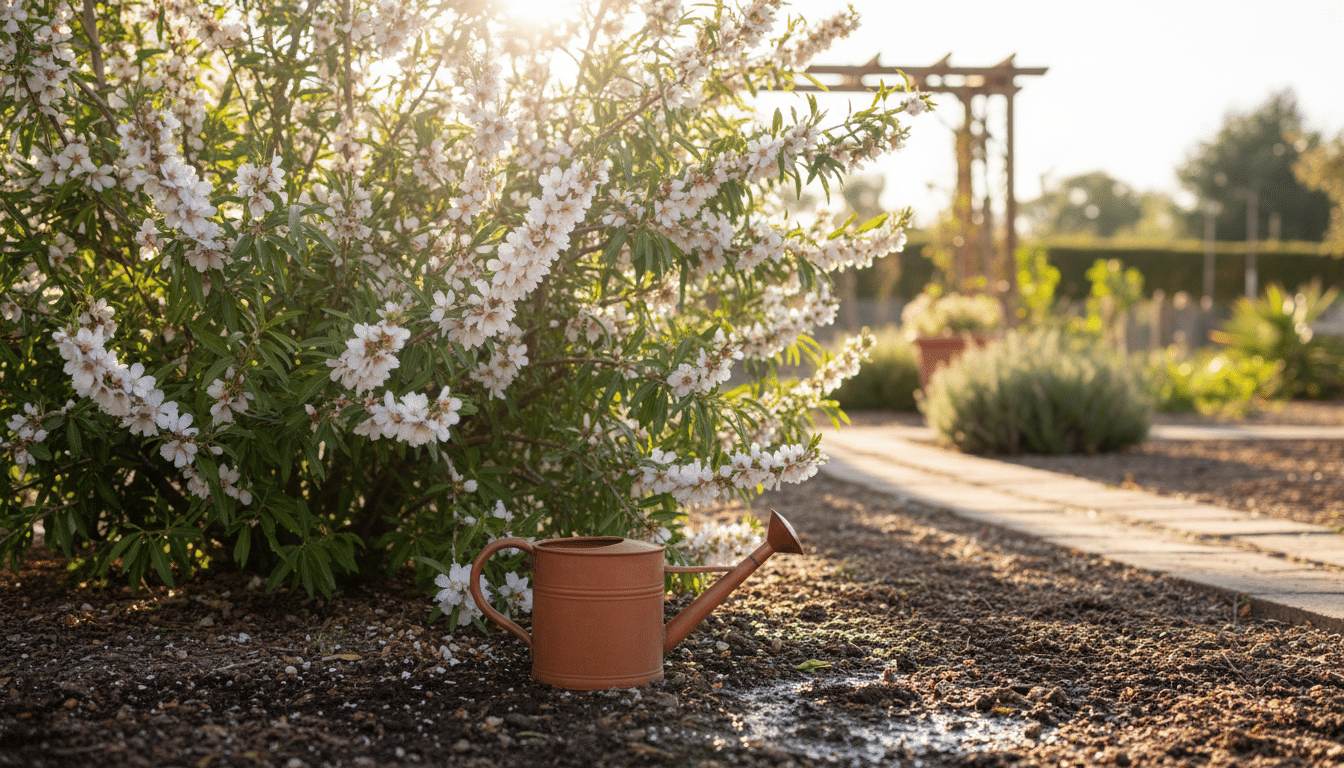
The Sweet Almond Bush “Trick” Most People Miss (AKA: Stop Loving It to Death)
If you’ve ever planted a sweet almond bush because you wanted your yard to smell like vanilla dessert and then… it promptly acted like it hated you? Welcome. You’re in good company.
Here’s the thing: root rot takes out more sweet almond bushes than anything else, and it’s almost always because we do the most human gardening move of all time we water it like it’s a thirsty little baby forever. Spoiler: it’s not. Once it’s established, it wants to be treated more like that tough friend who “forgets” to text back for three weeks and is somehow thriving.
So let’s talk about the three fundamentals that make this plant bloom like crazy:
- Sun
- Drainage
- Watering that changes as it grows up
And yes, I’m going to be a little bossy about drainage, because soggy roots are the villain in this story.
First: Do you have a sweet almond bush… or the sweet almond tree?
Garden centers and plant tags love chaos, so let’s clear it up.
The one this post is about:
Sweet almond bush (Aloysia virgata)
- Ornamental shrub with white flower spikes and a ridiculous, delicious fragrance
- Typically grows in Zones 8-11
- Flowers smell amazing… but they are not edible (please don’t make potpourri tea and blame me)
The other one:
Almond nut tree (Prunus dulcis)
- Actual almond producer (the snack!)
- Different zones (roughly 5-9 depending on variety)
- More orchard style needs, often needs a pollinator buddy, and frost can ruin your crop
If you have the nut tree, here’s my quick and dirty: full sun, consistent watering in the growing season (especially spring), well draining soil, and watch for late frosts during bloom. Also, pollination matters unless you picked a self-fertile variety like “All-in-One.”
Now back to the fragrant diva shrub.
The real “trick”: Plant it like you’re scared of root rot (because you should be)
I know. Dramatic. But I’ve seen more sweet almond bushes quietly decline from “too much love” than from neglect.
The goal: roots that get water… and then get to breathe.
Sun: the bloom booster you can’t cheat
If your sweet almond bush is healthy looking but barely blooming, I would bet actual money on this:
It’s not getting enough sun.
- Minimum for decent blooms: 6 hours of direct sun
- For the big, show off flower spikes and strongest scent: 8+ hours
It can survive in partial shade, sure but “survive” isn’t the vibe you planted it for.
My placement hot take:
- In Zones 8-9, a south or west spot is usually great (more warmth = happier plant).
- In Zones 10-11, I like east facing morning sun if you get brutal afternoons (less crispy stress).
Soil: “It tolerates clay” is not the same as “it likes wet feet”
Sweet almond bush will tolerate a lot of soil types. What it will not tolerate is water sitting around its roots like a swampy hug.
Do the 5-minute drainage test (before you commit)
Dig a hole about 12 inches deep, fill it with water, and check it in a few hours.
- If it drains pretty quickly? Great.
- If water is still hanging out after a few hours? Fix that first. Don’t “hope.” Hope is not a drainage plan.
Easy upgrades:
- Heavy clay? Mix in coarse sand/perlite and compost (compost helps more than people think).
- Planting in a pot? Use potting mix with extra perlite. Do not use garden soil in containers unless you enjoy disappointment.
The planting detail people skip (and then regret):
Keep the crown a little high.
That spot where the roots meet the stem? Plant it 1-2 inches above the surrounding soil line.
Yes, it will look a tiny bit “perched” at first. That’s good. That prevents water from pooling right at the base and starting the slow rot spiral.
Watering: the schedule that changes (because the plant changes)
This is the part most people miss: sweet almond bush has two different personalities baby plant and grown up plant.
Years 1-2: You’re building roots, not just keeping it alive
When it’s establishing, you want consistent moisture (not puddles, not dust).
A simple rhythm:
- First week: keep it watered (check often)
- Next month-ish: 2-3 times a week depending on heat/soil
- After that: about weekly, adjusting based on weather
But here’s the rule that beats any calendar:
Stick your finger in the soil. If the top 2-3 inches are dry, water. If not, don’t.
Signs it’s too dry: leaf edges curl, it looks tired, blooms stall.
Year 3 and beyond: stop watering it like a newborn
Once established, sweet almond verbena shrub is drought tolerant. Which is gardener speak for: “Please stop drowning me.”
At that point, I mostly water:
- during long dry spells (think: 3 weeks with no meaningful rain)
- during intense summer heat if it’s looking stressed
If you’re a “give everything a weekly sprinkle” person (no judgment, I used to be you), this is your permission slip to NOT.
Containers: the plant version of living in an apartment
Pots dry out faster. Expect more frequent watering in summer often every 4-5 days, sometimes more in extreme heat.
Two sweet almond container rules I will tattoo on my soul:
- Drainage holes are mandatory.
- No standing water in the saucer. That’s basically a root rot hot tub.
Pruning + feeding: how to get more flowers without turning it into a green blob
Fertilizer: easy does it
Sweet almond bush isn’t a heavy feeder. If you dump fertilizer on it like you’re trying to win a prize, you’ll often get: lush leaves… and fewer flowers.
What I do:
- A light dose of a balanced slow release fertilizer in early spring
- If you planted with compost, you can often skip fertilizer the first year (or two)
Pruning: do it at the right time or you’ll prune off the party
This plant blooms on new growth, so timing matters.
- Light prune after the first big bloom flush (mid summer is common) = often encourages a second round of blooms
- Avoid fall/winter pruning if you want maximum flowers next season
If you’re in Zones 8-9 and it gets zapped by frost and looks like a sad pile of sticks don’t panic. More on that in a second.
Deadheading + mulch (small effort, big payoff)
- Snip off spent flower spikes if you want to extend blooming.
- Mulch 2-3 inches to keep moisture steadier and reduce watering… but keep mulch a few inches away from the trunk. Mulch piled at the base is basically a rot invitation.
Zone reality check (because climate always has opinions)
Zones 10-11: evergreen-ish and living its best life
In warm zones, it can stay green year round. Just ease up on watering in winter (it’s not growing as aggressively).
Zones 8-9: the “it died!” moment that isn’t actually death
After a hard frost (around 28°F), it may die back to the ground and look absolutely tragic.
This is normal.
What I do:
- Cut it back
- Clean up the debris
- Add loose mulch over the root area for protection
It usually resprouts in late spring and flowers by mid summer. It’s dramatic, but it’s a survivor.
Want to baby it through winter? Put it in a pot.
If you’re in a cooler zone and you want to avoid dieback, container growing is your cheat code.
- Bigger pot (around 18-24 inches wide) for a full size shrub
- Bring it inside before frost near a bright window
- Water lightly when the top inches dry out
Then move it back outside after your last frost. Boom evergreen vibes in a zone that doesn’t deserve them.
Troubleshooting: quick fixes before you spiral
“Help, it’s wilting” root rot vs. thirsty
These two can look annoyingly similar, so check the soil.
Root rot vibes:
- Soil is wet but leaves are limp/soft
- Yellowing starts lower and creeps up
- Sometimes there’s a sour smell near the base (not cute)
What to do:
- Stop watering
- Improve drainage
- If it’s early, you can lift it, trim mushy roots, and replant in fast draining soil
Underwatering vibes:
- Soil is dry
- Leaf edges curl
- Plant looks crispy/tired
What to do:
- Water deeply and consistently (especially if it’s still young)
“It won’t bloom”
Check in this order:
- Sunlight (this is usually it)
- Pruning timing (don’t prune it at the wrong time and then wonder where the flowers went)
- Age + consistency (young plants bloom better with steadier watering)
“It’s leggy and weird”
Usually: not enough sun, or it never gets pruned after blooming. Give it more light and a post bloom trim to encourage branching.
Your next move (because reading is great, but plants require action)
If you do nothing else this week, do these two things:
- Check how much sun it’s really getting. Not “I think it’s sunny.” I mean actual hours of direct sun.
- Check drainage and stop watering on autopilot. Water when the soil says so not when your calendar does.
Get those right, and your sweet almond bush will repay you with those dreamy white blooms and that “who’s baking?” scent every time you walk by. And honestly, that’s the kind of yard drama I fully support.