Caring for plants looks simple from the outside, but once you bring one home, you realize there’s a whole language happening in the leaves, soil, and small day-to-day shifts.
A good plant care guide doesn’t just tell you what to do; it helps you understand why plants behave the way they do. That’s where the real confidence comes from.
In this blog, I’ll break down the essentials you actually need, explain the quiet signals plants give when something’s off, and share the small skills that make a big difference.
By the end, you’ll see that plant care isn’t complicated; it’s just about paying attention. Let’s start with the core needs every plant depends on.
The Core Needs of Every Plant
Every plant you bring home is running on the same basic system. Light , water , soil , temperature , humidity , nutrients , and airflow . Once you understand how each piece works, you stop guessing and start actually reading the plant the way growers do.
1. Light
Light is the strongest driver of plant health. It controls growth rate, leaf size, and overall energy. If a plant isn’t doing well, light is the first thing you check.
South-facing windows bring the most exposure, east gives gentle morning sun, west brings intense afternoon heat, and north is steady but weaker.
Most indoor plants want bright indirect light ; a room filled with daylight without the sun hitting leaves directly.
Too much light creates bleaching or crispy patches . Too little causes stretching and small new leaves . When a plant leans toward the window, that’s your confirmation it needs more.
2. Water
Watering isn’t about schedules; it’s about soil moisture . Roots need oxygen, and waterlogged soil cuts that off. The simplest method is the finger test : check dryness an inch deep.
- Top watering flushes out salts.
- Bottom watering rehydrates soil that’s pulled away from the pot.
- Overwatering shows up as soft stems , yellow leaves , and root rot .
- Underwatering leads to brittle leaves , sharp drooping , and dry soil that pulls from the pot.
- Pot size controls how long the soil stays wet; bigger pots dry slower, smaller pots dry faster.
3. Soil
Soil controls water flow, oxygen, and nutrients. A good mix stays loose , well-draining , and doesn’t compact.
- Tropicals want airy mixes with bark and perlite .
- Succulents need gritty , fast-drying blends.
- Aroids do best with chunky soil that stays moist without trapping water.
If the soil stays soggy , grows fungus , or smells musty , it’s too dense. Changing the soil alone can revive a struggling plant.
4. Temperature
Plants want stability. Most houseplants prefer 65–75°F .
Below 55°F , growth slows and leaf tissue gets damaged.
Above 85°F , plants lose moisture faster than they can pull it in.
Drafts , heaters , and AC vents cause sudden stress, which shows up as drooping or damage on the side facing the airflow.
5. Humidity
Many popular houseplants come from regions with high humidity , often 60–90% . Homes, especially in winter, can drop below 30% .
Pebble trays , plant grouping , and humidifiers all help raise local humidity.
Low humidity causes brown tips , crispy edges , and deformed new leaves . These signs tell you the air is too dry for the plant to keep up.
6. Nutrients
Plants rely on nitrogen (N) for leafy growth, phosphorus (P) for roots and blooms, and potassium (K) for strength.
- Most indoor plants only need fertilizer during spring and summer .
- Over-fertilizing leads to root burn and brown patches that look like humidity issues.
- Fresh soil already contains nutrients, so skip fertilizing right after repotting .
Fertilizer is not a recovery tool; it only helps when the plant is stable.
7. Airflow
Good airflow prevents fungus , mold , and pests by helping moisture evaporate evenly.
Stagnant air keeps leaves and soil damp longer, which is how fungus gnats , spider mites , and mildew take hold.
A bit of room around the plant and gentle movement from a fan across the room keeps things healthier without drying the plant out.
The Essential Plant Care Routine
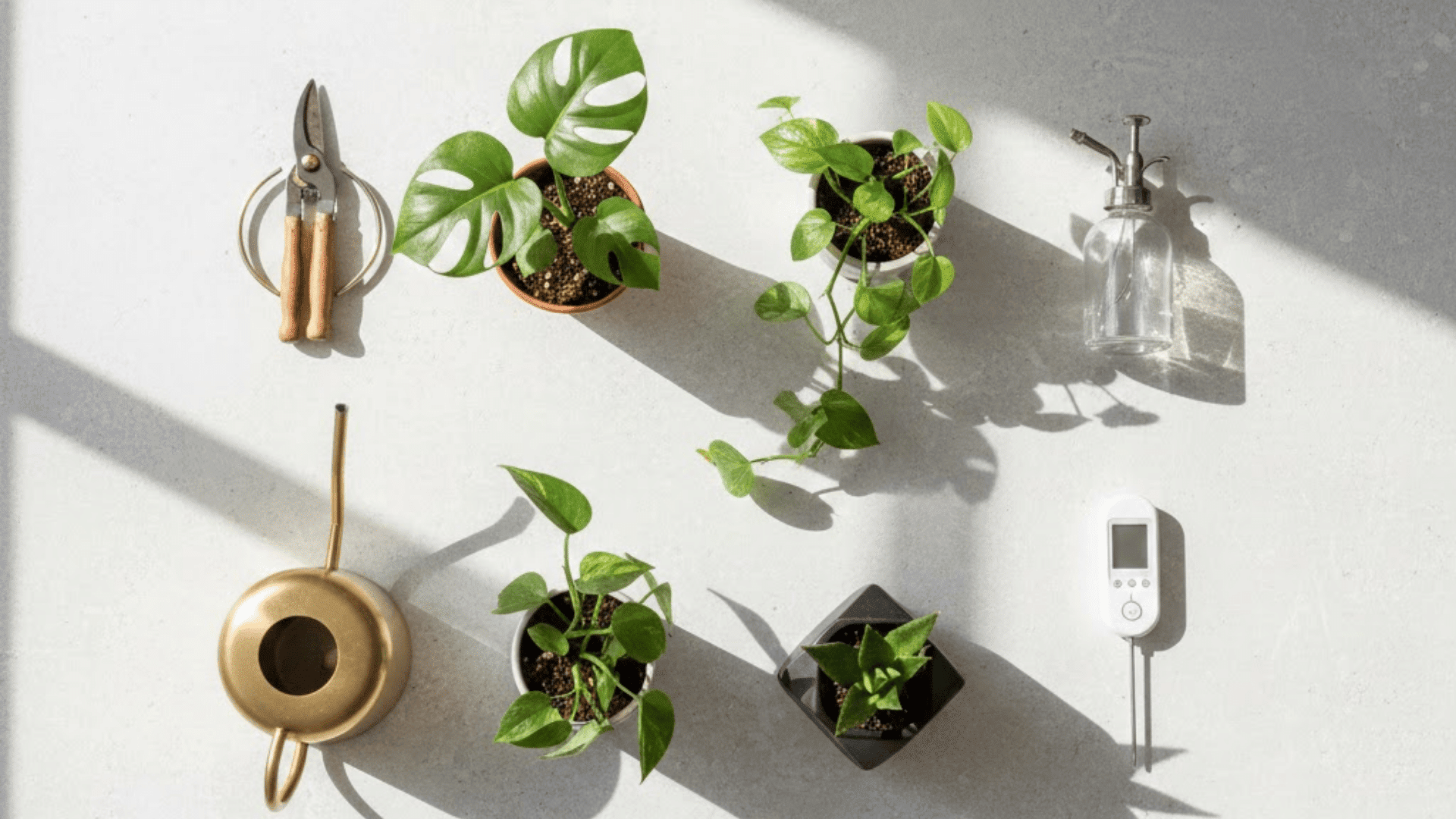
Most people care for plants only when something looks wrong, and that’s why problems sneak up on them. A simple routine keeps plants stable so issues don’t get a chance to build.
Weekly Routine
A weekly rhythm keeps your plant in check without turning it into a full-time job.
- Start with a water check . Don’t follow a schedule; check the soil and water only when it’s dry at the right depth. This prevents almost every watering-related problem.
- Follow that with leaf cleaning . Dust blocks light, and even a light wipe helps the plant photosynthesize better. It’s also the easiest time to look over the leaves.
- Do a quick pest scan while you’re there. Look under leaves, along stems, and at the top of the soil. Catching pests early makes them way easier to handle.
- Finish with a rotate pot moment. Plants lean toward the light naturally. A quarter turn each week keeps growth even and prevents them from stretching in one direction.
Monthly Routine
Monthly tasks keep the plant’s long-term health on track.
- Start with a fertilizer check . During the growing season, light feeding once a month gives the plant the nutrients it needs without overdoing it.
- Loosen the top layer of soil with your fingers; a simple soil loosening step. Compact soil slows drainage and reduces oxygen flow, and this quick move helps roots breathe again.
- Take a minute for a growth assessment . Are new leaves coming in smaller? Is growth slowing down despite good light? These clues help you adjust care early instead of guessing when the plant starts declining.
Seasonal Adjustments
Plants respond to changes in daylight and temperature, even indoors. Adjusting your routine through the year keeps them stable.
- In winter, shorter days mean plants need more light and less water . Soil dries slower, and cold air from windows can stress the plant, so be mindful of placement.
- In summer, plants naturally hit a growth boost . They take up more water, use more nutrients, and push out new leaves faster; this is the best time for pruning, repotting, and fertilizing.
- Pay attention to dormancy signs . Some plants slow down on purpose, producing fewer leaves or pausing growth. When you see this, ease up on watering and stop fertilizing until they wake back up.
How to Choose the Right Plant for Your Home
Most people pick plants because they “look nice,” and that’s usually how they end up killing them. The trick is matching the plant to your actual lifestyle and the conditions in your home.
Here’s the beginner-friendly way to choose plants you won’t fight with later:
1. Low-Light Plants
Not every home gets bright indirect light, and that’s fine; plenty of plants thrive in dimmer spaces.
Snake plants , ZZ plants , Pothos , and Aglaonema handle corners, hallways, and rooms with weaker natural light.
“Low light” doesn’t mean no light at all, just spaces where the sun never hits directly. These plants grow slower, but they stay stable as long as they get some brightness during the day.
2. Pet-Friendly Plants
If you’ve got pets, you need plants that won’t cause problems if someone decides to chew a leaf.
Calathea , Peperomia , Areca palm , and Spider plants are solid options because they’re considered non-toxic to cats and dogs.
Avoid things like pothos, philodendrons, dieffenbachia, and lilies; they’re extremely common buttoxic .
A pet-friendly home just means choosing plants that keep everyone safe without constant worry.
3. Low-Maintenance Plants
If you want plants but don’t want a new hobby, go for things that don’t care if you forget them sometimes.
Snake plants , ZZ plants , Jade , and Succulents are classic low-maintenance picks. They store water, tolerate inconsistency, and don’t demand weekly attention.
These plants are basically the “set it and chill” category; good for beginners or anyone who isn’t ready for plants that throw tantrums.
4. Plants for People Who Travel
If you’re gone often, you need plants that don’t collapse the second you miss a watering.
Cacti , Succulents , ZZ plants , and Hoya handle longer dry periods without drama. You can even set up simple tools like self-watering stakes or wick systems if you’re away for weeks at a time
The goal is choosing plants with slow water usage so they stay stable while you’re on the move.
How to Take Care of Plants: Step-by-Step Plant Care Skills
These are the core skills that actually change how your plants behave. Once you get these down, troubleshooting becomes easier, plants recover faster, and problems stop catching you off guard.
1. Watering Techniques
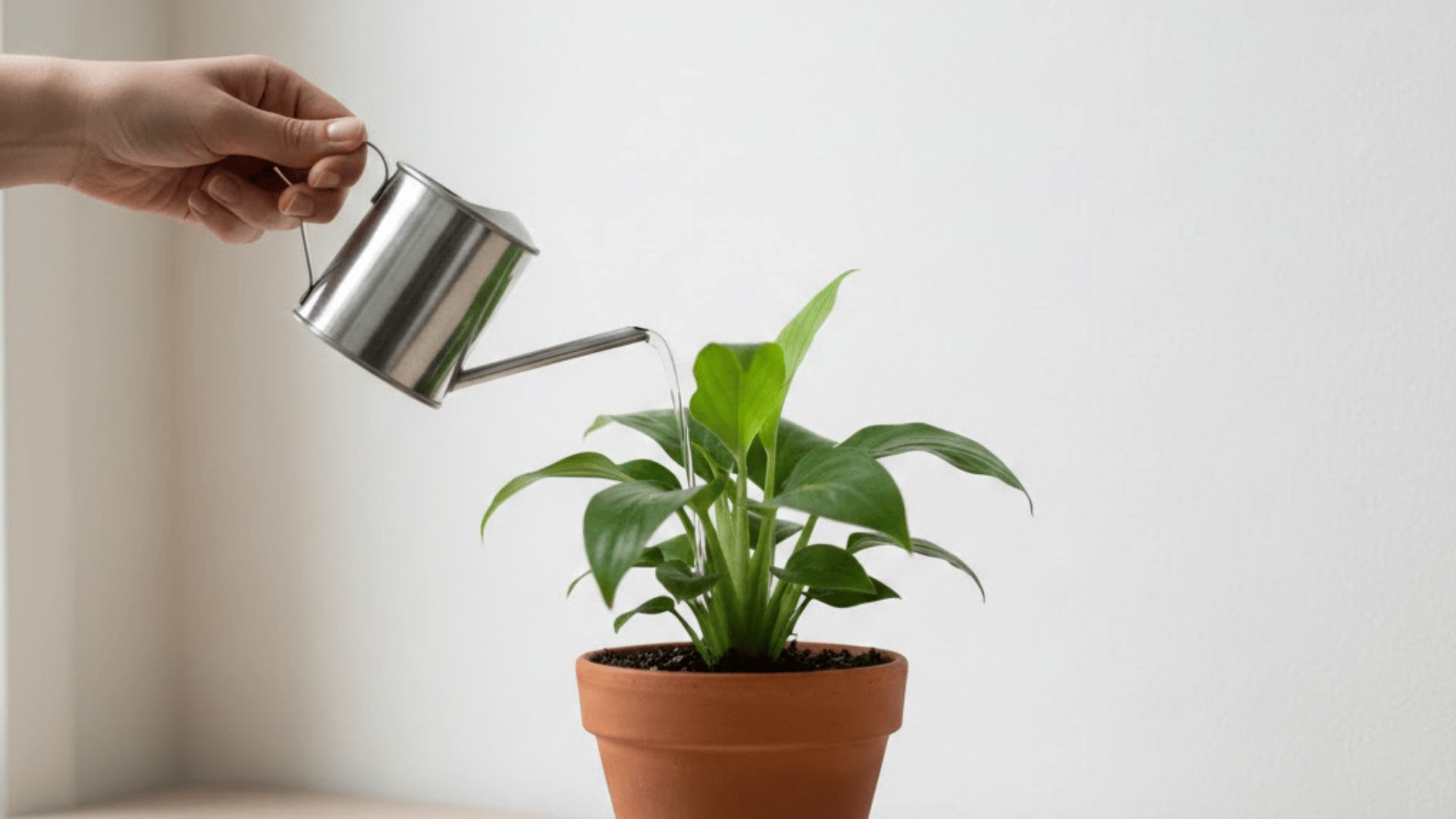
Watering is a skill, not a guess. When you understand how water moves through soil, you stop overdoing it or starving the plant without realizing it.
Bottom watering helps rehydrate dry soil that won’t absorb moisture from the top. You set the pot in a shallow tray of water and let the soil pull moisture upward for about 10 to 20 minutes. Once the top of the soil feels slightly damp, you’re done.
Deep watering is the opposite; you water from the top until water runs through the drainage holes. This flushes out excess salts from fertilizer and gives the entire root system a full drink.
Proper draining matters just as much as watering. After each session, empty any water sitting in the pot’s saucer. Standing water suffocates roots and leads straight to root rot.
Whether you water from the top or bottom, letting the pot drain fully is what keeps the roots healthy.
2. How to Repot Without Killing Your Plant
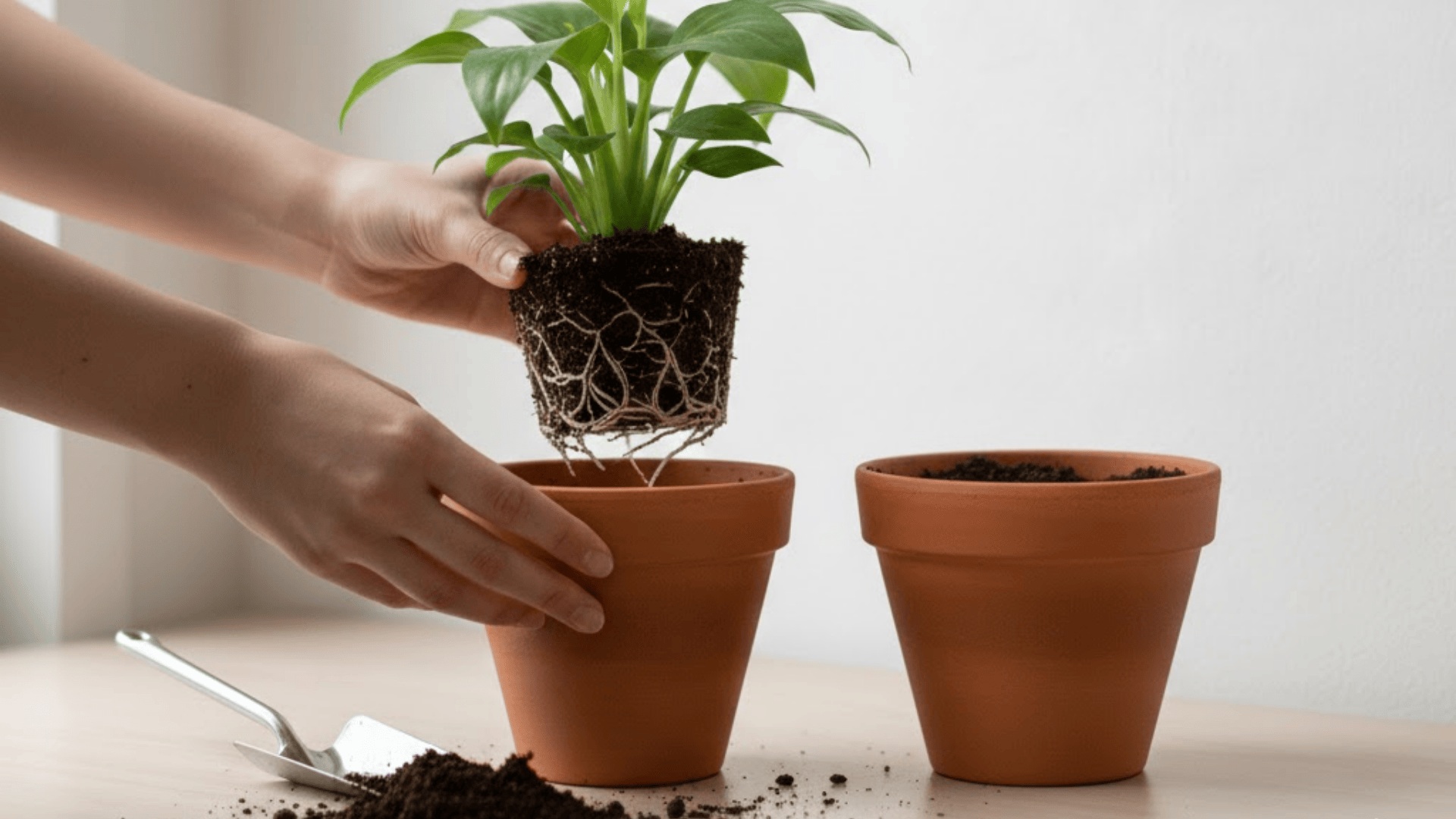
Repotting isn’t just moving a plant into a bigger container; it’s refreshing the soil, giving the roots air, and preventing long-term problems.
Signs a plant needs repotting include roots circling the pot, water running straight through too fast, soil collapsing inward, or the plant drying out unusually quickly. New growth slowing down for no clear reason is another clue.
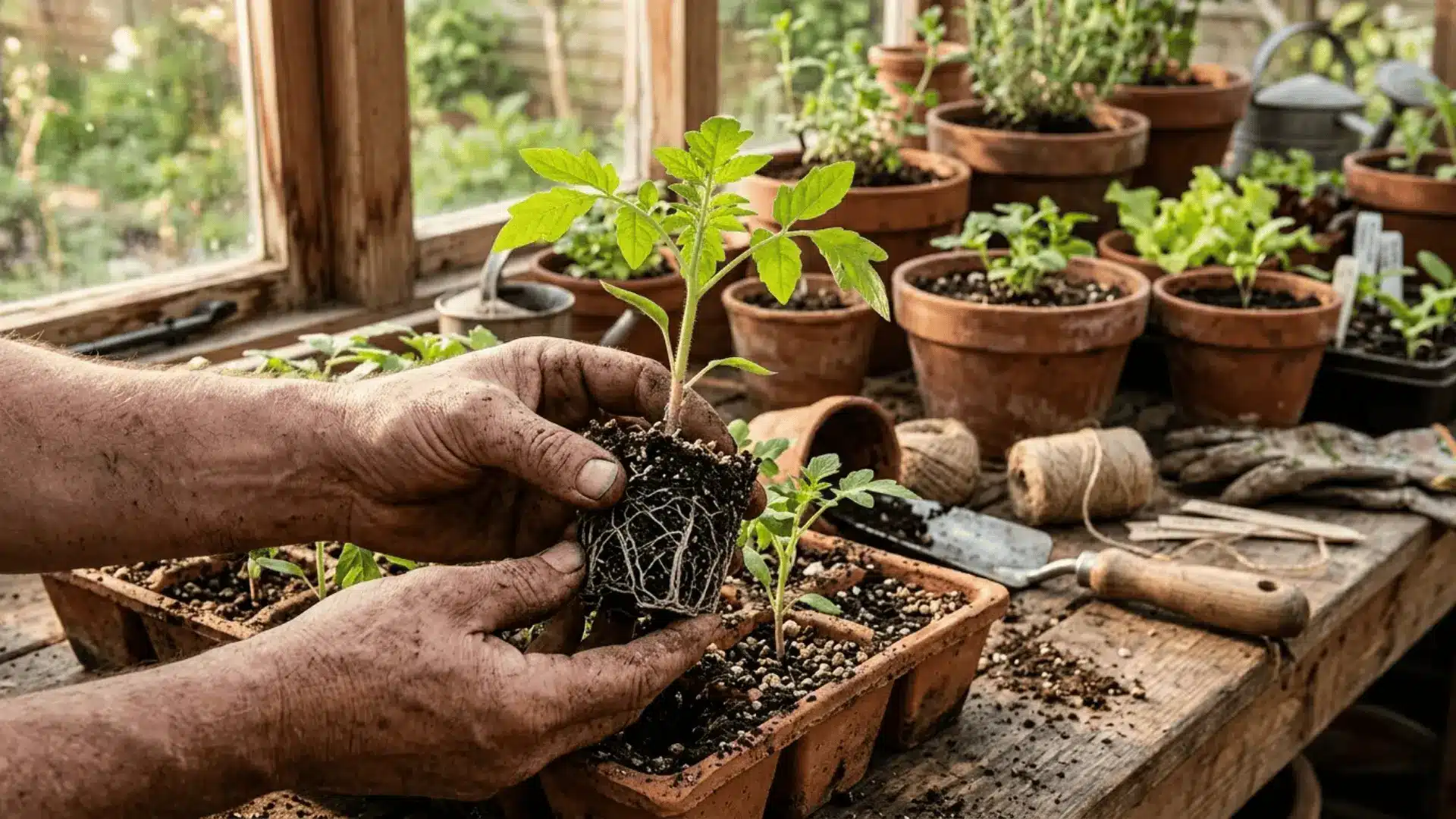
A proper repotting process starts with gently loosening the root ball.
- Remove old, compacted soil, trim dead or mushy roots, and place the plant into fresh, well-draining soil.
- Choose a pot one size bigger; not too big, not too tight.
- After planting, water lightly to settle the soil.
To preventroot rot , always use a pot with drainage holes and avoid oversizing the new pot. A giant pot holds more water than the roots can handle, and that’s when rot shows up.
3. Pruning Like a Pro
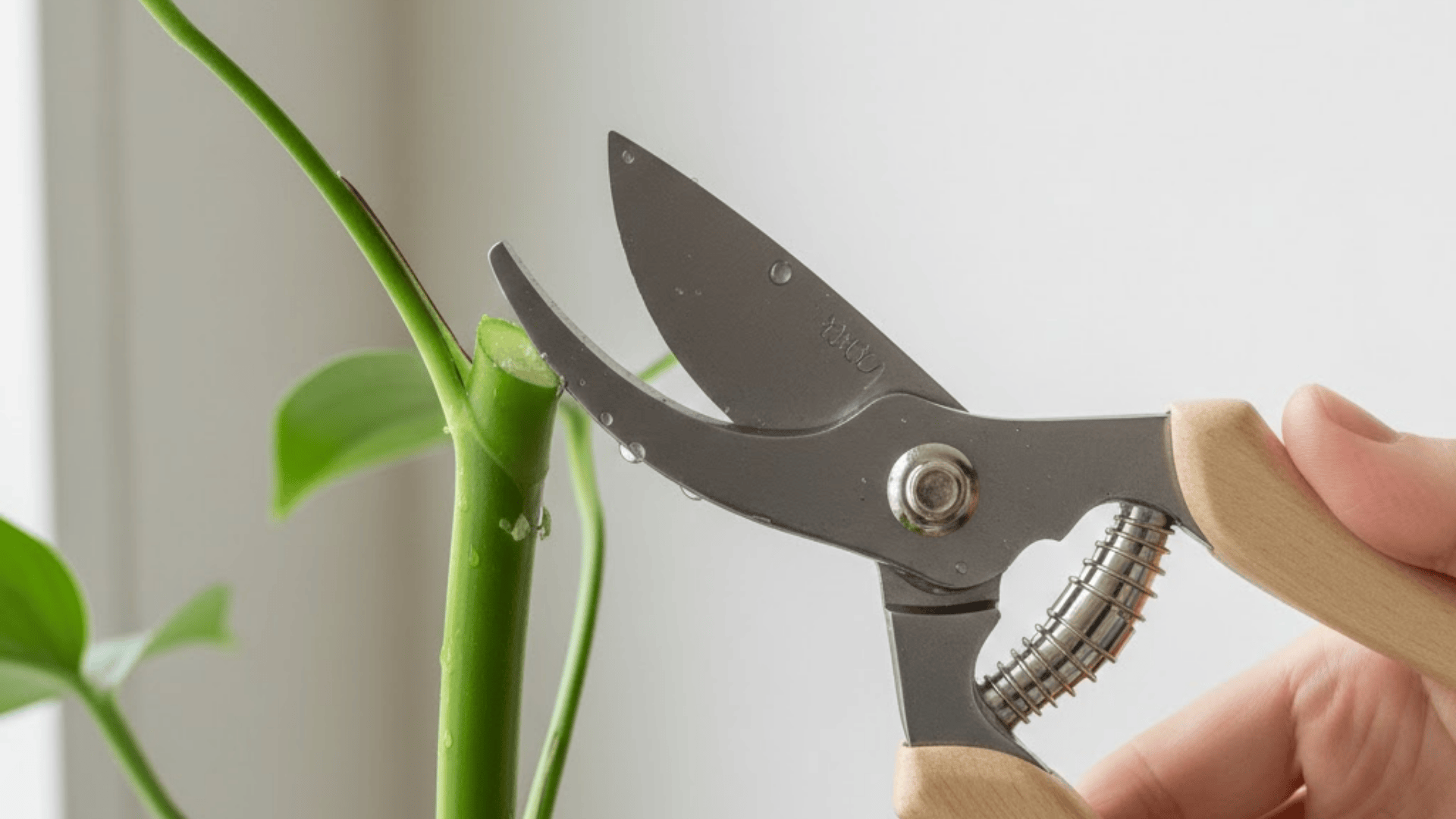
Pruning is all about controlling growth and encouraging healthier, stronger leaves.
To shape a plant , cut just above a node, which is where new growth forms. This redirects energy and creates fuller, bushier growth.
Removing dead leaves improves airflow and stops decay from spreading. Plants don’t recover dead leaves, so taking them off helps redirect energy to healthy areas.
If you want toencourage new growth , prune lightly during spring and summer when the plant is actively growing. A small cut at the right time pushes out new stems and keeps the plant compact instead of leggy.
4. Leaf Cleaning & Dusting
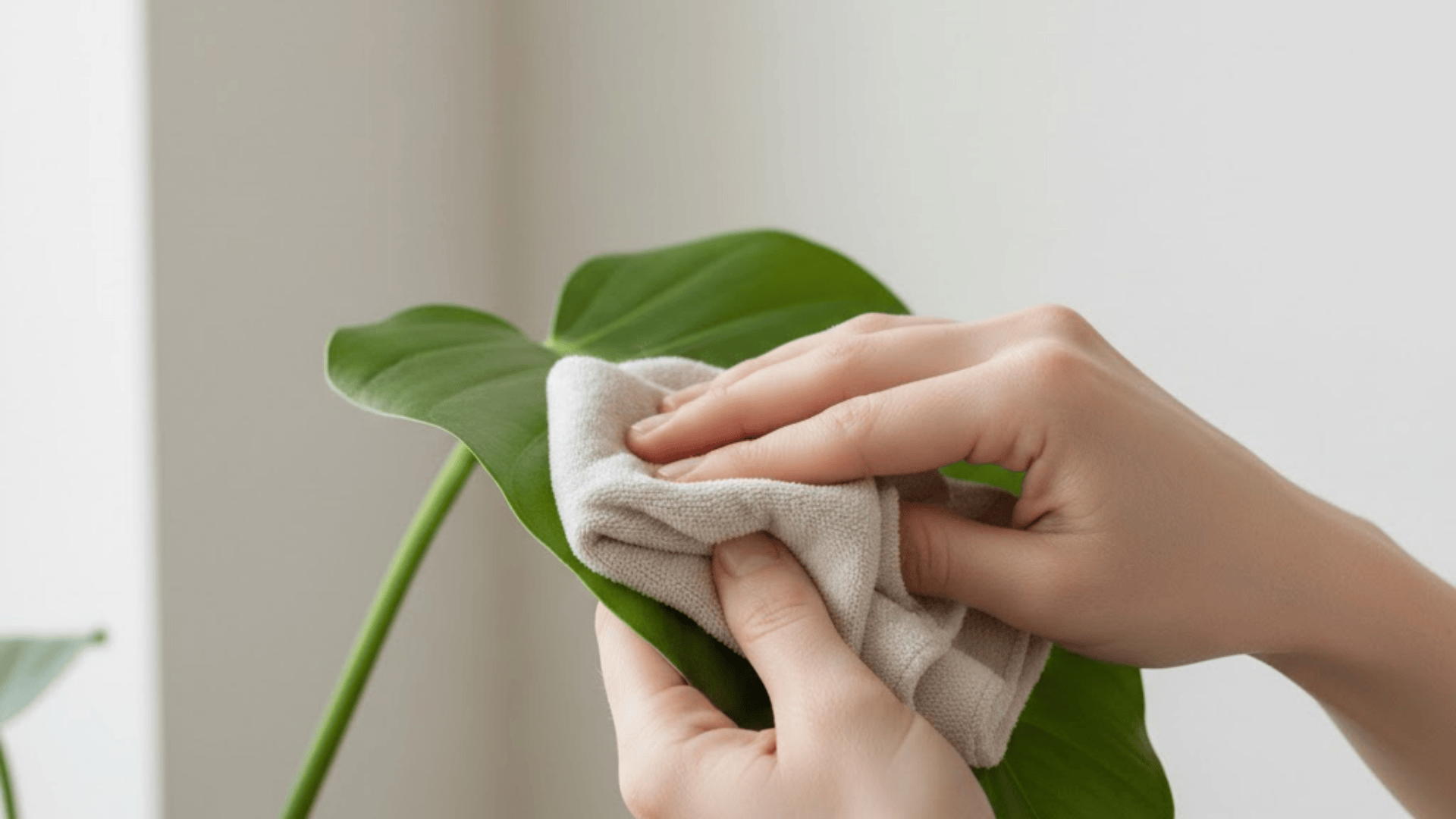
Leaf cleaning isn’t cosmetic; dust blocks light, and light is the plant’s energy source.
Dust reduces photosynthesis , which means the plant produces less energy and grows slower. Big-leaf plants especially need regular cleaning.
The best cleaning method depends on the leaf type . Smooth leaves do well with a damp microfiber cloth. Fuzzy leaves, like African violets, shouldn’t get soaked; use a soft brush instead.
For plants with lots of thin leaves, like palms, a gentle shower works as long as the soil drains well afterward.
5. Pest Prevention & Treatment
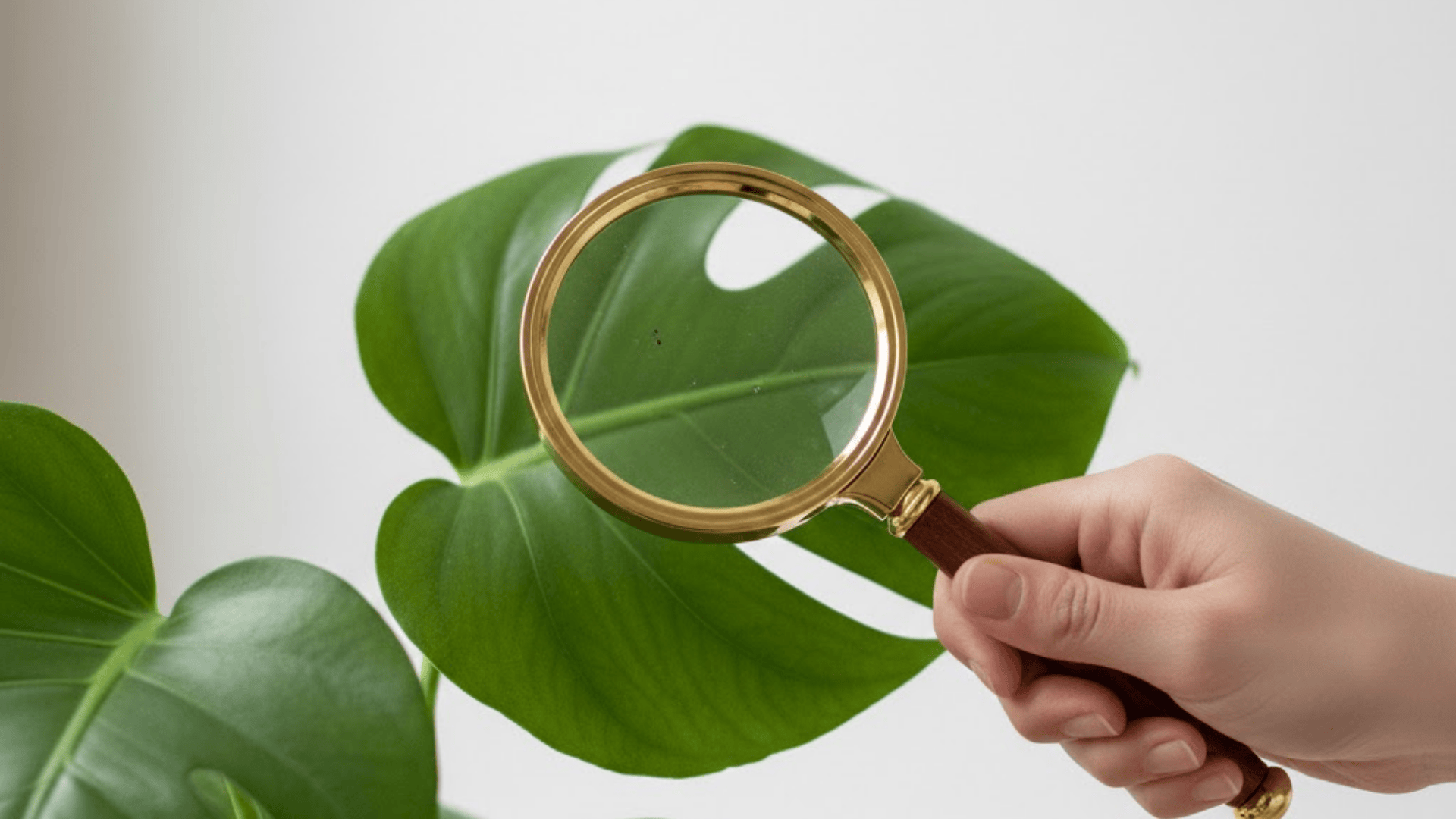
Pests are common, but catching them early makes them easy to control. You identify common pests by symptoms:
- Spider mites leave tiny specks and webbing.
- Fungus gnats hover around the soil.
- Mealybugs look like white cotton patches.
- Scale insects look like flat brown bumps stuck to stems.
For safe removal , a simple soap spray (a few drops of dish soap in water) works for soft-bodied pests. Neem oil helps prevent eggs from hatching and stops new infestations.
Always start with a quarantine process when you bring home new plants. Keep them separate for one to two weeks and check daily for hidden pests. This step alone prevents almost every major infestation.
Plant Troubleshooting Guide: Diagnose and Fix Any Problem
Plants don’t hide their problems, they show you exactly what’s wrong once you know how to read the signs. Use this guide to match the symptom, find the cause, and fix the issue before it gets worse.
1. Yellow Leaves
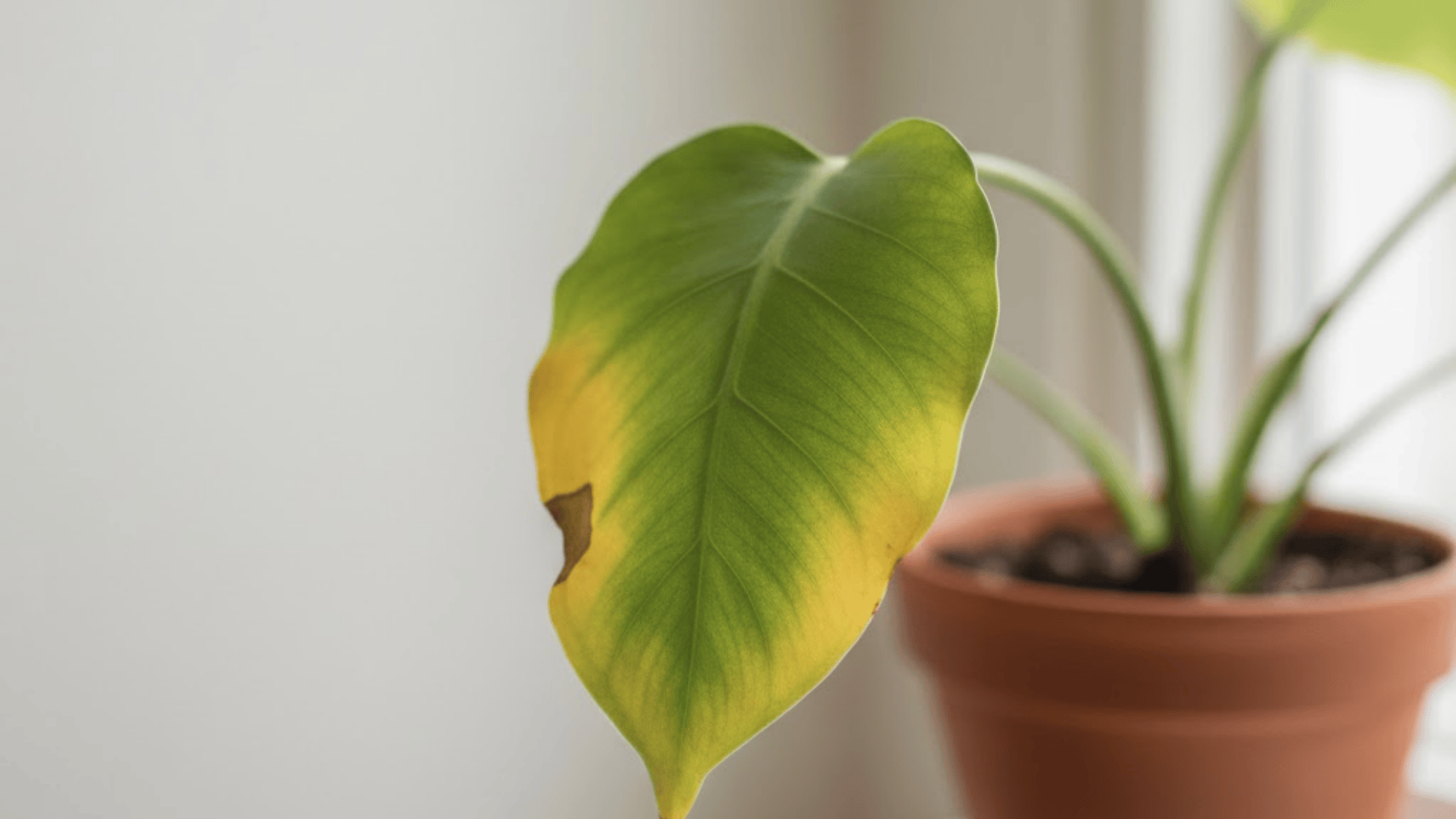
- Symptoms: Soft yellowing, fading lower leaves, or yellow patches with crispy edges
- Likely Causes: Overwatering, light burn, natural aging, early fungal issues
- Diagnosis Tips: Soft + yellow = too much water; dry yellow patches = too much light; only old leaves yellowing = normal aging
- Solutions: Adjust watering, move plant out of harsh sun, remove old leaves, improve airflow if spotting spreads
2. Brown Tips
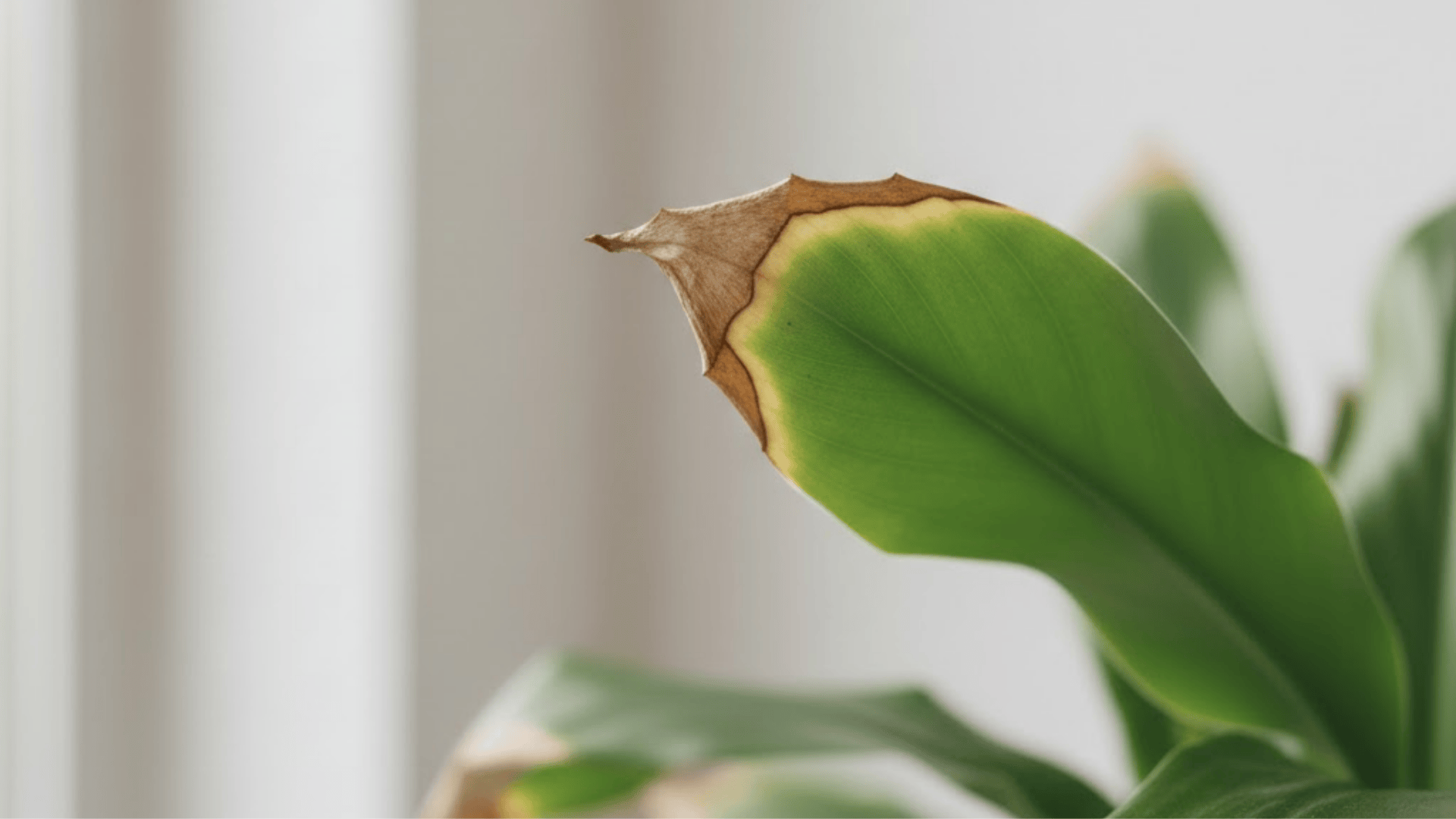
- Symptoms: Crispy edges, dry tips, browning that slowly moves inward
- Likely Causes: Low humidity, mineral buildup from tap water, fertilizer salt burn
- Diagnosis Tips: Even crisp edges = humidity issue; uneven browning = minerals; sudden scorched look = fertilizer burn
- Solutions: Raise humidity, switch to filtered water, flush soil thoroughly, pause feeding until new growth appears
3. Drooping or Wilting
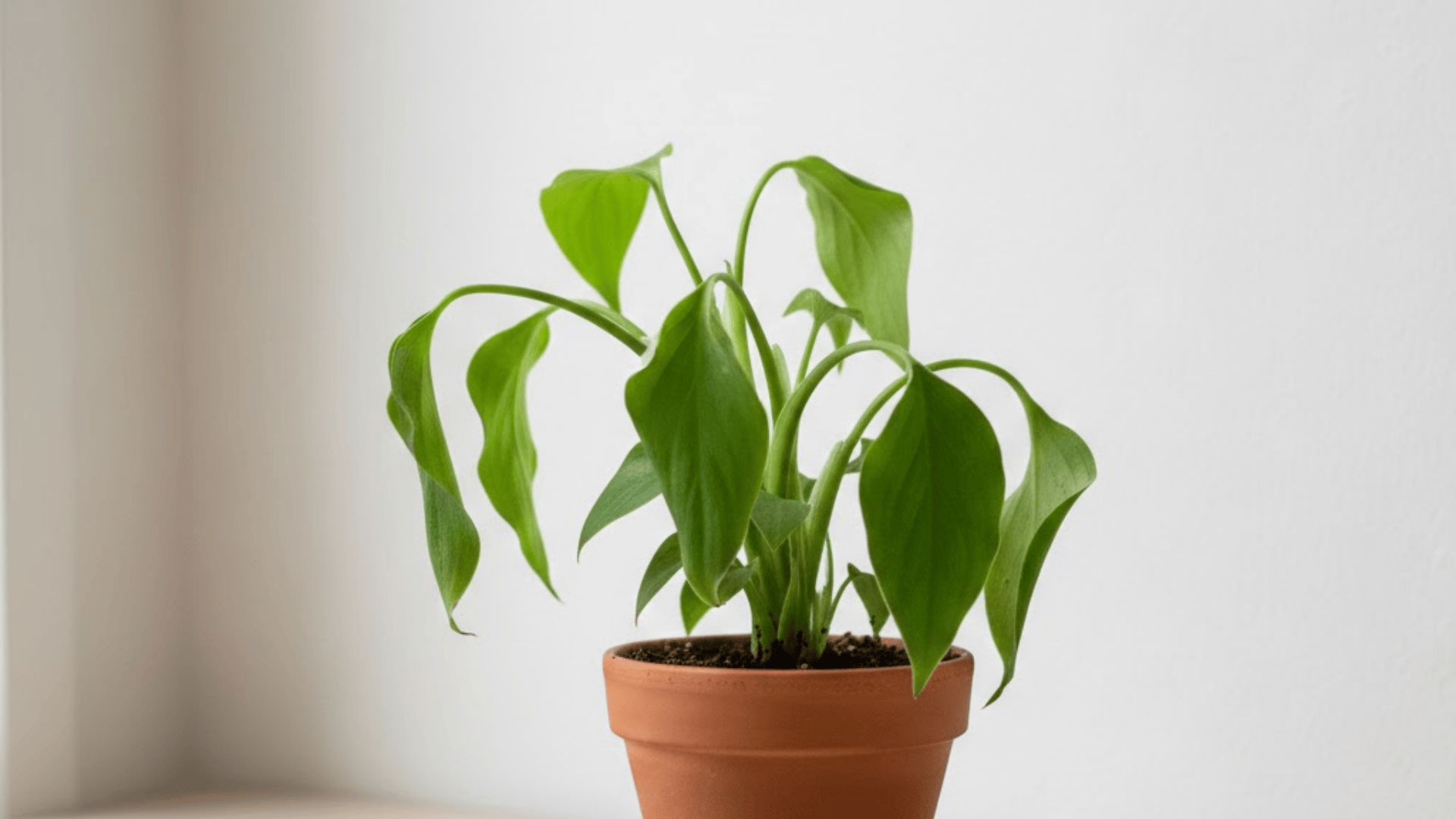
- Symptoms: Limp leaves, stems bending, heavy or dry-looking foliage
- Likely Causes: Underwatering, overwatering, temperature shock
- Diagnosis Tips: Dry soil + thin leaves = underwatering; wet soil + soft stems = overwatering; sudden collapse = temperature swing
- Solutions: Rehydrate fully if dry, let soil dry if overwatered, move plant away from vents and cold drafts
4. Spots, Mold, Bugs
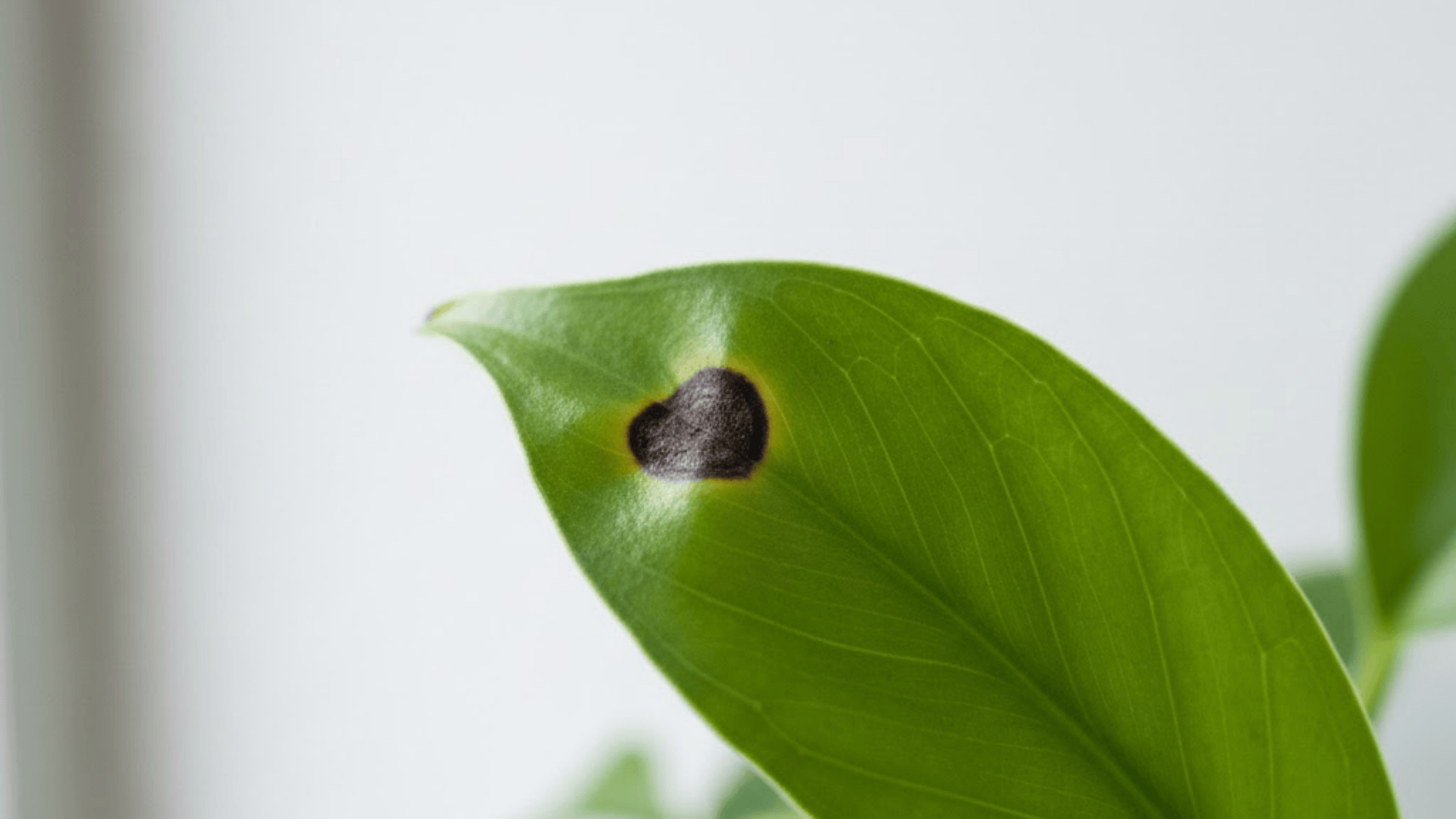
- Symptoms: Dark leaf spots, fuzzy mold, white powder, flying gnats, fine webbing
- Likely Causes: Fungal infections, soil gnats, spider mites
- Diagnosis Tips: Fuzzy or powdery coating = fungus; tiny flies = gnats; pale specks + webbing = spider mites
- Solutions: Increase airflow, allow soil surface to dry, treat with soap spray or neem oil, isolate badly affected plants
5. Root Rot
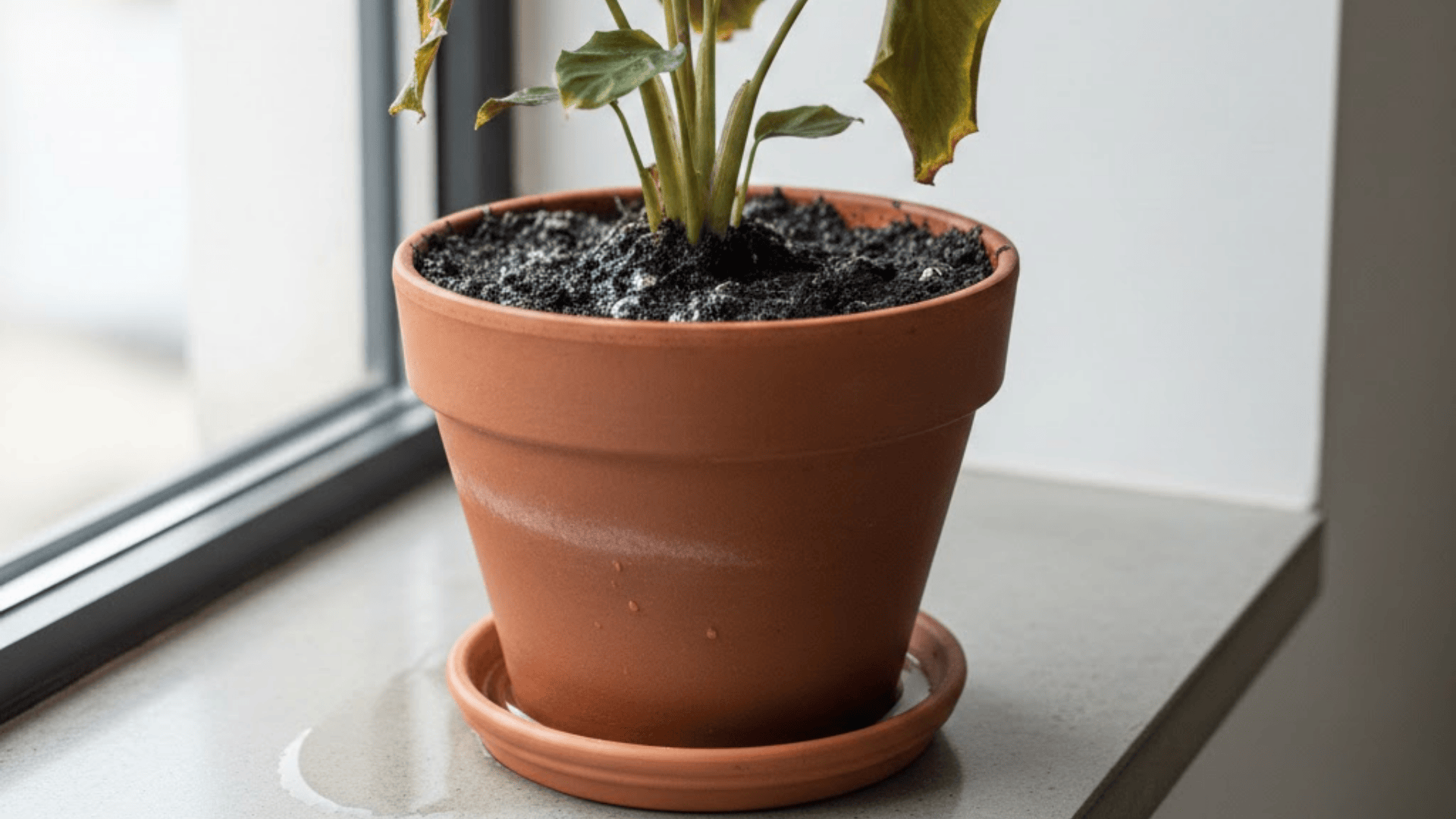
- Symptoms: Mushy brown roots, foul smell, plant collapsing despite wet soil
- Likely Causes: Overwatering, compact soil, no drainage
- Diagnosis Tips: Healthy roots are firm and pale; rotten roots fall apart and smell sour
- Solutions: Remove plant from pot, cut off all rotten roots, repot in fresh well-draining soil, water lightly after repot
- When It’s Too Far Gone: If no healthy roots remain or the stem is rotting, take a cutting and propagate
Indoor Plant-by-Plant Care Quick Guide
Every plant behaves differently, so here’s a simple breakdown to help you match each one to the light, water, and care it actually needs:
| Plant | Light Needs | Water Needs | Key Notes |
|---|---|---|---|
| Pothos | Bright indirect; tolerates low light | Let top soil dry between waterings | Fast grower; extremely beginner-friendly; easy to propagate |
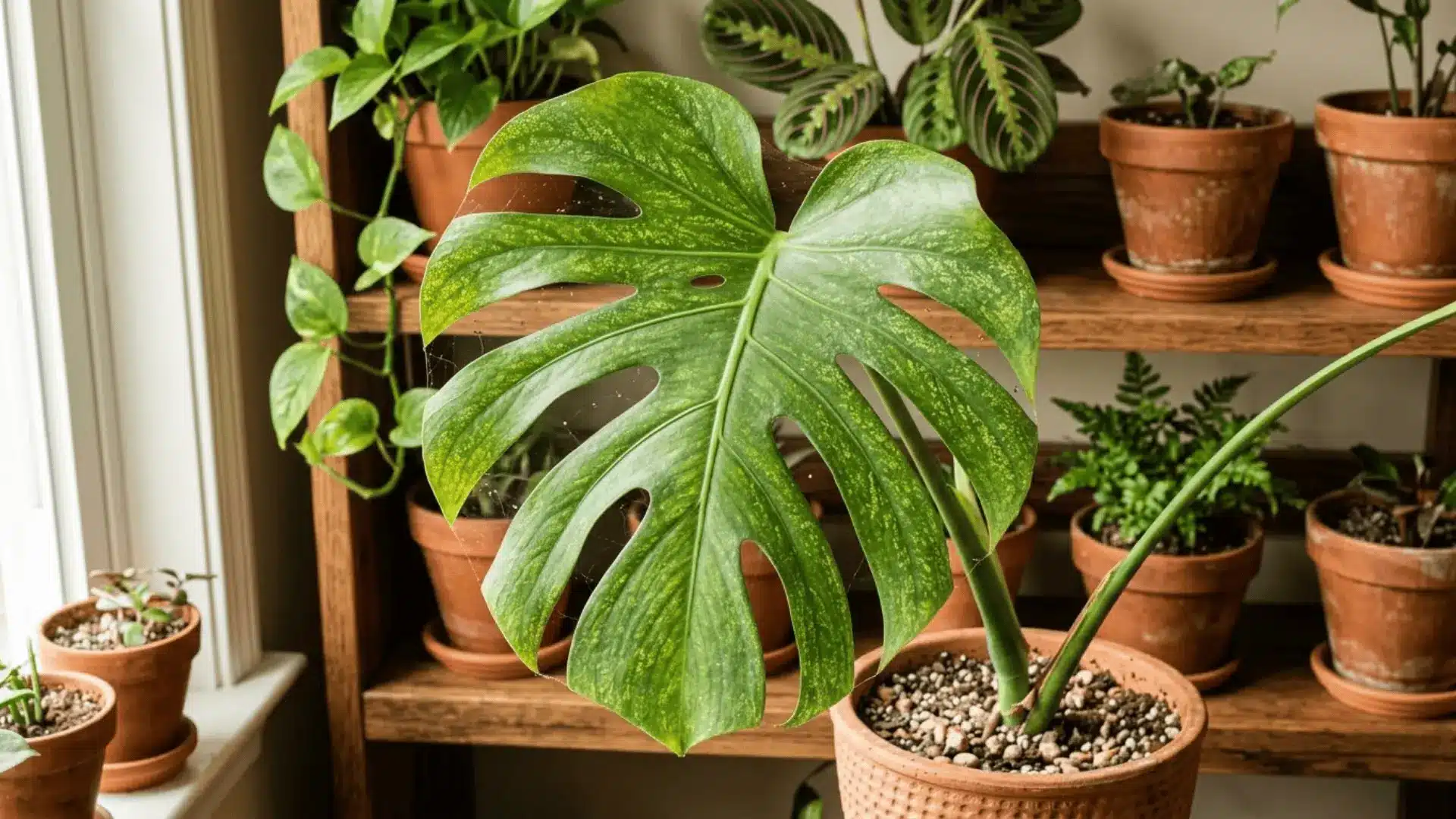
| Monstera | Bright indirect | Keep soil lightly moist | Prefers chunky soil; benefits from a moss pole; splits leaves with maturity |
| Snake Plant | Low to bright light | Very low; water sparingly | One of the most low-maintenance plants; thrives on neglect |
| Peace Lily | Medium to bright indirect | Keep soil consistently moist | Dramatic drooper when thirsty; sensitive to low humidity |
| Succulents | Bright direct or strong indirect | Water deeply, then fully dry | Needs gritty soil; prone to stretching without strong light |
| Ferns | Medium indirect | Consistent moisture; never fully dry | Requires high humidity; sensitive to dry air and heat vents |
Gardening Tools that Actually Help and What to Skip
Not every gardening tool is worth buying, and some can actually make plant care harder. Here’s a simple breakdown of what helps and what you can skip:
Tools that are Absolutely Worth It
- Moisture meter: Helps beginners avoid overwatering; use as a guide, not a replacement for checking soil.
- Humidifier: Essential for tropical plants in dry homes; improves leaf health and prevents crispy edges.
- Grow lights: Fix weak lighting and prevent leggy growth; choose full-spectrum lights over purple ones.
- Pruning shears: Clean, sharp cuts mean faster healing and better shaping.
- Sticky traps: Catch fungus gnats before they multiply; simple but effective.
- Pots with drainage: The single biggest protection against root rot; always choose drainage holes.
Tools that are Useful but Not Essential
- Spray bottle: Great for cleaning leaves and applying soap spray; misting doesn’t replace humidity.
- Soil scoop: Makes repotting cleaner and easier; nice but not required.
- Propagation vessels: Stylish glass containers work, but any jar does the same job.
Tools that aren’t Worth the Money
- Self-watering globes: Dump water unevenly and cause overwatering.
- Smart moisture meters: Extra features, same accuracy as cheap analog versions.
- Decorative pots without drainage: Fine as outer pots, dangerous if used directly for planting.
- Plant food sticks: Release nutrients unevenly and often burn roots.
- Leaf shine sprays: Clog leaf pores and attract dust; a damp cloth works better.
Common Mistakes to Avoid
Moving plants too often: Plants take time to adjust to a spot. When beginners keep shifting them around “to try something new,” the plant never settles. Stability is part of plant care; move only when a problem shows up.
Using ice cubes to water plants: This trend sounds clever but shocks roots with cold temperatures and causes tissue damage. Room-temperature water is always safer and closer to a plant’s natural environment.
Ignoring pot depth: Beginners look at pot width but forget about depth. Shallow pots dry out faster and stress deep-rooted plants; overly deep pots hold water longer and confuse watering rhythms.
Mixing plant types with totally different needs: Putting a fern next to a cactus on the same care schedule always ends badly. Grouping plants by vibe instead of needs creates nonstop care conflicts.
Cleaning leaves with products that leave residue: Furniture polish, oils, and DIY shine mixes block pores and attract dust. They make leaves look good for a day but harm them long-term.
These mistakes are easy to avoid once you know they exist, and fixing them makes your plants a lot more stable with almost no extra effort.
Wrapping Up
Plant care gets easier the moment you start noticing patterns instead of reacting to panic moments. That’s the part most beginners miss, and it’s what separates guesswork from real understanding.
This plant care guide gave you the tools to read your plant clearly, adjust your routine with purpose, and build habits that actually support long-term growth.
Whether you’re keeping your first houseplant alive or managing a growing indoor jungle, the same principles apply: stay consistent, observe quietly, and make small adjustments before problems spiral.
If you’re ready to take the next step, start applying these tips today; your plants will show you the difference.