Indoor plants have a quiet way of making a space feel more alive, more breathable, and honestly, just prettier.
And if you’ve been scrolling through bedroom inspo lately, chances are the rubber plant has caught your eye more than once.
With those broad, glossy leaves and effortless structure, it’s easy to see why.
But before you find a cozy corner on your nightstand, you probably want to know: is it actually safe to sleep next to, and will it do anything good for your rest?
Let’s get into it.
Can You Keep a Rubber Plant in the Bedroom?
Yes, you absolutely can, and plenty of people do. The rubber plant is one of those rare picks that genuinely balances good looks with low-maintenance living.
It adapts well to indoor light conditions, doesn’t demand daily attention, and adds that sculptural, editorial quality to a bedroom that’s hard to achieve with most other plants.
The only things worth keeping in mind are light availability, whether you have pets, and any latex sensitivities in your household.
Outside of those, it fits bedroom life quite naturally.
Benefits of Rubber Plant in the Bedroom
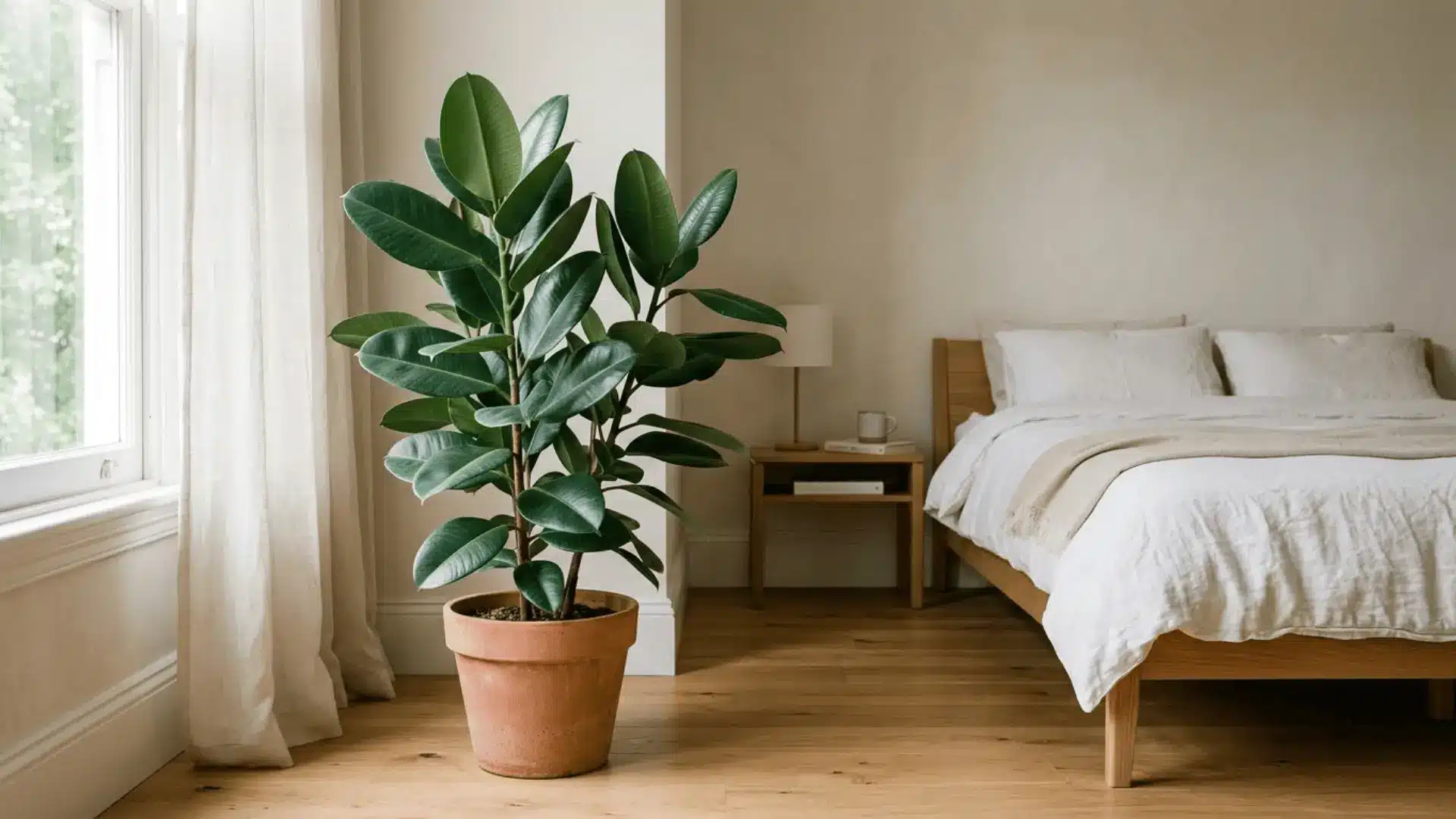
A rubber plant isn’t just sitting pretty in your bedroom corner. It’s quietly doing a few things that genuinely make your space feel better to be in.
From air filtration to mood, the indoor rubber plant benefits go further than most people expect.
1. Improves Indoor Air Quality
Rubber plants absorb indoor pollutants like formaldehyde and VOCs through their leaves and root systems. Their broad, waxy leaves increase surface area, making them more effective than smaller-leaved plants.
The NASA Clean Air Study specifically identifies Ficus elastica as a houseplant that filters airborne toxins in enclosed spaces, though the effect is most pronounced in well-sealed rooms.
2. May Support a Better Sleep Environment
Cleaner air means your body isn’t working overtime while you sleep. Beyond that, there’s something about having greenery in your bedroom that naturally softens the space and makes it feel more restful.
Having a rubber plant in your room sets a calmer, more grounded tone as you wind down for the night.
3. Adds Humidity to Dry Air
Through transpiration, rubber plants release moisture into the air as part of their natural growth process.
In rooms with dry air, especially during winters or in air-conditioned spaces, this subtle humidity boost can ease breathing, reduce dryness in the throat, and make your sleep environment noticeably more comfortable.
4. Reduces Stress and Lifts Your Mood
There’s a reason biophilic design keeps showing up in bedroom inspo boards. Being around greenery has a way of making a space feel less clinical and more alive.
A rubber plant, with its bold leaves and quiet presence, adds that visual softness that makes a bedroom feel like an actual retreat rather than just a room you sleep in.
Is Rubber Plant Safe in the Bedroom?
A rubber plant is generally safe for most people, but there are a few things worth knowing before you bring one into your sleep space.
It’s less about danger and more about knowing your household.
Toxicity and Allergies
The rubber plant’s milky sap is the main thing to watch. It’s toxic to pets if ingested and can irritate skin on direct contact. Anyone with latex sensitivity may also react when handling it.
That said, simply having it in your room is fine for most people. Wear gloves while repotting, and keep it out of your pet’s reach.
The Oxygen Myth
Plants produce oxygen through photosynthesis, but that process needs light, so it slows down significantly at night.
The real bedroom benefit is more subtle: a gradual improvement in air quality and the quiet psychological comfort of having greenery nearby. Both are worth having, but not the dramatic overnight oxygen boost often discussed.
Who Should Avoid It?
- Pet owners whose cats or dogs have free roam of the bedroom
- Latex-sensitive individuals who may react to the plant’s sap
- Allergy-prone people who notice irritation around certain houseplants
Does a Rubber Plant Affect Sleep Quality?
Not directly, but the conditions it creates do make a difference.
Cleaner air and added humidity support easier breathing through the night, and the visual calm of having greenery in your space genuinely helps you wind down.
On the flip side, overwatering can lead to mold, which does the opposite of helping your sleep environment.
Placement matters, too. Poor airflow around the plant can make a small room feel stuffy.
Think of it as a quiet, indirect contributor to better sleep rather than a fix.
Best Placement for Rubber Plant in Bedroom
Where you put your rubber plant matters just as much as having one.
Get the placement right, and it thrives quietly in the background; get it wrong, and you’ll notice the difference in both the plant and the room.
Placement also carries more weight than aesthetics alone, particularly through the lens of rubber plant feng shui, where the east and southeast directions are considered most favorable for positive energy and abundance.
| Placement | Ideal Condition | Avoid |
|---|---|---|
| Light | Bright, indirect light near a window | Direct harsh sunlight or dark corners |
| Distance from bed | A few feet away | Right next to your pillow if you’re sensitive |
| Airflow | Stable room temperature, away from drafts | AC vents or cold windowsills in winter |
| Sunlight hours | 4 to 6 hours of filtered light daily | Rooms with little to no natural light |
| Vastu/Feng Shui | East or southeast-facing window | North or southwest, considered less favorable |
How to Care for a Rubber Plant in the Bedroom?
A rubber plant is forgiving, but it does have its preferences. Stay consistent with the basics, and it will reward you with steady, lush growth without demanding much in return.
1. Light Requirements
Rubber plants are adaptable, but do their best with the right light conditions. Keep these in mind:
- Place near a window with bright, indirect light
- Rotate the pot every few weeks for even growth on all sides
- Wipe dust off leaves regularly so they can absorb light efficiently
- Tolerates low light but grows more slowly and loses vibrancy over time
2. Watering Schedule
Overwatering is the most common mistake with rubber plants. A simple rule: check the topsoil before you water, not the calendar.
| Factor | Ideal Practice | Warning Sign |
|---|---|---|
| Frequency | Water when the top inch of soil feels dry | Watering on a fixed schedule regardless of soil moisture |
| Season | More frequent in summer, reduced in winter | Watering the same amount year-round |
| Pot type | Use a pot with drainage holes | Water is pooling at the bottom with no way to escape |
| Overwatering | Let the soil breathe between waterings | Yellowing leaves and a soggy soil surface |
| Underwatering | Water thoroughly when the soil is dry to the touch | Drooping leaves and soil pulling away from pot edges |
3. Temperature and Humidity
Rubber plants thrive at 15-24°C, ideal for bedrooms. Keep them away from cold drafts, open windows at night, or air conditioning vents.
If your space tends to run dry, an occasional misting or a pebble tray with water nearby can help maintain the moisture level they appreciate.
4. Cleaning the Leaves
The rubber plant’s glossy leaves, though attractive, collect dust rapidly, blocking light and air filtration. Wiping them with a damp cloth every few weeks improves its health.
It keeps the plant functioning well, and honestly, it keeps it looking the way it deserves to in a well-put-together bedroom.
Common Problems and How to Fix Them?
Even low-maintenance plants run into trouble sometimes.
Rubber plants are pretty vocal about what they need, and most issues are easy to turn around once you know what to look for.
Problem 1: Why are My Rubber Plant’s Leaves Turning Yellow?
The Fix: This is almost always a watering issue. Cut back, let the top inch of soil dry out completely before the next watering, and make sure your pot has proper drainage so the roots aren’t sitting in moisture.
Problem 2: Why is My Rubber Plant Dropping Leaves?
The Fix: Your plant isn’t getting enough light. Move it closer to a window with bright, indirect light and give it a few weeks to stabilize, as some initial shedding during the adjustment period is normal.
Problem 3: Why Do My Rubber Plant’s Leaves Have Brown Edges?
The Fix: The air around your plant is too dry. Place a pebble tray filled with water near the pot, mist the leaves occasionally, or move it away from air conditioning vents that pull moisture out of the air.
Problem 4: Why Does My Rubber Plant Have Sticky Residue or Webbing on The Leaves?
The Fix: That’s a pest problem, likely spider mites or mealybugs. Wipe the leaves down with a damp cloth, treat with neem oil or a mild insecticidal soap, and isolate it from other plants until it clears up.
Rubber Plant Bedroom Setup Ideas
A rubber plant is one of those rare picks that’s as much a design choice as it is a wellness one.
Here are a few ways to style it well:
- The Minimalist Corner: Place a tall rubber plant in a matte black or terracotta planter in an empty corner to anchor the room without cluttering it.
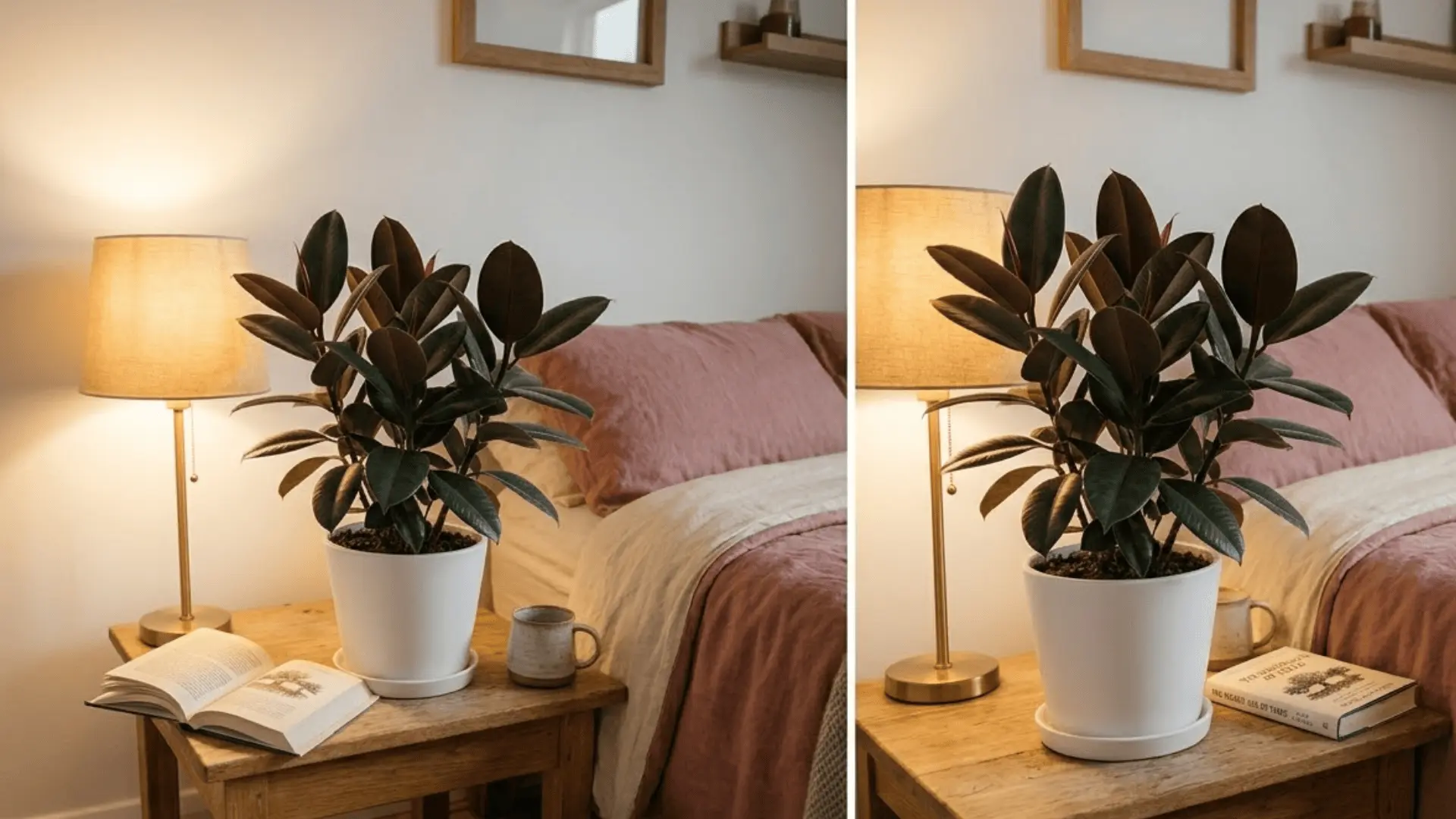
- The Bedside Statement: A smaller rubber plant on a side table adds organic texture right where you wind down each night.
- Neutral Decor Pairing: Deep burgundy or dark green rubber plant varieties sit beautifully against white, beige, or warm grey bedroom palettes.
- Decorative Planters: The plant is striking enough to deserve a thoughtful pot; woven baskets, ceramic vessels, or concrete planters all work well, depending on your aesthetic.
- Layered Greenery: Pair your rubber plant with a smaller trailing plant nearby to create depth without making the space feel overcrowded.
However you style it, the rubber plant has a way of making a bedroom feel more considered and lived-in, without trying too hard.
Rubber Plant vs. Other Bedroom Plants
Not every plant suits every bedroom or every person.
Here’s how the rubber plant stacks up against two other popular bedroom picks so you can choose what actually fits your space and lifestyle.
| Factor | Rubber Plant | Snake Plant | Peace Lily |
|---|---|---|---|
| Air Purification | Filters formaldehyde and VOCs | Broader range: formaldehyde, benzene, xylene | Targets ammonia, benzene, and formaldehyde |
| Night Oxygen | Slows at night | Produces oxygen at night (CAM photosynthesis) | Minimal at night |
| Pet Safety | Toxic to pets | Toxic to pets | Toxic to pets |
| Maintenance | Low | Very low | Moderate |
| Best for | Design-forward bedrooms, air quality | Low light spaces, night oxygen | Humid, darker rooms |
Final Thoughts
Keeping a rubber plant in your bedroom is a quiet, low-effort way to make your space feel more intentional.
It won’t overhaul your sleep overnight, but what it does bring, cleaner air, a touch of humidity, and that grounding visual calm, adds up in ways you actually notice over time.
If you’ve been on the fence, consider this your nudge. Pick the right spot, water it mindfully, and let it settle in.
Have a rubber plant in your bedroom already? Drop your experience in the comments below.