Tired of constantly mowing, watering, and replanting your yard?
River rocks might be the simple fix you need. These smooth, naturally beautiful stones bring texture and style to any outdoor space without demanding your weekends.
From dry creek beds that handle drainage to clean borders that frame your garden, river rocks work hard while looking effortless.
This guide walks you through practical ideas, shows you how to install them right, and helps you avoid the mistakes that waste time and money.
Let’s turn your yard into a space you actually enjoy.
What is River Rocks Landscaping?
River rocks are smooth, rounded stones formed naturally over thousands of years by flowing water.
These stones come in many colors, from soft gray and beige to warm brown and rust tones, making them easy to match with any outdoor style.
Unlike sharp-edged gravel or crushed stone, river rocks have a polished, organic look that feels calm and natural. They work well in landscaping because they add texture without looking harsh.
Their smooth surface also means they stay in place better than smaller materials and create a clean, finished appearance around plants, walkways, and garden beds.
Benefits of Using River Rocks in Landscaping

Once you understand what river rocks are and how they differ from other materials, it’s easy to see why so many homeowners are making the switch. Here’s what makes river rocks such a wise choice for your outdoor space.
- Low upkeep compared to organic ground cover: River rocks don’t need watering, trimming, or replacing like mulch or grass, saving you time and effort year after year.
- Helps with drainage and erosion control: Water flows easily through river rocks, preventing puddles and soil washout, especially on slopes or near downspouts.
- Adds contrast and structure to outdoor spaces: The solid texture and varied colors of river rocks create visual interest and define different zones in your yard.
- Long-lasting and weather-resistant: River rocks don’t fade, rot, or break down in sun, rain, or snow, keeping your landscape looking fresh for decades.
Types and Sizes of River Rocks
Before you start shopping, it helps to understand the different types and sizes available. Choosing the right river rock for your project depends on both the look you want and how you plan to use it.
| Type/Size | Size Range | Best For | Look & Function |
|---|---|---|---|
| Small & Pea-Sized | 0.25 to 0.5 inches | Pathways, ground cover, between pavers | Smooth, uniform, easy to spread, and walk on |
| Medium Rocks | 1 to 3 inches | Garden beds, borders, drainage | Balanced texture; stays in place, prevents weeds |
| Large Rocks | 4 to 8+ inches | Accents, focal points, dry creek beds | Bold statement; anchors design, reduces erosion |
| Polished Finish | Any size | Modern spaces, water features | Glossy, rich color; reflects light |
| Natural Finish | Any size | Traditional, rustic gardens | Matte, earthy; blends with nature |
How Size Choice Affects Appearance and Function: Small rocks create soft, flowing looks but can shift easily. Medium rocks balance coverage and texture for most projects. Large rocks make bold statements and stay in place but cover less area per stone.
River Rock Landscaping Ideas for Stylish Outdoor Spaces
Ready to see river rocks in action? Here are 18 practical and stylish ways to use them throughout your property, from simple accents to complete landscape modifications.
1. River Rock Garden Bed Borders
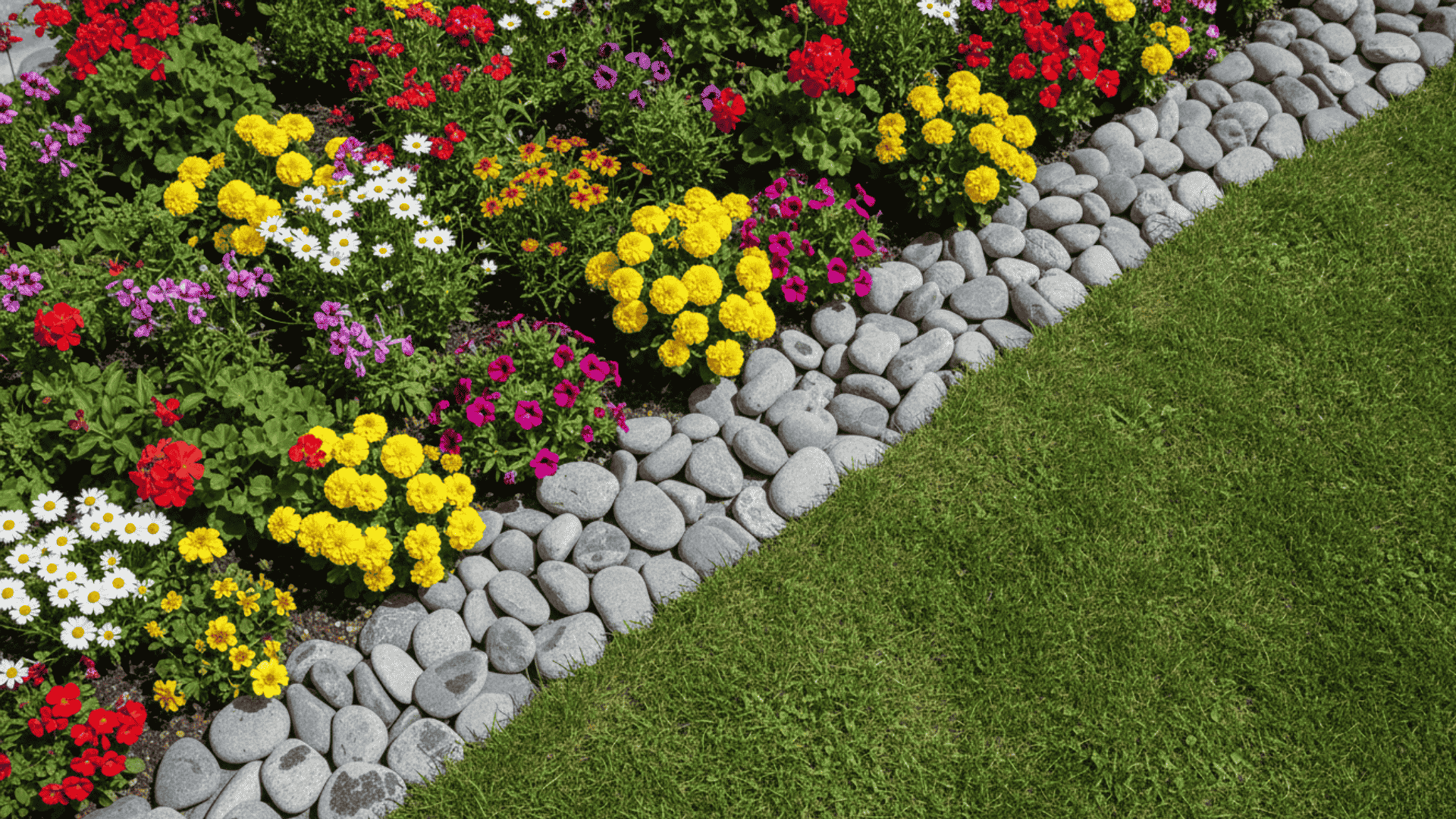
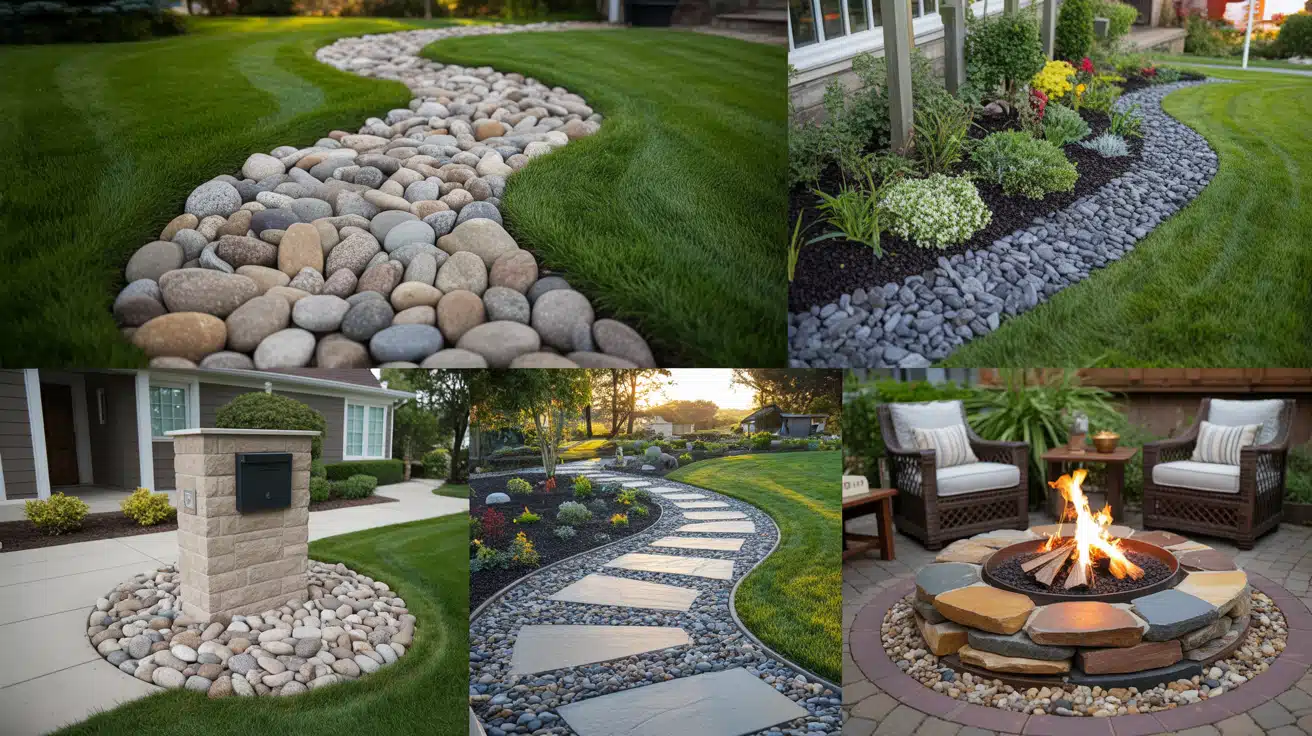
Create clean lines around your garden beds by lining the edges with medium river rocks. This defines planting areas while keeping mulch and soil contained. The contrast between soft plants and smooth stones adds visual interest to any garden.
- Maintenance: Occasionally reposition rocks after heavy rain or gardening work.
- Best Rock Size: 2 to 4 inches for clear definition.
- Pro Tip: Use landscape fabric underneath to prevent weeds from growing through.
2. Dry River Bed Landscaping Design
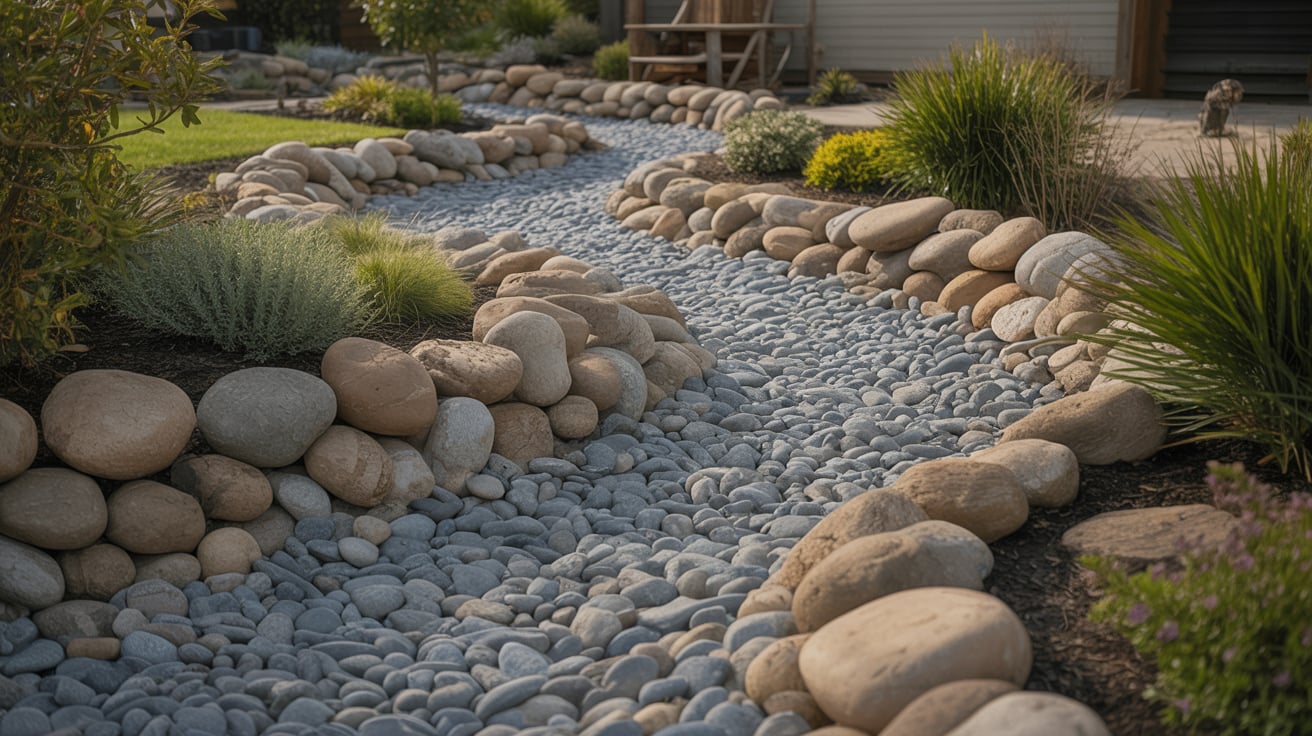
Mimic a natural streambed by arranging river rocks in a winding pattern through your yard. Mix different sizes to create depth, with larger rocks on the edges and smaller stones in the center. This design handles drainage beautifully while adding a natural feature.
- Maintenance: Rake stones back into place after storms; remove debris seasonally.
- Best Rock Size: Mix of small (1 inch), medium (3 inches), and large (6+ inches).
- Pro Tip: Add native grasses or plants along the edges for a realistic look.
3. Front Yard River Rock Accents
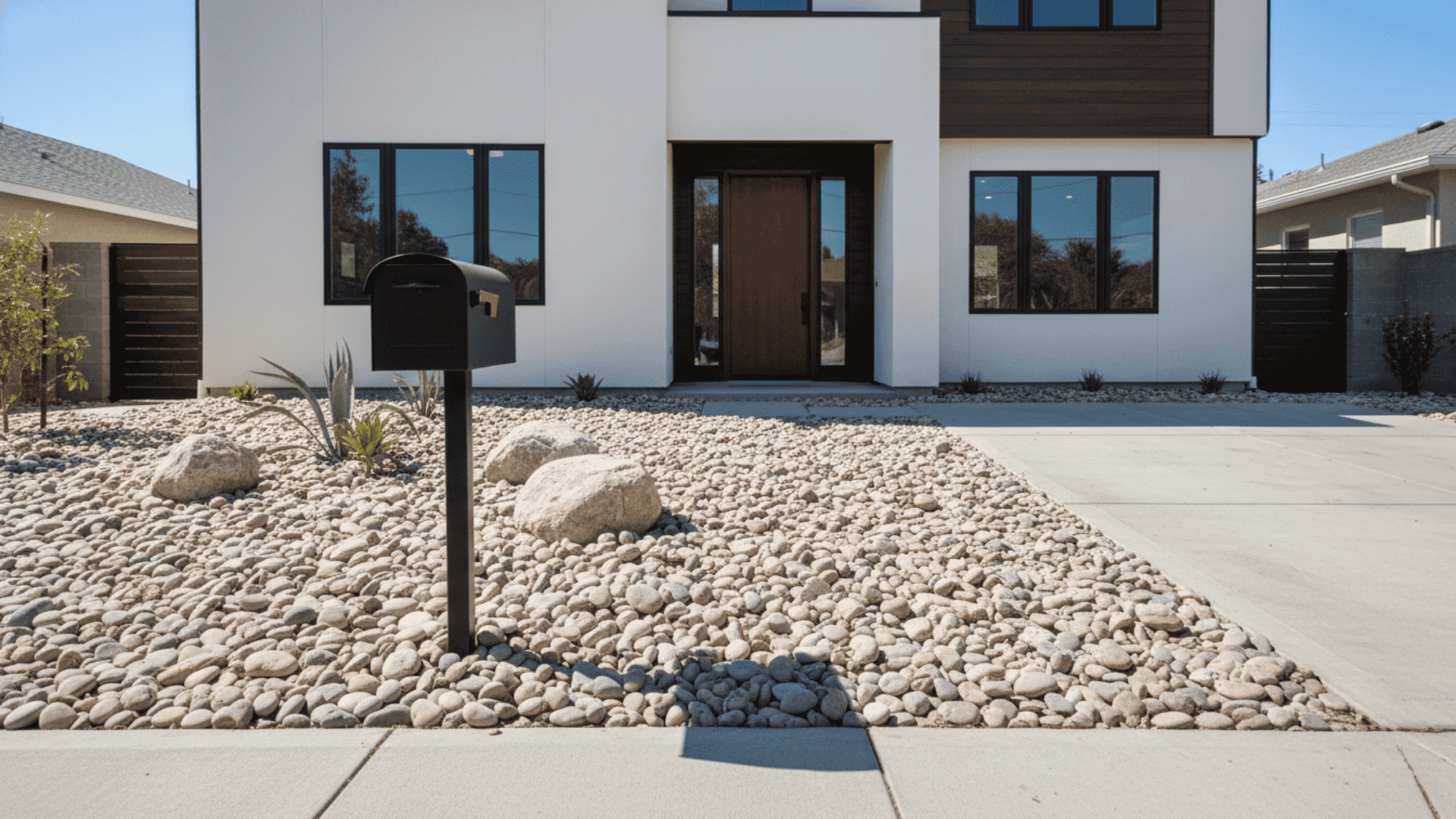
Replace high-maintenance grass patches with river rock zones in your front yard. Use them around mailboxes, lamp posts, or along the driveway edge. This reduces mowing time and creates a polished, low-effort curb appeal.
- Maintenance: Blow off leaves and debris; rinse rocks once or twice a year.
- Best Rock Size: 1 to 3 inches for balanced coverage.
- Pro Tip: Choose neutral tones that complement your home’s exterior colors.
4. River Rock Walkway Edging
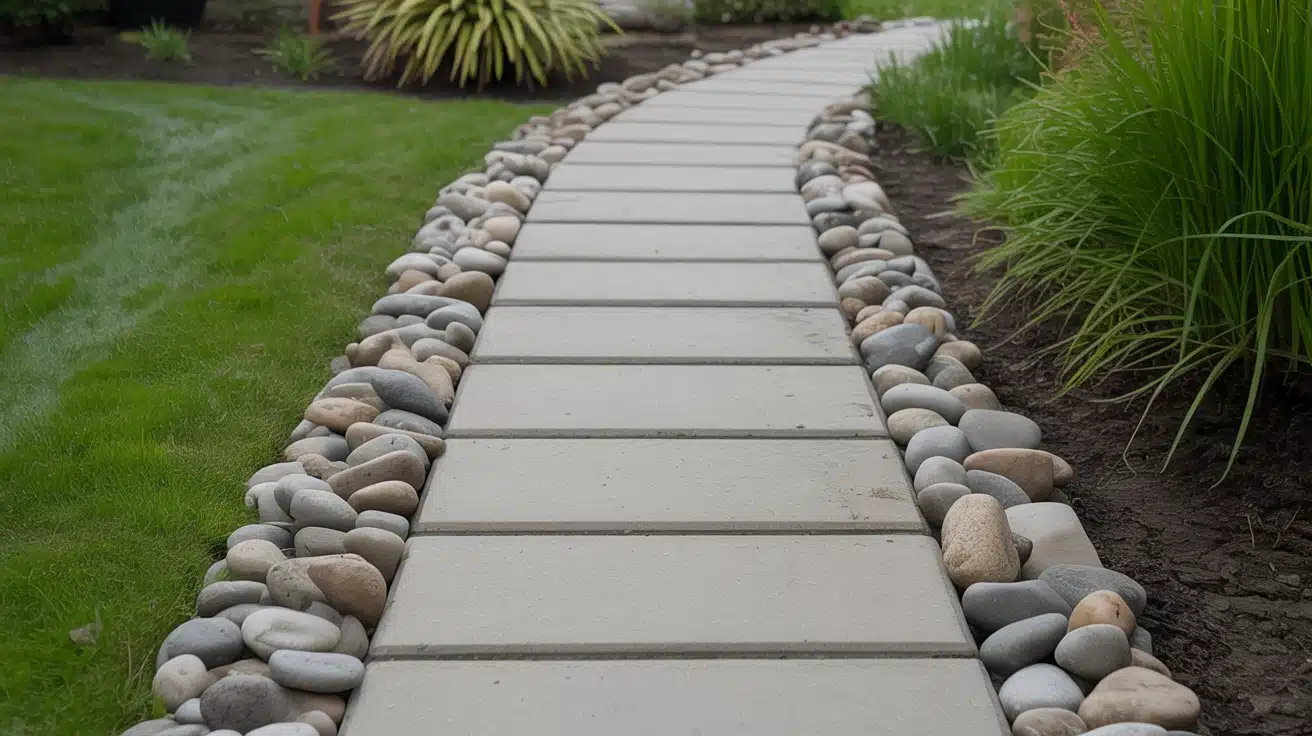
Line both sides of your garden path or walkway with river rocks to create a clear boundary. This prevents grass from creeping onto the path and gives your walkway a finished, intentional look. It works with concrete, gravel, or paver paths.
- Maintenance: Keep edges tidy by removing soil buildup and weeds.
- Best Rock Size: 2 to 4 inches for visibility and impact.
- Pro Tip: Install metal or plastic edging first to hold rocks in place.
5. Rock Mulch Around Trees
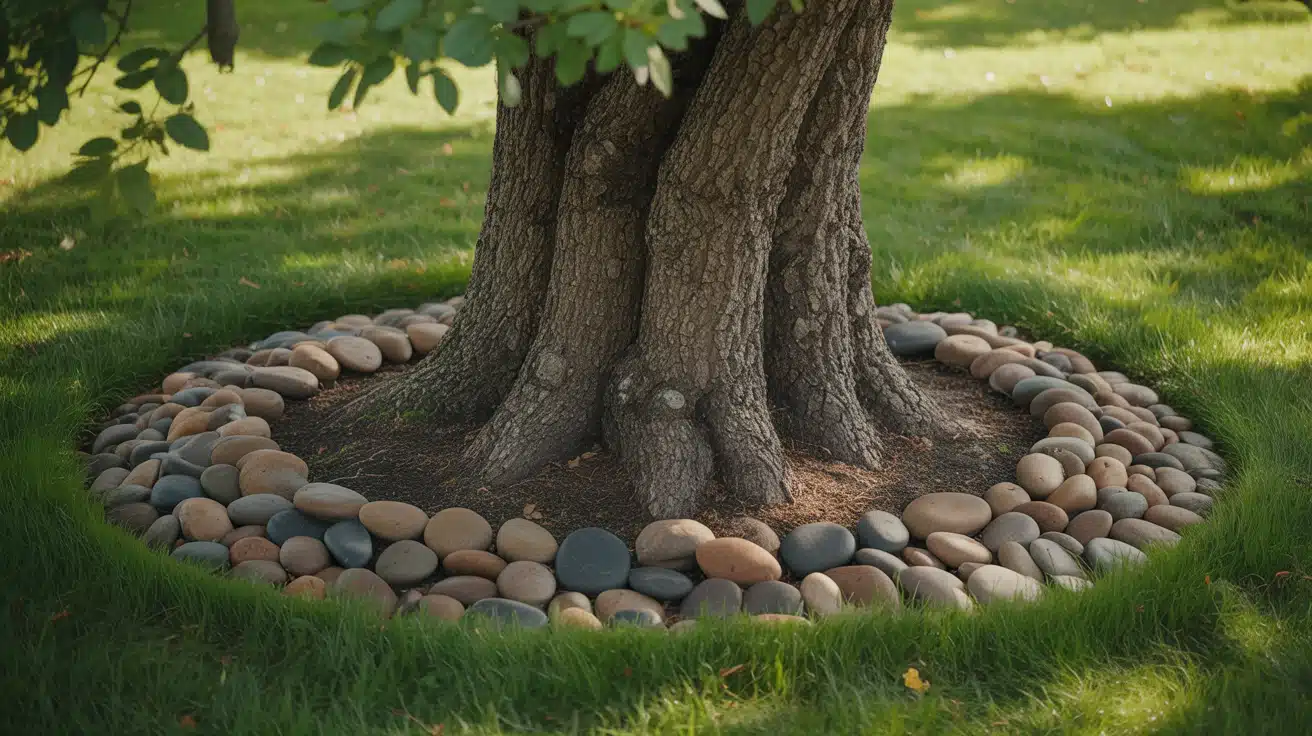
Spread river rocks in a circle around tree trunks instead of traditional mulch. This keeps moisture in the soil, prevents weed growth, and looks neat year-round. Unlike wood mulch, river rocks won’t decompose or attract pests.
- Maintenance: Avoid piling rocks against the trunk; leave a few inches of space.
- Best Rock Size: 1 to 2 inches for even coverage.
- Pro Tip: Use darker rocks to absorb heat in cooler climates or lighter ones in hot areas.
6. River Rock Flower Bed Replacement
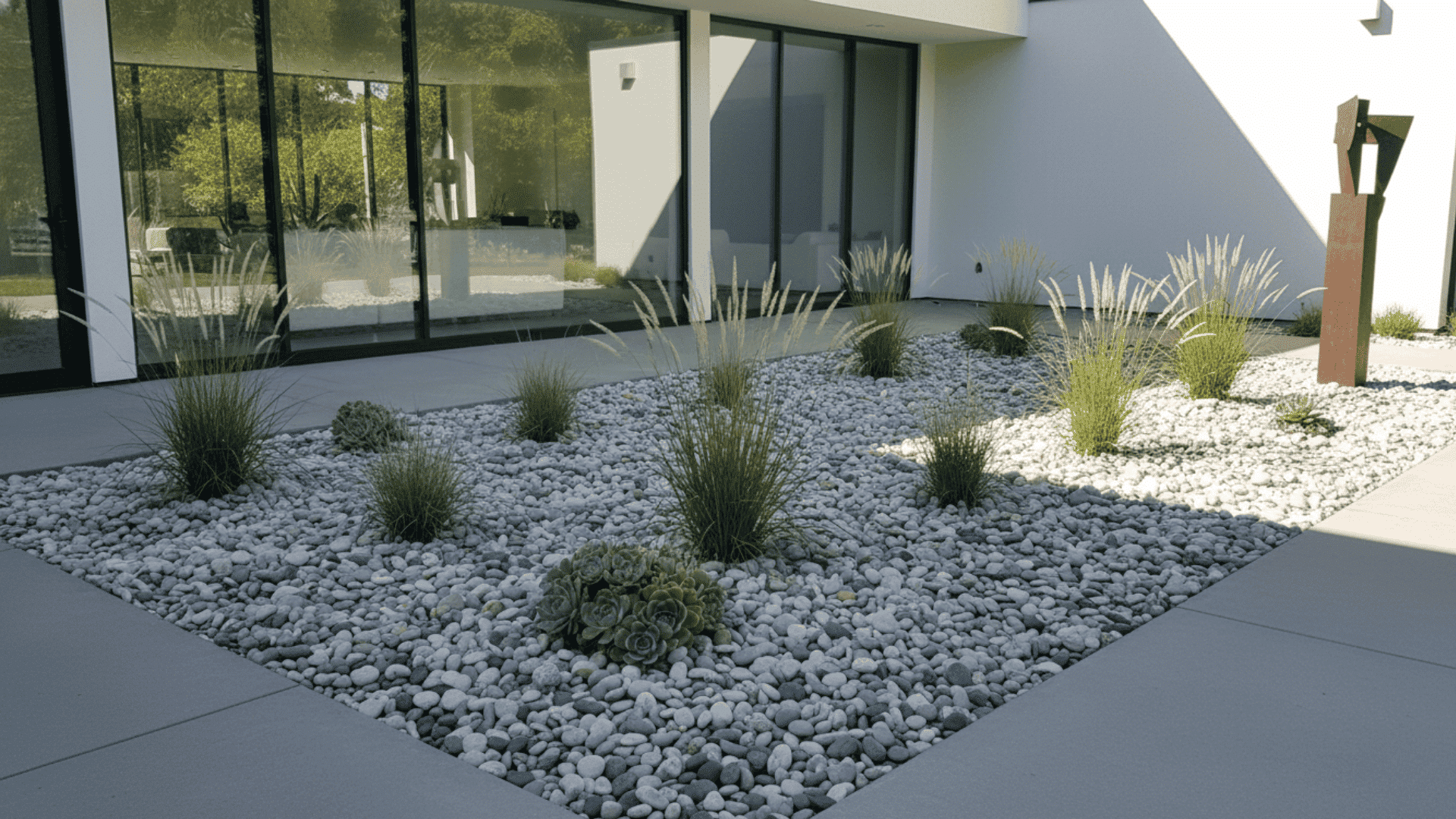
Swap out tired flower beds with river rock displays for a modern, minimal look. Add a few statement plants like succulents or ornamental grasses for color. This works well in areas where flowers struggle to grow.
- Maintenance: Pull occasional weeds; refresh plants as needed.
- Best Rock Size: 2 to 3 inches for texture without overwhelming plants.
- Pro Tip: Group rocks in odd numbers for a more natural arrangement.
7. Decorative Drainage Channels
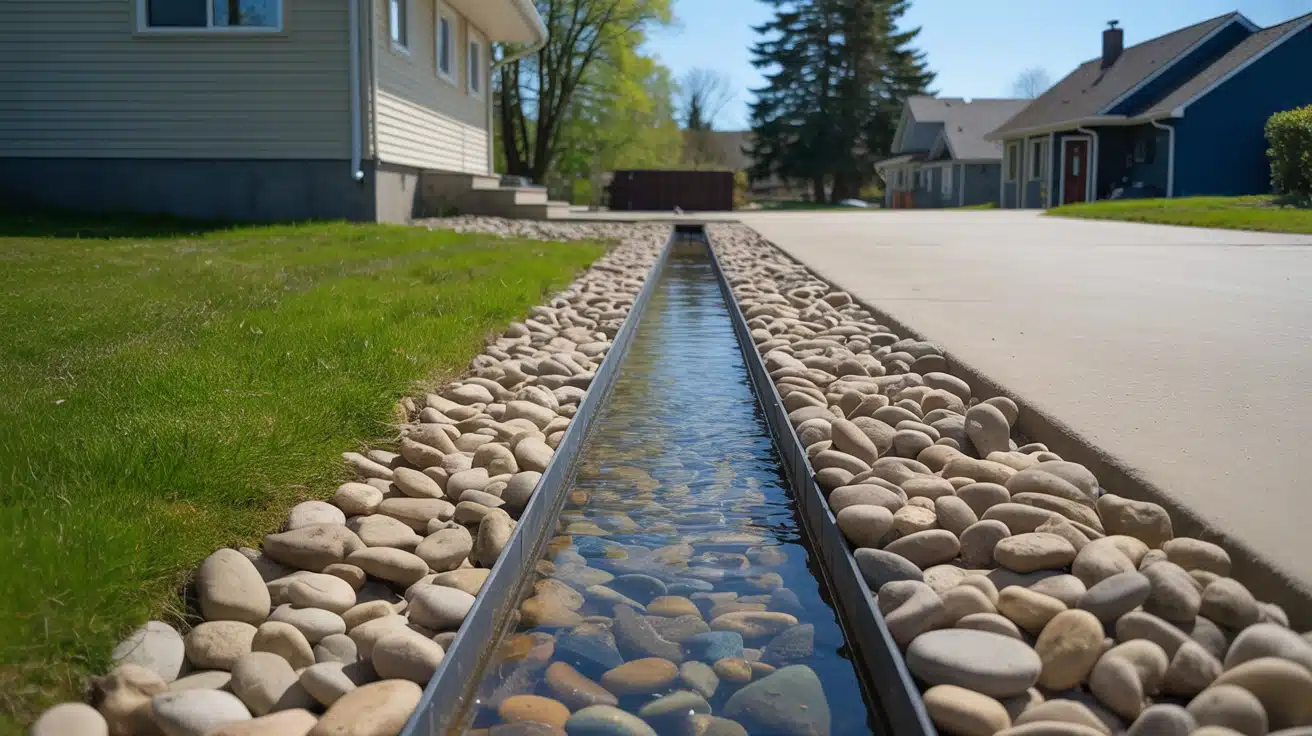
Turn a functional drainage ditch into a feature by filling it with river rocks. This manages water runoff while looking intentional and stylish. Line the channel with landscape fabric first to prevent rocks from sinking into mud.
- Maintenance: Clear out leaves and silt after heavy rains.
- Best Rock Size: 3 to 5 inches to handle water flow and stay in place.
- Pro Tip: Add a few larger rocks as anchors at bends or low points.
8. River Rock Patio Accents
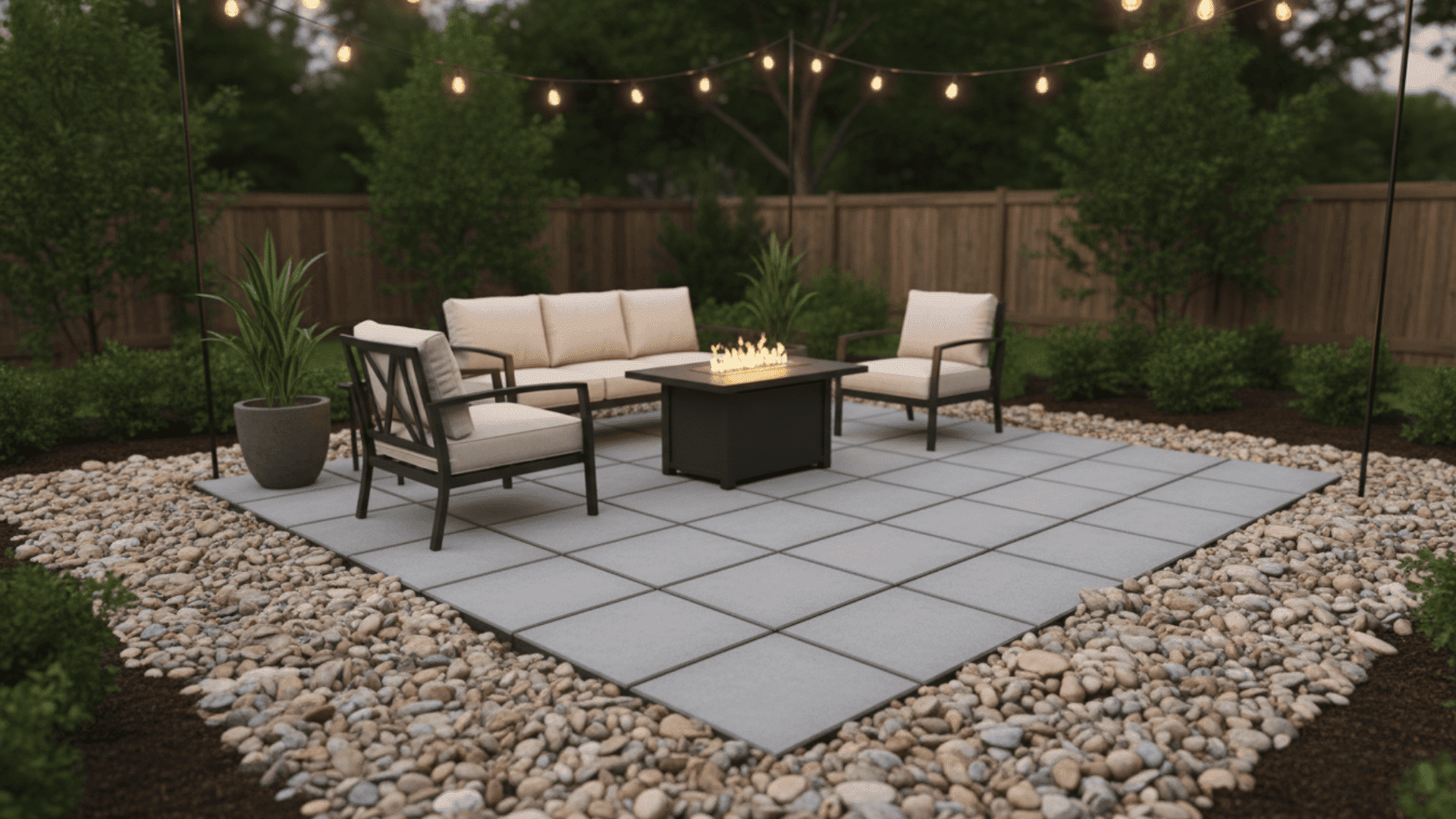
Frame your patio or deck with a border of river rocks to soften hard edges. You can also fill gaps between patio stones or create small rock gardens in corners. This adds texture and ties your patio to the surrounding landscape.
- Maintenance: Sweep rocks back into place; rinse to remove dust.
- Best Rock Size: 1 to 2 inches for easy placement in tight spots.
- Pro Tip: Match rock colors to your patio material for a cohesive look.
9. Fire Pit Surround With River Rocks

Circle your fire pit with river rocks to create a safe, attractive buffer zone. The rocks absorb heat and prevent grass or plants from getting too close to flames. This also defines the fire pit area visually.
- Maintenance: Check for shifting after use; keep flammable debris cleared.
- Best Rock Size: 3 to 6 inches for heat resistance and stability.
- Pro Tip: Use heat-tolerant rocks and avoid river rocks that may crack under extreme heat.
10. River Rock Water Feature Edging
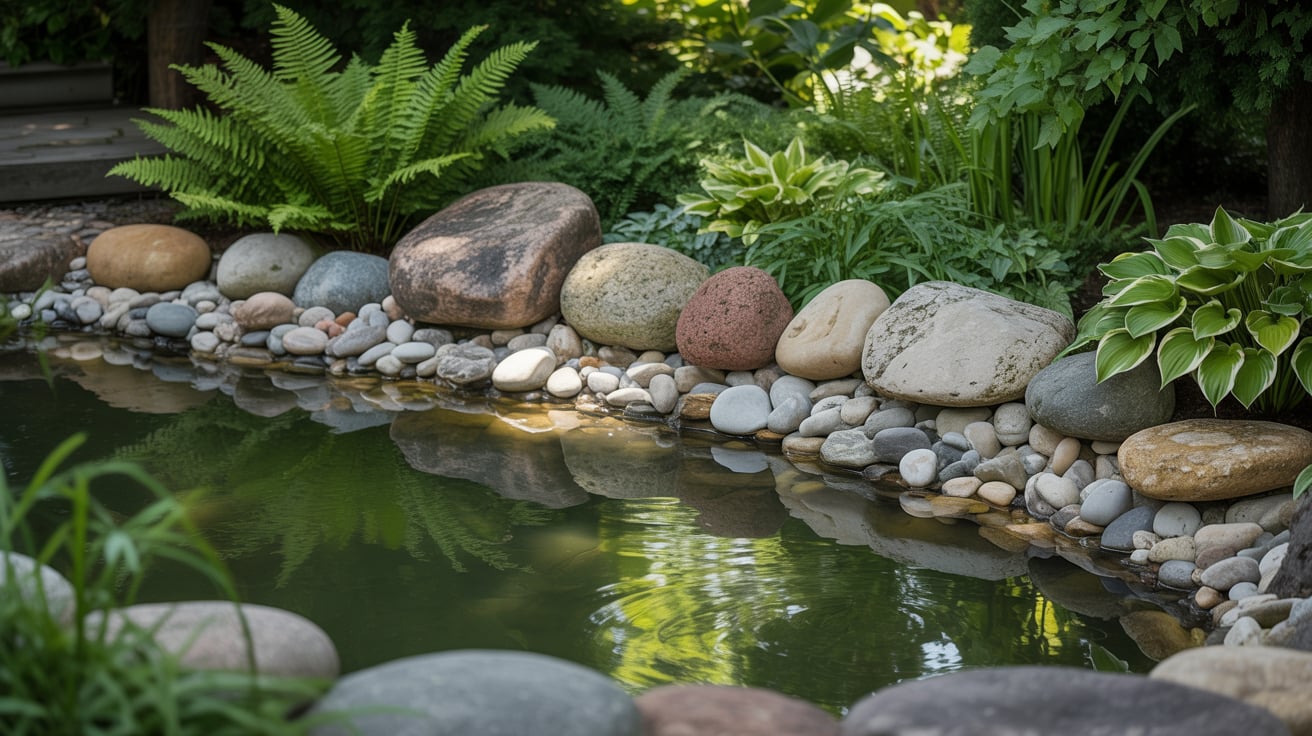
Outline ponds, fountains, or waterfalls with river rocks to create a natural transition. The rocks hide pond liners and blend the water feature into the landscape. Their smooth texture complements flowing water perfectly.
- Maintenance: Remove algae buildup; reposition rocks that slip into the water.
- Best Rock Size: 4 to 8 inches for a bold, natural look.
- Pro Tip: Layer rocks at different heights for a more realistic shoreline effect.
11. Sloped Yard Erosion Control
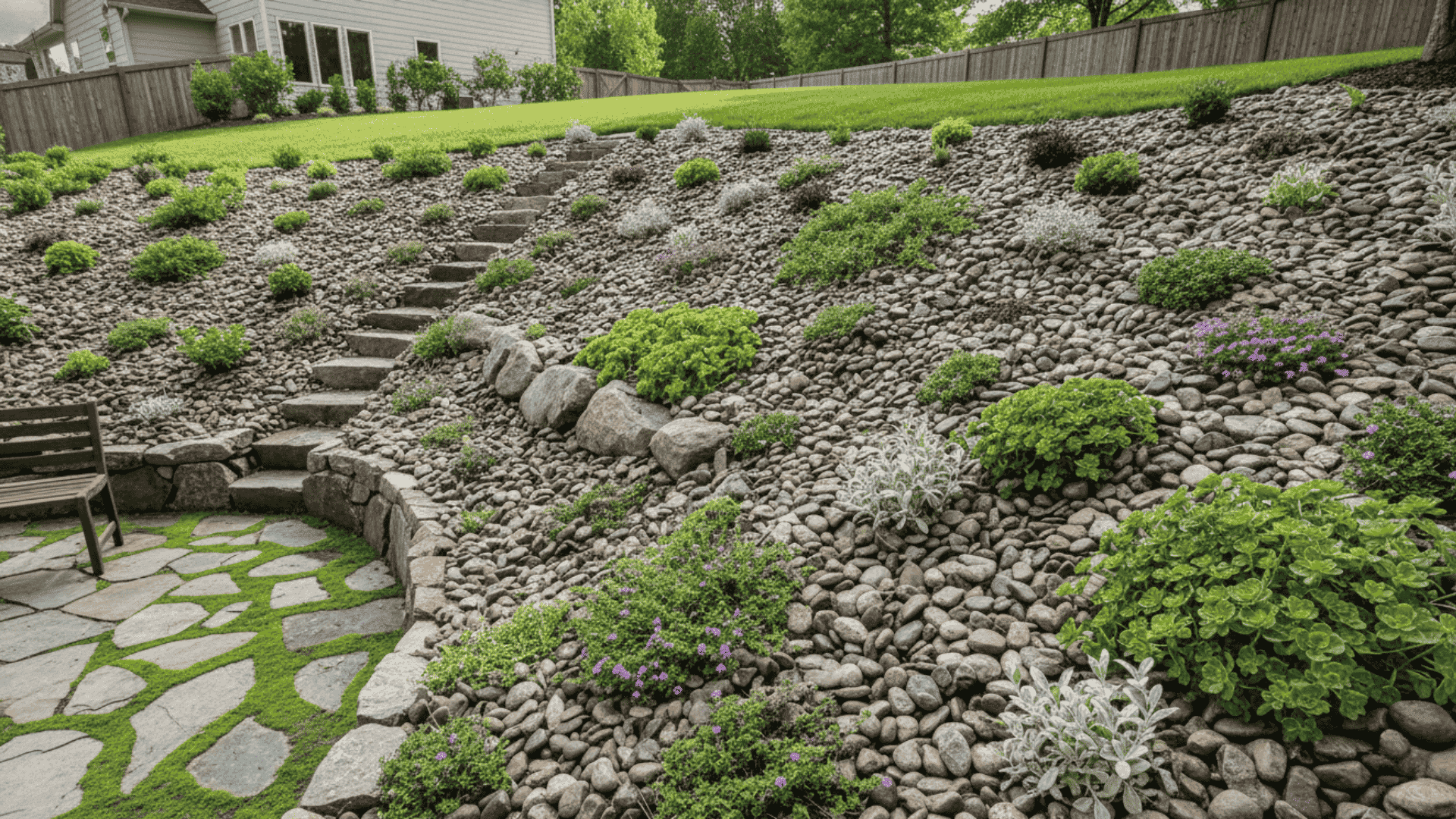
Cover sloped areas with river rocks to prevent soil from washing away during rain. The rocks slow down water flow and hold the ground in place. This is especially useful on hillsides or beside driveways.
- Maintenance: Check after storms for shifting; add more rocks if needed.
- Best Rock Size: 3 to 5 inches for weight and coverage.
- Pro Tip: Plant ground cover between rocks for added stability and greenery.
12. Zen-Inspired River Rock Garden
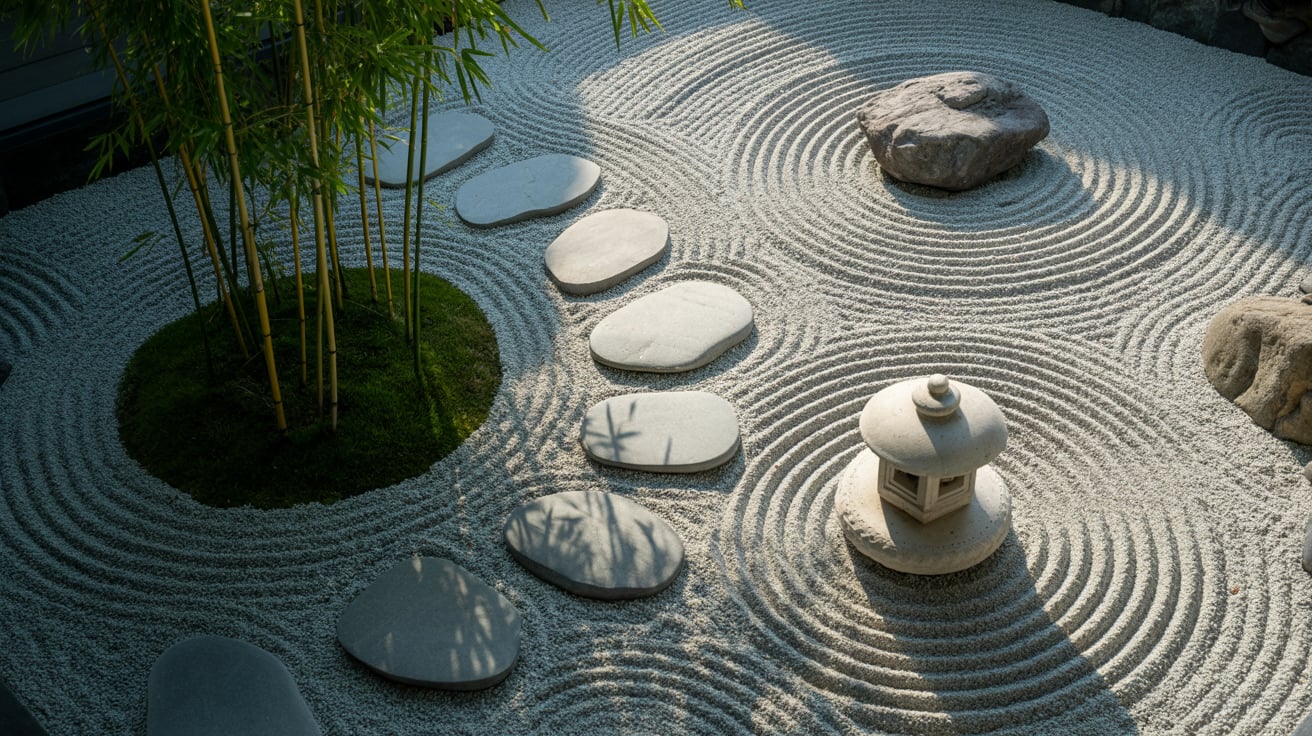
Design a calm, meditative space using river rocks as the main element. Arrange them in patterns or circles, and pair them with minimal plants like bamboo or ferns. This style emphasizes simplicity and balance.
- Maintenance: Rake rocks into patterns; keep the area free of clutter.
- Best Rock Size: 1 to 3 inches for raking and shaping.
- Pro Tip: Use white or light gray rocks for a classic Zen garden feel.
13. River Rock Stepping Stone Layouts
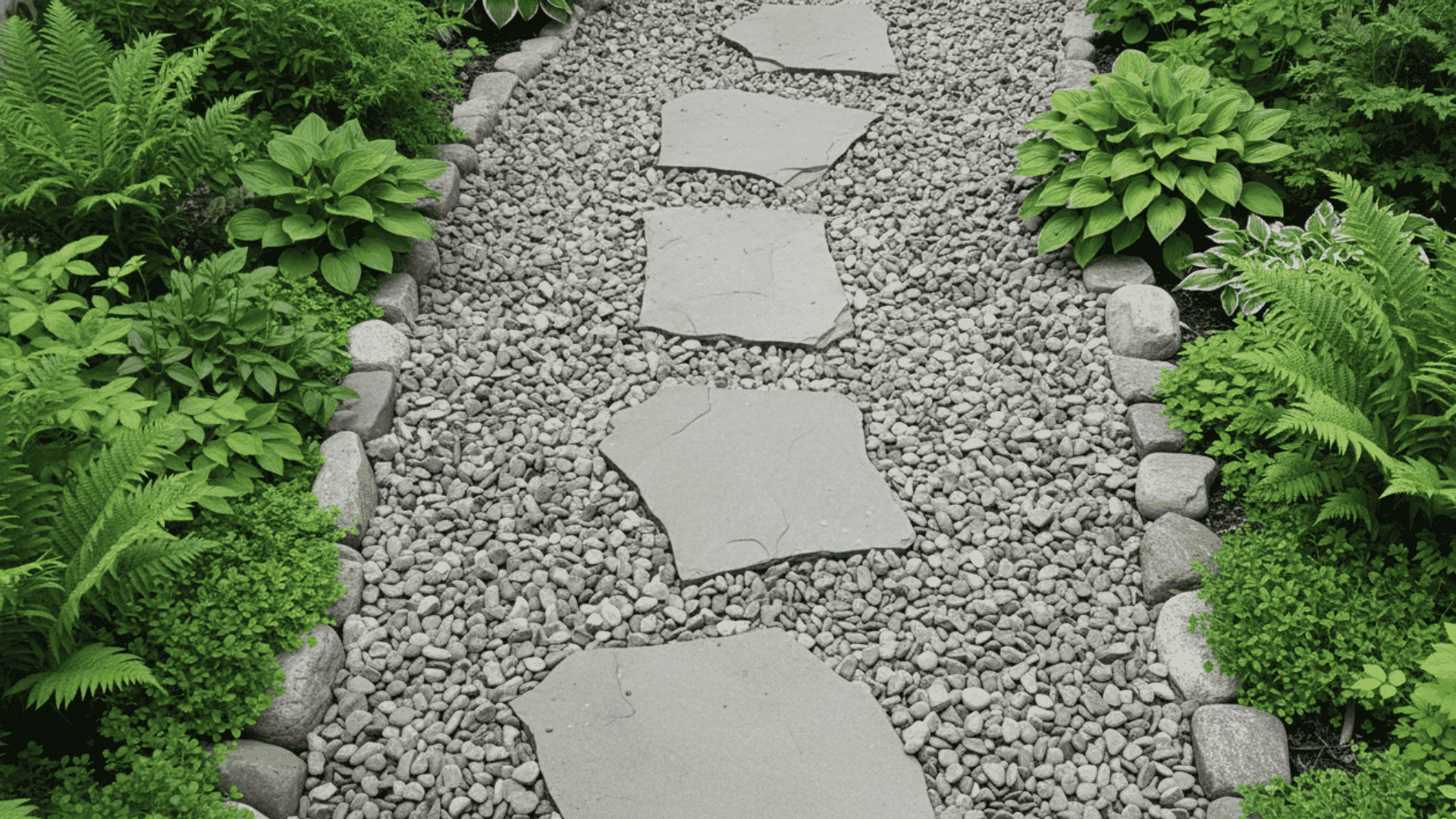
Place large, flat river rocks as stepping stones through garden beds or across lawns. Fill the spaces between stones with smaller river rocks for contrast and to prevent mud. This creates functional paths that look natural.
- Maintenance: Level stones that sink over time; top up small rocks as needed.
- Best Rock Size: Large flat stones (8+ inches) for steps; small (0.5 to 1 inch) for fill.
- Pro Tip: Space stepping stones 18 to 24 inches apart for comfortable walking.
14. Backyard Seating Area Accents
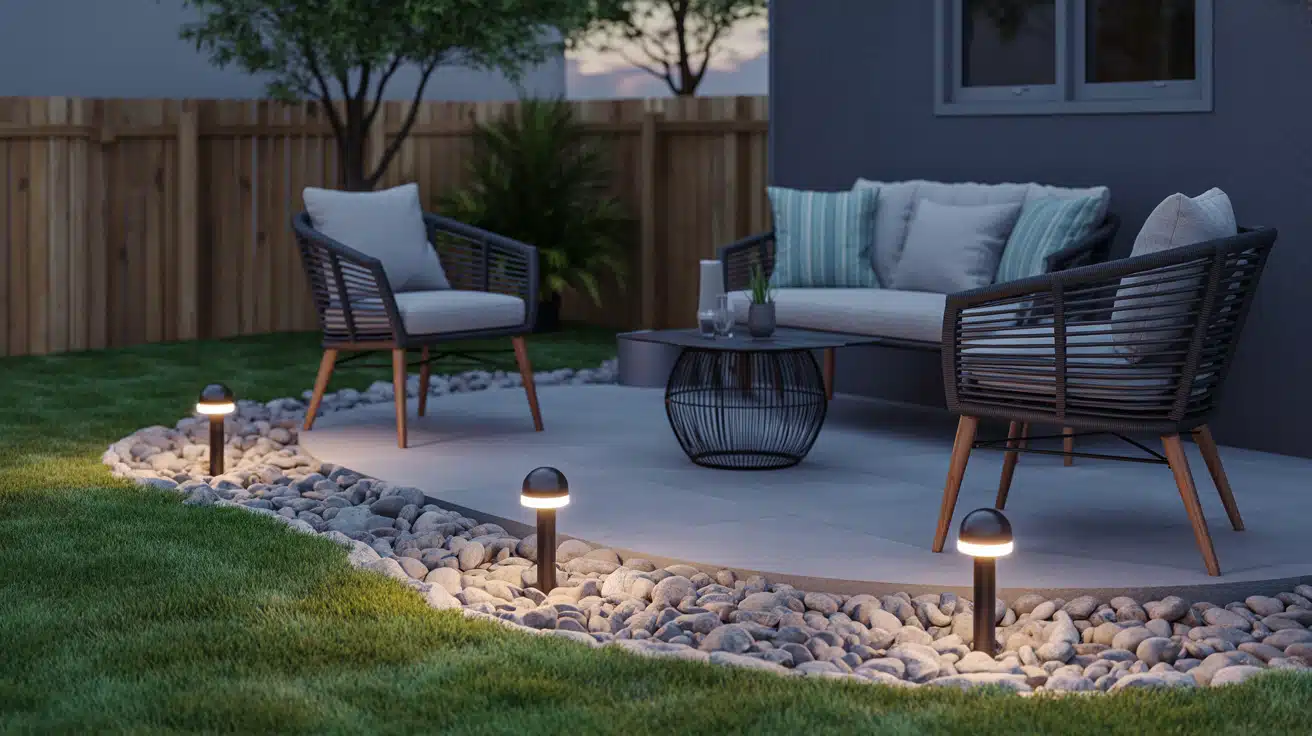
Surround benches, swings, or outdoor chairs with river rocks to define relaxation zones. This creates a clean base that doesn’t get muddy and separates seating from grass or garden areas. It also reduces the need for constant lawn care around furniture.
- Maintenance: Keep rocks level; remove leaves and dirt regularly.
- Best Rock Size: 2 to 3 inches for comfort and coverage.
- Pro Tip: Add solar lights between rocks for nighttime ambiance.
15. River Rock Between Pavers
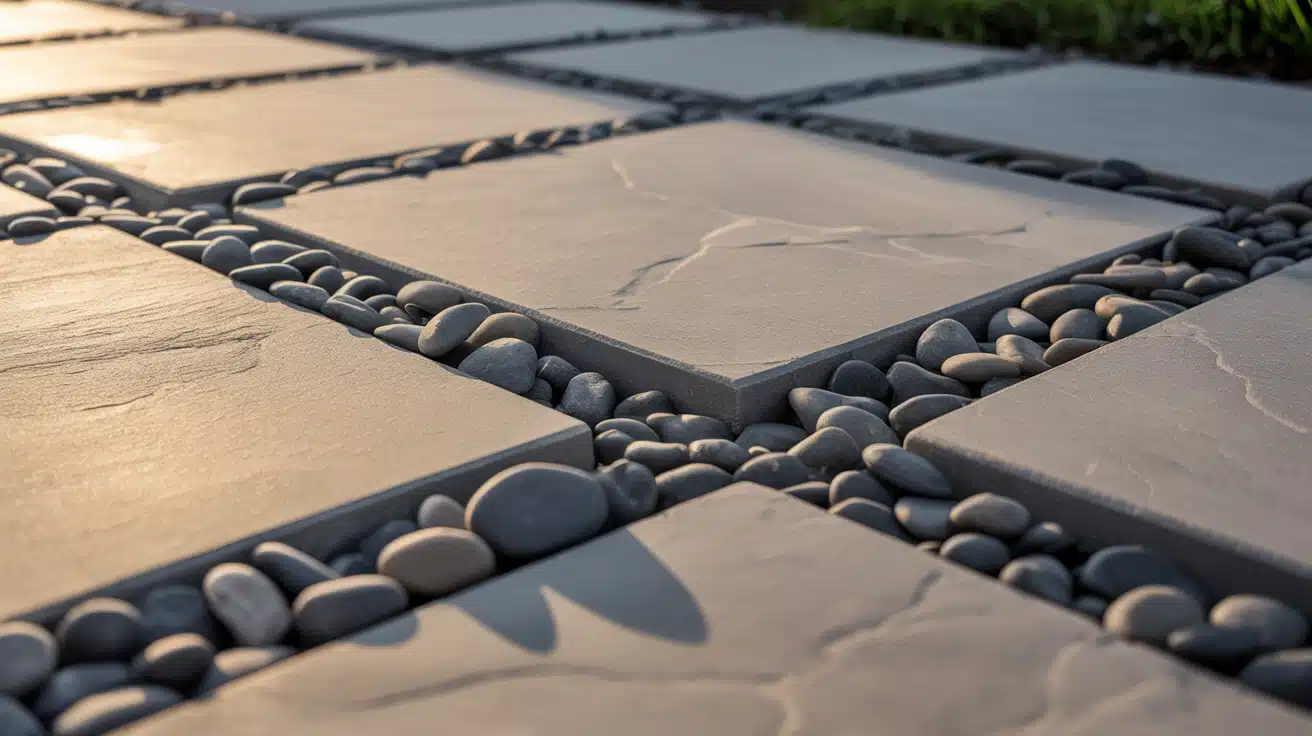
Fill the gaps between patio pavers or stepping stones with small river rocks instead of sand or gravel. This prevents weeds, improves drainage, and adds texture. The contrast between flat pavers and rounded rocks looks intentional and polished.
- Maintenance: Top up rocks that settle; sweep surface clean.
- Best Rock Size: 0.5 to 1 inch to fit snugly between pavers.
- Pro Tip: Choose a color that contrasts with your pavers for visual pop.
16. River Rock Rain Garden Base
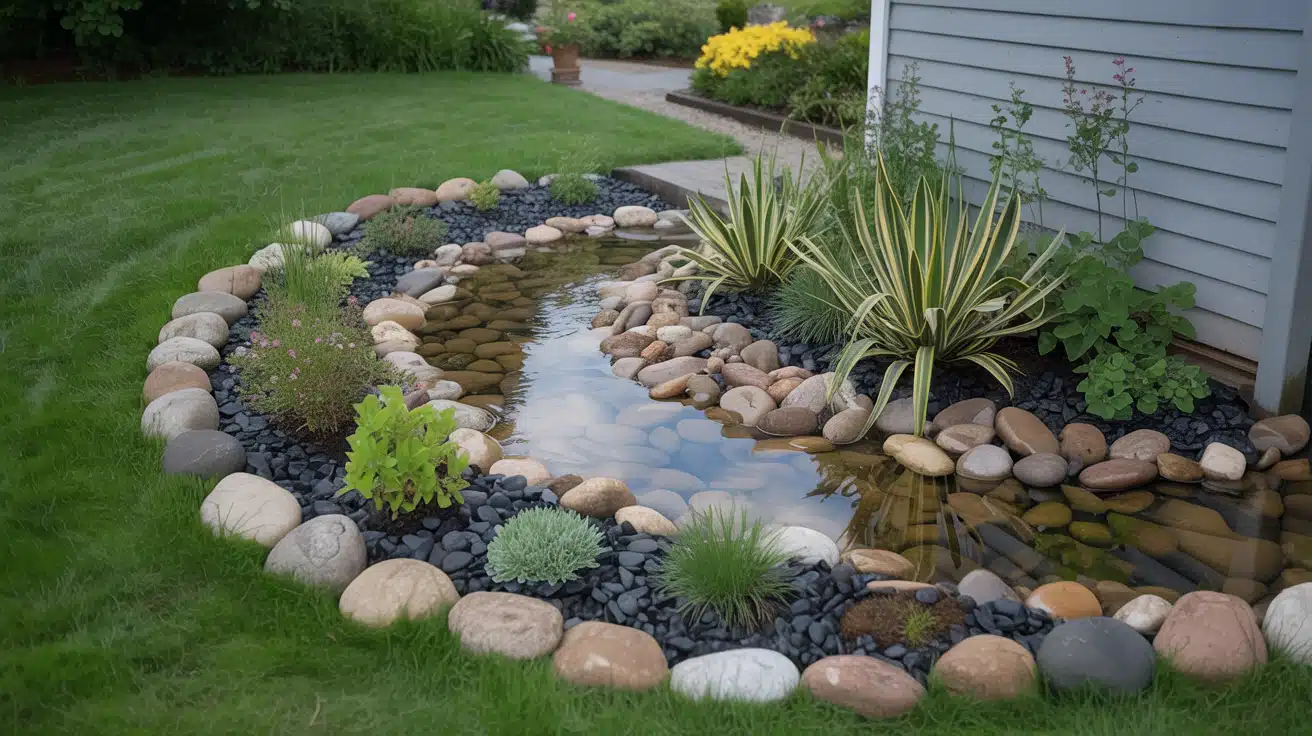
Create a shallow depression in your yard filled with river rocks to catch and filter rainwater naturally. This eco-friendly feature collects runoff from roofs or driveways, allowing water to soak into the ground slowly.
- Maintenance: Remove accumulated debris and sediment twice a year; replant as needed.
Best Rock Size: 2 to 4 inches to allow water flow while filtering runoff.
Pro Tip: Position the rain garden at least 10 feet from your home’s foundation to protect against water damage.
17. Mixed Rock Texture Landscaping
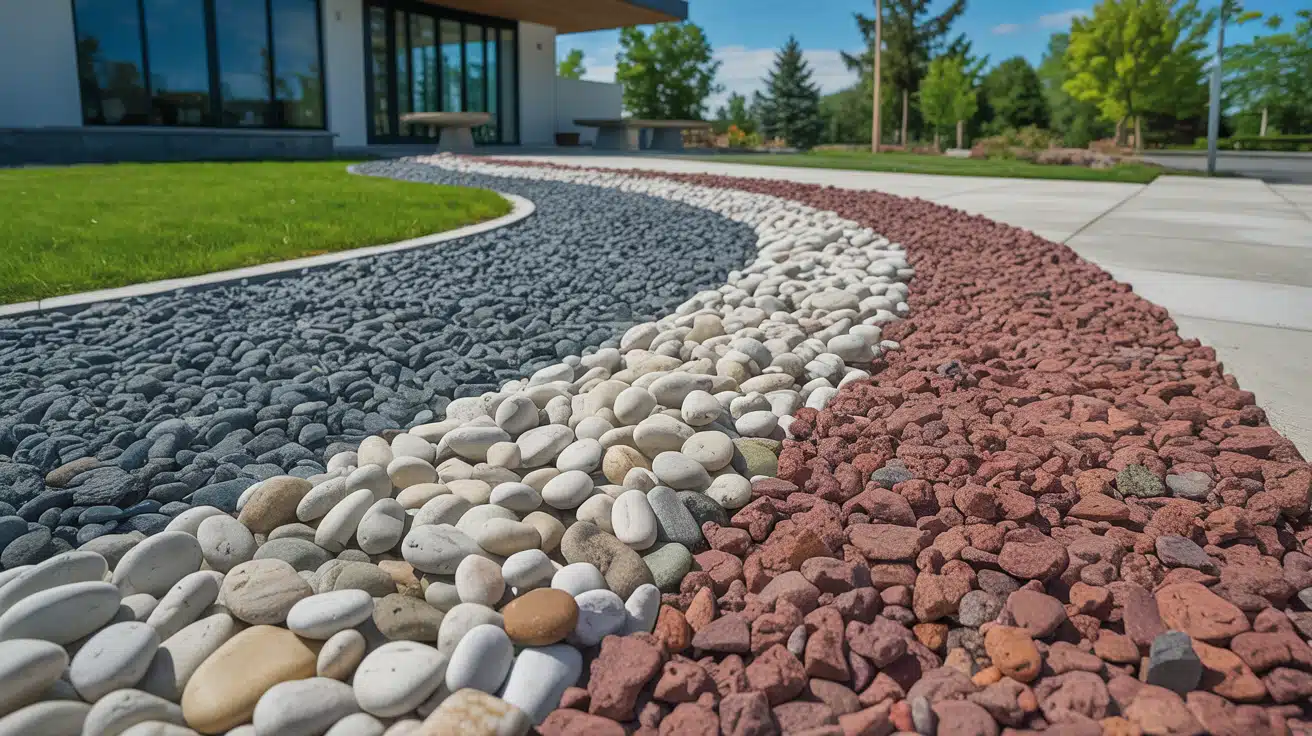
Combine river rocks with other materials like lava rock, crushed granite, or slate for a layered, textured design. Use river rocks as the base and accent with contrasting materials. This adds depth and makes your landscape more interesting.
- Maintenance: Keep different rock types separated with edging or barriers.
- Best Rock Size: Vary sizes across materials for visual interest.
- Pro Tip: Stick to two or three rock types to avoid a cluttered look.
18. Minimalist River Rock Designs
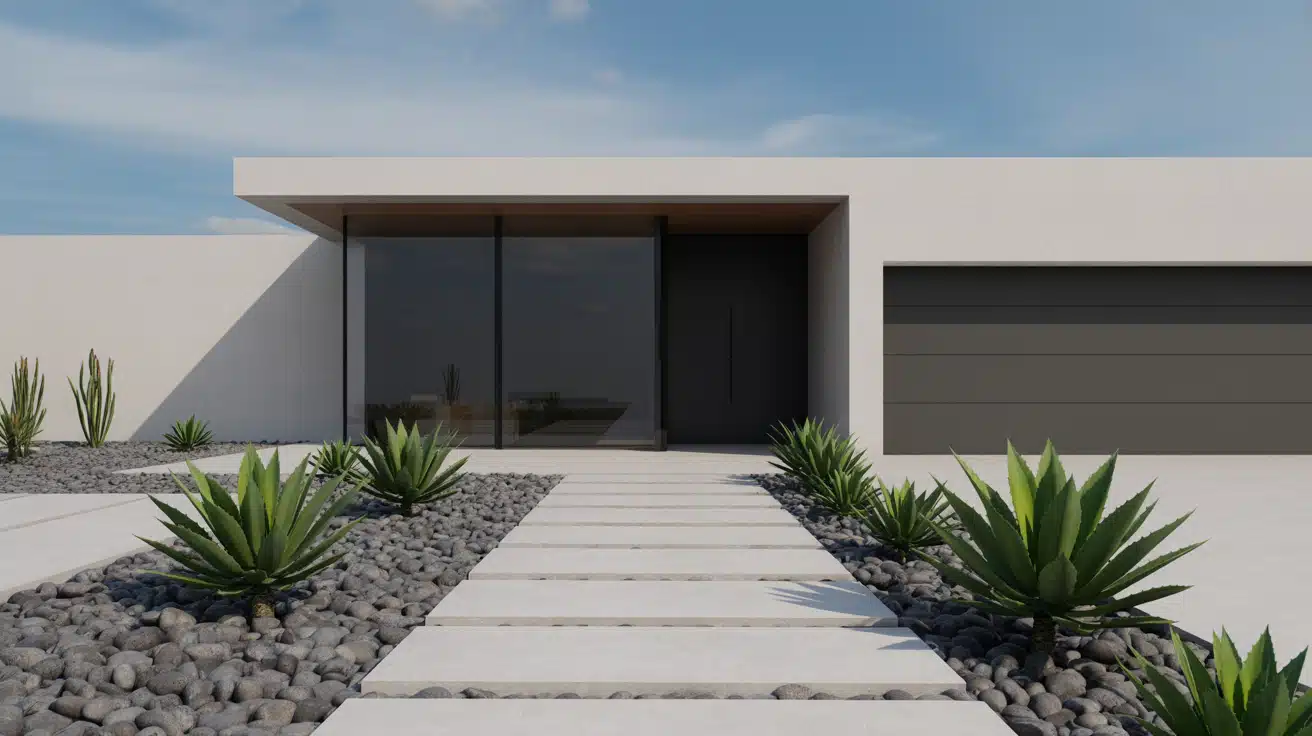
Use river rocks sparingly in a simple, modern layout. Think clean lines, monochrome colors, and open space. Place rocks in geometric patterns or single-file rows for a contemporary, uncluttered style.
- Maintenance: Keep design lines sharp; remove any stray rocks or debris.
- Best Rock Size: 2 to 4 inches for uniformity and precision.
- Pro Tip: Pair with architectural plants like agave or ornamental grasses for balance.
Where River Rock Works Best in Landscaping
Now that you know the benefits and design ideas, let’s talk about placement. Certain areas of your property will benefit more from river rocks than others, so choosing the right spots makes all the difference.
- Front yards and entryways: River rocks create strong curb appeal around mailboxes, along driveways, and in place of grass patches that are hard to maintain.
- Backyards and garden paths: Use river rocks to line walkways, fill seating areas, or replace mulch in garden beds for a clean, low-maintenance backyard look.
- Around water features: River rocks naturally complement ponds, fountains, and waterfalls by hiding edges and creating smooth transitions between water and landscape.
- Drainage-prone areas: Place river rocks in spots where water collects or flows, such as downspout areas, slopes, and drainage ditches, to control erosion and improve water flow.
How to Landscape With River Rock?
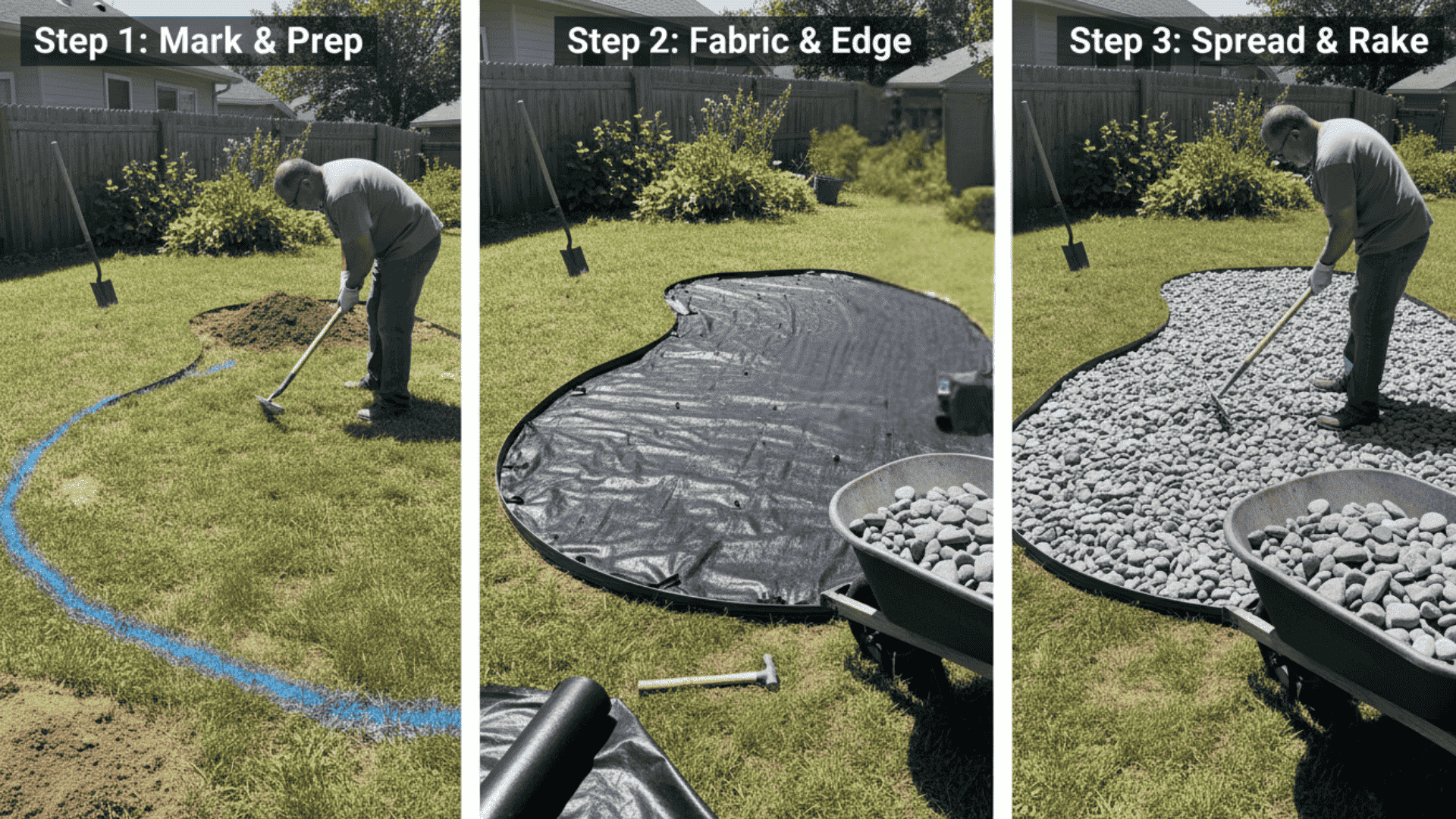
Knowing where to use river rocks is one thing, but installing them correctly ensures they look great and stay in place for years. Follow these steps to set up your river rock landscape the right way.
Planning the Layout Before Installation
Sketch your design on paper or mark the area with spray paint or string to visualize the final look. Measure the space to calculate how many bags or tons of river rock you’ll need. Planning prevents mistakes and helps you choose the right rock size and color for your project.
Preparing the Soil and Base Layer
Remove grass, weeds, and debris from the area where you’ll place river rocks. Level the soil and compact it lightly to create a stable base. For better drainage and weed control, add a thin layer of sand or gravel before laying landscape fabric.
Using Landscape Fabric Correctly
Lay high-quality landscape fabric over the prepared soil to block weeds while allowing water to drain through. Overlap fabric edges by at least six inches and secure them with landscape staples every few feet. Cut X-shaped slits in the fabric where you want to place plants, keeping the fabric intact everywhere else.
Installing Edging to Keep Rocks in Place
Install metal, plastic, or stone edging along the borders of your rock area to prevent rocks from spreading into grass or garden beds. Bury the edging at least two inches deep and secure it firmly with stakes. Edging creates clean lines and makes maintenance much easier over time.
Spreading River Rocks Evenly for a Natural Look
Pour river rocks slowly and spread them with a rake to create an even layer two to three inches deep. Avoid dumping rocks in piles, as this creates an artificial look and poor coverage. Step back frequently to check for bare spots and adjust rocks by hand for a smooth, natural finish.
Mistakes to Avoid With River Rock Landscaping
Even the best river rock designs can fail if you skip essential steps or make poor choices during installation. Here are the most common mistakes homeowners make and how you can avoid them.
| Mistake | The Problem | The Fix |
|---|---|---|
| Skipping ground preparation | Weeds grow through, rocks sink into the soil | Remove vegetation, level the ground, and use landscape fabric |
| Using the wrong rock size | Looks unbalanced, poor coverage | Small for paths, medium for beds, large for accents |
| Poor drainage planning | Water pools, rocks shift, and erosion occurs | Grade the soil properly, and add a gravel base layer |
| Overusing river rock in planting areas | Traps heat, dries soil, and is hard to replant | Use as accents only, not full ground cover |
How to Choose the Right River Rock for Your Landscape?
Start by selecting river rock colors that complement your home’s exterior, with neutral tones like gray and tan offering versatility while warmer browns and reds add character.
Consider size based on your project: small rocks for pathways, medium for garden beds, and large for bold accents, aiming for two to three inches deep.
Match the style to your home, choosing polished stones for modern designs and natural textures for traditional settings.
To estimate quantity, measure your area in square feet; one ton typically covers 100 square feet at two inches deep, and order 10 percent extra for settling.
Closing Remarks
River rocks offer a smart way to refresh your outdoor space without the constant upkeep of traditional landscaping.
From practical drainage solutions to stylish garden accents, these versatile stones work in nearly any yard. The key is planning your layout, choosing the right size and color, and preparing the ground properly before you start.
With a little effort up front, you’ll create a landscape that looks great year after year with minimal maintenance.
Ready to get started? Measure your space, pick your favorite design from this list, and grab some river rocks this weekend. Your low-maintenance dream yard is closer than you think.