Your backyard slope has been bothering you for years. Soil keeps washing down after rain. The space feels wasted and messy. You have been putting it off because you assume it costs a fortune to fix.
You do not need a big budget to build something that works and looks good. There are retaining wall ideas for every yard type and every price range.
From timber builds you can finish in a weekend to stone options built to last decades, the right fit is out there.
This guide covers real, practical retaining wall ideas with costs, tips, and advice backed by real-world experience. Let us get into it.
What Is a Retaining Wall?
A retaining wall is a structure built to hold back soil on sloped or uneven ground.
It stops the earth from shifting or washing away, creates flat and usable outdoor space, and brings order to a yard that feels out of control.
These walls can be built from stone, concrete, wood, or metal, and the right material depends on your soil, your budget, and the height of the wall you actually need.
How to Choose the Right Retaining Wall for Your Yard
Picking the right option takes more than just browsing photos online. The material that works for a gently sloped front yard may completely fail on a steep backyard with heavy clay soil.
Here are the five things you should decide on before you start:
- Wall height needed: Walls under 3 feet are manageable for most DIY builds. Anything taller often needs a permit and professional input.
- Soil type and slope: Soft, sandy, or clay-heavy soil puts far more pressure on a wall than firm, compacted ground.
- Budget: Material costs range from $10 to over $150 per square foot, depending on the type you choose.
- Maintenance level: Wood needs regular checks and may need replacement within 15 years. Concrete and stone hold up with very little ongoing work.
- DIY skill level: Interlocking blocks are the most beginner-friendly option. Poured concrete and steel walls require trained hands.
35 Retaining Wall Ideas That Work for Every Budget
Not every yard needs the same fix. The right wall for a steep hillside looks nothing like what works for a shallow garden border. Here are 35 retaining wall ideas to fit different styles, spaces, and price ranges.
1. Natural Stacked Stone Wall
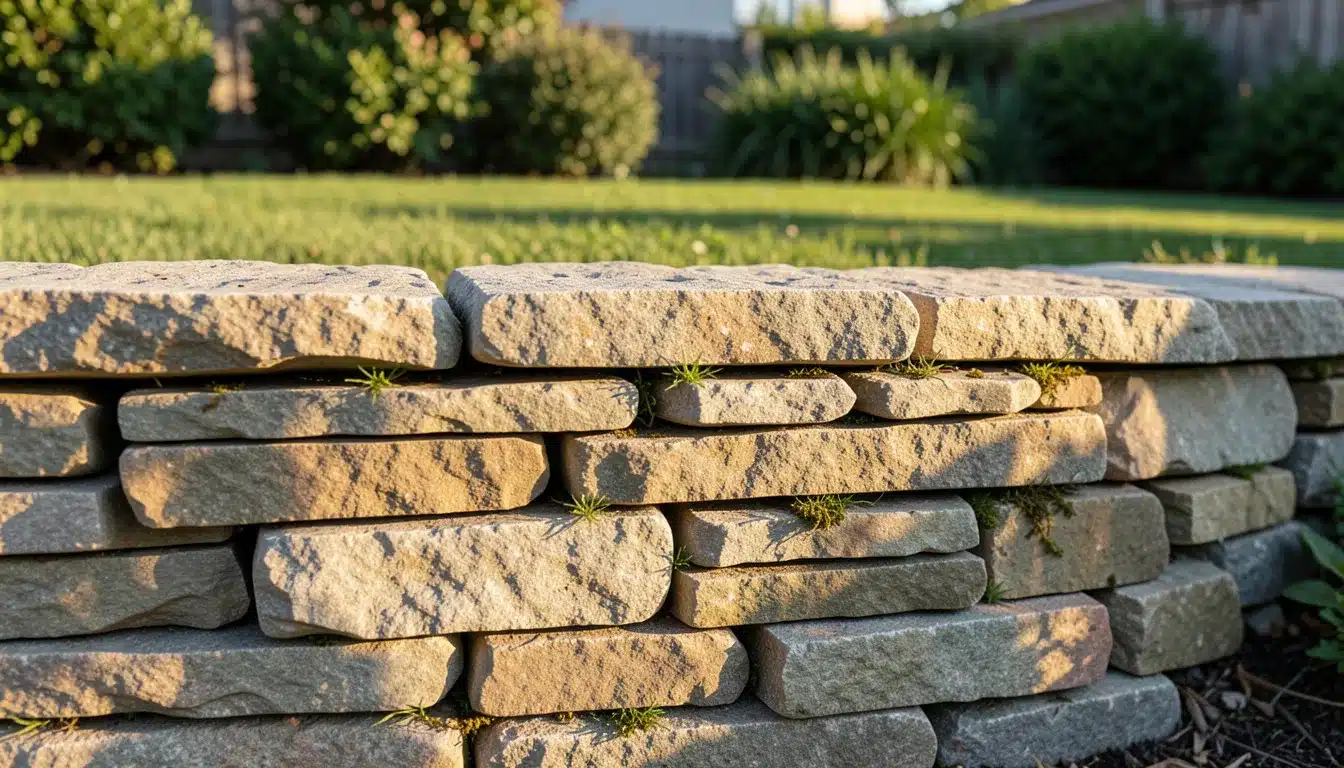
Natural stones are stacked tightly without mortar, a method called dry-stacking. The weight and shape of each stone keep everything in place. This wall ages well and fits naturally into garden settings.
Cost: $25 to $75 per sq. ft.
2. Fieldstone Retaining Wall
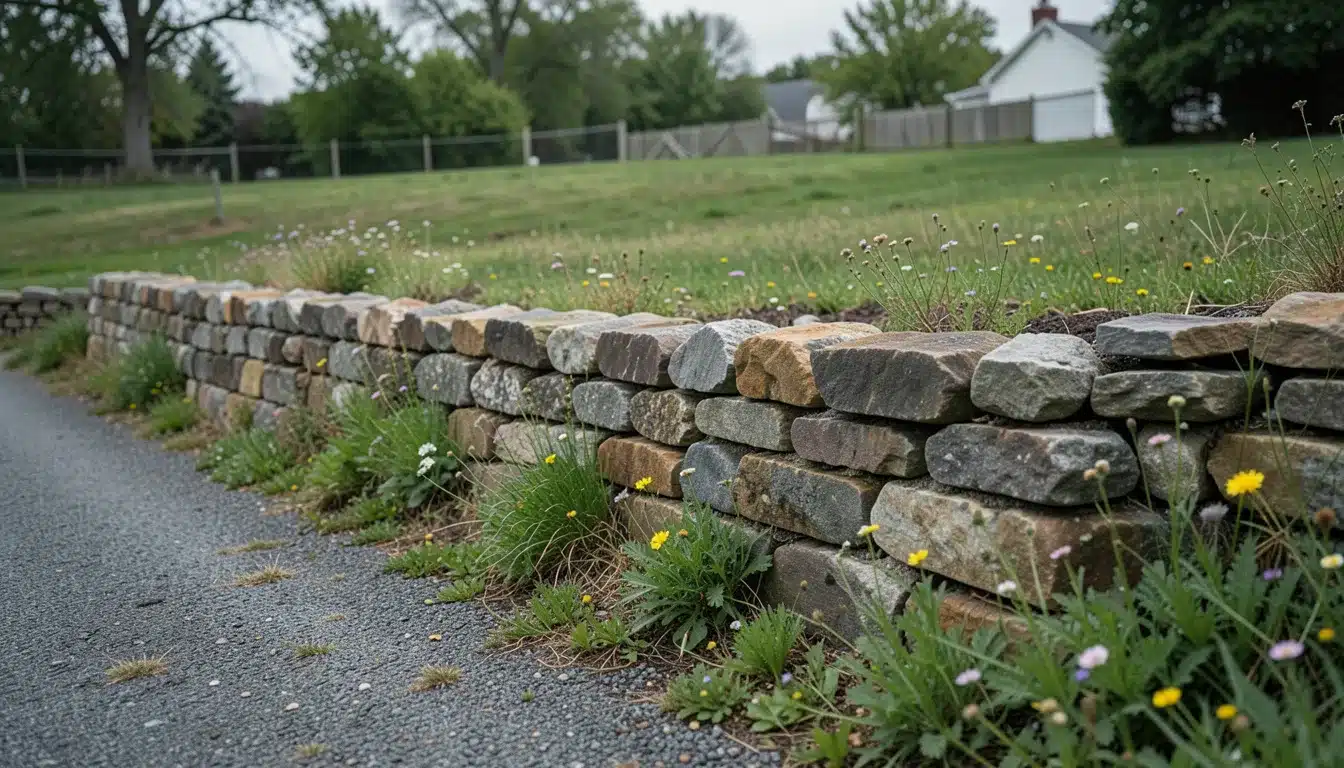
Fieldstones are rough, irregular rocks often found near the building site. Using locally sourced stone significantly reduces material costs. The uneven shapes create a rugged look that suits rural and semi-rural properties.
Cost: $20 to $60 per sq. ft.
3. River Rock Retaining Wall
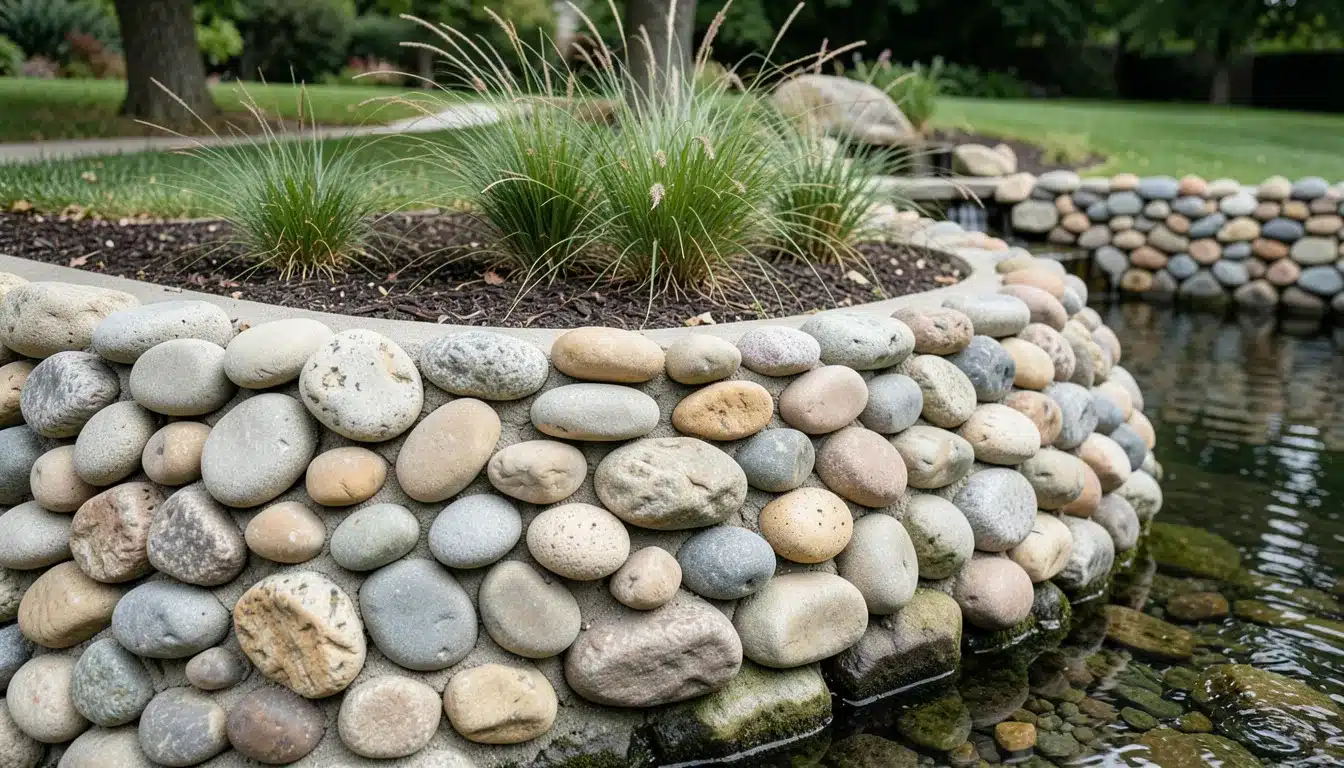
Smooth, rounded river rocks are stacked or set in mortar to form a low to mid-height wall. The soft shapes give this wall a calm, organic quality. It pairs well with garden beds near water features.
Cost: $30 to $70 per sq. ft.
4. Dry-Stacked Stone Wall
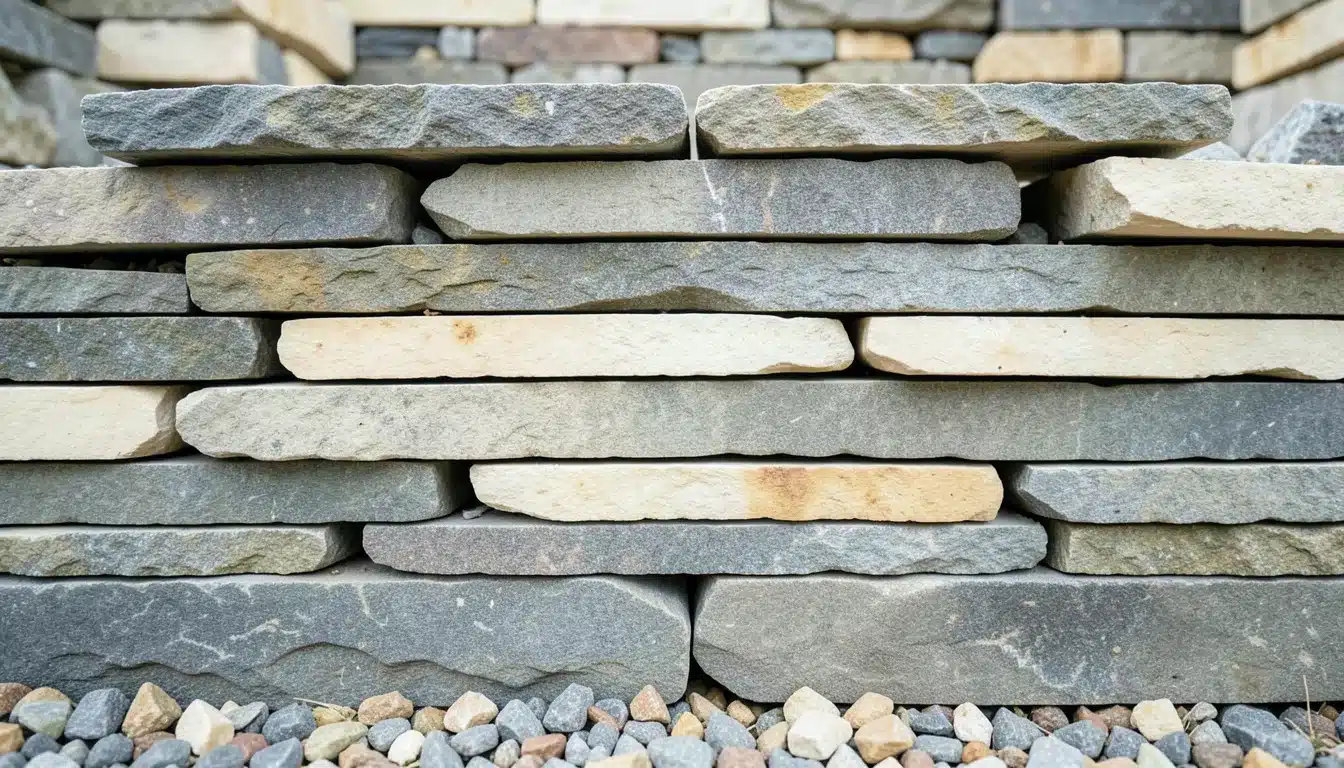
This approach places stones without any mortar. The wall relies on tight fitting and gravity to hold together. Water drains naturally through the gaps, which reduces the pressure that builds up behind the wall.
Cost: $15 to $50 per sq. ft.
5. Flagstone Retaining Wall
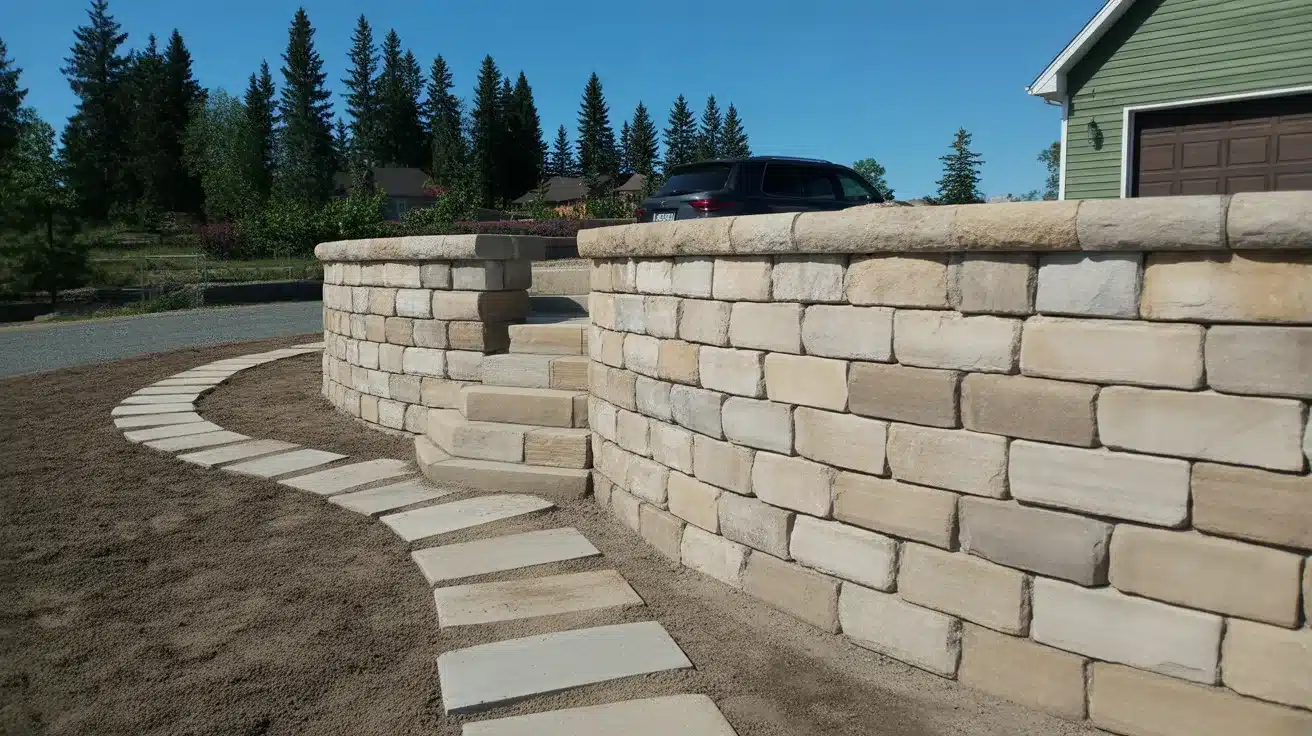
Flat flagstone slabs stack in thin, even layers, creating a clean horizontal look. The result works in both formal gardens and casual backyard spaces. Flagstone is widely available and simpler to work with than rounded rocks.
Cost: $20 to $55 per sq. ft.
6. Boulder Retaining Wall
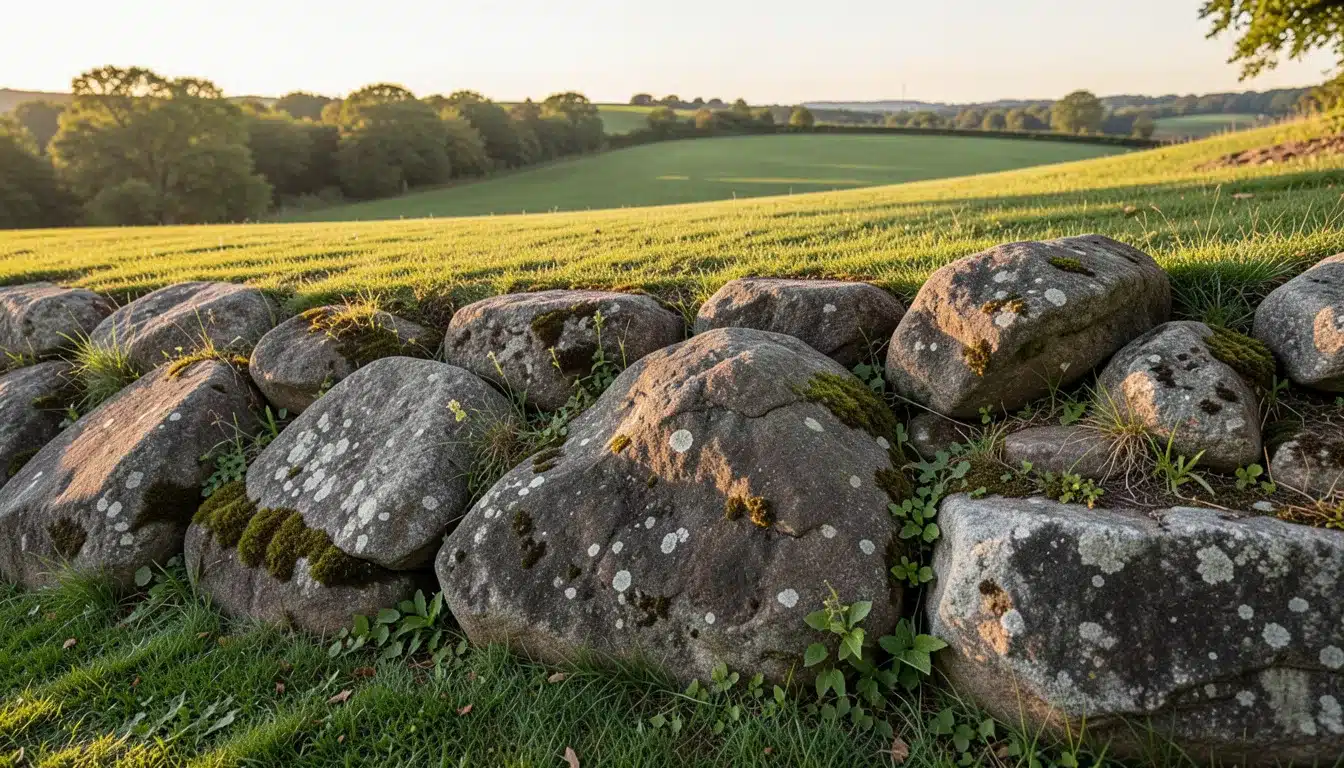
Large individual boulders are placed side by side to hold back a slope. No mortar or fasteners are needed because sheer weight keeps them in position. Over time, moss and small plants grow between the gaps, adding real character.
Cost: $30 to $80 per sq. ft.
7. Interlocking Concrete Block Wall
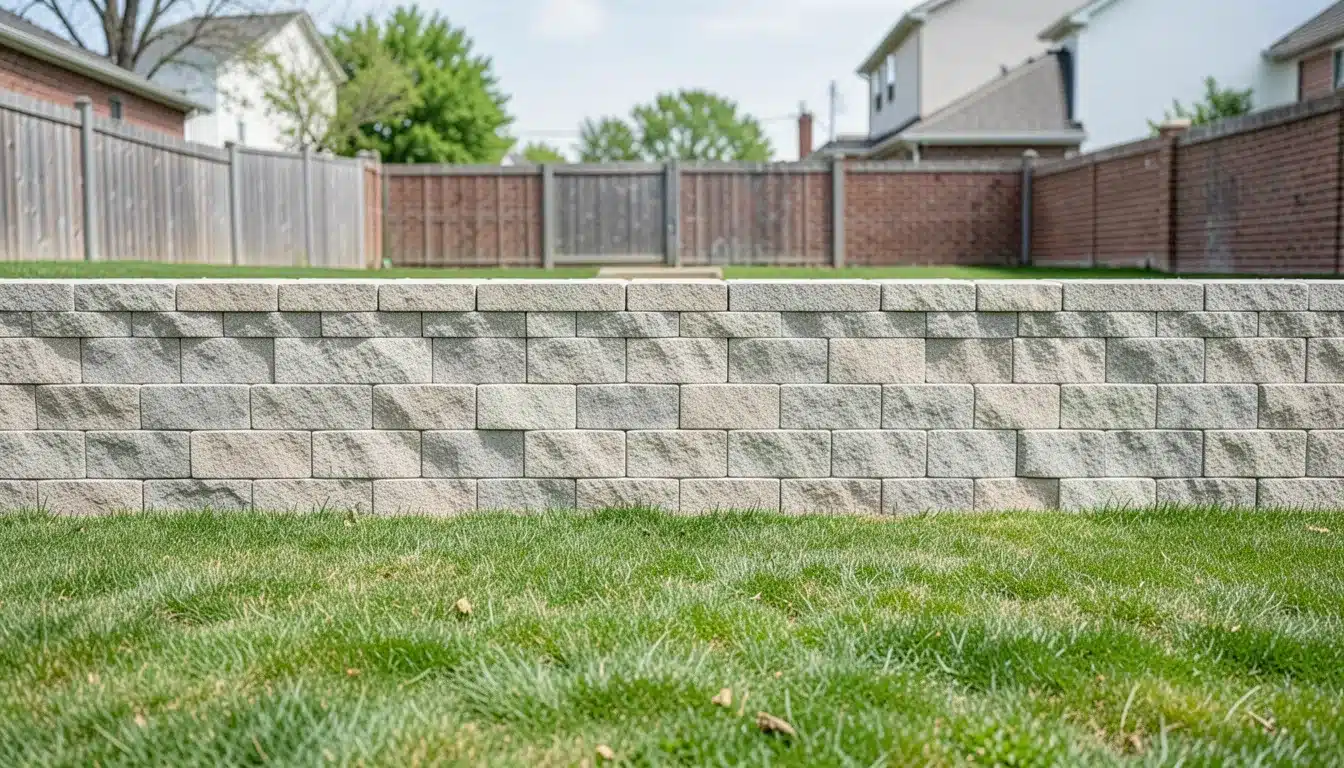
Interlocking blocks are designed to lock together without mortar. They are easy to transport, available at most home improvement stores, and one of the most beginner-friendly retaining wall ideas out there. They come in many textures and finishes.
Cost: $15 to $35 per sq. ft.
8. Cinder Block Retaining Wall
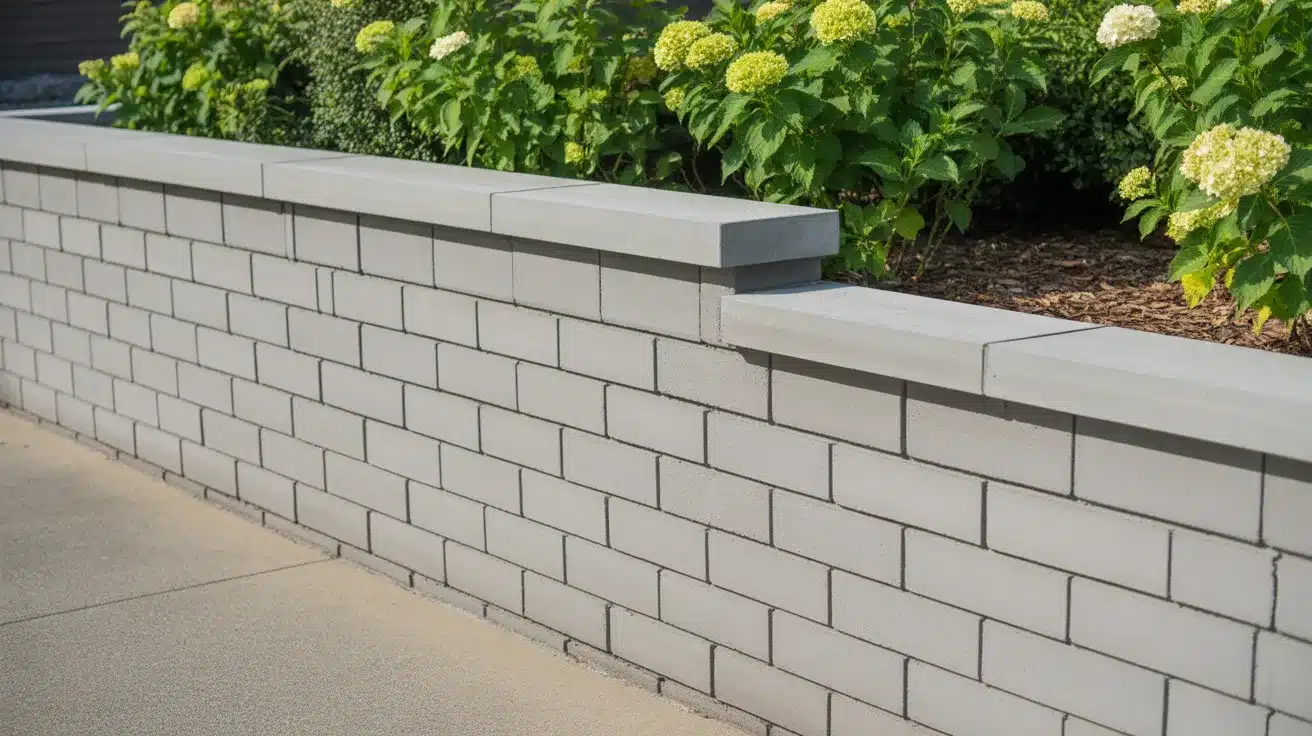
Cinder blocks are lightweight, strong, and go up fast. They can be painted or coated with stucco to improve the appearance. For a more finished result, cover the front face with thin stone veneer or paver panels.
Cost: $20 to $35 per sq. ft.
9. Poured Concrete Retaining Wall
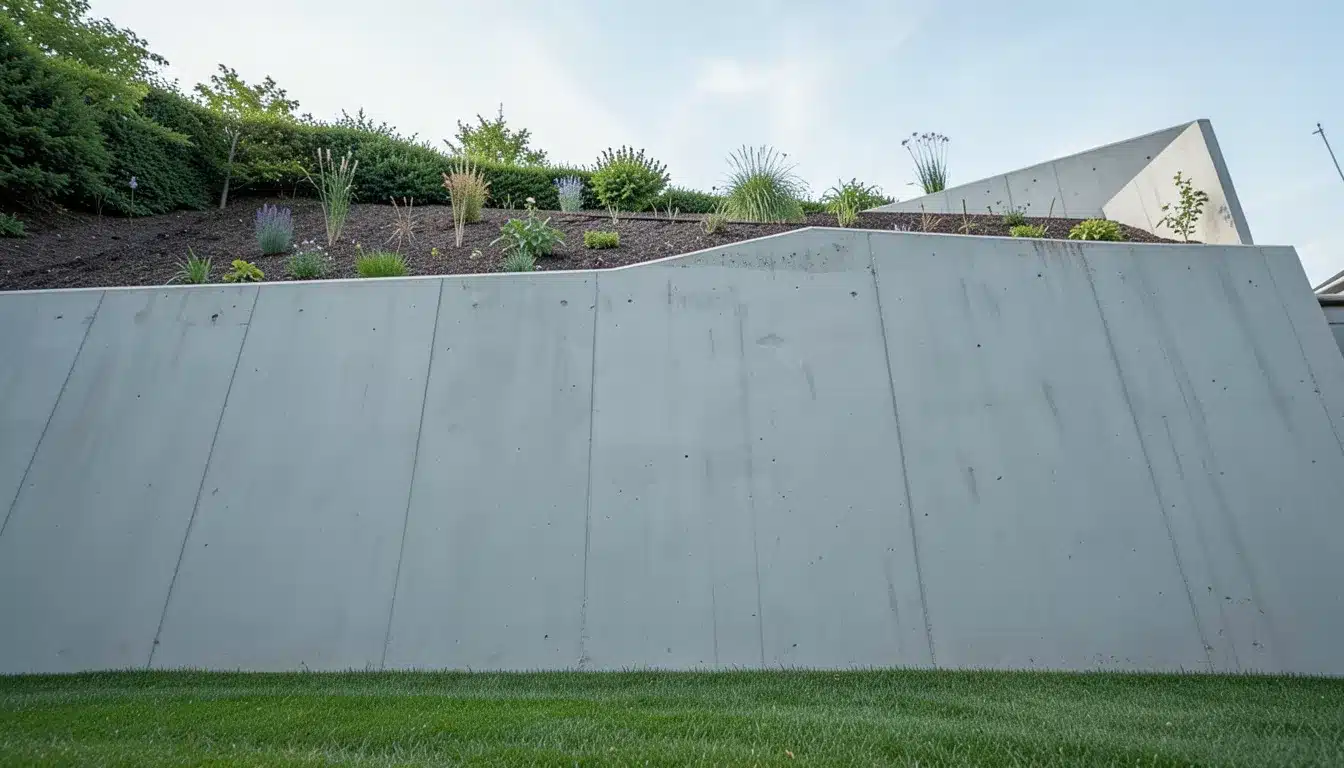
Poured concrete is one of the strongest options for holding back large volumes of soil. It handles high water pressure and works especially well on steep slopes. Professional installation gives the best outcome with this material.
Cost: $15 to $50 per sq. ft.
10. Stamped Concrete Retaining Wall
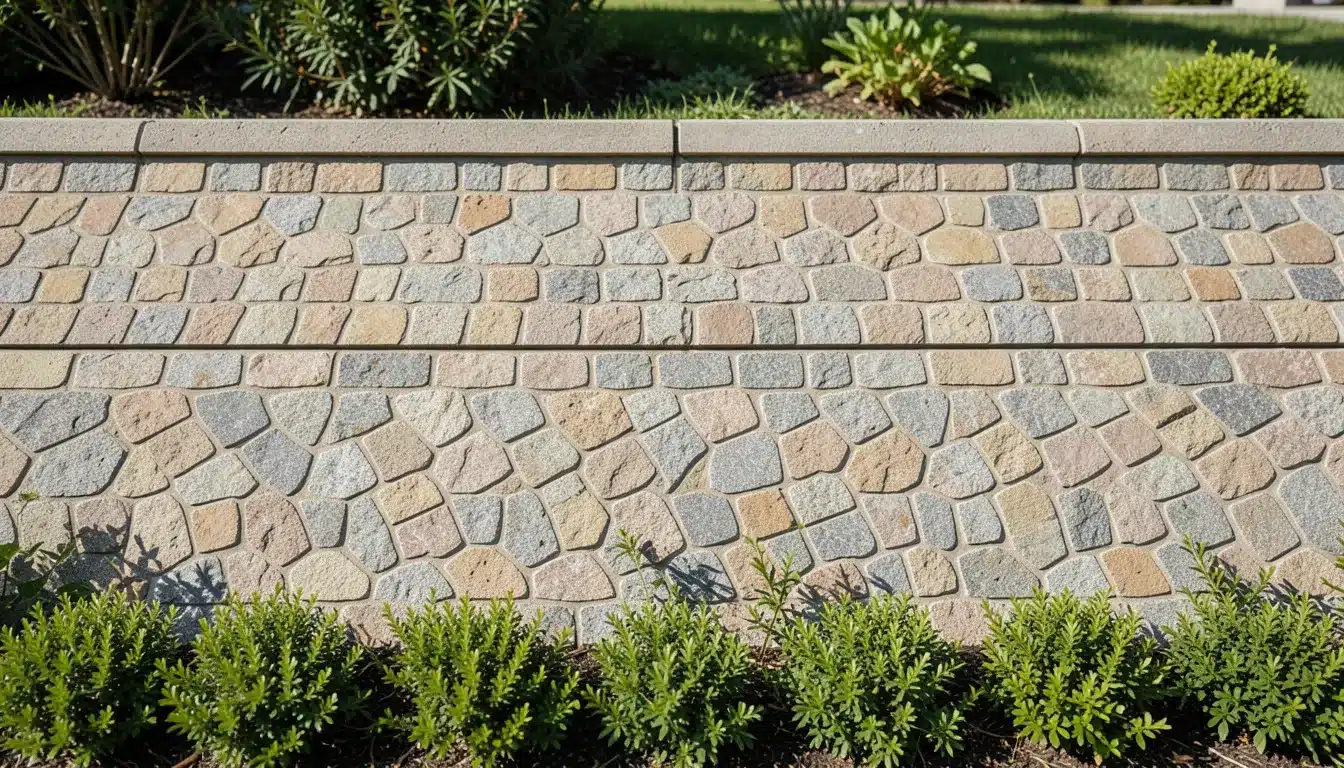
Concrete is poured and then pressed with a pattern mold while still wet. It can be shaped to look like stone, brick, or wood grain. You get the strength of concrete with a finish that costs far less than natural stone.
Cost: $25 to $50 per sq. ft.
11. Modular Concrete Block Wall
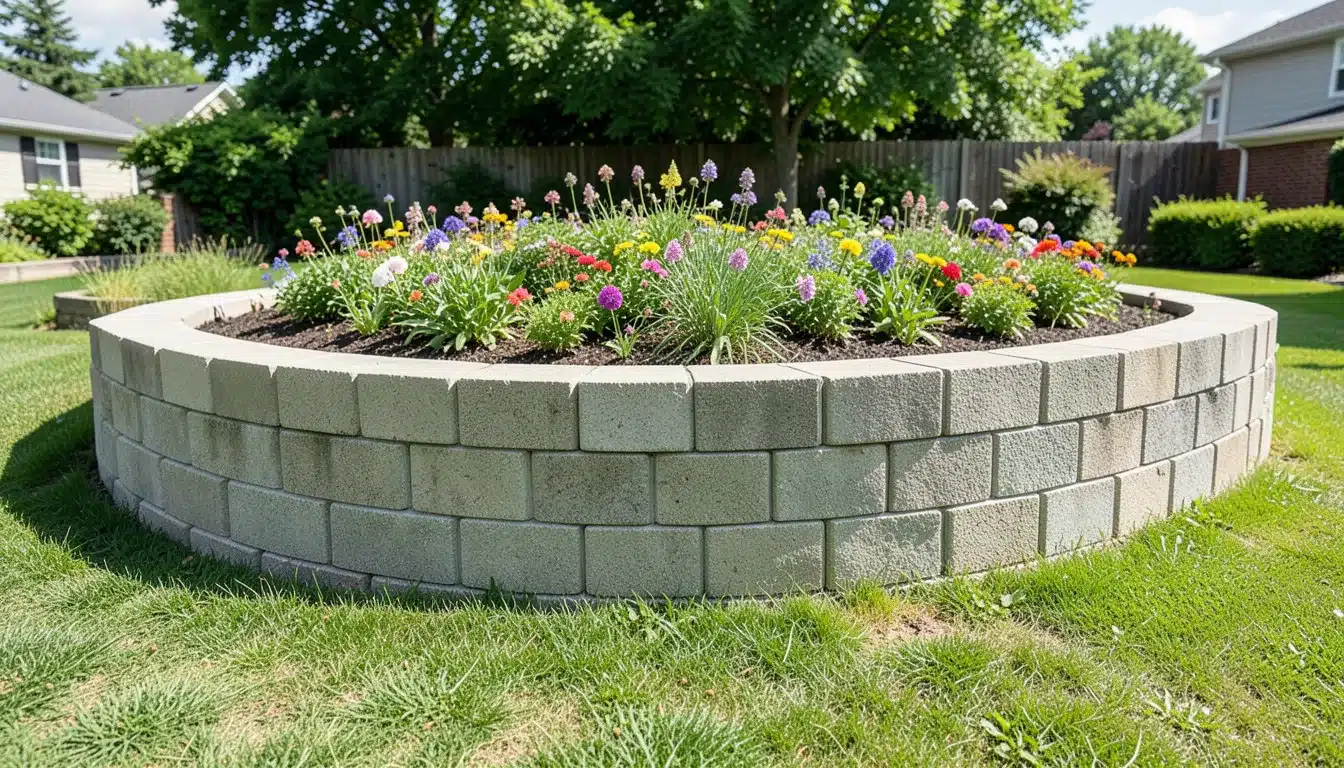
Modular blocks come in standard sizes and fit together in a set pattern. Their uniformity makes them quick to install and easy to keep level. They work well for both straight runs and gently curved designs.
Cost: $15 to $35 per sq. ft.
12. Concrete Sleeper Wall
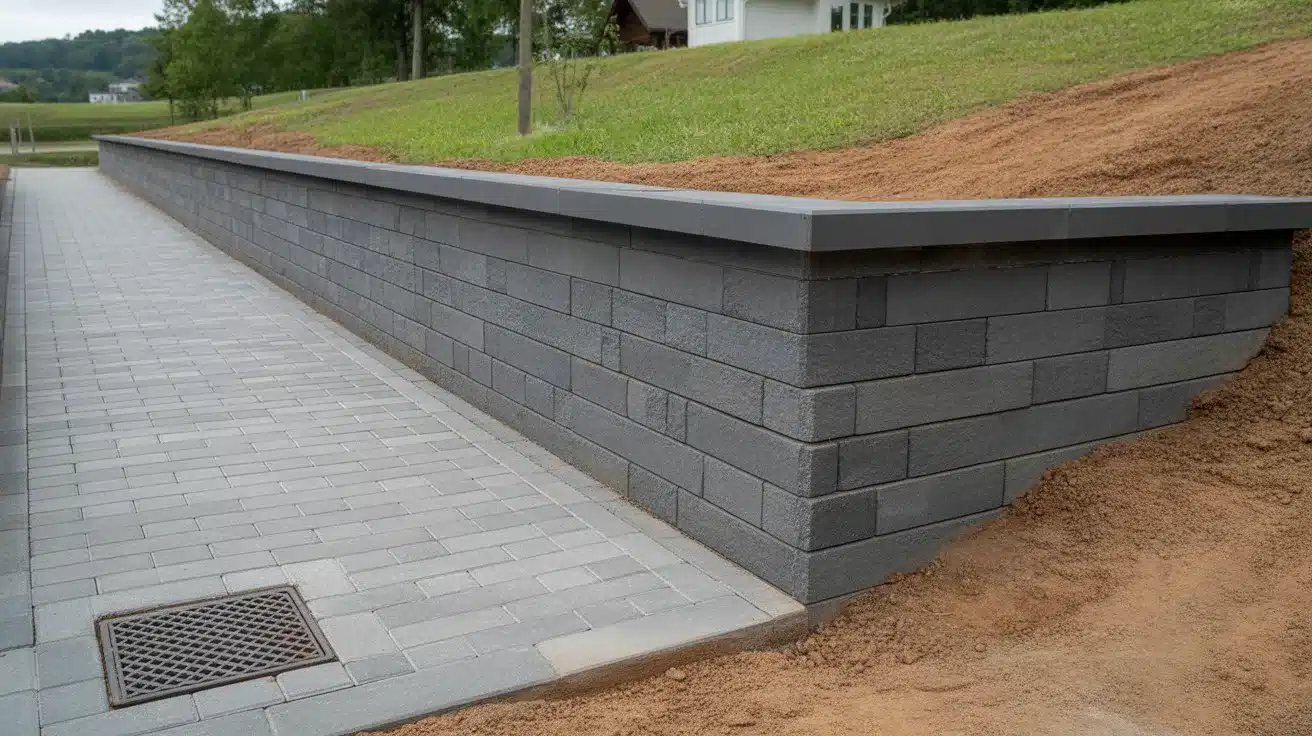
Concrete sleepers are cast to look like timber but last far longer. They resist rot, moisture, and insects without any special treatment. Many come with a wood grain texture, giving you the visual warmth of timber without the maintenance.
Cost: $20 to $50 per sq. ft.
13. Treated Timber Sleeper Wall
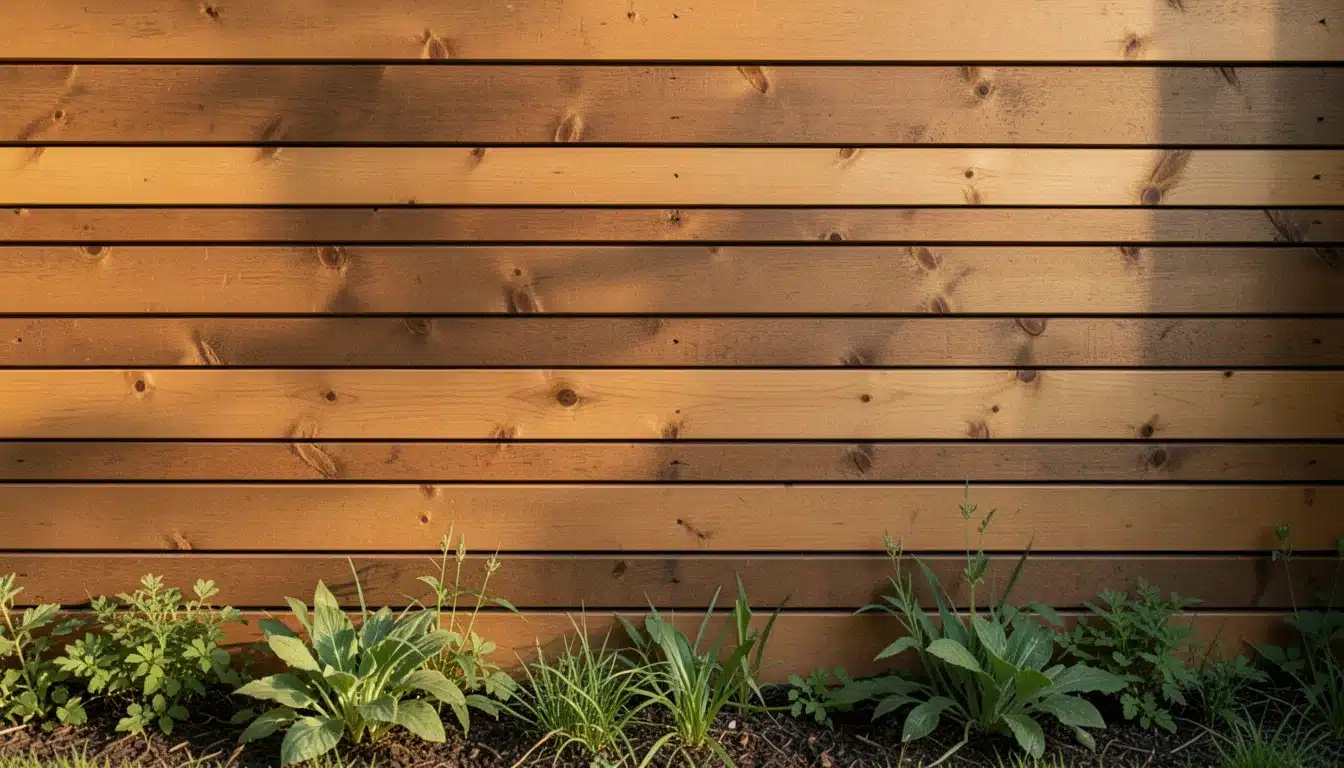
Treated pine sleepers are among the most affordable retaining wall materials available. The wood is chemically treated to resist rot and insects. This option works best for walls under 3 feet tall.
Cost: $10 to $40 per sq. ft.
14. Timber Crib Wall
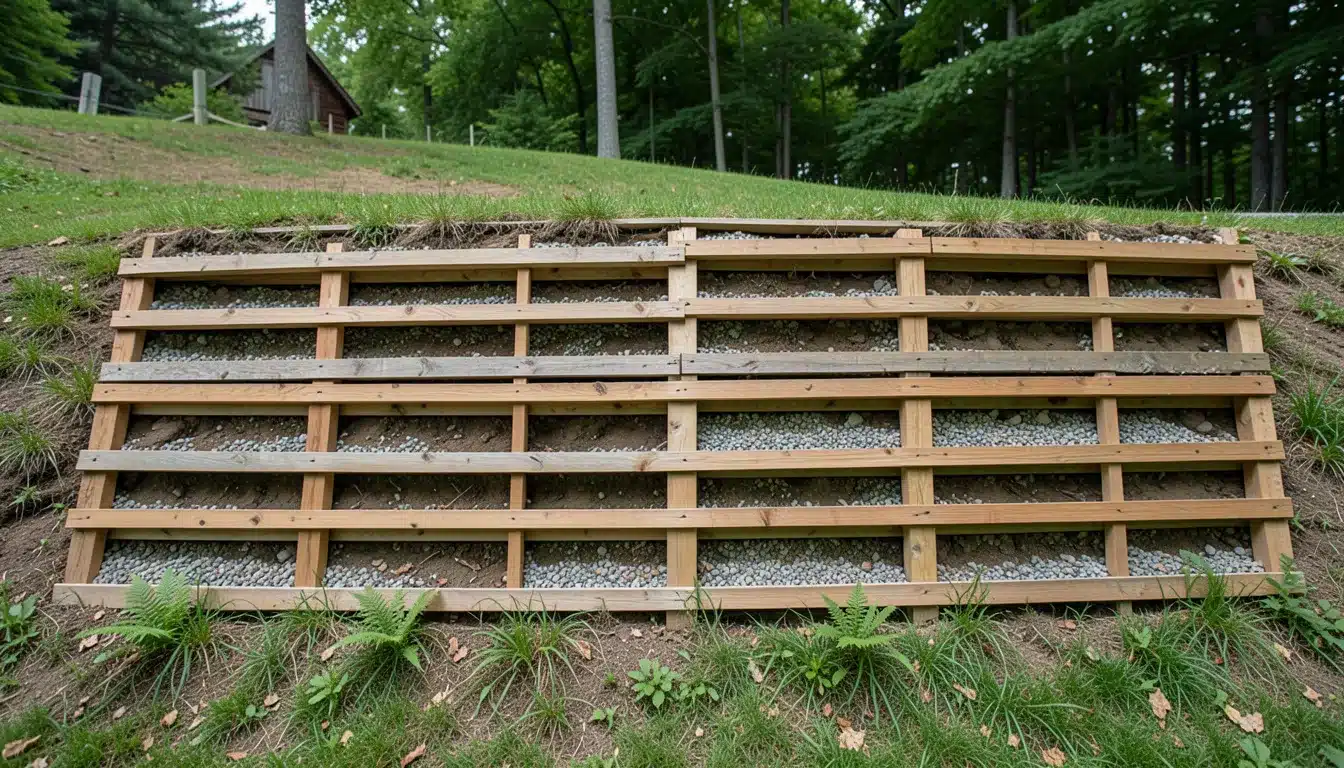
A crib wall uses interlocking timber frames stacked in a log-cabin structure. The hollow sections are filled with gravel or compacted soil for stability. This style fits naturally into wooded or garden settings.
Cost: $15 to $40 per sq. ft.
15. Railroad Tie Retaining Wall
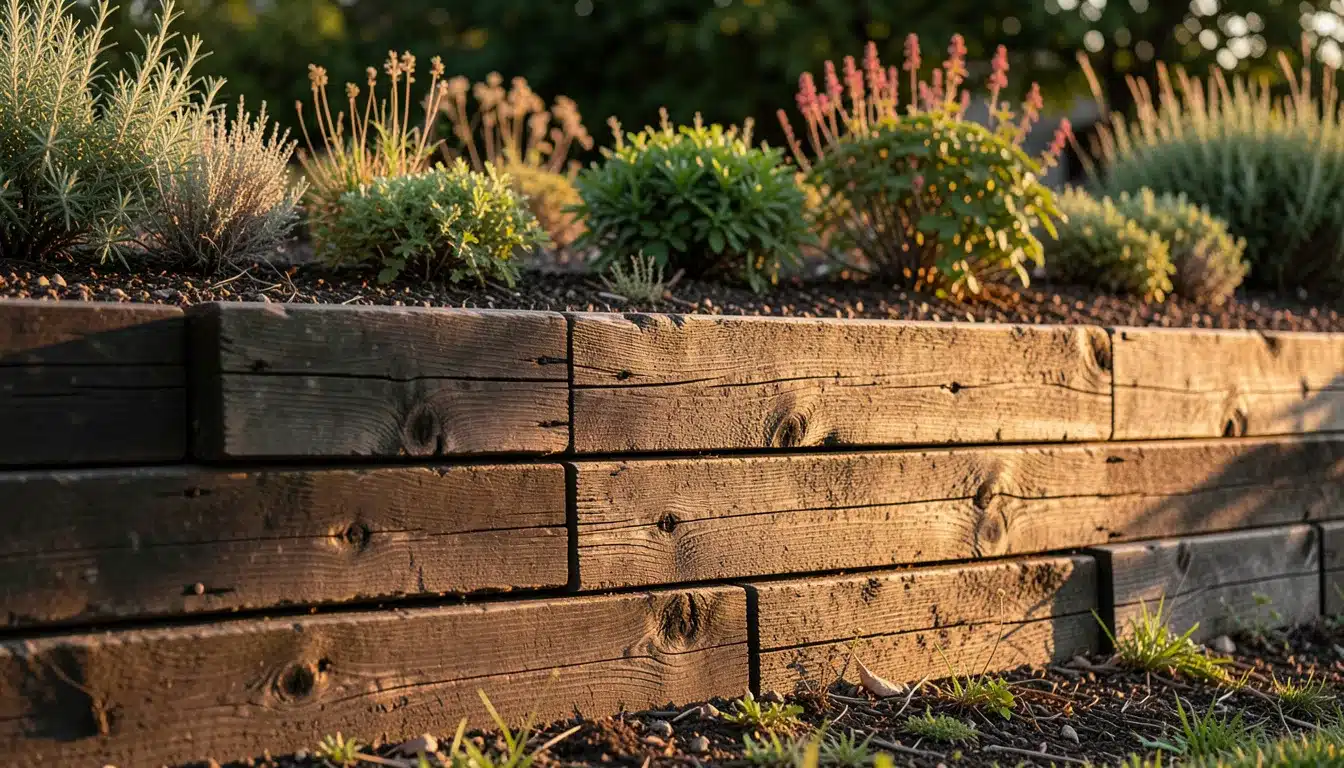
Reclaimed railroad ties are thick, heavy, and very affordable. They are easy to stack and can be secured with metal spikes or rebar. Older ties may contain chemical treatments, so check before planting edible crops nearby.
Cost: $10 to $30 per sq. ft.
16. Horizontal Timber Plank Wall
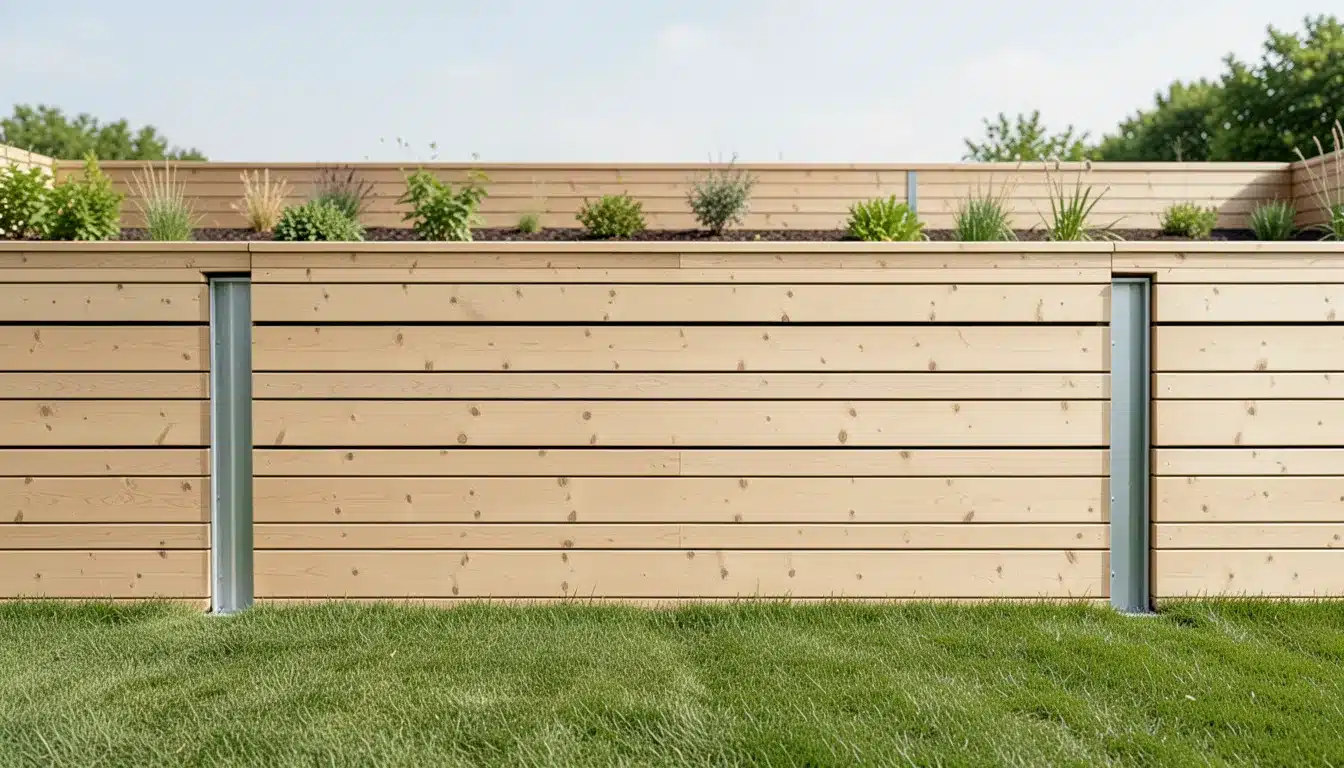
Horizontal timber planks are fixed between upright steel posts set in the ground. The planks slot between the posts to hold back soil. The design is clean and easy to repair by swapping out individual boards.
Cost: $15 to $35 per sq. ft.
17. Wooden Pallet Wall
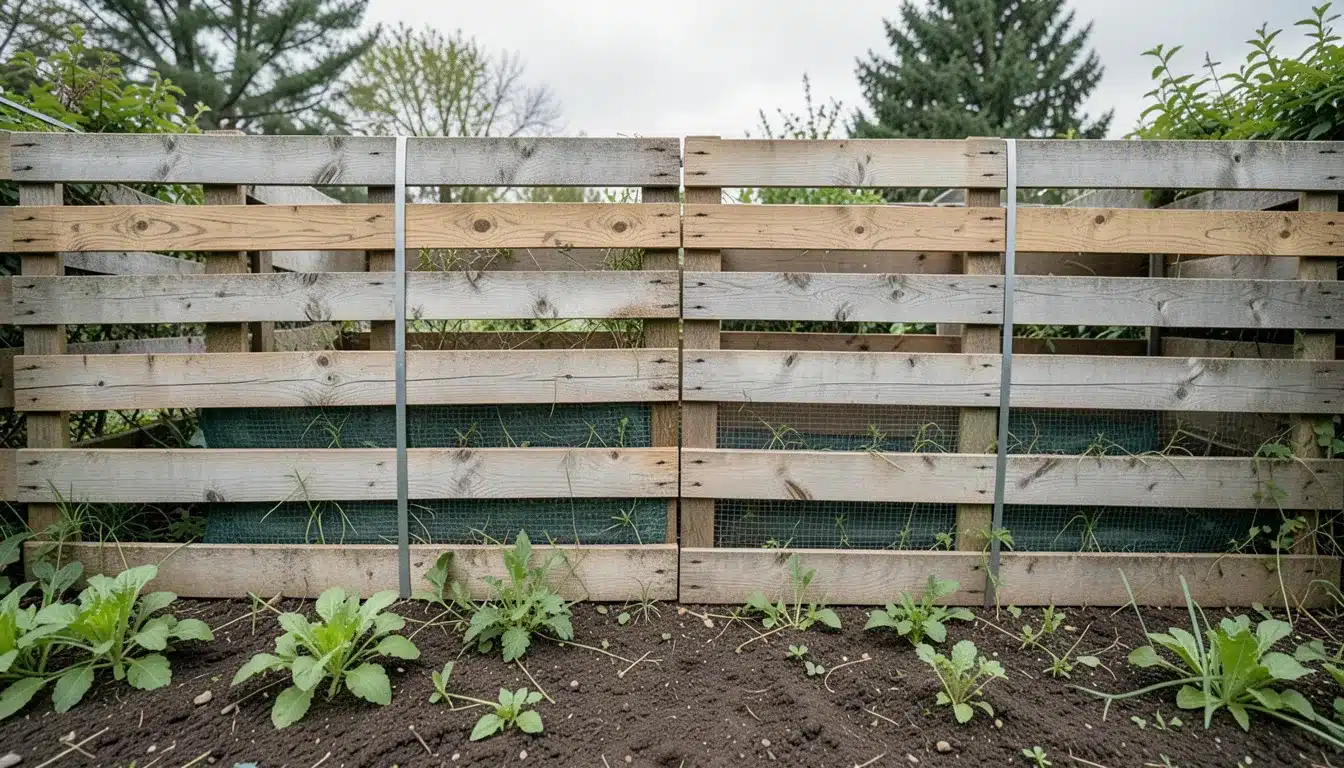
Stacked and secured pallets make a very low-cost short-term wall. Line the inside with weed guard fabric before adding soil. Pallets will break down over time, so treat this as a temporary fix while planning something more permanent.
Cost: Often free to very low cost
18. Gabion Wire and Rock Wall
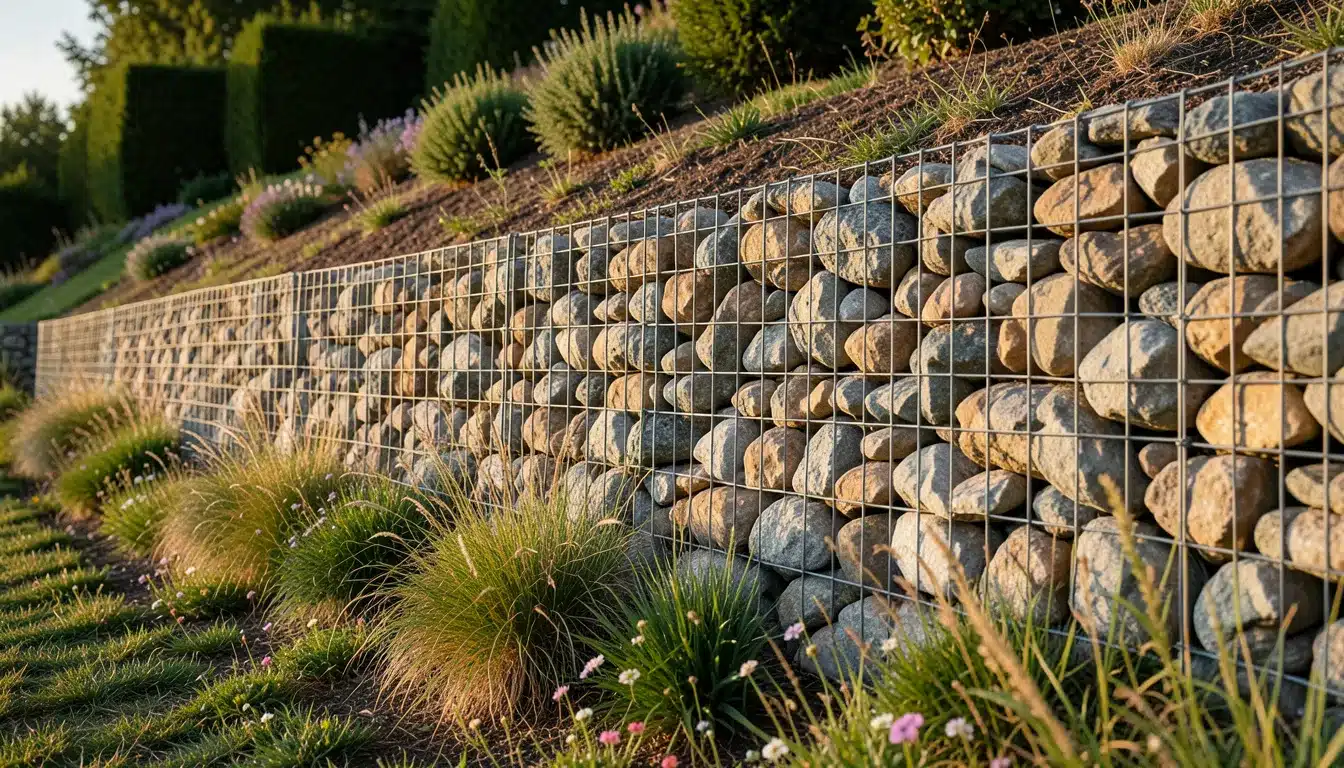
Gabion walls use wire mesh cages filled with rocks or stones. Water drains naturally through the gaps, which reduces pressure behind the wall. Using locally sourced rock keeps material costs low.
Cost: $10 to $40 per sq. ft.
19. DIY Gabion Basket Wall
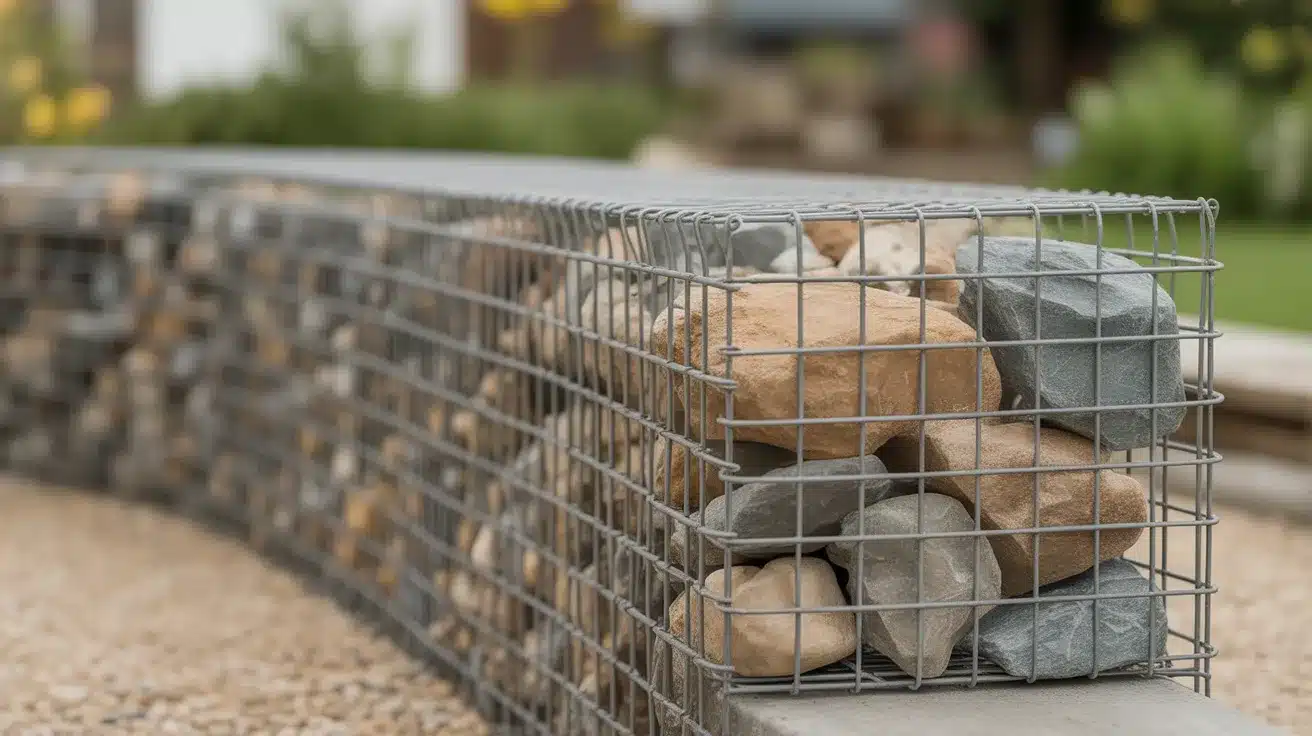
Building and filling gabion cages yourself further cuts the cost. You choose the stone type, cage size, and total height. Popular fill options include sandstone, granite, and quartzite.
Cost: $10 to $30 per sq. ft.
20. Corrugated Metal Wall
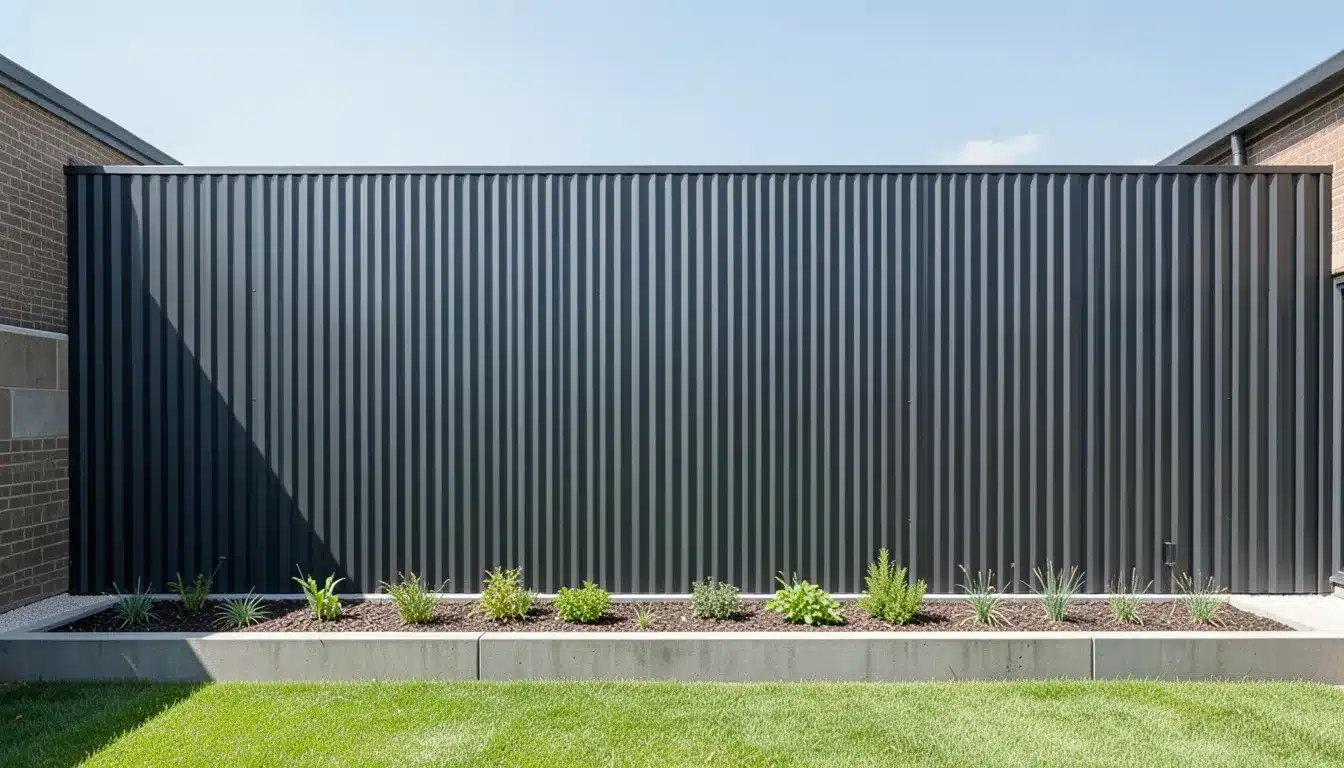
Corrugated steel sheets are pressed vertically into the ground and backfilled. This option suits industrial, modern, and urban outdoor spaces. Properly coated panels hold up well against rust in most climates.
Cost: $15 to $45 per sq. ft.
21. Cor-Ten Steel Retaining Wall
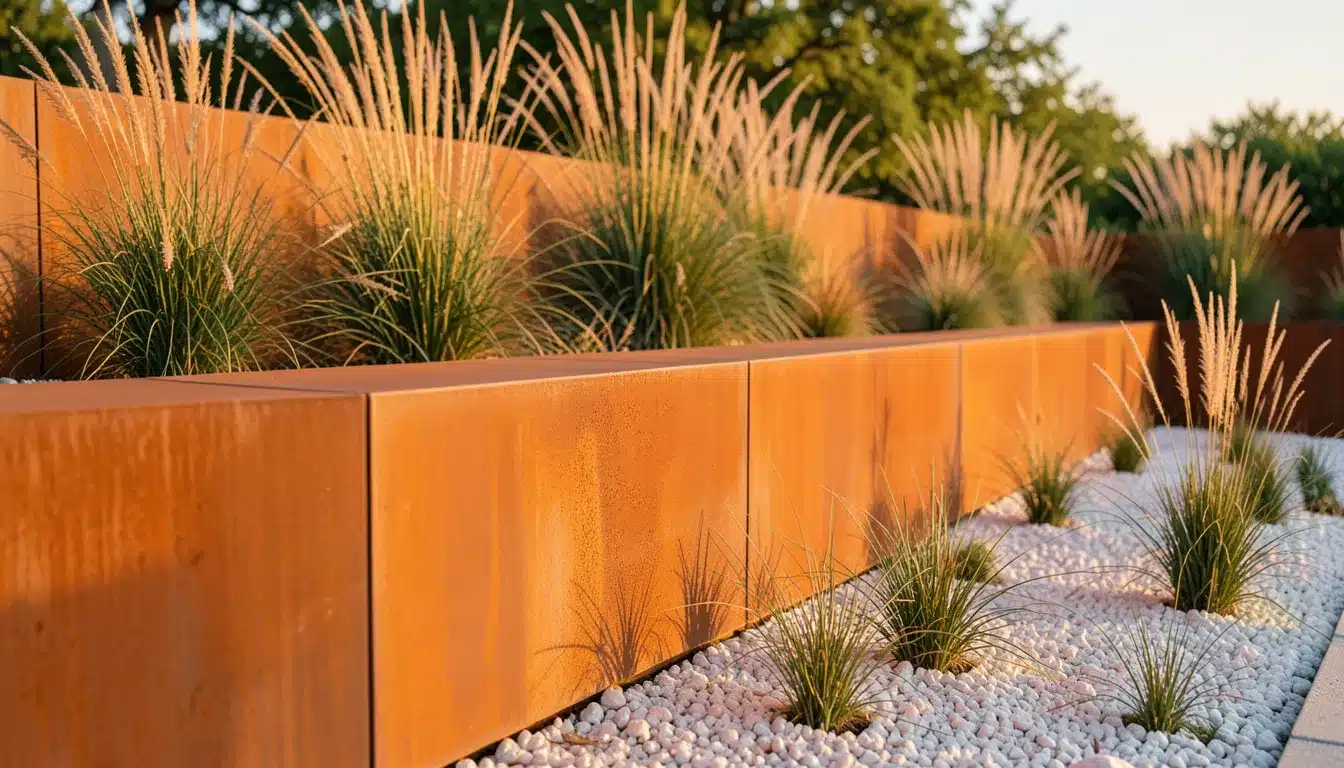
Cor-Ten, also called weathering steel, develops a rust-toned outer layer that protects the metal underneath. The finish looks intentional and has become popular in modern landscape design. It is a higher-cost option but needs almost no upkeep.
Cost: $35 to $100 per sq. ft.
22. Stone Veneer Over Concrete Wall
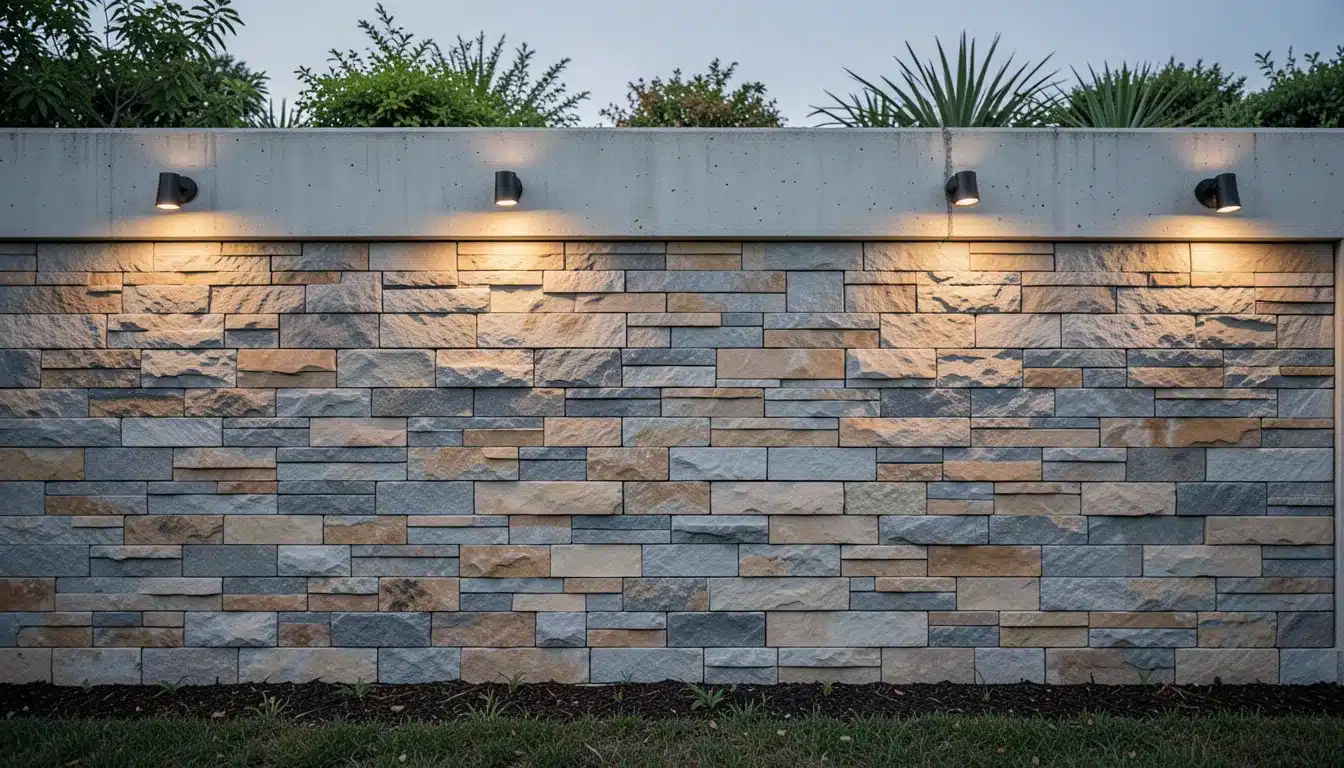
Pour a concrete wall for structural strength, then apply thin stone veneer panels over the front face. You get the look of natural stone at a much lower material cost. The veneer is mortared or bonded directly onto the concrete.
Cost: $30 to $60 per sq. ft.
23. Reclaimed Brick Retaining Wall
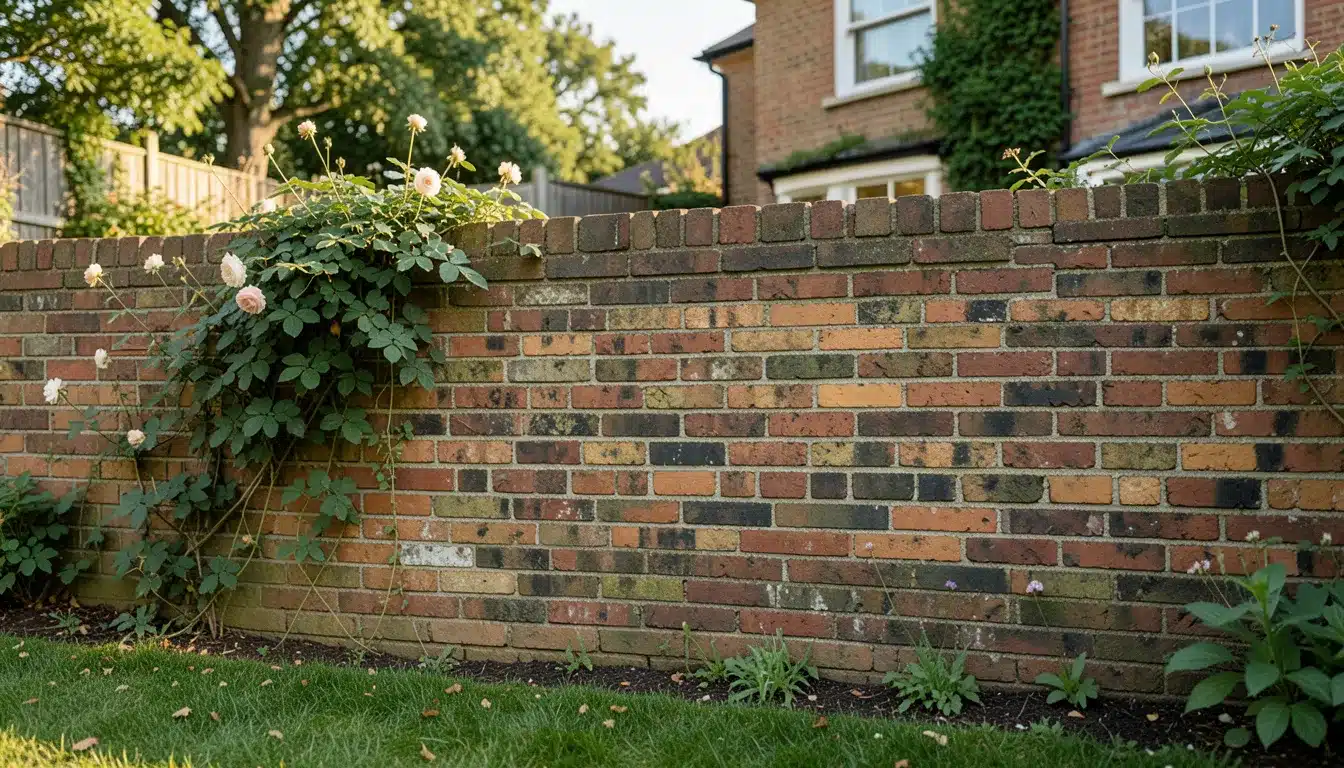
Salvaged bricks from old buildings cost a fraction of new brick prices. Stack them in a running bond pattern with mortar for a wall that holds firm. The aged surface brings character that new materials simply cannot match.
Cost: $20 to $45 per sq. ft.
24. Cinder Block with Paint or Stucco Finish
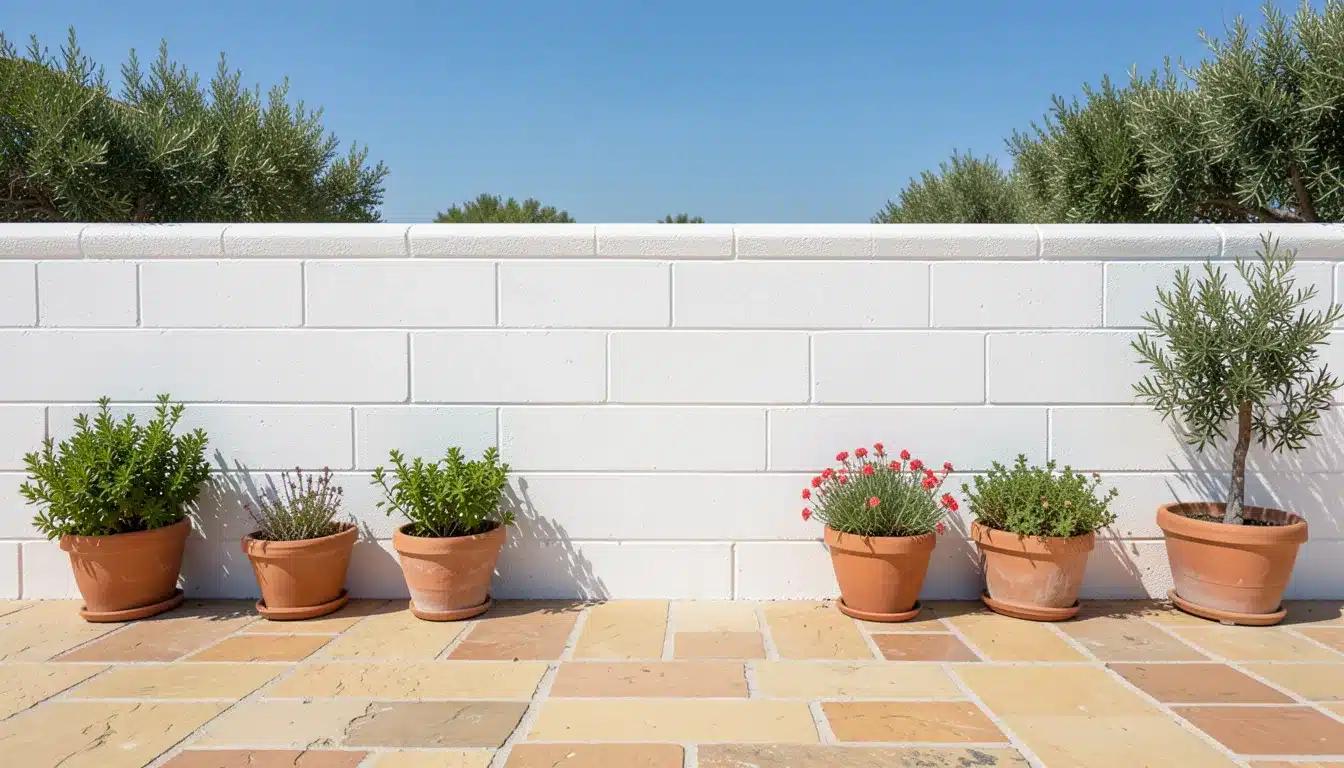
A basic cinder block wall can be finished with outdoor paint or a stucco coat to significantly improve its appearance. Choose a color that matches your home’s exterior or the surrounding plants. This is one of the most affordable ways to get a polished wall finish.
Cost: $20 to $35 per sq. ft.
25. Geocell Retaining Wall
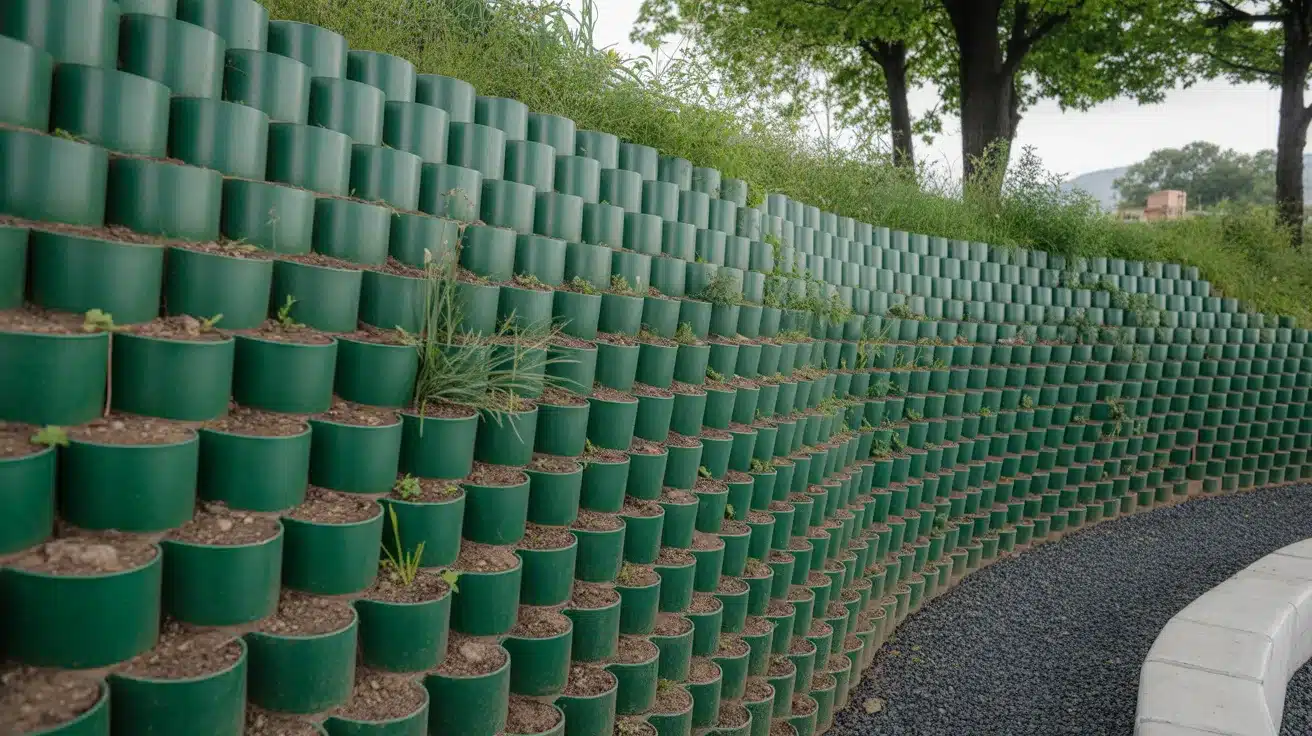
Geocell panels use a honeycomb-like structure filled with compacted soil or gravel. The material is lightweight, weather- and chemical-resistant, and easy to install. It drains naturally and works well for large, flat-graded areas.
Cost: $10 to $25 per sq. ft.
26. Soil Bag Retaining Wall
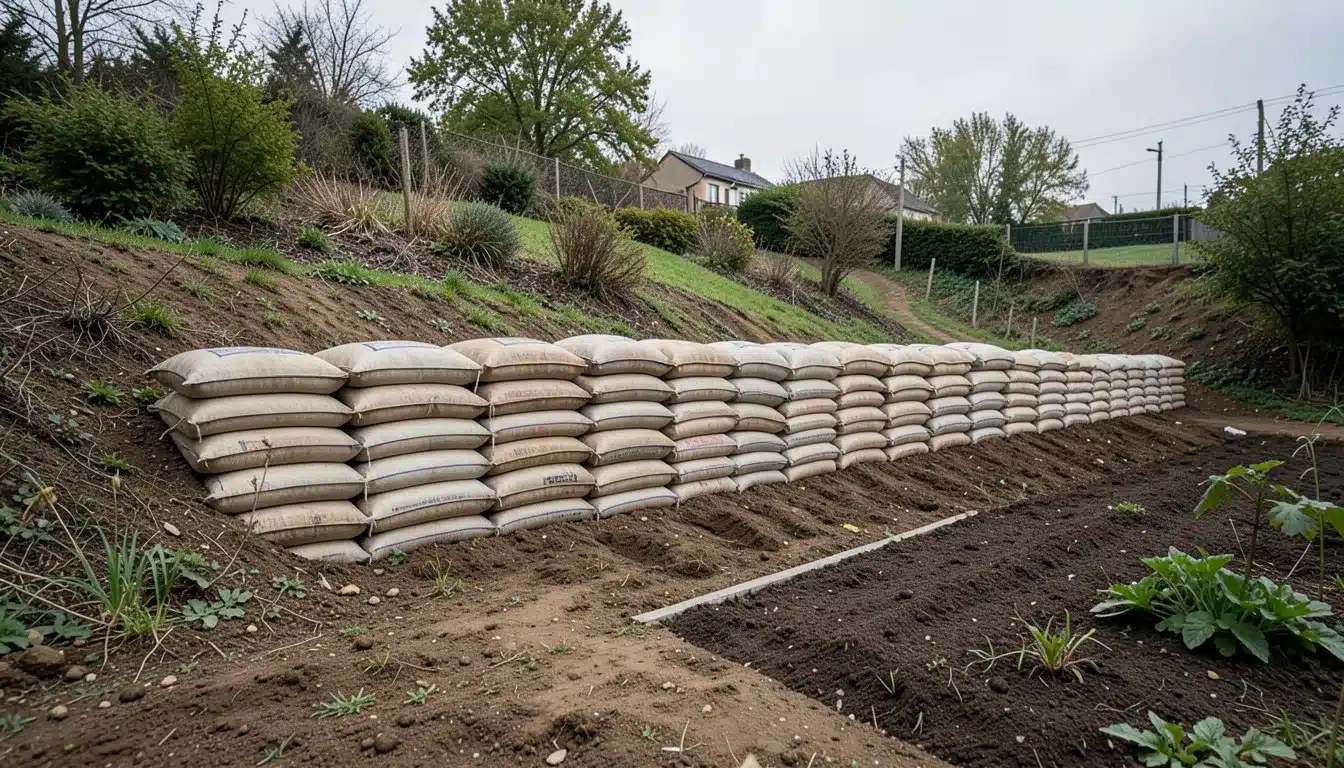
Filled bags of compacted soil or sand can be stacked quickly to stop erosion. This is often used during construction phases or after heavy rain. It is not a long-term fix, but it works well as a short-term measure.
Cost: $5 to $15 per sq. ft.
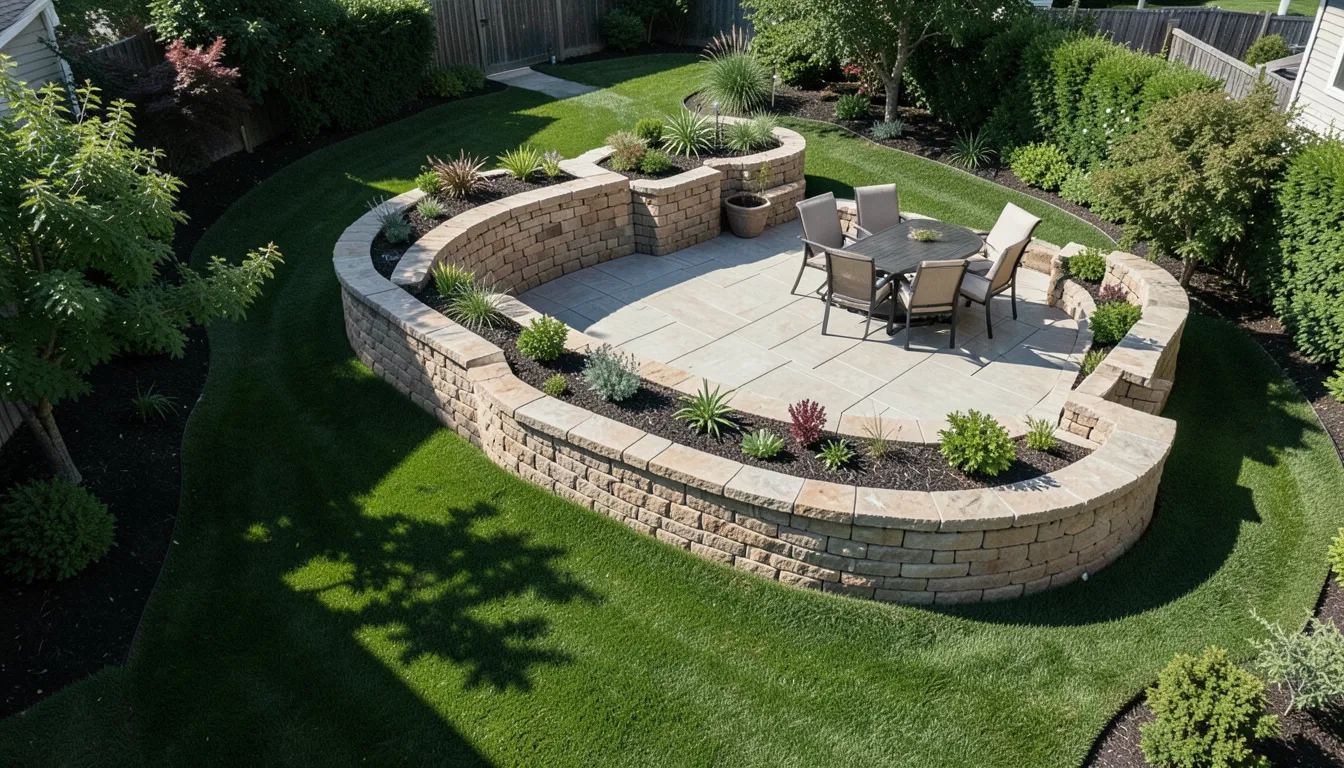
27. Tiered or Multi-Level Retaining Wall
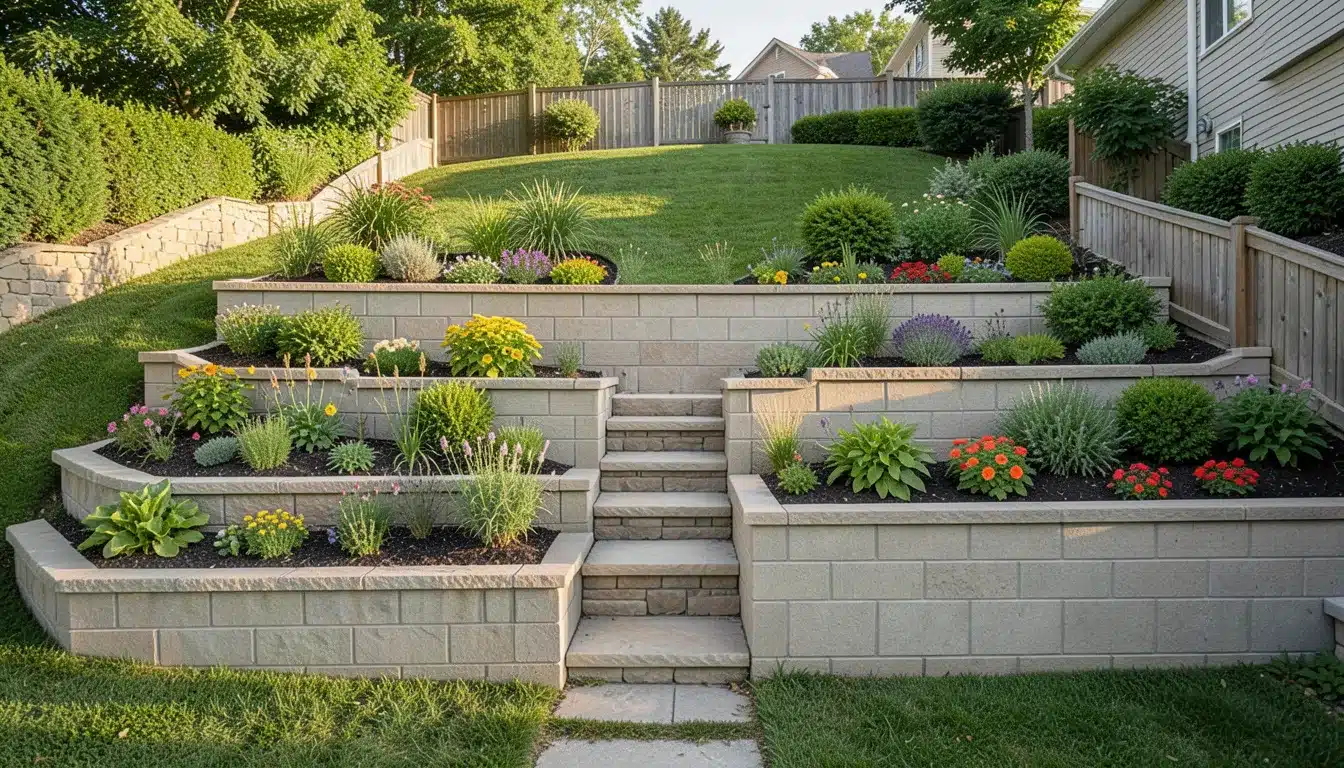
Instead of one tall wall, two or three shorter walls step up the slope. Each tier creates a flat, usable planting bed between the levels. Walls under 3 to 4 feet also tend to stay below permit thresholds, which saves on fees.
Cost: Varies by material chosen
28. Curved Retaining Wall
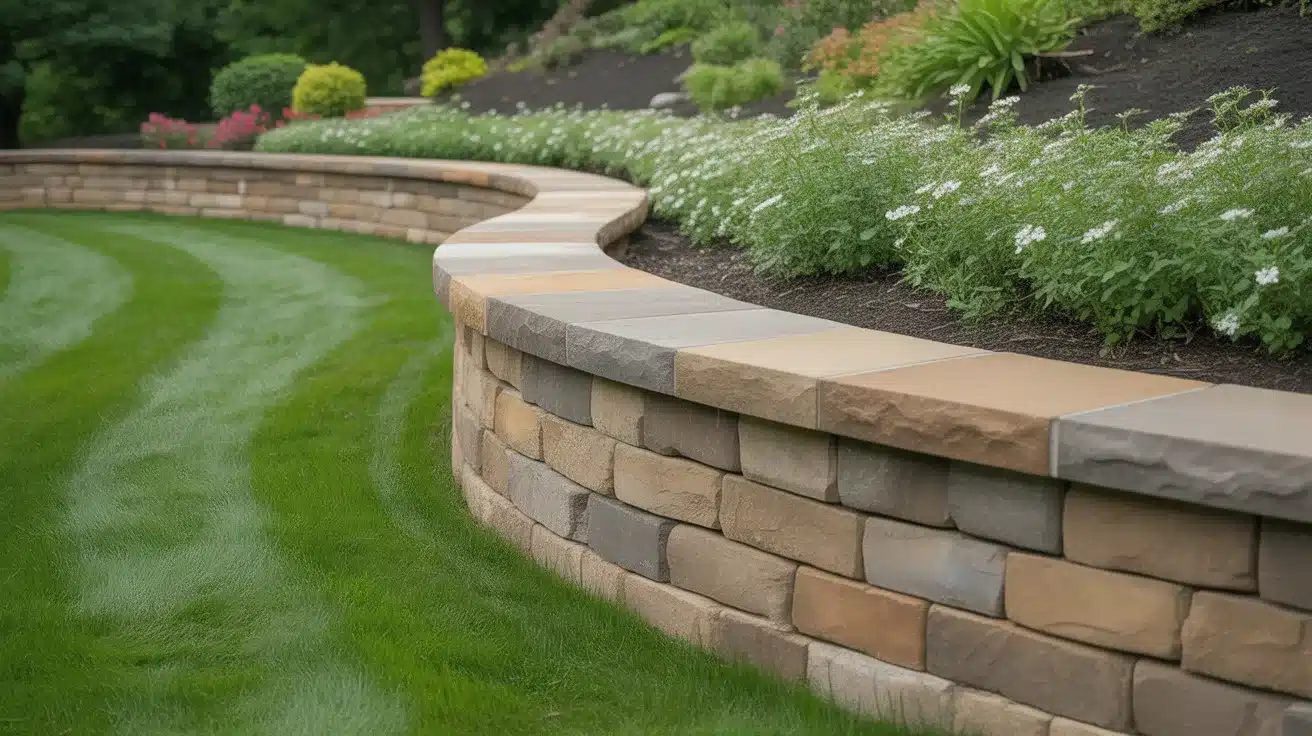
A curved wall follows the natural shape of the land rather than cutting straight across it. It looks more organic and requires less reshaping of the slope itself. Stone and interlocking blocks are the easiest materials to form into curves.
Cost: Roughly 10 to 20% more than a straight wall of the same material
29. Retaining Wall with Built-In Seating
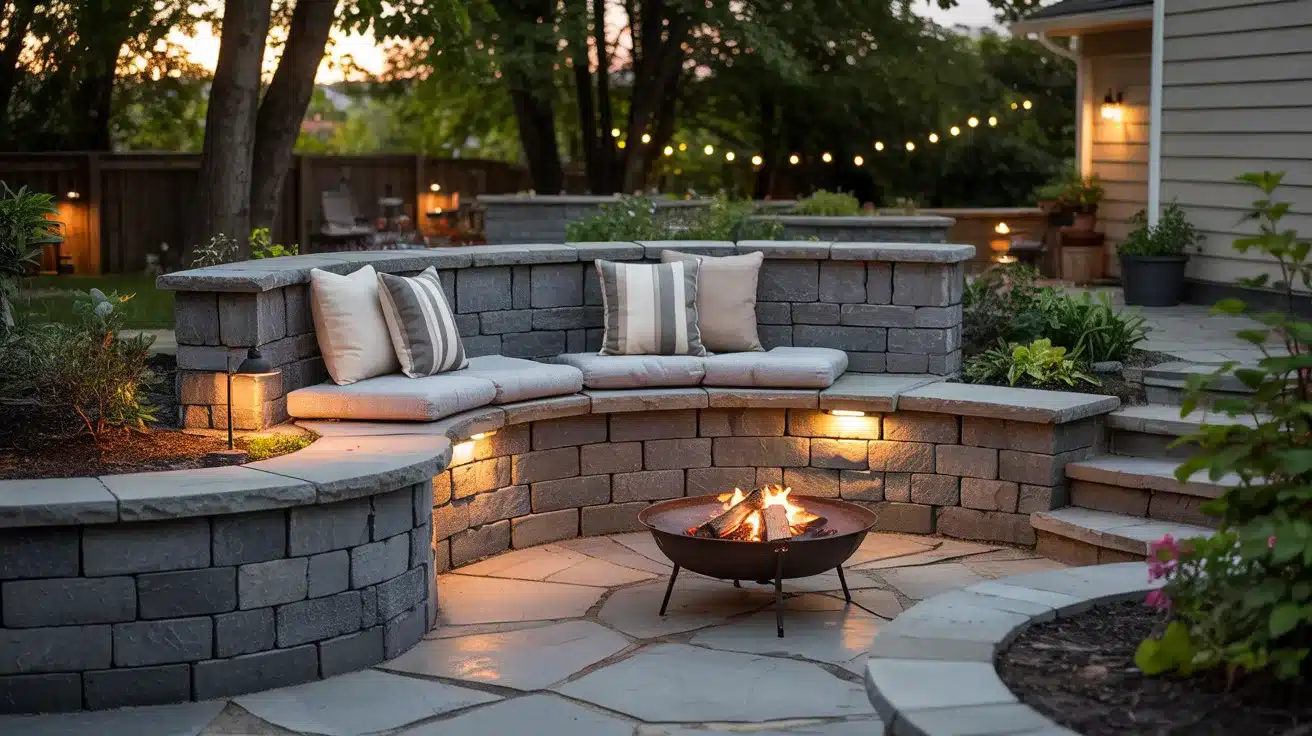
Adding a flat capstone row to the top of a block or stone wall creates a natural outdoor bench. This works well in smaller yards where dedicated seating space is tight. The wall becomes part of the outdoor living area rather than just a barrier.
Cost: Adds $50 to $150 per linear foot to the standard wall cost
30. Retaining Wall with Steps
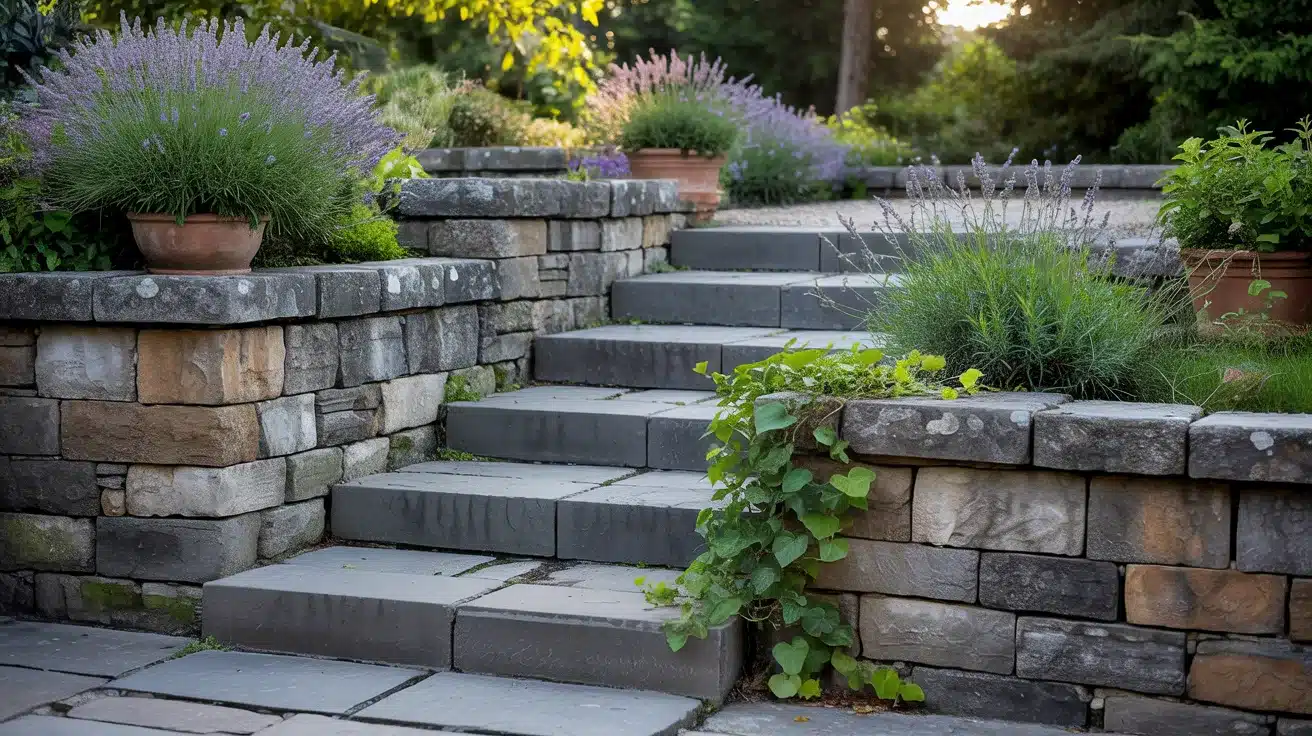
Building stairs directly into a tiered wall connects different yard levels safely and cleanly. Steps built from the same material as the wall keep the overall design consistent. This is also a practical safety feature on steep, regularly used slopes.
Cost: Adds $30 to $80 per step to the standard wall cost
31. Render Finish Retaining Wall
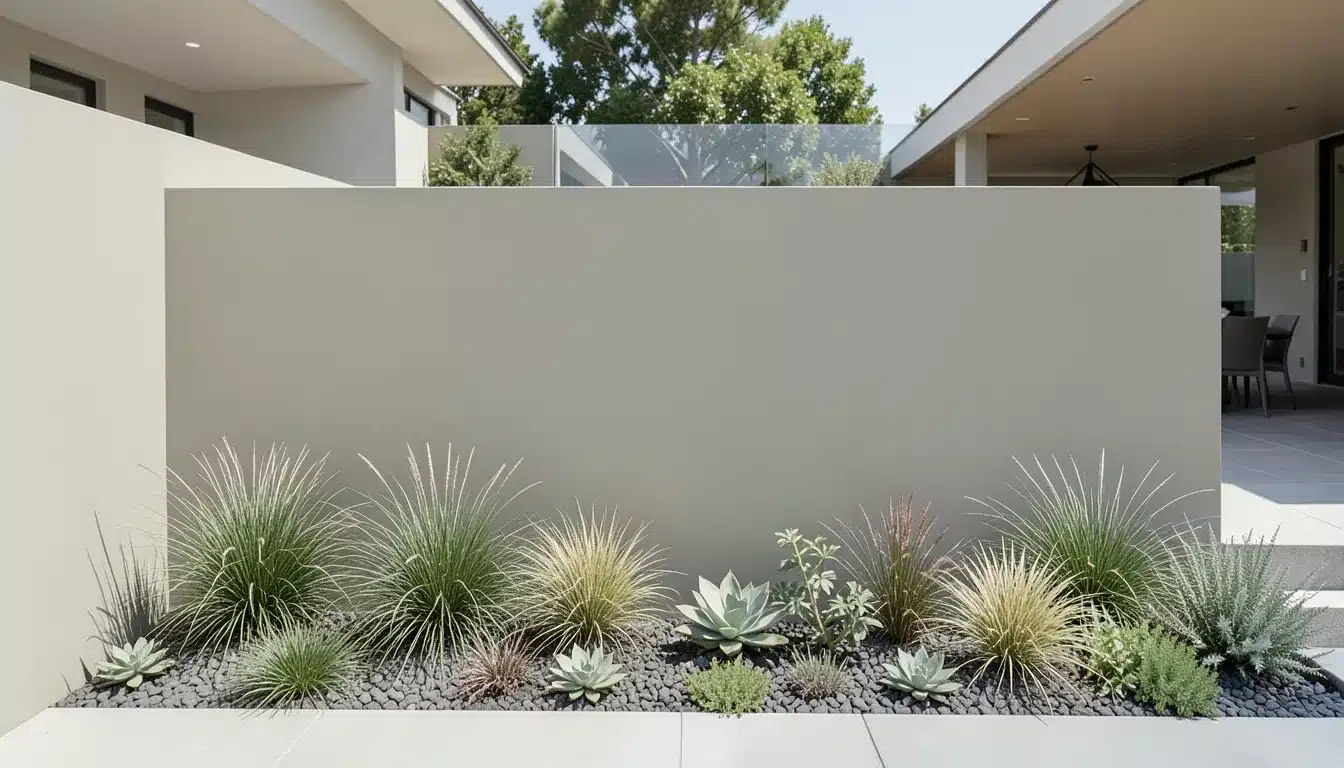
Render is a concrete coating applied over a block wall to create a smooth, water-resistant surface. It gives the wall a polished, plaster-like finish at a much lower cost than stone or brick. This suits contemporary and minimal outdoor designs well.
Cost: $25 to $50 per sq. ft.
32. Raised Garden Bed Retaining Wall
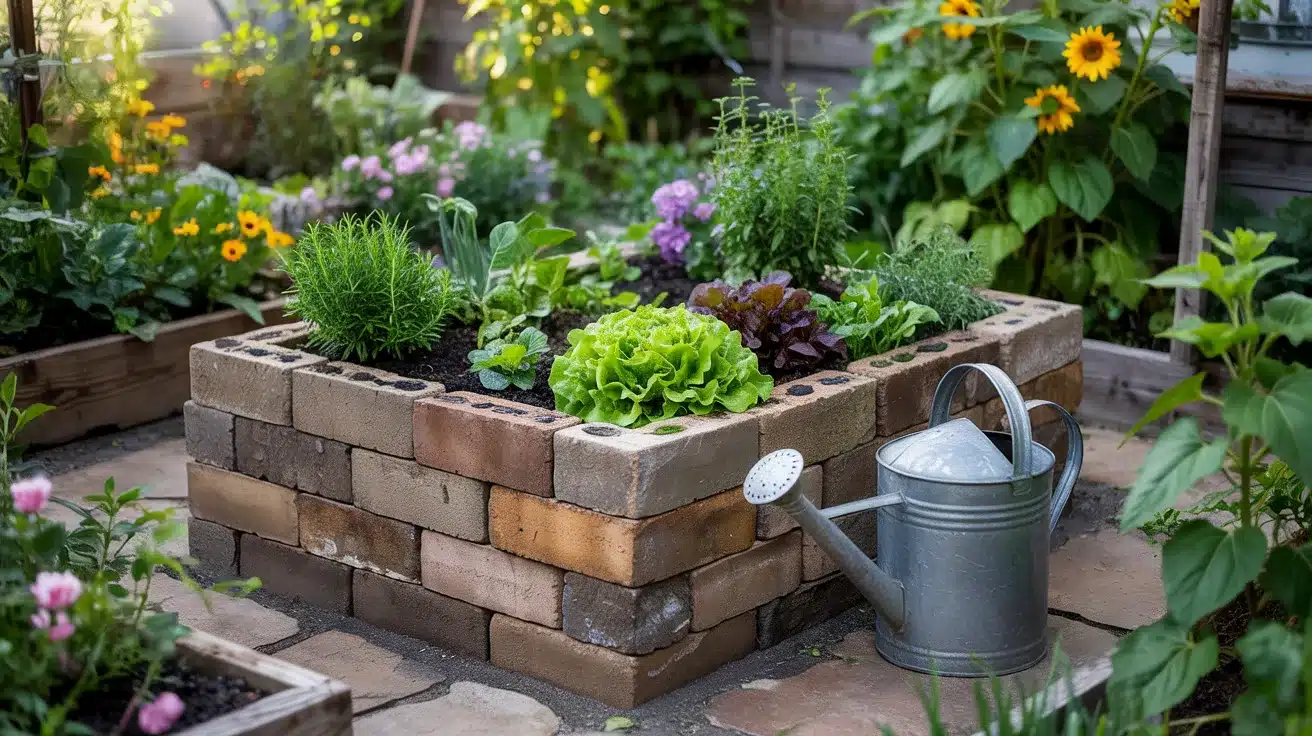
Retaining wall blocks stacked two or three courses high make a solid border for a raised planting bed. The wall holds the soil in while the bed gives you space to grow vegetables, herbs, or flowers. It is a practical, two-in-one build.
Cost: $10 to $40 per sq. ft.
33. Rock Garden Wall with Ground Cover Plants
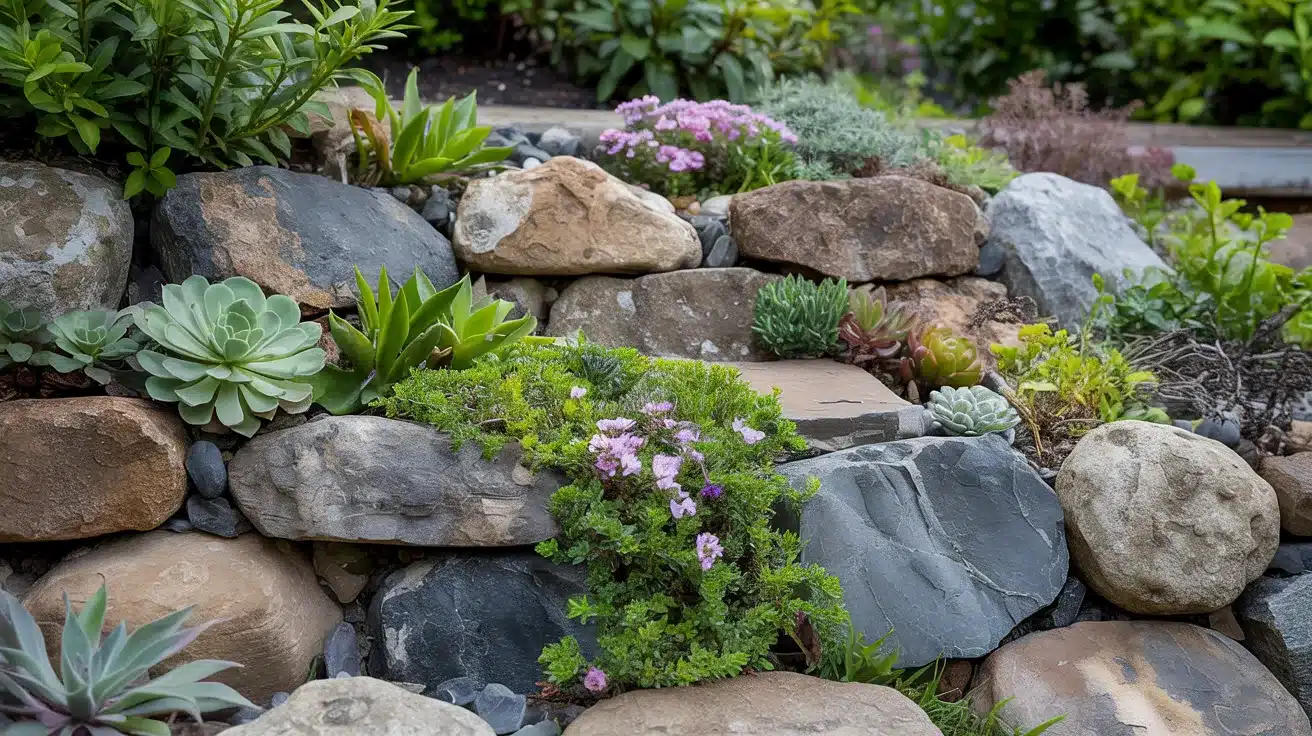
Boulders and smaller rocks are arranged with intentional gaps left open for planting. Low-growing ground covers and succulents fill the spaces over time. The wall actually improves in appearance over the first few seasons as the plants settle in.
Cost: $20 to $60 per sq. ft.
34. Retaining Wall with Planting Pockets
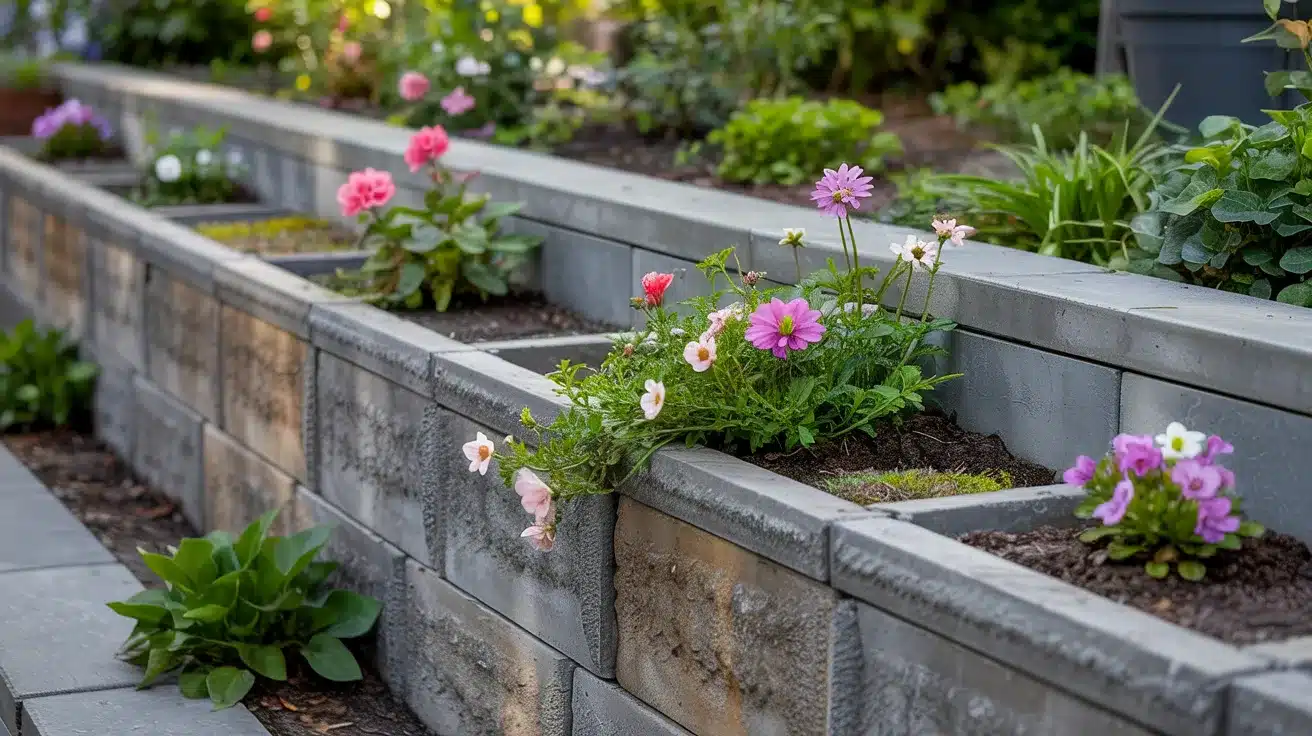
Leaving open gaps in the wall during construction creates small spaces for plants to grow directly in the structure. Fill each pocket with potting mix and plant trailing flowers, herbs, or small shrubs. The result is a wall that doubles as a vertical garden.
Cost: Adds $20 to $40 per pocket to the standard wall cost
35. Vine-Covered Retaining Wall
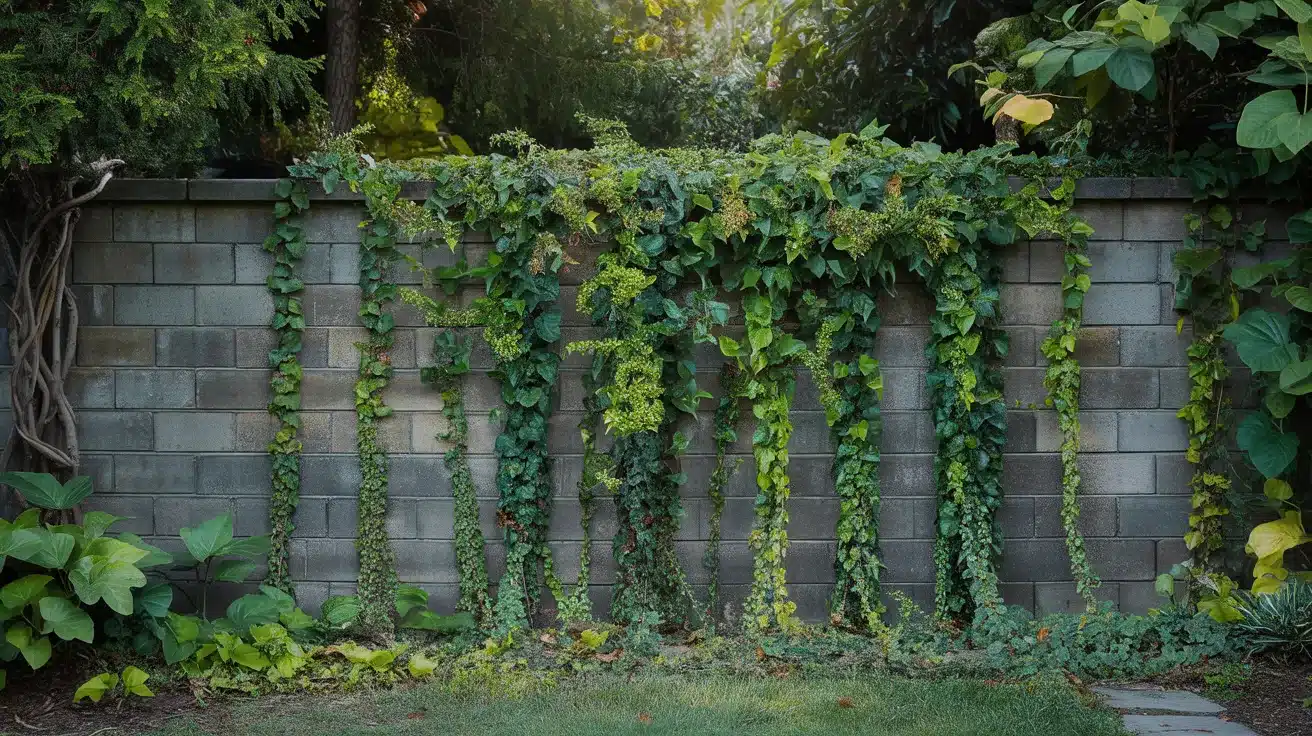
Build any block or concrete wall, then plant climbing vines at the base. Over one to two growing seasons, the vines cover most of the wall surface and considerably soften its appearance. No structural changes are needed to make this work.
Cost: Standard wall cost plus $5 to $20 per vine plant
DIY vs. Hiring a Professional: What Makes Sense for You?
The size and complexity of the job should drive this decision, not just cost. A small, straight wall using interlocking blocks is very manageable for most homeowners. Once height, soil pressure, and structural demands increase, the math changes fast.
| Project Type | Best Approach | Key Reason | Permit Likely? |
|---|---|---|---|
| Wall under 2 feet tall | DIY | Low pressure, simple materials, minimal risk | Usually no |
| Wall 2 to 3 feet tall | DIY with preparation | Manageable with interlocking blocks or timber | Check locally |
| Wall 4 feet or taller | Hire a professional | High soil and water pressure, structural risk | Usually yes |
| Steep or unstable slope | Hire a professional | Soil analysis and engineering are required | Usually yes |
| Curved or tiered design | Either, based on skill level | A more complex layout requires careful planning | Depends on height |
| Near a driveway or property line | Hire a professional | Local codes and safety requirements apply | Often yes |
Note: Labor is one of the highest costs in any retaining wall build. Doing the work yourself saves money upfront, but a mistake on a taller wall can cost more to fix than the original professional quote. Always include drainage materials in your budget as they are not optional.
How to Build a Retaining Wall?
Getting the process right from the start is what separates a wall that holds for decades from one that leans or cracks after the first wet season. Each step below applies to most material types.
- Mark the area with stakes and string to set a clear straight or curved guide line before you dig.
- Dig a trench about 6 inches deep and wide enough to fit the full base of your first course of material.
- Add gravel and compact it to create a firm, level base that will not shift under the weight of the wall.
- Lay the first course of your chosen material, checking for level at every section as you go.
- Place a perforated drainage pipe directly behind the first course and cover it with clean gravel.
- Add geotextile fabric between the gravel backfill and the native soil to stop the two from mixing over time.
- Stack the remaining courses, leaning each one slightly back toward the slope to add structural stability.
- Fill behind each course with gravel as you build up, rather than adding it all at the end.
- Finish the top with capstones or a compacted soil line, and press down all remaining backfill firmly.
How Long Do Retaining Walls Last?
Lifespan depends almost entirely on the material used and how well the drainage is set up. Pressure-treated wood lasts 5 to 15 years before showing signs of wear.
Concrete and block walls typically last 20 to 50 years with very little ongoing maintenance. Natural stone and brick walls, when built on a solid base with proper drainage, can stand for more than 50 years.
The single biggest factor in how long any retaining wall lasts is not the material. It is drainage. A wall without proper water management fails far more quickly, no matter what it is made of.
The Bottom Line
Now you have solid retaining wall ideas to work with. Some are affordable enough to build in a single weekend. Others take more time and planning, but they hold up for a lifetime.
The best retaining wall idea for your yard is the one that fits your space, your budget, and your long-term goals. Wood gives you speed and a low startup cost.
Stone and concrete offer lasting strength with very little maintenance. Gabion walls bring both good drainage and real affordability in one build.
Whatever direction you go, do not cut corners on drainage. That single step does more to protect your investment than any other part of the build.
Which retaining wall idea are you thinking of trying? Comment down below and let us know.