Pumpkins look simple from the outside, but the way they grow is often misunderstood.
Many people assume pumpkin growth stages are just a timeline you wait through. Plant a seed, wait, get a pumpkin. In reality, each stage depends on the one before it.
The plant makes choices along the way based on energy, structure, and timing. That’s why flowers fall off, vines spread so much, or fruit growth seems uneven.
Today, I’ll walk you through every stage in order, explaining what is happening inside the plant, not just what you see on the surface.
By the end, you’ll understand how a pumpkin actually forms, grows, and matures.
What Are the Main Growth Stages of A Pumpkin Plant?
Pumpkin growth stages follow a fixed biological order. Each stage sets up the next. If one stage is weak, the plant can’t fully move forward.
The life cycle begins as a dormant seed and ends as a mature fruit filled with new seeds. Under typical conditions, this entire cycle usually takes about 90 to 120 days. Between those points, the plant shifts its priorities in a specific sequence.
At first, the plant focuses on survival. It builds roots to secure water and stability. Next, it develops leaves to start producing its own energy. After that, it invests in structure, growing vines, and expanding its reach.
Only when enough energy is stored does the plant move into reproduction, forming flowers and fruit.
These stages are connected by energy flow:
- Early stages build the ability to collect energy
- Middle stages store and distribute that energy
- Later stages spend that energy on fruit and seeds
A common misunderstanding is thinking that stages can overlap freely or be skipped. They can’t. A weak root or leaf stage limits vine growth, which ultimately leads to limited fruit development.
How Does Pumpkin Seed Germination Begin?
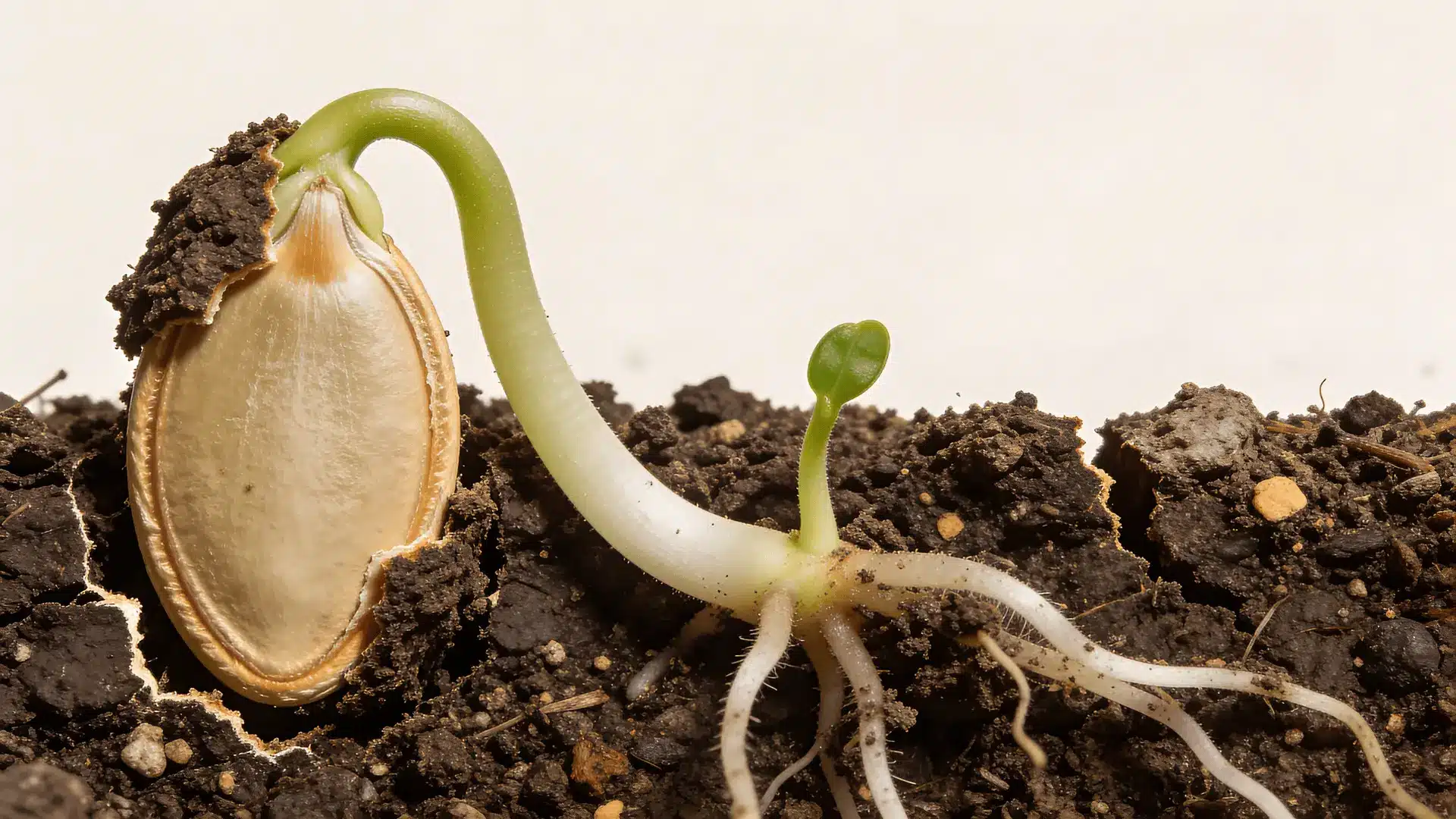
Pumpkin seed germination starts when the seed detects conditions that signal it can survive. This stage is about activation and establishment, not speed or size.
- Moisture absorption: Water penetrates the seed coat, softening it and allowing internal tissues to rehydrate
- Temperature activation: Warmth triggers enzymes that convert stored compounds into usable energy
- Metabolic restart: Dormant cells resume activity, using stored nutrients to fuel early growth
- Root emergence: The primary root grows downward first, anchoring the seedling and drawing in water
- Shoot formation: After the root is established, the shoot pushes upward toward the light
Germination often occurs within the first one to two weeks, depending on temperature and moisture.
This sequence matters. Root formation must happen before anything above the soil can be supported. A seedling without a strong root system cannot maintain growth.
When moisture is uneven or temperatures fluctuate, the internal process may slow, pause, or stop altogether. That’s why germination timing varies so widely. The seed responds to conditions, not planting date, and only moves forward when internal systems are fully activated.
What Happens when The First Leaves Appear?
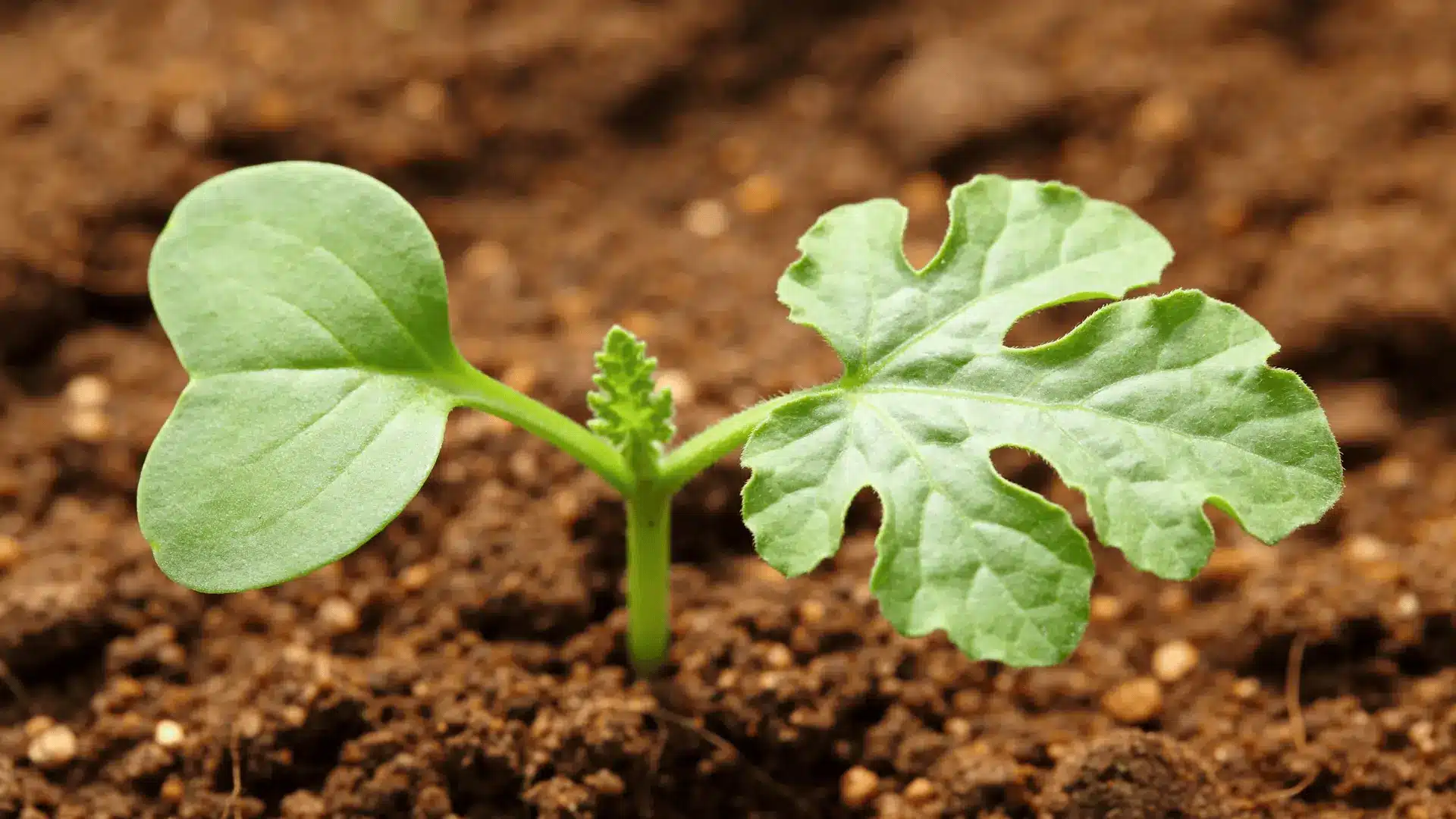
This marks the beginning of the seedling stage. The first leaves that appear are not true leaves. They are seed leaves, also called cotyledons. Their role is temporary: supplying early energy using nutrients stored inside the seed.
True leaves appear next. These leaves have a different shape, thicker structure, and more surface area. This marks a major shift. The plant moves from using stored reserves to making its own energy through photosynthesis.
Once true leaves are active, the plant becomes far more self-reliant. Energy production increases, growth speeds up, and the plant can begin strengthening its stems and roots.
Seed leaves slowly lose their role as true leaves take over. If true leaves emerge late or develop unevenly, overall growth slows because energy production is limited.
Leaf development at this stage determines how much energy the plant can generate later, which affects everything that follows.
Why Does the Pumpkin Plant Focus on Vines Before Fruit?
Before a pumpkin can grow fruit, it must build capacity. This period is known as the vine growth phase. Vines and large leaves are not extra. They are the system that supports fruit development later.
The cause isenergy demand. Pumpkins are heavy, resource-intensive fruit. The plant needs a wide surface area to collect sunlight and a strong network to move nutrients.
The mechanism is vegetative growth. The plant sends energy into vines, nodes, and leaves. Each new leaf adds more energy production. Each vine extends reach and support.
The outcome is readiness for reproduction. Without enough stored energy, the plant cannot sustain fruit growth.
Many people think vine growth delays fruit. In reality, it enables fruit. Plants with limited vine growth may flower but fail to hold pumpkins. Strong vegetative growth gives the plant options later when it shifts focus.
How Do Pumpkin Flowers Develop and Differ?
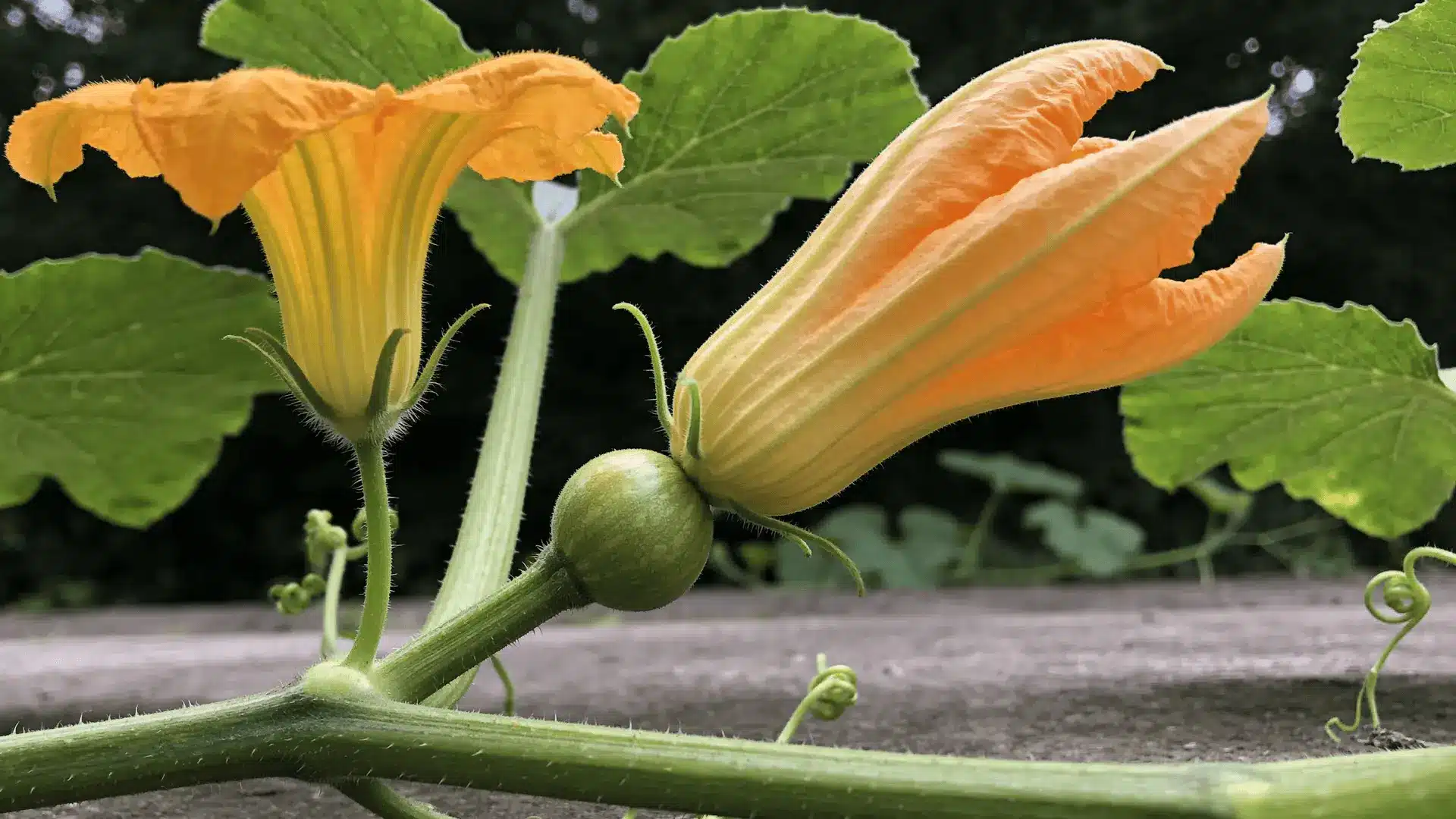
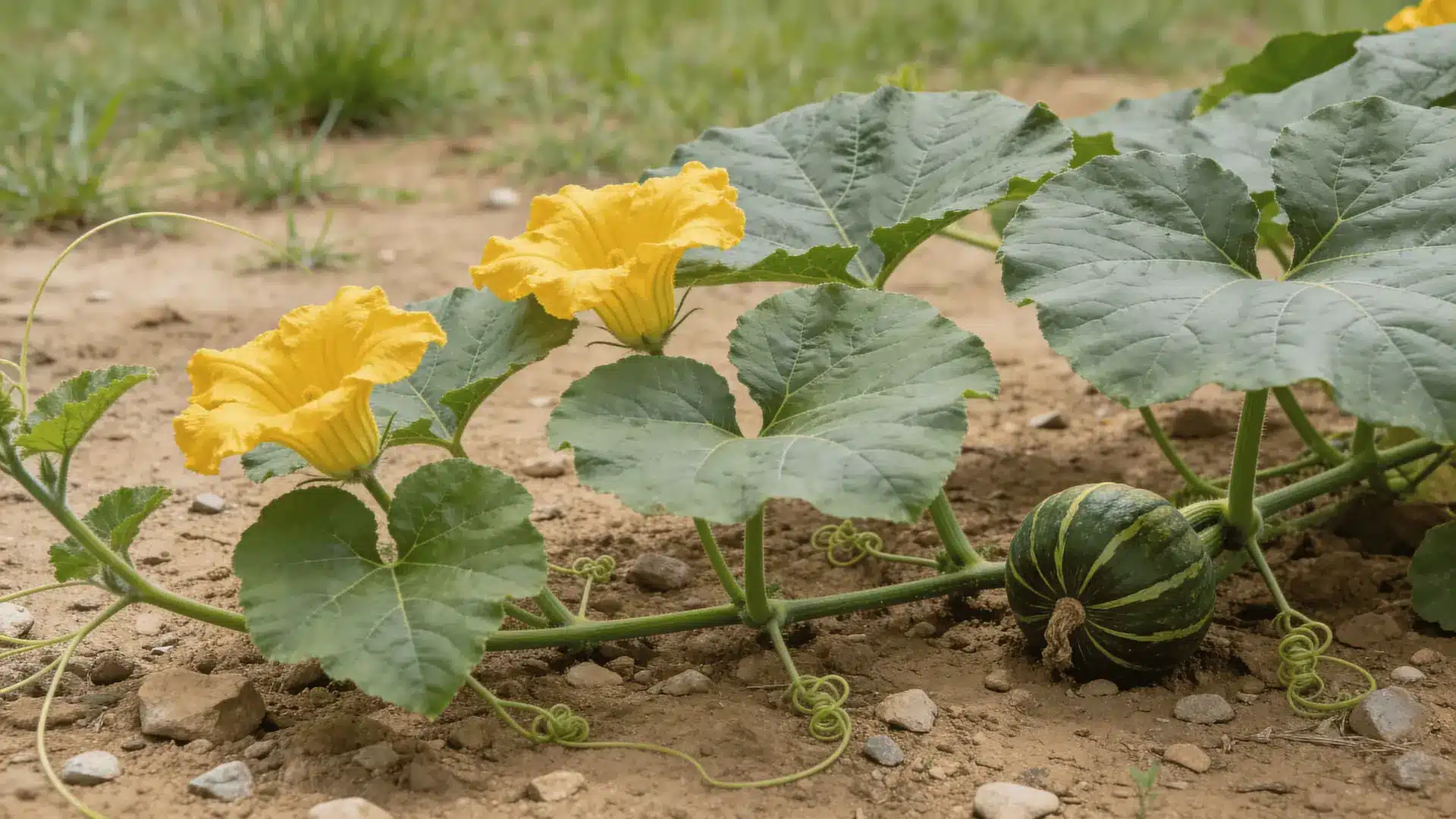
Pumpkin plants produce two distinct types of flowers, and they don’t appear at the same time or serve the same purpose.
Male flowers form first. They grow on long, thin stems and exist to produce pollen. Their early arrival helps the plant prepare for reproduction before fruit is even possible.
Female flowers appear later. You can spot them by thesmall swollen base beneath the petals. That swelling is the immature pumpkin, already formed but not yet growing.
This transition marks the flowering stage of the pumpkin plant. The timing is deliberate:
- Male flowers help build pollen supply early
- They also attract pollinators to the plant
- Female flowers appear only after enough energy is stored
Structurally, the difference matters. Female flowers already contain the structures needed to become fruit. Male flowers do not. Once pollen is released, the male flower’s role is finished.
Not every flower is meant to become a pumpkin. Flower production lets the plant test whether conditions and energy levels are right. Only female flowers that receive pollen at the right moment continue growing. The rest drop naturally, without turning into fruit.
What Triggers a Flower to Turn Into a Pumpkin?
The trigger is successful pollen transfer from a male flower to a female flower. Once pollen reaches the female flower, it signals the plant to begin fruit development.
This process starts inside the flower base. The ovary begins to expand as cells divide rapidly. At the same time, the plant redirects water, sugars, and nutrients toward that growing structure.
If pollination does not occur, the signal stops. The ovary never activates, and the flower drops. This isn’t a failure or a mistake. It’s the plant protecting its energy reserves.
The result is either fruit setor natural flower loss. Early in the season, fruit set can be uneven because energy levels are still building. As the plant grows stronger, successful fruit formation becomes more consistent.
Dropped flowers don’t always point to an outside problem. In many cases, it’s simply a matter of timing. The plant only commits to growing pumpkins when it has enough stored energy to support them
How Does a Pumpkin Grow and Mature on The Vine?
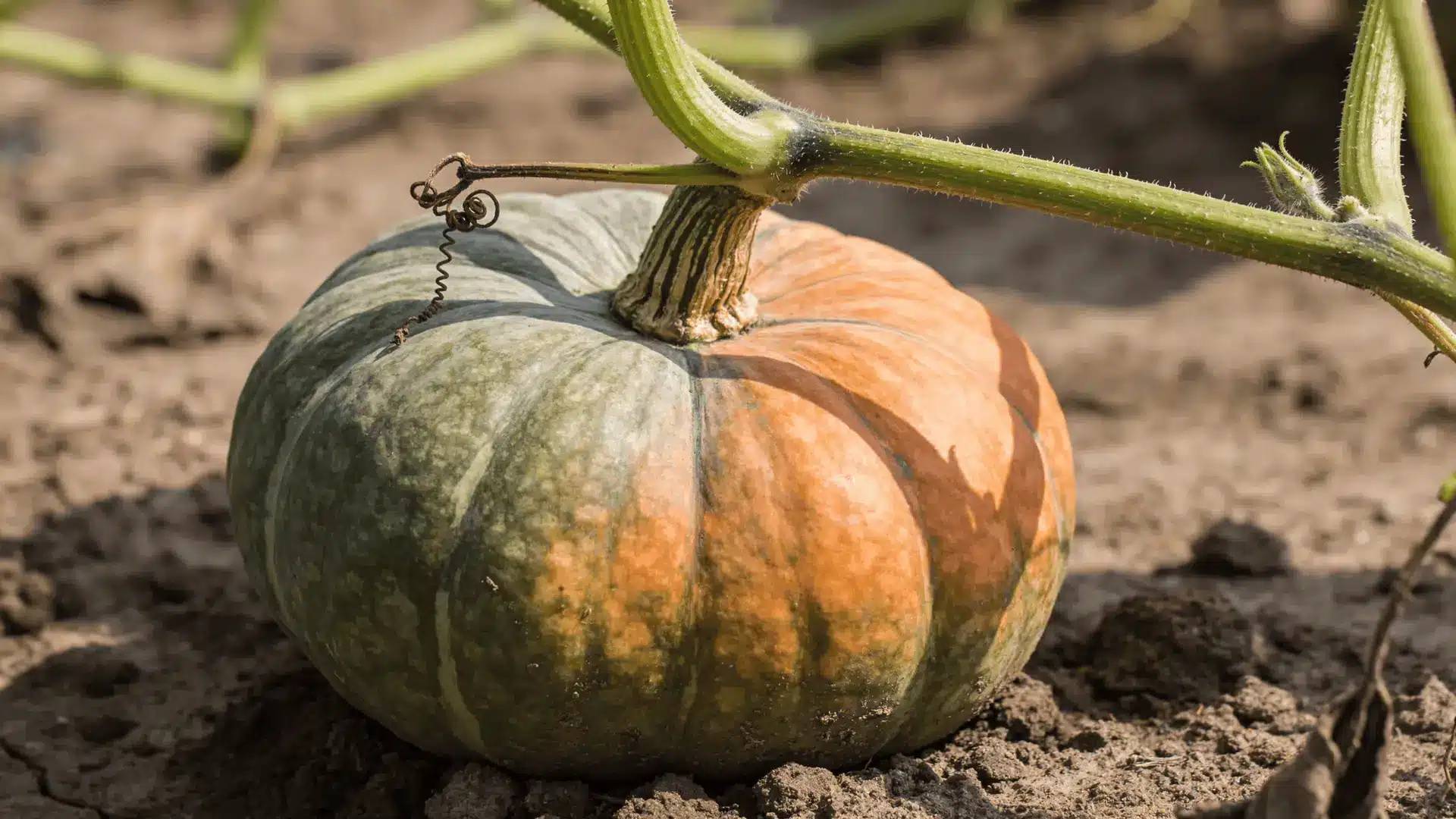
Once a pumpkin forms, its development follows two parallel processes that don’t move at the same speed. This is the fruit development stage.
One process focuses on size growth, the other focuses on internal maturation. When they fall out of sync, a pumpkin may look ready on the outside while still developing internally.
Size Growth: What You See First
Early growth is driven by rapid cell expansion. Cells fill with water and nutrients, causing the pumpkin to increase in size quickly. This phase creates the most noticeable changes, but it’s mostly about volume, not readiness.
At this point, the pumpkin may look impressive, even though important internal changes are still underway.
Internal Maturation: What Finishes the Process
While size increases on the outside, slower changes happen inside. Seeds mature, the rind thickens and hardens, and sugar levels stabilize. Chlorophyll breaks down, allowing deeper pigments to dominate and shift the pumpkin’s color.
These changes determine whether the pumpkin is actually complete, regardless of how large it appears.
Size and maturity don’t always align. A pumpkin can stop growing externally while internal development continues, or grow large before internal processes are finished.
Why Growth Speed Varies
Growth is not constant. Early fruit may develop unevenly or pause if the plant’s energy supply is limited. Later fruit often grows more steadily once the plant reaches peak energy production.
The key contrast is expansion versus completion. Expansion shows growth in progress. Completion shows the life cycle reaching its end. Both must occur for a pumpkin to fully mature on the vine.
This final maturation phase can take several weeks after the pumpkin reaches its full size.
Wrapping Up
The thing that really matters is seeing pumpkin growth stages as one long conversation the plant is having with itself. Nothing is rushed. Nothing is random.
Every move depends on how much energy the plant has, how stable it feels, and what it can actually support next. Roots lead to leaves. Leaves justify vines. Vines earn flowers. Flowers become fruit only when the timing is right.
When you stop expecting the plant to follow a neat schedule, the whole process starts to click.
If you want this to really sink in, pick one pumpkin plant and watch it closely over time. Let the patterns reveal themselves instead of trying to force them.