Pink Muhly Grass: Invasive Menace… or the Well Behaved Drama Queen Your Fall Garden Needs?
Every time someone says “ornamental grass,” I can practically hear a collective gardener flinch.
Because yes some grasses are basically the garden equivalent of that one party guest who “just needs to crash on your couch for a night” and then, three months later, has changed the Wi-Fi password and adopted a feral cat.
But pink muhly grass? Pink muhly is not that guest.
If you’ve been eyeing those fluffy pink fall plumes and wondering, “Am I about to plant a problem?” let me save you some stress spinning: pink muhly grass (Muhlenbergia capillaris) is not considered invasive and it generally stays put. You get the color show without the guilt spiral.
Let’s talk about why it behaves, what to avoid at the nursery (because there are troublemakers nearby), and how to plant it so it actually thrives instead of sulking.
First: Does Pink Muhly Spread Like a Gremlin?
Nope. It’s a clump forming grass.
Pink muhly doesn’t travel through your yard via underground runners (rhizomes/stolons) the way some grasses do. It basically just… gets wider from the same base, slowly, like it’s expanding its personal bubble by a couple inches a year.
So instead of “surprise! grass in your sidewalk cracks,” you get a predictable mound that politely stays where you planted it.
“Okay, but what about seeds?”
Totally fair question, because grasses love to act innocent and then quietly drop 9 billion seeds.
Pink muhly does make seed in those pink plumes, but it’s not a prolific self-starter. Most seed falls close to the plant or stays hanging out in the seed heads through winter. You might get a random baby plant near the mother clump if conditions are just right… but it’s not known for bulldozing gardens or natural areas.
Also: it’s been sold forever, planted all over, and it’s not showing up on invasive species lists the way the usual suspects do. And university/extension folks routinely recommend it as a safer alternative to grasses that actually cause problems. (Translation: this isn’t just wishful thinking from people who love pretty pink things. It’s backed up.)
The Real Problem: Grasses That Look Similar-ish (And Absolutely Do Not Behave)
Here’s where people get burned: they hear “ornamental grass” and think they’re all the same. They are not. Some are sweet. Some are chaos in a pot.
Two repeat offenders:
1) Mexican feathergrass (Nassella tenuissima)
It’s the wispy, hair like one that looks like a shampoo commercial in the breeze.
It also drops tons of seed and can form dense stands that crowd out other plants. Some states (like California) have it flagged as an emerging invasive. It’s pretty… and then it’s everywhere… and then you’re googling “how to unplant my past decisions.”
2) Japanese silver grass (Miscanthus sinensis)
Big, bold, architectural… and in many places, invasive. It can spread by underground growth and seed, and “sterile” cultivars are not always sterile in the real world (because plants love lying).
I’ve seen Miscanthus used in landscapes like it’s a harmless accent plant, and then a few years later it’s giving “jurassic thicket.” Not my favorite surprise.
My quick and dirty nursery rule:
Flip the tag and look for the botanical name: Muhlenbergia capillaris.
If it says Nassella or Miscanthus (or you see Pennisetum and you’re not 100% sure what you’re buying), pause. Read. Google in the parking lot. Text a plant friend. I support all of it.
Because the plant label is basically the ingredient list. And you don’t want to accidentally bring home the garden equivalent of gluten when you asked for rice.
Plot Twist: Pink Muhly Is Native… and Not Even “Too Successful”
This part always gets me: pink muhly is native to the Eastern U.S., and it’s actually listed as endangered in a few states (including Connecticut, Indiana, Maryland, and New Jersey), and presumed extinct in Pennsylvania.
That’s not what “aggressive invader” energy looks like.
It’s more like: pink muhly thrives in certain conditions (often historically supported by natural fire cycles), and when those conditions disappear, it doesn’t just steamroll its way into dominance.
Which brings us to the real key to pink muhly happiness…
Where Pink Muhly Thrives (And Where It Will Absolutely Sulk)
Pink muhly is low drama once it’s happy. But if you put it in the wrong spot, it won’t become invasive it’ll just look sad and stringy and make you feel like you failed it (you didn’t, you just chose poorly).
Here’s what it wants:
Sun: the more, the fluffier
For the big pink plume moment, aim for at least 6 hours of direct sun. In shade, it’ll survive, but you’ll get less bloom and less of the “cotton candy cloud” effect.
(And honestly? If you accidentally plant it where it gets less sun, it’s not the end of the world. It just won’t be as extra.)
Drainage: non-negotiable
Pink muhly hates wet feet. Soggy soil can lead to root rot fast.
If your yard holds water, don’t force it. You’ll just be watering a plant that’s already drowning. If you’re not sure, do the lazy person test: dig a small hole, fill it with water, and see if it drains within a few hours. If it’s still a puddle party later, pick a different spot or improve drainage.
Climate: generally zones 6-9
It tends to do best in USDA zones 6-9. Some folks in zone 5 get it to work in a protected spot (especially ‘Regal Mist’), but if you’re way north, you might be fighting nature. And nature is undefeated.
Planting Pink Muhly Without Overthinking Yourself Into a Spiral
You don’t need a master plan and a spreadsheet (unless that brings you joy, in which case… live your truth). You just need a few things right.
When to plant
- Spring after the soil warms up
- Or early fall, giving it a solid month-ish before hard frost
If you plant super late in fall, it’s like moving into a new house and immediately going on vacation you’re not giving the roots time to settle in.
Spacing (aka: give it room to be fabulous)
- 2-3 feet apart if you want distinct clumps
- 3-4 feet apart if you want that “soft meadow mass” look over time
The #1 mistake: planting too deep
Set the crown right at soil level (where the stems meet the roots).
Too deep = risk of rot. Too high = dries out.
This is one of those little details that matters way more than it feels like it should. (Ask me how I know. Actually don’t. I’m still embarrassed.)
Clay soil tip (because clay is a personality)
If you’ve got heavy clay, don’t dig a bathtub shaped hole and plop your plant into it like a sponge in a cereal bowl. You want drainage.
I like to amend with compost (think: improving structure, not “feeding”), and in really heavy spots, planting slightly proud/raised can help.
Watering (simple version, not a novella)
- Water regularly while it’s establishing (first season)
- After that, it’s pretty drought tolerant, and you’ll mostly water during extended dry spells
Basically: baby it for a bit, then let it be the independent adult it was born to be.
The Only Two Maintenance Things You Need To Do (Yes, Only Two)
Pink muhly is not a fussy plant. It just needs a tiny bit of yearly attention so it doesn’t turn into a tumbleweed wig.
1) Cut it back in late winter
Late February/early March is the sweet spot in a lot of places before new growth starts.
Cut it down to about 3-6 inches. This clears out the dead blades and old seed heads and makes room for fresh green growth.
If you skip it, it’ll still live, but it can start looking matted and messy. If you wait too long in spring, you’ll chop off new shoots and then you’ll feel like a villain.
2) Divide every few years (if it starts looking tired)
Every 3-4 years, older clumps can get a dead spot in the center. If that happens, dig it up, split it, replant the best pieces, and suddenly you’ve got:
- a refreshed plant
- bonus plants for other spots
- a very smug feeling of “look at me multiplying plants like a garden wizard”
Also, dividing is the main way pink muhly “spreads” meaning you control where it goes.
When I’d Skip Pink Muhly (Because Sometimes “Pretty” Isn’t the Whole Story)
I love this grass, but I’m not going to pretend it’s the answer for every single yard on earth.
I’d think twice if:
- You live right next to wetlands or sensitive natural areas. Even well behaved ornamentals can be a weird fit in super delicate ecosystems. In those spots, I’d lean into local natives like little bluestem, prairie dropseed, or switchgrass.
- You’re in a state where it’s endangered. This is a nuance thing: nursery grown plants might not be from local genetics, and that can complicate restoration efforts. If you’re in one of those states, ask your local extension office what they recommend (or look for locally sourced natives).
- You truly want zero maintenance. Pink muhly needs that yearly haircut to look its best. If you want “I never touch anything ever,” choose something that naturally stays tidy without a cutback.
What to Expect (AKA: When the Magic Happens)
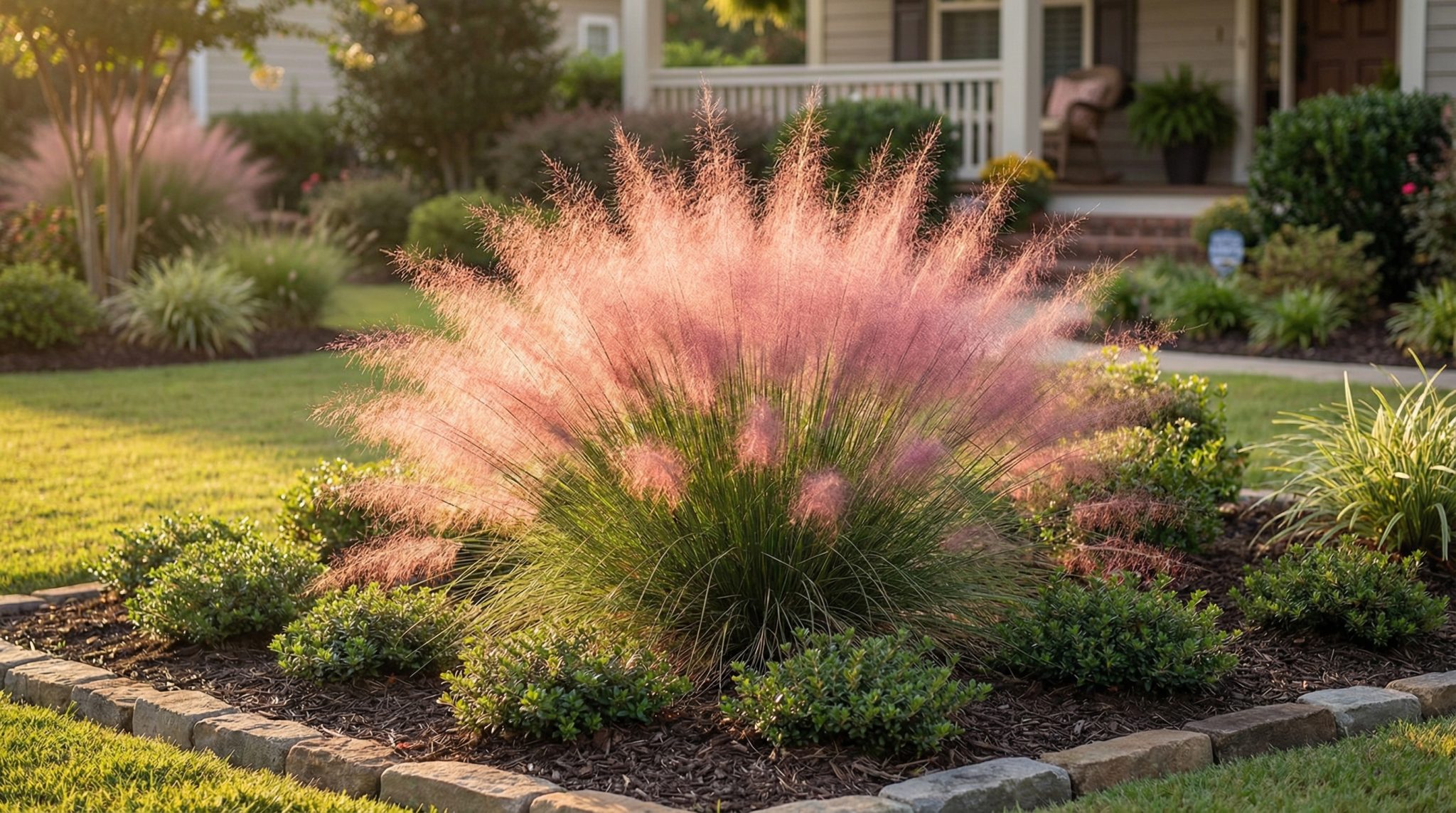
Pink muhly typically tops out around 2-4 feet tall and 2-3 feet wide, depending on your variety and growing conditions.
It’s not one of those plants that looks life changing in week two. It’s more of a “trust the process” situation. By year two or three, it starts showing up like it pays rent.
And then fall hits.
Those pink plumes usually show up September through November (depending on your climate) and hang around for weeks, often fading into a soft tan that still looks pretty through early winter.
Varieties I actually like
- Straight species (Muhlenbergia capillaris): reliable pink, classic look
- ‘Regal Mist’: deeper color, a bit more cold tolerant
- ‘White Cloud’: white plumes and a slightly later show (great if you want to stretch the season)
The Bottom Line: You Can Plant It Without Panic Googling at Midnight
Pink muhly grass is one of those rare landscape plants in this muhly grass plant profile that gives you a big, dramatic payoff without the “what have I done” aftermath.
If you give it sun and decent drainage, plant it at the right depth, and commit to the once a year haircut, it’ll stay in its lane literally while making your fall garden look like it’s wearing a pink, fluffy halo.
And honestly? We all deserve at least one plant that’s beautiful and well behaved.