Ever grabbed a bunch of fresh herbs at the store, only to realize halfway through cooking that you might have the wrong ones?
The parsley vs. cilantro mix-up happens to the best of us. These leafy twins might share the same botanical family, but their flavors couldn’t be more different.
One brings bright, peppery freshness while the other adds citrusy zing. Knowing which is which makes all the difference in your cooking.
This guide will help you spot them apart at a glance, understand their unique personalities, and use each herb with total confidence.
Let’s clarify these greens and learn how to make every dish taste just right.
Are Parsley and Cilantro the Same Plant?
Parsley and cilantro are completely different plants, though they belong to the same botanical family, Apiaceae.
Think of them as cousins rather than twins. They share similar feathery leaves and growth patterns, which explains why they’re so often mistaken for each other at the grocery store.
The confusion deepens depending on where you are in the world. Cilantro is called coriander in many countries, while parsley stays parsley everywhere.
But don’t let their family resemblance fool you. These herbs have distinct flavors, different culinary uses, and swapping one for the other can completely change your dish.
They’re definitely not interchangeable.
Parsley vs. Cilantro: Visual Differences
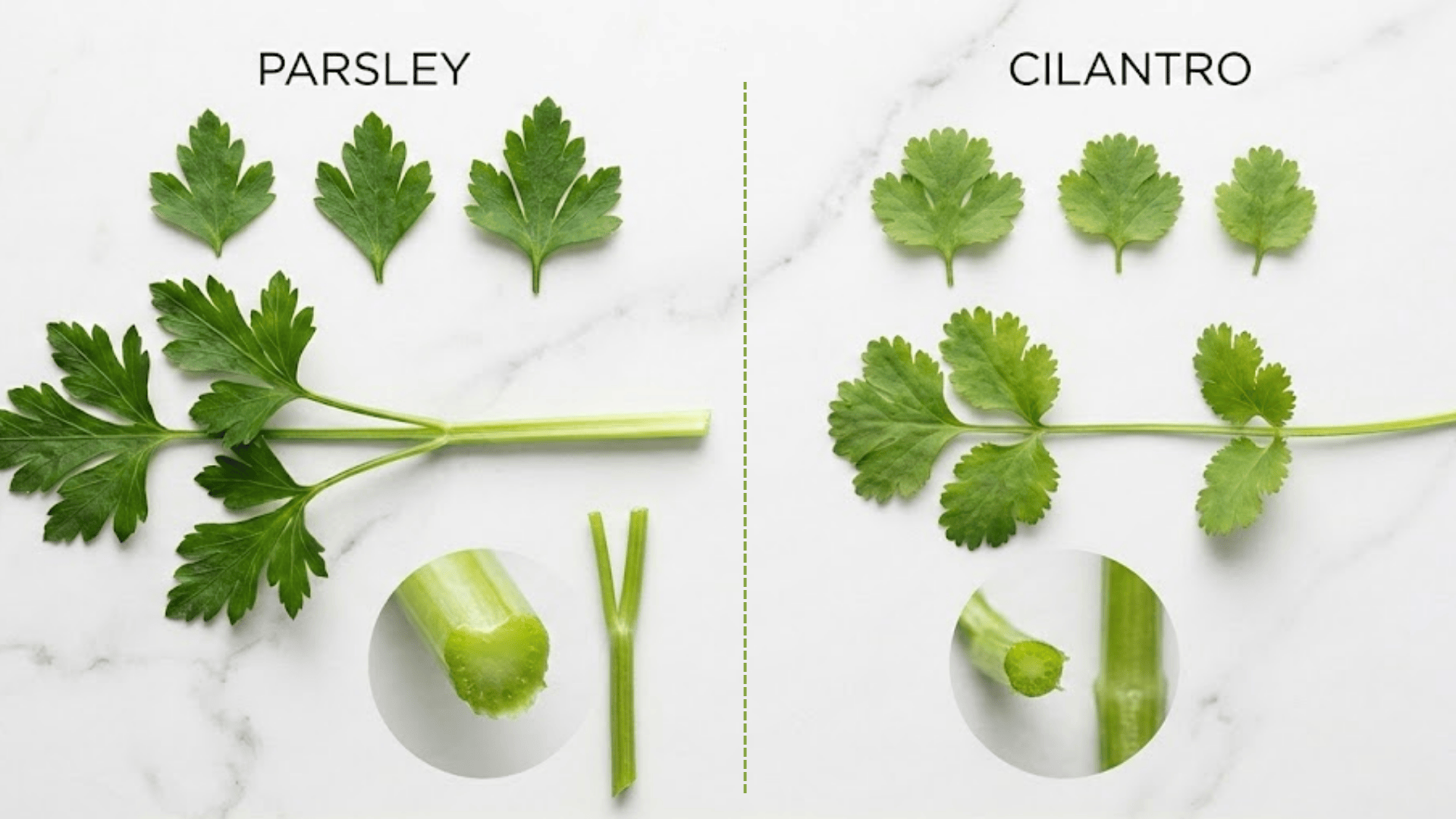
Once you know what to look for, telling these herbs apart becomes second nature. The secret is in the details: leaf shape, color, and stem structure all give you clues.
1. Leaf Shape
Parsley leaves come to a point with crisp, defined edges that almost look ruffled or serrated. The leaves have a structured, angular appearance that holds its shape well.
Cilantro, on the other hand, has rounded, softer leaves with gently scalloped edges that look more delicate and lacy. The overall shape is more flowing and less geometric.
If you run your fingers along the edges, parsley feels sharper while cilantro feels smooth and tender.
2. Color & Texture
Parsley shows up in a darker, more forest-like green with sturdy, firm leaves that feel substantial when you touch them. The leaves have a bit of weight and body to them.
Cilantro appears in a lighter, brighter shade of green with delicate, almost feathery leaves that feel soft and fragile.
Hold both up to the light, and you’ll notice parsley looks more robust while cilantro seems almost translucent and airy in comparison.
3. Stems
Parsley stems are thicker, firmer, and more fibrous, making them tougher to bite through and better suited for stocks or discarding. They hold up well and maintain their structure during cooking.
Cilantro stems are thinner, more tender, and actually edible, often chopped right along with the leaves in many recipes. They’re delicate enough to add directly to salsas, curries, and salads without any unpleasant texture.
This stem difference is one of the easiest ways to identify each herb.
Parsley vs. Cilantro: Smell & Taste Comparison
When it comes to telling these herbs apart, your nose and taste buds are your best friends. The flavor difference is so dramatic that one quick sniff or taste will settle any confusion instantly.
| Aspect | Parsley | Cilantro |
|---|---|---|
| Flavor | Fresh, grassy, mild with a clean peppery finish | Citrusy, bold, peppery with lemony zing |
| Aroma | Mild herbaceous scent, needs crushing to release | Pungent, immediately recognizable citrus notes |
| Intensity | Subtle, works as a background flavor | Strong, assertive, takes center stage |
| The Soap Factor | Tastes the same to everyone | 10-14% of people taste soap due to the OR6A2 gene |
| Quick Tell | Gentle, universally pleasant taste | Unmistakable citrus punch or soapy taste makes it instant to spot |
Parsley vs. Cilantro in Cooking
These herbs shine in completely different culinary worlds. Knowing when to use each one helps you nail the authentic flavor of any dish you’re making.
When to Use Parsley?
Best for Mediterranean and European cooking, where you want fresh flavor without stealing the spotlight.
- Classic garnish for soups, roasted vegetables, and grilled meats that adds color and a mild herbal note.
- Essential in Italian, French, and Middle Eastern dishes like tabbouleh, chimichurri, and gremolata.
- Perfect for sauces, salad dressings, and marinades where you need brightness without overpowering citrus.
When to Use Cilantro?
The go-to herb for bold, vibrant cuisines across Mexico, India, Thailand, and beyond.
- Stars in fresh salsas, guacamole, pico de gallo, and as a topping for tacos and burritos.
- Key ingredient in Indian curries, chutneys, and Thai soups, where its citrusy punch balances spice.
- Best added at the end of cooking or used fresh to preserve its bright, distinctive flavor.
Can You Substitute Parsley for Cilantro (and Vice Versa)?
Short answer: not really. While both add freshness, their flavors are too different for a true swap.
Parsley won’t give you that citrusy zing cilantro brings to tacos or curries, and cilantro’s bold flavor overwhelms delicate European dishes meant for parsley.
In a pinch, flat-leaf parsley can work as a visual stand-in for cilantro, but the taste won’t match.
For cilantro haters, try a mix of parsley with a squeeze of lime juice, or use fresh basil or mint, depending on the cuisine.
Each herb has its own role in cooking, so choosing the right one makes all the difference in how your dish turns out.
Parsley vs. Cilantro: Growing Differences
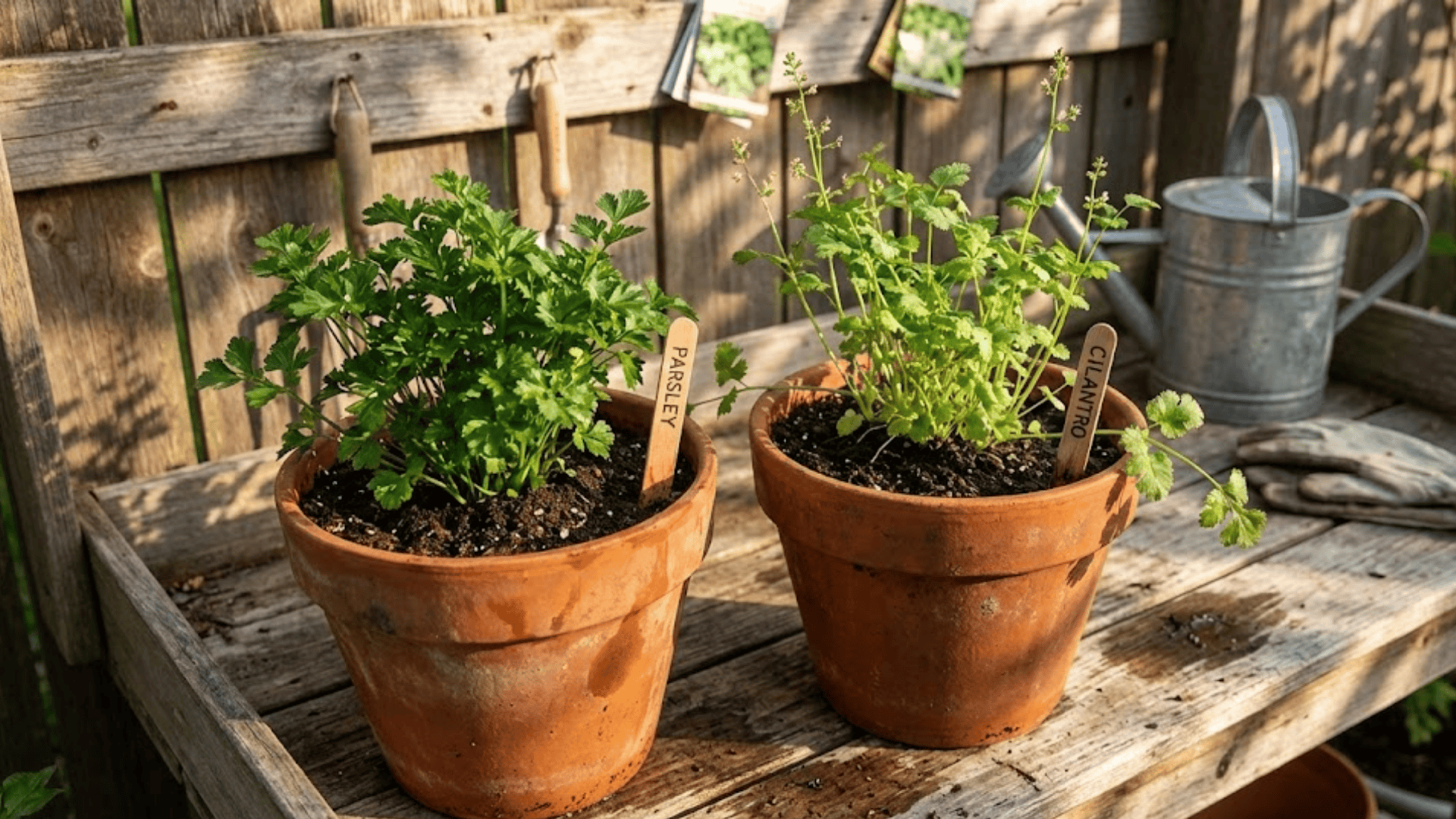
If you’re planning to grow these herbs at home, they have different needs and temperaments. Understanding their growing habits helps you keep a steady supply of fresh leaves all season long.
Growing Parsley
A patient grower that rewards you with steady harvests once it gets going.
- Prefers cooler weather and tolerates partial shade, making it perfect for spring and fall gardens.
- Slow to germinate (2-3 weeks), but produces consistently throughout the season once established.
- Needs regular watering to keep soil moist, but handles occasional dryness better than cilantro.
- Thrives in containers and garden beds alike, and is less likely to bolt in summer heat.
Growing Cilantro
A fast but fussy herb that loves cool weather and bolts quickly when stressed.
- Grows rapidly in cool conditions but bolts (goes to seed) fast in heat, requiring frequent replanting.
- Needs full sun and consistent moisture, wilting quickly if the soil dries out.
- Best grown in spring or fall, with succession planting every few weeks for continuous harvest.
- Does well in containers but needs deeper pots for its taproot and good drainage to prevent rot.
Parsley vs. Cilantro: Nutritional Differences
Both herbs pack impressive nutritional benefits into their tiny leaves, though they each bring something unique to the table.
Here’s how they compare when it comes to vitamins, minerals, and health perks.
| Nutrient/Benefit | Parsley | Cilantro |
|---|---|---|
| Key Vitamins | Extremely high in vitamin K, vitamin C, and vitamin A | Rich in vitamin K, vitamin A, and folate |
| Minerals | Good source of iron, calcium, and potassium | Contains manganese, magnesium, and iron |
| Antioxidants | High in flavonoids and carotenoids that fight inflammation | Contains quercetin and tocopherols with anti-inflammatory properties |
| Health Benefits | Supports bone health, immune function, and may help freshen breath | May aid digestion, support heart health, and help remove heavy metals |
| Standout Feature | One of the richest plant sources of vitamin K | Known for its natural detoxifying properties |
Both herbs provide great nutrition, but you’d need larger amounts than a garnish to gain significant benefits. The good news is they’re calorie-free flavor boosters, so toss them generously into your meals.
The Bottom Line
Now that you’ve cracked the parsley vs cilantro code, those grocery store herb runs just got a whole lot easier.
You know how to spot them by sight, tell them apart by taste, and use each one exactly where it shines. No more accidental swaps or flavor mishaps in your kitchen.
Keep this guide handy next time you’re cooking, and soon identifying these herbs will become totally instinctive.
Have your own tips for telling them apart, or a favorite way to use either herb? Drop a comment below and share your herby wisdom with fellow home cooks.