Mulch often feels like a small detail, yet it plays a significant role in how a garden looks and functions.
The right choice can help soil hold moisture, keep weeds in check, protect roots from temperature swings, and visually pull the whole landscape together.
With so many mulch types and colors available, it is easy to feel unsure about what actually works best and what looks good on the surface. This blog breaks it all down in a clear, practical way.
You will learn what mulch is used for, the difference between organic and inorganic options, how mulch colors affect appearance and plant health, how to choose wisely, how to apply mulch correctly, and how to stay safe around colored mulch.
What Is Mulch and What Are Its Uses?
Mulch is a protective layer of material spread over soil to improve the health of gardens and landscapes. It can be made from organic materials such as wood chips and leaves, or from inorganic materials such as rubber and stones.
Organic vs Inorganic Mulch:
| Feature | Organic Mulch | Inorganic Mulch |
|---|---|---|
| What it is | Made from natural materials like bark, wood chips, straw, or compost | Made from non-living materials such as stone, gravel, or rubber |
| Soil benefits | Breaks down over time and improves soil structure and nutrients | Does not improve soil health |
| Best use | Garden beds, vegetable gardens, shrubs, and trees | Decorative areas, pathways, and low-maintenance landscapes |
| Longevity | Needs regular replacement as it decomposes | Long-lasting with minimal replacement |
| Soil impact | Enhances microbial activity and soil fertility | Can increase soil temperature and limit soil airflow |
Key Uses of Mulch:
- Moisture Retention: Mulch acts as a barrier, slowing water evaporation from the soil and keeping plant roots hydrated longer.
- Weed Suppression: A thick mulch layer blocks sunlight from reaching weed seeds, preventing them from sprouting and growing.
- Soil Temperature Regulation: Mulch insulates the soil, keeping it cooler in summer heat and warmer in cold weather.
- Erosion Control: Mulch protects topsoil from being washed away by heavy rain or blown away by strong winds.
- Visual Enhancement: Colored and textured mulch adds curb appeal and creates a clean, finished look in garden beds.
Mulch Colors: Natural vs Dyed Options
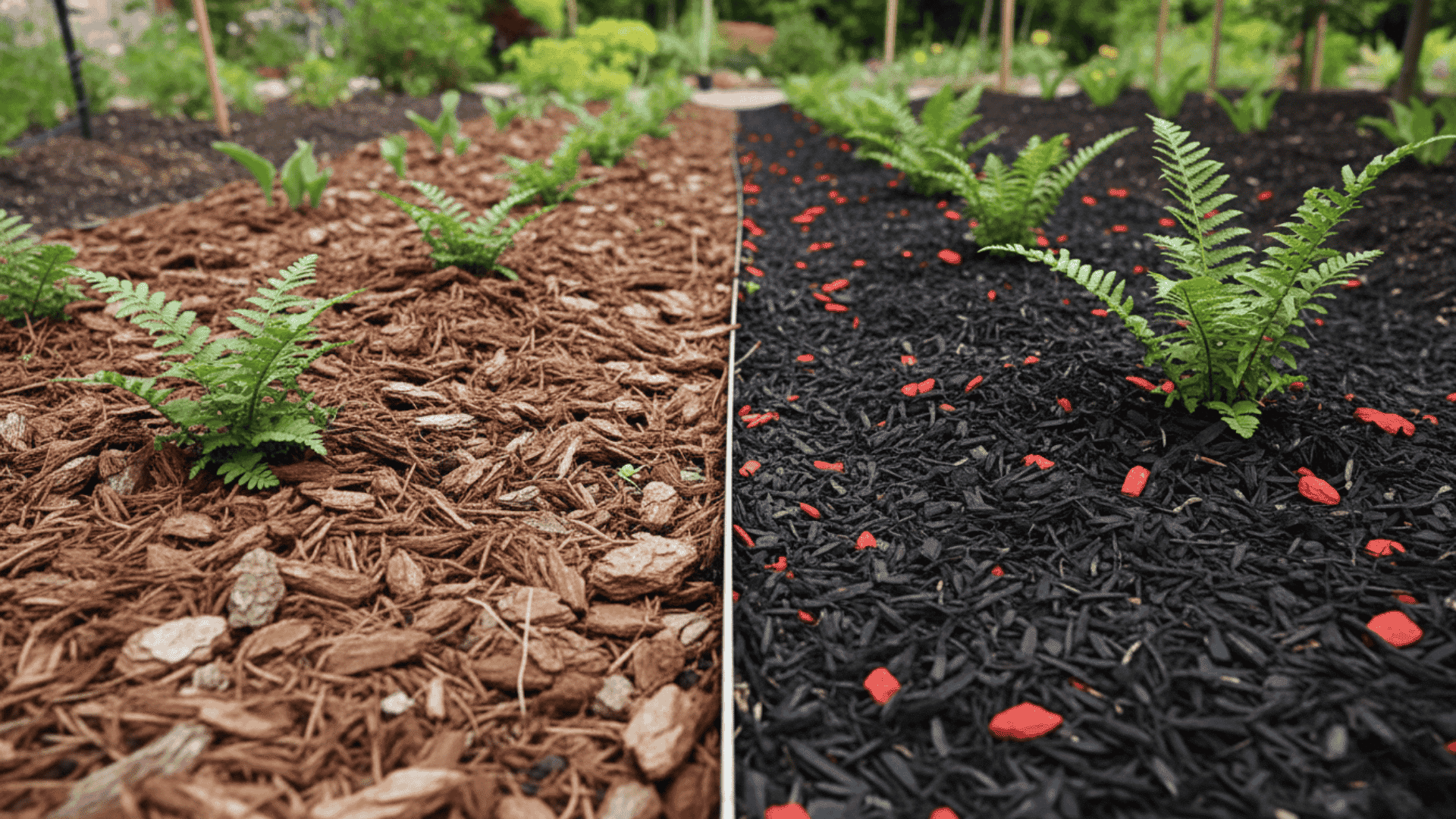
Mulch colors influence more than appearance. They affect how a landscape feels, how plants stand out, and how heat is absorbed at the soil surface.
Choosing the right mulch colors helps create visual balance while supporting plant health, especially in gardens exposed to intense sun or seasonal temperature changes.
Natural Mulch Colors
Natural mulch colors come from untreated materials such as bark, wood chips, pine straw, and shredded leaves. These colors blend naturally with soil and plants, making them a popular choice for gardens that aim for a more organic look.
- Browns, tans, blondes, and deep, earthy tones are the most common
- Colors fade slowly and evenly as the mulch breaks down
- Ideal for garden beds, trees, shrubs, vegetable gardens, and native plant areas
- Less noticeable color change over time compared to dyed options
Because natural mulch colors age gradually, they are easier to maintain visually and often require fewer touch-ups to keep the landscape looking consistent.
Dyed Mulch Colors
Dyed mulch colors are achieved by adding colorants to wood-based mulch, resulting in a more uniform, bolder appearance. These mulches are often used to create contrast and clearly define garden edges.
- Standard dyed mulch colors include black, brown, red, and dark chocolate shades.
- Provides a substantial visual impact and enhances curb appeal
- Helps highlight plant shapes, foliage colors, and landscape design lines
- Color longevity depends on sun exposure, rainfall, and mulch quality
Dyed mulch colors tend to fade faster in full sun. They may need refreshing to maintain their original appearance, making them better suited for decorative areas where visual impact is a priority.
9 Types of Mulch
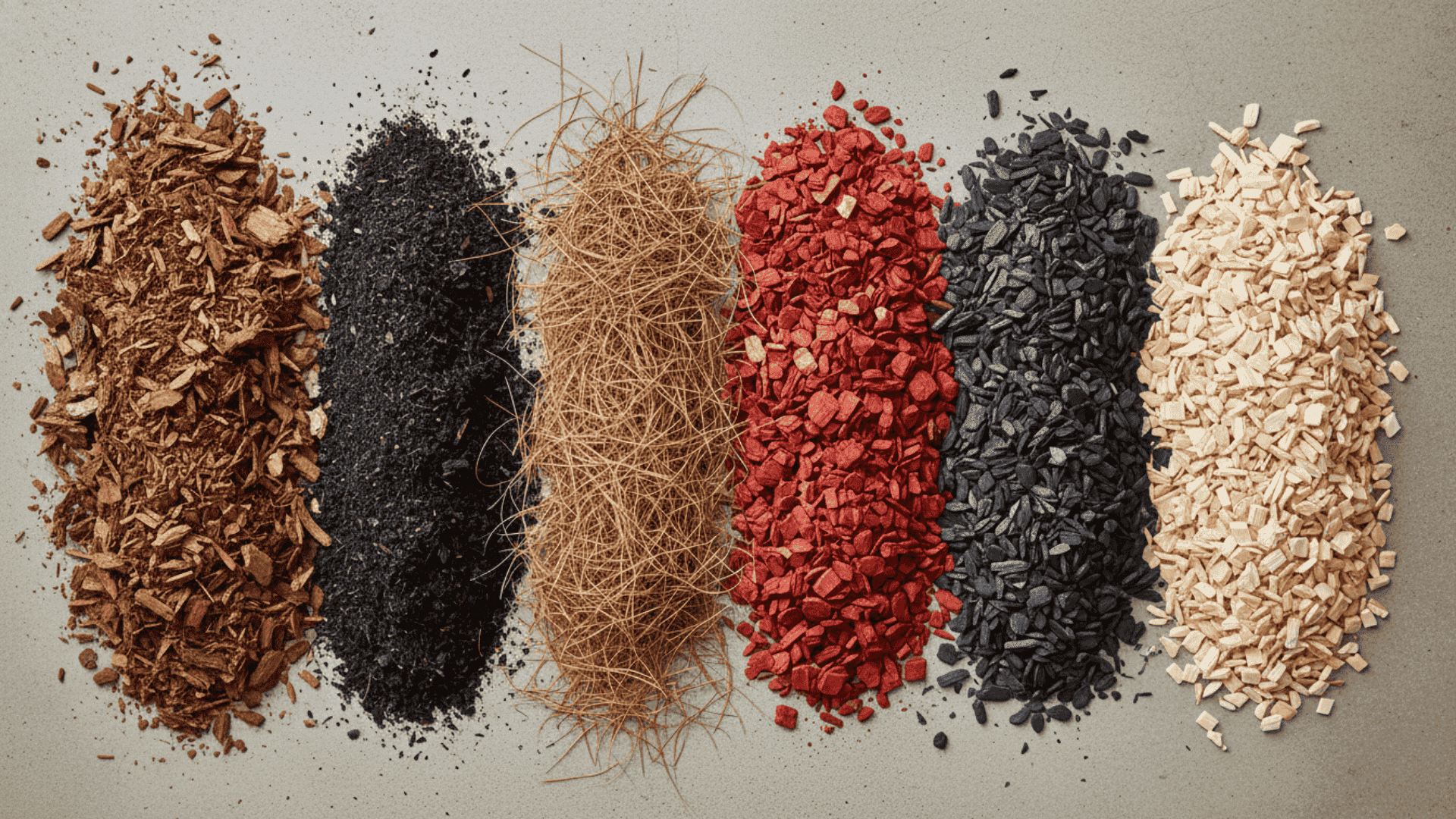
With so many mulch options available, understanding how each type works makes it easier to choose the right one for your garden. The mulch types below are grouped by material, performance, and typical use so you can quickly compare what fits your landscape needs best.
1. Bark Mulch
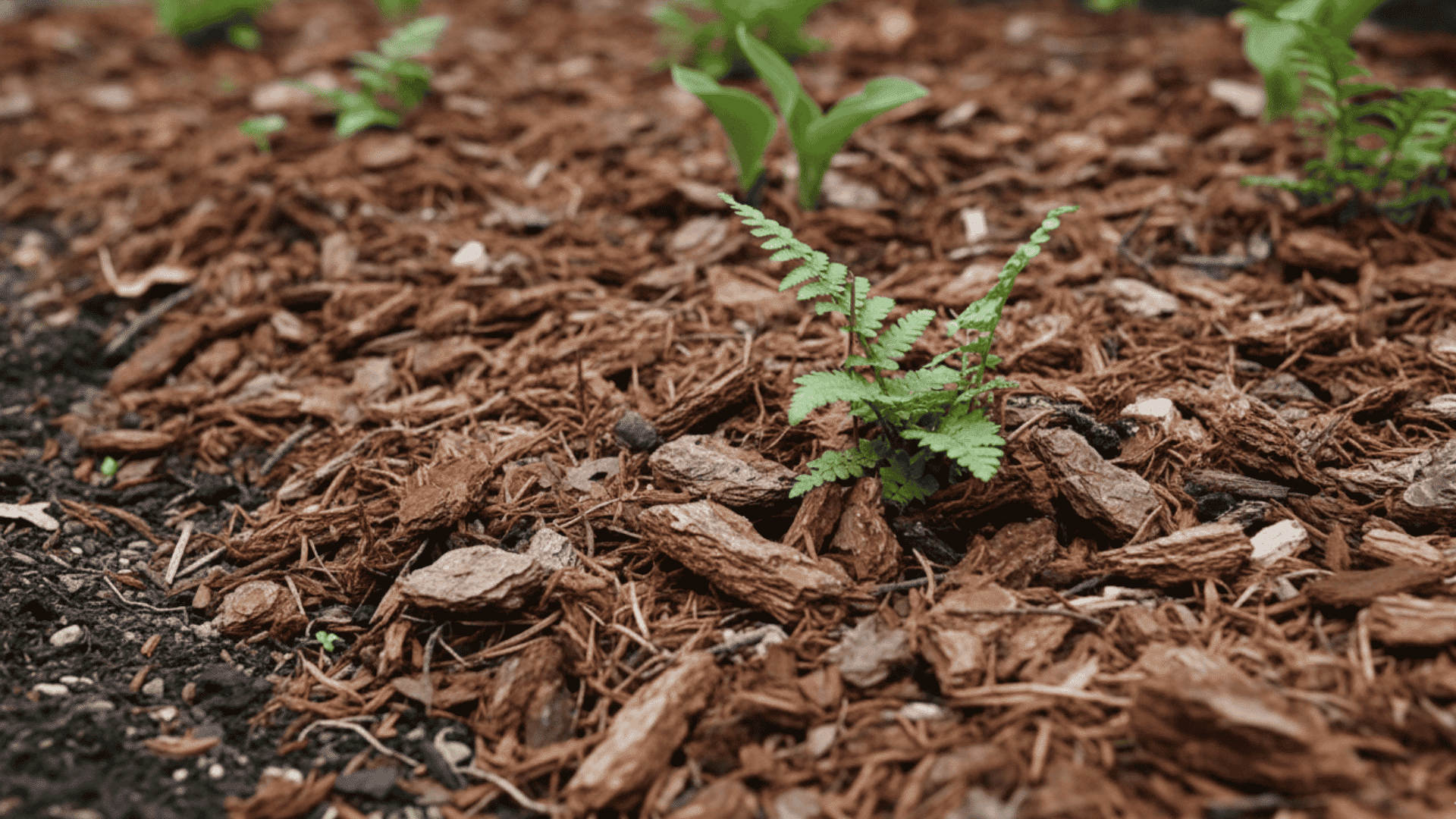
Bark mulch is an organic option made from tree bark and is available in nuggets, chips, or delicate textures. Coarser bark works well around shrubs and trees, while finer bark spreads evenly in flower beds and helps retain moisture.
- Type: Organic
- Best for: Shrubs, trees, decorative garden beds
- Key benefit: Long-lasting appearance with moderate soil improvement
2. Wood Chips
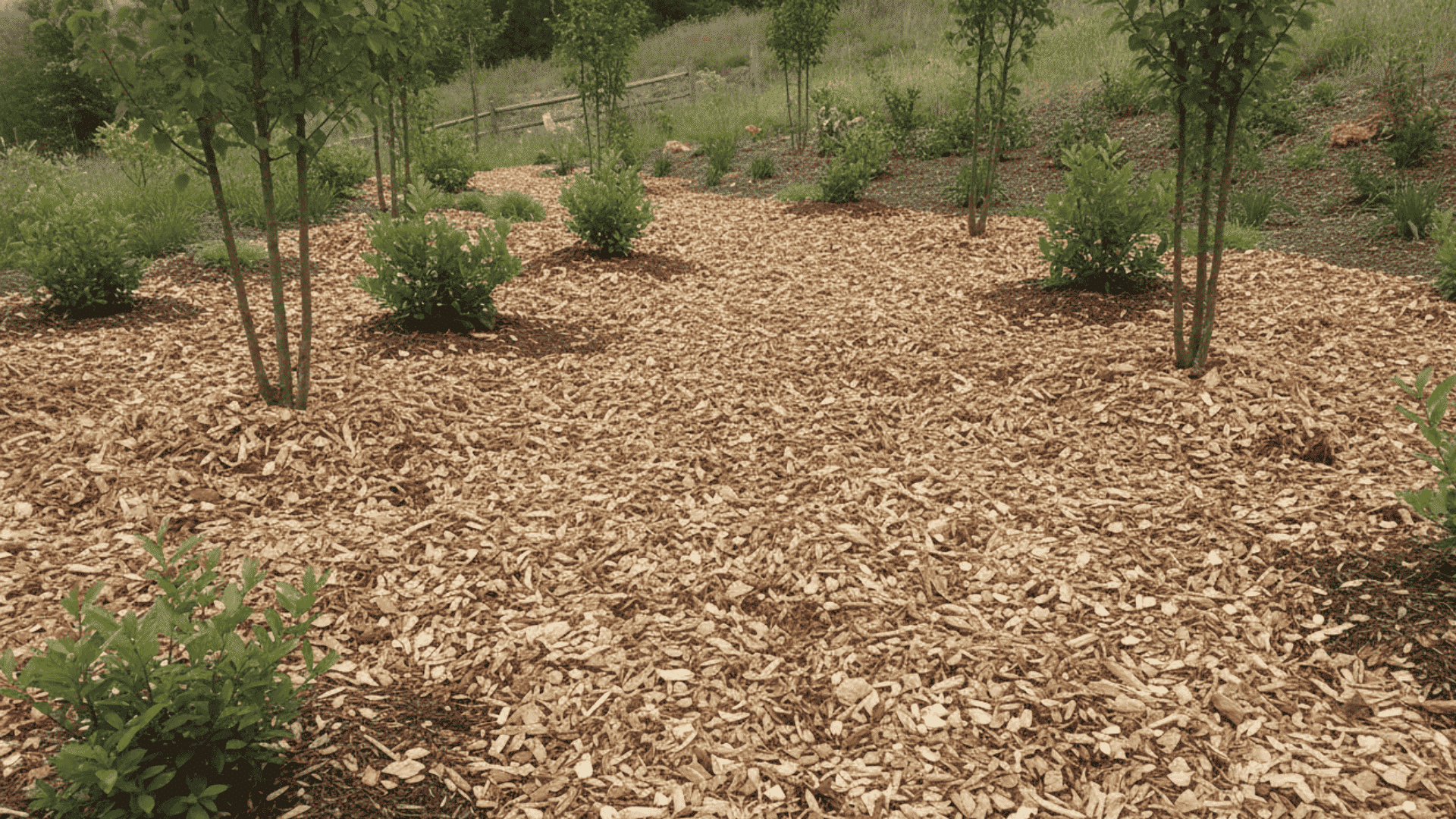
Wood chips come in two primary forms: arborist chips and bagged wood mulch. Arborist chips contain a mix of wood, bark, and leaves, making them more beneficial for soil health than uniform bagged options.
- Type: Organic
- Best for: Trees, large beds, natural landscapes
- Key benefit: Excellent moisture retention and soil conditioning
3. Shredded Hardwood Mulch
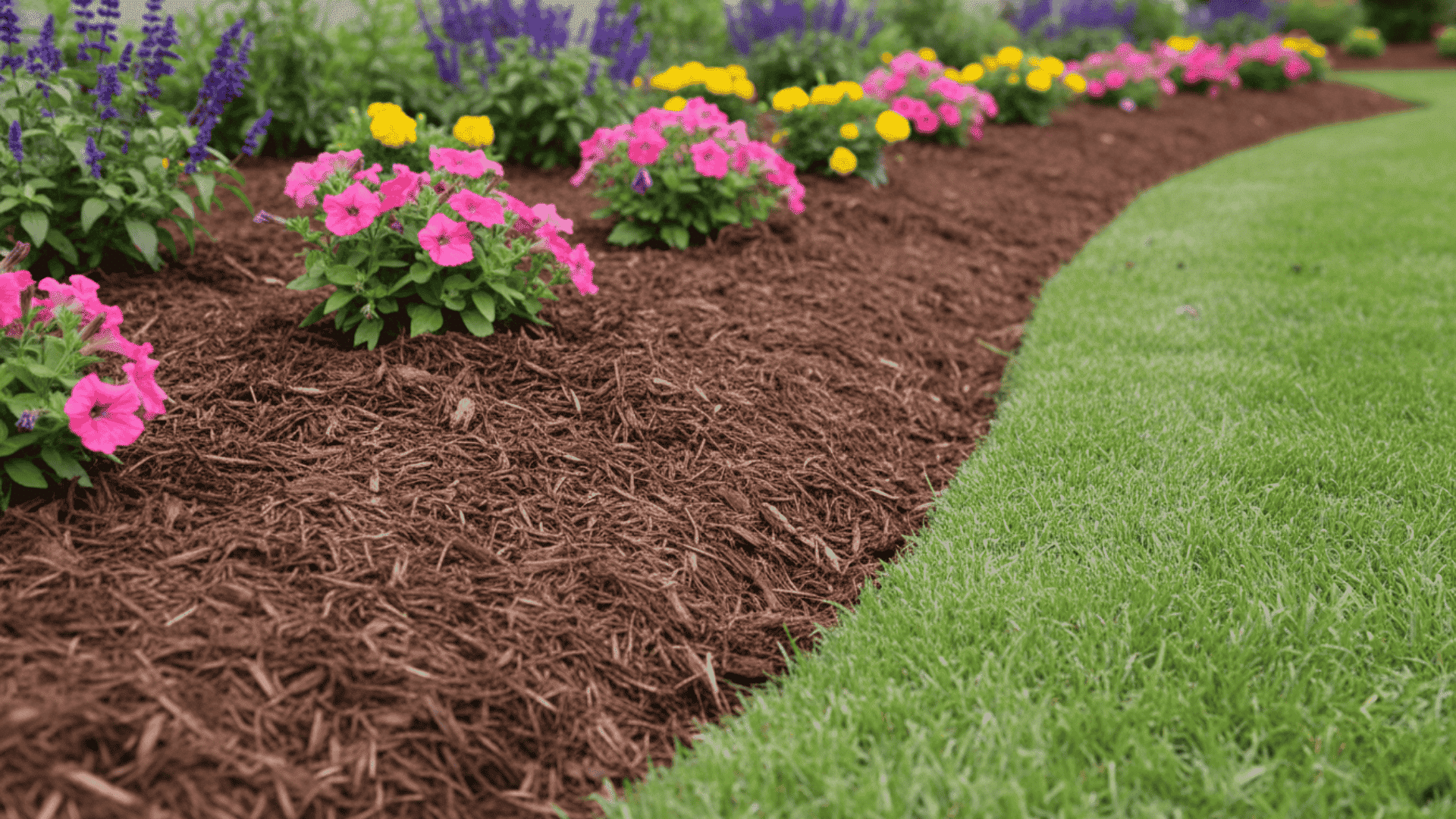
Shredded hardwood mulch is finely textured, allowing it to lock together and stay in place. This makes it effective for weed control and suitable for areas with moderate slopes.
- Type: Organic
- Best for: Flower beds and sloped areas
- Key benefit: Strong weed suppression and neat appearance
4. Pine Bark or Pine Straw
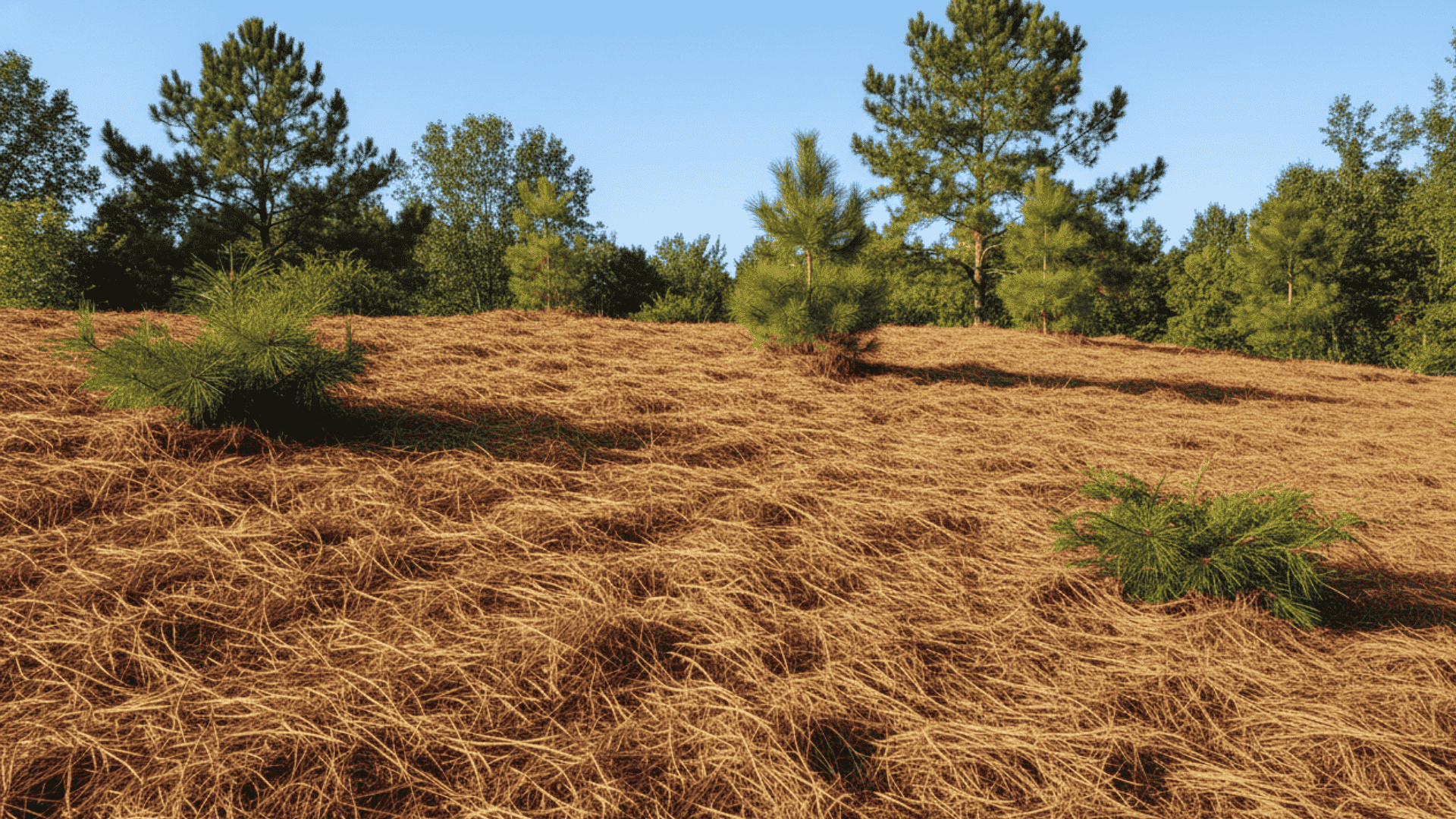
Pine bark and pine straw are lightweight organic mulches commonly used around acid-tolerant plants. A common misconception is that they significantly alter soil pH, but this is generally not the case when used as mulch.
- Type: Organic
- Best for: Slopes, shrubs, and perennial beds
- Key benefit: Good airflow and erosion control
5. Compost Mulch
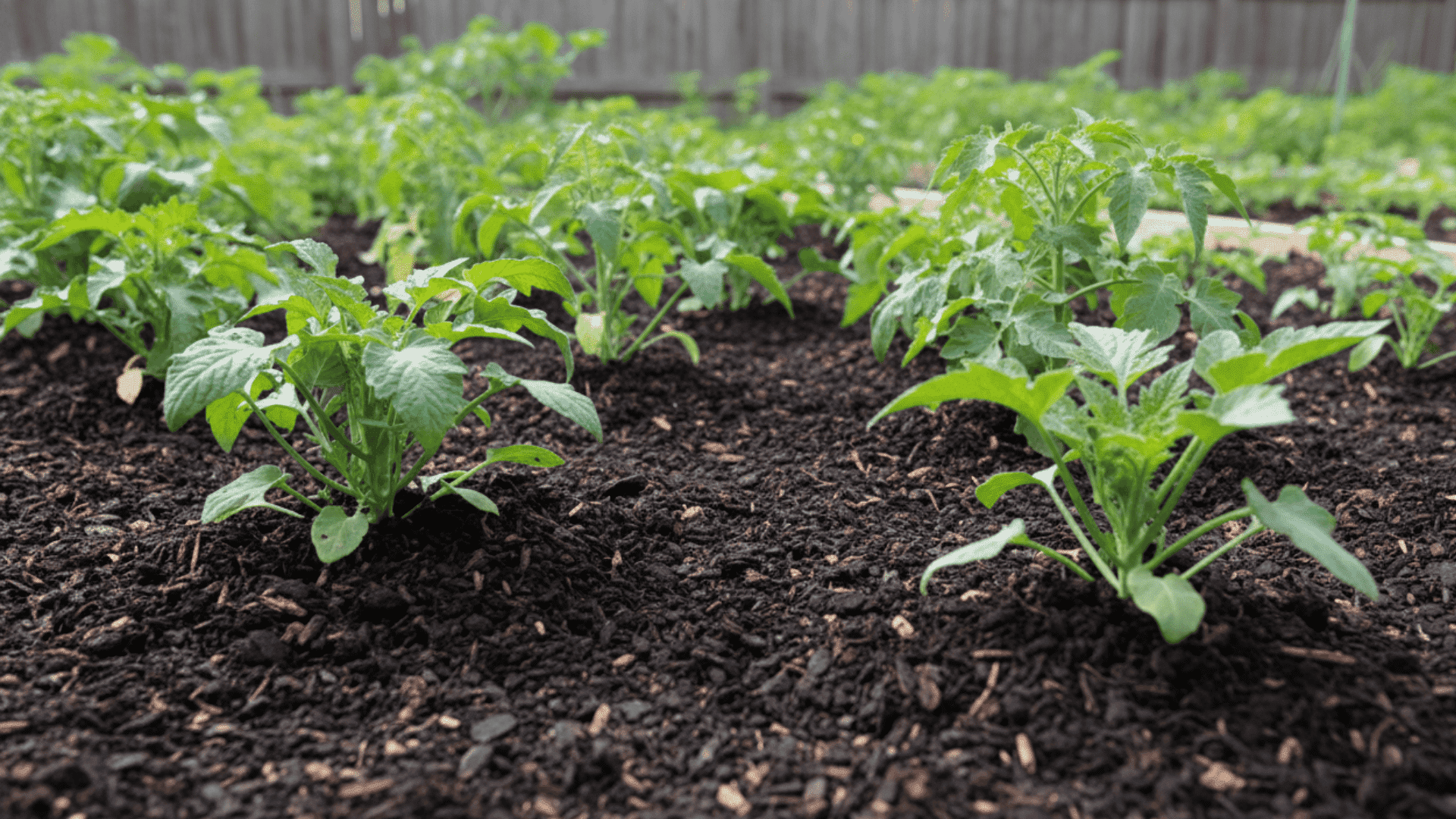
Compost mulch is nutrient-rich and works well when plants need a boost in soil quality. It functions best as a thin mulch layer rather than a deep covering.
- Type: Organic
- Best for: Vegetable gardens and flower beds
- Key benefit: Improves soil structure and nutrient availability
6. Straw Mulch
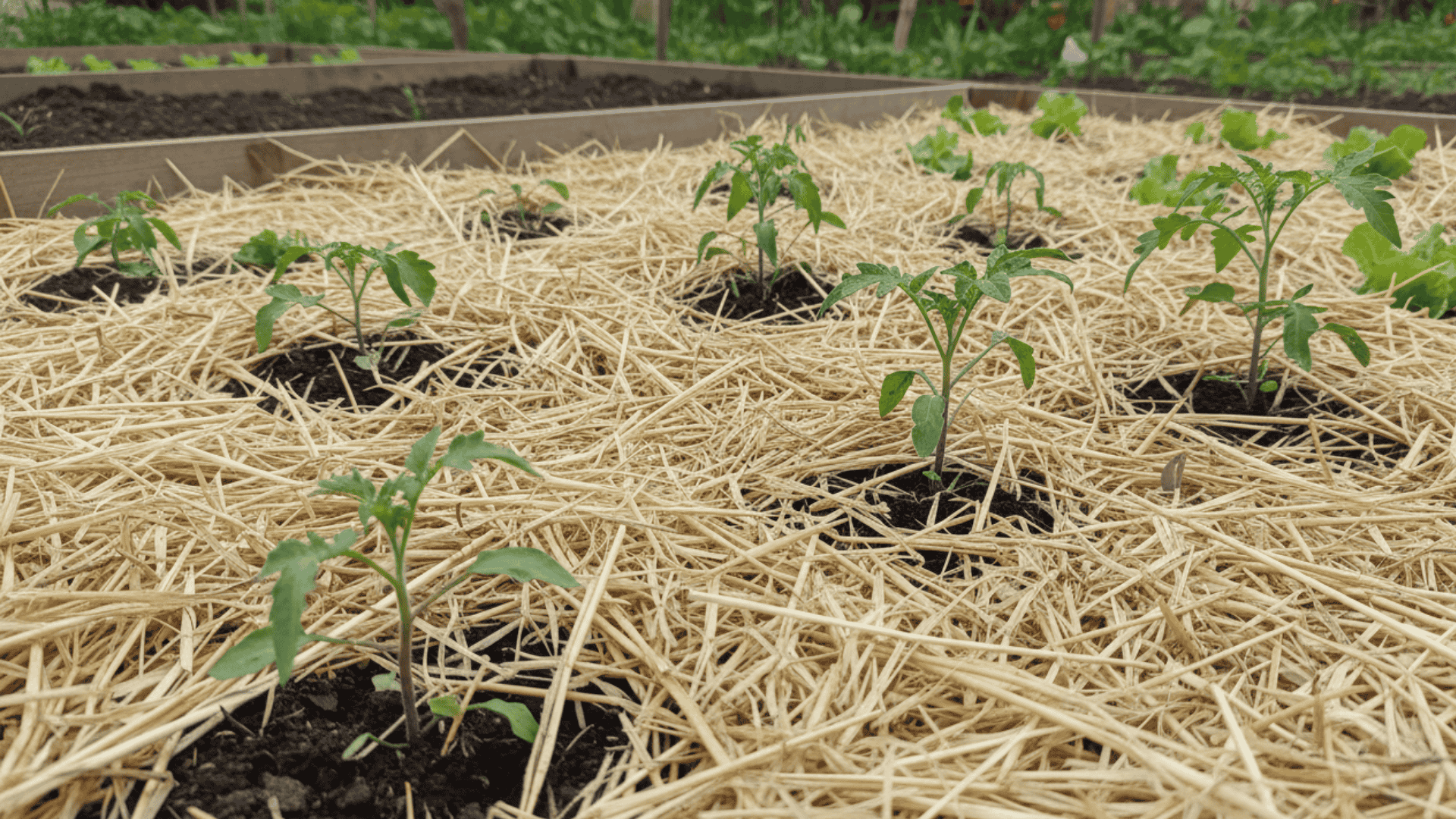
Straw mulch is commonly used in vegetable gardens to protect soil and plants during growing seasons. It is essential to avoid hay, which may contain weed seeds.
- Type: Organic
- Best for: Vegetable gardens and seasonal planting beds
- Key benefit: Lightweight insulation and moisture retention
7. Leaf Mulch
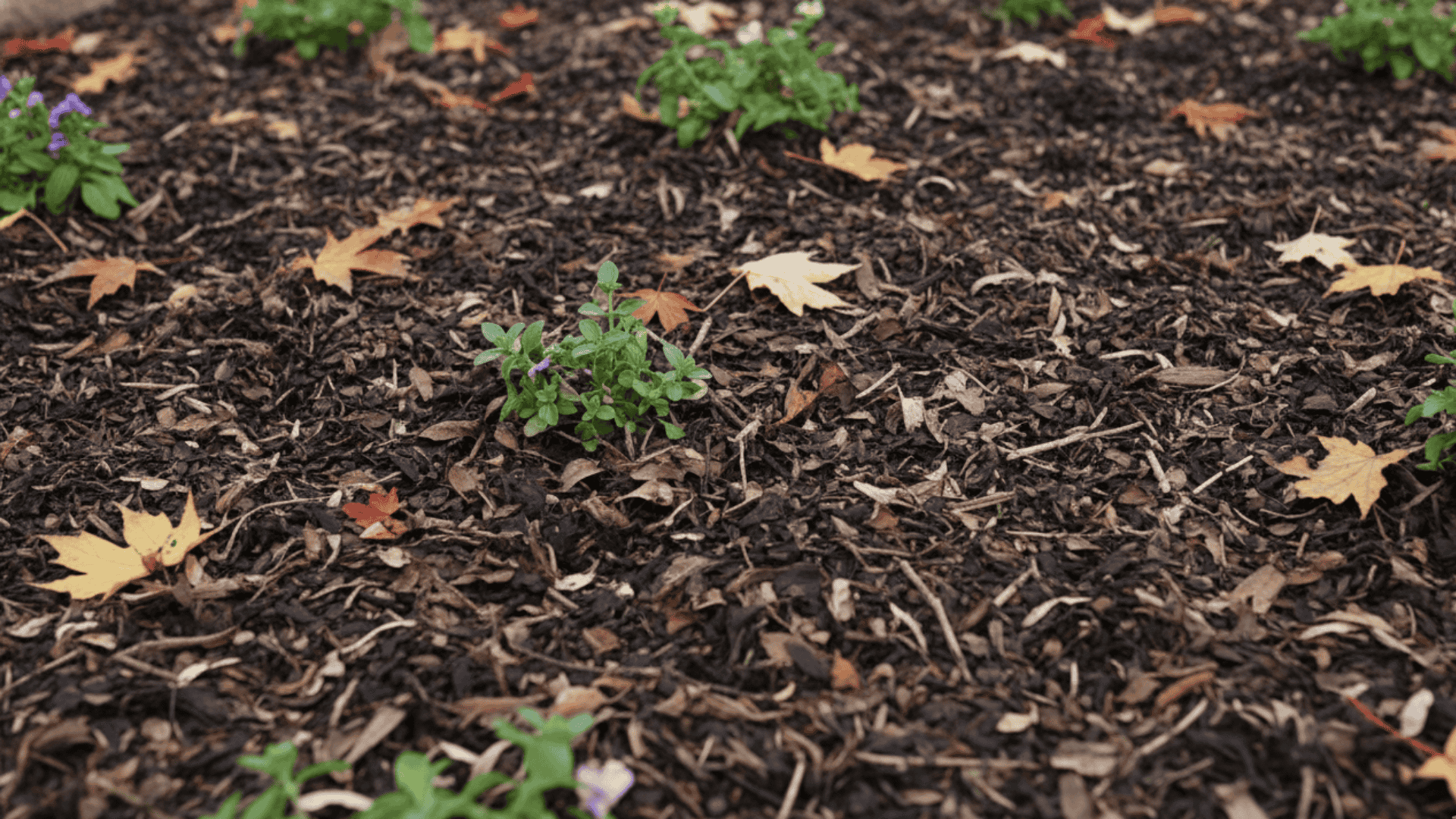
Leaf mulch is made from shredded fallen leaves and offers an eco-friendly way to recycle yard waste. Shredding prevents matting and allows water to penetrate the soil easily.
- Type: Organic
- Best for: Garden beds and around trees
- Key benefit: Improves soil as it decomposes
8. Gravel or Stone Mulch
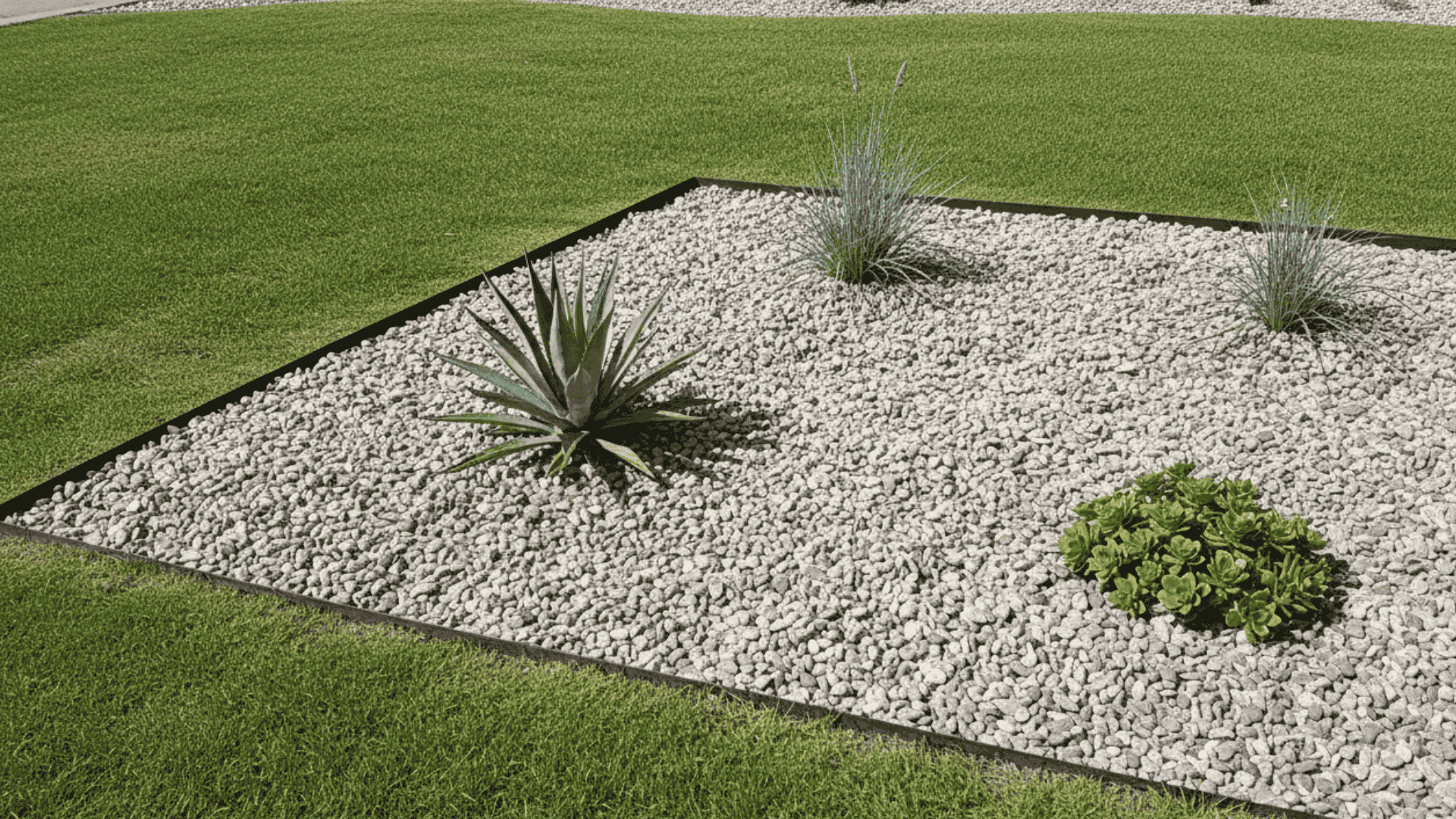
Gravel and stone mulch are inorganic options that provide a clean, modern look. They do not break down but can increase soil temperature and require a barrier to prevent soil mixing.
- Type: Inorganic
- Best for: Pathways, dry landscapes, and foundation areas
- Key benefit: Long-term durability with low replacement needs
9. Rubber Mulch
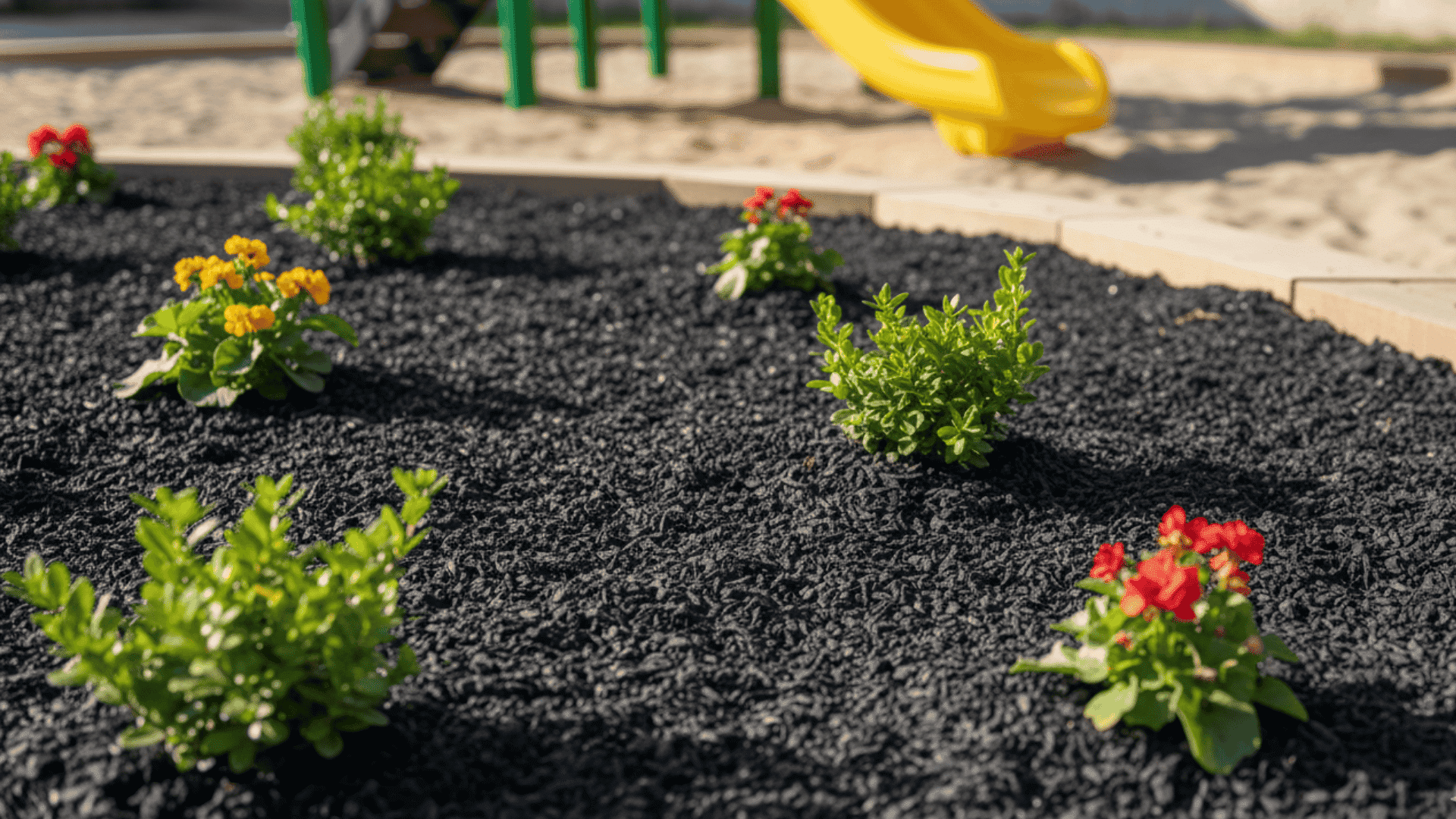
Rubber mulch is made from recycled materials and is designed for long-term use. While it does not decompose, it does not contribute to soil health and may retain heat.
- Type: Inorganic
- Best for: Playgrounds and high-traffic areas
- Key benefit: Long lifespan and reduced maintenance
How to Choose the Right Mulch Types and Colors?
Choosing the right mulch types and colors depends on more than looks alone. Plant needs, climate conditions, and long-term maintenance all play a role in selecting mulch that performs well and enhances your landscape.
- Plant type: Choose organic mulch for plants that benefit from improved soil health, and inorganic mulch for decorative or non-plant areas.
- Climate and sun exposure: Darker mulch colors absorb more heat, which can help in cooler climates but may stress plants in hot, sunny locations.
- Soil needs: Nutrient-poor soils benefit from organic mulch that breaks down and enriches the soil over time.
- Maintenance level: Organic mulch requires periodic replacement, while inorganic mulch lasts longer but needs occasional cleaning.
- Mulch color and appearance: Dark mulch creates a strong contrast and a polished look, while lighter colors offer a softer, natural appearance.
- Matching with home and landscape style: Coordinate mulch colors with exterior finishes, hardscaping, and plant colors for a cohesive design.
How to Apply Mulch Correctly
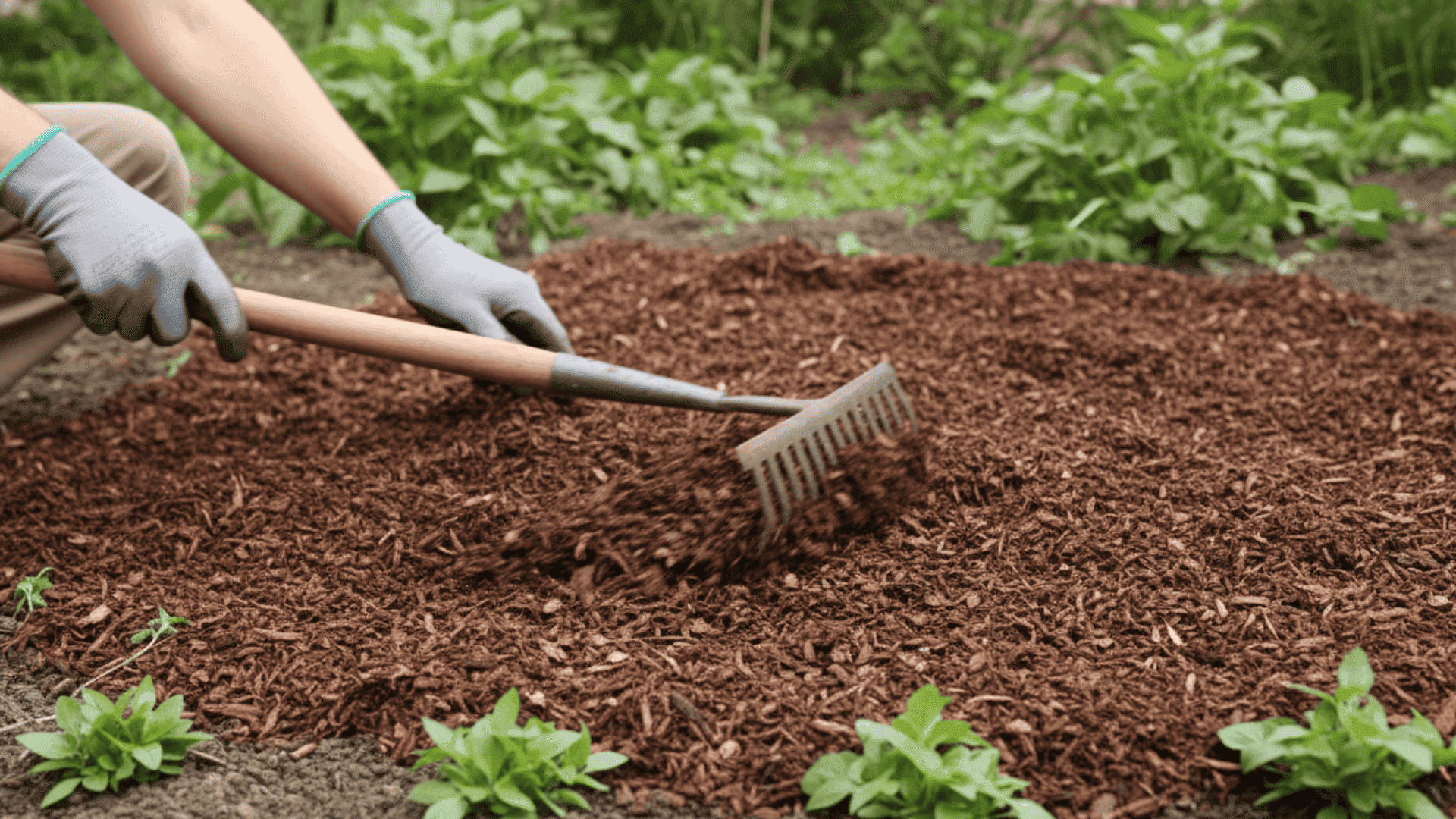
Proper mulch application improves plant health and keeps garden beds looking neat. Taking a few extra steps before and after mulching helps prevent common issues and ensures the mulch performs as intended.
1. Preparing the Area Before Mulching
Clear weeds, debris, and old compacted mulch from the area, then level the soil and water it lightly. This creates a clean base that allows mulch to sit evenly and lock in moisture effectively.
2. Recommended Mulch Depth by Type
Apply organic mulch in a layer about 2 to 4 inches deep to balance moisture retention and airflow. Inorganic mulch is usually applied in a thinner layer, often over a landscape barrier, to prevent soil mixing and weed growth.
3. Keeping Mulch Away from Plant Stems and Tree Trunks
Leave a small gap around stems and trunks to prevent moisture buildup and decay. Mulch should form a donut shape around trees rather than piling directly against the bark.
4. Tips for Refreshing and Maintaining Mulch
Rake mulch occasionally to prevent compaction and refresh faded areas by topping off rather than replacing everything. Remove decomposed mulch buildup before adding new layers to maintain proper depth and soil health.
Is Colored Mulch Safe?
Colored mulch is typically made from recycled wood that is dyed using colorants designed for outdoor use, but safety depends on the source material.
Concerns arise when mulch is produced from treated or contaminated wood, which may introduce unwanted chemicals into the soil.
To reduce risk, look for mulch that is certified by recognized quality programs, such as those that screen for treated wood content.
For vegetable gardens, pet areas, and play spaces, using certified natural or untreated mulch is generally the safest choice.
Final Thoughts
Choosing the right mulch types and colors is about more than appearance. It is a practical decision that affects soil health, plant growth, and long-term maintenance.
By understanding how organic and inorganic mulches work, how different mulch colors perform, and how to apply mulch the right way, it becomes much easier to make confident choices for any garden or landscape.
A thoughtful approach helps plants thrive while keeping outdoor spaces neat and visually balanced.
Use this knowledge to review your current mulch, adjust where needed, and plan future updates with purpose. A well-mulched garden is easier to care for and more rewarding to enjoy.