White kitchens are everywhere. They’re safe, bright, and predictable. But what if you want something that actually makes you stop and stare?
Dark kitchens are having a moment, and for good reason. When done right, they feel rich, grounded, and intentional.
Not cold or heavy, just bold. The trick is knowing how to balance darkness with light, texture, and contrast so your space still feels warm and usable.
This guide walks you through moody kitchen ideas, the best color palettes to try, lighting tips that actually work, and common mistakes to skip.
By the end, you’ll know if a dark kitchen suits your space and how to pull it off.
What Makes a Kitchen Feel Moody?
A moody kitchen is not just dark. It combines rich colors, controlled lighting, and layered textures to create depth and atmosphere. The space feels intentional, not accidental. You get warmth from the shadows, not coldness. It pulls you in rather than pushes you away.
- Color depth and undertones: Dark tones with warm or cool undertones set the mood and prevent the space from feeling flat or one-dimensional.
- Light control and shadow play: Strategic lighting creates contrast, highlights key areas, and lets shadows add character instead of just making the room feel darker.
- Texture, contrast, and material choices: Mixing matte finishes, natural wood, stone, and metal keeps visual interest alive and prevents the darkness from feeling heavy or dull.
- Difference between a dim kitchen and a poorly lit one: A dim kitchen uses low light on purpose for style and mood, while a poorly lit kitchen lacks enough light to function comfortably.
Moody Kitchen Ideas for a Dark, Stylish Space
These ideas show how darkness can work in your favor. Each one balances color, light, and texture to create a kitchen that feels bold but still inviting.
1. Matte Black Cabinets with Warm Wood Accents
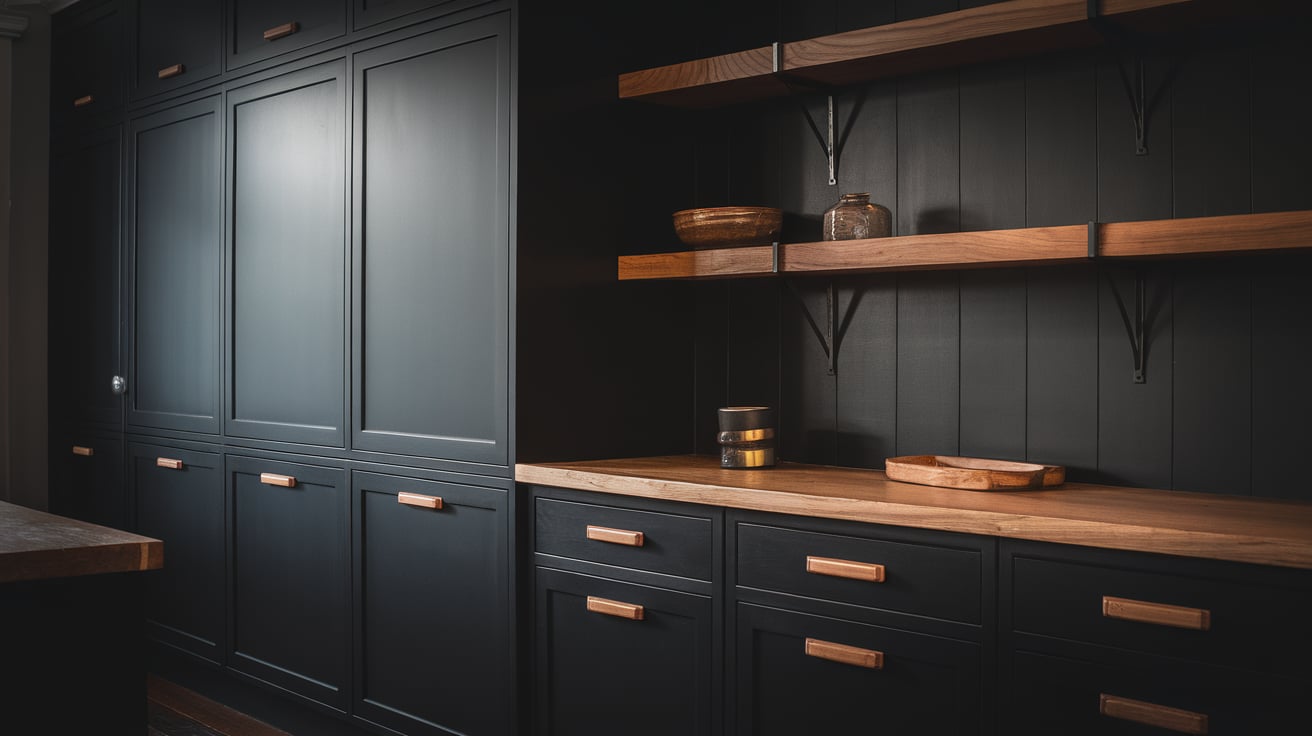
Matte black cabinets create a strong foundation with weight and structure. Add warm wood accents like walnut shelves, oak countertops, or teak handles to soften the look and ground the darkness naturally.
- Best For: Kitchens with good natural light that can handle bold color choices.
- Key Elements: Matte black cabinetry, warm wood tones (walnut, oak, teak), minimal hardware.
- Why It Works: The contrast between cool black and warm wood creates balance and prevents the space from feeling too severe.
2. Deep Green Cabinetry with Brass Hardware
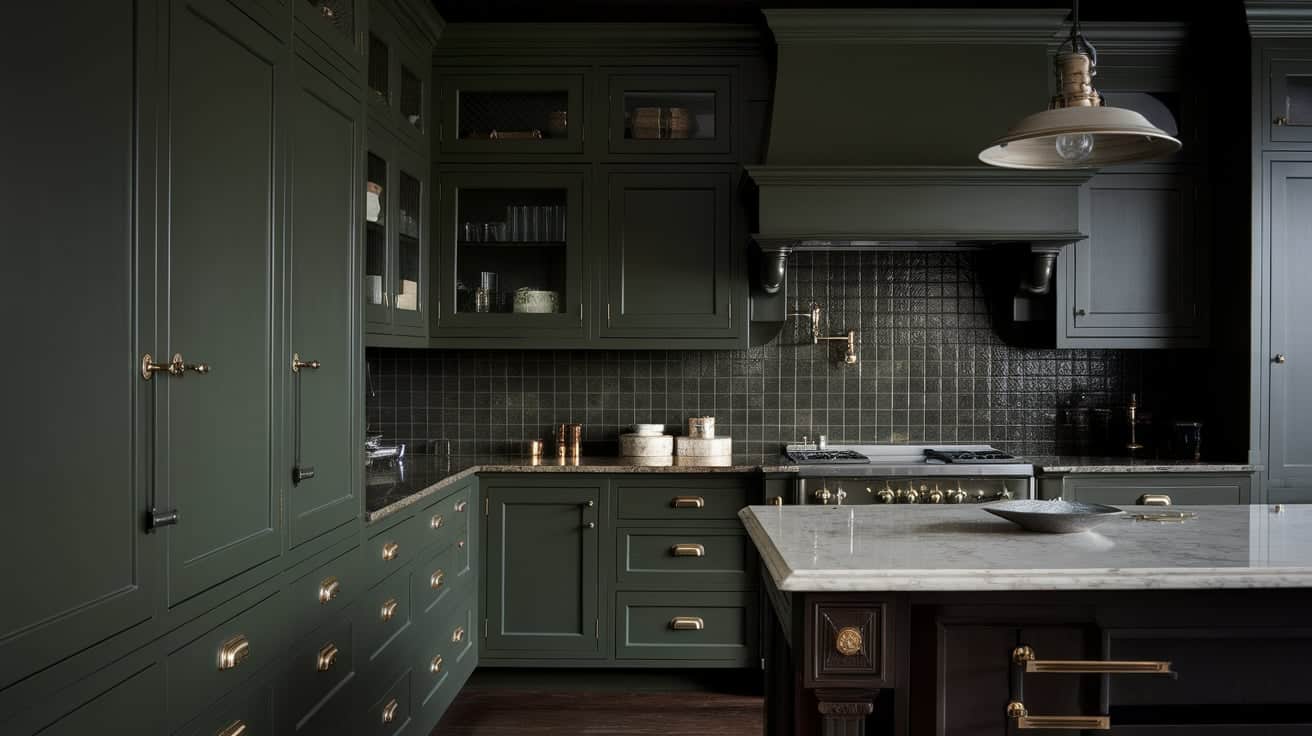
Forest green or hunter green cabinets feel rich but not overwhelming, with depth that works in modern and traditional spaces. Brass hardware adds warmth and a slight vintage feel that complements the green naturally.
- Best For: Homeowners who want color but prefer something softer than black.
- Key Elements: Deep green cabinets (forest, hunter, or olive), brass or gold hardware, neutral countertops.
- Why It Works: Green feels organic and less stark than black while still creating a moody atmosphere.
3. Charcoal Gray Kitchen with Soft Under-Cabinet Lighting
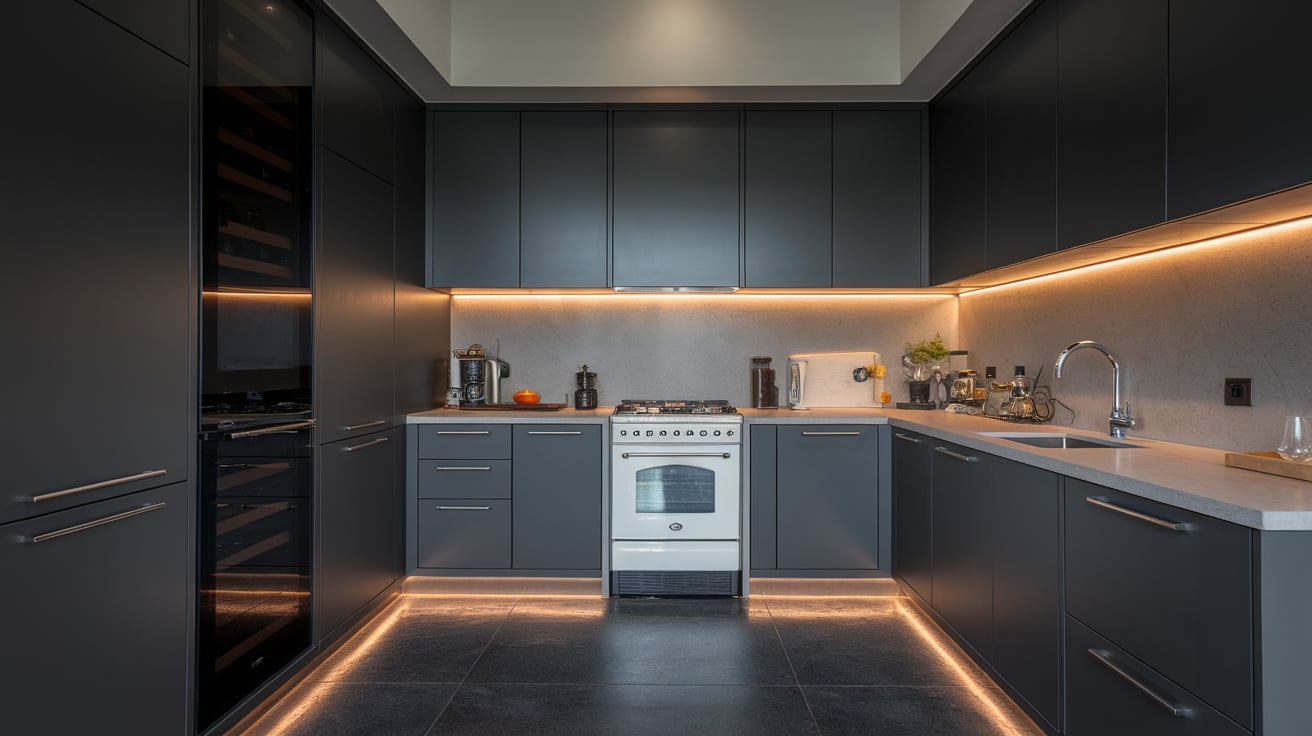
Charcoal gray sits between black and lighter grays, giving depth without going all the way dark. Soft under-cabinet lighting keeps the space functional and highlights work areas with a warm glow.
- Best For: Those who want a dark kitchen that remains practical for everyday cooking.
- Key Elements: Charcoal gray cabinets, LED under-cabinet lights (warm tone), light countertops for contrast.
- Why It Works: Gray offers moodiness with more flexibility than black, and the lighting ensures usability.
4. Moody Kitchen with Black Stone Countertops
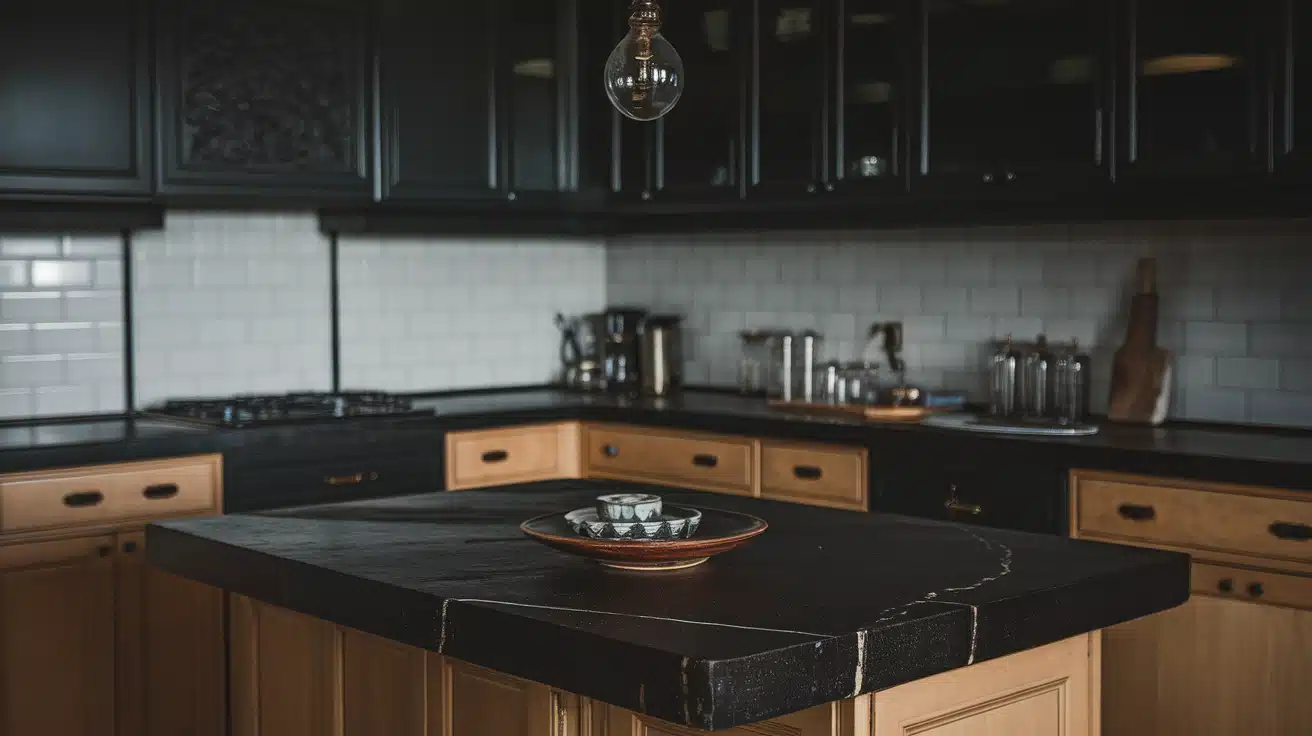
Black granite, soapstone, or marble countertops become the focal point with natural veining and texture. Pair these with lighter cabinets for balance or go full dark and let the stone veining provide contrast.
- Best For: Kitchens where you want the countertop to be a statement piece.
- Key Elements: Black stone countertops (granite, soapstone, marble), visible veining, matte or honed finish.
- Why It Works: The natural patterns in stone add organic texture that keeps solid black from feeling too uniform.
5. Dark Blue Cabinets Paired with Antique Finishes
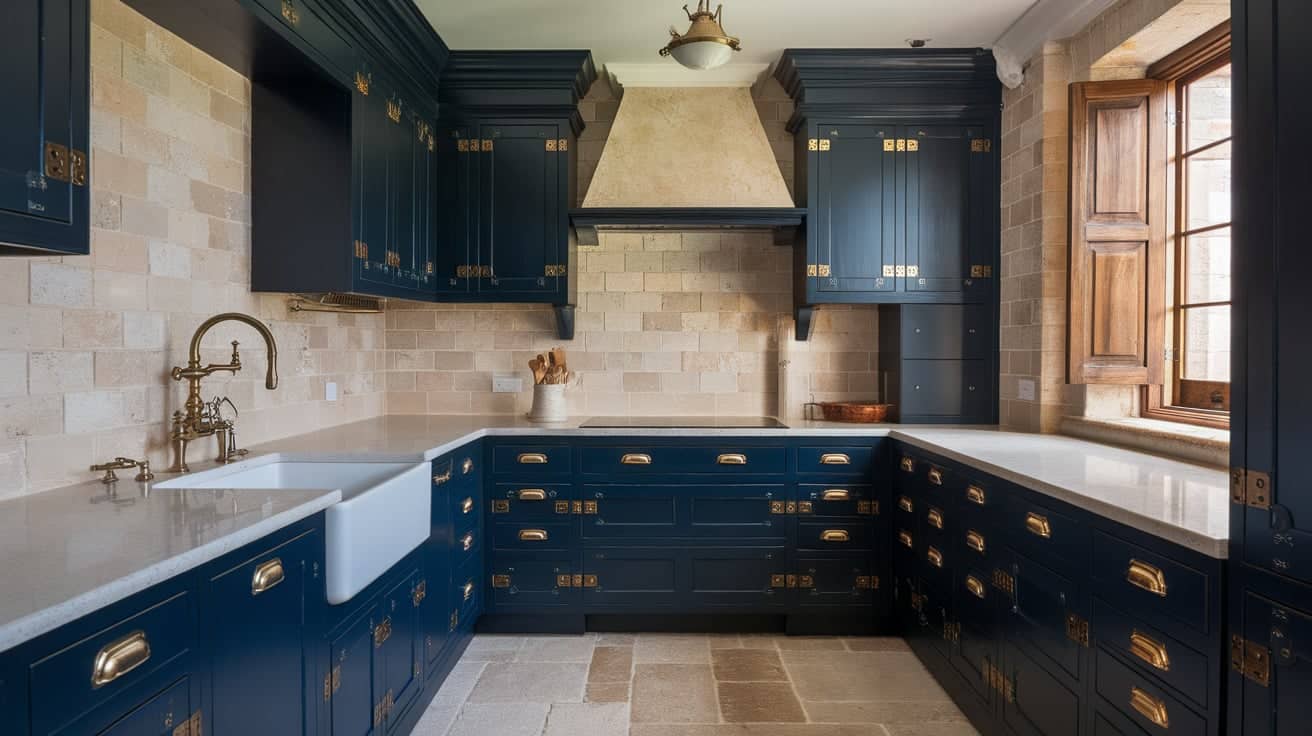
Navy or midnight blue cabinets bring drama with a classic edge that feels more approachable than black. Antique brass, aged copper, or brushed nickel finishes add character and make the blue feel timeless.
- Best For: Traditional or transitional kitchens that want depth without going industrial.
- Key Elements: Dark blue cabinetry, antique metal finishes, classic hardware styles.
- Why It Works: Blue is bold but familiar, and antique finishes add a layer of complexity.
6. All-Black Kitchen with Mixed Textures
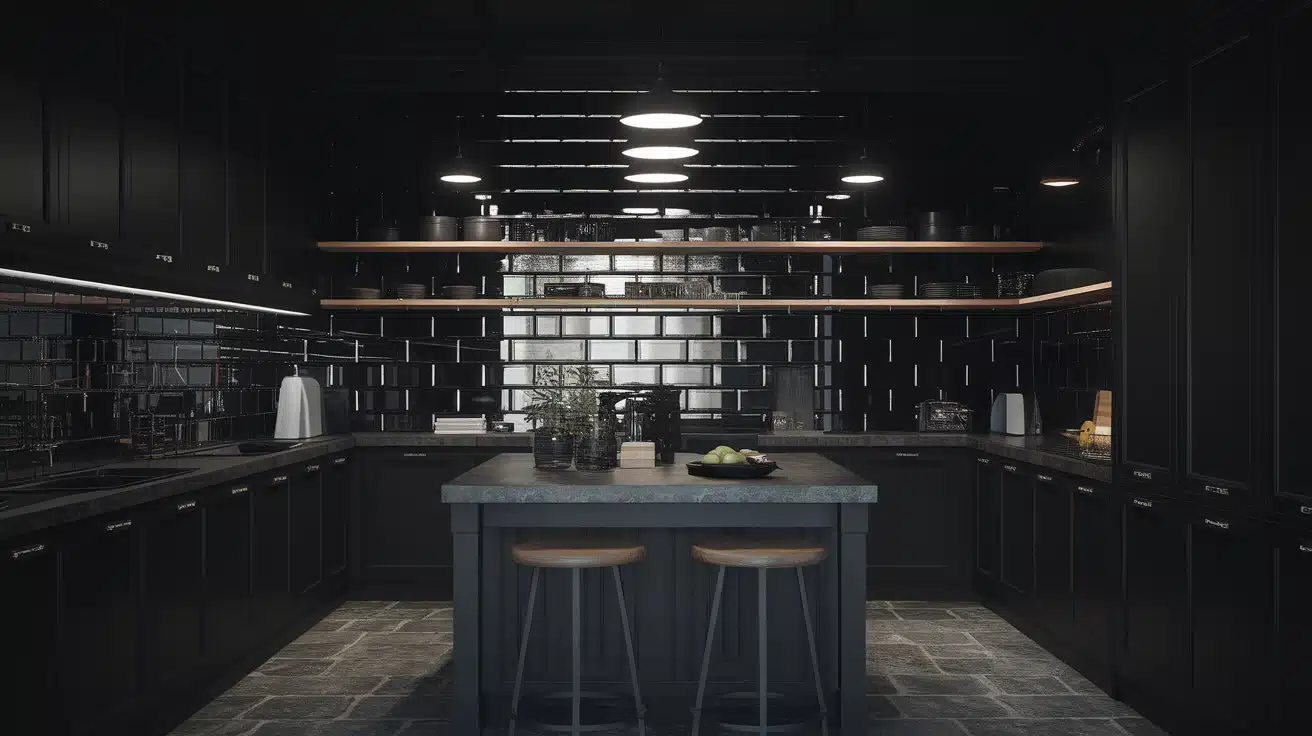
An all-black kitchen needs mixed textures to avoid feeling heavy or flat. Combine matte cabinets, glossy backsplash tiles, natural wood shelves, and stone counters so each surface reflects light differently.
- Best For: Bold homeowners who want a fully immersive dark kitchen without it feeling monotonous.
- Key Elements: Black cabinets (matte), glossy backsplash, natural wood accents, varied materials.
- Why It Works: Texture variation prevents visual flatness and adds depth to a monochrome palette.
7. Dim Kitchen with Statement Pendant Lighting
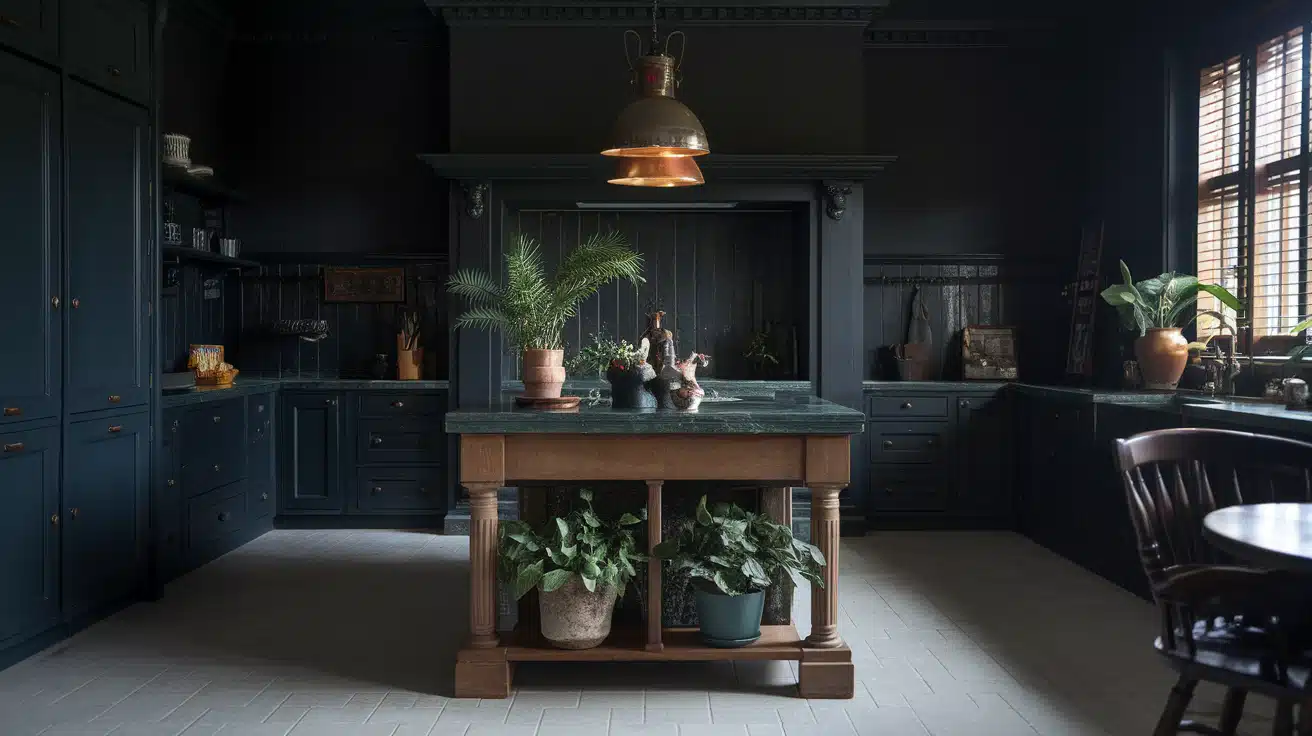
In a dim kitchen, lighting becomes the design hero with bold pendant lights like oversized globes or industrial metal fixtures. The fixtures draw the eye upward and provide functional light exactly where you need it.
- Best For: Kitchens with lower ambient light where you want lighting to serve double duty as art.
- Key Elements: Statement pendant lights, focused task lighting, and darker walls or cabinets.
- Why It Works: Bold lighting fixtures become the visual anchor and compensate for reduced overall brightness.
8. Moody Kitchen with Exposed Brick or Stone Walls
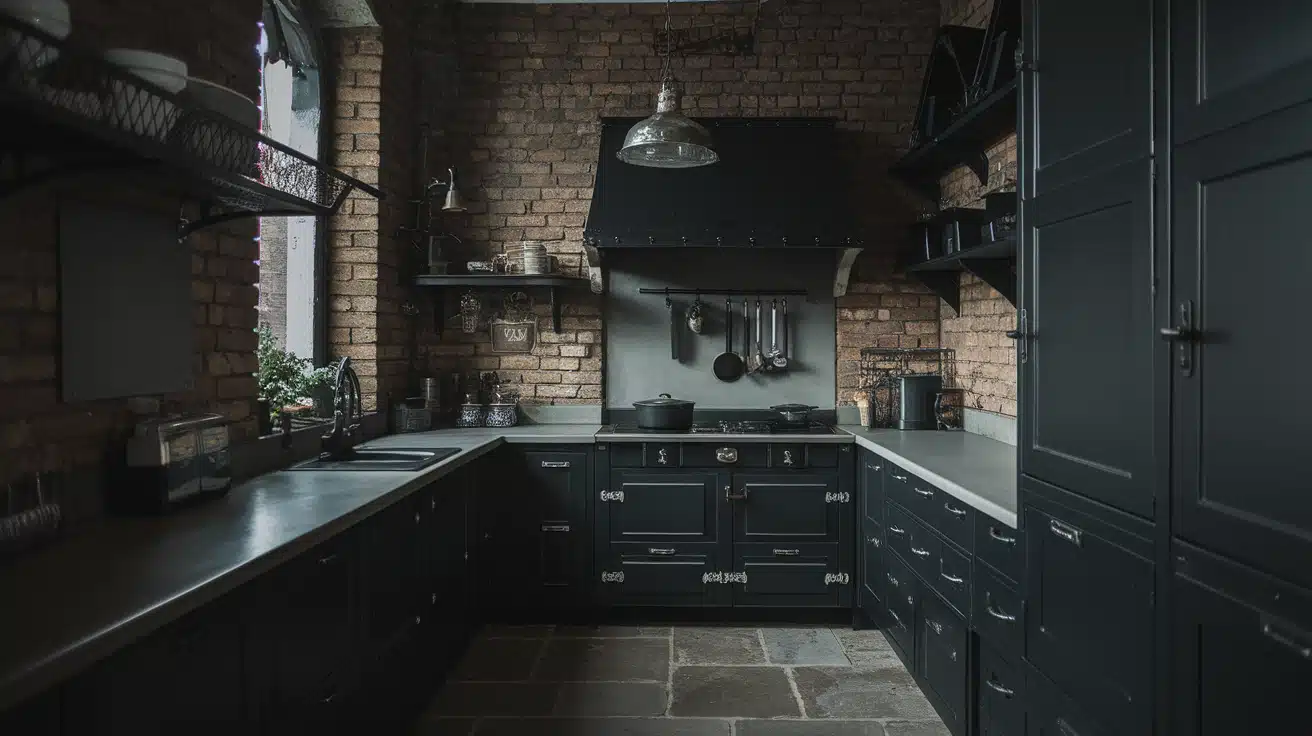
Exposed brick or stone adds instant age and texture that brings warmth and history to the space. Pair it with dark cabinets or leave it as the only dark element for contrast.
- Best For: Loft-style homes, older buildings, or anyone wanting an industrial or rustic vibe.
- Key Elements: Exposed brick or stone accent wall, dark cabinetry, metal accents.
- Why It Works: Natural materials add warmth and character that prevent dark kitchens from feeling cold.
9. Dark Kitchen Ideas with Open Shelving
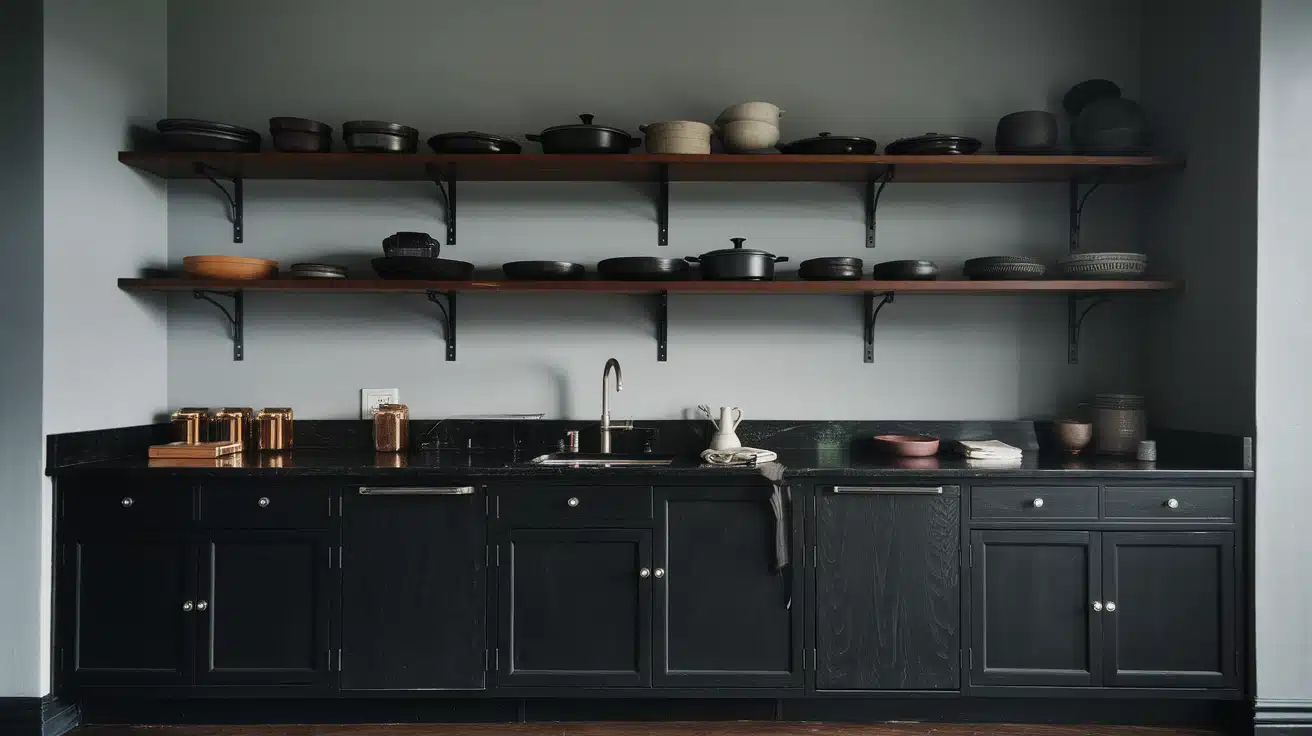
Open shelving lightens a dark kitchen visually by breaking up solid cabinet runs and adding breathing room. Use wood or metal shelves and keep items displayed neatly to avoid clutter.
- Best For: Small to medium kitchens where solid dark cabinets might feel too heavy.
- Key Elements: Open wood or metal shelves, curated display items, and dark surrounding cabinets.
- Why It Works: Open shelving provides visual relief and makes dark cabinets feel less imposing.
10. High-Contrast Moody Kitchen with Light Marble Backsplash
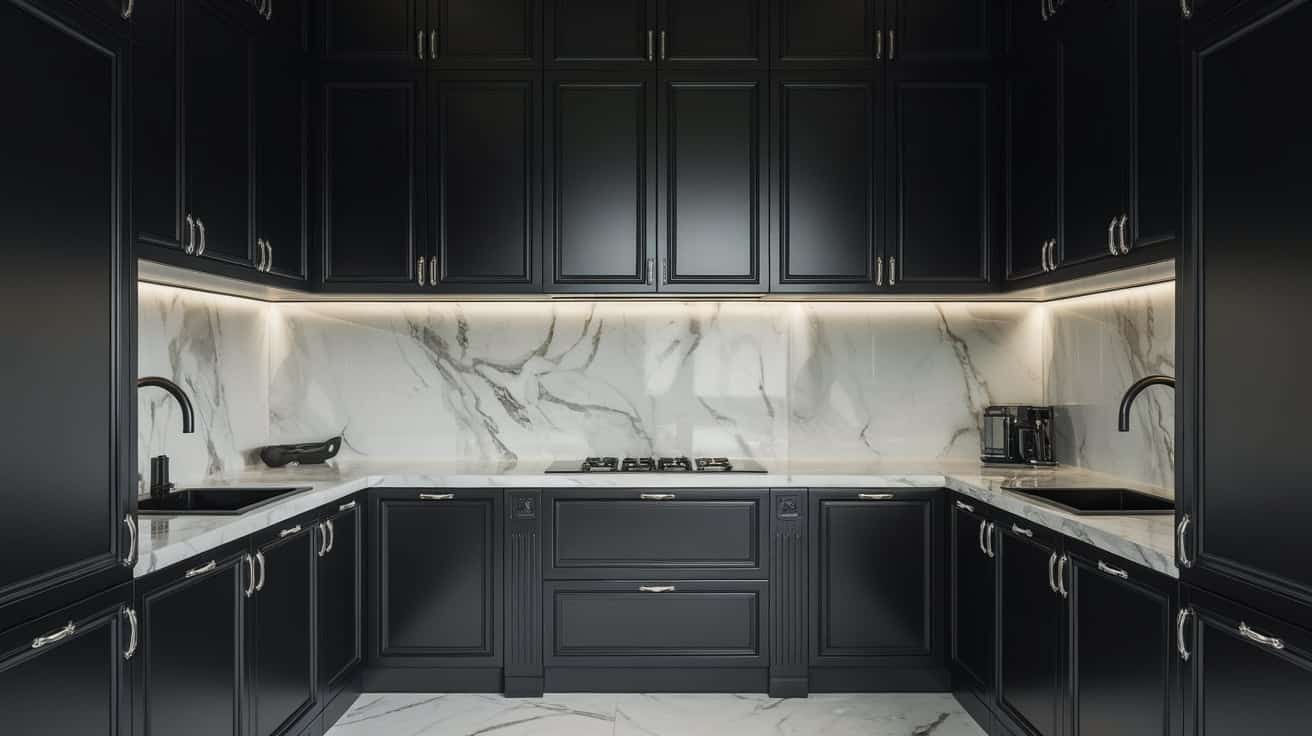
High contrast creates drama when you pair dark cabinets with bright white or light gray marble backsplash. The light backsplash reflects more light into the space and gives your eyes a place to rest.
- Best For: Homeowners who want moodiness but need the kitchen to still feel bright enough for daily use.
- Key Elements: Dark cabinets, white or light gray marble backsplash, contrasting grout lines.
- Why It Works: The contrast keeps the space from feeling too enclosed while maintaining the dark mood.
11. Black and Walnut Kitchen Color Scheme
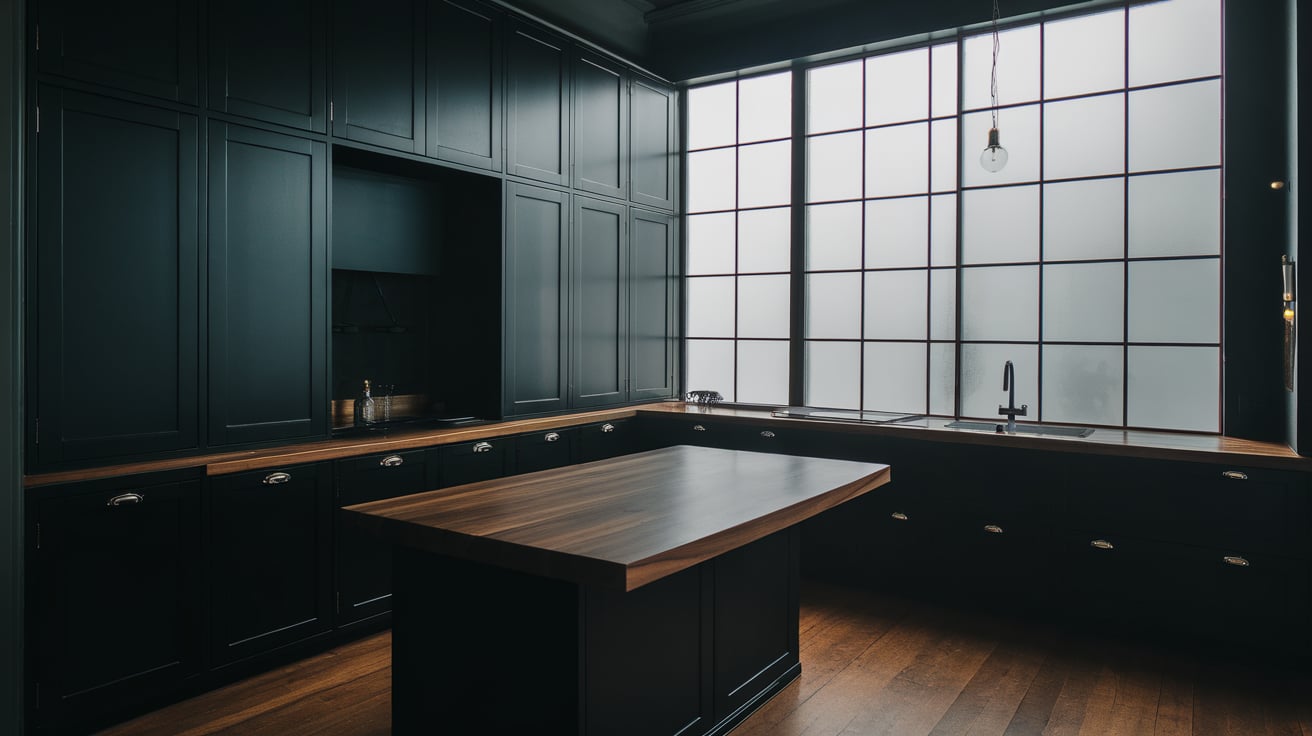
Black and walnut is a classic pairing where deep brown tones warm up the coolness of black. Use walnut for countertops, shelving, or flooring while letting black handle the cabinetry.
- Best For: Modern or mid-century inspired kitchens that prioritize natural materials.
- Key Elements: Black cabinets, walnut wood surfaces, minimal metal accents.
- Why It Works: Walnut brings warmth and prevents black from feeling too stark or cold.
12. Moody Kitchen with Floor-to-Ceiling Cabinets
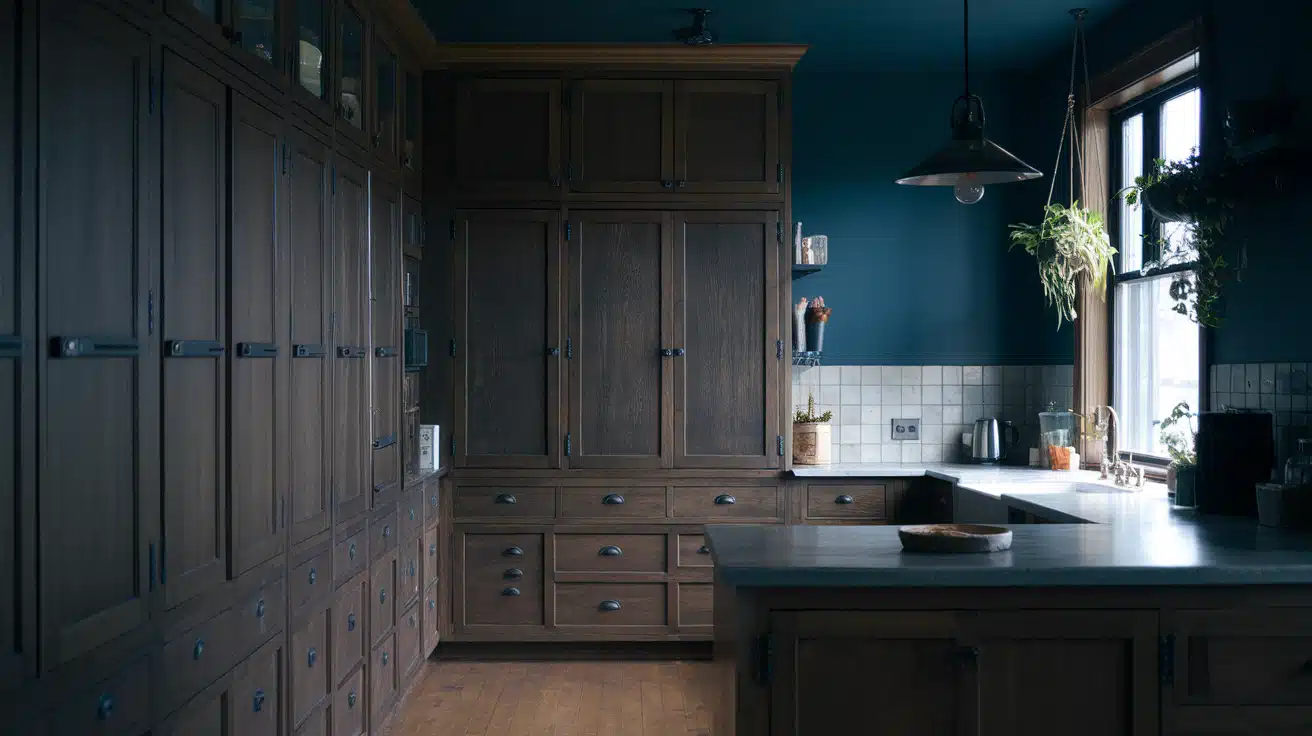
Floor-to-ceiling cabinets make a bold statement with a built-in, intentional look. The vertical lines draw the eye upward and make ceilings feel higher, but you need adequate lighting.
- Best For: Kitchens with high ceilings or those needing maximum storage without upper clutter.
- Key Elements: Full-height cabinetry, integrated lighting, minimal hardware.
- Why It Works: The unbroken vertical lines create a cohesive, intentional design that feels custom and luxurious.
13. Dark Kitchen with Minimal Hardware
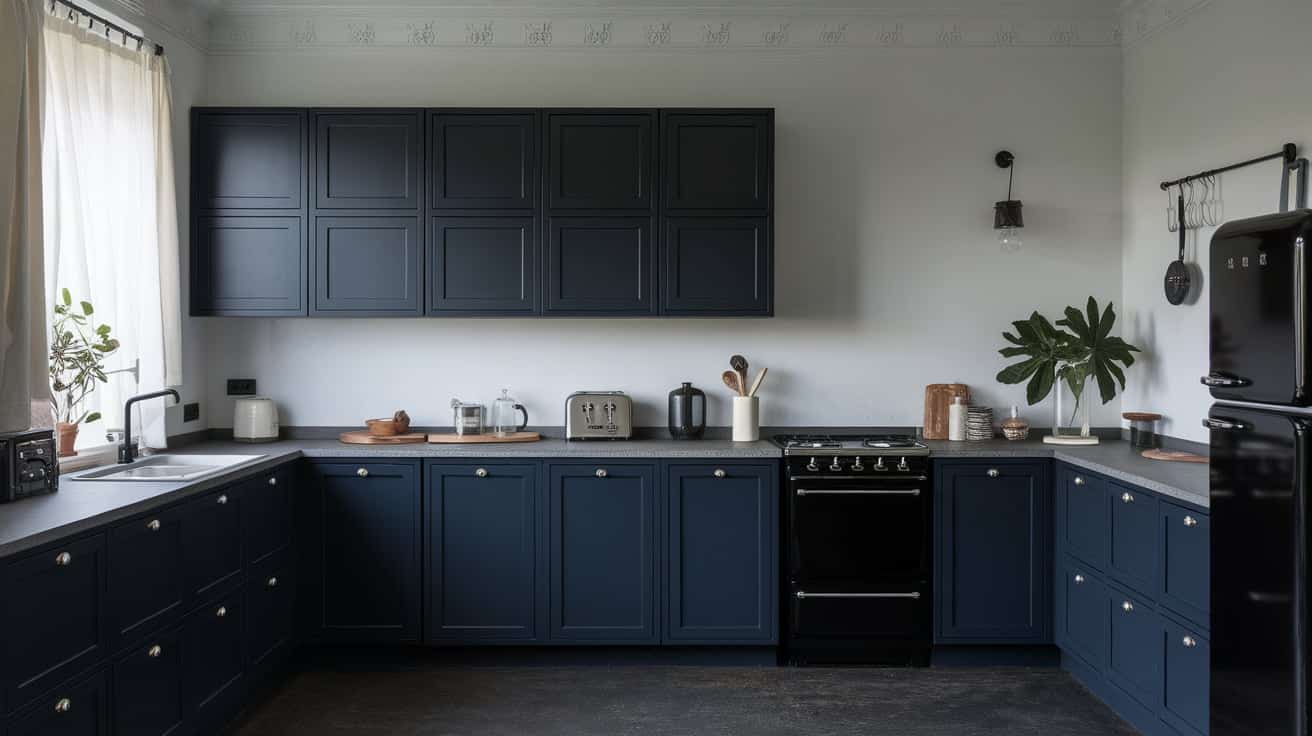
Minimal or hidden hardware lets the cabinet color and form be the focus with push-to-open mechanisms or recessed pulls. The lack of hardware makes the darkness feel more sophisticated and less busy.
- Best For: Minimalist or modern kitchens where simplicity is the goal.
- Key Elements: Handleless cabinets, push-to-open systems, clean lines.
- Why It Works: Removing hardware reduces visual noise and lets the dark color take center stage.
14. Moody Kitchen Using Concrete Surfaces

Concrete countertops, floors, or backsplashes bring an industrial edge that feels raw and modern. The material can be polished, honed, or left rough, depending on how you want light to interact with it.
- Best For: Industrial, modern, or urban-style kitchens that want a raw, grounded feel.
- Key Elements: Concrete surfaces (countertops, floors, or backsplash), dark cabinetry, metal accents.
- Why It Works: Concrete adds texture and an industrial edge that complements dark tones naturally.
15. Dim Kitchen Enhanced with Reflective Finishes

Reflective surfaces like glossy backsplash tiles, polished countertops, or glass cabinet fronts bounce light around the room. The reflection creates the illusion of more light without adding actual fixtures.
- Best For: Kitchens with limited natural light that need help maximizing what little light exists.
- Key Elements: Glossy tiles, polished stone, glass elements, metallic accents.
- Why It Works: Reflective surfaces multiply available light and prevent the space from feeling too dark or closed in.
16. Dark Kitchen Ideas with Vintage-Inspired Details

Vintage details like farmhouse sinks, retro hardware, or reclaimed wood shelves add personality and history. The aged finishes and classic shapes make the space feel timeless, moody, but not cold or modern.
- Best For: Those who love character-rich spaces with a nostalgic or farmhouse feel.
- Key Elements: Vintage hardware, farmhouse sink, reclaimed wood, classic shapes.
- Why It Works: Vintage elements add warmth and personality that balance out darker modern tones.
17. Moody Kitchen with Dark Ceiling Treatment
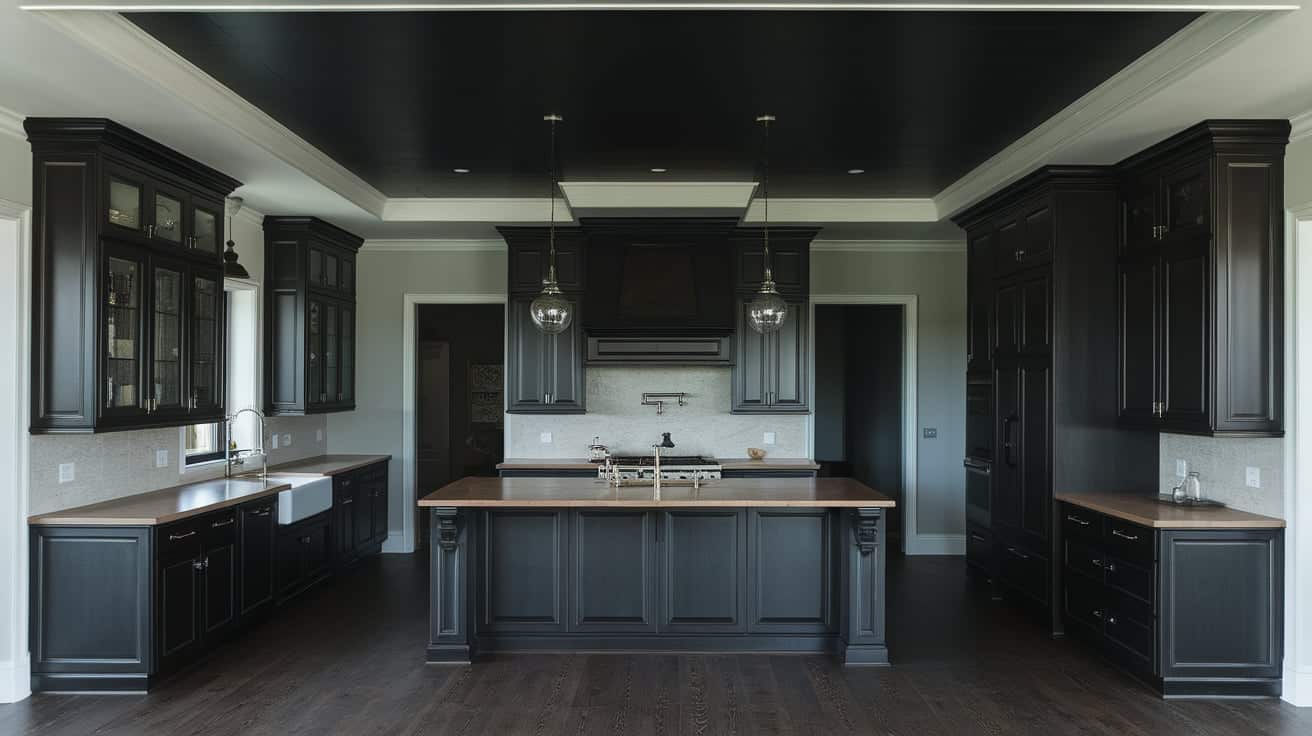
A dark ceiling extends the mood upward and creates a cocooning effect that makes the room feel more intimate. Pair this with good lighting like recessed lights, pendants, or wall sconces to keep things functional.
- Best For: Kitchens where you want a fully immersive, enveloping mood.
- Key Elements: Dark painted or stained ceiling, layered lighting, dark or mid-tone cabinets.
- Why It Works: Extending darkness to the ceiling creates a cohesive, wrapped feeling that makes the space feel intentional and intimate.
18. Small Moody Kitchen That Feels Intentional
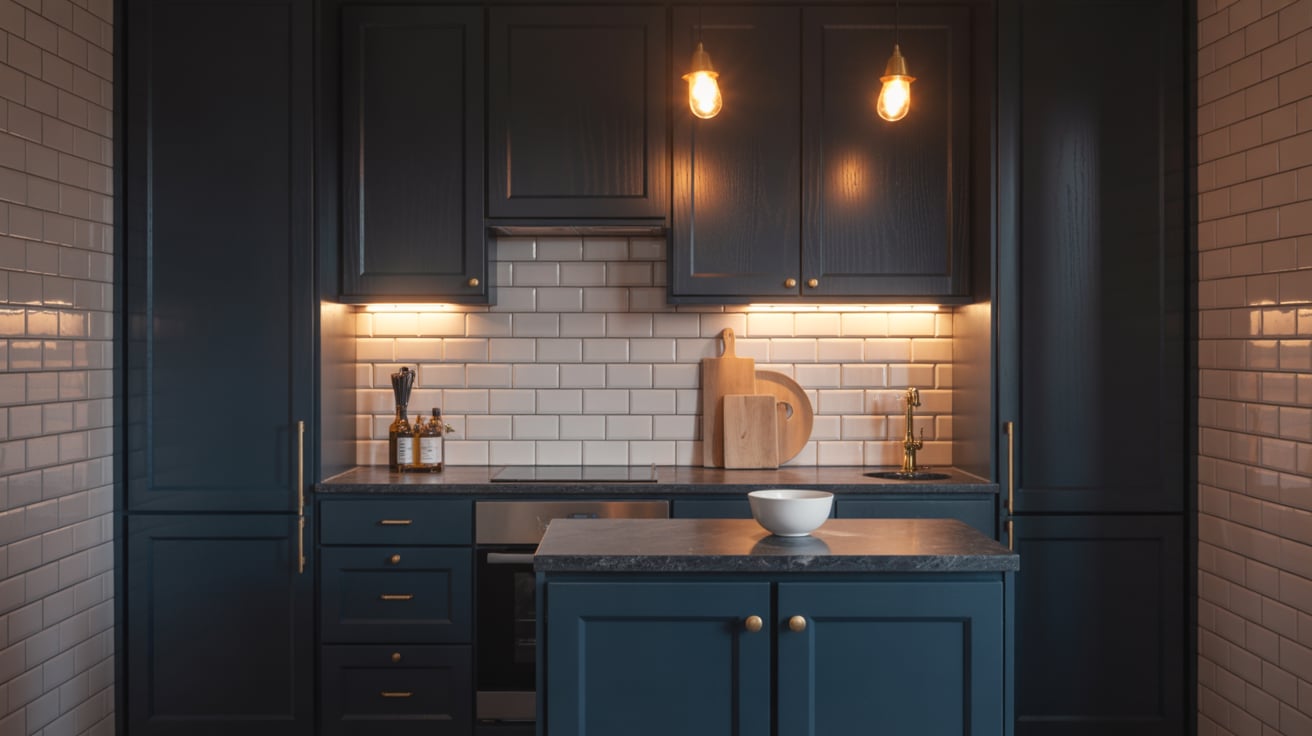
A small kitchen can handle dark colors if you use them to add depth, not shrink the space. Keep surfaces reflective and lighting ample, and add one or two lighter elements to break things up.
- Best For: Compact kitchens where dark tones can add interest without overwhelming the footprint.
- Key Elements: Dark cabinets, reflective surfaces, strategic lighting, and one light contrast element.
- Why It Works: Darkness adds depth and makes a small space feel more designed, not smaller.
19. Moody Kitchen with Warm Ambient Lighting Layers
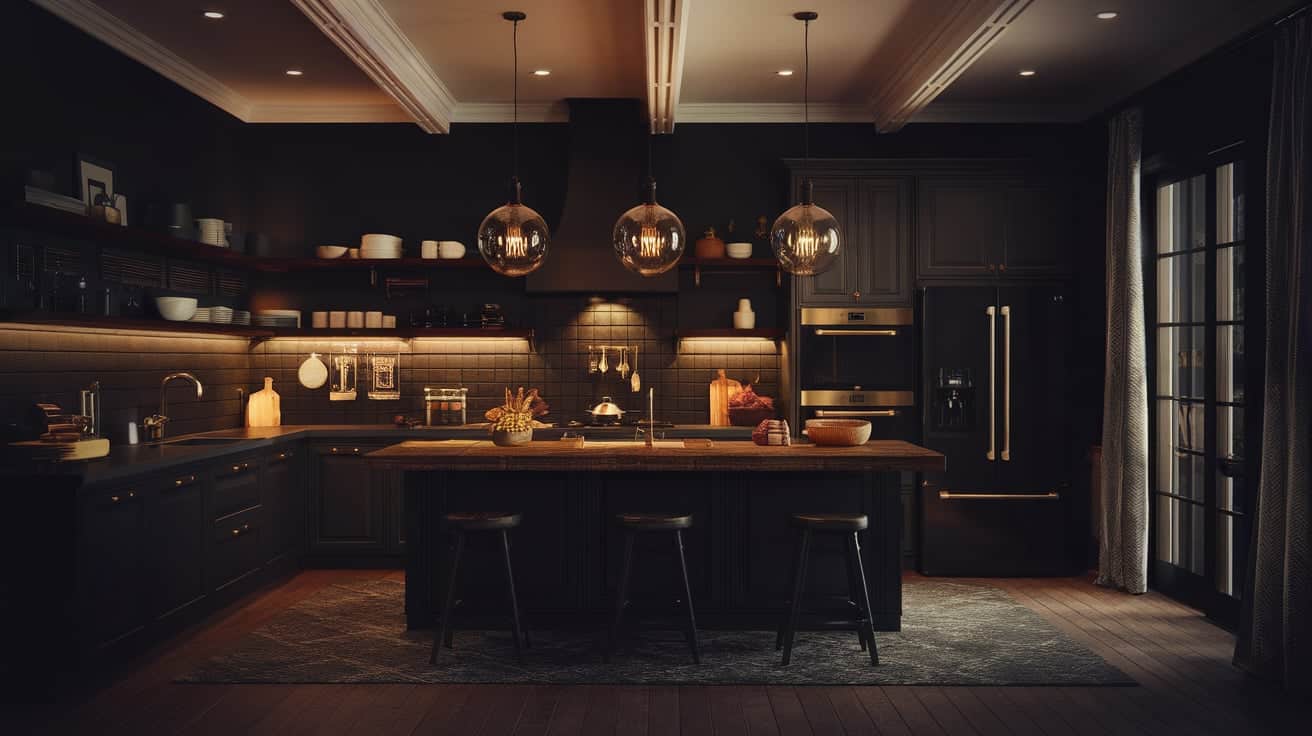
Layered lighting combines task lights for cooking, ambient lights for overall glow, and accent lights for drama. Use warm-toned bulbs to enhance the cozy feel since cold white light can make dark spaces feel harsh.
- Best For: Any moody kitchen, but especially those used heavily for cooking and gathering.
- Key Elements: Task lighting (under-cabinet), ambient lighting (recessed or pendants), accent lighting (in-cabinet or toe-kick), warm bulb temperatures.
- Why It Works: Multiple light sources at different levels create a functional, inviting space that never feels too dark or poorly lit.
Best Color Palettes for a Moody Kitchen
The right color palette sets the foundation for your moody kitchen. Choose colors with depth and pair them smartly to avoid a space that feels flat or lifeless.
- Black, charcoal, and soft gray combinations: These neutrals layer beautifully together, with black providing boldness, charcoal adding softness, and light gray offering breathing room.
- Deep greens, blues, and browns: Earthy and rich tones like forest green, navy blue, and chocolate brown bring warmth and organic depth without feeling too harsh.
- How to avoid flat or muddy tones: Use undertones intentionally (warm vs cool), add texture through materials, and include one lighter contrasting element to keep the palette from looking dull.
Common Design Mistakes to Avoid in Dark Kitchens
| Mistake | Why It Fails |
|---|---|
| Over-darkening without contrast | Everything blends, and the space loses depth and visual interest. |
| Ignoring texture | Flat surfaces make dark colors feel boring and one-dimensional instead of rich. |
| Poor lighting placement | Dark kitchens need strategic light sources, or they become unusable and gloomy. |
| Skipping reflective surfaces | Without any shine or gloss, the room absorbs all light and feels heavy. |
| Choosing the wrong undertones | Mixing warm and cool dark tones randomly creates a muddy, uncoordinated look. |
Is a Moody Kitchen Right for Your Space?
A moody kitchen works best when your lifestyle matches the mood, and your space can support it.
Consider how much natural light enters the room, since dark colors need good lighting to stay functional and inviting.
Think about maintenance too, as matte finishes hide fingerprints better than glossy ones, and darker surfaces show dust and water spots more easily.
If you cook often, entertain regularly, or have kids, choose durable finishes that can handle daily wear without constant cleaning.
Summing It Up
Moody kitchens prove that darkness can feel inviting, not oppressive. The key is balance.
Mix deep colors with warm wood, add layers of light, and bring in texture through stone, metal, or matte finishes. These dark kitchen ideas work because they respect contrast and function, not just style.
A moody kitchen isn’t for everyone, but if you’re drawn to bold, designed spaces that feel personal and grounded, it might be precisely what your home needs.
Start small with one dark element, like cabinets or a backsplash, and build from there.
Ready to try it? Pick your favorite idea from this list and see how darkness can change your space. Drop a comment below and tell us which moody kitchen style speaks to you.