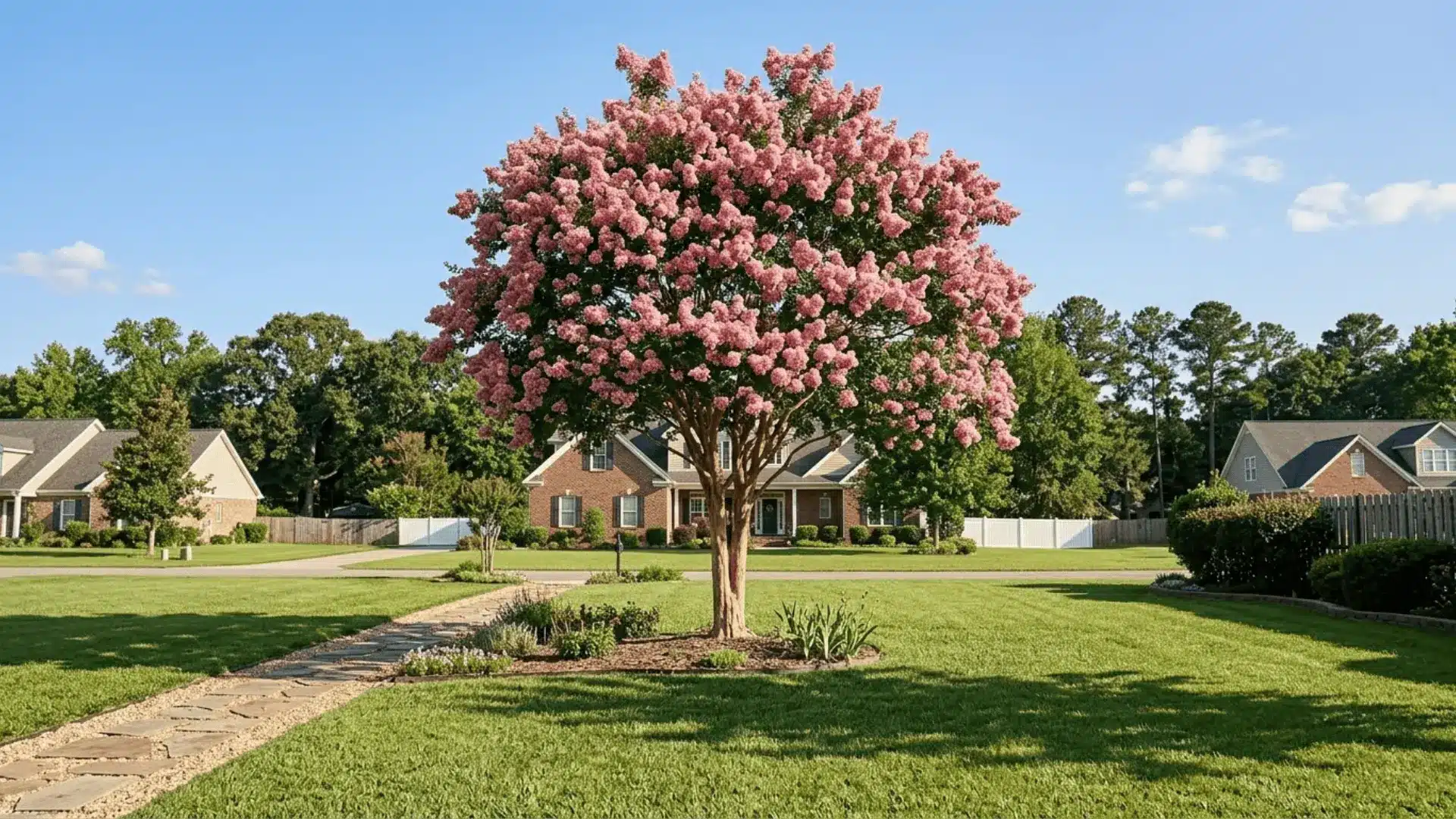
The weekend ritual of mowing, edging, and watering has quietly become one of homeownership’s most time-consuming commitments. Between rising water bills and shrinking free time, traditional turf lawns are starting to feel more like a burden than a benefit.
That shift in perspective is driving more homeowners toward low-maintenance landscaping, where the goal is a yard that looks intentional and inviting without demanding constant attention. The alternatives are more varied and practical than most people realize, and this guide walks through realistic approaches that work for modern residential landscapes.
What Makes a Lawn Truly Low-Maintenance?
A truly low-maintenance yard isn’t about giving up on curb appeal. It’s about designing a landscape that holds its shape and color without weekly intervention.
In practical terms, that means fewer hours behind a mower, less dependence on irrigation, and a reduced need for fertilizers, herbicides, and seasonal replanting. The yard still looks polished, but the effort behind it drops significantly.
Climate-appropriate choices sit at the foundation of this approach. Plants and materials suited to a region’s rainfall, soil, and temperature naturally require less propping up.
When homeowners simplify their outdoor maintenance routine with the right selections upfront, the long-term savings in time, water, and cost tend to compound year after year. The upfront investment may feel larger, but it replaces the slow, steady drain of maintaining a landscape that was never designed for the local environment.
Grass-Free Alternatives Worth Considering
For homeowners ready to move beyond traditional turf, the options fall into two broad categories: living groundcovers and synthetic surfaces. Each solves the maintenance problem differently, and the right choice depends on climate, budget, and how the space gets used.
Groundcovers That Replace Traditional Turf
Groundcover plants like creeping thyme, white clover, and native sedge spread laterally to fill open space, forming a dense mat that chokes out weeds without any mowing. Once established, most varieties need only occasional watering and virtually no fertilizing.
These plants also work well in areas where traditional grass struggles. The gaps between pavers, edges along pathways, and shaded patches under trees are all spots where groundcovers thrive with minimal oversight.
Synthetic Turf for Year-Round Green
On the other end of the spectrum, artificial turf eliminates watering, mowing, and fertilizing entirely. Modern synthetic grass for residential landscapes has come a long way in realism, with varied blade heights and natural color blends that hold up under consistent foot traffic.
The trade-offs are worth noting, though. Upfront installation costs run significantly higher than seeding or sodding, and synthetic surfaces also retain more heat than living groundcovers, which can make them uncomfortable underfoot during peak summer months.
Still, for households that prioritize a consistently green look with near-zero upkeep, artificial turf remains one of the most practical options on the market. The key is weighing that initial investment against years of eliminated yard work.
Hardscaping Ideas That Cut Mowing in Half
One of the most effective ways to reduce yard work is also one of the most straightforward: replace portions of the lawn with materials that never need mowing at all. Hardscaping turns high-effort turf into functional, visually defined spaces that hold up year after year.
Gravel, Stone, and Paver Layouts
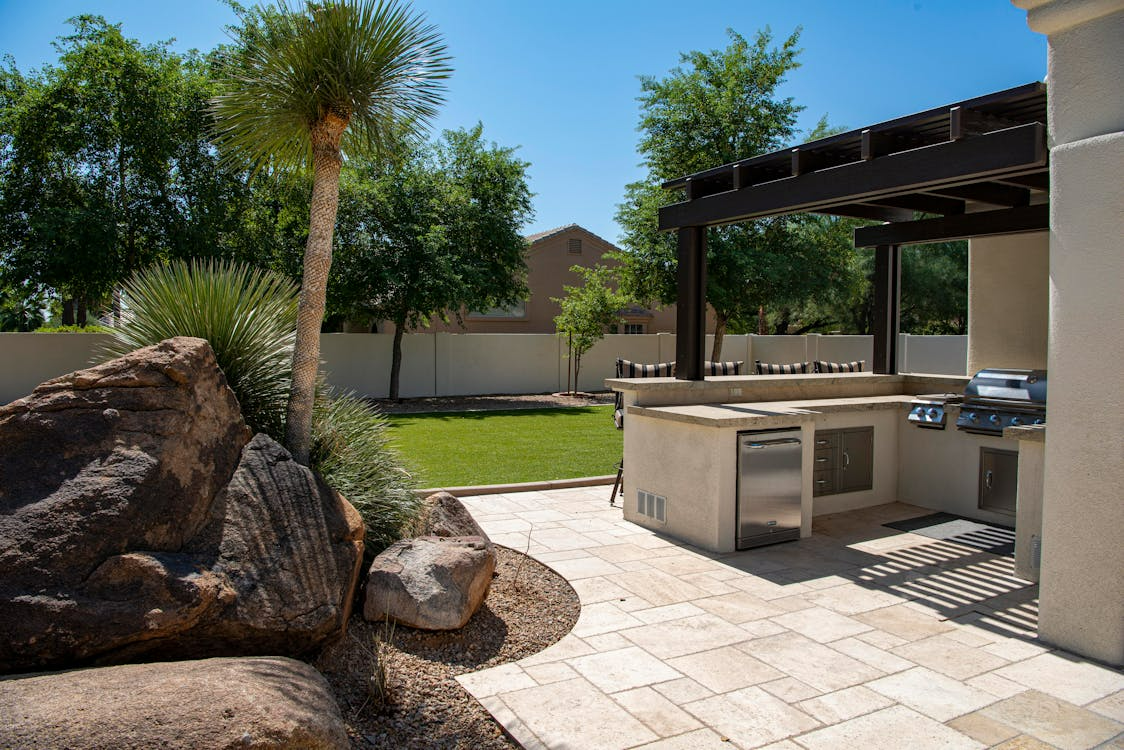
Gravel landscaping is a natural fit for dry climates and works especially well when used around planting beds or as a base layer in xeriscape designs. A well-placed gravel bed can eliminate a significant stretch of mowable lawn while adding clean texture to the overall layout.
Pavers, on the other hand, bring structure. They create defined pathways, patio areas, and transition zones between different parts of the yard. Permeable paver options also help with drainage, allowing rainwater to filter through rather than pooling on hard surfaces.
Flagstone offers a more organic look, fitting naturally into garden borders and stepping paths where rigid geometry would feel out of place.
What ties all three materials together is the ability to pair them with small planting pockets. A few clusters of ornamental grasses or low-growing succulents tucked between stones or along gravel edges create visual contrast without adding meaningful upkeep.
The planted areas stay small enough to manage by hand, and the hardscaping around them does the heavy lifting in keeping the yard looking finished.
Drought-Tolerant and Native Plant Picks
Choosing the right plants is just as important as choosing the right materials. While the hardscaping strategies covered earlier reduce mowable area, the plants that fill the remaining beds and borders determine how much watering, feeding, and fussing a yard actually demands.
Native plants are a strong starting point because they’ve already adapted to local rainfall patterns and soil conditions. That built-in resilience means less supplemental irrigation and fewer amendments to keep them healthy.
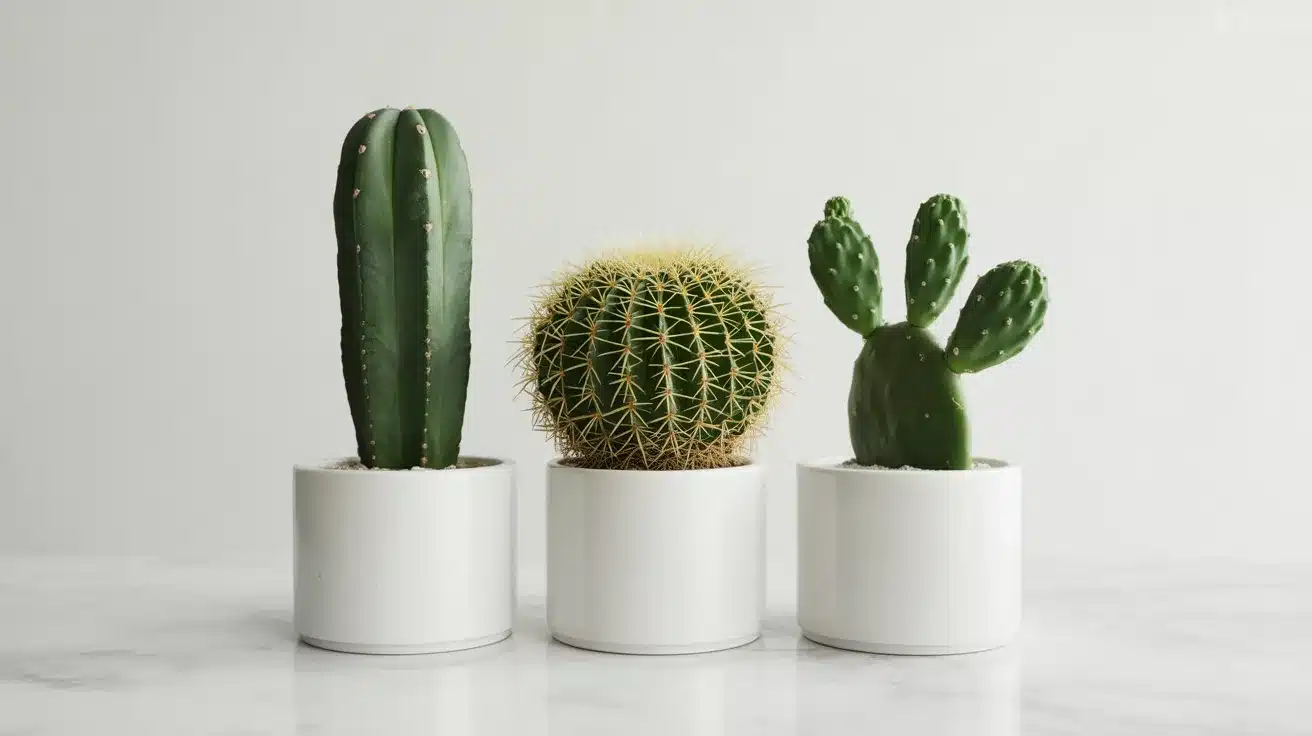
Species like lavender, agave, and ornamental grasses thrive in lean conditions where traditional garden plants would struggle without consistent attention.
However, regional climate should drive every selection. A plant palette that works beautifully in the arid Southwest will look entirely different from one suited to the humidity of the Southeast. Matching plants to the environment they’ll actually grow in is the simplest way to avoid fighting nature with a hose.
Xeriscaping Basics for Residential Yards
Xeriscaping takes drought-tolerant planting a step further by organizing the entire landscape around water efficiency. The core principle is zoning, where plants with similar water needs are grouped together so irrigation targets only the areas that truly need it.
Mulch plays a supporting role in these designs. A consistent layer across planted beds suppresses weed growth and helps soil retain moisture longer between rains.
That combination of smart zoning and mulch coverage can reduce outdoor water consumption by up to 60%, which adds up quickly over a full growing season. For homeowners already thinking about seasonal landscape care strategies, xeriscaping creates a foundation where each season’s workload stays predictable and manageable rather than reactive.
Layering Plants for Visual Depth and Less Work
Strategic plant layering is one of the simplest ways to boost curb appeal while cutting down on routine yard work. The concept follows a back-to-front height graduation: tall ornamental grasses or shrubs anchor the rear, mid-height perennials fill the middle, and low groundcover plants spread across the front edge.
This arrangement fills vertical space that would otherwise sit empty or require mowing. When each tier is planted densely enough, the canopy shades the soil beneath it, naturally suppressing weed germination and helping the ground retain moisture between rains.
Over time, these layered beds begin functioning as self-sustaining plant communities. The taller species shelter the shorter ones from wind and harsh sun, while the groundcover layer locks in soil health at the base.
The result looks polished and intentional, yet the ongoing effort stays remarkably low once everything fills in.
Building a Yard That Works Without You
The right combination of strategies always comes back to two factors: local climate and personal priorities. What works in a water-scarce region looks nothing like what suits a rainy one, and the best low-maintenance landscaping reflects that reality rather than fighting it.
Upfront planning and smart material choices replace years of recurring effort and cost. A yard designed around its environment from the start demands far less intervention down the line.
None of this means settling for a dull or lifeless outdoor space. It means building a smarter one, where the design itself does the work.