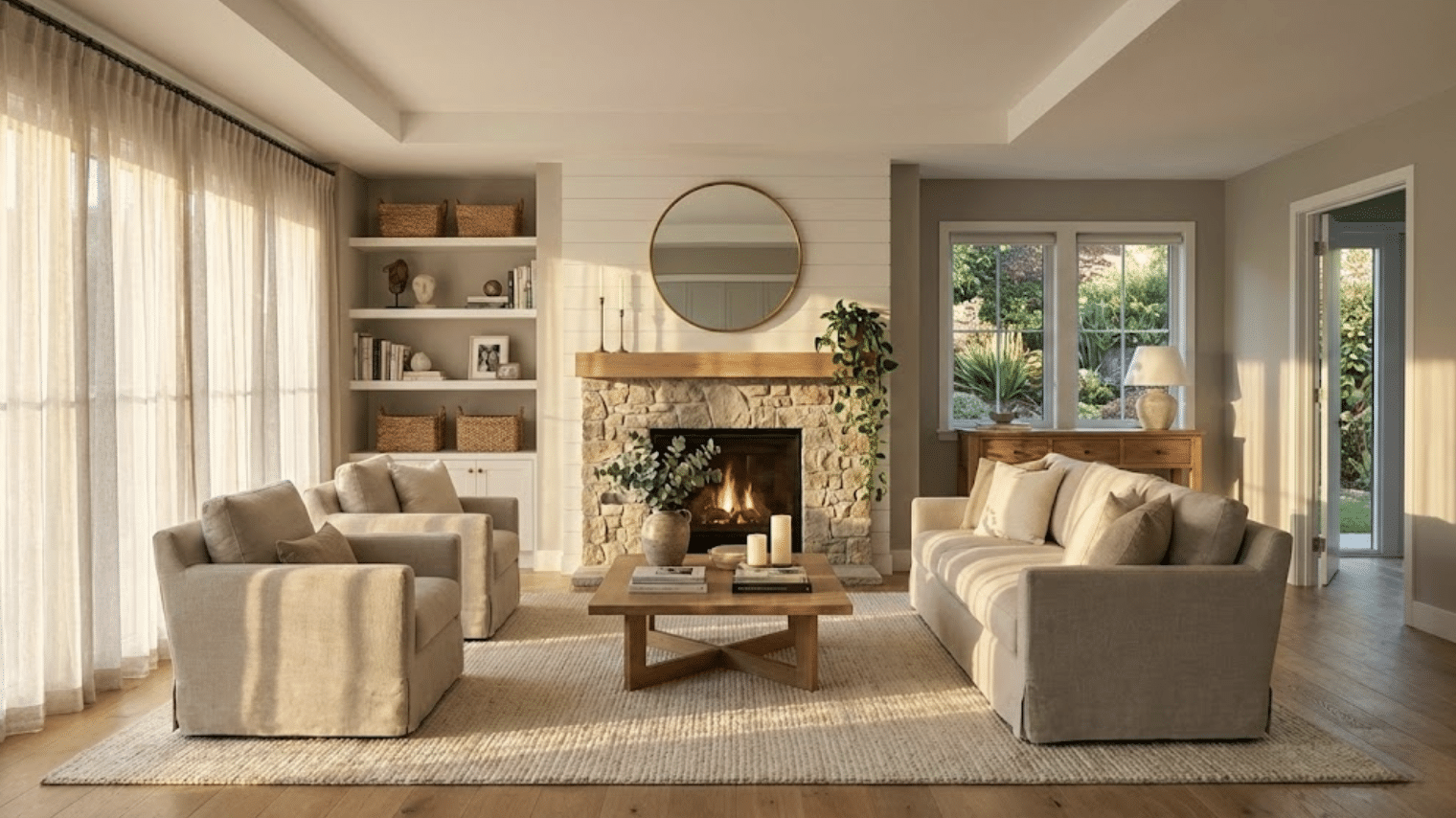
There’s something magnetic about a fireplace: it draws the eye, anchors the room, and whispers cozy evenings. Yet that same beautiful feature can turn furniture arrangement into a genuine puzzle.
Do you face the sofa toward the flames or the TV? Where does conversation flow when the heart demands attention?
You are not alone in this design dilemma.
The right layout honors that flickering focal point while creating a space that actually works for how you live.
Think balanced symmetry, intentional angles, and furniture that invites you to linger. Ready to reimagine your living room around the glow?
Why the Fireplace Changes Your Living Room Layout?
A fireplace instantly becomes the visual anchor of any living room, pulling attention the moment you walk in.
But it’s more than just pretty: it reshapes how you move through the space, where your sofa can go, and how you balance seating around both warmth and entertainment.
Functional fireplaces demand clearance and heat considerations, while decorative ones offer more flexibility. Placement matters enormously.
A centered fireplace invites symmetry, corner units free up wall space, off-center designs require creative balancing, and wall-to-wall statements command the entire room.
Understanding your fireplace type is the first step to arranging everything else beautifully.
Key Design Rules for a Living Room With a Fireplace
Great layouts start with intention. Before you push a single piece of furniture, these core principles will guide every decision and keep your space feeling cohesive and breathable.
- Decide Your Hero: Choose whether the fireplace, TV, or view takes center stage, then arrange seating to honor that choice without fighting it.
- Keep Pathways Open: Maintain at least 3 feet of clearance for traffic flow so the room feels easy to move through, not like an obstacle course.
- Balance Visual Weight: Distribute large furniture pieces evenly across the space so one side doesn’t feel heavy while the other floats awkwardly empty.
- Match the Scale: Select sofas and chairs proportional to your fireplace size; an oversized hearth needs substantial seating, while a petite mantel pairs beautifully with lighter pieces.
When these fundamentals align, the rest of your design decisions become remarkably intuitive.
Popular Living Room Layouts With a Fireplace
The best layout isn’t about following trends but finding what fits your room’s bones and how you actually gather.
Here are four tried-and-true arrangements that make the fireplace feel like the natural heart of your space.
1. Sofa-Focused Layout
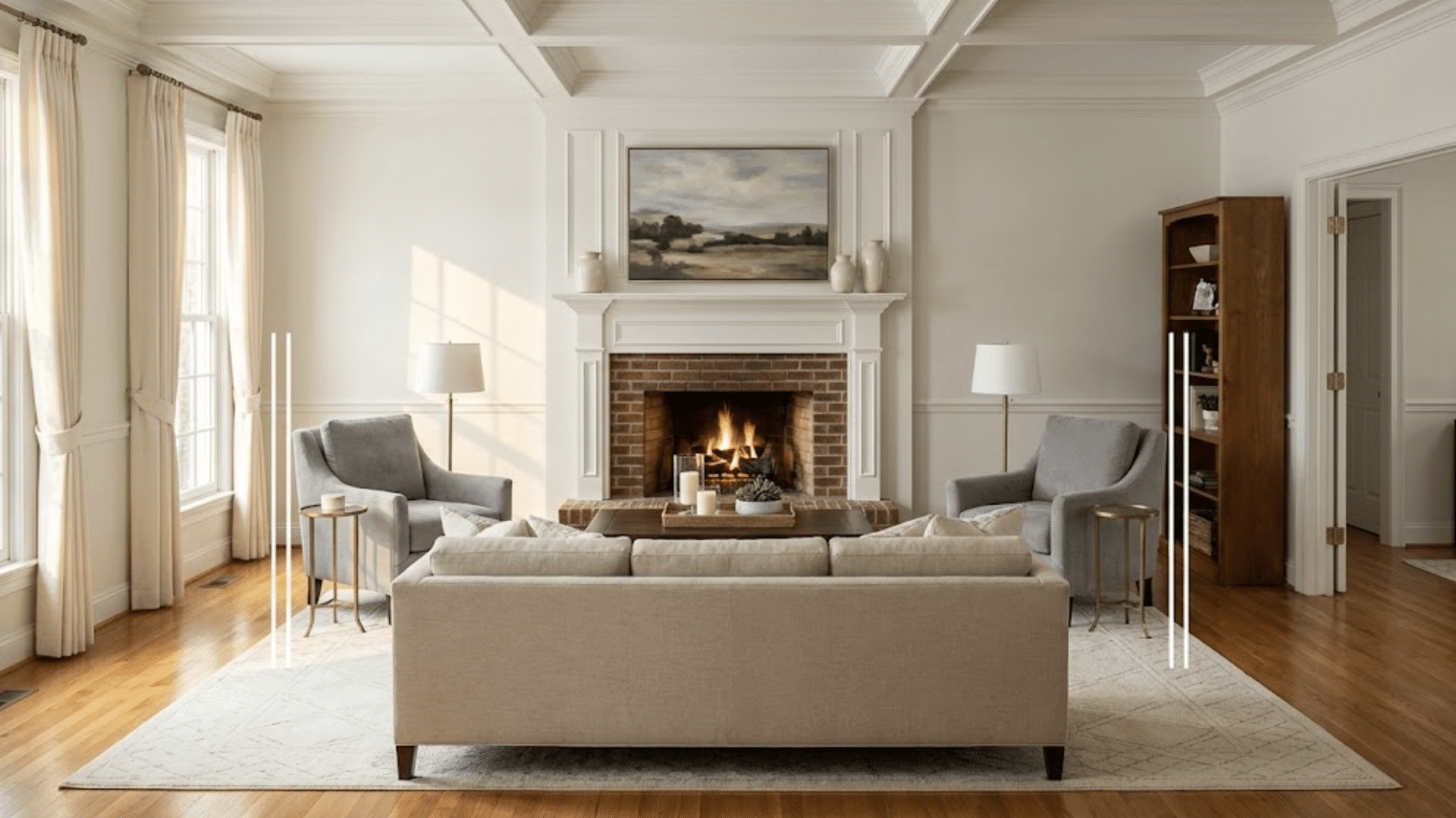
Room dimensions: 12×14 feet or larger with a centered fireplace
Your fireplace is the undisputed star, and you want a clear, uncluttered view of the flames. This classic setup places the sofa directly opposite the hearth, creating an instant conversation zone.
Add a coffee table between them, then flank with accent chairs or side tables.
It’s perfect for formal living rooms or spaces where the fireplace gets regular use. The symmetry feels grounding, and everyone has a front-row seat to the glow.
2. L-Shaped Seating Layout
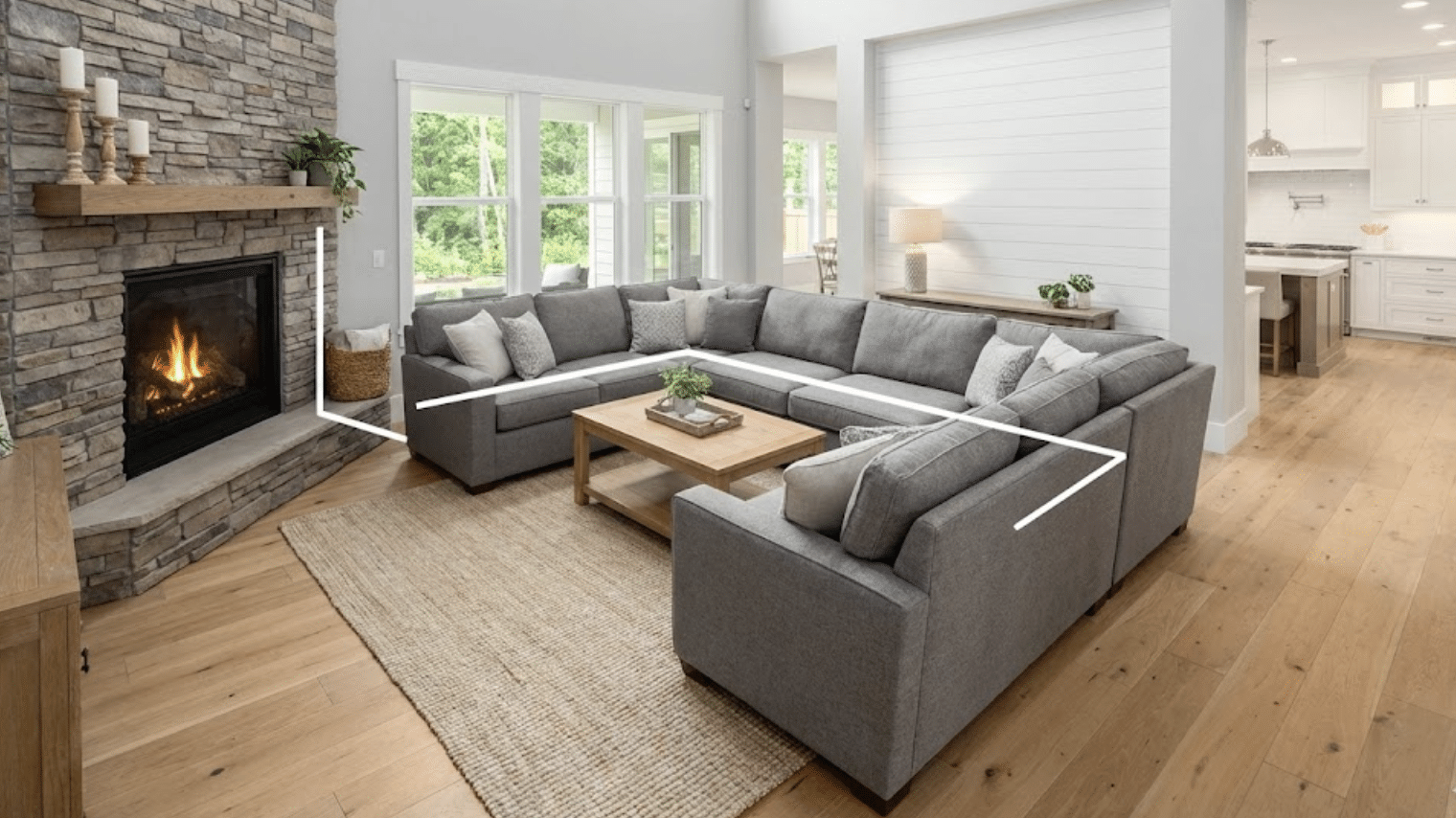
Room dimensions: 15×18 feet or open-concept floor plans with corner fireplaces
A sectional wraps around the fireplace, defining the living zone while keeping sightlines open to adjacent areas.
This layout maximizes seating without blocking flow, making it ideal for homes where the living room blends into the kitchen or dining area.
Corner fireplaces especially benefit from this arrangement since the L-shape naturally hugs the angle. It feels casual, inclusive, and designed for real life, not just looking pretty.
3. Symmetrical Layout
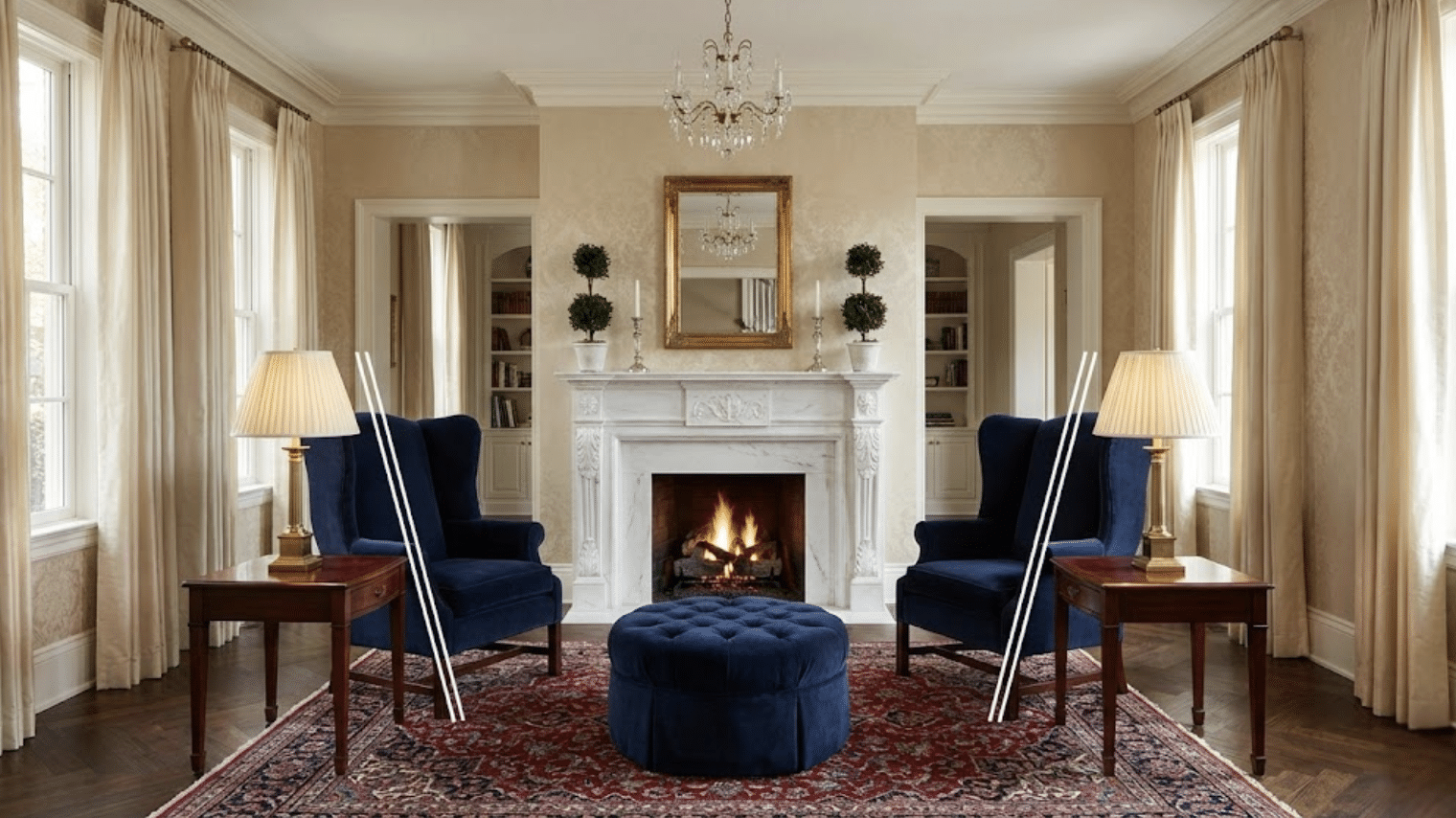
Room dimensions: 10×12 to 14×16 feet with a centered fireplace on the main wall
Matching chairs or loveseats flank each side of the fireplace, creating a mirror-image balance that feels urbane and intentional.
This layout works beautifully in smaller, more intimate spaces where you want polish over sprawl.
Think wingback chairs, matching side tables, and a central ottoman or rug anchoring the arrangement. It’s classic, tailored, and whispers refined taste without trying too hard.
4. Floating Furniture Layout
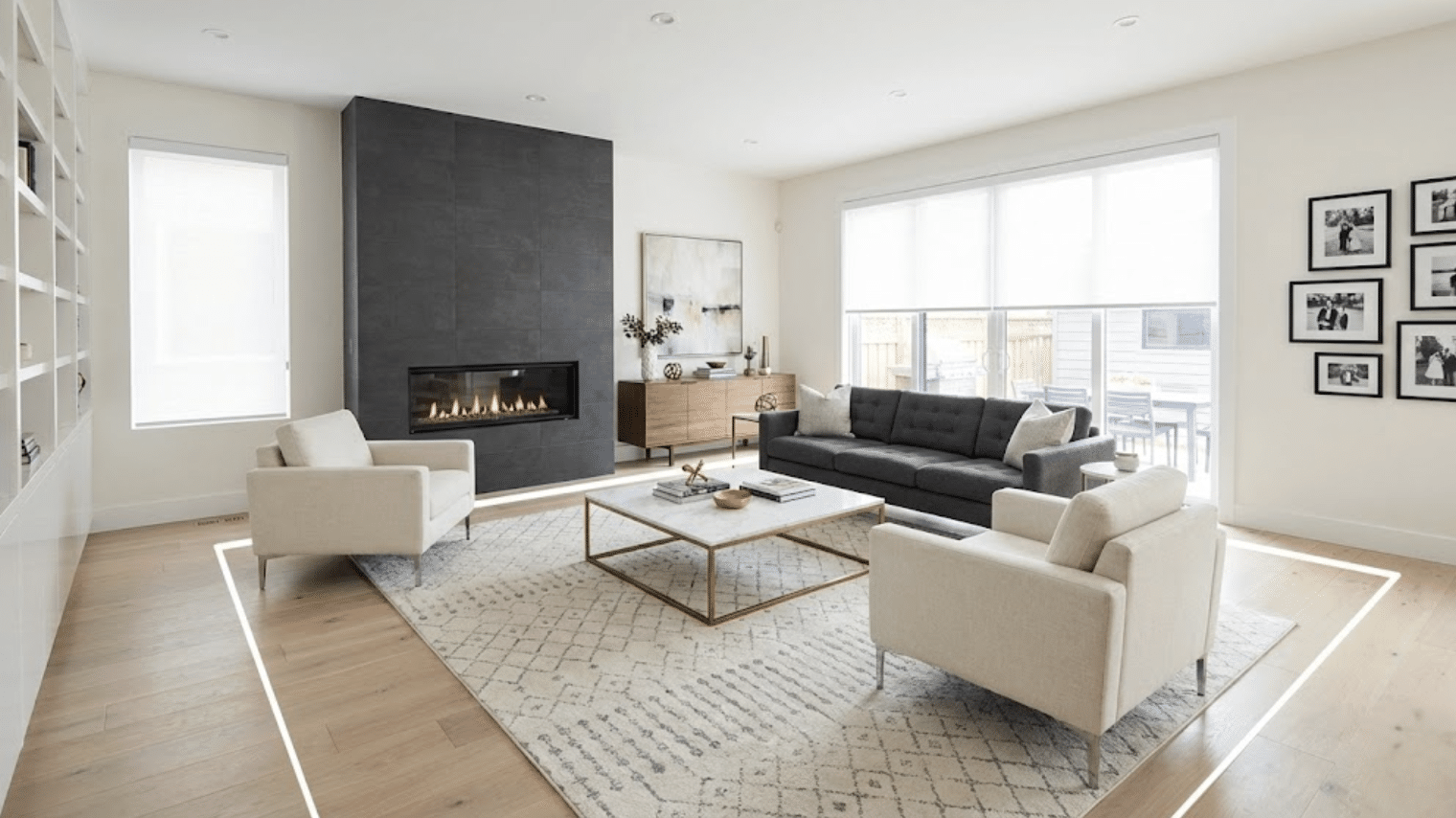
Room dimensions: 16×20 feet or larger with 3+ feet of clearance on all sides
Pull the sofa and chairs away from the walls to create an intimate seating island centered around the fireplace.
This arrangement adds breathing room and makes oversized spaces feel more conversational.
A rug grounds the furniture grouping, while the freed-up wall space opens opportunities for consoles, bookshelves, or art. It’s modern, airy, and converts a cavernous room into a cozy gathering spot.
Living Room Layout With Fireplace: Common Problems & Fixes
Even the most beautiful fireplace can create layout headaches. Here’s how to solve the most common frustrations with simple, strategic fixes.
Problem 1: Corner fireplaces feel awkward and make seating arrangements lopsided.
The Fix: Use an L-shaped sectional that hugs the corner, or position two chairs at a 45-degree angle facing the hearth. Balance the space with a media console on adjacent walls and a round coffee table to soften sharp angles.
Problem 2: A jutting fireplace eats up wall space and creates dead zones.
The Fix:Float your furniture instead of pushing it against walls. Position the sofa perpendicular to the fireplace to create a natural room divider, then use the back of the sofa as a boundary for a console table or workspace.
Problem 3: Fireplaces in long, narrow rooms create awkward seating distances.
The Fix: Break the room into 2 distinct zones: a cozy fireplace area with compact seating at one end, and a secondary function like a reading nook at the other. Use rugs to define each zone and keep furniture scaled down.
Problem 4: Multiple focal points like fireplaces and TVs compete for attention.
The Fix:Mount the TV above the fireplace if mantel height allows, or arrange seating in a gentle arc that acknowledges both features. Swivel chairs offer flexibility for shifting attention as needed.
Before and After: Awkward Living Room Layout With Fireplace
Seeing real changes makes abstract advice click into place. Here’s how strategic furniture shifts turn fireplace frustration into flow.
Before: A centered fireplace with the sofa shoved against the opposite wall, leaving an awkward chasm in between. The TV competes with a side wall, chairs float aimlessly, and nothing feels connected.
After: The sofa moves within 6 feet of the hearth, anchored by a cohesive rug. TV mounts above the mantel, uniting both focal points. Matching armchairs flank the fireplace; a console table behind the sofa adds functionality.
Real examples like this fireplace addition project show how thoughtful placement creates instant cohesion and warmth.
Living Room With Fireplace and TV
Pairing a fireplace with a TV is the ultimate design debate. Mounting the TV above the mantel unifies focal points and saves wall space, but heat can damage electronics, and viewing angles strain necks.
Alternative placements include adjacent walls with angled seating, built-ins flanking the fireplace, or a media console on the opposite wall.
Balance is key: ensure the TV sits at eye level when seated, keep heat vents clear, and use minimal decor on the mantel to avoid visual clutter.
Consider a Frame TV or hiding cables within the wall for a cleaner look that honors both features equally.
Small Living Room Layout With Fireplace
Small living rooms with fireplaces need clever strategies to feel spacious, not squeezed. These tactics maximize every inch while keeping the hearth as your cozy centerpiece.
- Choose Scaled-down Furniture: Opt for armless chairs, loveseats instead of full sofas, and nesting tables that tuck away when not in use to keep pathways clear.
- Define Zones with Rugs: A well-placed rug anchors seating around the fireplace, visually separating the cozy zone from other areas without adding walls or bulk.
- Build Vertically Around the Hearth: Install floating shelves or floor-to-ceiling built-ins flanking the fireplace to draw eyes upward and add storage without eating floor space.
- Bounce Light Strategically: Hang a large mirror above the mantel to reflect natural light, use pale wall colors to expand the room visually, and skip heavy drapes for sheer panels.
With thoughtful choices, even the coziest room can feel open, organized, and utterly inviting.
Decorating Around the Fireplace
The fireplace isn’t just functional, it’s your room’s natural stage for personal style.
Here’s how to dress it beautifully without overwhelming the space.
| Element | Styling Approach | Key Tips |
|---|---|---|
| Mantel Styling | Layer 3 to 5 objects in varying heights. | Keep it asymmetrical but balanced. Leave breathing room. |
| Artwork & Mirrors | Hang a statement piece sized at two-thirds the mantel width. | Mirrors expand space; bold art adds personality. |
| Built-Ins & Shelving | Flank the fireplace with symmetrical shelves for books and decor. | Mix items purposefully and leave some shelves sparse. |
| Seasonal Decor | Swap mantel pieces seasonally: greenery, florals, warm tones. | Edit ruthlessly to avoid clutter. |
Quick Layout Checklist
Before you rearrange a single cushion, run through this quick checklist to save time, avoid mistakes, and create a layout that actually works.
- Measure your room and fireplace dimensions: Know exact wall lengths, fireplace width, and clearance zones before shopping or moving furniture.
- Identify your primary focal point: Decide whether the fireplace, TV, or view takes center stage, then orient seating accordingly.
- Test layouts with painter’s tape: Map furniture footprints on the floor to visualize flow and spacing before committing to placement.
- Anchor seating with a properly sized rug: Ensure all front furniture legs sit on the rug to ground the space and define the fireplace zone.
- Layer lighting around the hearth: Add table lamps, sconces, or floor lamps to balance the fireplace glow and create ambient warmth.
With these steps checked off, your living room layout practically arranges itself.
Final Thoughts
Creating a living room layout with a fireplace doesn’t have to feel like an impossible puzzle.
With the right furniture placement, thoughtful zoning, and a clear focal point, that hearth becomes the heart of a space you’ll actually want to spend time in.
Corner fireplaces, centered statements, or off-center challenges all respond beautifully to these same core principles.
Now it’s your turn: what’s your biggest fireplace layout challenge? Drop a comment below and let’s troubleshoot together.
Sometimes the best design breakthroughs come from sharing what’s tripping us up.