Imagine stepping into your garden and finding something beautiful blooming every season without replanting each spring. That’s the magic of perennial garden design plans.
These thoughtful layouts create living tapestries that return year after year, weaving together color, texture, and structure with surprisingly little effort.
For first-time gardeners sketching ideas on graph paper or seasoned planners reimagining landscapes, understanding how to lay out a perennial flower garden turns scattered plantings into cohesive, enduring scenes.
The right design becomes your garden’s backbone: a framework that celebrates each season while building effortless beauty that deepens with time.
Perennial Garden Design Principles
Great perennial layouts aren’t accidental. They follow gentle principles that bring harmony to your beds.
Balance guides where the eye travels, while layering by height creates natural depth and dimension. Repeating certain colors or plant varieties throughout your design builds rhythm and unity.
Most importantly, planning for seasonal interest means your garden never feels empty, with blooms unfolding from spring’s first crocus through autumn’s final aster.
| Design Principle | What It Does | How to Apply It |
|---|---|---|
| Balance and Flow | Guides the eye through your garden naturally | Mix rounded with spiky shapes; arrange colors to create visual pathways |
| Formal vs. Informal | Sets your garden’s personality | Formal: symmetrical, geometric; Informal: curved, naturalistic |
| Plant Height & Layering | Creates depth and dimension | Tall in back, medium in center, low at edges |
| Repetition & Rhythm | Builds cohesion and unity | Repeat colors or plant types at intervals |
| Seasonal Interest | Ensures continuous blooms | Layer spring, summer, and fall bloomers together |
Site & Layout Planning: Step-By-Step Guide to Mapping Your Perennial Garden
Before planting a single perennial, take time to understand your space. A thoughtful site plan saves you from costly mistakes and ensures your garden thrives exactly where you place it.
This planning phase might feel tedious, but it’s where beautiful gardens truly begin. Here’s how to map your space with confidence.
- Step 1: Note the length, width, and any existing features like trees or structures that will influence your layout.
- Step 2: Track sunlight movement throughout the day. Mark full sun (6+ hours), partial sun (3-6 hours), and shaded areas.
- Step 3: Check for clay, sandy, or loamy soil. Identify where water pools after rain to spot drainage issues.
- Step 4: Sketch your space on grid paper or use digital tools. Mark measurements, sun zones, and existing elements.
- Step 5: Plan where pathways, seating areas, sculptures, or fences will anchor your design and create visual interest.
With your site plan complete, you’re ready to start selecting plants and bringing your perennial garden vision to life. This groundwork turns guesswork into intentional design.
Ready-Made Perennial Garden Design Plans
Sometimes the best way to start is with a proven blueprint. These 5 design plans offer complete layouts for different garden styles and conditions.
Each includes a curated plant list, spacing guidelines, and arrangement tips you can adapt to your own space. Pick the plan that matches your site and style, then customize it to make it yours.
Plan 1: Classic Cottage Garden
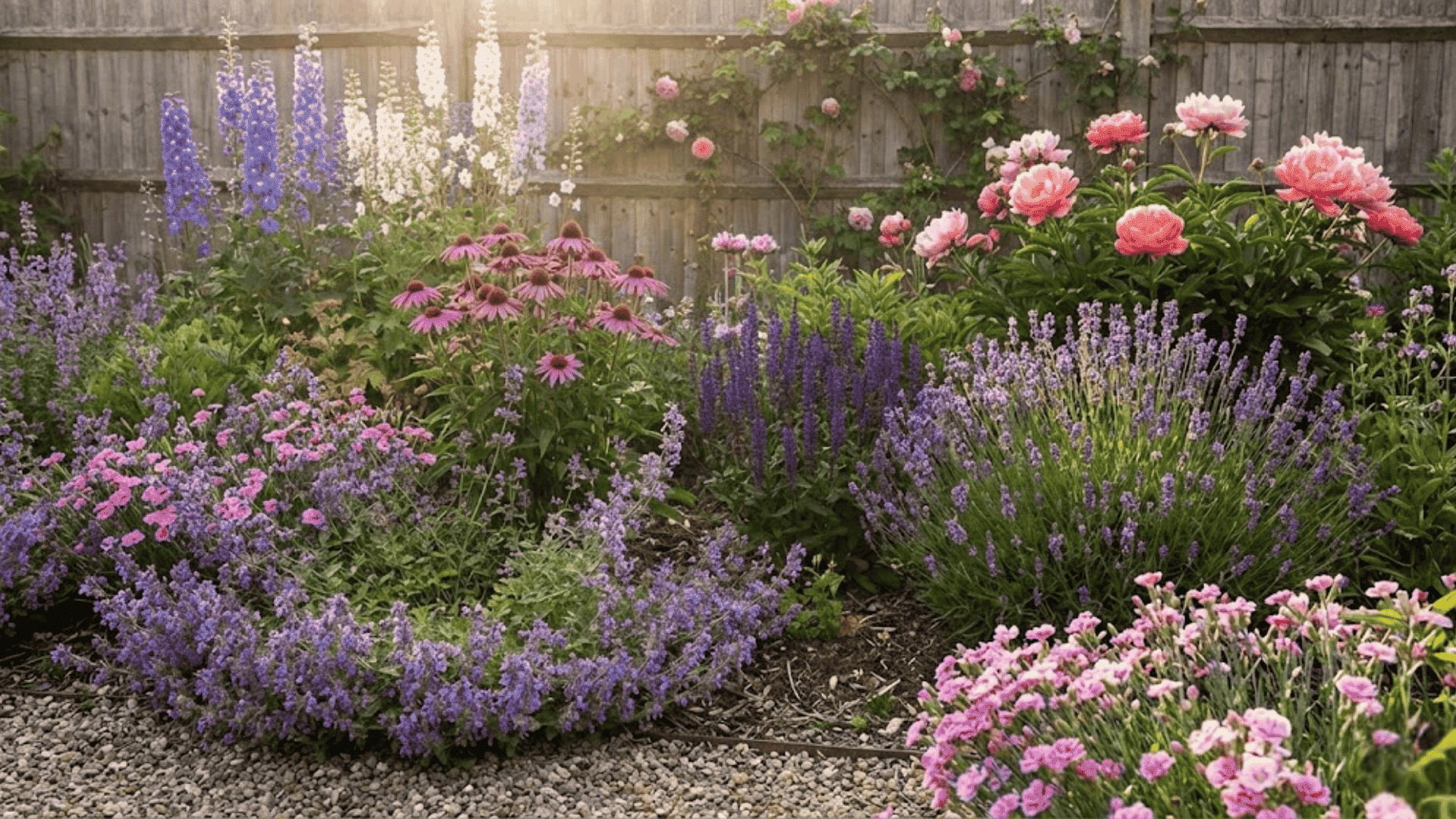
Style: Informal, romantic, and abundantly colorful
Best For: Sunny borders with full sun (6+ hours daily)
Garden Size: 10′ × 15′ bed
Plant List:
- Delphiniums (3) – back layer
- Peonies (3) – back to mid layer
- Coneflowers/Echinacea (5) – mid layer
- Lavender (5) – mid to front layer
- Salvia (5) – mid layer
- Catmint (7) – front layer
- Dianthus (9) – edging
Spacing & Arrangement:
Plant in drifts rather than rows for a natural, overflowing look. Place tall delphiniums and peonies at the back, spacing 24-30″ apart.
Cluster coneflowers and salvia in the middle, 18-24″ apart. Edge with low catmint and dianthus, 12-15″ apart. Let plants mingle and self-sow for that signature cottage charm.
Plan 2: Pollinator-Friendly Garden

Style: Ecological, vibrant, and buzzing with life
Best For: Full to partial sun, attracting bees, butterflies, and birds
Garden Size: 10′ × 15′ bed
Plant List:
- Joe Pye Weed (2) – back layer
- Black-Eyed Susans (7) – mid to back layer
- Bee Balm/Monarda (5) – mid layer
- Coneflowers (5) – mid layer
- Asters (7) – mid layer
- Sedum ‘Autumn Joy’ (5) – front layer
- Coreopsis (9) – front layer
Spacing & Arrangement:
Design for continuous nectar flow from spring through fall. Place Joe Pye Weed at the back, 36″ apart. Arrange black-eyed Susans and bee balm in mid-layer clusters, 18-24″ apart.
Front with sedum and coreopsis, 12-18″ apart. This plan ensures blooms from April through October, supporting pollinators throughout the season.
Plan 3: Shade Perennial Garden
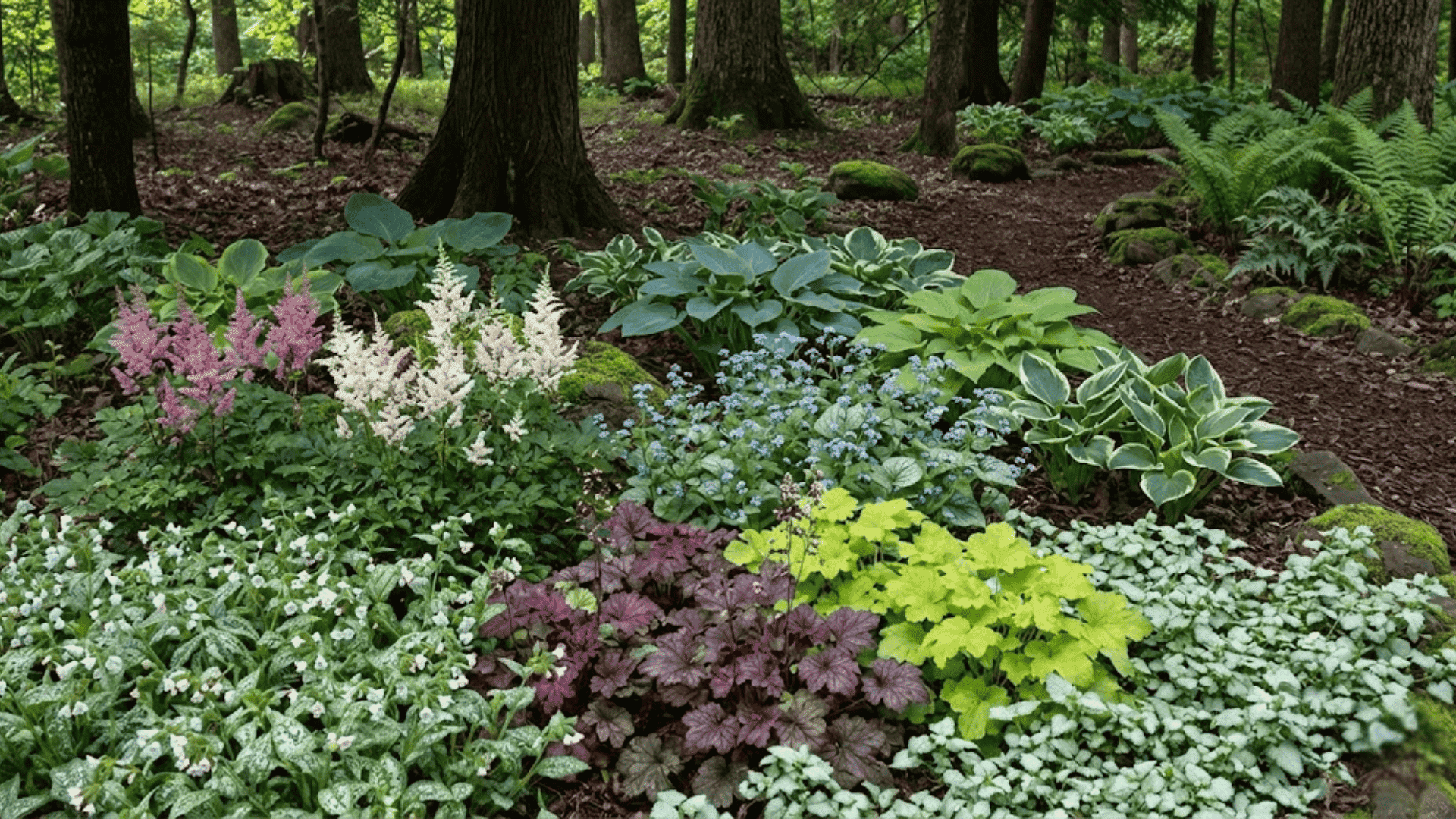
Style: Lush, textured, and serene
Best For: North-facing sites or areas under trees with dappled to full shade
Garden Size: 10′ × 15′ bed
Plant List:
- Astilbe (5) – back to mid layer
- Hostas, mixed varieties (7) – back to mid layer
- Heuchera/Coral Bells (7) – mid to front layer
- Brunnera (5) – mid layer
- Ferns (3) – back layer
- Pulmonaria (5) – front layer
- Lamium (9) – groundcover/edging
Spacing & Arrangement:
Focus on foliage texture and color since blooms are fewer in shade. Place ferns and large hostas at the back, 24-30″ apart. Layer astilbe and brunnera in the middle, 18-24″ apart.
Front with heuchera and pulmonaria, 12-15″ apart. Edge with Lamium as a spreading groundcover. This creates a tapestry of greens, silvers, and burgundies.
Plan 4: Low-Maintenance Design
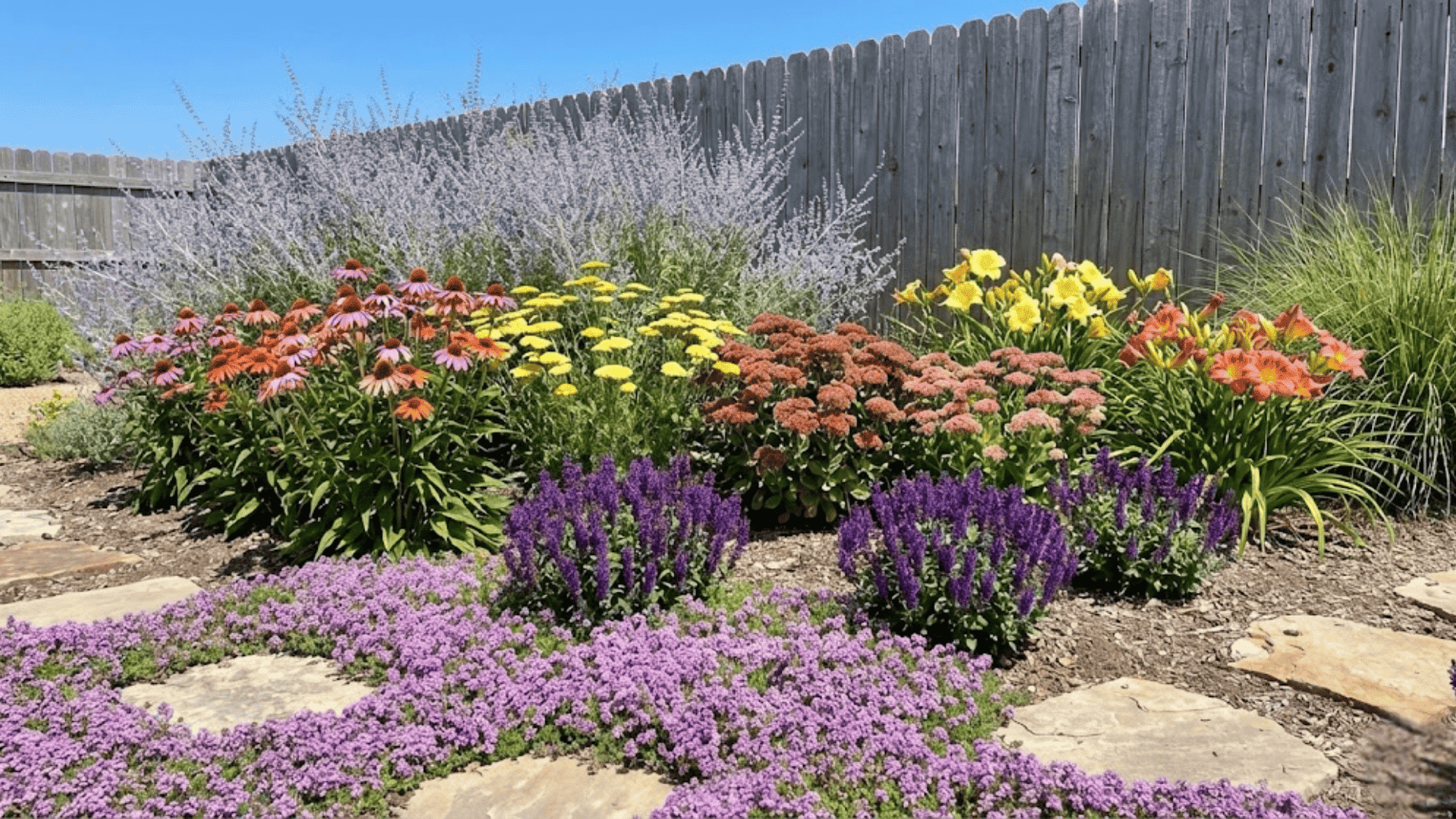
Style: Resilient, drought-tolerant, and effortlessly beautiful
Best For: Full sun, minimal watering, busy gardeners
Garden Size: 10′ × 15′ bed
Plant List:
- Russian Sage (3) – back layer
- Yarrow (5) – mid to back layer
- Coneflowers (7) – mid layer
- Sedum varieties (7) – mid to front layer
- Daylilies (5) – mid layer
- Salvia ‘May Night’ (5) – front layer
- Creeping Thyme (9) – edging/groundcover
Spacing & Arrangement:
Choose plants that thrive on neglect. Place Russian sage at the back, 30-36″ apart. Arrange yarrow and coneflowers in mid-layer groups, 18-24″ apart.
Front with sedum and salvia, 15-18″ apart. Edge with creeping thyme as a drought-tolerant groundcover. Once established, this garden needs watering only during extreme drought.
Plan 5: Small Space/Urban Garden
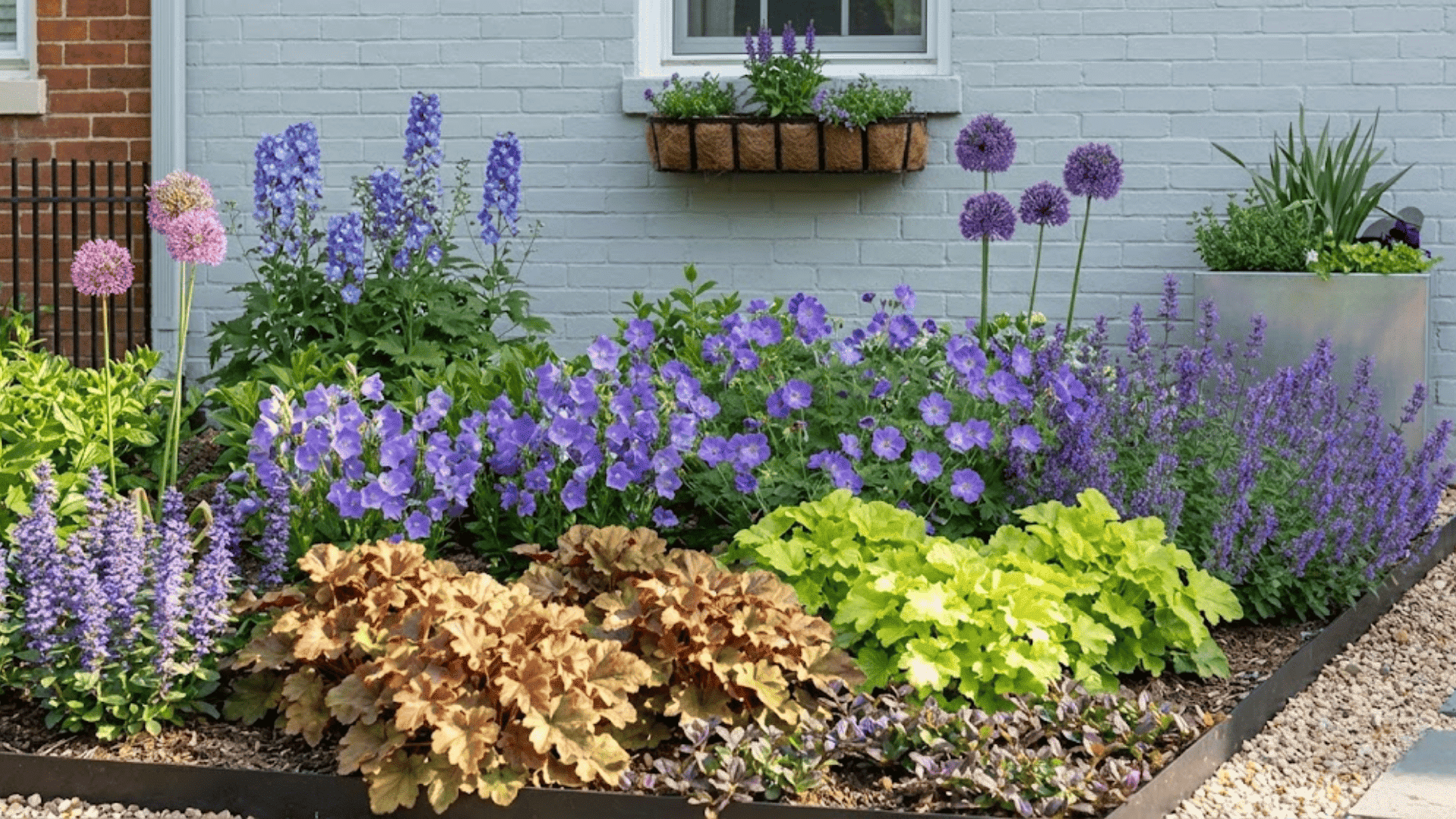
Style: Compact, vertical, and space-efficient
Best For: Balconies, patios, narrow beds, or urban yards
Garden Size: 5′ × 10′ bed
Plant List:
- Dwarf Delphinium (2) – back layer for height
- Campanula (3) – mid layer
- Geranium ‘Rozanne’ (3) – mid layer
- Nepeta ‘Walker’s Low’ (4) – front to mid layer
- Allium (5 bulbs) – vertical accents throughout
- Heuchera (3) – front layer
- Ajuga (5) – groundcover/edging
Spacing & Arrangement:
Maximize vertical interest in tight quarters. Use dwarf delphinium at the back for height without bulk, 18″ apart. Layer campanula and geranium in the middle, 12-15″ apart.
Tuck allium bulbs between perennials for vertical spring drama. Front with compact heuchera and ajuga, 10-12″ apart. This plan creates layers of bloom and foliage without overwhelming a small footprint.
How to Choose Perennials for Your Layout?
Selecting the right perennials transforms a basic plan into a garden that feels intentionally designed.
Beyond simply choosing pretty flowers, consider how colors interact, how plant forms create visual interest, when blooms appear, and what happens when flowers fade.
These 4 factors work together to build a garden with depth, rhythm, and year-round appeal.
| Selection Factor | Options | Examples |
|---|---|---|
| Color Schemes | Monochrome, Complementary, Analogous | All white; Purple + yellow; Pink + purple + blue |
| Plant Height & Form | Spiky, Mounding, Sprawling | Salvia, delphinium; Coneflowers, peonies; Catmint, geranium |
| Bloom Time | Early, Mid-season, Late | Bleeding heart; Coneflowers, daylilies; Asters, sedum |
| Foliage Features | Evergreen, Deciduous, Textural | Heuchera, hellebores; Hostas, astilbe; Ferns, lamb’s ear |
Spacing, Planting & Layout Tips for Healthy Perennial Growth
While it’s tempting to fill every inch immediately, giving perennials room to grow prevents disease, reduces competition, and creates that lush, mature look you’re after.
Here’s how to space and arrange your plants for long-term success.
- Follow the Mature Width Rule: Space plants based on their full-grown width, typically 18-24″ for most perennials, to prevent overcrowding as they fill in.
- Plant in Odd-Numbered Groups: Arrange perennials in clusters of three, five, or seven for a natural, impactful look rather than single specimens.
- Leave Mulched Gaps Initially: Don’t panic when new beds look sparse; perennials need two to three seasons to reach full size and fill the space.
- Account for Spreaders: Give aggressive growers like catmint and geranium extra room, or use them intentionally as fillers between slower plants.
- Create Overlapping Drifts: Arrange plant groups so they flow into each other rather than sitting in isolated clumps for a cohesive, layered effect.
Patience with spacing pays off beautifully. What looks empty in year one becomes a lush, healthy garden by year three, with plants reaching their full potential without competing for resources or light.
Example Layout Diagrams: Visual Guides for Planning Your Perennial Garden
Visual layouts help you understand plant placement, spacing, and how your garden will look from different perspectives before you ever dig. Here are three essential diagram styles to guide your planning.
1. Grid View Layout
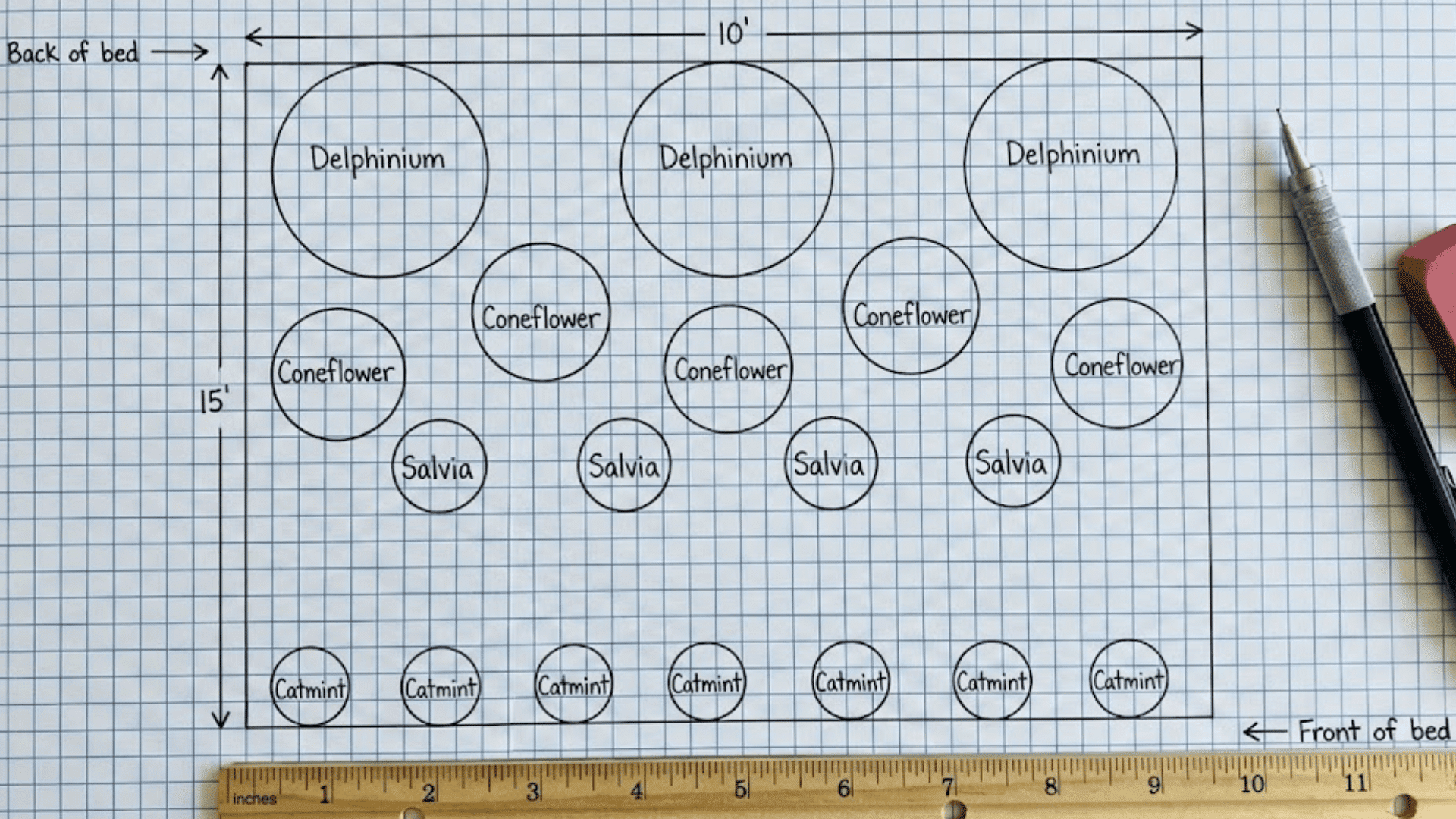
A grid view places your garden on graph paper where each square represents a specific measurement, typically one foot.
This bird’s-eye view helps map plant locations, count perennials, and ensure proper spacing. Mark tall plants with circles at the back, medium heights in the center, and low growers at the front.
Label each circle with the plant name and quantity. This technical approach works perfectly for ordering plants and executing your design accurately.
2. Overhead Plan with Mature Growth
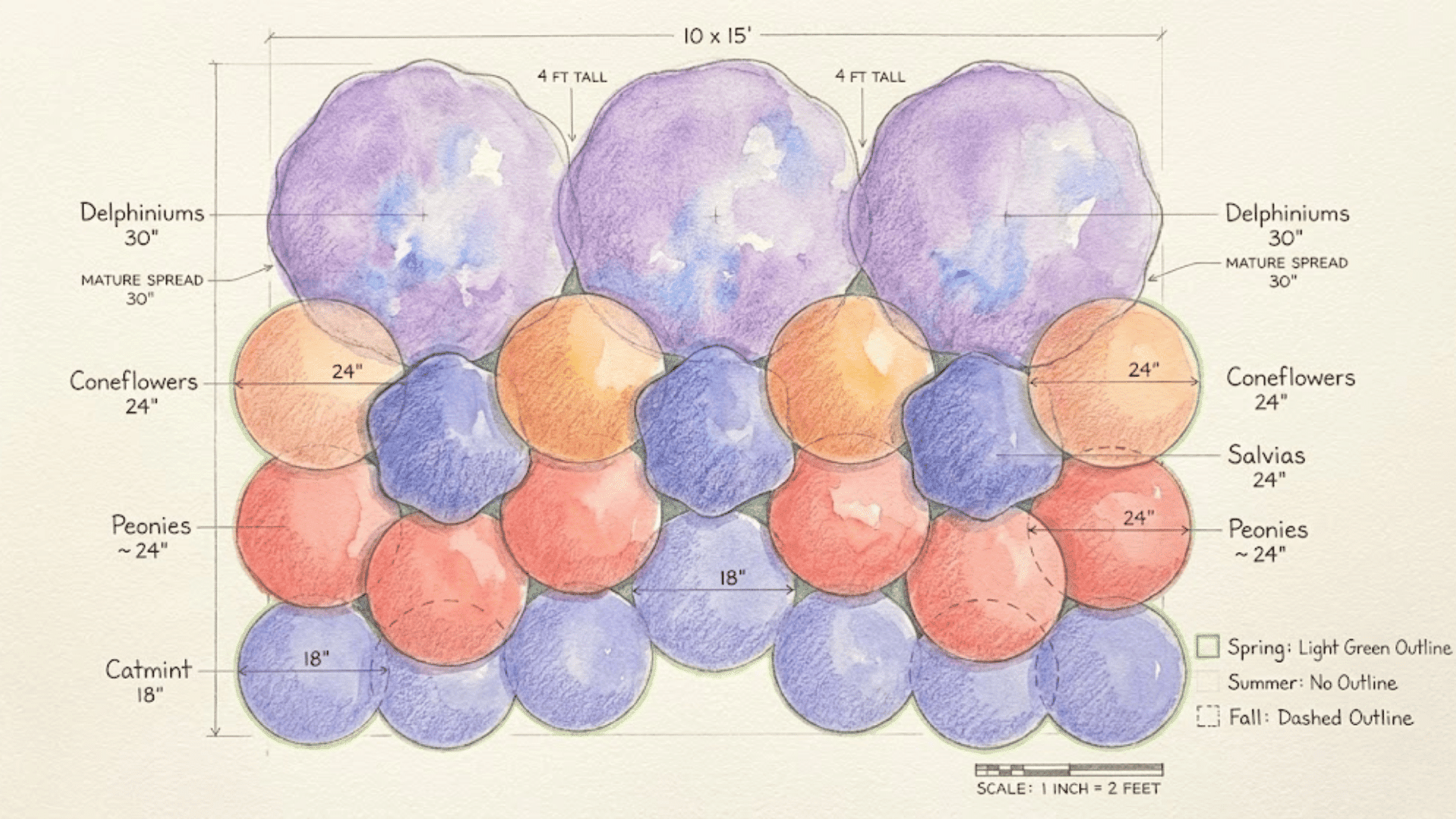
An overhead plan shows your garden as it will look when plants reach full size, typically in their third season.
Draw overlapping circles or organic shapes to represent the mature spread of each perennial, using different colors for bloom times or foliage types.
This view reveals where gaps might appear, where plants may overcrowd, and how drifts will flow together. It’s the best tool for visualizing the finished garden and adjusting spacing before planting.
3. Before & After Layout Comparison
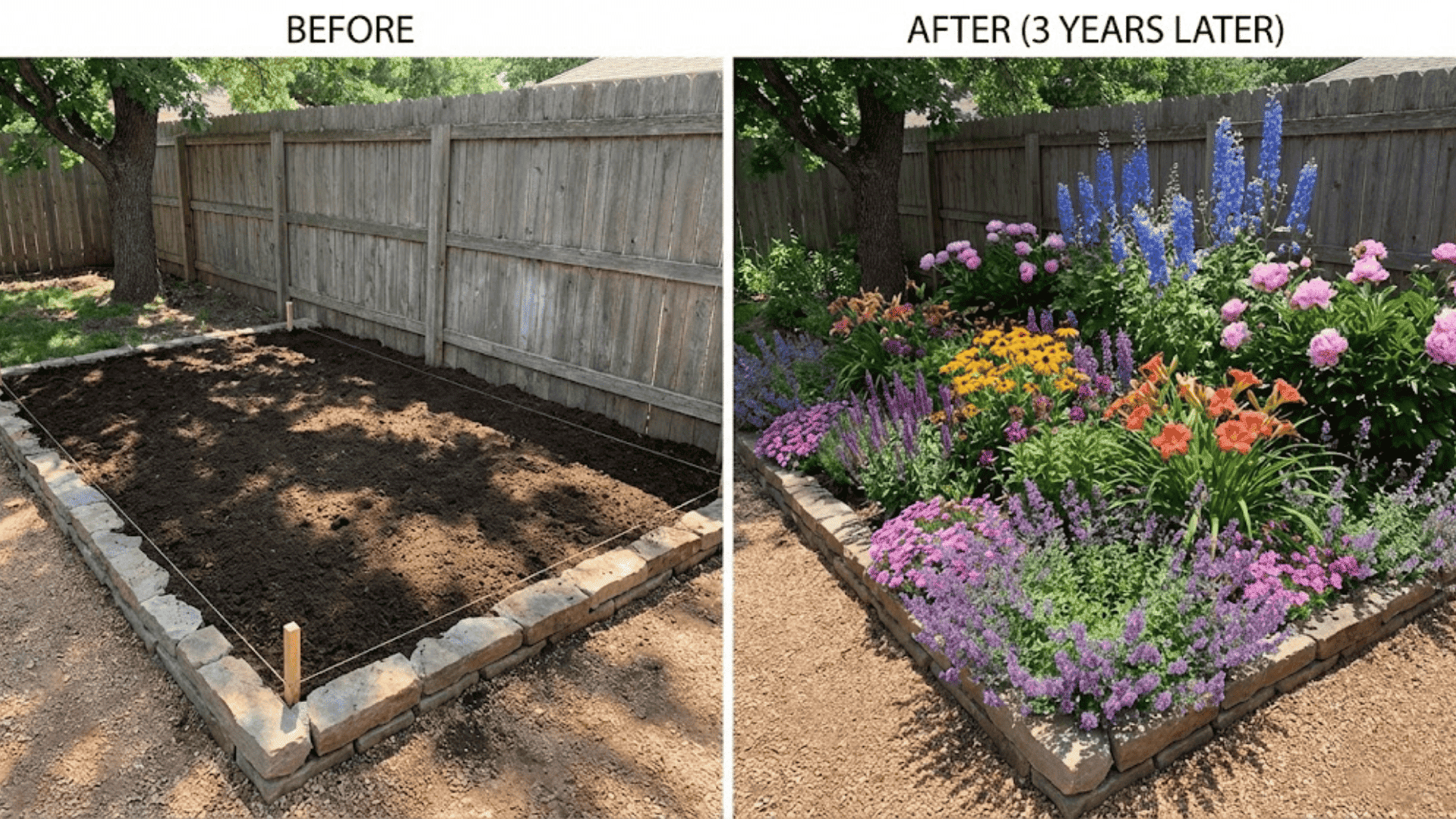
A side-by-side comparison shows your empty garden space on the left and the planned mature garden on the right.
The “before” captures existing features like pathways, fences, trees, and bare soil. The “after” illustrates the same view filled with layered perennials at their peak bloom, showing height differences, color distribution, and focal points.
This comparison helps you communicate your vision to others and serves as motivation during the sparse early stages when your new garden looks more gap than glory.
Perennial Flower Garden Layout: Soil Prep & Bed Setup
Healthy perennials start with healthy soil. Before you plant, invest time in preparing the foundation your garden will grow in for years to come.
Soil Testing & Amendments for Optimal Growth
Test your soil’s pH, nutrient levels, and drainage before planting. Most perennials thrive in slightly acidic to neutral soil (pH 6.0-7.0) with plenty of organic matter worked in.
Amend clay soils with compost and coarse sand to improve drainage, or add compost and peat moss to sandy soils to boost water retention.
Poor drainage kills more perennials than anything else, so address soggy spots by creating raised beds or installing drainage solutions. A simple soil test from your local extension office reveals exactly what your garden needs.
Bed Structure, Mulching & Weed Control
Choosing between raised beds and in-ground planting shapes how your garden performs. Each approach offers distinct advantages depending on your site conditions and goals.
| Bed Type | Benefits | Considerations |
|---|---|---|
| Raised Beds | Better drainage, warmer soil in spring, easier access, improved soil control | Higher initial cost, requires more frequent watering, and materials needed for construction |
| In-Ground Beds | Lower cost, less watering needed, works with existing landscape, easier to expand | Dependent on existing soil quality, drainage may be poor, harder to amend thoroughly |
After planting, apply a 2- to 3-inch layer of organic mulch like shredded bark or compost around plants, keeping it away from stems.
Mulch suppresses weeds, retains moisture, regulates soil temperature, and breaks down to feed your perennials over time. Refresh mulch annually each spring for ongoing weed control and soil health.
Maintenance Calendar: Perennial Garden Thriving Year-Round
A well-designed perennial garden practically cares for itself, but a little seasonal attention keeps it looking its best.
This maintenance calendar breaks down essential tasks by season so your garden stays healthy, blooms abundantly, and returns stronger each year.
| Season | Watering | Deadheading & Pruning | Fertilizing | Seasonal Clean-Up |
|---|---|---|---|---|
| Spring | New: 2-3x weekly; Established: as needed | Cut back dead foliage | Slow-release fertilizer or compost | Remove debris; divide plants; mulch |
| Summer | First-year: consistent; Established: minimal | Deadhead spent blooms; trim floppy stems | Light feeding for heavy bloomers | Weed; stake; monitor pests |
| Fall | Reduce gradually; stop mid-fall | Leave seed heads standing | Stop after August | Plant new perennials; collect seeds |
| Winter | None | Leave foliage for insulation | None | Extra mulch; wind protection |
Once established, most perennials need far less attention than annuals, rewarding your minimal effort with years of reliable beauty.
Wrapping Up
Creating a perennial garden design plan might feel overwhelming at first, but breaking it down into these simple steps makes it surprisingly approachable.
Understanding your site, choosing the right plants, and arranging them thoughtfully gives you everything needed to layout a perennial flower garden that blooms beautifully season after season.
The real joy comes from watching your design mature, deepen, and surprise you with each passing year.
Ready to start planning your own perennial paradise? Share your garden dreams or questions in the comments below. We’d love to hear what you’re planting this season.