Mulch beds look great. They give your yard that clean, finished look and help your plants stand out. Most people see mulch as a nice design element or maybe something to help with weeds. But there’s something else going on that doesn’t get much attention.
That same mulch might be making it easier for pests to move around. Not just living in it, but actually using it as a way to travel through your yard. If you’ve ever wondered how bugs keep finding their way from the garden to your house, your mulch could be playing a bigger role than you think.
Continuous Ground Cover Removes Natural Obstacles
When pests move across your yard, they’re not just wandering aimlessly. Many of them prefer covered routes where they can stay protected from predators, sun exposure, and dry conditions. That’s where mulch beds come in. When you spread garden mulch in long, unbroken strips around your garden, you’re giving pests a continuous path to follow.
Unlike bare soil or patchy grass, mulch offers a soft, insulated layer that insects can walk through easily. It acts almost like a sidewalk for ants, termites, and other ground-level pests. There are no rough patches or exposed areas that might slow them down or steer them elsewhere.
These uninterrupted beds also connect different zones in your yard. A mulch border might stretch from your flower beds to the foundation of your home without any break in cover. That’s a dream come true for pests looking to travel unnoticed.
Moisture Retention Turns Mulch into a Reliable Transit Zone
Mulch does more than just tidy up the garden. It also traps moisture, especially after watering or a good rainfall. That damp layer beneath the surface creates a cool, humid environment that sticks around much longer than bare soil. For many pests, this kind of moisture is essential for survival.
Insects like ants, pill bugs, and termites are sensitive to dry conditions. They often avoid traveling across open ground because it can dehydrate them or leave them exposed. Mulch solves that problem by giving them a protected, moist path to move freely.
According to experts at Axiom Pest Control, consistently damp mulch near a home can increase pest activity along the foundation. It’s not just about where pests live, but how they get from one place to another, and moisture plays a key role in that.
Mulch Connects Food Sources in a Straight Line
Mulch beds often stretch across the yard, connecting different parts of your landscape. While this might look neat and intentional, pests see it a bit differently. To them, it’s a direct route between food sources like plant roots, compost, and even structural wood.
Ants, termites, and other insects are constantly on the move for food. When mulch forms a continuous path between a tree base, a garden bed, and the side of your house, it provides pests with an efficient way to travel without needing to cross open or hazardous terrain.
Once they find food in one spot, they can return along the same route with others from their colony. This repeat traffic creates a dependable highway, one that’s reinforced by scent trails and habit.
Vertical Edges Turn Horizontal Beds into Entry Ramps
Most people spread mulch to cover the soil, but it often ends up pushed against things like tree trunks, fence posts, or even the side of the house. When pests travel through the mulch on the ground, these vertical edges give them an easy way to climb up and explore new areas.
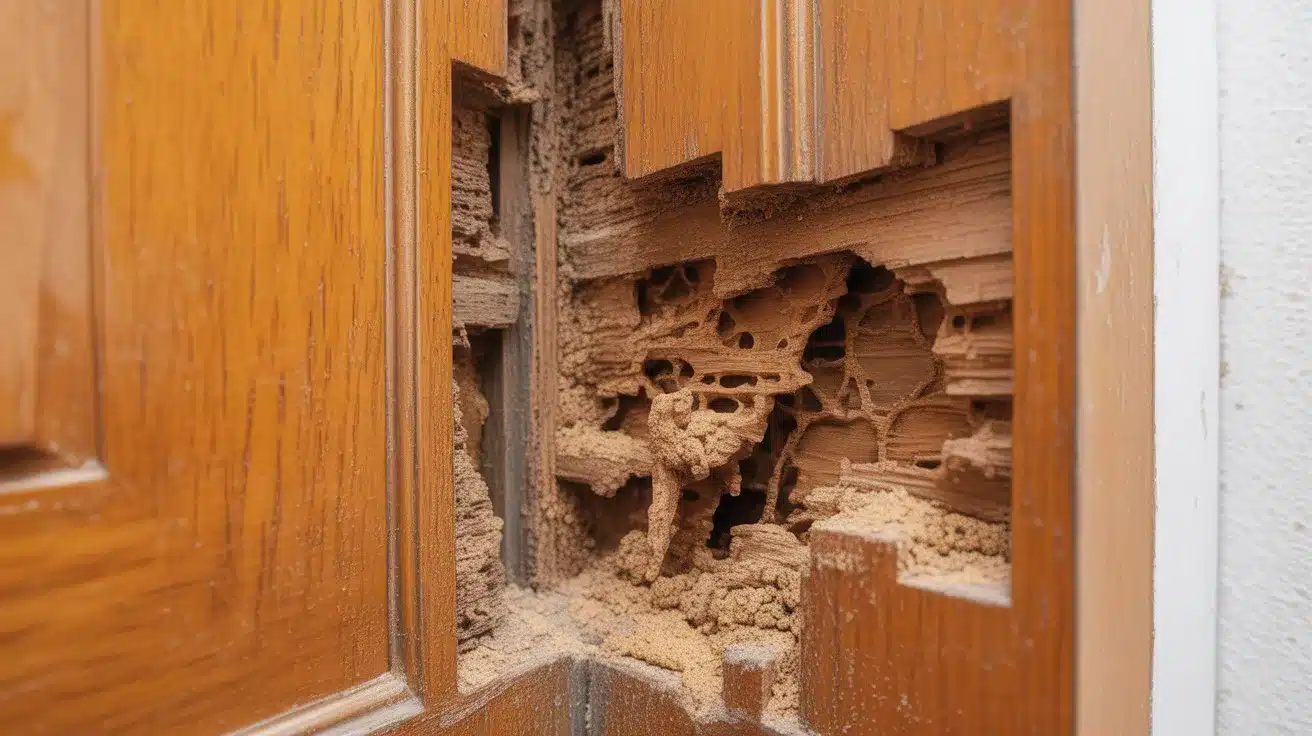
For crawling insects like ants or termites, mulch touching a wooden structure is like a ramp. It removes the gap between the ground and your home, making it easier for them to reach siding, vents, or weep holes they wouldn’t normally access.
This kind of direct contact is especially risky near wooden materials or entry points. Once pests find a way up, it’s only a matter of time before they’re nesting or feeding in places you don’t want them.
Keeping mulch slightly pulled back from vertical surfaces can help. But when left in place, those raised edges often become the next step on the pest highway.
Mulch Depth and Compaction Increase Hidden Movement
On the surface, a mulch bed may appear clean and well-maintained. But dig just a few inches down, and you might find a different story. When mulch is spread too thick or becomes compacted over time, it creates a dark, quiet space where pests can move freely without being seen.
Thicker mulch layers give insects more room to tunnel and hide. This is especially true for pests like roaches, earwigs, or termites that prefer darkness and stillness. Once they’re under the surface, they can travel across the yard without ever coming into view.
Compacted mulch also makes it harder for water to evaporate, which means the environment stays moist and pest-friendly for longer stretches. These conditions are ideal for insects that don’t just want to pass through. They want to stay.
Why Pests Prefer Mulch Over Lawns or Hardscapes
When pests have a choice between mulch, grass, gravel, or concrete, they usually pick mulch. It’s softer, cooler, and easier to move through. Unlike open lawn or hardscaped areas that expose them to heat, dryness, or predators, mulch offers shelter with every step.
Grass might seem like a good cover, but it’s not consistent. Mowing, foot traffic, and sun exposure break up the surface. Gravel and concrete paths don’t offer any moisture or food, and they’re too hot during the day for many pests to survive. Mulch, on the other hand, feels safe and familiar.
Pests naturally choose the path that offers the most protection and the least resistance. That’s exactly what mulch gives them: a consistent, covered surface they can follow day or night.
Wrapping Up
Mulch beds can do more than improve curb appeal. When placed and maintained a certain way, they give pests a safe, reliable path across your yard.
By holding moisture, offering cover, and connecting key areas, mulch turns into a travel route for bugs you’d rather not invite. The good news is that small adjustments go a long way. With a little awareness, you can keep the look you love without giving pests an easy road to follow.