The first time I grew tulips, I expected them to behave like low-effort spring flowers. They bloomed, looked great for a short while, then dropped fast.
That surprise made me slow down and actually pay attention to what they needed instead of guessing. Tulips follow simple rules, but skipping one can cut their season short. Learning how to take care of tulips starts with knowing what matters most at each stage.
You want to know when to water, where to place them, and what to do once the blooms are gone.
I’ll walk you through those steps in a clear order, so you can grow tulips that last longer and return healthier next year without extra work.
Why Tulips Need Different Care Depending on Where They’re Growing
Tulips behave differently because where they grow controls how much support they get.
A tulip in a vase has no roots working for it anymore. Once it is cut, it survives only on stored energy and the water you give it.
Temperature changes hit it fast, and warm rooms make it age quicker. That is why vase tulips often bend, drop petals, or fade within days.
Tulips in pots still have roots, but space is limited. The soil dries faster, and roots cannot spread wide.
If water timing is off or the pot gets too warm, stress shows up fast. Garden tulips act differently again because roots stay cool and deep, pulling water slowly over time.
Many care problems happen when you treat all tulips the same way.
Water, light, and heat affect each growing setup in its own way. Once you understand that difference, care steps start to make sense instead of feeling confusing.
How to Take Care of Tulips Based on Their Setup
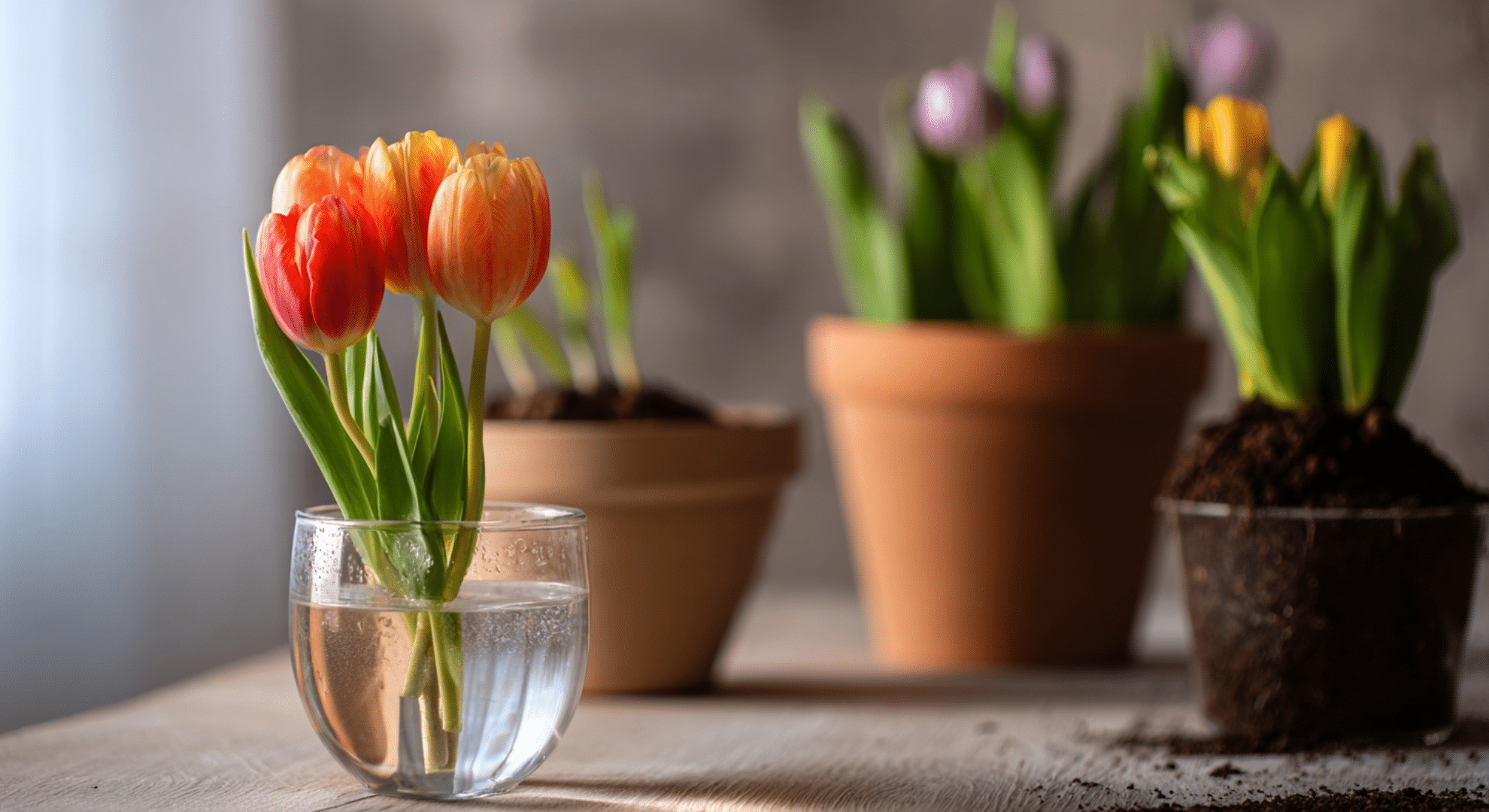
Tulip care starts with knowing where your flowers are growing. That one detail decides every step that follows. Tulips only fall into two main care paths, and each one works very differently.
Cut tulips in water: These are tulips with no roots. You will see clean-cut stems placed in a vase or container. Their care focuses on water quality, room temperature, and stem support.
Potted tulips in soil: These tulips still have roots and are growing in a pot or planter. You will see soil at the base and new growth coming from the bulb. Their care depends on watering, light, and keeping roots healthy.
If your tulips are standing in water without soil, follow cut flower care.
If they are growing in soil with roots attached, follow potted tulip care. Identifying this early helps you avoid common mistakes later.
How to Care for Cut Tulips and Make Them Last Longer
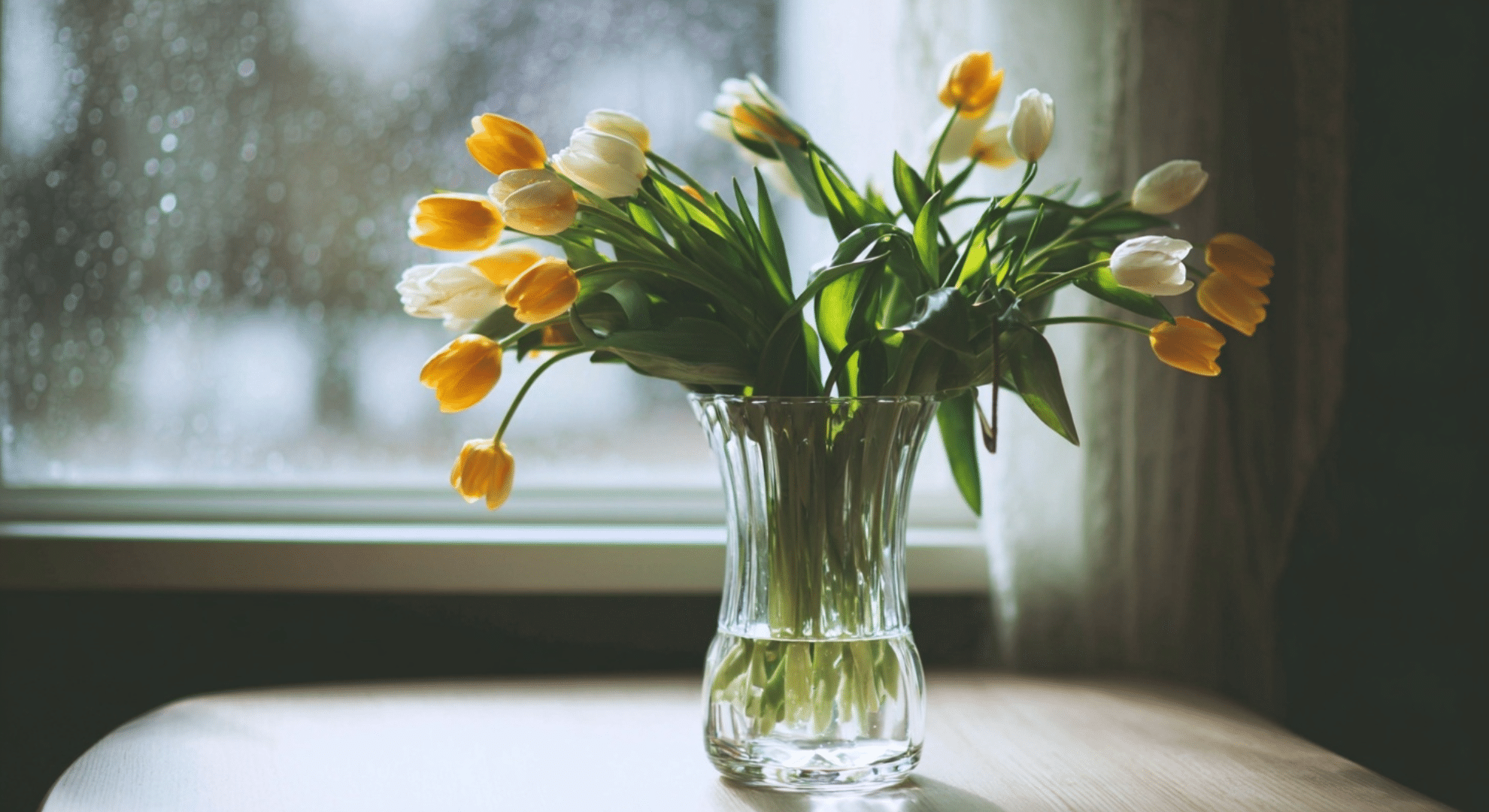
Cut tulips can last longer than many people expect, but only if you handle them the right way from the start. Small setup choices like this can make a big difference:
- Start with a clean vase: Always wash the vase with warm water and a little dish soap. Old bacteria shortens tulip life fast. Rinse well so no soap film remains. Clean water helps stems absorb moisture instead of fighting buildup.
- Use shallow water on purpose: Fill the vase with about one to two inches of cool water. Tulips prefer shallow water because their stems rot easily when submerged too deeply. Less water also slows their rapid growth, helping blooms stay upright longer.
- Trim stems the right way: Cut about half an inch from the bottom of each stem before placing them in water. Use sharp scissors or garden shears. Cut straight across, not at an angle. Recut every two days to keep water moving up the stem.
- Understand why tulips bend: Tulips keep growing after being cut. They stretch toward light, which causes leaning and curved stems. This is normal behavior, not a care mistake.
- Choose the best vase location: Place the vase in a cool room with indirect light. Keep it away from heaters, sunny windows, and fruit bowls. Cooler air slows aging and helps tulips hold their shape longer.
Follow these steps, and your cut tulips will stay fresh, upright, and bright for more days.
Daily Care Routine for Cut Tulips
Keeping cut tulips fresh comes down to a few daily habits that take very little time. These small steps help slow down wilting and keep stems firm.
Change the water every day or at least every other day. Fresh, cool water limits bacteria growth, which is the main reason tulips fade early. If the water looks cloudy, change it right away instead of waiting.
Re-trim the stems every two days. Cut a small amount from the bottom using sharp scissors. This opens the stem again so water can move upward without blockage.
Check for leaves sitting below the water line. Remove any submerged leaves as soon as you see them. Leaves break down quickly and dirty the water fast.
Watch the water for warning signs. Cloudiness, a sour smell, or slimy residue means bacteria is building up. When you notice these signs, clean the vase and refresh the water immediately.
What Causes Cut Tulips to Droop
Cut tulips droop for several reasons, and most of them are part of how the flower naturally behaves. The key is knowing which issues you can fix and which ones you can manage.
Heat Exposure
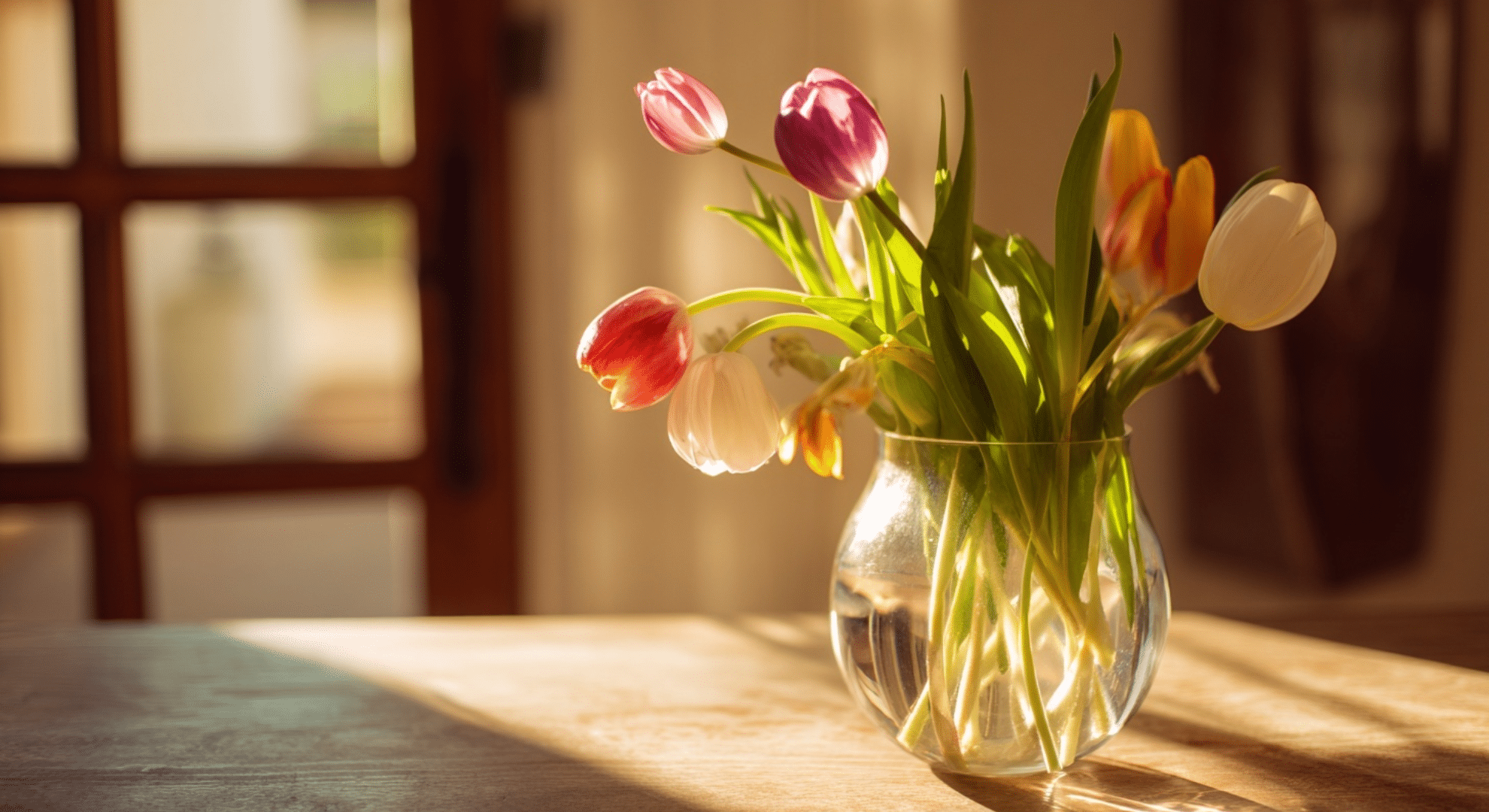
Warm air makes tulips grow faster than their stems can support.
This leads to bending and soft stems. Heat also shortens bloom life. Fix this by moving the vase to a cool room with indirect light. Keep tulips away from sunny windows, heaters, and warm appliances.
Dirty Water
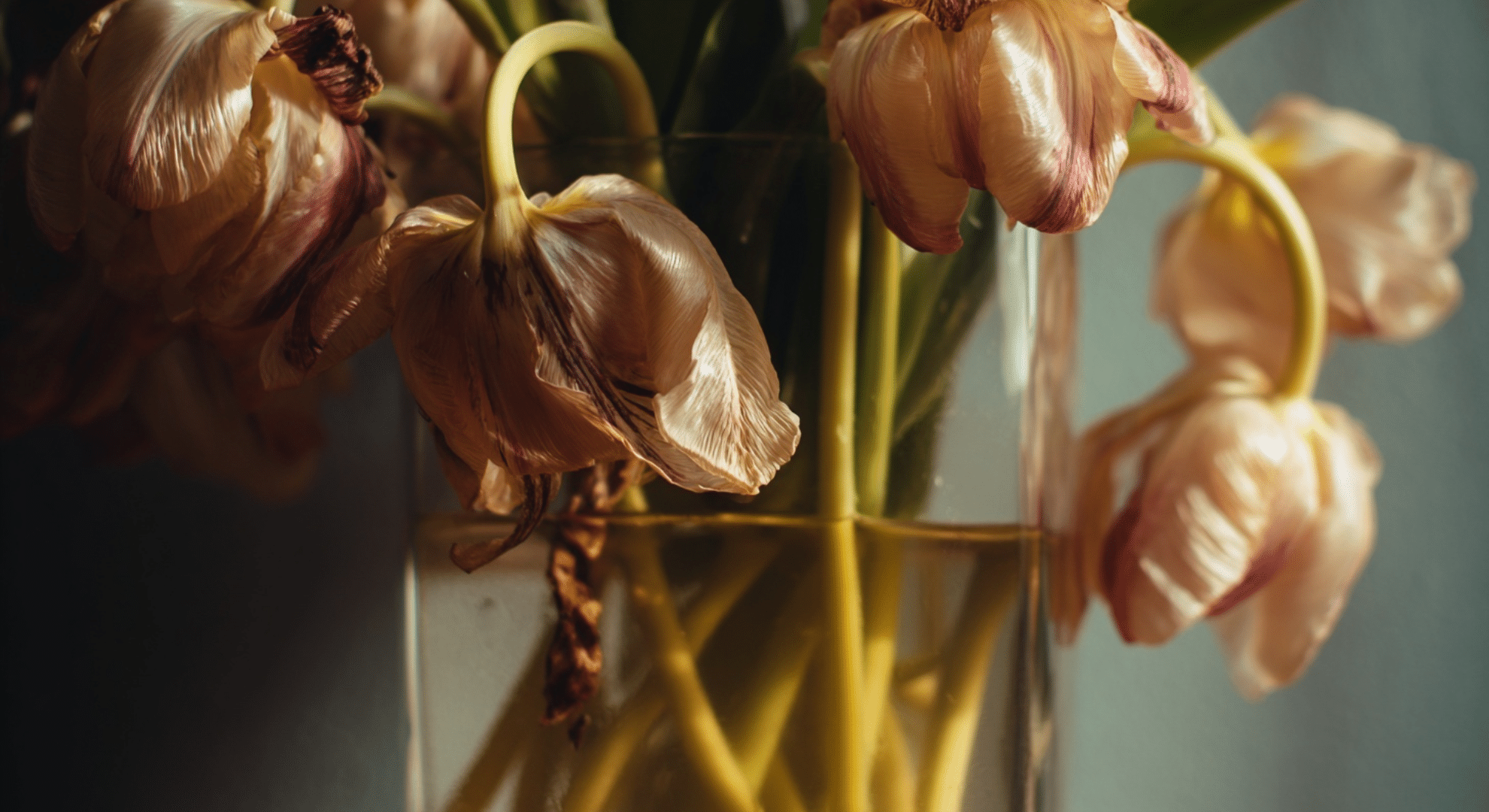
Bacteria build up quickly in the vase water and block the stem from taking in moisture.
When that happens, tulips lose strength and fall over. Change the water often, wash the vase, and re-trim stems to restore proper water flow.
Dehydration
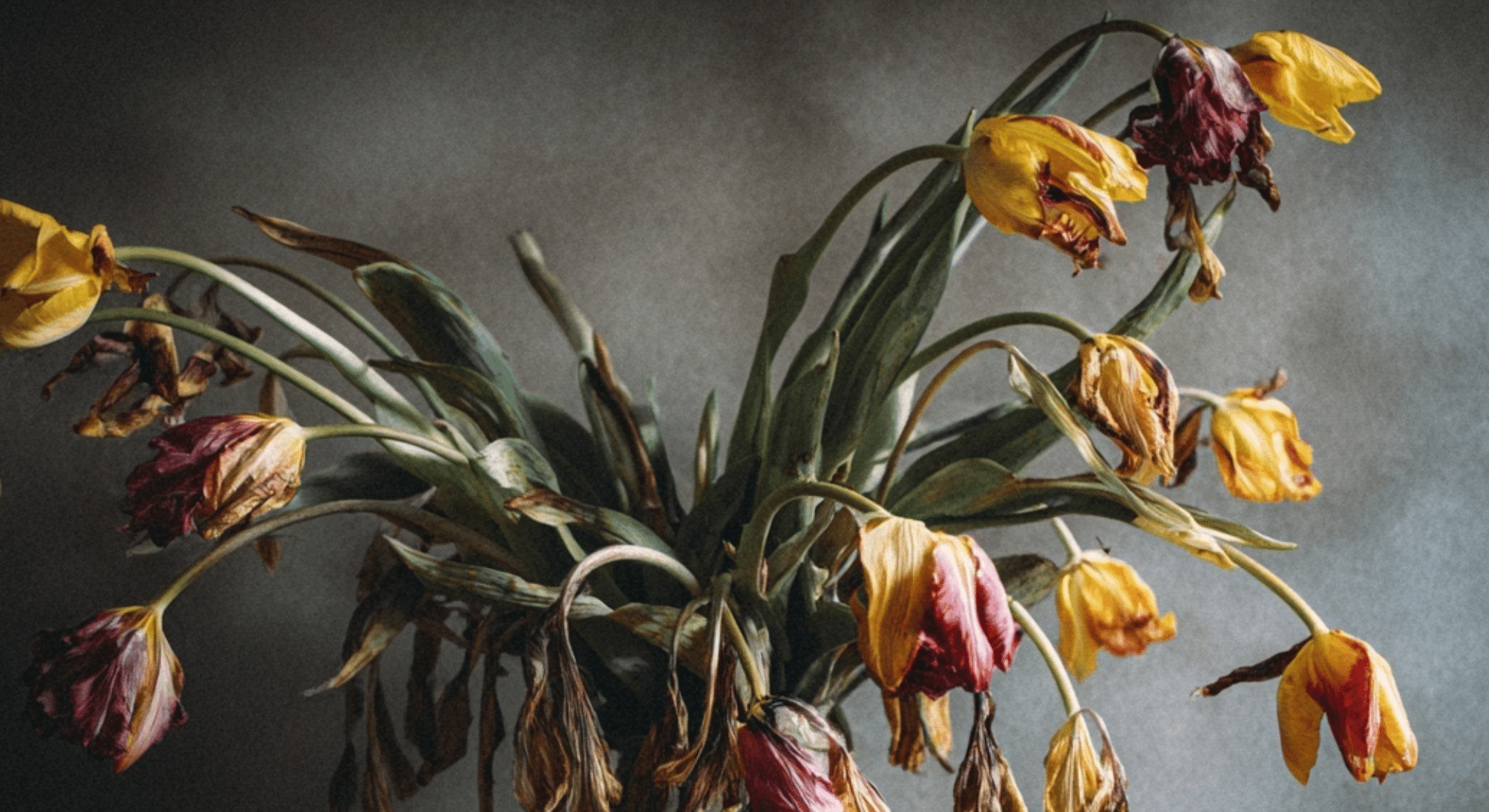
Low water levels or blocked stems can leave tulips thirsty. When they cannot pull enough water, stems soften and blooms droop.
Keep shallow water in the vase and check it daily. Recut stems every couple of days to help absorption.
Natural Stem Movement
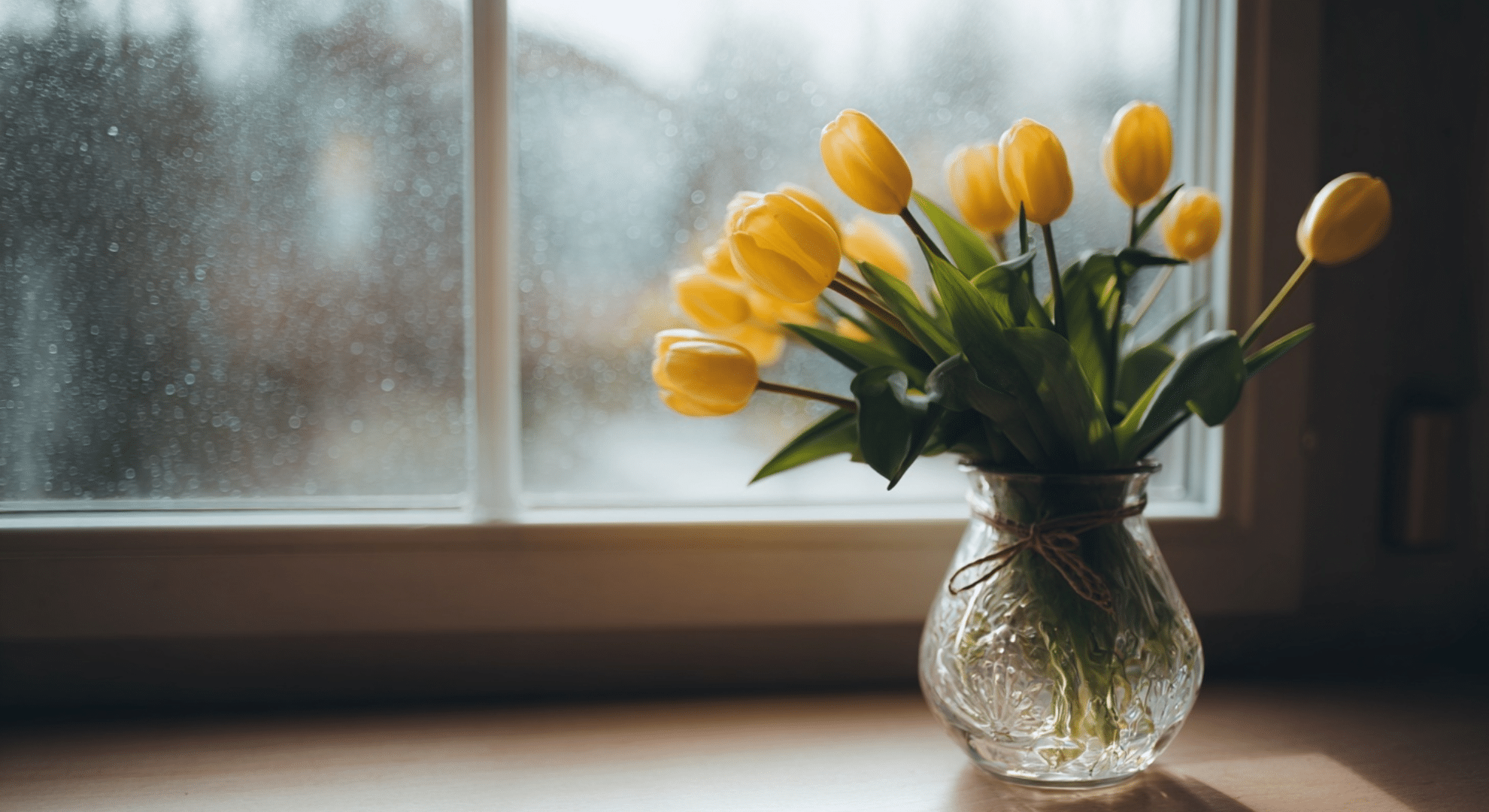
Tulips keep growing after being cut and bend toward light sources. This movement is normal.
Rotate the vase daily or adjust its position to help stems stay balanced and upright.
How to Care for Potted Tulips Indoors or in Containers
Potted tulips are often brought indoors to enjoy their blooms, but they are not meant to live inside forever. Tulips need a cold period to reset their growth cycle. Indoors, warm temperatures shorten bloom time and drain the bulb’s stored energy faster.
This is why potted tulips usually flower once indoors and then decline. The goal is to support the plant through blooming, not force long-term indoor growth.
Container care also works differently than garden planting. Pots limit root space and dry out faster than ground soil. You need to check moisture more often, but avoid soaking the soil.
Drainage matters more in containers because standing water can rot bulbs quickly. Light also plays a bigger role. Potted tulips need bright, indirect light indoors and cooler conditions to slow stress.
In the ground, tulip roots stay cooler and spread naturally, pulling moisture steadily. Containers rely on you to manage water, temperature, and placement carefully for healthy blooms.
Light and Temperature Needs for Potted Tulips
Potted tulips need the right balance of light and cool air to hold their blooms longer. Too much heat or poor placement can shorten their flowering time fast.
Place potted tulips near a bright window with indirect light. East facing windows work well because they provide gentle morning light without harsh heat. Avoid south or west windows where direct sun can overheat the pot and dry the soil too quickly.
Tulips prefer cool indoor temperatures.
The ideal range is about 60 to 65 degrees during the day and slightly cooler at night. Cooler air slows growth and helps stems stay firm. Warm rooms cause tulips to stretch, weaken, and drop petals sooner.
Heat shortens bloom time because tulips are spring bulbs that grow best in cool conditions.
Warm air pushes them to finish their life cycle too quickly. Keep pots away from heaters, vents, fireplaces, and sunny windowsills to help blooms last as long as possible.
How and When to Water Potted Tulips
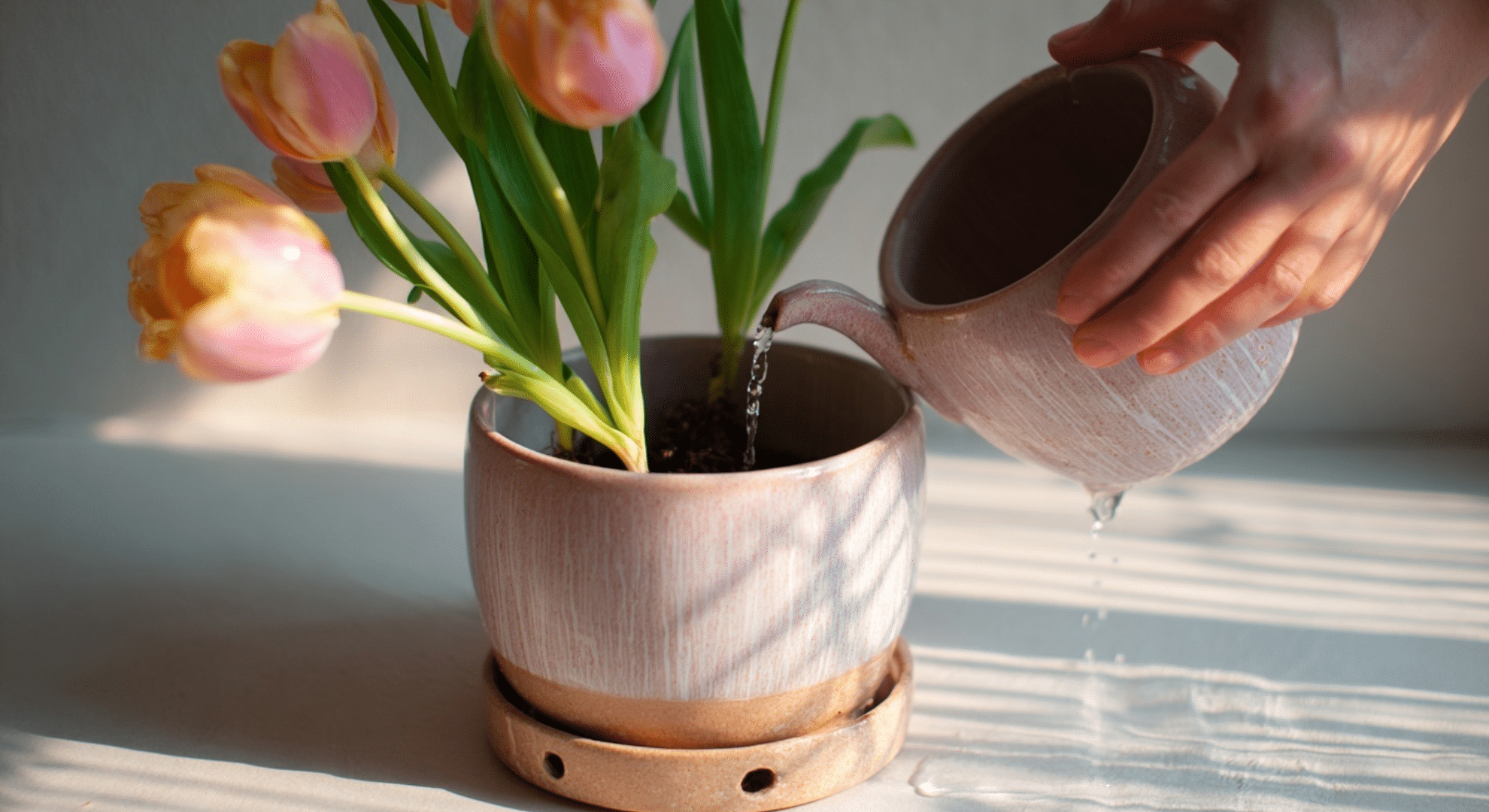
Watering potted tulips is about timing, not quantity. The goal is to keep the soil lightly moist without letting water sit around the bulbs.
Checking soil and drainage helps prevent stress and rot.
| Watering Check | What to Look For | What It Means |
|---|---|---|
| Soil moisture | Top inch feels dry to the touch | Time to water slowly |
| Soil moisture | Soil feels wet or sticky | Wait before watering |
| Drainage holes | Water drains out after watering | Roots can breathe |
| No drainage | Water stays in the pot | High risk of bulb rot |
| Leaf condition | Yellowing or limp leaves | Possible overwatering |
| Soil smell | Sour or musty odor | Water buildup below |
Always water until a small amount drains from the bottom of the pot, then empty the saucer.
Never let tulips sit in standing water. Overwatering often shows up as soft stems, yellow leaves, and soil that never dries.
Allowing proper drainage keeps bulbs healthy and supports steady growth throughout the bloom period.
How Long Potted Tulips Usually Last Indoors
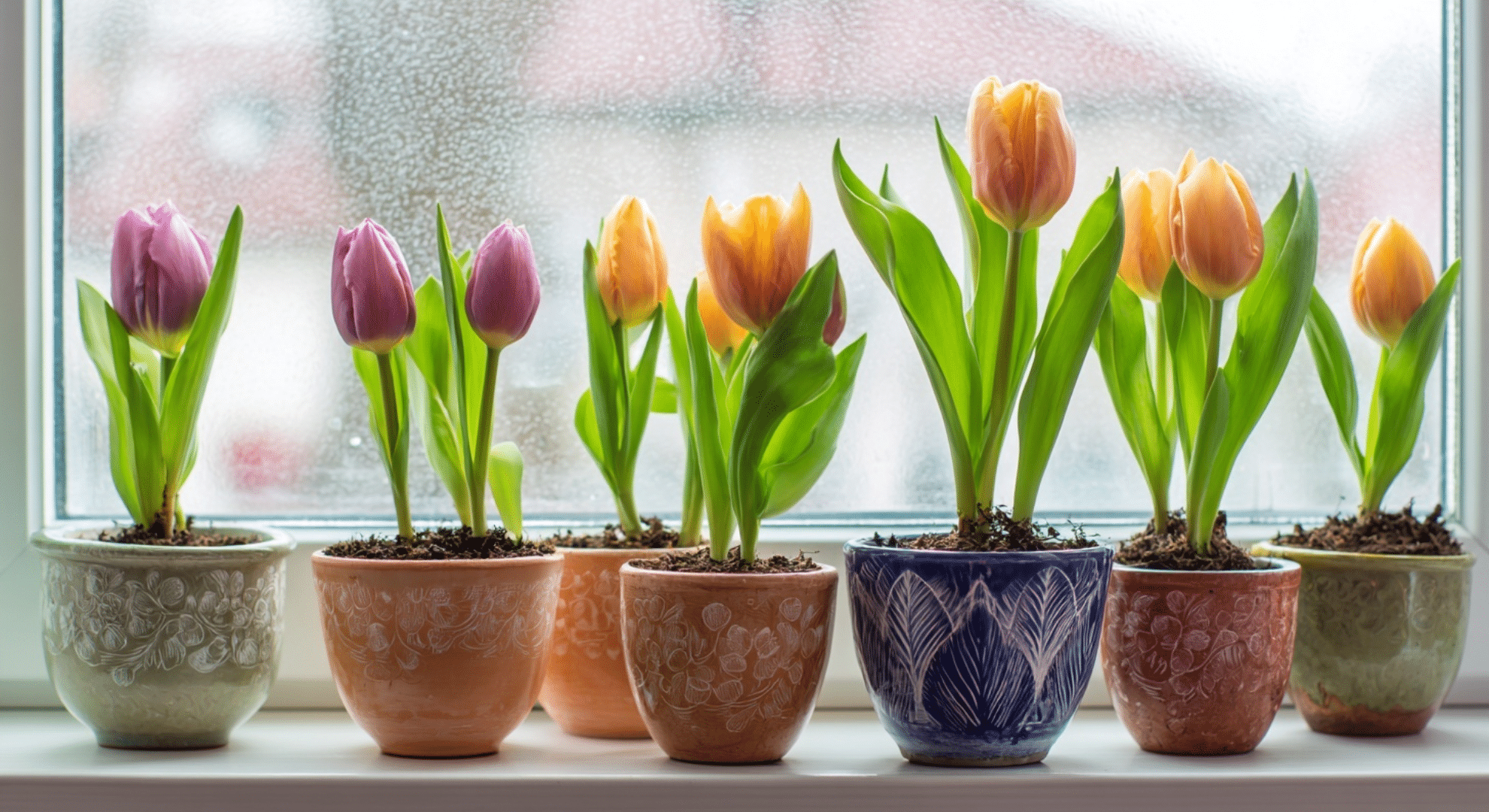
Potted tulips have a short indoor life, and knowing what to expect helps you avoid disappointment. Once brought inside, most tulips bloom for about one to two weeks. Cooler rooms may extend this slightly, while warm spaces shorten the display.
After the flowers fade, the plant enters its leaf phase.
The green leaves stay active for several weeks, pulling energy back into the bulb. During this time, the plant may look messy, but the leaves are doing important work. Cutting them too early weakens the bulb.
Indoor tulips rarely rebloom because they miss the long cold period bulbs need to reset.
Homes stay too warm for this natural cycle. Without months of cold soil, the bulb cannot store enough energy to flower again.
Many people move spent bulbs outdoors or compost them once the leaves yellow fully, rather than expecting another indoor bloom.
What to Do After Tulips Finish Blooming
Once tulip flowers fade, the next steps affect how the bulb recovers. Start by removing the spent flower head.
This step is called deadheading. It stops the plant from putting energy into seed making and redirects it back to the bulb.
Leave the green leaves in place, even if they look untidy. The leaves collect light and turn it into stored energy. Cutting them too early weakens the bulb and reduces future growth. Let the leaves yellow and dry on their own.
Water less as the leaves begin to fade. Keep the soil slightly moist at first, then stop watering once the leaves fully yellow.
At that point, the bulb no longer needs moisture.
Dormancy simply means the bulb is resting. Growth pauses while energy is stored inside the bulb.
During this rest period, the plant looks inactive, but it is preparing for the next growing season.
Common Tulip Care Mistakes That Shorten Bloom Life
Tulips are simple to care for, but small mistakes can cause blooms to fade faster than expected. Most problems come from treating tulips like long term houseplants instead of spring bulbs.
- Placing tulips in warm rooms or direct sunlight
- Letting vases or pots sit near heaters or air vents
- Overwatering potted tulips or letting bulbs sit in soggy soil
- Using dirty vases or old water for cut tulips
- Submerging leaves in water instead of keeping stems clean
- Cutting leaves too early after blooms fade
- Expecting indoor tulips to rebloom without outdoor planting
- Using additives, coins, or tricks instead of basic care
Avoiding these mistakes helps tulips stay upright, fresh, and healthy longer.
Focus on clean water, cool placement, proper watering, and realistic expectations to get the most from each bloom cycle.
Conclusion
Caring for tulips became much clearer for me once I stopped treating them all the same. Paying attention to where they grow, how they react to heat, and what they actually need made the results predictable instead of frustrating.
That clarity is the real takeaway here.
You now understand how to take care of tulips in ways that match their setup and natural behavior.
You can decide what matters, what to ignore, and when to step in. That makes care feel calm instead of rushed. Use these steps as a reference whenever tulips enter your space.
If you want more plant care guides that explain the why, not just the steps, check out other blogs on the website and keep learning!