Lavender might just be the most misunderstood plant in your garden. Everyone wants it because, honestly, who can resist those purple spikes and that calming scent?
You grab one from the nursery, feeling all inspired, ready to create your own little lavender paradise. Then, a few weeks later, you’re standing there wondering why it looks sad and scraggly while your neighbor’s is absolutely thriving.
Turns out lavender is kind of backwards from what you’d expect. It doesn’t want your care and attention the way other plants do.
It actually wants you to forget about it a little, to resist the urge to fuss.
Once you understand how lavender thinks, everything clicks into place, and suddenly you’re the one with the gorgeous, bushy plants that bloom like crazy.
Understanding Lavender Plants
Not all lavender is created equal, and this is where so many people go wrong from the start.
English lavender is your cold-hardy friend that can handle frost and comes back year after year in most climates.
French and Spanish varieties are the showier cousins with those butterfly-wing blooms, but they’re fussier about cold weather. Then there are hybrids that fall somewhere in between.
In nature, lavender clings to rocky Mediterranean hillsides where the soil is poor, drainage is perfect, and rain is scarce.
Understanding which type you have completely changes how you care for it, because what works for English lavender in Vermont will absolutely fail with French lavender in the same spot.
How to Take Care of a Lavender Plant?
Taking care of lavender feels counterintuitive at first because it goes against everything you’ve learned about keeping plants happy.
Less is more here; adopting this will reward you with years of gorgeous lavender blooms.
1. Full Sun is Non-Negotiable
Lavender needs at least 6 hoursof direct sunlight daily, though 8 is even better. This isn’t a plant that tolerates shade or dappled light situations. Think about those sunny Mediterranean hillsides where it originates.
Without enough sun, your lavender gets leggy, produces fewer flowers, and becomes prone to fungal issues. If you’re growing indoors, place it right against your sunniest window or consider a grow light.
2. Soil That Drains Like a Dream
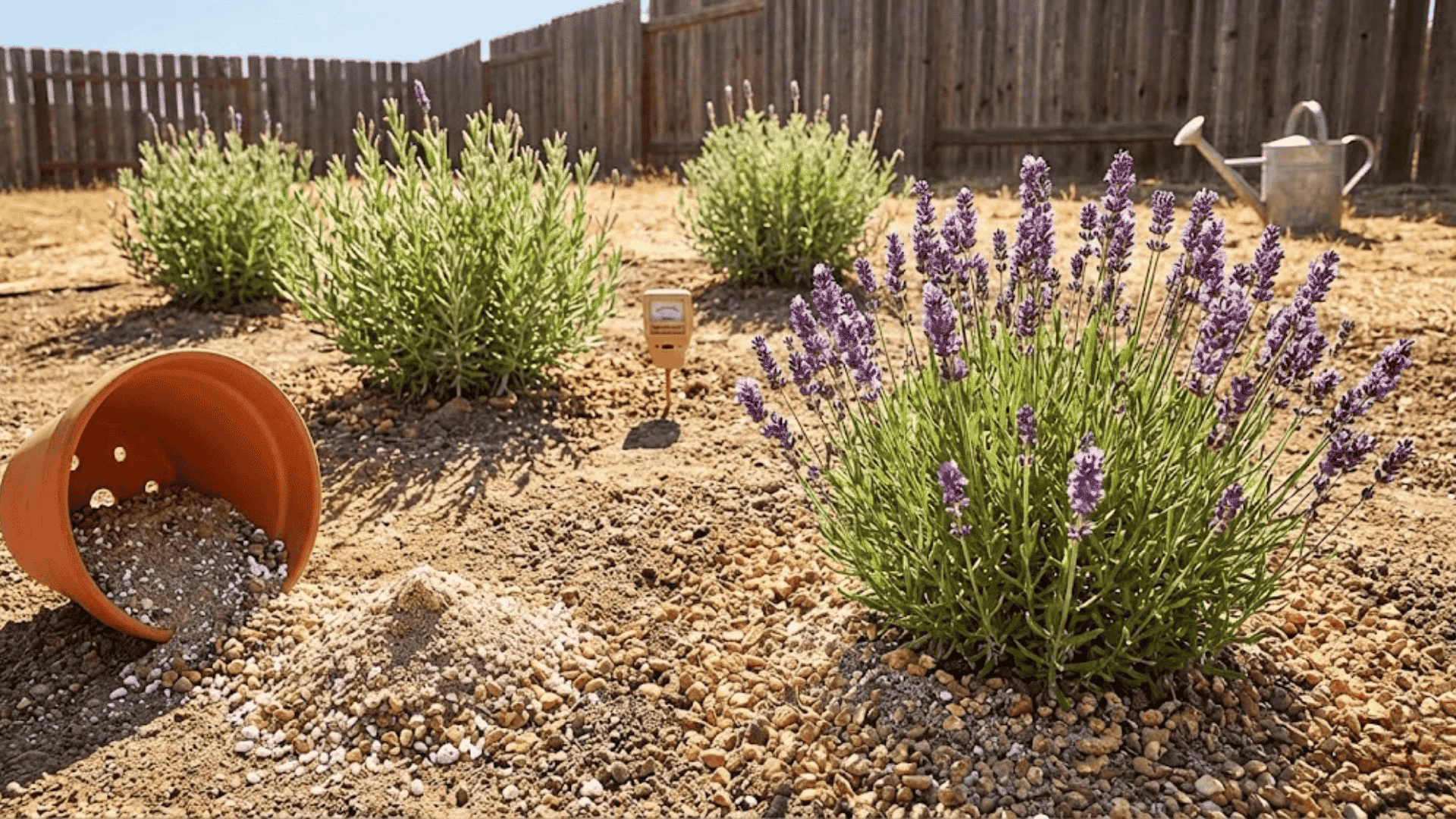
Forget rich, moisture-retaining potting mix. Lavender wants lean, gritty soil that water rushes through quickly. Mix regular potting soil with perlite, coarse sand, or gravel at about a one-to-one ratio.
The roots should never sit in dampness. If you’re planting in clay-heavy garden soil, either amend heavily with sand and compost or grow in raised beds. Slightly alkaline pH between6.5 and 7.5 is ideal.
3. Water Sparingly and Strategically
This is where most people kill their lavender with kindness. Established plants need very little water, maybe once every two to three weeks during dry spells.
New plants need more frequent watering for the first few months while they establish roots, but even then, let the soil dry out between waterings. Overwatering leads to root rot faster than anything else. When in doubt, skip the watering.
4. Airflow Prevents Most Problems
Lavender hates being crowded or stuck in humid, stagnant conditions. Space plants at least two to three feet apart so air can circulate freely around every stem. Good airflow prevents fungal diseases and keeps foliage dry.
If you’re growing indoors, don’t tuck your lavender into a corner. Give it breathing room and maybe even a small fan nearby during humid weather.
Planting Lavender the Right Way
Getting lavender into the ground properly sets you up for success from day one. Plant in spring after the last frost or in early fall when the soil is still warm, giving roots time to establish before extreme weather hits.
- Step 1: Pick a spot that gets full sun all day long and has excellent drainage, avoiding low areas where water collects.
- Step 2: Dig a hole twice as wide as the root ball but the same depth, mixing in sand or gravel if your soil is heavy clay.
- Step 3: Loosen the root ball gently with your fingers before placing it in the hole, keeping the crown slightly above soil level to prevent rot.
- Step 4: Backfill with your amended soil mix, pressing firmly but not compacting it too much around the roots.
- Step 5: Water thoroughly just this once to settle the soil, then space additional plants two to three feet apart for proper airflow.
Once planted, resist the urge to mulch heavily around the base. A thin layer of gravel works better than organic mulch, which can trap moisture against the stems and invite problems you don’t want.
Sunlight Requirements for Lavender
Lavender is practically sun-obsessed and needs a minimum of 6 to 8 hours of direct sunlight daily to truly thrive.
Outdoors, this means choosing the brightest, most exposed spot in your garden where nothing casts shade throughout the day.
Indoor lavender is trickier because window light rarely provides enough intensity, even in south-facing windows. You’ll likely need supplemental grow lights positioned close to the plant.
When lavender doesn’t get enough sun, it tells you pretty clearly:
- Stems stretch out and become leggy instead of staying compact
- Fewer flower buds form, and blooms are sparse or nonexistent
- Foliage loses that vibrant silvery-green color and looks dull
- The plant becomes weak and more susceptible to pests and diseases
Watering Lavender Plants
Watering lavender is all about restraint. Newly planted lavender needs water 1-2 times a week for the first few months while roots establish, but even then, let the top few inches of soil dry completely between drinks.
Established plants can go 2-3 weeks without water, relying mostly on rainfall in many climates.
Overwatered lavender shows yellowing leaves, mushy stems, and a generally sad, drooping appearance. Underwatered lavender simply looks a bit wilted but bounces back quickly with a drink.
Honestly, though, drainage matters way more than how often you water. Even weekly watering works fine if water rushes through the soil instantly and never pools around the roots.
What Soil and Fertilizer Does Lavender Need?
Lavender thrives in conditions that would make most plants struggle, which is why treating it like your other garden favorites usually backfires.
Understanding what this Mediterranean native actually wants will save you from overcomplicating things.
The Perfect Soil Mix
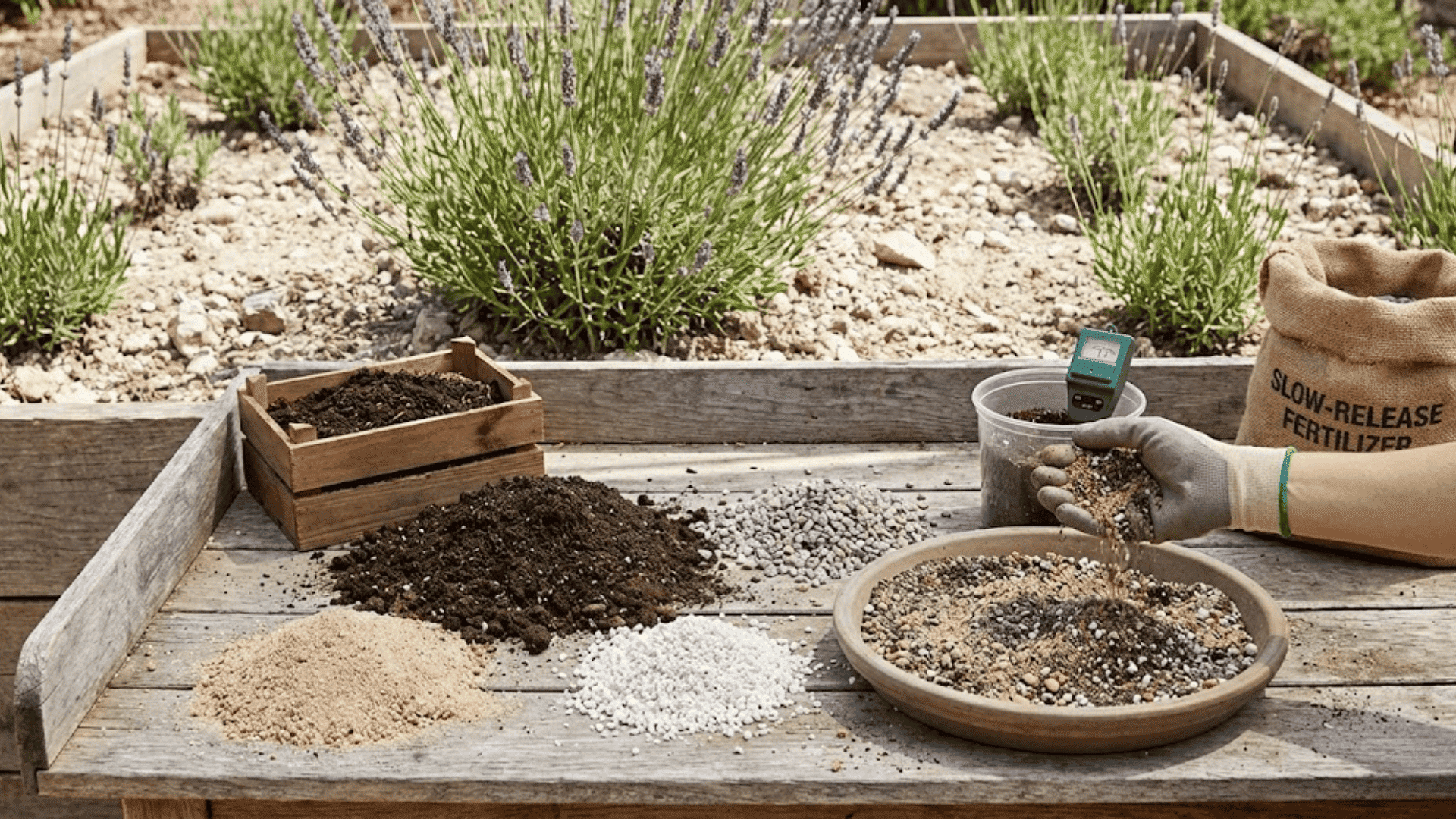
Lavender wants sandy, alkaline soil with a pH between 6.5 and 7.5 that drains almost instantly. Think rocky hillsides, not rich garden beds.
Mix regular soil with coarse sand, perlite, or fine gravel at a 1:1 ratio to create that fast-draining texture. Heavy clay needs serious amendment, or you’re better off using raised beds.
The soil should feel gritty between your fingers, not dense or moisture-retentive like what you’d use for vegetables or flowers.
Skip the Fertilizer (Mostly)
Here’s where lavender gets even easier. It actually prefers nutrient-poor soil and produces more fragrant oils when it’s not overfed. Rich soil creates leggy growth with fewer blooms.
If your lavender looks truly weak after a few years, a light application of slow-release fertilizer in early spring is plenty. Even then, use half the recommended amount.
Compost worked into the soil at planting time provides enough nutrition for years. Resist the urge to feed it regularly like your other plants.
Pruning and Maintaining Lavender
Pruning might feel intimidating at first, but it’s actually what keeps lavender from turning into a woody, scraggly mess.
Done right, it encourages bushy growth and tons of blooms year after year.
- Step 1: Prune in early spring when you see new green growth emerging, cutting back about one-third of the plant’s height.
- Step 2: Shape the plant into a rounded mound, avoiding cutting into the woody brown stems since lavender struggles to regrow from old wood.
- Step 3: Deadhead spent flowers immediately after blooming in summer by cutting stems down to the next set of leaves.
- Step 4: Do a lighter trim after the main flowering period ends to tidy up and encourage a possible second bloom.
- Step 5: Remove any dead or damaged branches throughout the year, keeping the center of the plant open for airflow.
Skip pruning in fall or late summer because new growth won’t have time to harden off before winter, leaving your plant vulnerable to cold damage.
A little courage with the shears in spring makes all the difference in keeping your lavender compact and covered in blooms.
Growing Lavender in Pots vs. Ground
Container lavender gives you the flexibility to move plants around and control soil conditions perfectly, but it does require a bit more attention than ground-planted lavender.
Here’s how to set up your potted lavender for success.
| Aspect | Requirements | Why |
|---|---|---|
| Pot Size | 12-16 inches in diameter minimum | Lavender’s roots need space, and larger pots dry out faster |
| Material | Terracotta or unglazed clay | Clay breathes and wicks moisture away from roots |
| Drainage | Multiple large bottom holes, no saucers | Standing water causes root rot within minutes |
| Soil Mix | 50% potting soil + 50% perlite/sand/gravel | Containers need even faster drainage than garden beds |
| Watering | Every 5-7 days in summer, 10-14 days in cooler months | Pots dry faster, but lavender still hates constant moisture |
Repot every 2-3 years in spring with fresh soil, going up just one size. Move containers to sheltered spots during harsh winter if you’re in a borderline zone.
Common Lavender Care Problems
Even with proper care, lavender can throw you a curveball now and then. Catching problems early and knowing what caused them makes fixing issues way easier than you’d think.
Problem 1: Yellowing Leaves
Fix: This usually screams overwatering or poor drainage. Cut back on water immediately, check that drainage holes aren’t blocked, and let the soil dry out completely before watering again.
Problem 2: Leggy Growth
Fix: Your lavender isn’t getting enough sunlight, or you’re feeding it too much fertilizer. Move it to a sunnier spot and skip the fertilizer, then prune it back in spring to encourage bushier growth.
Problem 3: Root Rot and Fungal Issues
Fix: Soggy soil and poor airflow create the perfect breeding ground for these problems. Improve drainage by adding sand or gravel to the soil, space plants farther apart, and water only when the top few inches are bone dry.
Problem 4: Pest Problems
Fix: Aphids and spittlebugs occasionally show up, but lavender’s oils usually keep most pests away. Blast aphids off with water, hand-pick spittlebugs, and avoid using harsh pesticides that can damage the plant’s natural defenses.
Seasonal Lavender Care Tips
Lavender’s needs shift throughout the year, and adjusting your care routine with the seasons keeps your plants healthy and blooming their best.
A little seasonal awareness goes a long way with these Mediterranean beauties.
Spring Care Routines
- Prune back 1/3 of the plant when new green growth appears, shaping it into a tidy mound
- Clear away any dead foliage or winter debris from around the base for better airflow
Summer Maintenance
- Deadhead spent flowers regularly to encourage continuous blooming throughout the season
- Water established plants only during extended dry spells, letting the soil dry completely between waterings
Fall and Winter Protection
- Do a light trim to tidy up, but avoid heavy pruning that stimulates tender new growth
- Move potted lavender to sheltered locations or against south-facing walls in cold climates
Lavender is remarkably low-maintenance once established, but these seasonal touches keep it looking gorgeous year-round.
Real Tips From Gardeners
Experienced lavender growers on forums like r/gardening consistently share the same hard-won wisdom.
The biggest regret? Babying their lavender to death with too much water and attention.
One grower mentioned their lavender only thrived after they basically forgot about it for weeks. Another common lesson is planting lavender way too close together, then watching helplessly as fungal issues spread.
The gravel mulch trick gets mentioned repeatedly as a game-changer for drainage.
Perhaps the most universal advice is to be ruthless with spring pruning even when it feels scary, because timid snips lead to woody, bare-centered plants within 2-3 years that never recover their full bushiness.
The Closing Note
Learning how to take care of a lavender plant really comes down to unlearning what you know about typical gardening.
Give it sun, skip the fussing, hold back on water, and prune with confidence each spring.
Your lavender will reward that hands-off approach with years of gorgeous blooms and that incredible fragrance that makes every garden feel like a getaway.
Growing it in pots on your balcony or creating a full lavender hedge, these plants are more forgiving than you think once you understand what they actually need.
Have your own lavender tips or questions? Drop a comment below and let’s chat about what’s worked for you.