Potatoes seem simple, yet they confuse more people than almost any other staple. They sprout too fast, rot unexpectedly, or taste off even when nothing obvious went wrong.
Most advice skips the reasons and jumps straight to rules, which makes it hard to know what actually matters.
Today, I’ll explain what affects potatoes over time and why certain methods work while others fail.
You’ll learn how to preserve potatoes based on your space, your habits, and how long you need them to last.
Once the basics make sense, storage decisions stop feeling stressful and start feeling obvious. Let’s begin by looking at why potatoes spoil in the first place.
Why Potatoes Spoil Faster than Expected
Potatoes are alive. Not in a dramatic way, but enough that they respond to light, temperature, and moisture long after harvest.
When storage conditions push them in the wrong direction, they try to grow, protect themselves, or break down. Spoilage is not random. It follows patterns.
1. Light Exposure and Greening
When potatoes are exposed to light, they produce chlorophyll. That’s what turns the skin green. Along with it comes solanine, a natural compound that tastes bitter and can upset your stomach in larger amounts.
Light tells the potato it’s time to grow. Growth is the opposite of storage. Even indirect light over time can trigger this process, which is why clear bins and open counters cause problems.
2. Too Much Moisture
Moisture creates the perfect environment for rot and mold. Potatoes breathe through their skins. When moisture sits on the surface or gets trapped around them, oxygen drops and decay organisms take over.
Washing potatoes before storage leaves water in tiny skin cracks. Sealed containers do the same thing by trapping humidity.
3. Cold Temperatures
Cold does not stop potatoes. It changes them. In the fridge, starch converts to sugar. That’s why refrigerated potatoes taste oddly sweet and cook unevenly. Texture suffers too.
Once this conversion happens, it does not fully reverse. Cold storage solves one problem and creates several others.
The Best Way to Store Whole Potatoes at Home
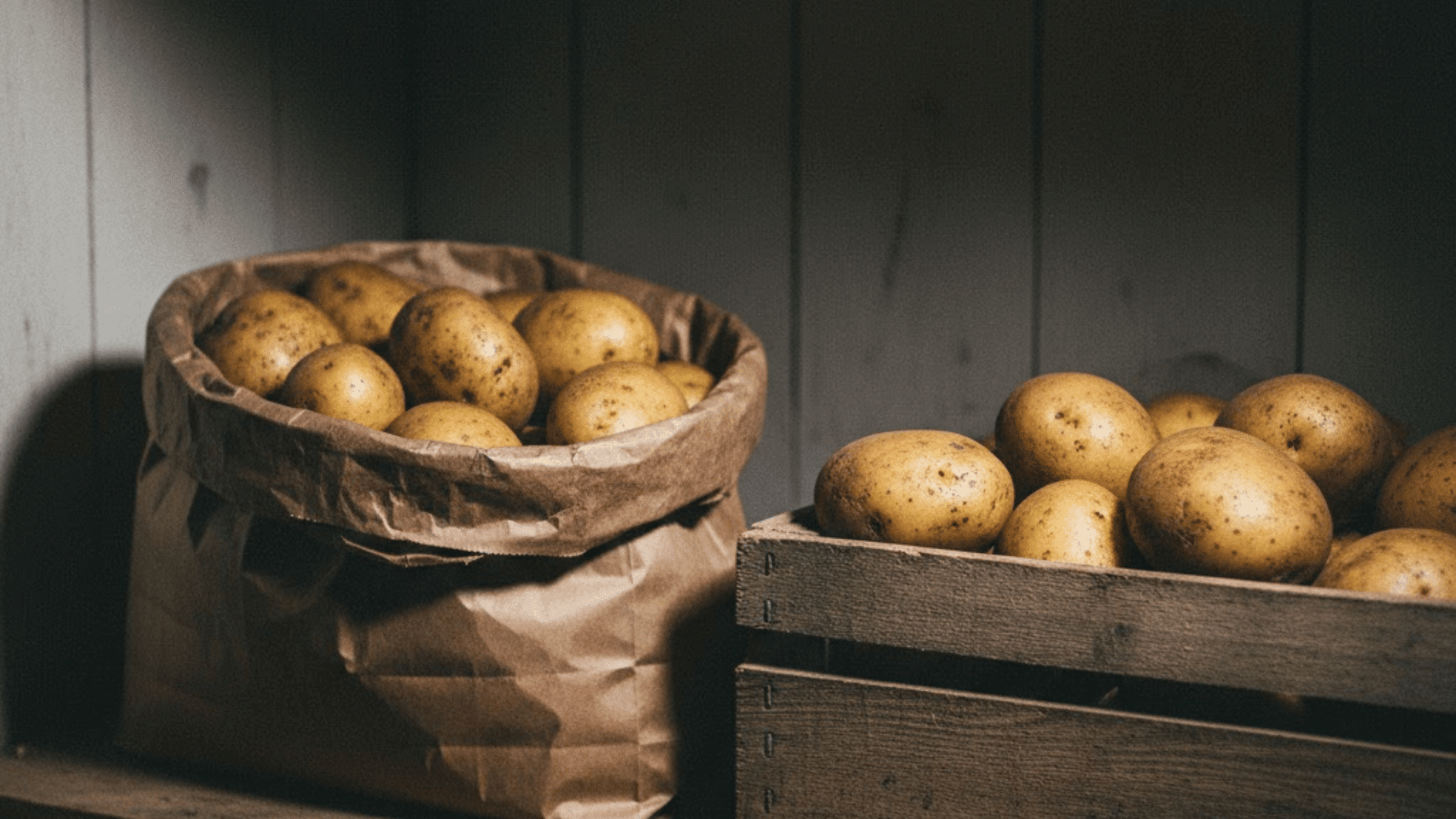
Good storage is about balance. You are slowing the potato down without stressing it. That means cool, dark, dry, and breathing room. Miss one part and problems start showing up weeks later.
1. Ideal Temperature and Location
The sweet spot is 45 to 55°F. This range keeps potatoes dormant without stressing them. Basements, cellars, and unheated pantries often fall here naturally. Some interior closets can work in winter.
Garages usually fluctuate too much. Warm spaces encourage sprouting. Cold spaces change starches, which affects flavor and texture later.
2. Light Control
Dark means no steady light exposure. Not dim. Not shaded. No windows. Even small amounts of repeated light signal growth over time. A closed cabinet or covered box works well. Clear bins do not, even if they sit in a dark room, because light still reaches the skins.
3. Airflow and Containers
Potatoes need air to release moisture. Paper bags, cardboard boxes, wooden crates, or baskets allow airflow and prevent condensation.
Avoid sealed plastic bags and airtight bins. Those trap humidity and lead to rot. Lining boxes with newspaper can help absorb excess moisture without sealing it in.
4. Why Onions Should Never Be Nearby
Onions release ethylene gas as they age. Potatoes react by sprouting faster. Stored together, both spoil sooner. This is not a myth. It’s chemistry. Storing them separately helps both last longer.
How Long Potatoes Last Based on Storage Method
Shelf life depends on conditions, not labels or dates. Potatoes respond to light, temperature, and airflow over time. Knowing what’s realistic helps you plan meals and preservation instead of checking the bag every few days and hoping for the best.
Pantry or Basement Storage
In a cool, dark pantry or basement, whole potatoes usually last one to three months. Consistency matters more than the exact location.
Frequent temperature swings, especially between day and night, speed up sprouting and softening. Light exposure shortens storage life even if everything else is right. Potatoes stored this way should be checked weekly so early spoilage doesn’t spread to the rest.
Root Cellar or Cellar-Style Storage
Steady temperature, full darkness, and good airflow can keep potatoes for four to six months. This is the environment potatoes are naturally suited for.
Higher humidity helps prevent shriveling, but airflow is still necessary to avoid rot. Even in ideal conditions, long storage only works if damaged or soft potatoes are removed as soon as they appear.
When Potatoes are No Longer Safe to Eat
Toss potatoes that show:
- Strong sour or musty smell
- Soft, wet, or leaking spots
- Extensive mold
- Deep greening under the skin
Small sprouts can be cut off if the potato is still firm and smells normal. Widespread bitterness, softness, or decay means it’s no longer safe to use.
How to Preserve Potatoes Long Term
Long-term methods make sense when storage space runs out or harvests are large. Each method changes the potato in a different way.
1. Freezing Potatoes the Right Way
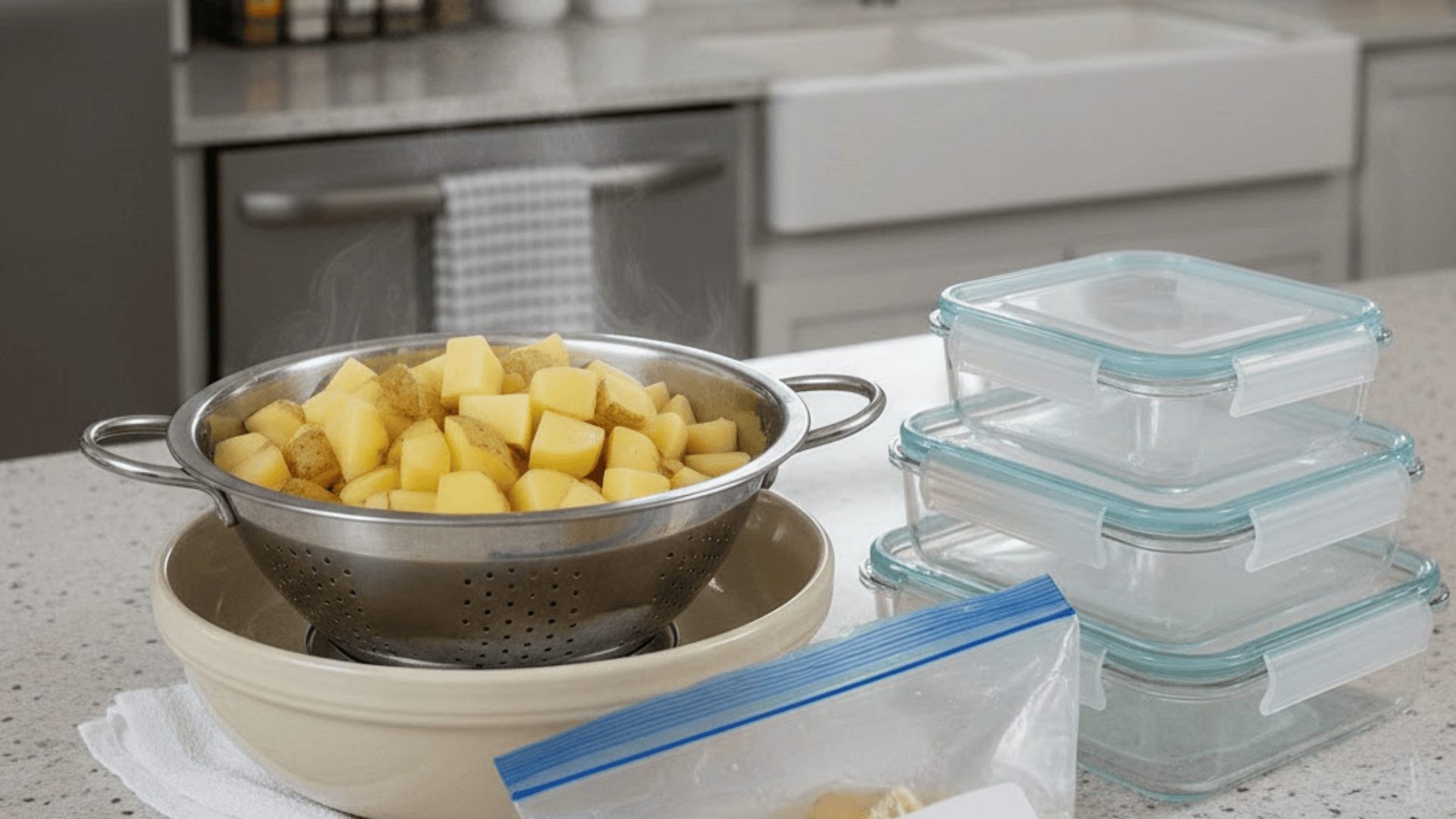
Raw potatoes do not freeze well on their own. Freezing them without prep leads to grainy texture and uneven cooking. Blanching solves this by stopping enzyme activity that breaks down the potato during freezing.
Blanching matters because it:
- Preserves natural color
- Reduces mushiness after thawing
- Keeps flavor more stable over time
To blanch potatoes, bring a large pot of water to a boil. Add cut potatoes and cook briefly, usually two to five minutes depending on size. They should soften slightly but not fully cook. Drain immediately and transfer to ice water to stop the cooking. Once cooled, drain well and dry before freezing.
Diced, sliced, or par-cooked fries freeze best. After thawing, texture will be softer. Frozen potatoes work best in soups, casseroles, and roasted dishes, not for crisp frying.
2. Dehydrating Potatoes
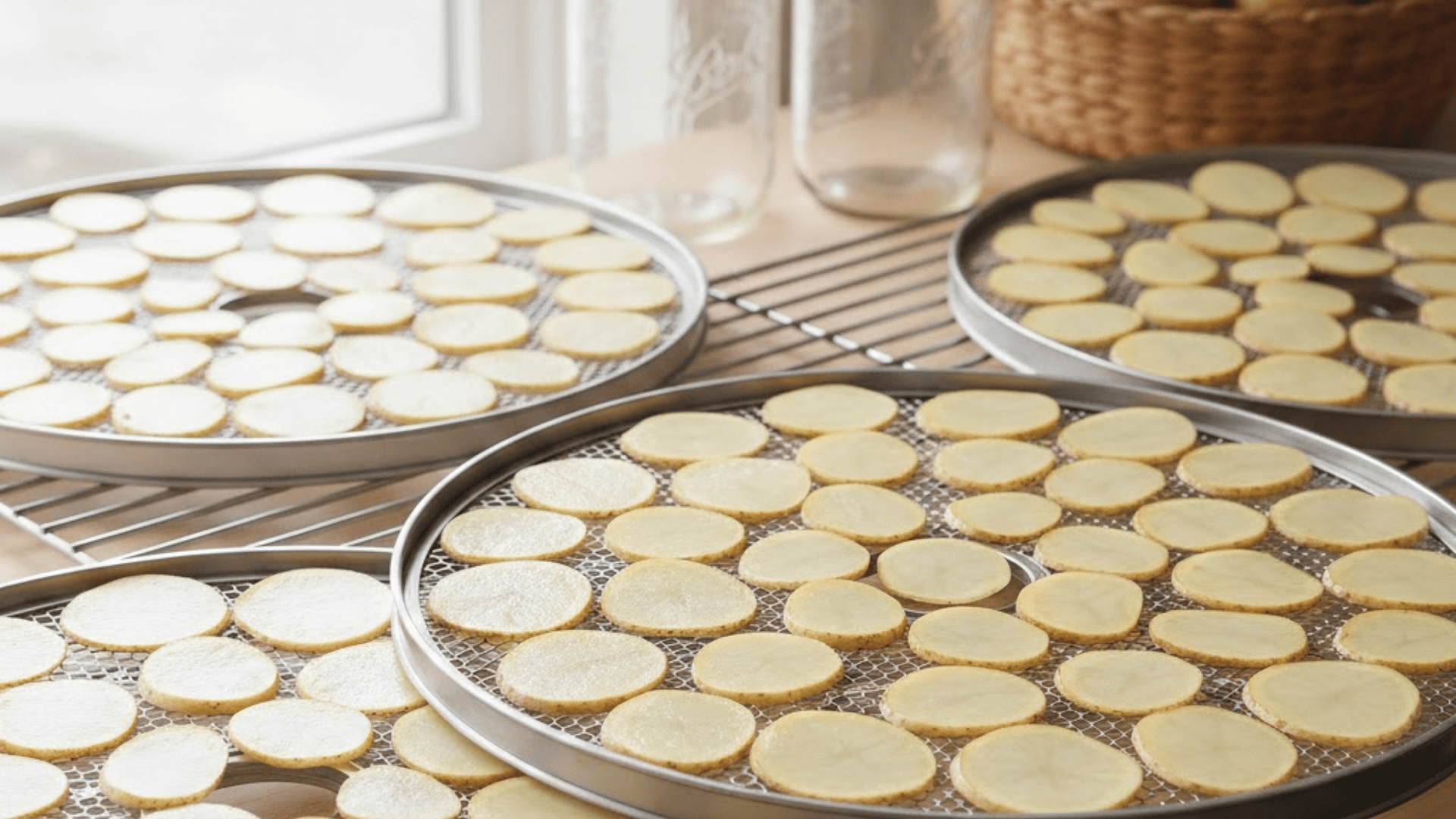
Slice evenly for consistent drying. Thin slices dry faster and store better. Fully dried potatoes last six to twelve months when kept airtight and dark.
Dried potatoes work well for:
- Soups
- Stews
- Camping meals
- Emergency storage
They need rehydration time, but flavor holds up well.
3. Pressure Canning Potatoes
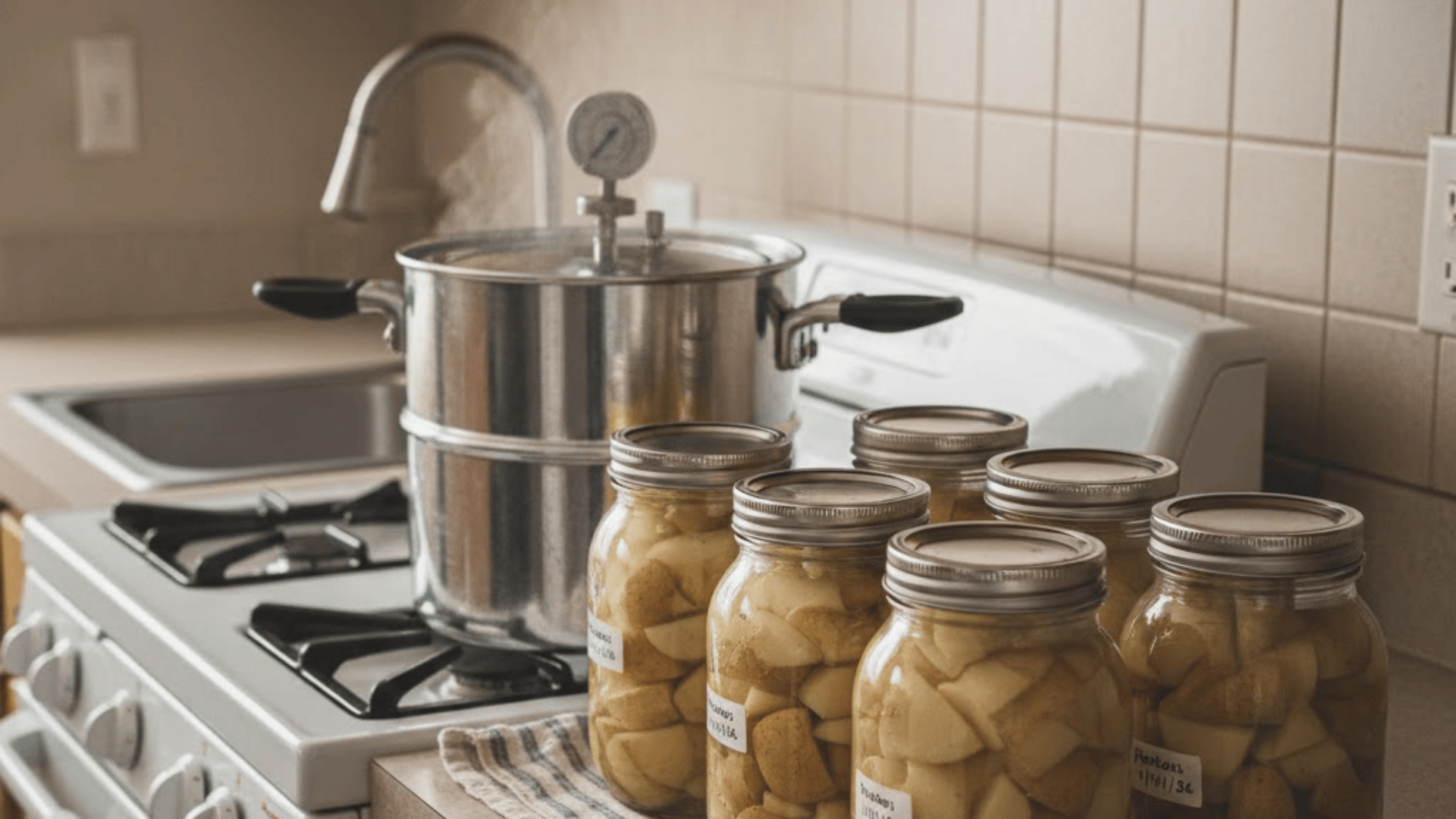
Potatoes must be pressure-canned to be safe. Water bath canning does not reach high enough temperatures to prevent dangerous bacterial growth. This is not optional or preference-based. It’s a safety requirement.
To pressure can potatoes, start by washing, peeling, and cutting them into evenly sized pieces. Place the potatoes in boiling water and parboil for about two minutes.
Pack the hot potatoes into clean canning jars, leaving proper headspace. Cover with fresh boiling water and add salt if desired.
Wipe the rims, apply lids, and process the jars in a pressure canner according to the canner’s instructions for your altitude.
This method makes sense when:
- You have a large quantity to preserve at once
- You need shelf-stable storage without refrigeration
- A softer texture is acceptable
Pressure-canned potatoes usually last one to two years when stored properly. The texture becomes tender and slightly crumbly, which works best in soups, stews, casseroles, and skillet dishes rather than as a stand-alone side.
How to Preserve Homegrown Potatoes
Garden potatoes behave differently from store-bought ones. They haven’t been treated for long storage and are more vulnerable to moisture loss and surface damage.
Curing Potatoes After Harvest
Curing thickens the skin and allows minor cuts to heal before long-term storage.
- Keep freshly harvested potatoes in a dark, well-ventilated space to prevent greening and allow the skins to toughen naturally.
- Maintain temperatures between 50 and 60°F so healing occurs without triggering sprouting or cold-related starch changes.
- Aim for moderate humidity to prevent shriveling while still discouraging mold and surface rot.
- Cure potatoes for one to two weeks, checking occasionally and removing any that show signs of softening or damage.
- Do not wash potatoes during curing. Brush off loose dirt only so moisture does not interfere with skin healing.
Storage After Curing
Once cured, store homegrown potatoes like any other whole potato in a cool, dark, well-ventilated space. They often last longer than store-bought potatoes, but still need regular inspection. Remove any that soften or rot.
What to Do if You Have Too Many Potatoes
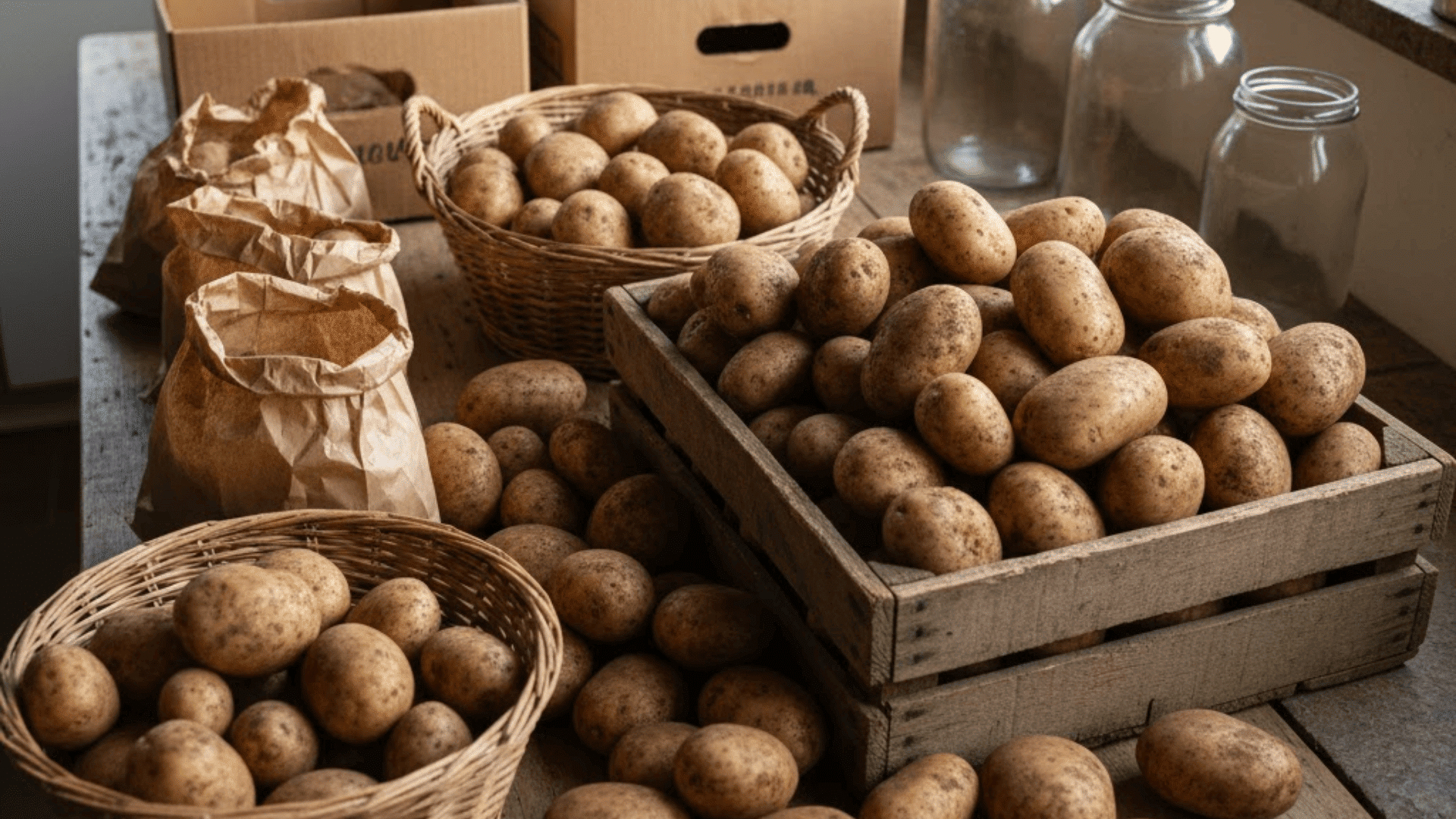
Excess creates pressure. Pressure leads to rushed choices that don’t hold up over time.
When too many potatoes pile up, the goal isn’t to find one perfect solution. It’s to match the method to your space and how quickly you can realistically use them.
In small apartments, freezing or dehydrating usually makes the most sense. Freezers buy time when storage space is limited, while drying saves space entirely.
Basements and cooler homes can support longer whole-potato storage, but only if conditions stay stable. No single setup works for everyone.
Relying on just one method is risky. Whole storage works best for the short term. Preservation methods handle overflow. Mixing approaches spreads risk, prevents waste, and gives you flexibility as conditions change.
Common Potato Storage Mistakes to Avoid
Some potato problems don’t come from where you store them, but from how you handle them over time. These mistakes are easy to miss and often show up weeks later.
- Stacking potatoes too deeply: Large piles restrict airflow at the center, trapping heat and moisture that cause potatoes in the middle to soften and rot first.
- Storing damaged or bruised potatoes: Cuts and bruises break the skin’s protection, allowing bacteria to enter and spread decay to surrounding potatoes.
- Forgetting to sort potatoes before storage: Mixing sizes and conditions hides early spoilage, making it harder to spot and remove problem potatoes before damage spreads.
- Leaving potatoes in original store packaging: Many store bags limit airflow or trap moisture, creating poor storage conditions even when the location itself is suitable.
Avoiding these habits keeps storage conditions stable and gives potatoes a better chance to last as long as they’re meant to
Conclusion
Good potato storage is less about tricks and more about understanding cause and effect.
Light, moisture, air, and temperature all push potatoes in specific directions, and small changes can make a big difference over weeks and months.
When you match the method to your situation, waste drops naturally. Learning how to preserve potatoes is really about planning ahead instead of reacting when things go wrong.
A quick check of where and how you store them can save money, time, and frustration.
Take a moment to look at your current setup, adjust one thing that’s working against you, and put the rest of this knowledge to use with your next batch.