
Mint is one of the easiest herbs to grow indoors. And somehow, it still confuses a lot of people.
You’ll see advice that says it grows anywhere, needs very little care, and never causes problems. Then you try it. The plant stretches, turns yellow, or slowly fades.
This guide is here to clear that up. Growing mint indoors works well when you understand how the plant behaves and why it reacts the way it does.
This isn’t about tricks or fast results. It’s about learning how to grow mint indoors in a steady, calm way that actually holds up over time.
Does Mint Grow Well Indoors?
Mint adapts well to indoor life because it’s flexible by nature. It doesn’t need extreme heat, strong sun all day, or special soil. It grows fast, recovers well after cutting, and keeps producing leaves when conditions are decent.
That said, indoor mint behaves differently than outdoor mint. Outside, mint spreads through runners and has unlimited space. Indoors, it’s confined. That changes how it grows. You’ll usually get slower growth, shorter stems, and fewer leaves at once. That’s normal.
The goal indoors isn’t a huge plant. It’s steady, usable growth. If your mint stays green, smells strong, and keeps putting out new leaves, it’s doing fine even if it looks smaller than garden mint.
Best Ways to Grow Mint Indoors
How you start your plant matters more indoors than outside. Some methods give quick results. Others take patience. Choosing the right one saves frustration later.
1. Growing Mint from Cuttings (Best for Beginners)
Cuttings work well because you’re starting with mature plant tissue. That means the plant already knows how to grow leaves and stems.
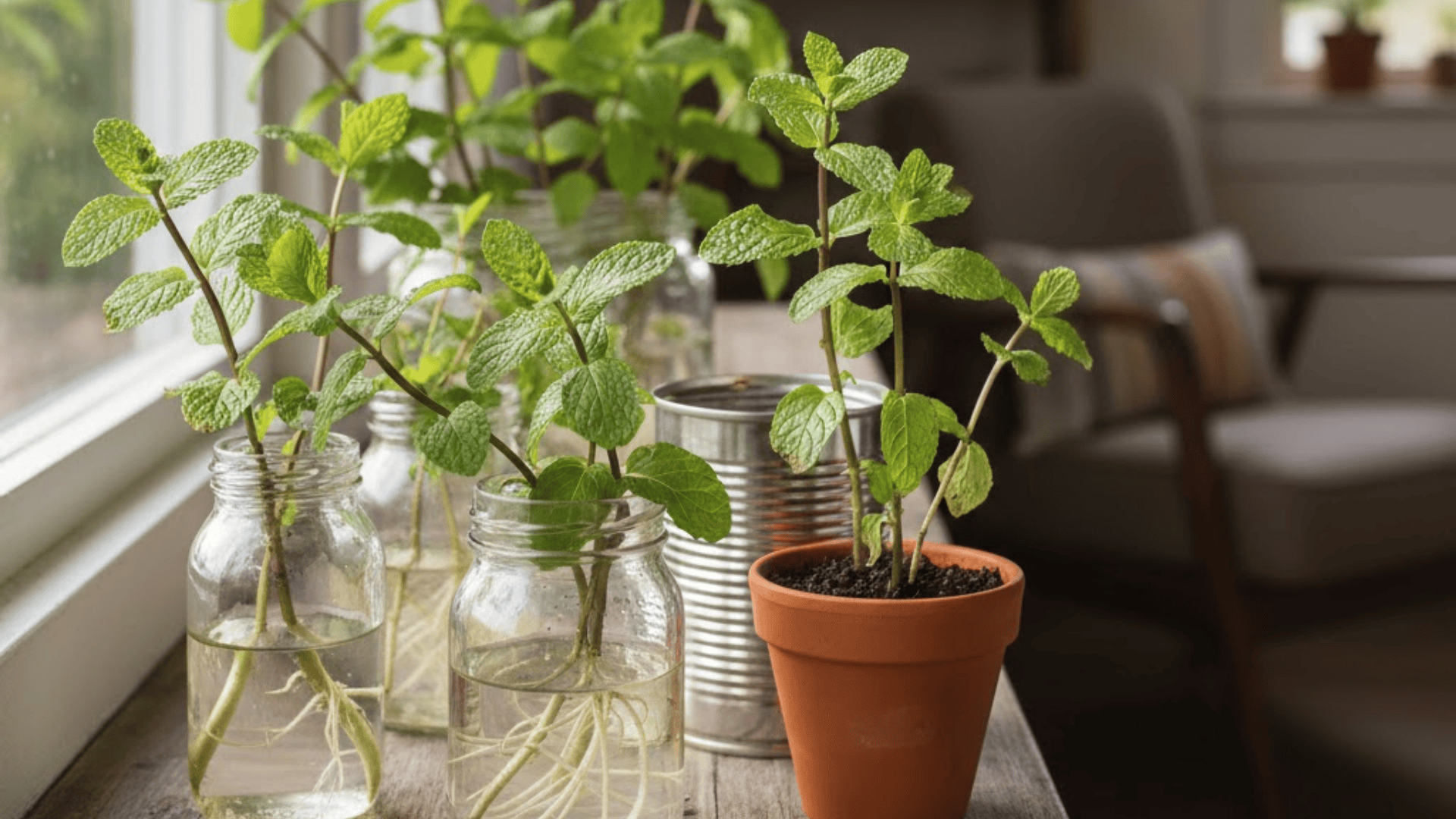
Cut a healthy stem about 3 to 4 inches long. Remove the lower leaves. Place the stem in water or moist soil.
Water rooting is simple. Put the cutting in a glass so the bare stem is submerged. Change the water every few days. Roots usually appear within one to two weeks.
Soil rooting skips the water step. Push the cutting into damp soil and keep it evenly moist. This can take a little longer, but the roots adapt to soil right away.
You’ll usually see new leaf growth within two to three weeks. At that point, the plant is established.
2. Growing Mint from Store-Bought Mint
This can work, but it’s hit or miss. Grocery store mint is often stressed and grown for looks, not strength.
It works best when the stems are fresh, firm, and not wilted. Avoid plants with blackened stems or soft spots. Use the same cutting method as above.
It fails when the mint has been refrigerated too long or treated to slow growth. If roots don’t form after two weeks, it’s best to try again with a fresher bunch.
3. Growing Mint from Seeds
Seeds are the slowest option. Mint seeds take longer to sprout and even longer to look like real plants.
Seeds make sense if you want a specific variety or can’t access fresh mint. Expect germination in 10 to 15 days. Expect usable leaves in several months.
Indoor seed starts need patience and steady light. This is not the best option if you want quick results.
Choosing the Right Pot and Soil
Mint needs space for its roots to spread sideways, not straight down.
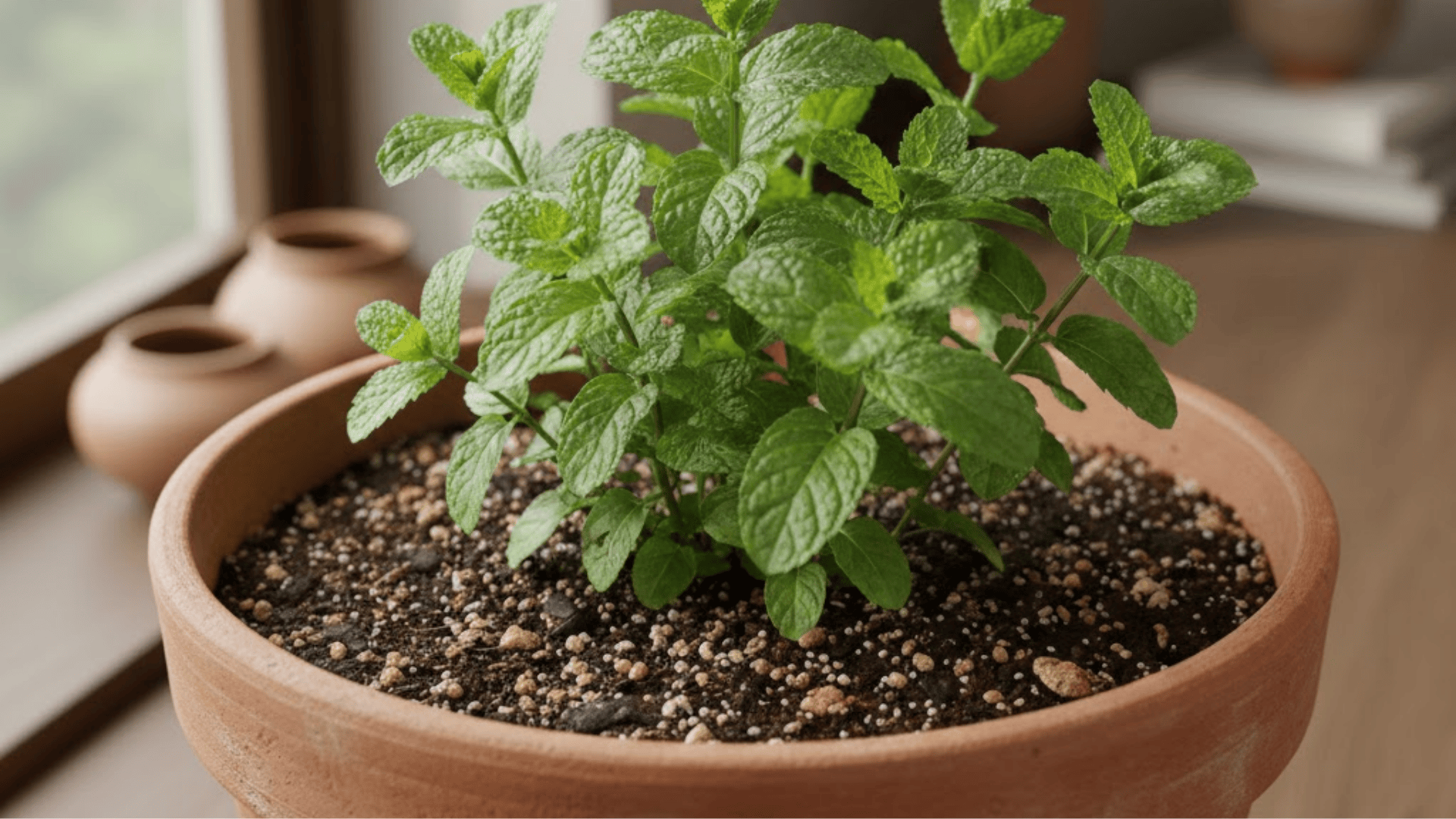
A wider pot works better than a deep one because mint fills out horizontally. An indoor pot around 8 inches wide gives the roots enough room without encouraging weak, stretched growth.
Drainage matters more than pot size. Mint roots need air as well as water. Without drainage holes, water collects at the bottom and the roots stay wet for too long, which leads to rot even if watering seems light.
Soil should stay loose. Mint grows fast, and compacted soil holds too much water and limits airflow around the roots.
A standard indoor potting mix works well, but it should feel light and crumbly, not dense or sticky. If the mix feels heavy when wet, blend in perlite or coarse sand to improve drainage.
Light Requirements for Indoor Mint
Light is where most indoor mint problems start.
A south- or west-facing window works well. Mint does best with about 4 to 6 hours of direct sunlight each day. This gives the plant enough energy to grow compact stems and full leaves without stressing it.
If direct sun isn’t consistent, mint can also do well with 8 to 10 hours of bright, indirect light. What matters most is that the light is strong and regular. When mint doesn’t get enough light, it stretches toward the window, the stems get thin, and the flavor weakens.
Grow lights work if windows are limited. Place the light close, about 6 to 12 inches above the plant. Aim for 12 to 14 hours a day.
What matters most is consistency. Steady light beats strong light once in a while.
How Often to Water Mint Indoors
Mint prefers soil that stays lightly moist, not constantly wet. That difference matters more than it sounds.
Moist soil feels cool and slightly damp when you touch it. Soggy soil feels heavy and stays wet for days, especially near the bottom of the pot. That’s when roots start to struggle.
The easiest way to tell is the finger test. Push your finger about an inch into the soil. If the surface feels dry at that depth, it’s time to water. If it still feels damp, wait another day or two.
Watering needs change with the seasons. In winter, mint grows more slowly even though indoor air feels dry. The plant uses less water, so overwatering becomes easier. Most indoor mint problems happen when watering follows a schedule instead of the soil.
Temperature and Humidity Needs for Mint
Mint does best in normal indoor temperatures. Around 60 to 70°F keeps growth steady and leaves healthy. It doesn’t like sudden heat or cold shifts.
Problems usually show up when the plant sits near heaters, vents, or hot windows. Warm, dry air pulls moisture from the soil faster and stresses the leaves, even if watering seems fine.
Mint also prefers a bit of humidity. When indoor air is too dry, leaf edges can curl or crisp. You don’t need anything complicated to fix this.
SImple fixes help:
- Keep the pot away from heat sources.
- Grouping plants together raises humidity slightly.
- Setting the pot on a shallow tray filled with pebbles and water adds moisture to the air around the plant without soaking the roots.
Pruning and Harvesting Mint the Right Way
Pruning is what keeps mint productive indoors. It helps the plant stay full, and it keeps the flavor strong.
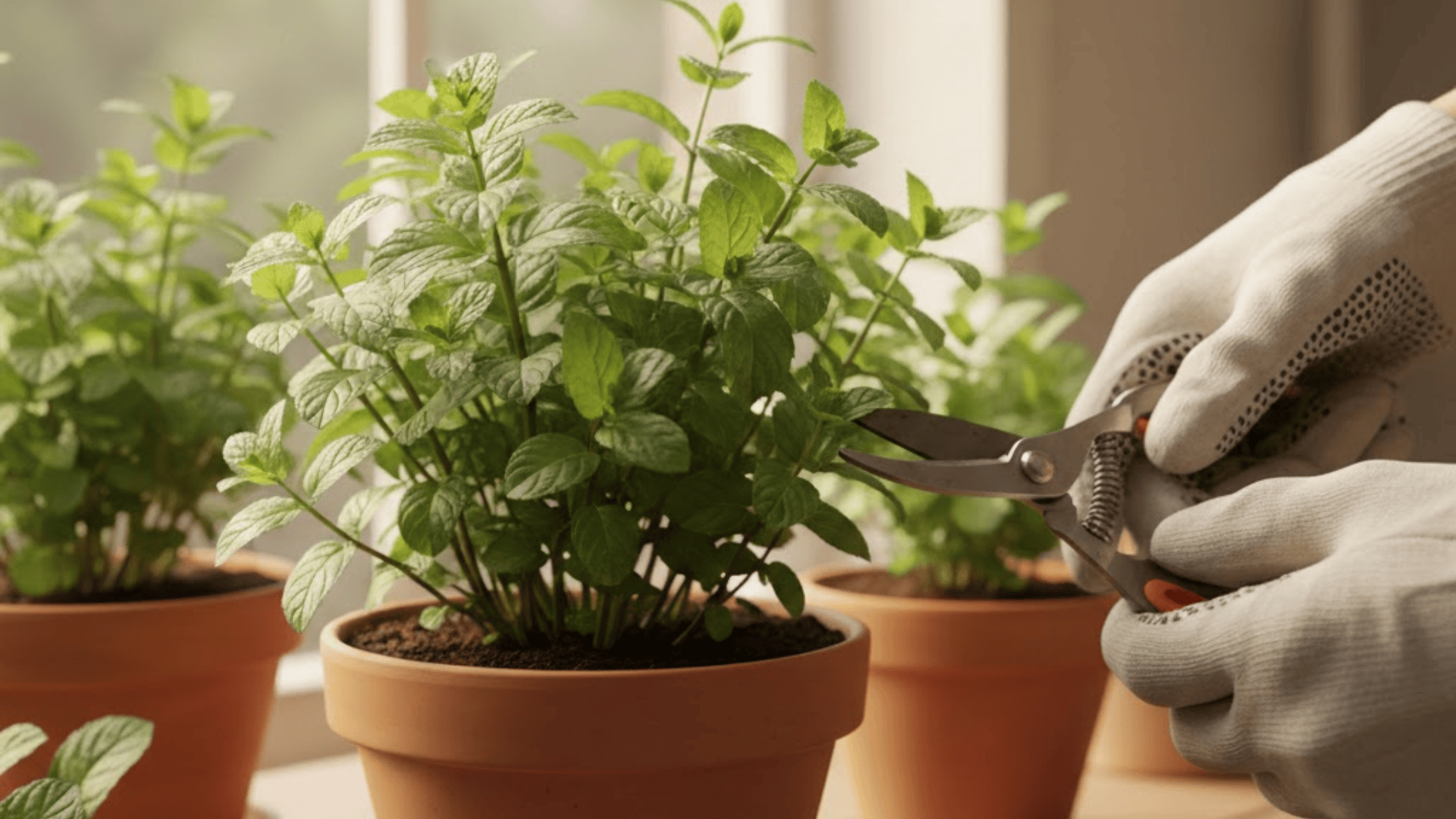
When you cut mint, always snip the stem just above a set of leaves. New growth comes from that point, so cutting there encourages the plant to branch instead of growing tall and thin.
Harvest regularly, even if you don’t need much mint right away. Light, frequent cutting prevents weak, leggy stems and keeps the plant balanced. Once the plant is established, trimming every one to two weeks works well.
Trim early to stop flowers from forming. When mint flowers, it shifts energy away from leaf growth and the flavor becomes less sharp
Common Indoor Mint Problems and Fixes
Most indoor mint problems look serious at first, but they usually come back to the same few causes. Light, water, and space affect how the plant grows, and when one of those is off, the leaves show it quickly.
| Problem | Why it happens | How to fix it |
|---|---|---|
| Yellow leaves | Soil stays wet for too long, which limits oxygen around the roots and blocks nutrient uptake | Let the soil dry slightly between watering, make sure the pot drains well, and remove yellowed leaves |
| Leggy or weak growth | Light is too low, causing stems to stretch toward the light source | Move the plant to brighter light or add a grow light, then prune back long stems |
| Aphids or spider mites | Plant stress from low light, dry air, or poor airflow | Rinse leaves with water, use a mild soap solution, and improve light and airflow |
When mint’s basic needs are met, these problems usually stop showing up. Pay attention to how the plant responds, adjust one factor at a time, and give it a little time to recover.
Can You Grow Mint Indoors All Year?
Yes, mint can grow indoors year-round, but it won’t behave the same in every season. As daylight drops in winter, growth naturally slows. New leaves may be smaller and appear less often, and that’s completely normal.
During darker months, a grow light can help keep the plant healthy. You’ll also need to adjust care. Water less often, since the plant uses moisture more slowly, and ease up on pruning so you don’t stress it. With steady light and lighter care, mint will keep producing, just at a slower pace until brighter days return.
Growing Mint Indoors in Water Only
Mint can survive in water for short periods, which makes this method useful for rooting cuttings or keeping small stems fresh. It’s simple and works well in the beginning.
Over time, though, water-grown mint tends to weaken. Stems become softer, leaves lose strength, and flavor fades.
To slow this down, change the water often and rinse the roots to prevent buildup. Replacing older stems with fresh cuttings helps, too.
This method works best as a temporary setup, not a long-term growing solution.
Indoor Mint Care Checklist
| Care Area | What to aim for | What to watch for |
|---|---|---|
| Light | Bright, consistent light for several hours each day | Long, thin stems or pale leaves signal low light |
| Water | Soil that stays lightly moist, never soggy | Yellow leaves or constantly wet soil point to overwatering |
| Pruning | Clean cuts just above leaf sets every 1–2 weeks | Tall, floppy growth means pruning is overdue |
| Repotting | Move to a wider pot when roots circle the edges | Slow growth or soil drying too fast can mean root crowding |
| Monitoring | Check leaves and stems weekly for changes | Spots, curling, or pests usually show up early |
Final Tips for Long-Lasting Indoor Mint
A few habits make the difference between mint that struggles and mint that keeps producing for months. These tips focus on long-term care, not short-term fixes:
- Avoid overwatering: Too much water limits oxygen at the roots, weakens growth, and causes yellow leaves. Let the soil dry slightly before watering again.
- Adjust expectations: Indoor mint grows based on available light, not calendars. Slower growth in winter is normal and doesn’t mean the plant is failing.
- Support strong flavor: Bright light and regular pruning keep oils concentrated in the leaves, which is what gives mint its fresh, sharp taste.
- Restart aging plants: Indoor mint loses vigor over time. Starting new plants from cuttings every year keeps growth stronger and more reliable.
Once you understand how the plant responds to light, water, and pruning, mint becomes easy to manage. Small adjustments and patience matter more than constant attention.
Wrapping Up
Growing mint indoors works best when you stop treating it like a houseplant that needs constant fixing.
Mint responds clearly to its environment. Light shapes its growth, water affects its roots, and pruning decides how long it stays productive. When those basics are steady, most problems never appear.
The plant doesn’t need tricks or perfect timing. It needs consistency and small adjustments based on what it shows you.
Once you understand how to grow mint indoors this way, care becomes simple and predictable.
If your mint looks healthy, smells strong, and keeps producing new leaves, you’re already doing it right. Keep observing, adjust slowly, and let the plant do what it naturally knows how to do.