
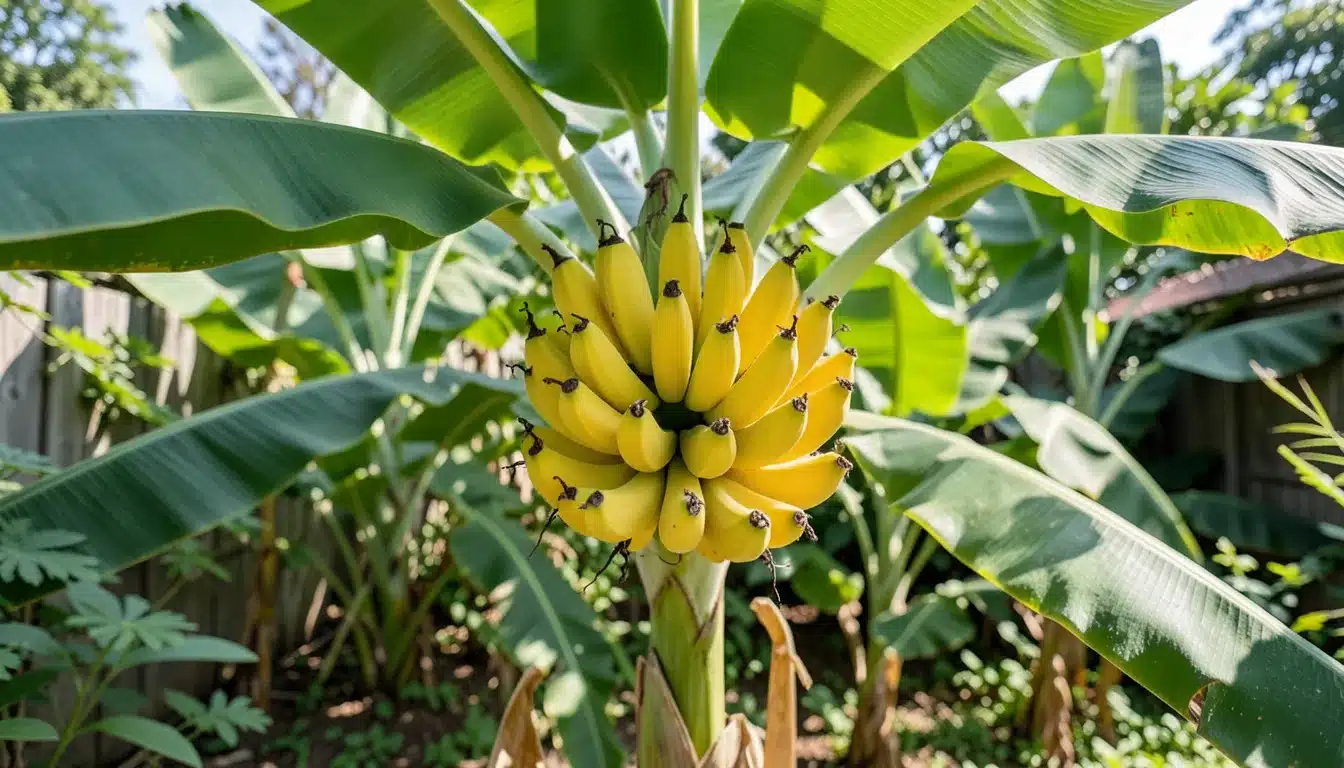
Growing bananas at home is easier than most people think. These tropical plants thrive in warm climates but can also grow in containers.
Success depends on providing enough warmth, sunlight, and consistent care. Bananas are fast growers that need rich soil and regular water. You can harvest fruit in 9 to 18 months under the right conditions.
This guide covers everything from choosing the right banana type to planting, daily care, and harvest timing. You will learn the five essential steps to grow healthy banana plants.
We will also cover common mistakes that slow growth and reduce fruit production. With proper planning and care, you can grow bananas in your backyard or even on your patio.
Banana Plant Quick Overview
Before you start planting, understanding the basic requirements helps you plan better. This quick reference table shows what banana plants need to grow successfully.
| Category | Details |
|---|---|
| Botanical Name | Musa spp. |
| Plant Type | Tropical herbaceous perennial |
| Mature Height | 6–20 feet (variety dependent) |
| Sunlight | Full sun (6–8+ hours daily) |
| Soil | Fertile, well-draining soil |
| Soil pH | Slightly acidic to neutral |
| Water Needs | Regular moisture, not waterlogged |
| Fertilizer | High nutrient demand |
| Propagation | Pups (suckers) |
| Time to Fruit | 9–18 months |
| Climate Preference | Warm, frost-free regions |
Types of Bananas You Can Grow at Home
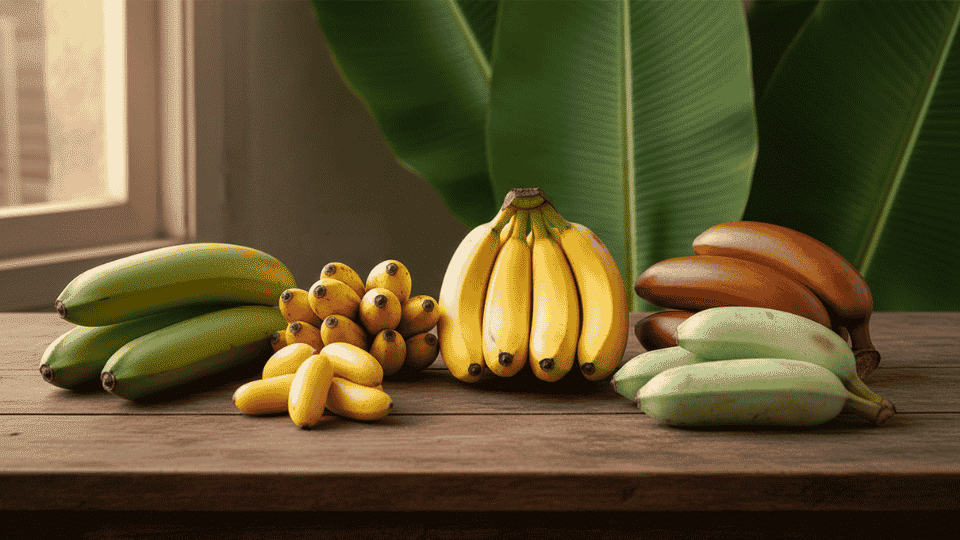
Not all banana plants are the same. Picking the right type helps you match your climate and available space. Here are the main banana types you can consider:
- Cavendish Bananas: This is the common yellow banana you see in stores, and it grows well in warm climates.
- Lady Finger Bananas: These are smaller and sweeter than regular bananas, perfect for home gardens with limited space.
- Plantain Bananas: Plantains are starchy and used for cooking; they thrive in hot, humid weather.
- Red Bananas: Red bananas have a reddish-purple peel and taste slightly sweeter than yellow ones.
- Dwarf Cavendish: This compact variety works great for small yards or even large pots on patios.
- Ice Cream Bananas (Blue Java): These bananas have a creamy texture and can tolerate cooler temperatures better than most types.
- Gros Michel: This older variety has a rich flavor but is harder to find and more prone to disease.
- Manzano Bananas: Also called apple bananas, these are short and chunky with a hint of apple flavor.
Your local climate matters most. Pick a type that matches your temperature range and frost patterns.
Pro Tip: If you live in a cooler area, choose cold-hardy types like Ice Cream bananas. For tropical zones, Cavendish or plantains work best.
Where Bananas Grow Best?
Bananas need warmth, sun, and protection from wind to thrive. They grow best when temperatures stay between 78°F and 95°F during the day.
These plants need 6 to 8 hours of direct sunlight daily to produce healthy leaves and fruit. Strong winds tear the large leaves easily, so plant behind fences or buildings for protection.
Soil must drain water quickly because bananas rot when roots sit in soggy ground. In warm climates, plant directly in the ground for maximum growth.
Cooler regions are better suited to container growing, so you can move plants indoors during winter. The right location makes the difference between struggling plants and ones that fruit reliably each year.
Step-by-Step Guide to Growing Bananas
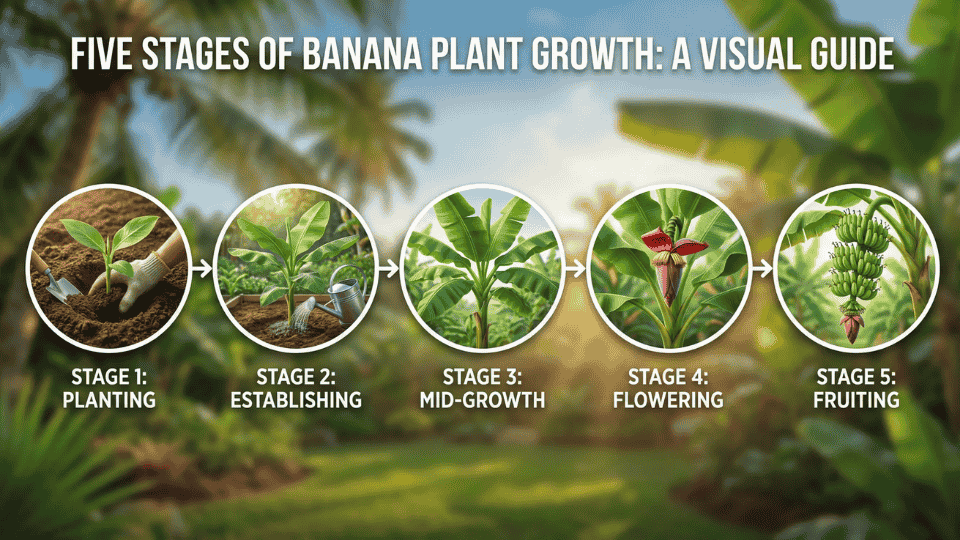
Following these five steps will help you grow bananas successfully from start to harvest. Each step builds on the previous one to create strong, productive plants.
Step 1: Select a Healthy Banana Plant
Start by choosing the right banana variety for your climate and space. Cold-hardy types work for cooler areas, while tropical varieties need constant warmth.
Look for plants with bright green leaves without brown spots or tears. The base should feel firm and show no soft or mushy areas that indicate rot or disease.
Step 2: Prepare the Soil and Location
Mix a 3- to 4-inch layer of compost into the top 12 inches of soil before planting. Test drainage by filling the planting hole with water and making sure it drains within an hour.
Choose a location that gets full morning sun and stays protected from strong afternoon winds. South-facing areas near walls work well because they retain extra warmth during the day and at night.
Step 3: Plant at the Correct Depth
Set the plant at the same depth it grew in its nursery pot to prevent rot or root exposure. Leave 8 to 10 feet between plants if growing multiple bananas to allow proper airflow.
Soak the soil deeply after planting to settle roots and remove air pockets, then keep the soil moist but not waterlogged for the first few weeks.
Step 4: Establish a Strong Watering and Feeding Routine
Water 2 to 3 times per week during warm weather, adjusting based on rainfall and soil moisture. Container plants dry faster and may need daily watering in summer heat.
Feed every 2 to 4 weeks from spring through early fall using balanced fertilizer, then stop in late fall when growth naturally slows. Spread 3 to 4 inches of organic mulch around the base to hold moisture and keep roots cooler during hot weather.
Step 5: Monitor Growth and Support Fruit Development
Cut off torn or brown leaves at the base using clean, sharp tools to improve appearance and reduce hiding spots for pests.
Keep only 1 to 3 strong pups per plant and remove extras because too many compete for food and water. Stake tall plants or those carrying fruit bunches to prevent toppling, using soft ties that will not cut into the plant.
Watch for the flower stalk to appear at the top, as fruit develops over the next 3 to 6 months after flowering begins.
How to Care for Banana Plants Year-Round
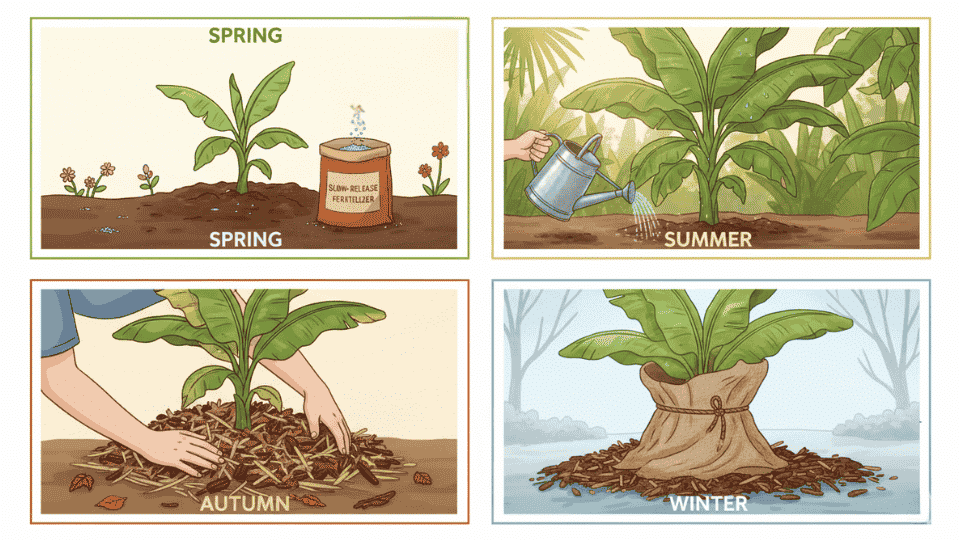
Regular maintenance keeps banana plants healthy and productive throughout their life. These tasks vary by season but remain fairly simple.
- Watering Adjustments by Season: Water 2 to 3 times weekly during summer, reduce to once weekly in fall, and water minimally during winter dormancy.
- Fertilizer Timing and Nutrient Balance: Feed every 2 to 4 weeks from spring through early fall with balanced NPK fertilizer, then stop in late fall.
- Pruning and Airflow Management: Remove only dead or damaged leaves at the base to improve air circulation and reduce pest problems.
- Mulching Benefits: Apply 3 to 4 inches of organic mulch around the base to retain moisture and regulate soil temperature year-round.
- Supporting Tall Plants: Stake plants over 10 feet tall, or those carrying fruit bunches, with soft ties to prevent toppling in the wind.
- Winter Protection Methods: Cut plants down to 6 inches after the first frost and cover with thick mulch, or move containers indoors.
- Managing Banana Pups for Continued Production: Keep 1 to 3 strong pups per plant and remove weak or crowded ones to maintain healthy fruit production.
Avoid These Common Banana Growing Mistakes
Learning what not to do saves time and prevents poor results. These mistakes are common but easy to avoid once you know about them.
| Mistake | Why It Matters | How to Avoid It |
|---|---|---|
| Planting in Poor-Draining Soil | Causes root rot and plant death | Test drainage before planting, add sand or compost to heavy clay |
| Underestimating Sunlight Needs | Results in slow growth and no fruit | Choose locations with 6-8 hours of direct sun daily |
| Overwatering or Waterlogging | Rots roots and attract fungal disease | Water only when the top 2 inches of soil feel dry |
| Ignoring Wind Exposure | Tears leave and reduce plant energy | Plant behind windbreaks like fences or buildings |
| Overcrowding Pups | Weakens all plants and reduces fruit size | Remove extra pups, keep only 1-3 strong ones |
| Expecting Fruit in Cold Climates Without Protection | Plants go dormant or die below 50°F | Use containers you can move or provide heavy winter mulch |
How Long Does a Banana Take to Grow?
Most banana plants take 9 to 12 months to flower after planting in warm climates. Fruit develops over the next 3 to 6 months once the flower appears.
Cold weather significantly slows this timeline, sometimes extending it to 18 months or more. The variety you plant also affects timing, with dwarf types often fruiting faster than tall varieties.
First-year plants usually focus on leaf growth rather than fruiting. Plants that receive consistent warmth, water, and fertilizer flower faster than those with interrupted care.
Some plants produce beautiful leaves but never fruit because temperatures stay too cool for flower development.
Wrapping It Up
Growing bananas at home rewards you with fresh tropical fruit and striking foliage. These plants need warmth, full sun, and well-draining soil to thrive.
Consistent watering and regular feeding during the growing season keep plants healthy and productive.
The steps in this guide cover everything from selecting the right variety to supporting fruit development. Remember to protect plants from wind and cold, as these cause the most damage.
Choose a banana type that matches your climate zone for the best chance of success. With proper care and realistic expectations, you can enjoy homegrown bananas within 9 to 18 months.
Start with one plant to learn its needs before expanding your banana collection.