
You know that sinking feeling when you spot mysterious tunnels crisscrossing your lawn, or find your favorite perennials suddenly wilting?
Voles might be the uninvited guests wreaking havoc in your yard.
These small rodents work quietly beneath the surface, gnawing through root systems and leaving behind a trail of damaged grass, chewed tree bark, and demolished garden beds.
If those surface runways and nibbled roots sound familiar, you’re in the right place.
We’ll walk through how to spot these persistent pests, get them out of your space, and create a yard that stays beautifully protected.
What are Voles and Why are They a Problem?
Voles look like plump mice with shorter tails and smaller ears, but don’t confuse them with moles (which have those spade-like paws) or typical house mice.
These grass-munching rodents live in shallow tunnels and surface runways, feasting on roots, bulbs, tree bark, and tender vegetation.
Signs you have voles:
- Visible surface runways through grass, about two inches wide
- Gnawed bark at the base of trees and shrubs
- Wilting plants with damaged root systems
- Small holes leading to underground tunnels
Here’s why they become such a headache: voles reproduce rapidly, with females having multiple litters each year. What starts as a couple of voles can quickly turn into a full-blown colony taking over your yard.
How to Identify Vole Damage?
Spotting vole damage early can save your yard before things get worse.
Look for these telltale signs that point directly to voles rather than other pests:
- Surface Runways: Narrow paths through grass where voles travel, creating visible tracks about 2 inches wide.
- Gnawed Bark: Irregular chew marks at the base of trees and shrubs, especially during winter months.
- Damaged Root Systems: Plants suddenly wilting or dying because voles have eaten through their underground roots and bulbs.
- Lawn Patterns: Winding trails and bare patches where grass has been clipped at ground level.
- Fresh Activity: Soft soil pushed up near tunnel openings and recently nibbled vegetation.
If you see a combination of these signs, particularly those distinctive surface runways paired with plant damage, you’re almost certainly dealing with voles.
Their feeding patterns leave a unique signature that sets them apart from other garden pests.
When Vole Control is Most Effective
Timing matters when you’re tackling a vole problem. Catching them during vulnerable periods makes your control efforts far more successful and keeps populations from spiraling out of control.
| Season | Why It Matters | What to Do |
|---|---|---|
| Fall | Voles seek winter shelter; populations peak after breeding | Set traps, clear ground cover, and add tree guards |
| Early Spring | Breeding season starts; stopping it prevents summer explosions | Resume trapping, check damage, reinforce barriers |
| Winter | Snow provides cover for hidden root and bark damage | Monitor after snowmelt, keep mulch from trees |
| Late Spring/Summer | Most active and visible, young voles spread to new spots | Trap actively, mow regularly, and maintain barriers |
Acting during the fall and early spring gives you the biggest advantage.
Fall control reduces overwintering populations, while early spring intervention stops breeding before it ramps up. Snow might seem like it would slow voles down, but it actually gives them cover to feast undetected.
Natural Ways to Get Rid of Voles
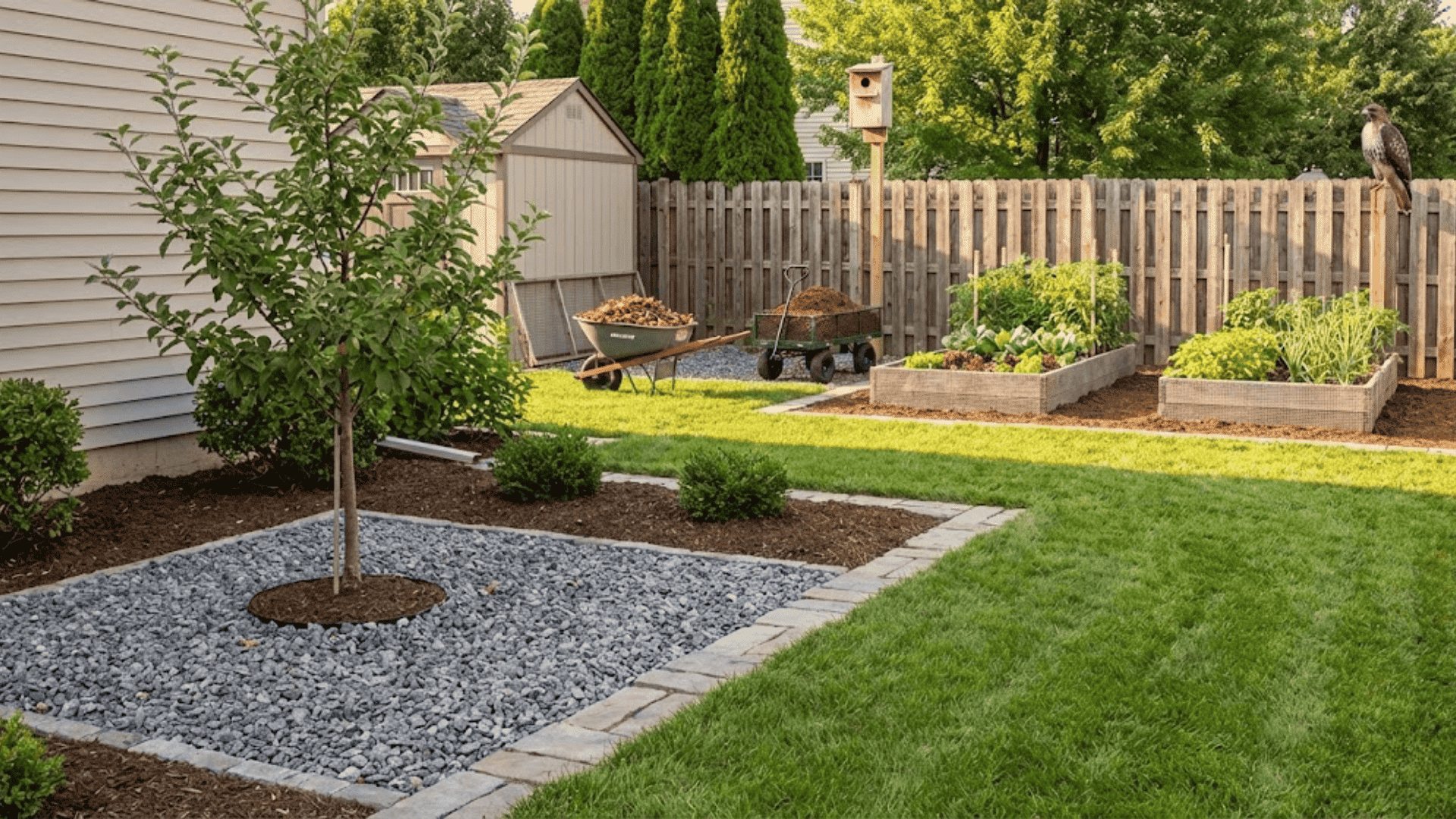
Sometimes the gentlest approach works best. These natural methods make your yard less appealing to voles while keeping your space safe for kids, pets, and beneficial wildlife.
Method 1: Habitat Modification and Yard Cleanup
Clear away the hiding spots voles love. Remove piles of leaves, brush, and wood that provide shelter. Keep your lawn mowed short and rake up fallen fruit or seeds that attract them.
Trim overgrown shrubs and eliminate dense ground cover near your home’s foundation. A tidy yard gives voles fewer places to hide and makes them vulnerable to predators, naturally discouraging them from settling in.
Method 2: Remove Ground Cover and Dense Vegetation
Voles thrive under dense vegetation for tunneling. Keep mulch 6 inches from trees and foundations. Swap ivy or pachysandra with open, low-maintenance groundcovers.
Thin out overgrown garden beds and create visible pathways between planting areas. This exposure makes voles feel unsafe and pushes them toward yards that offer better protection.
Method 3: Encourage Natural Predators
Invite vole hunters into your yard naturally. Barn owls, hawks, foxes, and snakes all feast on voles. Install owl boxes to attract these efficient nighttime hunters. Keep a few open perches for hawks to scan your property.
Avoid using rodenticides that could harm predators eating poisoned voles. A healthy predator population keeps vole numbers naturally balanced without any work on your part.
Method 4: Use Gravel or Sharp Mulch as Deterrents
Replace soft wood mulch with coarse gravel or crushed stone around vulnerable plants and tree bases. Sharp materials like oyster shells or hardware cloth buried just below the soil surface discourage digging.
Cedar or cypress mulch also works as a mild deterrent since voles dislike the strong scent. These physical barriers protect your plants while looking perfectly natural.
Physical Vole Control Methods
Trapping delivers immediate, measurable results when you need direct control over your vole problem. These hands-on techniques let you monitor progress in real time and adjust your strategy as populations decline.
Types of Vole Traps
Different trap styles suit different situations and personal preferences. Here’s what works best for catching voles efficiently.
| Trap Type | Best For | Key Points |
|---|---|---|
| Snap Traps (Victor Pro) |
Large infestations, active runways | Place across trails; inexpensive; check twice daily |
| Plunger Traps (Victor Mole Trap) |
Underground tunnels, burrows | Set at tunnel openings; cover with a container |
| Live Traps | Small numbers, humane capture | High stress for voles; relocates the problem elsewhere |
Trap Placement and Timeline
Position traps directly across matted surface runways where you see fresh droppings and chewed vegetation. Trim surrounding grass so voles can’t bypass the trigger.
Here’s what to expect:
- Week 1: Most voles caught during the initial trapping phase.
- Weeks 2-4: Moderate infestations are typically controlled within this timeframe.
- Weeks 6-8: Severe cases require extended trapping as the population thins.
- Combined Approach: Habitat modification + trapping cuts control time by 50%.
- Ongoing Monitoring: Keep traps set even after catches slow, since remaining voles continue breeding.
Vole Control Repellents and Deterrents
Chemical-free deterrents create an unwelcoming environment without harming voles. These solutions work best as preventive measures or alongside other control methods for lighter infestations.
1. Castor Oil-Based Repellents
Castor oil makes food taste terrible to voles while coating their tunnels with an unpleasant odor.
Products like Nature’s MACE Pure Castor Oil or I Must Garden Mole & Vole Repellent penetrate soil effectively, driving voles away by making their habitat uncomfortable.
Apply to moist soil for better absorption, focusing on active areas first. Results appear within a week as voles relocate. Reapply monthly or after heavy rain to maintain protection.
2. Granular vs. Liquid Repellents
Granular repellents spread easily with a lawn spreader and work well for large open areas, releasing slowly as moisture activates them.
Bonide MoleMax RTS comes ready to spray, covering up to 10,000 square feet per bottle. Liquid concentrates like Natural Elements Mole Repellent mix with water and penetrate deeper into soil, working faster than granules.
Liquids suit gardens and smaller targeted areas, while granules handle expansive lawns efficiently.
3. Homemade Vole Repellent Options
Making your own vole repellent saves money and uses ingredients you likely already have at home.
Here’s a simple recipe that works as a temporary deterrent:
- Step 1: Mix 1 cup pure castor oil with 2 tablespoons liquid dish soap in a container.
- Step 2: Add the mixture to 1 gallon of water and stir thoroughly until combined.
- Step 3: Soak problem areas completely, focusing on runways, tunnel entrances, and damaged spots.
- Step 4: Reapply every 2-3 weeks or immediately after heavy rain for continued effectiveness.
Note on Repellent Limitations: Repellents gradually discourage voles but can’t quickly eliminate established colonies like trapping. They work best preventively or combined, as voles often move to untreated yards instead of leaving.
Chemical and Professional Vole Control Options
When vole populations explode, or other methods aren’t cutting it, chemical controls and professional services step in. These options deliver powerful results but require careful handling and consideration of risks.
| Control Option | Best For | Key Considerations |
|---|---|---|
| Rodenticides (Tomcat Bromethalin) |
Severe infestations, large populations | Tamper-resistant stations required; secondary poisoning risk to pets and wildlife |
| Professional Pest Control | Failed DIY attempts, large properties | Higher cost; includes expertise, guarantees, and follow-up visits |
Safety & Legal Note: Check local regulations; some states ban certain products. Never place baits where pets or children access them. Prioritize non-chemical methods first.
Protecting Plants, Trees, and Lawns
Protect vulnerable trees by wrapping trunks with quarter-inch hardware cloth, buried 6 inches deep and extending 18 inches high to block gnawing voles.
Plant bulbs inside wire cages to shield roots from hungry rodents.
If your lawn already shows damage, rake away dead grass, loosen the compacted soil, and overseed bare patches with regular watering until growth recovers.
Keep mulch pulled back at least 6 inches from tree bases and maintain short grass to eliminate hiding spots.
Regular yard inspections catch new vole activity before populations rebuild and start the cycle again.
Long-Term Vole Prevention Tips
Keeping voles away permanently means making your yard consistently uninviting. These ongoing practices create an environment where voles struggle to thrive, and populations stay naturally low.
- Mow Regularly: Keep grass trimmed to 3 inches or shorter to eliminate protective cover voles need for safe runway travel.
- Clear Debris: Remove leaf piles, brush, fallen fruit, dense vegetation, and wood stacks that provide shelter and food sources.
- Pull Back Mulch: Maintain a 6-inch bare zone around tree trunks and building foundations where voles can’t hide or nest.
- Monitor Monthly: Walk your property checking for fresh surface runways, tunnel openings, and gnawed bark, especially in fall and early spring.
- Act Immediately: Set traps or apply repellents at the first sign of activity before small numbers become breeding colonies.
A well-maintained yard naturally discourages voles while supporting the predators that keep populations in check, giving you lasting protection without constant intervention.
The Bottom Line
Getting rid of voles takes patience and the right combination of strategies, but your efforts will pay off with a healthier, more beautiful yard.
Start by identifying active damage, then choose the methods that fit your situation best, whether that’s trapping, natural repellents, or habitat changes.
Remember that prevention is your strongest tool once you’ve reclaimed your space. Keep your lawn tidy, monitor regularly, and act quickly at the first signs of new activity.
Have questions about tackling your vole problem? Drop a comment below and let’s troubleshoot together!