Pull it once, pull it twice, and somehow it shows up again like it never left.
Nutsedge weed has a reputation for a reason, and if it has quietly taken over a corner of your garden, you already know that feeling.
What most people overlook is that nutsedge is not even a grass, which is exactly why treating it like one never works.
Once you understand what you are actually dealing with, getting rid of it for good stops feeling impossible and starts feeling very, very doable.
What is Nutsedge Weed?
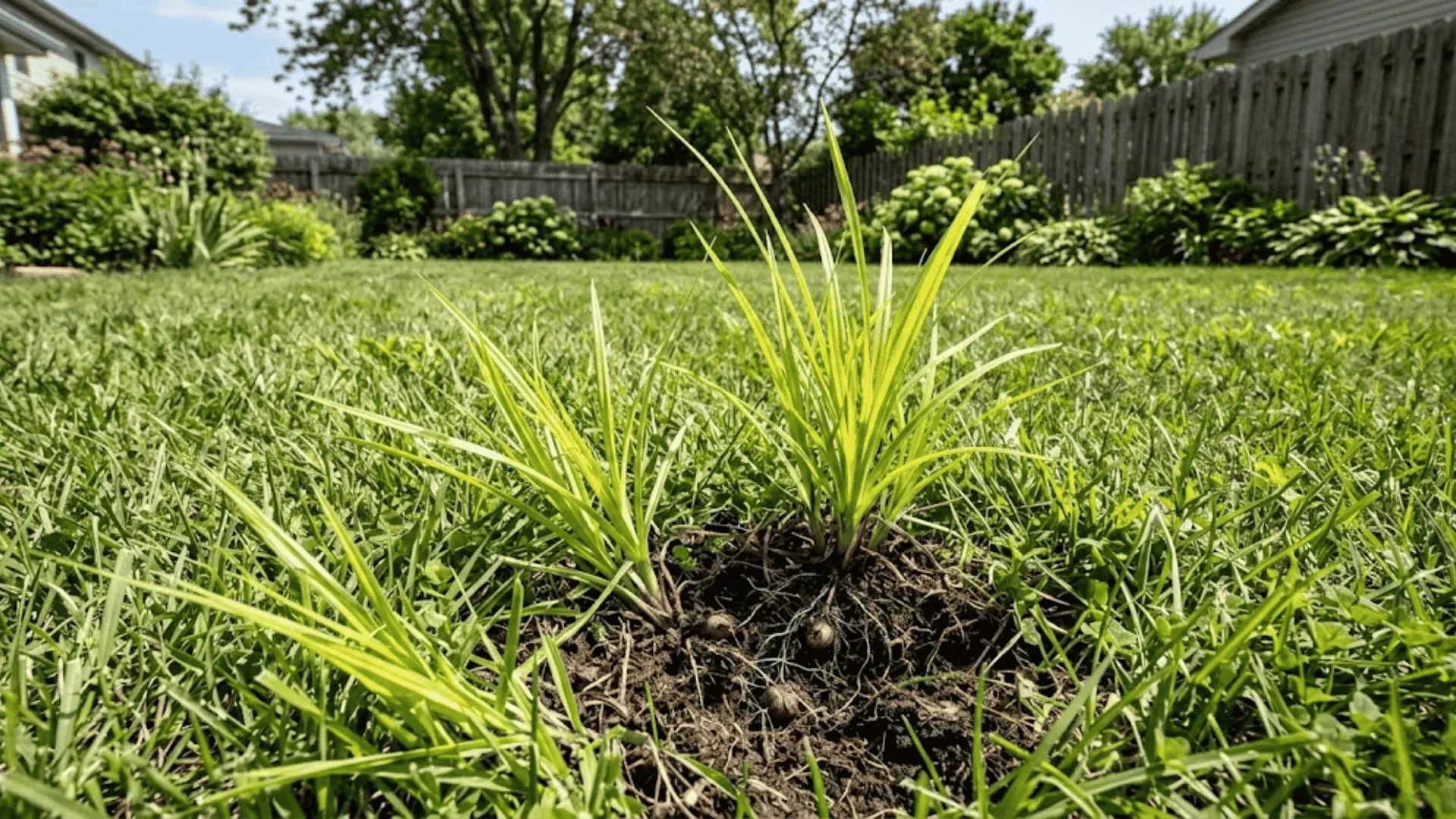
Nutsedge weed is a perennial sedge plant, not a grass, even though it blends in so convincingly that most people do not notice it until it has already spread.
It belongs to the genus Cyperus, a classification that sets it entirely apart from typical lawn weeds.
What makes it so persistent is what is happening underground, where a network of tubers and rhizomes keeps regenerating the plant even after you pull the top growth out.
It grows fast, thrives in moist soil, and laughs in the face of casual weeding.
Types of Nutsedge Found in Lawns
Nutsedge does not come in just one form, and knowing which type has taken root in your lawn makes a real difference in how you approach it.
The two most common ones you will come across are yellow nutsedge and purple nutsedge, and while they look similar at first glance, they behave quite differently.
Yellow Nutsedge
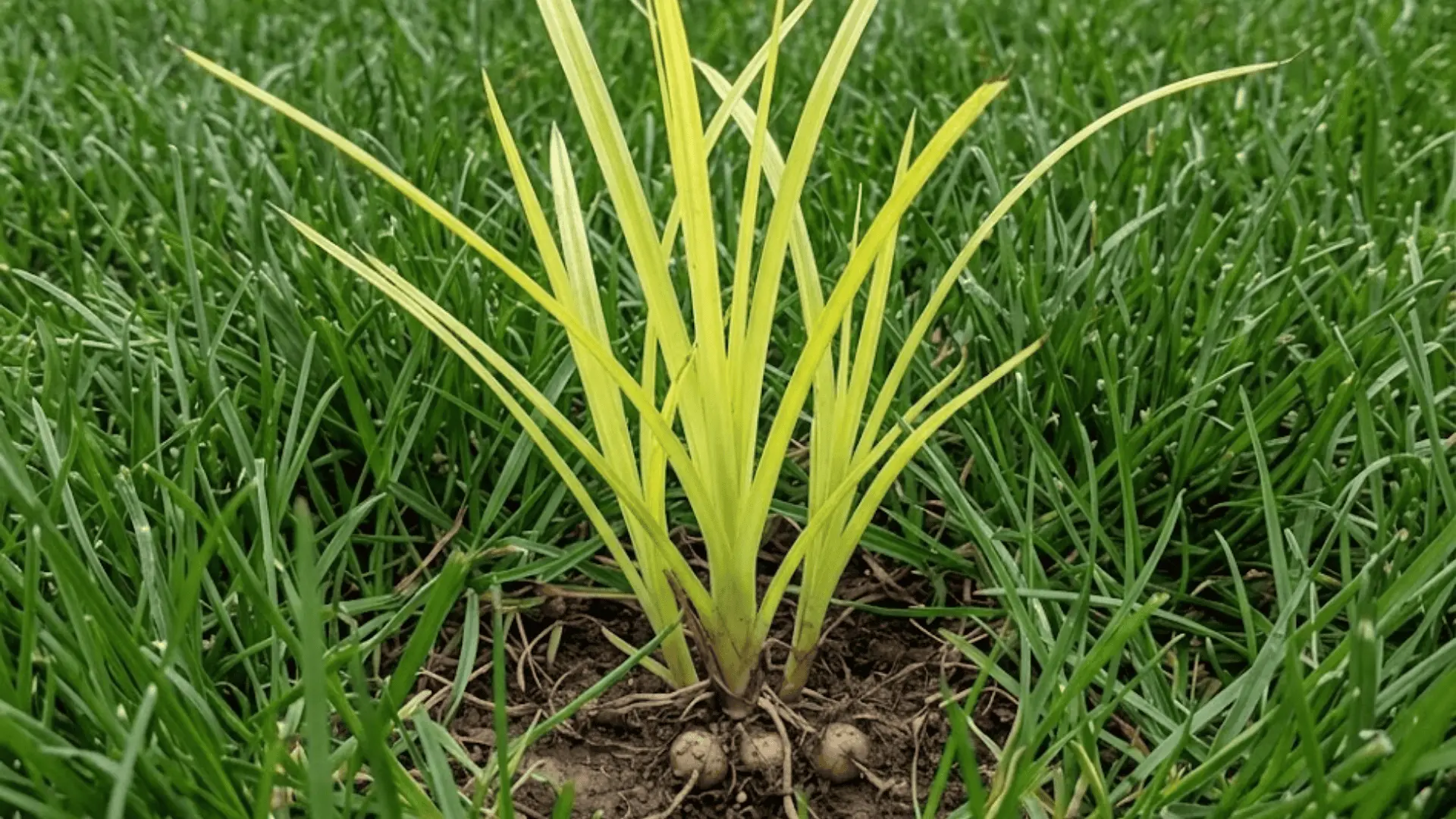
Yellow nutsedge tends to show up in a lighter, more yellow-green shade, which is actually one of the easier ways to spot it. It prefers cooler, wetter conditions and is the more common of the two across northern lawns.
What makes it particularly interesting is that its tubers, known as chufa, are technically edible, though finding them in your garden is still far from a welcome surprise.
It spreads steadily but is generally considered the more manageable of the two.
Purple Nutsedge
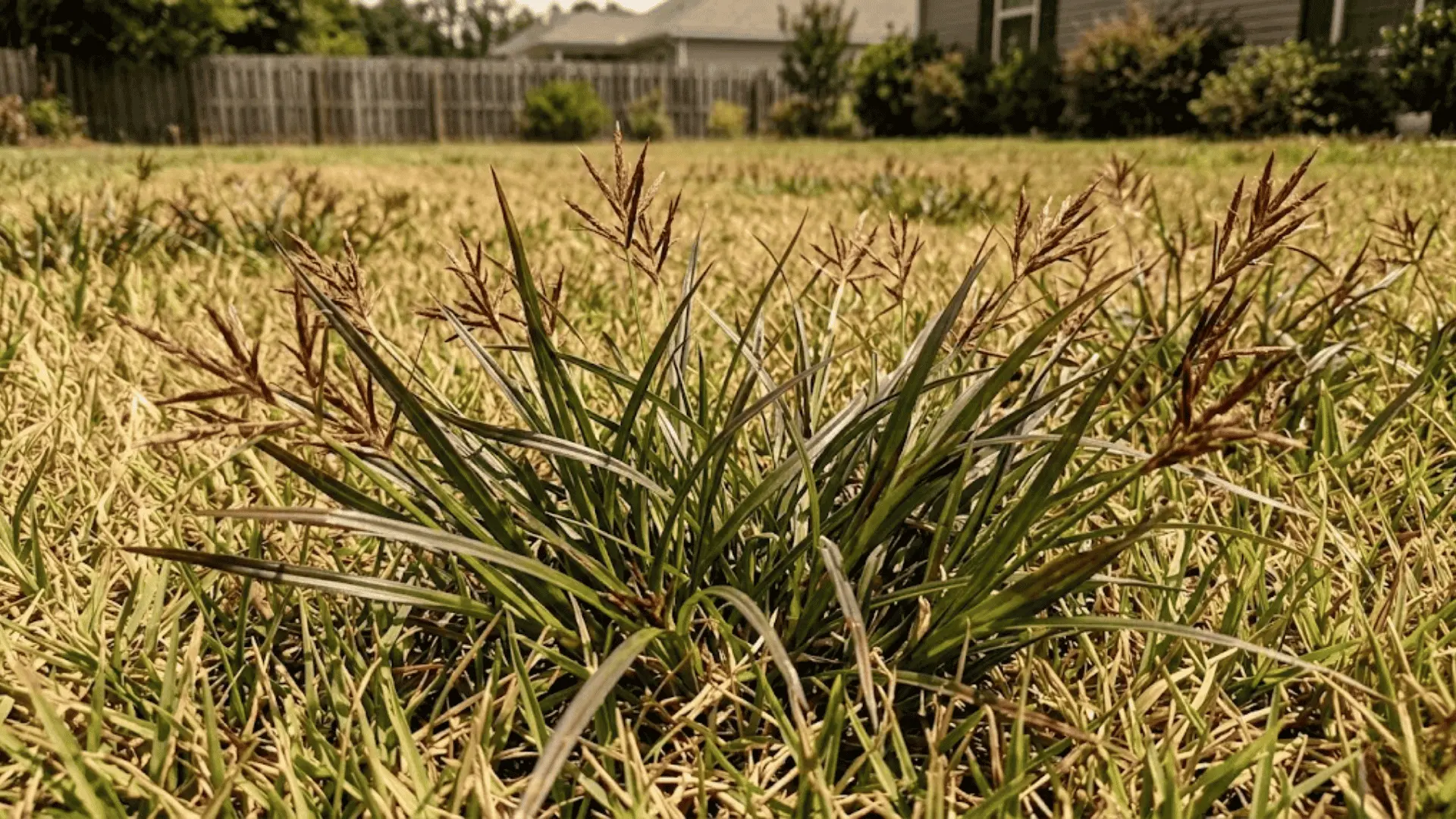
If yellow nutsedge is the difficult one, purple nutsedge is the relentless one. Its leaves run darker, and its spread is considerably more aggressive, forming dense colonies faster than most gardeners expect.
It has been called one of the world’s worst weeds, and not without reason, since it is found across more countries and infests more crops than almost any other weed species.
Warmer, more humid climates are where it truly thrives.
Yellow vs. Purple Nutsedge: A Quick Comparison
| Feature | Yellow Nutsedge | Purple Nutsedge |
|---|---|---|
| Leaf Color | Light yellow-green | Dark green |
| Growth Habit | Moderate spread | Aggressive spread |
| Climate Preference | Cool, moist climates | Warm, humid climates |
| Control Difficulty | Moderate | High |
How to Identify Nutsedge Weed in Your Lawn?
Catching nutsedge early starts with knowing exactly what to look for, and fortunately, it gives itself away in a few pretty telling ways.
- Triangular stems are the most reliable giveaway. Roll the stem between your fingers, and if it has distinct edges rather than rolling smoothly, you are likely dealing with nutsedge.
- Glossy, light green blades tend to stand out against your regular turfgrass, especially after mowing.
- Faster vertical growth means it pokes above your lawn within days of being cut.
- A clumping growth pattern makes it visible as uneven, raised patches across your lawn.
Once you have checked off more than one of these signs, there is a good chance nutsedge has made itself at home in your lawn, and that is your cue to start taking action.
Why Nutsedge Keeps Coming Back?
If you feel like you have been fighting nutsedge forever, there is a reason for that, and it has everything to do with what is happening beneath the surface.
The real culprit is underground tubers called nutlets, which sit dormant in the soil long after you have removed the visible plant and simply sprout again when conditions are right.
Nutsedge also loves wet or compacted soil, which gives it a constant edge over your turfgrass.
What makes it even trickier is that mowing can scatter seeds further across your lawn, and pulling the plant without treating it can actually stimulate regrowth from the tubers left behind.
How to Get Rid of Nutsedge Weed Naturally?
Getting rid of nutsedge naturally takes a little patience, but it is absolutely doable when you target the problem at the root, quite literally.
These methods work best when combined and applied consistently over time.
1. Improve Drainage
Since nutsedge thrives in wet, waterlogged conditions, cutting off its preferred environment is one of the smartest first moves you can make.
Aerating your soil breaks up compaction and improves water flow, while fixing low spots in your lawn eliminates the pooling that nutsedge gravitates toward. Less standing water deters this weed.
2. Hand Removal
Hand removal works, but only when done correctly. Pulling from the surface without getting the full root system is actually what causes nutsedge to grow back stronger.
Dig several inches deep to remove the entire root system, including the nutlets, ideally when the soil is moist and loose. Dispose of everything you pull out rather than leaving it on the soil surface.
3. Smothering Method
Cutting off sunlight is a surprisingly effective way to weaken nutsedge over time.
| Method | How It Works | Effectiveness |
|---|---|---|
| Landscape fabric | Blocks sunlight from reaching the plant | Moderate, best for garden beds |
| Thick mulch layers | Creates a barrier against new shoots | Moderate, improves over time |
| Fabric + mulch combined | Cuts off light more completely | High, best long-term results |
4. Boiling Water or Vinegar
Boiling water and vinegar are popular natural remedies, but it is worth understanding what they can and cannot do. Both deliver a surface-level kill, taking out the visible plant quickly and without chemicals.
The limitation is that neither penetrates deep enough to destroy the tubers, which means regrowth is still likely. These methods work best for very small, isolated patches rather than a widespread nutsedge problem.
Best Chemical Treatments for Nutsedge
When natural methods are not enough, the right herbicide can make a real difference, and with nutsedge specifically, what you use matters just as much as when and how you use it.
Selective Herbicides
Not every herbicide will touch nutsedge, which is exactly why reaching for a general weed killer tends to be a frustrating waste of time. You need a product specifically labeled for sedges, one that is safe for your existing turf.
Two well-regarded options worth knowing are Sedgehammer (halosulfuron-methyl) and Dismiss (sulfentrazone), both selective and safe for most common turf types.
Active Ingredients to Look For
The two most effective active ingredients for nutsedge control are Halosulfuron and Sulfentrazone, and here is how they compare:
| Active Ingredient | How It Works | Best For |
|---|---|---|
| Halosulfuron | Moves systemically through the plant down to the tubers | Both yellow and purple nutsedge |
| Sulfentrazone | Fast-acting, absorbed through roots and foliage | Yellow nutsedge, with suppression of purple |
Application Tips
Even the best herbicide will underperform if applied at the wrong time or in the wrong way.
- Apply when nutsedge is actively growing, ideally in late spring to early summer when plants are 4 to 6 inches tall.
- Avoid mowing for at least two days before and after treatment so the product has full leaf surface to absorb into.
- A second application, six to eight weeks later, significantly improves long-term control.
- Always follow label instructions, as exceeding recommended rates will not speed up results and can stress your turf.
When is the Best Time to Treat Nutsedge?
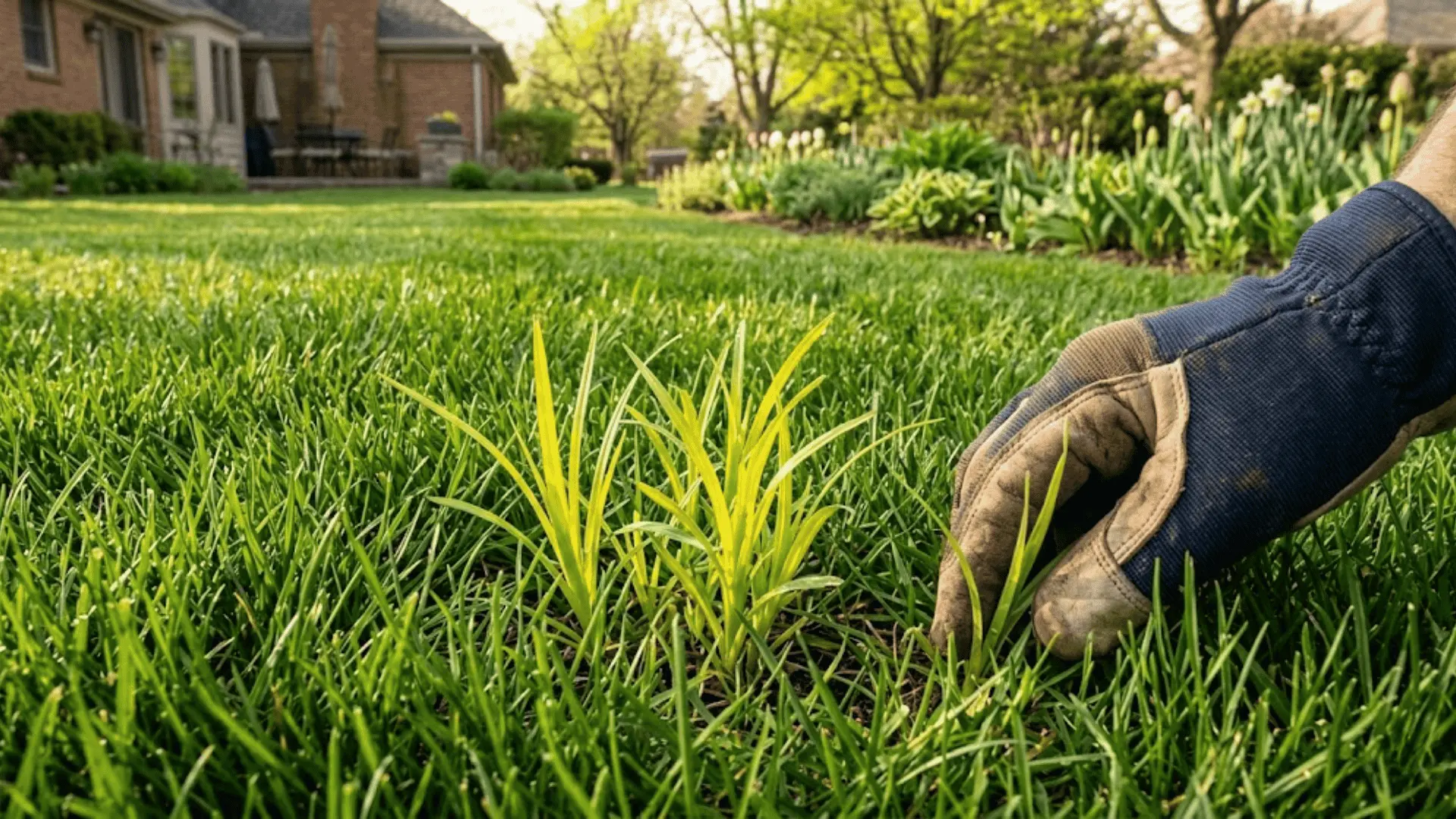
Timing your treatment correctly is what separates a frustrating cycle of regrowth from actually getting ahead of the problem.
Late spring to early summer is the window you want to work with, when nutsedge is young, actively pushing new growth, and most vulnerable to both physical removal and herbicide absorption.
At this stage, the plant has not yet had the chance to establish a deep, dense tuber network, which makes your efforts significantly more effective.
Treating nutsedge during dormant periods, on the other hand, is largely wasted effort since the plant simply will not respond.
How to Prevent Nutsedge from Returning?
Getting rid of nutsedge is one thing; keeping it gone is another. A few consistent lawn care habits go a long way in making sure it does not find its way back.
- Avoid overwatering since nutsedge thrives in consistently wet soil conditions.
- Improve soil drainage by addressing low spots and compacted areas that hold moisture.
- Maintain thick, healthy turfgrass so there is simply no room for nutsedge to establish.
- Aerate regularly to break up compaction and discourage the soggy conditions that nutsedge loves.
- Fertilize in a balanced way to keep your lawn strong without creating conditions that favor weed growth.
A healthy, well-maintained lawn is genuinely the best long-term defense you have, and most of these habits are things you would want to be doing anyway.
Nutsedge vs. Crabgrass: What’s the Difference?
Nutsedge and crabgrass get mixed up more often than you would think, and treating one like the other is an easy way to waste both time and product.
Here is how they actually compare:
| Feature | Nutsedge | Crabgrass |
|---|---|---|
| Stem Shape | Triangular, with distinct edges | Round, smooth stem |
| Root System | Deep tubers and rhizomes underground | Shallow, fibrous roots |
| Growth Speed | Grows faster than turfgrass, especially vertically | Spreads outward low to the ground |
| Control Method | Sedge-specific herbicides or deep hand removal | Pre-emergent herbicides in early spring |
Does Pulling Nutsedge Make It Worse?
Pulling nutsedge without a plan can actually work against you.
When you yank the plant from the surface without getting the full root system, the underground tubers are left completely intact, and the disturbance can signal them to send up even more shoots than before.
The right way to do it is to dig several inches deep, loosening the surrounding soil first so you can remove the tubers along with the plant. Moist soil makes this considerably easier.
Whatever you pull out, make sure it leaves your garden entirely rather than sitting on the soil surface nearby.
Final Thoughts
Nutsedge weed is persistent, but it is far from invincible.
With the right identification, the correct timing, and a treatment approach that actually targets the root of the problem, quite literally, you can take your lawn back and keep it that way.
The key is staying consistent and not giving it the conditions it loves to settle into.
Got nutsedge in your lawn? Drop a comment below and tell us what has worked for you, or ask anything you are still figuring out. Your experience might be exactly what someone else needs to read today.