There’s something undeniably luxurious about sinking into a suede couch: that buttery-soft texture, the velvety matte finish, the way it makes your living room feel like a cozy retreat.
Suede demands a gentler touch than regular upholstery, though. One wrong move with harsh cleaners or too much water, and you could end up with stiffened fibers or permanent watermarks.
Most people make the mistake of treating it like any other fabric, which is exactly how damage happens.
We’re covering everything you need to know, from simple daily care to handling those inevitable spills, so your favorite piece stays as dreamy and inviting as the day you brought it home.
What is Suede and Why is it Tricky to Clean?
Suede is essentially leather with a napped finish, created by sanding the underside of animal hide to achieve that signature soft, fuzzy texture.
Unlike smooth leather or woven fabrics, suede has exposed fibers that easily absorb liquids, making it prone to water stains and discoloration. Friction can flatten or roughen these fibers, leaving visible marks or shiny patches.
Regular household cleaners often contain too much moisture or harsh chemicals that stiffen the material permanently.
While routine maintenance is manageable at home, deeply embedded stains, large spills, or overall dinginess usually call for professional intervention.
Check the Care Label Before Cleaning
Before you grab any cleaning supplies, take a moment to locate your couch’s care label. It’s usually tucked under the cushions or along the bottom edge, and it contains crucial information that could save you from costly mistakes.
- The “S” code means solvent-based cleaners only. Water will leave permanent stains on these suede types, so you’ll need specialized dry-cleaning solutions or professional help.
- The “W” code indicates water-based cleaning is safe. These are rare in genuine suede but common in microfiber suede alternatives, allowing you to use mild soap-and-water mixtures.
- The “SW” code gives you flexibility. Both water-based and solvent-based cleaners work, though solvent options are typically gentler on suede.
- The “X” code means vacuum only. Any liquid cleaning, whether water or solvent, will damage the fabric. Stick to dry methods like brushing and vacuuming.
- Missing labels require extra caution. When in doubt, test any cleaning method on a hidden spot first or consult the manufacturer directly.
Your couch’s care label isn’t a suggestion; it’s a safeguard. Using the wrong cleaning method, even with the best intentions, can leave you with permanent staining, stiffened fabric, or texture changes that can’t be undone.
Tools and Supplies for Cleaning a Suede Couch
Most of what you need is already sitting in your home, and the specialized items are inexpensive investments that’ll serve you for years.
| Tool/Supply | What It Does | Why You Need It |
|---|---|---|
| Suede brush | Lifts and restores flattened nap, removes surface dirt | The soft bristles work with the grain of the suede without damaging delicate fibers |
| Suede eraser | Tackles stubborn marks and scuffs | Works like a pencil eraser to gently lift stains without moisture |
| Microfiber cloths | Blots, spills, and applies cleaning solutions | Won’t leave lint behind or scratch the surface like rougher fabrics |
| White vinegar | Breaks down water stains and odors | Acidic enough to clean but gentle enough not to discolor suede |
| Rubbing alcohol | Dissolves oil-based stains and ink | Evaporates quickly, minimizing moisture damage |
| Baking soda | Absorbs grease and eliminates odors | Pulls oil out of fibers without leaving residue |
| Cornstarch | Lifts fresh oil and grease stains | Acts as a natural absorbent for wet spills |
What to Avoid: Never use regular fabric brushes with stiff bristles, colored cloths that might bleed dye, steam cleaners, harsh chemical cleaners, or excessive water. These can permanently flatten the nap, cause discoloration, or stiffen the suede beyond repair.
How to Clean a Suede Couch: Step-by-Step
Cleaning suede might seem intimidating, but breaking it down into manageable steps makes the process surprisingly straightforward.
Once you understand the rhythm of brush, clean, rinse, and restore, you’ll find it becomes second nature.
Step 1: Remove Surface Debris and Dirt
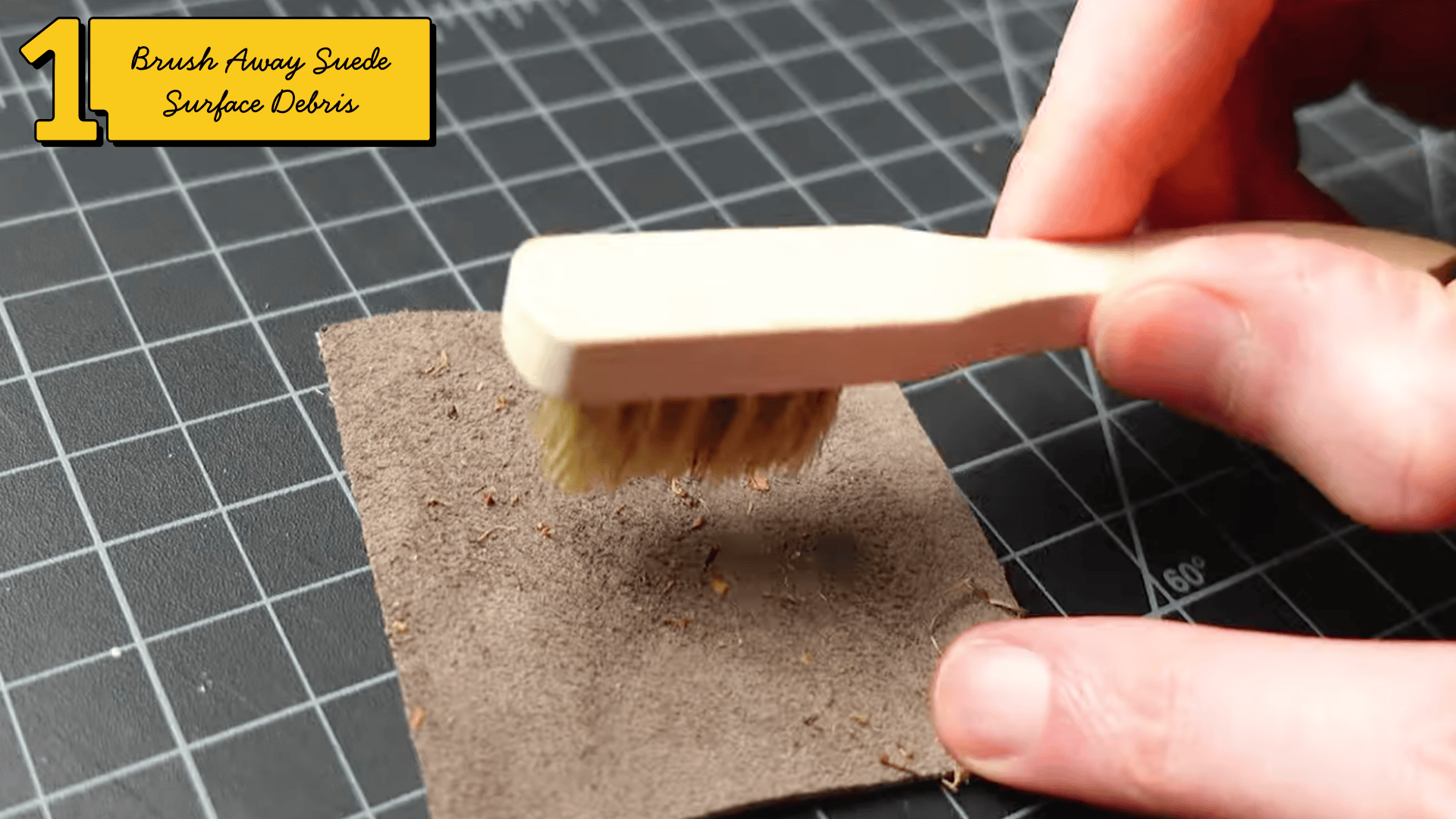
Start by using a soft horsehair brush to gently sweep away any loose dirt, crumbs, or debris sitting on top of the suede. Brush in the direction of the nap with light strokes to avoid damaging the delicate fibers.
For stubborn surface stains or gunk, use a rubber crepe brush or suede eraser with gentle circular motions to lift the marks without pressing too hard into the fabric.
Step 2: Apply Suede Cleaner Solution
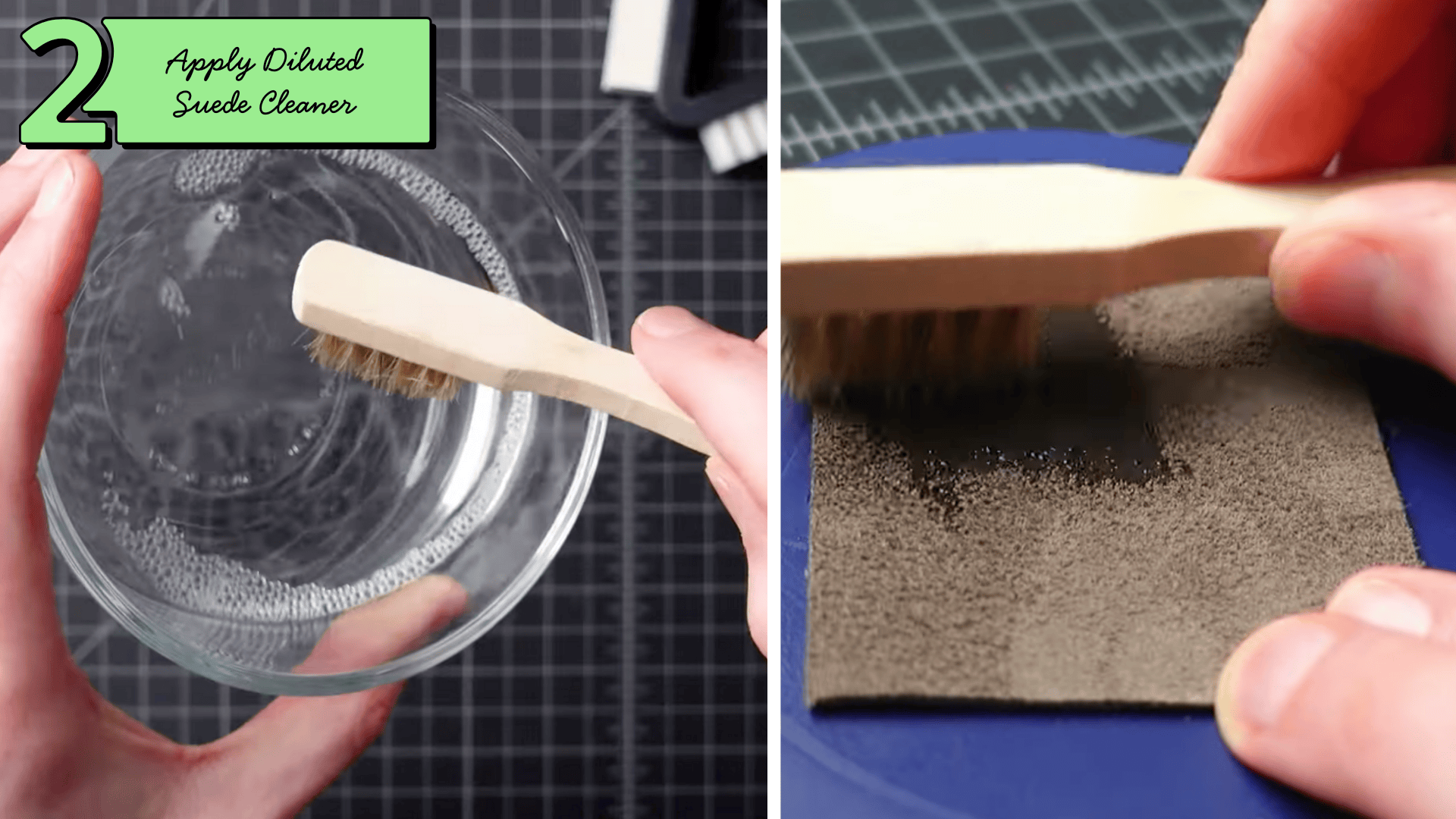
Mix your suede cleaner with distilled water in a 1:3 ratio (one part cleaner to three parts water). Dip a clean horsehair brush into the solution and gently dab or brush it onto the suede, working in small sections.
Avoid oversaturating the fabric, but don’t be afraid of some moisture. Clean the entire visible surface to prevent uneven coloring or water marks from appearing.
Step 3: Rinse and Remove Cleaner Residue
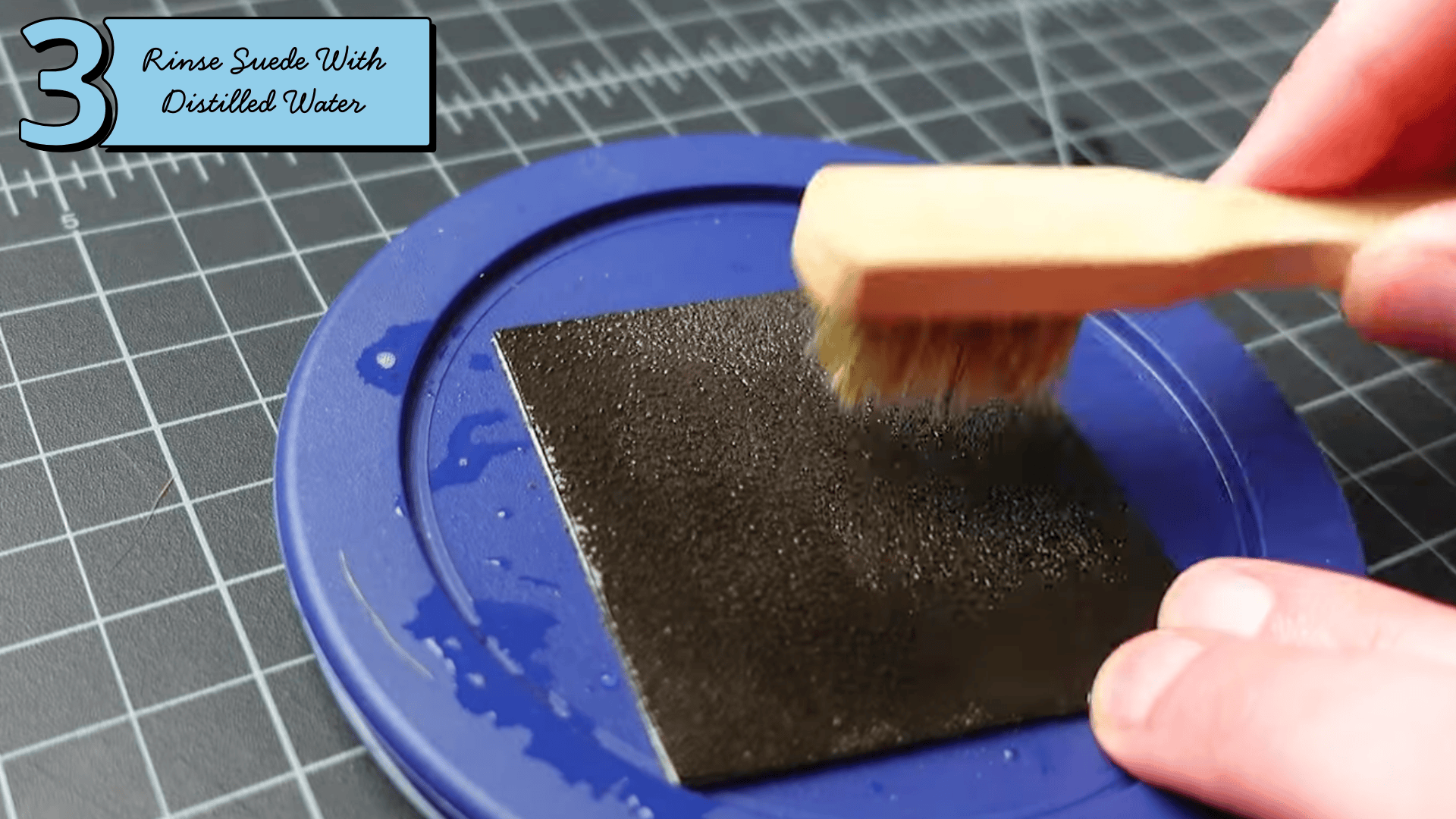
Rinse your brush thoroughly with clean distilled water, then gently work over the suede again to remove any remaining cleaner. Continue this rinsing process until no suds appear and the cleaning solution has been lifted out.
The suede will be damp at this point, which is completely normal and won’t cause harm if you’ve followed proper cleaning methods.
Step 4: Dry and Restore the Nap
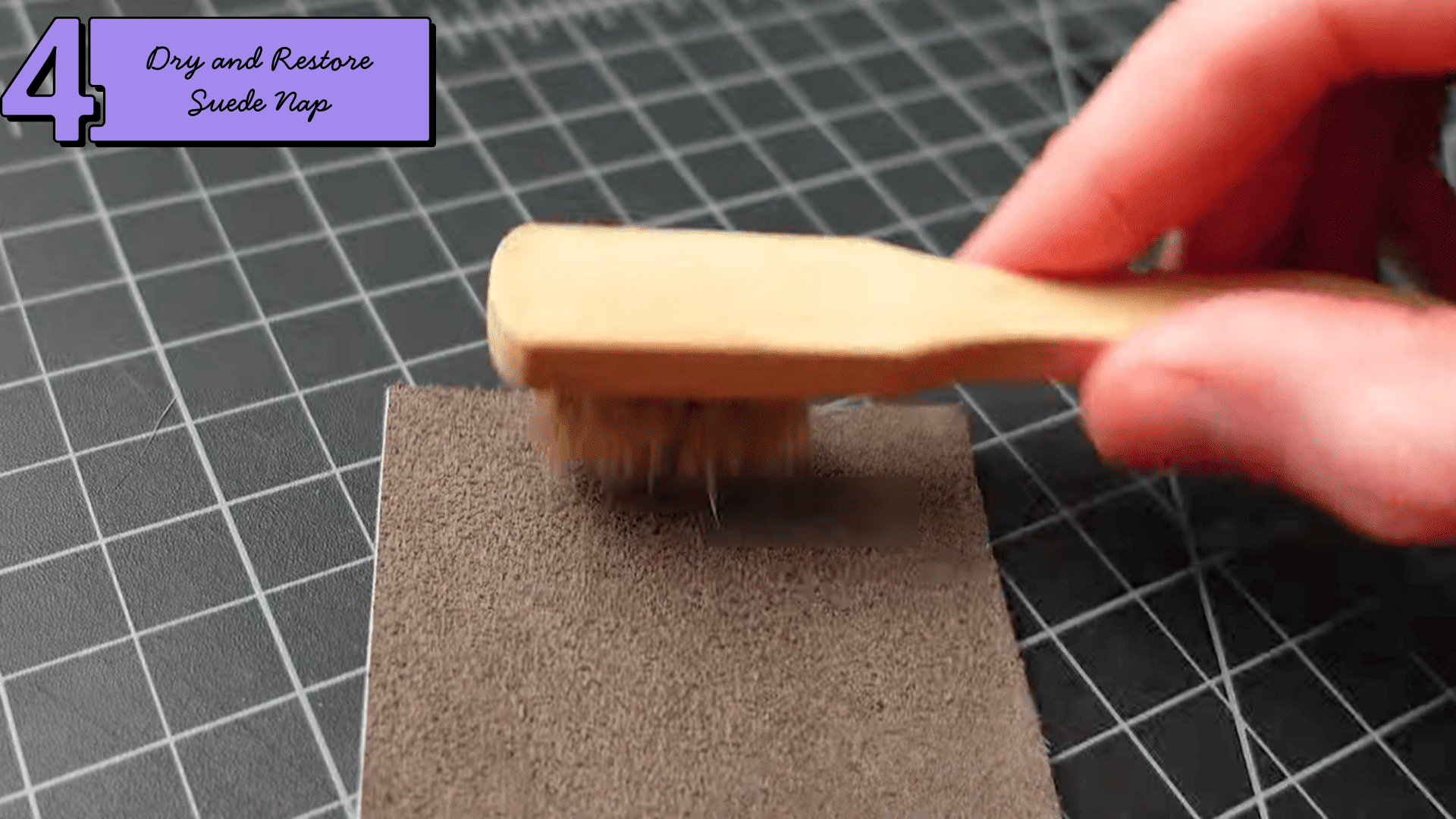
Allow the suede to air dry completely for at least 12 to 24 hours in a well-ventilated area away from direct heat or sunlight. Once fully dry, use a horsehair brush to gently raise the nap by brushing in the direction of the fibers.
This restores that signature soft, fuzzy texture and prepares the suede to receive any protective treatments you want to apply afterward.
For a more detailed walkthrough of the process, check out the complete video tutorial below by the International Leather Club.
How to Remove Common Stains From a Suede Couch?
Different stains require different approaches, but the key is always acting quickly and using gentle techniques. Knowing which method works for each type of stain saves you from making the problem worse.
1. Water Stains
Water stains on suede create those dreaded dark rings that seem impossible to fix.
The trick is counterintuitive: you actually need to dampen the entire section evenly to reset the fibers and prevent those telltale watermark circles from forming.
- Step 1: Lightly dampen the entire stained section with distilled water using a spray bottle or a damp cloth.
- Step 2: Blot gently with a clean microfiber cloth to absorb excess moisture without rubbing.
- Step 3: Let air dry completely, then brush with a suede brush to restore the nap.
2. Oil and Grease Stains
Oil and grease sink deep into suede fibers fast, so immediate action is critical.
Absorbent powders work wonders here by pulling the oil out before it sets permanently into the material.
- Step 1: Sprinkle cornstarch or baking soda generously over the stain and let it sit for 4-6 hours to absorb the oil.
- Step 2: Vacuum or brush away the powder gently with a suede brush.
- Step 3: If the stain persists, dab with a cloth dampened in rubbing alcohol, then let it dry and brush.
3. Food and Drink Spills
Food and drink spills are inevitable on any couch, but catching them while they’re still wet gives you the best chance at complete removal.
Never rub these stains, as that just pushes them deeper into the fibers.
- Step 1: Blot immediately with a clean, dry microfiber cloth to absorb as much liquid as possible.
- Step 2: For sticky residue, let it dry completely, then gently scrape off with a suede eraser or dull knife.
- Step 3: Treat any remaining discoloration with white vinegar diluted 1:1 with water, dab lightly, then air dry and brush.
4. Ink and Scuff Marks
Ink and scuff marks look scary, but often respond well to rubbing alcohol.
The alcohol breaks down the ink without saturating the suede the way water would, giving you a fighting chance at removal.
- Step 1: Dip a cotton swab in rubbing alcohol and gently dab the ink or scuff mark without spreading it.
- Step 2: Blot with a clean microfiber cloth and repeat until the mark lifts.
- Step 3: Let the area air dry completely, then brush to blend the treated spot with the surrounding suede.
What Not to Do When Cleaning a Suede Couch
Knowing what to avoid is just as important as knowing the right techniques, because some mistakes simply can’t be undone.
- Don’t Use Regular Water or Dish Soap Directly on Suede: Tap water leaves mineral deposits, and soap residue attracts more dirt, creating a worse mess than you started with.
- Don’t Scrub or Rub Stains Aggressively: Harsh scrubbing flattens the nap, creates shiny patches, and pushes stains deeper into the fibers instead of lifting them out.
- Don’t Use Heat Sources Like Hair Dryers or Radiators to Speed Drying: Heat stiffens suede, causes shrinkage, and can permanently alter the texture and color of the fabric.
- Don’t Skip the Spot Test on a Hidden Area First: Every suede composition reacts differently to cleaners, and testing saves you from finding out about incompatibility on the most visible part of your couch.
Avoiding these common pitfalls protects your investment and keeps your suede looking soft and beautiful. When in doubt, err on the side of caution and consider calling a professional for tricky situations.
How to Restore the Texture of Suede After Cleaning?
Once your suede is completely dry, restoring that signature soft texture is crucial.
Use a horsehair brush in long, gentle strokes following the direction of the nap to lift the fibers back up.
For stubborn flattened areas, try brushing in multiple directions until you find the grain, then work with it. A suede eraser can also help revive compressed spots without damaging the material.
If the nap remains flat, discolored, or stiff after your efforts, or if you notice any texture changes that won’t reverse, it’s time to call a professional upholstery cleaner who specializes in suede restoration.
Preventing Future Stains and Damage
The best way to keep your suede couch looking pristine is to stop problems before they start.
A few simple preventive measures can extend the life of your suede by years and save you countless hours of stain removal.
- Vacuum your suede couch weekly with an upholstery attachment to remove dust, crumbs, and debris before they work their way into the fibers.
- Apply a suede protector spray every 3-6 months to create an invisible barrier that repels water, oil, and stains without changing the texture.
- Position your couch away from direct sunlight and heat sources to prevent fading, drying out, and uneven wear on exposed sections.
- Establish house rules like no food or drinks on the suede and use throws or blankets on high-traffic seating areas to minimize contact and oils.
Prevention always beats restoration, and your future self will thank you for the minimal effort it takes now.
DIY vs. Professional Suede Couch Cleaning
Deciding whether to clean your suede couch yourself or call in a professional depends on the severity of the issue and your comfort level.
Here’s a quick breakdown to help you make the right choice.
| Aspect | DIY Cleaning | Professional Cleaning |
|---|---|---|
| Best For | Light dirt, fresh spills, routine maintenance | Deep stains, color fading, stiffened suede, overall dinginess |
| When to Choose | You know the care code, have proper tools, stain is manageable | Stain persists after attempts, unsure of fabric type, expensive couch |
| Cost Range | $20-50 for tools and supplies | $100-300+ depending on size |
| Risk Level | Low with proper testing; medium if rushed | Very low with experienced professionals |
If you’ve tried DIY methods twice without success or the stain is spreading, stop and call a professional. Sometimes spending money upfront saves you from replacing an entire couch later.
Community Tips and Real-World Advice
Real homeowners on forums like r/CleaningTips consistently recommend acting fast on spills and keeping a suede brush handy at all times.
Many swear by white vinegar for stubborn water rings and cornstarch for grease, noting these pantry staples outperform expensive commercial products.
The most common mistake shared? Using too much water or regular fabric cleaners, which left couches stiff and discolored. One lesson appears repeatedly: always brush in the same direction and never against the grain.
Homeowners also stress that patience pays off, as rushing the drying process with heat sources ruins the suede texture permanently.
Wrapping Up
Learning how to clean suede couch upholstery doesn’t have to feel overwhelming once you understand the basics.
With the right tools, gentle techniques, and a little patience, you can tackle most stains and keep that luxurious texture intact for years.
Remember to always test first, work with the nap, and never rush the drying process. Your suede couch is an investment worth protecting, and now you have the knowledge to do exactly that.
Have your own suede cleaning tips or questions? Drop a comment below and share your experience with fellow suede owners!