Container Plants That Actually Love Brutal Heat (Yes, Even That Angry South Facing Porch)
If you’ve done the annual “buy pretty flowers in May, hold a tiny funeral in July” routine… hi, welcome. You’re among friends.
South and west facing porches are basically convection ovens: direct sun + reflected heat bouncing off concrete, brick, siding, railings… it’s like your pots are sitting on a hot skillet. A lot of typical garden center cuties (looking at you, tender little annuals) simply cannot hang.
But here’s the plot twist: some plants live for this. Like, “95 degrees and a glare? Thank you, more please” energy. If you pick the right plants and stop accidentally slow roasting their roots, you can have containers that look good all summer long without watering them like they’re on life support.
Let’s do this.
The 2 minute porch check (before you spend a dollar)
I know the temptation is to impulse buy whatever is blooming the hardest at the garden center. I’ve done it. I’ve regretted it. I’ve done it again. But if you take literally two minutes to clock what your porch is doing, your success rate goes way up.
Here’s what I want you to notice:
- How many hours of direct sun are you getting?
“Full sun” means 6+ hours. If you’re getting 8-10 hours, you’re in the big leagues. - When is the sun the meanest?
Morning sun is like a gentle motivational speaker.
Afternoon sun (2-6 PM) is like a personal trainer who yells in your face. - Where is the heat reflecting back at your pots?
Brick, concrete, and siding can make the area around your containers 20-30°F hotter than the air temp. (Fun, right?)
If you want the quick and dirty method: step outside at 9 AM, noon, 3 PM, and 6 PM and see what’s in direct sun each time. That’s it. That’s your whole “assessment.”
Pick plants that match your real life habits (not your fantasy self)
This is where I get opinionated: don’t choose plants based on who you want to be. Choose plants based on who you are in July.
If you forget to water (or you travel)
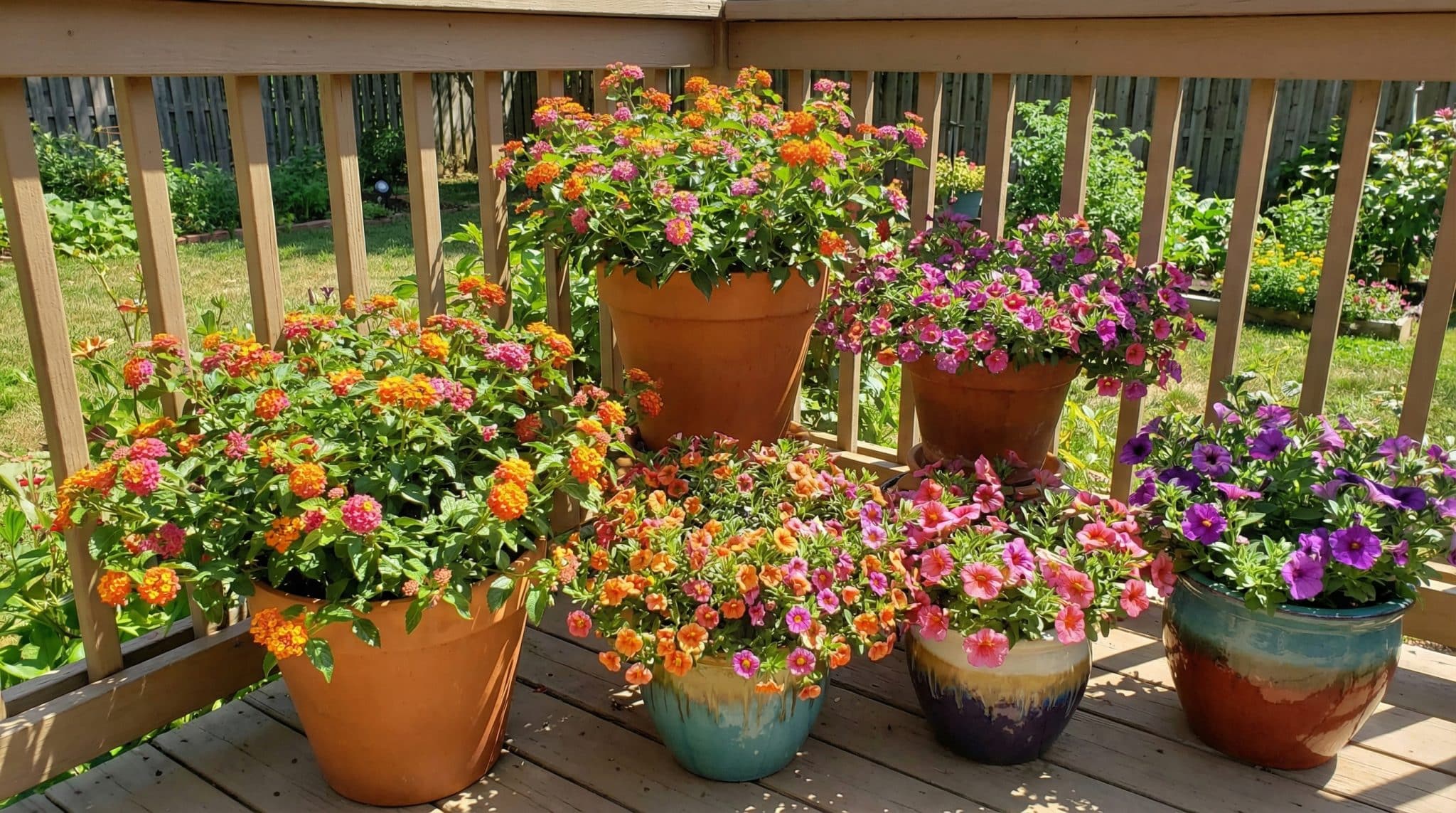
Go for: lantana and portulaca (moss rose)
These two are basically the camels of the container world. They don’t want to be babied. They want you to leave them alone (with occasional water).
If you’re new to containers and want easy wins
Go for: Wave petunias, marigolds, and thyme
They bounce back from missed days better than the drama queens.
If you want big color but not constant fussing
Go for: calibrachoa (Million Bells)
It blooms like it’s being paid per flower and doesn’t require you to deadhead every five minutes.
If your porch is a west facing blast furnace
Go for: angelonia, lantana, portulaca
These are the plants that still look decent at 3 PM when everything else is lying down in surrender.
If you’ve got pets who snack on plants
Please don’t play roulette. Some popular porch plants are toxic (including lantana, geraniums, and cordyline). If your dog or cat is a known leaf cruncher, stick with things like angelonia, marigolds, zinnias, verbena, and many herbs and double check the ASPCA toxic plant list if you’re not sure.
My go to heat loving flowers (the ones that don’t ghost you by midsummer)
If I could only recommend a handful of “hot porch” MVPs, it would be these:
Lantana
This plant is basically sunscreen in leaf form. It thrives in brutal heat and blooms like crazy.
Bonus: butterflies love it.
Real talk: give it a decent size pot (think 5 gallon-ish) and let it dry out between waterings.
Calibrachoa (Million Bells)
Tiny petunia looking blooms, but with way less neediness. Trails beautifully over the edge of a pot, blooms forever, and doesn’t demand constant deadheading.
Angelonia
Upright, clean, reliable like a snapdragon’s tougher cousin. Great “thriller” (tall center plant) in mixed pots.
Verbena
Tough, floriferous, and a great spiller/trailer. It can take heat, it attracts pollinators, and it doesn’t collapse the second you look away.
Portulaca (Moss Rose)
Succulent-ish leaves, loves sun, and basically laughs at drought. The flowers open in sunshine and close at night, which feels very “solar powered porch fairy.”
A quick word on petunias
Petunias can absolutely work in brutal sun especially Wave types but in peak summer they often want daily water. If you’re not into that, pick one of the plants above and sleep peacefully.
The “nice outfit” plants: foliage that makes everything look intentional
Flowers are the confetti. Foliage is the outfit that makes you look like you didn’t get dressed in the dark.
- Sweet potato vine: one plant can make a pot look finished. It trails, it’s colorful, it’s dramatic. (It can crisp a bit in extreme heat, but it’s still worth it.)
- Helichrysum ‘Lime’: chartreuse trailing goodness that makes nearby flower colors pop.
- Coleus: gorgeous, BUT I’ll be honest on the hottest porches it can appreciate a break from late afternoon sun.
Want instant resort vibes? Add one tropical “main character”
If you want that “I’m sipping something cold at a beach hotel” look, add one big tropical in a statement pot.
- Hibiscus: huge blooms, big impact. Bring it inside when nights drop below about 50°F.
- Cannas: bold leaves, tall flowers, very “look at me.” They like big pots and regular water.
- Elephant ears: dramatic leaves for days. In extreme heat, a little afternoon shade helps.
(Warning: once you start doing this, you will begin pricing oversized pots like it’s a normal hobby.)
The pot matters more than you think (aka: stop cooking the roots)
Most “dead by July” container stories aren’t actually about the plant. They’re about the pot turning into a root sauna.
Here’s what helps:
- Go bigger than you think.
Small pots heat up fast and dry out fast. If you want less stress, size up. For mixed plantings, I like 14-16 inches wide minimum, and bigger is often better. - Choose a material that doesn’t turn into a frying pan.
- Thick plastic/resin: not always the prettiest, but it holds moisture and buffers heat well.
- Glazed ceramic: gorgeous and insulating (and heavy enough that a gust of wind won’t yeet it off your porch).
- Terracotta: fine for drought tolerant plants, but it dries FAST in full sun.
- Drainage is non-negotiable.
You need drainage holes. Full stop.
And please skip the “rocks in the bottom” thing it doesn’t improve drainage it just raises the soggy zone closer to the roots.
My favorite lazy trick: a coffee filter over the hole so soil doesn’t wash out.
If your pots sit flat on scorching concrete, popping them up on little “pot feet” or blocks can help airflow underneath. Every little bit counts when your porch is auditioning to be the surface of the sun.
Dirt matters. And yes, it’s different from yard dirt.
Do not use garden soil in containers. It compacts, suffocates roots, and turns into a weird brick. You want a real container potting mix.
Two tips that save lives (plant lives and your sanity):
- Pre-wet your potting mix before planting.
Dry peat based mixes can repel water and make it run down the sides like your pot is wearing a raincoat. - If your mix stays soggy, add some perlite for better drainage. (Especially if you’re prone to over loving your plants with water.)
Watering without losing your mind (or your summer)
I’m not going to give you a complicated spreadsheet. The secret is: check the soil, not the weather app.
The only two “tests” you need:
- Finger test: stick your finger in 1-2 inches. Dry? Water. Moist? Walk away.
- Weight test: lift the pot. If it feels weirdly light, it’s probably thirsty.
General rhythm (for typical midsize pots)
- Below ~75°F: check every couple days
- 75-85°F: check daily, water every 2-3 days-ish
- 85-95°F: check daily, often water daily
- Above ~95°F: you may need morning and evening watering for thirstier bloomers
Water deeply until it runs out the bottom. Morning is best so leaves dry out before night (less disease drama).
Keep blooms coming: the quick “grooming” routine
If your containers start looking like they’ve had a hard week, here’s what helps:
- Deadhead when it matters:
Some plants don’t need it (calibrachoa, lantana).
Others absolutely look better if you clean them up (geraniums, standard petunias, zinnias). - Don’t be afraid to haircut leggy plants.
Petunias and calibrachoa can get stringy. Cutting them back feels cruel for about 48 hours… and then they come back fuller. (Plants are weirdly into tough love.) - Feed them.
Heavy bloomers are hungry. I like a slow release fertilizer at planting plus a liquid feed every couple weeks.
Important: never fertilize bone dry soil. Water first, then feed.
“Help, my plant looks possessed.” Quick troubleshooting
- Wilting but the soil is wet: likely too much water / root rot vibes. Let it dry, improve drainage, consider repotting.
- Crispy leaf edges: could be underwatering or fertilizer salt buildup. If the soil is already moist, flush the pot with plain water.
- Stopped flowering mid summer: usually hungry or root bound. Feed it, and if roots are circling the pot like a spaghetti nest, size up.
My favorite foolproof combos (because decision fatigue is real)
If you want the easiest “it just works” structure, think:
Thriller (tall) + Filler (mounding) + Spiller (trailing)
Three combos I love for hot porches:
- The “I want it to look expensive” combo
Angelonia (thriller) + calibrachoa (filler) + helichrysum ‘Lime’ (spiller) - The full on flower explosion
Wave petunias + calibrachoa + verbena spilling over the edge - The “I might forget to water” combo
Lantana + marigolds + verbena (tough, cheerful, forgiving)
Pick one combo. Just one. You can always get fancy next year with seasonal porch containers after you’ve proven to yourself you’re not running a porch plant hospice.
The whole secret, summed up
A brutal hot porch isn’t a dead zone it’s just a place that demands the right cast of characters. Choose heat loving plants, put them in a pot that won’t cook their roots, use real potting mix, and water like a sane person (check the soil, not your guilt).
Start with one solid pot this weekend. Once you see it thriving in the heat like it owns the place, you’ll never go back to the July funeral cycle again.