Why Fringe Trees Grow Slower Than You’d Expect (and Why You’ll Still Love Them)
If you’re used to fast growing trees that shoot up like they’re trying to win an Olympic event, a fringe tree is going to humble you a little.
Most fringe trees put on about 6-12 inches a year. That’s it. That’s the whole plot twist. You plant one, you water it, you stare at it for a season… and it’s basically like, “Thanks! See you next spring.”
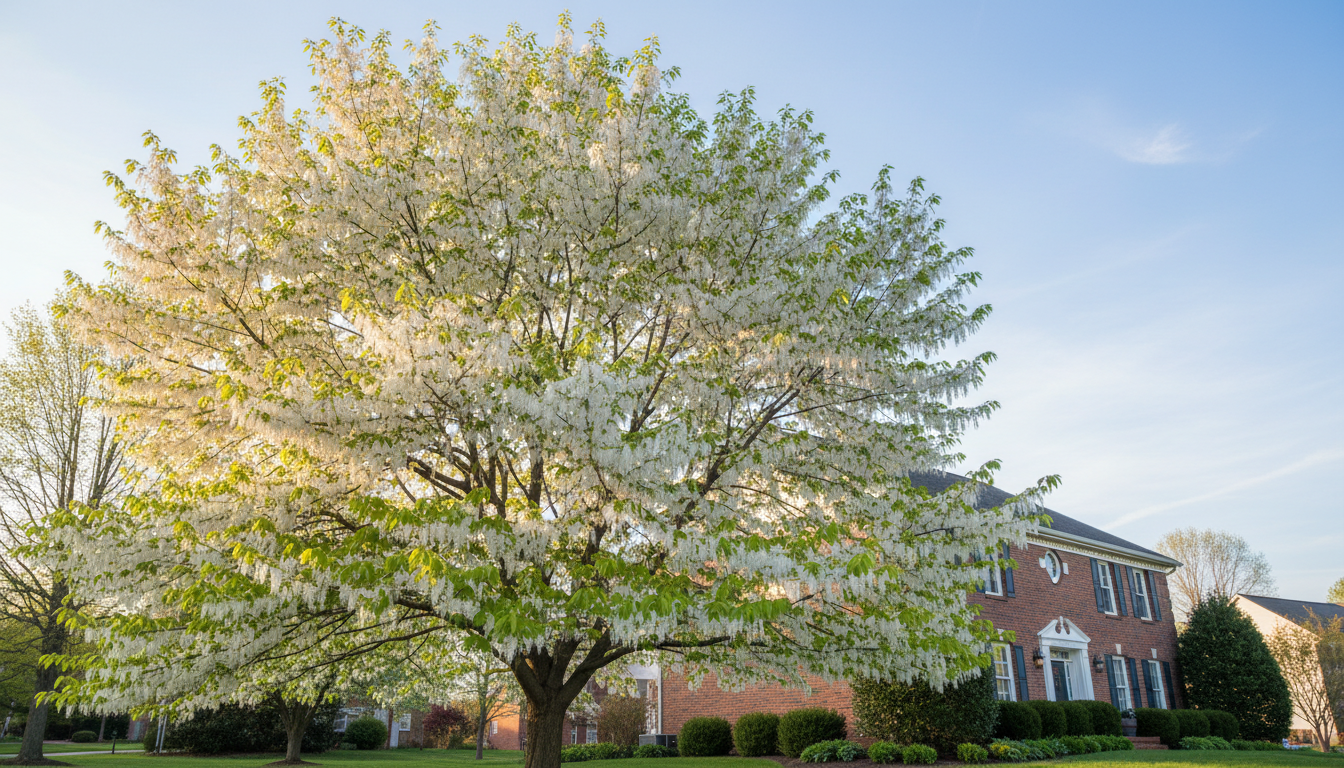
And honestly? I still think they’re worth it. Because when they bloom, they look like someone threw a cloud of white fringe-y confetti into your yard. Plus, they top out around 12-25 feet, so you get a “real tree” without signing up for a future where you’re arguing with branches over your roofline.
Let’s talk about why they’re slow, how to pick the right one, and how to avoid the classic mistakes that add even more waiting.
First: fringe trees are a “slow burn” on purpose
Here’s the big reason they grow slower than you expect: they only push one flush of growth per year. One. Uno. They don’t do the spring and summer growth spurts some other trees do.
So if you get:
- a late frost,
- a dry stretch,
- compacted soil that makes the roots sulk…
…that year’s growth can basically be a shrug and a couple leaves.
This is also why fringe trees are the definition of “plan ahead.” You’re not planting a quick screen. You’re planting a long term relationship.
American vs. Chinese fringe tree (aka: pick your personality)
There are two main types you’ll see:
American fringe tree (Chionanthus virginicus)
- Growth rate: ~6-10 (maybe 12) inches/year
- Mature size: ~12-20 ft tall and wide
- Zones: 3-9
- Timeline to “mature-ish”: 20-30+ years (yes, really)
This is the cold hardy, native option. It’s also the one for patient people… or people who keep accidentally buying slow plants and then acting surprised (hi, it’s me).
Chinese fringe tree (Chionanthus retusus)
- Growth rate: 12-24 inches/year when young (then slows down)
- Mature size: ~15-25 ft tall, ~15-20 ft wide
- Zones: 5-8
- Timeline to mature size: 10-20 years
If you want more “something is happening!” in the early years, the Chionanthus retusus plant profile helps you pick the right one assuming you give it decent sun and water.
The “don’t make future you hate present you” checklist
Before you even think about digging, do these three things. I promise they’re faster than relocating a tree later (which fringe trees absolutely do not enjoy).
1) Measure your space like you mean it
Fringe trees can spread. A lot of the heartbreak I see is people planting one “kinda near the patio” and then realizing later their tree wants to be the patio.
- If you can give it 20-25 feet of clearance (in all directions), you can let it do its natural thing.
- If you only have about 15 feet, you’ll want to train it into more of a single trunk tree and prune with intention.
- If you’ve got less than that, I say this lovingly: pick a different spot or a different plant. (This is me saving you from a future where you’re whisper yelling into shrub branches.)
2) Pick your species based on climate + patience
- Cold climate? American is your friend.
- Want quicker early growth and you’re in zones 5-8? Chinese might make you happier.
3) Commit to a permanent location
Fringe trees are transplant sensitive. They’re not the kind of tree you can move later because you changed your mind about the firepit layout. Choose the spot you’d still pick if you were grumpy and carrying mulch.
What they actually want (light, soil, and two hard no’s)
Light: more sun = more blooms
- Full sun (6+ hours) = best flowering and stronger growth.
- Part shade = it’ll live, but blooms can be lighter.
- In hot climates, morning sun + afternoon shade is a sweet spot.
Soil: moist + well drained is the dream
They like moist, well drained soil, slightly acidic to neutral (roughly pH 5.5-7.0). They can tolerate some clay and occasional wetness, but they won’t survive:
- waterlogged soil
- compacted soil that acts like concrete around the roots
Two “don’t even try it” situations
1) Salt exposure: Fringe trees are salt intolerant. If your planting area gets road salt splash or coastal salt spray, skip it. (This is not a “maybe it’ll be fine” situation.)
2) Buried trunk flare: When you plant, the root collar/root flare needs to be at or slightly above soil level. If you bury the trunk, rot moves in like it pays rent.
Male vs. female: do you want berries… or not?
This part is kind of fun, and also kind of annoying, because a lot of nursery stock is unsexed, so you don’t always get to choose.
- Male trees: showier flowers, no fruit
Great near patios, walkways, driveways anywhere you don’t want mystery berries underfoot. If you can specify, look for cultivars like ‘Emerald Knight’ or ‘Spring Fleecing.’
- Female trees: flowers + blue black berries (summer into early fall)
Birds love them (like, a lot dozens of species). Your hardscape may not. I’m pro wildlife, but I’m also pro not slipping on fruit next to the front steps.
My personal take: if the tree is going near a sitting area, I’d lean male. If it’s going in a wilder area of the yard where you want birds and you don’t care about cleanup, female is great.
Want it to grow as fast as it can? Don’t sabotage it.
Fringe trees aren’t fast, but you can make them slower by accident. The biggest growth killers are:
- Dry soil (especially in the first year)
- Too much shade (less than 6 hours of sun can noticeably reduce growth and flowering)
- Compacted/poorly draining soil (roots can’t expand, tree can’t thrive)
Think of the first year as “tree kindergarten.” You’re not asking it to perform; you’re helping it settle in and build roots.
Planting it right (so you’re not accidentally adding 3 extra years)
Best timing
Plant in early spring or fall. Avoid summer planting unless you love watering like it’s your new hobby.
Dig the hole like this
- As deep as the root ball
- 2-3x as wide
Set the tree so the root flare is at or slightly above grade. Backfill with native soil (not a fancy amended pocket that encourages roots to circle and stay put like they’re afraid of the yard).
Watering: non-negotiable, sorry
For the first growing season, check moisture 6-12 inches down a couple times a week. If rain doesn’t do the job, aim for about 1-1.5 inches of water per week.
You want steady moisture not the “bone dry, then flood it” cycle that stresses the tree out.
Mulch like a normal person (not a volcano artist)
Mulch 2-3 inches deep, but keep it 3-4 inches away from the trunk. Mulch piled against the trunk is basically an engraved invitation for rot and pests.
Fertilizer?
Skip it the first year. Year two and beyond, if your soil is lean, a balanced slow release fertilizer in early spring is fine. (But water and good planting beat fertilizer every time.)
The “instant impact” myth (aka: pot size does matter… but only so much)
Yes, bigger trees look more impressive when you plant them. But with fringe trees, there’s still a patience tax.
- 1 gallon: cheaper, but you’re waiting a while for height
- 5 gallon: a nice middle ground
- Balled and burlapped: closest thing to “instant,” but needs careful watering to establish well
And here’s the part nobody wants to hear when they’re standing in the nursery feeling impulsive:
Flowering can take 5+ years after transplant
Even if you buy a larger tree. They often want time to establish before they go all out with blooms. Once they start flowering, though, they tend to be consistent for decades which feels like a fair trade.
Choose your tree’s “look” early: shrub vibe vs. tree vibe
Fringe trees naturally like to grow multi-stemmed, kind of shrub meets small tree. It’s gorgeous in an informal garden.
But you can train it into a single trunk if you want a tidier, more “tree” shape and a slightly narrower spread.
- Multi-stem form: typically wider (often 12-20 feet)
- Single trunk training: can keep it more like 10-15 feet wide with intentional early pruning
Important: the best training window is the first 1-3 years. After about year three or four, heavy reshaping can stress the tree and set it back. So decide early what you want romantic shrub cloud or tidy small tree and prune accordingly.
Pruning and pests (the quick, practical version)
When to prune
Prune with bloom timing by zone right after flowering (late spring into early summer). Fringe trees set next year’s flower buds on summer growth, so pruning too late can mean you accidentally delete next spring’s show. (Ask me how I learned this. Actually don’t.)
What to watch for
They’re generally low maintenance, but keep an eye out for:
- scale insects
- mites
- borers
These tend to show up when the tree is stressed especially from drought or trunk damage. Keep it watered during dry spells (even once it’s “established”) and be gentle with weed whackers and mowers around the trunk.
One emerging concern: emerald ash borer
Fringe trees are in the olive family (relatives of ash), so there’s been concern they might be vulnerable to emerald ash borer. At this point, it’s more of a “stay informed and keep your tree healthy” situation than a reason to panic plant something else.
If you’re deciding today, here’s what I’d do
- Pick American fringe tree if you’re in a colder zone, want a native, and you’re okay with slow and steady.
- Pick Chinese fringe tree if you’re in zones 5-8 and you want faster early growth and a denser look.
Then:
- Measure your space (seriously tape measure first, nursery trip second).
- Plant it where it can stay forever.
- Water like it’s your job the first year.
- Prune right after bloom if you prune at all.
That’s it. That’s the secret.
A fringe tree won’t turn your yard into a “mature landscape” overnight… but it will quietly grow into one of those plants you brag about every spring like, “Oh this old thing? Yeah, it blooms like this every year.”