Emerald Ash Borer: Save Your Tree or Start Over?
If you have an ash tree, you’re basically living with a ticking time bomb that looks like a nice shade tree. (Rude, honestly.) Emerald ash borer (EAB) has wiped out tens of millions of ash trees across North America, and in places where it’s been around awhile, almost every untreated ash eventually dies.
So here you are, staring at your tree like, “Do I fight for you… or do I start emotionally preparing for the chainsaw guy?”
Let’s make this decision way less mysterious and way more based on reality than vibes.
First: Do you actually have an ash tree?
Before you spiral, confirm you’re not dealing with an innocent lookalike.
Here’s the quick “is it an ash?” checklist:
- Opposite branching/leaves: leaves and buds grow directly across from each other (this is the big giveaway)
- Compound leaves: usually 5-11 leaflets on one stem
- Bark: mature ash bark often has a diamond pattern
- Seeds: those winged “helicopter-ish” seeds called samaras
A lot of people confuse ash with hickory, but hickory has alternate leaf arrangement (they don’t sit across from each other) and it makes nuts.
Also: mountain ash and prickly ash aren’t true ash, and EAB doesn’t care about them. (They are spared from this particular drama.)
Then: Look for EAB signs (aka “the tree is waving a tiny white flag”)
If you’ve got ash, check for these classic EAB clues:
- D shaped exit holes in the bark (about 1/8″ wide). The flat side is the tell.
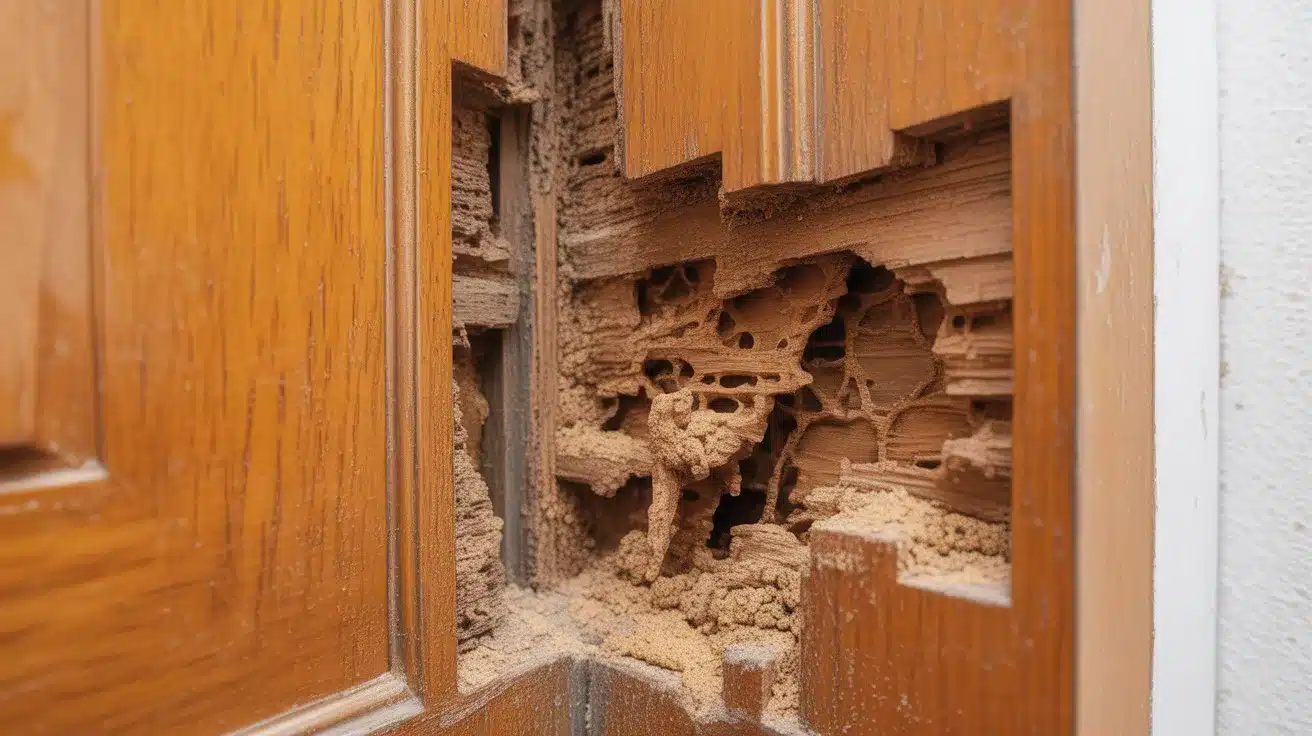
- Bark splits or loose bark where you might see S shaped tunnels underneath
- Woodpecker frenzy: if birds are going to town on your tree like it owes them money, they might be hunting larvae
- Crown dieback: thinning leaves/branches, usually starting at the top
- Weird sprouts: stressed ash trees often throw out little shoots from the trunk/base like, “I’m not dead yet!”
Personal note: the first time I saw EAB damage up close, I thought, “Wow, the woodpeckers are really enjoying this tree.” Two months later, the canopy looked like a bad haircut. Woodpeckers are not doing “free pruning.” They’re doing pest control.
If you can, take a look every spring. Catching it early gives you options.
The make or break rule: canopy loss tells you what to do
Here’s the simplest decision filter I know and it’s the one arborists come back to again and again:
- Less than 30% canopy loss → treatment is usually worth it
- 30-50% canopy loss → borderline; get a pro to evaluate
- More than 50% canopy loss → don’t treat (it’s usually too far gone)
Why? Because once the tree’s vascular system is heavily damaged, it can’t move treatment through the canopy effectively. At that point you’re basically paying for expensive hope. (And I love optimism, but not the kind that costs hundreds of dollars.)
Quick and dirty canopy check
Stand back far enough to see the whole crown. Compare it to what a full, healthy tree “should” look like. If you’re missing big sections of leaf cover and the top is thin and sad… that’s real decline, not just a quirky season.
If your tree is treatable: what treatment actually looks like (and costs)
If your ash is still in the “saveable” window, you’ve got two common routes:
1) The gold standard: trunk injection (most effective)
- Emamectin benzoate trunk injections are typically done by a professional
- Rough cost: around $150-$175 for a ~14″ diameter tree (price varies a lot by region)
- Lasts 2-3 years
- Effectiveness: often quoted around 85-99% when done correctly and on time
This is the option people usually pick for a big, mature ash that provides serious shade (and makes your house noticeably cooler in summer).
2) DIY soil drenches (more affordable, more limited)
- Often imidacloprid products
- Cost: roughly $20-$75 per year
- Works best on smaller trees (under ~15″ diameter tends to be the common cutoff where results are more reliable)
- Timing matters: apply mid-April to mid-May so it has time to move up into the canopy
I’m not anti-DIY just pro-honesty. Big trees are harder to protect with soil drenches, and if you’re trying to save a massive shade tree, this isn’t the place to “maybe” it.
When removal is the smarter move (even if it hurts your feelings)
Remove the ash if:
- It’s at more than 50% canopy loss
- It’s small enough that treatment feels like throwing money into a leafless pit
- It has structural issues (cracks, major dead limbs, poor form, etc.)
- It’s very large (especially over ~20″ diameter) and you need a safety assessment anyway
If you’re on the fence and the tree is near your house, driveway, or a place where gravity can ruin your week, get a certified arborist to weigh in. Dead ash gets brittle fast.
And yes, it stinks. Losing mature shade feels like someone turned the sun up to “aggressive.”
If you’re replacing: don’t replant your way into the next disaster
This is where a lot of people accidentally repeat history.
Ash was popular because it was tough, fast growing, and tolerant of rough conditions so neighborhoods planted a zillion of them. And when a specialized pest showed up… you know the rest.
The goal isn’t “find the new ash.” The goal is: plant a mix of shade trees and a white fringe bloom tree so one pest can’t wipe out your whole yard (or street) again.
My personal rule of thumb: pick 3-5 different species across at least 2-3 different genera if you’re planting multiple trees over time and include trees deer tend to ignore.
My favorite easy method: the 3 filters
- Hard limits: your USDA zone, overhead wires, mature size, distance from house/sewer lines
- Site reality: wet vs. dry, compacted soil, sun/shade
- Your preferences: fast shade, fall color, “please don’t drop weird fruit all over my car,” etc.
Solid replacement ideas (depending on your situation)
Not a perfect list, just a strong starting point:
- Hackberry: tough as nails, handles compacted/urban soils, very “set it and forget it”
- Swamp white oak: great if you have wetter ground; oaks are long term MVPs
- Disease resistant American elm cultivars: classic shape, durable street tree option (make sure it’s a resistant cultivar)
- Japanese zelkova (‘Green Vase’ is a popular form): nice structure, good urban tolerance (but check your zone if you’re far north)
- Kentucky coffeetree: hardy, interesting, and gives a similar compound leaf look to ash
- Thornless honey locust: airy, light shade, compound leaves, generally very adaptable
- Male ginkgo (like ‘Autumn Gold’): city tough and gorgeous fall color (male only unless you enjoy fragrant sidewalk surprises)
A couple quick cautions:
- Red maple can be stunning, but it’s not magic skip it if your site is consistently dry.
- Don’t plant based on “fastest growth” alone. Fast growers can be short lived or weak wooded (and then you’re back to paying for removals).
Planting basics that save you years of regret
You don’t have to be a tree wizard to plant well, but you do have to avoid the classic mistakes.
What to buy
- Container trees are the most forgiving (and easiest to plant)
- Bare root can be great (and cheaper), but timing and technique matter more
- Balled and burlapped gives you instant size, but it’s heavier, pricier, and often better with pro help
The part nobody wants to hear: year one is boring
New trees often sit there looking unimpressed for the first season because they’re building roots. Usually year two is when you see the “okay, we’re doing this” growth.
Also: plan on watering help for years, not weeks. Small trees might need 3-5 years of support; bigger transplanted stock can need 5-7. (Trees are a commitment. Like bangs. But more expensive.)
What I check before buying
- Where it was grown (local stock often adjusts better)
- Root situation (watch for circling/girdling roots those can cause long term problems)
- That the size is actually what the label claims (it happens!)
“Resistant ash”: is that a thing right now?
A little, but not in a “problem solved” way.
- Manchurian ash is the most field proven resistant option (high survival in trials), but it’s non-native and can be hard to find in nurseries.
- Hybrid/marketed varieties with resistance claims can be a mixed bag some have conflicting data. I’d be cautious until the science is clearer.
- Blue ash sometimes gets hyped as “resistant,” but it’s more like “declines more slowly.” Don’t plant it expecting immunity.
Researchers are also working with “lingering ash” genetics (the rare survivors), but widely available, truly resistant native ash isn’t something I’d wait on if you need to plant now.
What I’d do this week (yes, actually this week)
- Walk your yard and confirm: ash or not?
- If it’s ash, look for EAB signs and estimate canopy loss
- Use the canopy rule:
- under 30% → call an arborist about treatment (or plan DIY for small trees)
- 30-50% → get a professional opinion
- over 50% → start planning removal + replacement
- If you’re replanting, pick a short list of trees that fit your site and don’t plant all one kind
Losing an ash is a gut punch, especially if it’s been shading your house for decades. But you can absolutely come out the other side with a healthier, more resilient yard one that won’t get bullied by the next pest that rolls into town.