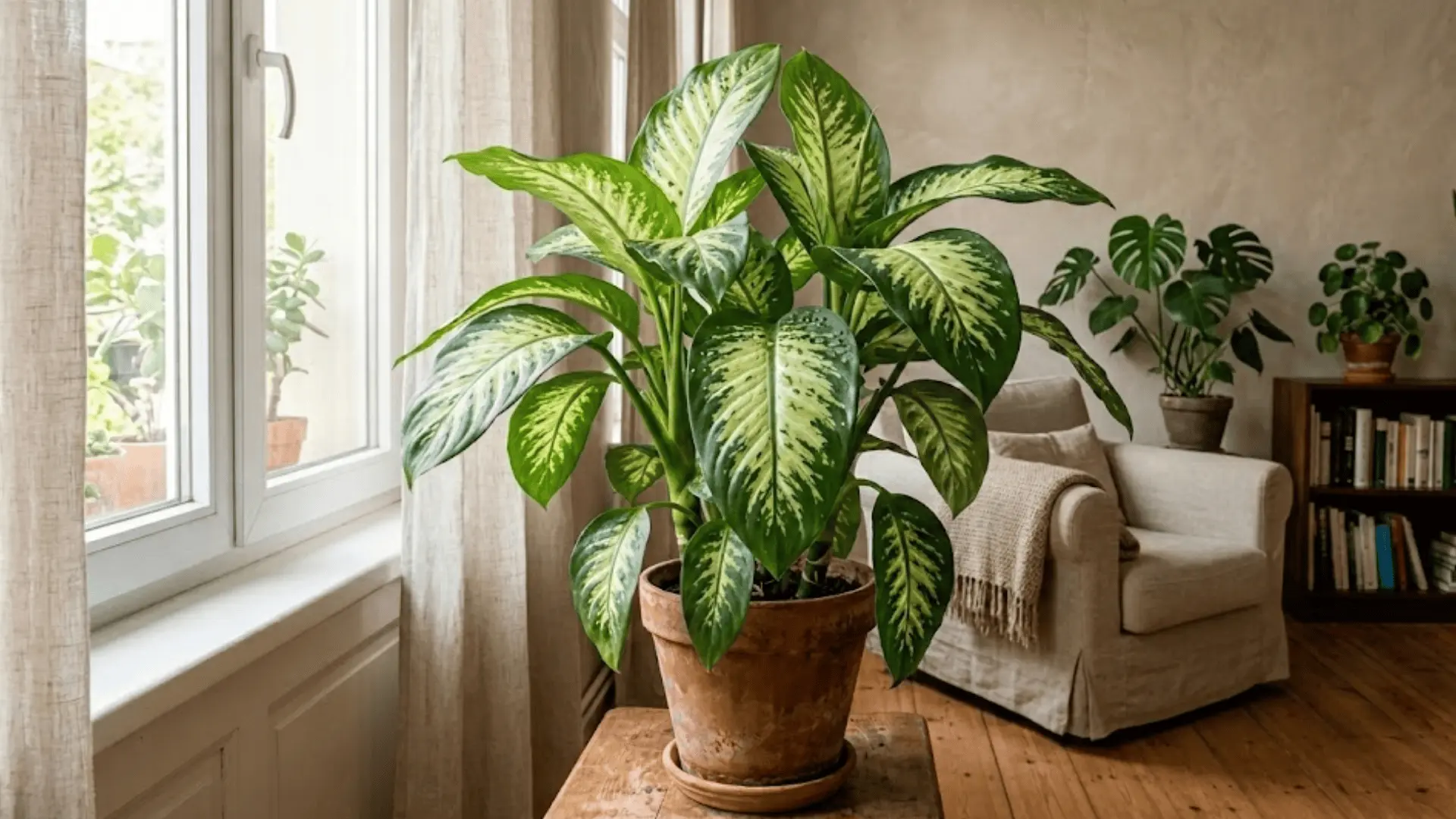
The dumb cane plant brings a genuine slice of the tropical Americas straight into our homes.
As a highly popular houseplant, it is celebrated for its bold, variegated foliage, featuring striking splashes of cream and green that instantly command attention.
Yet beneath those broad leaves lies a true rainforest native that relies on specific conditions to flourish indoors.
To help your vibrant botanical guest thrive, we are going to walk through all the essential care tips. We will look closely at exactly what it needs regarding light, water, soil, pruning, and propagation.
What is a Dumb Cane Plant?
Known to botanists as Dieffenbachia, this houseplant originates in the understories of Central and South America.It earned the name “dumb cane” through a highly effective defense mechanism.
The plant sap contains calcium oxalate crystals.If chewed, these crystals severely irritate the throat and swell the vocal cords, temporarily preventing speech.
Despite this toxicity, it remains a staple for indoor growers.
Cultivars like Tropic Snow, Camille, and Maculata adapt easily to living rooms, each offering different takes on those recognizable leaf patterns.
Dumb Cane Plant Light Requirements
Position your plant near an east-facing window to catch early morning rays. The primary goal is bright, indirect light that mimics a shaded canopy floor.
While they adapt well to medium light, leaves with heavy variegation need brighter spots to photosynthesize effectively.
Remember to rotate the pot weekly to encourage even stem development.
Signs of Incorrect Lighting
Your plant communicates clearly when the lighting environment is off. Watch for these visual indicators to adjust its placement:
- Leggy Growth: Stems stretch aggressively toward the nearest light source, resulting in a sparse appearance.
- Leaf Burn: Bleached, papery patches appear when direct midday sun hits and damages the leaf tissue.
- Fading Variegation: The plant reverts to solid green to maximize chlorophyll production if left in a dark corner
How Often to Water a Dumb Cane Plant?
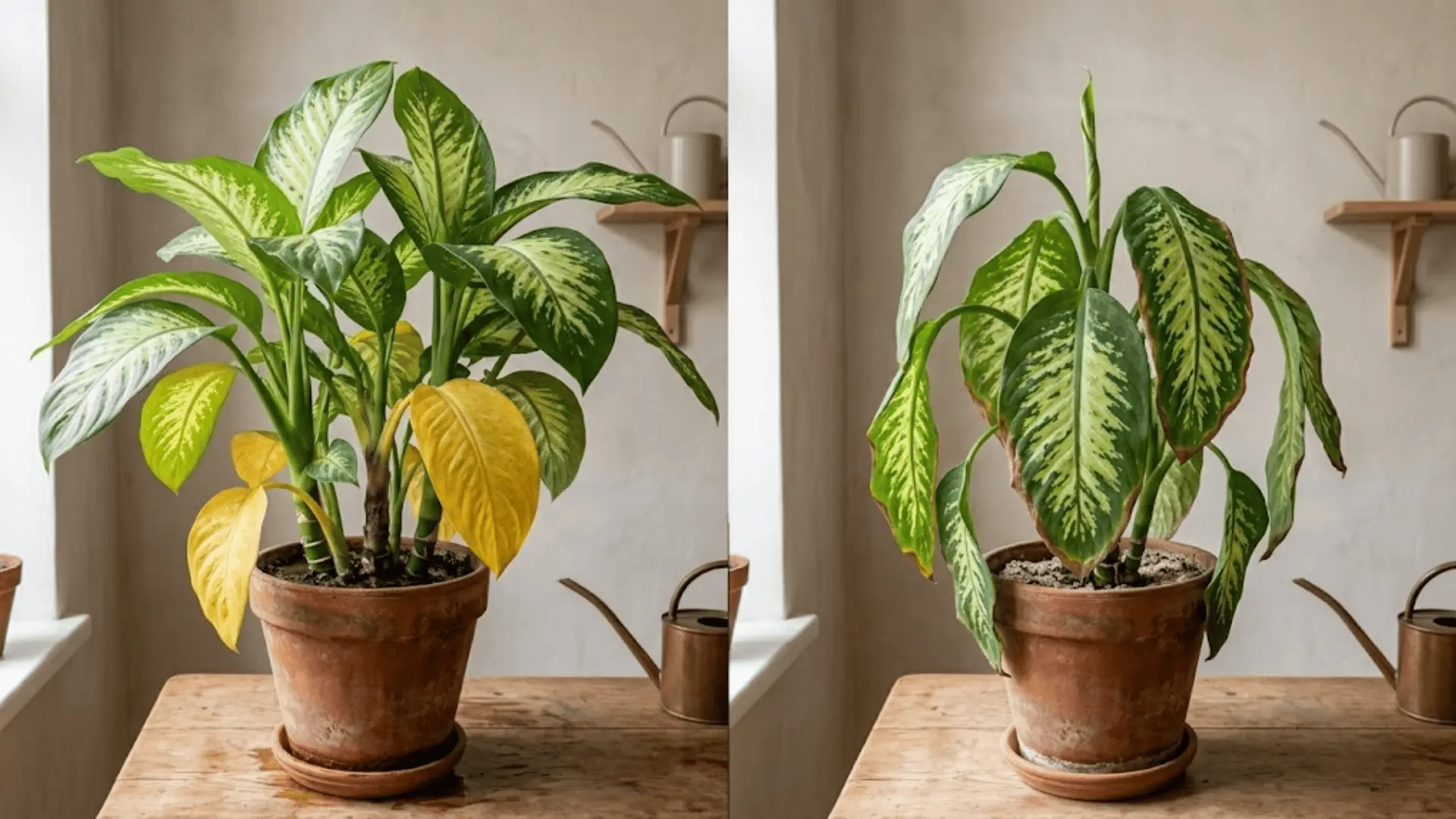
To keep a dumb cane hydrated without drowning its roots, always let the top inch of soil dry out completely before watering again.
Proper drainage is non-negotiable to prevent rot, and you must reduce your watering schedule during the cooler winter months when the plant enters a dormant phase.
Signs of Overwatering
Giving this plant too much water suffocates the root system and quickly leads to structural collapse.
Watch for these clear indicators of waterlogged soil:
- Yellow Leaves: Lower foliage typically turns a uniform yellow as drowning roots fail to absorb essential nutrients.
- Mushy Stems: The base of the stem becomes soft and structurally weak due to excess moisture trapped inside the cellular tissue.
- Root Rot: This fatal condition turns firm, healthy roots into a dark, foul-smelling decay beneath the surface.
Signs of Underwatering
While this plant survives short dry spells, extended drought forces it to pull moisture from its extremities just to stay alive.
These physical changes mean it is time for a thorough soak:
- Drooping Leaves: The plant loses its internal water pressure, causing those massive, heavy leaves to sag dramatically.
- Dry Leaf Edges: Crisp, brown margins form along the perimeter as the plant sacrifices its outer tissue to conserve water for the main stem.
Best Soil for Dumb Cane Plants
To replicate the loose forest floor where Dieffenbachia naturally grows, you need a precise mix.
Generic potting soil straight from the bag is usually too dense and will suffocate the root system over time. You have to build a structured foundation that holds moisture but drains instantly.
Here is the specific breakdown to create that ideal environment:
| Soil Component | What Exactly to Use | Why the Plant Needs It |
| Moisture Base | 60% standard peat or coco coir mix | Retains hydration for the roots without turning into thick mud. |
| Aeration | 20% coarse perlite or pumice | Creates physical air gaps so oxygen can reach the root tissue. |
| Texture | 20% orchid bark | Breaks up the dirt structure to let water flush through rapidly. |
| Hardware | A pot with visible bottom holes | Gives gravity a way to pull out excess water and stop bacterial rot. |
Ideal Temperature and Humidity for Dumb Cane Plants
Recreating the climate of the rainforest keeps a dumb cane robust. These plants rely on consistent warmth and heavy moisture in the air, so placing them in a standard living room often requires a bit of environmental tweaking.
Here is how to strike the right balance to keep the foliage intact:
- Ideal Temperature Range: Maintain a warm environment between 65°F and 75°F. Sudden drops below 60°F shock the plant, causing it to shed lower leaves.
- Avoid Cold Drafts: Keep the pot away from AC vents and drafty windows. Sudden blasts of chilly air directly damage the cellular structure of the leaves.
- Moderate to High Humidity: Aim for an indoor humidity of 50% or higher. Dry air, especially in winter, pulls moisture out of the plant and creates crispy, brown tips.
- How to Increase Humidity Indoors: Run a small humidifier, rest the pot on a shallow pebble tray filled with water, or group it with other plants to build a shared microclimate.
The Best Fertilizing Schedule for Dumb Cane Plants
In the wild, decaying organic matter naturally feeds the root system of a dumb cane. Indoors, that nutrient supply relies entirely on you.
A strategic feeding routine gives the plant the energy required to push out those large leaves, but too much food will burn the roots. Striking a careful balance ensures steady growth without overwhelming the soil chemistry.
Here is a straightforward guide to managing its diet:
| Guideline | What to Apply | Timing & Amount | The Benefit |
| Type of Feed | Balanced liquid fertilizer | Standard formulation | Delivers a steady baseline of nutrients. |
| Growing Season | Routine feeding | Every few weeks in spring and summer | Fuels the production of new foliage. |
| Application Limit | Diluted mixture | Cut the recommended dose in half | Prevents chemical scorch on sensitive roots. |
| Winter Dormancy | Plain water only | Halt all feeding until spring | Respects the natural rest cycle of the plant. |
Pruning and Maintenance of Dumb Cane Plants
Keeping a Dieffenbachia looking its best requires a little regular grooming. In the wild, natural elements strip away old foliage and dust, but indoors, you have to step in.
Remember to wear gloves to protect your hands from that irritating sap before you begin.
Here are the core steps to keep your plant in top shape:
- Removing Yellow Leaves: Snip off dying foliage near the base to redirect energy toward fresh, healthy growth.
- Cutting Back Leggy Stems: Slice tall, stretched stalks down to a lower node to maintain a compact and stable structure.
- Encouraging Bushier Growth: Trimming the top canopy forces dormant lower buds to activate and fill out the base.
- Cleaning Leaves: Wipe the broad foliage gently with a damp cloth to remove dust and maximize light absorption.
A cleanly pruned plant not only anchors a room beautifully but also naturally resists pests and diseases much better than a neglected one.
Methods for Propagating Dumb Cane Plants
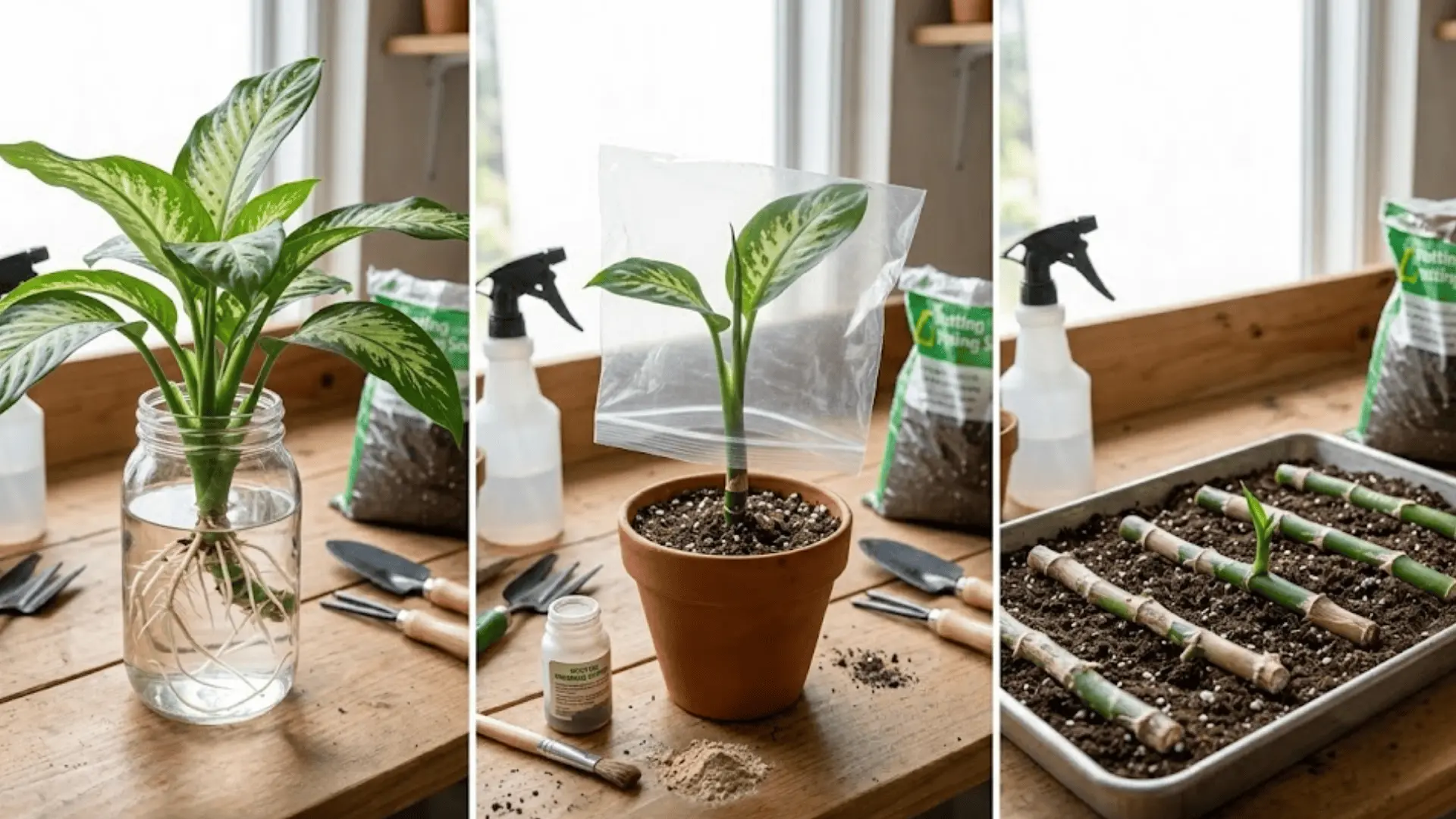
Multiplying a Dieffenbachia is a practical way to expand your indoor collection or salvage a plant that has grown too tall and bare at the base.
Because these plants naturally drop lower foliage as they age, cutting them back and rooting the pieces gives you fresh, compact growth.
1. Stem Cuttings in Water
Rooting a top cutting in a glass jar lets you monitor the root development in real time. This method is highly reliable and visually satisfying.
- Step 1: Snip off a healthy top section of the plant just below a visible node using a sterile blade.
- Step 2: Submerge the cut end and the bottom node in a jar of room-temperature water.
- Step 3: Keep the remaining foliage completely above the water line to prevent bacterial rot.
- Step 4: Transplant the cutting into potting soil once a thick, white root system forms over a few weeks.
2. Soil Propagation
For a more direct transition, you can skip the water phase and root the stem straight into its permanent home.
- Step 1: Dip the freshly cut base of the stem into a standard rooting hormone powder to speed up development.
- Step 2: Bury the node directly into a small pot filled with a moist, airy soil mixture.
- Step 3: Trap humidity around the leaves by loosely covering the planted cutting with a clear plastic bag.
- Step 4: Pull lightly on the stem after a month to check for firm root resistance, signaling successful growth.
3. Cane Cuttings Method
If you are left with a long, leafless stalk after removing the top, do not throw it away. This horizontal technique turns bare stems into multiple new plants.
- Step 1: Chop the thick cane into short segments, ensuring you leave at least one node on every piece.
- Step 2: Lay the segments horizontally across the surface of a damp potting mix.
- Step 3: Press the pieces halfway down into the dirt so the node makes solid physical contact with the soil.
- Step 4: Maintain a consistently warm and moist environment until fresh green shoots push up from the buried nodes.
Repotting Guide for Dumb Cane Plants
Moving your Dieffenbachia into a new container gives its root system fresh nutrients and physical room to expand.
However, disrupting the roots too often causes unnecessary stress. You only want to upgrade its home when the plant genuinely needs the extra space.
Keep an eye out for these clear indicators to ensure a smooth transition:
- Root-Bound Signs: Look closely at the current container. If thick roots are poking out of the bottom drainage holes or tightly circling the top of the soil, your plant has simply run out of room.
- When to Repot: Wait until the spring or early summer to make the move. The plant actively grows during these warmer months and will recover from the transplant much faster.
- Choosing a Slightly Larger Pot: Select a new container that is only one to two inches wider than the old one. Upgrading to a massive pot leaves too much empty, wet soil around the roots and directly invites rot.
Is the Dumb Cane Plant Toxic?
The Dieffenbachia earns its name from a potent defense system. Its sap is packed with calcium oxalate crystals.
If ingested by humans or pets, these microscopic needles trigger intense swelling and burning in the mouth and throat.
For this reason, you must keep the plant entirely out of reach of children and animals.
If accidental exposure happens, gently wipe the mouth clean, provide cold liquids to soothe the irritation, and contact a medical professional or veterinarian right away.
Solutions to Common Problems With Your Dumb Cane Plant
Even the most resilient rainforest natives occasionally struggle when adapting to indoor living spaces.
If your plant is starting to look a little less vibrant, these common physical signs will help you identify exactly what needs to change.
Problem 1: “The leaves on my plant are turning yellow.”
Solution: Check the soil moisture and scale back your watering frequency immediately. Consistently wet soil suffocates the roots, which prevents the plant from absorbing the nutrients it needs to keep its foliage green.
Problem 2: “The tips of the leaves are becoming brown and crispy.”
Solution: Increase the ambient humidity around the plant using a pebble tray or a small humidifier. Dry indoor air, especially during winter, pulls moisture directly from the leaf edges faster than the roots can replace it.
Problem 3: “My plant looks tired and is starting to droop.”
Solution: Examine the soil to see if it is bone-dry or overly saturated. Severe drooping is a stress response that usually points to either extreme thirst or the early stages of root rot.
Problem 4: “I see tiny webs or small sticky spots on the foliage.”
Solution: Wipe the leaves down with a mild soapy solution or spray them thoroughly with neem oil. These signs indicate pests like spider mites or mealybugs, and repeating the treatment weekly will break their breeding cycle.
Problem 5: “The stems feel mushy and the soil smells slightly sour.”
Solution: Remove the plant from its pot, trim away any dark, decaying roots, and repot the healthy sections in fresh, dry soil. This is a clear sign of root rot, and you must reduce your watering schedule to save the plant.
Best Places to Put a Dumb Cane Plant in Your Home
Finding the right spot for your Dieffenbachia is about balancing its need for light with the safety of your household.
Since these plants thrive in stable, warm environments, you should look for areas that avoid drastic temperature swings while offering plenty of indirect sun.
Here are the most effective locations for your plant:
| Room | Ideal Light Source | Placement Strategy |
| Living Room | Large, filtered windows | Keep away from drafty exterior doors. |
| Bedroom | Soft morning sun | Place on high furniture away from pets. |
| Home Office | Bright, ambient light | Position near a desk but out of direct rays. |
| Near Windows | East- or north-facing | Use sheer curtains to soften intense heat. |
Final Thoughts
Cultivating a healthy dumb cane plant is a rewarding experience that brings a bold, tropical presence to your indoor sanctuary.
By mastering the balance of filtered light and mindful watering, you can enjoy its striking patterns for years to come.
While its storied defense system requires a little extra caution, this jungle native remains one of the most resilient and visually impressive companions for any plant lover.
Do you have a favorite variety of this tropical classic, or perhaps a success story with your own specimen? Share your experiences in the comments below!