You water it. You mow it. You fertilize it. And your lawn still looks flat-out disappointing.
Most people blame the weather or the soil. But the real culprit is often the grass itself. Not because it is hard to grow, but because most homeowners plant whatever is available at the store rather than what actually fits their yard.
Different types of grass have very different needs. Some want full sun. Others die in it. Some hold up under heavy foot traffic. Others thin out badly after just one season.
This guide covers types of grass, helps you figure out what you already have, and shows you how to choose the one that actually works.
What Makes Something a Lawn Grass?
Grass belongs to the Poaceae family, one of the largest plant families on earth. For lawn use, it refers to low-growing plants that form dense, ground-covering turf when mowed regularly.
Beyond its appearance, lawn grass does real work: it holds soil in place, lowers surface temperatures, filters rainwater, and reduces the conditions that allow ticks and other pests to gather in your yard.
Types of Grass for Your Lawn
With so many options, picking the right grass can feel like a guessing game. The good news is that once you know what each type offers and where it falls short, the right choice becomes much clearer for your specific yard.
1. Kentucky Bluegrass
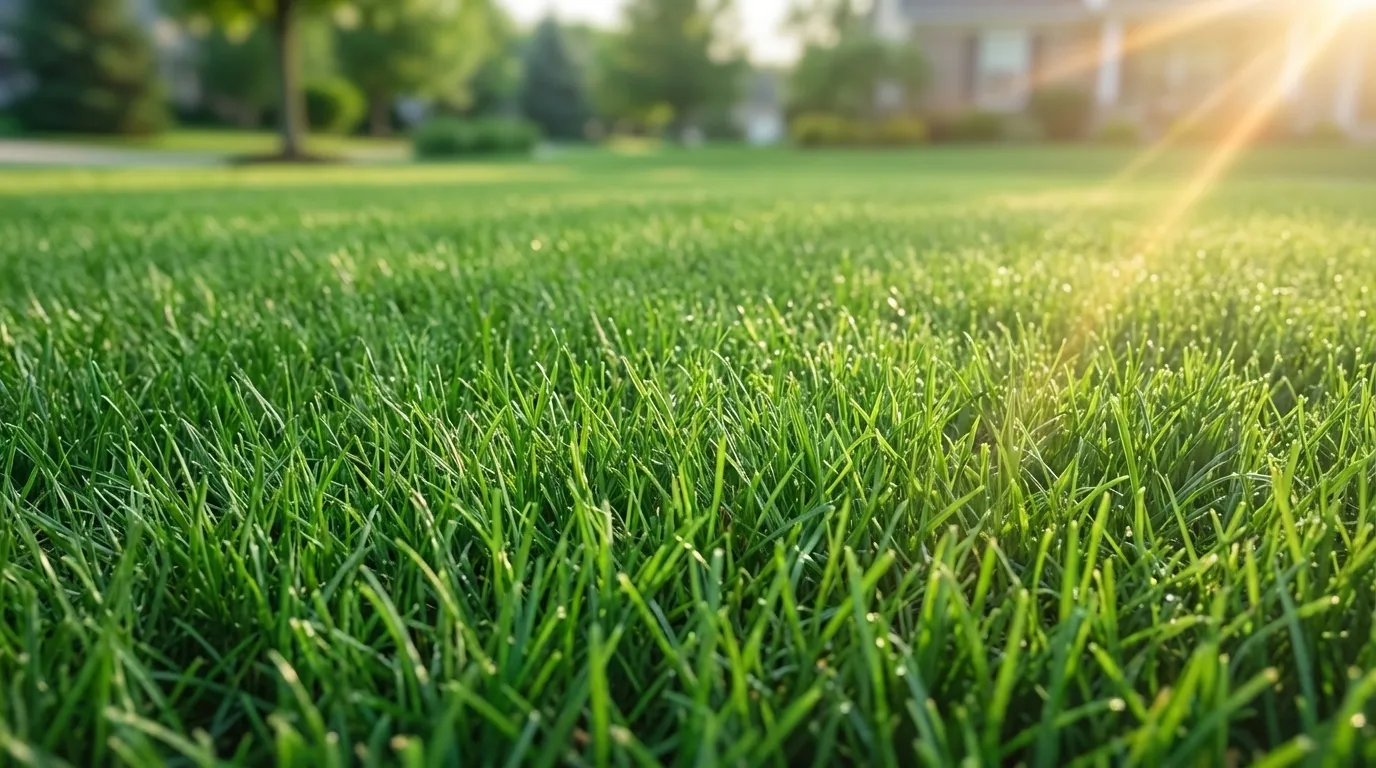
Kentucky bluegrass is what most people think of when they picture a classic American lawn. It grows thick, looks rich and dark green, and has been a staple of northern yards for generations.
What It Looks Like: Fine to medium-width blades with a boat-shaped tip. Forms a dense, uniform lawn with a deep green color.
Where It Grows Best: Northern US states with cold winters and moderate summers.
| Pros | Cons |
|---|---|
| Excellent cold hardiness | Needs frequent mowing and fertilizing |
| Handles heavy foot traffic well | Shallow roots make it less drought-resistant |
| Self-repairs through underground stems | Goes dormant in extreme summer heat |
Best For: Homeowners in northern climates who want a thick, well-maintained lawn that holds up to regular use.
Quick Care Note: Water 1 inch per week. Mow at 2.5 to 3.5 inches. Fertilize 2 to 4 times a year.
2. Tall Fescue
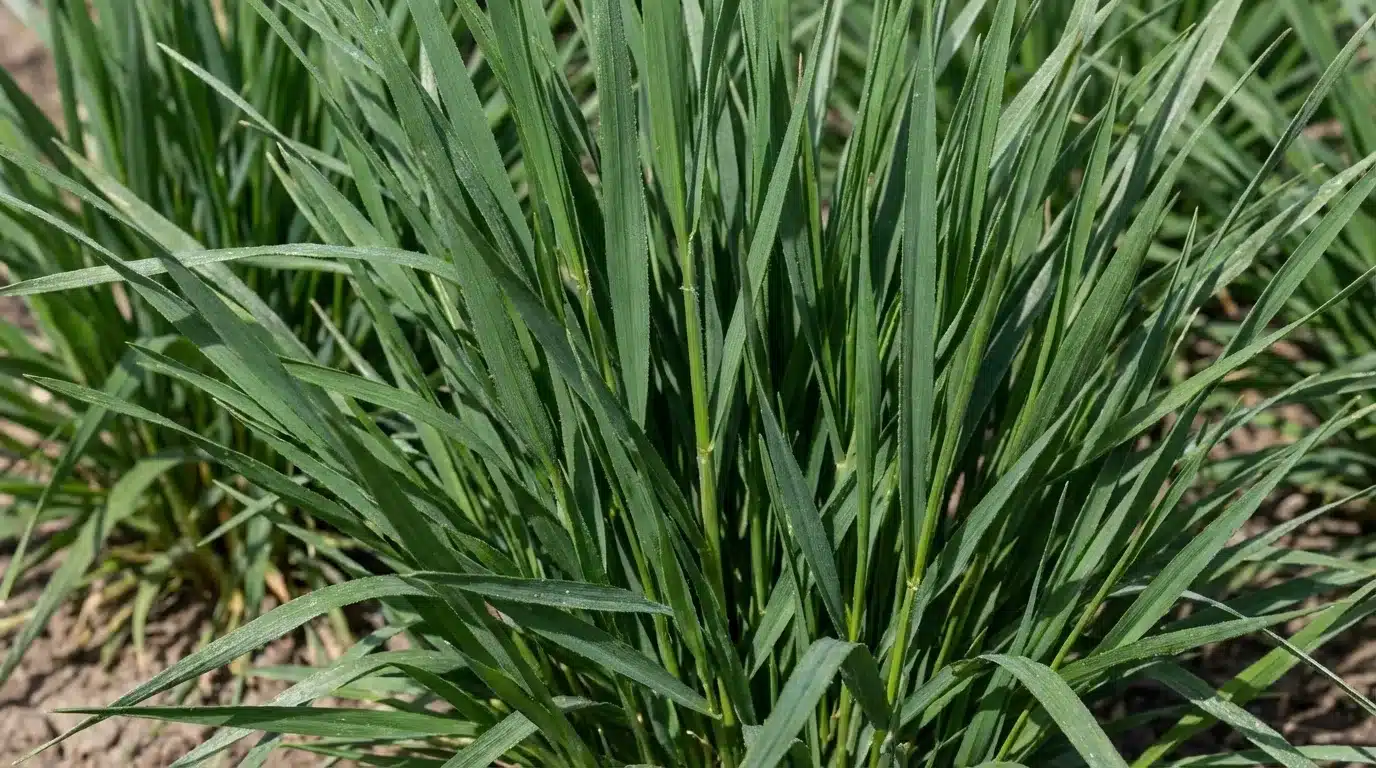
Tall fescue is the reliable choice for homeowners caught between northern cold and southern heat. It is not flashy, but it consistently delivers where other cool-season grasses struggle.
What It Looks Like: Wide, flat blades with a darker green color. Grows in upright clumps rather than spreading across the surface.
Where It Grows Best: Transition zone states and the cooler parts of the northern US.
| Pros | Cons |
|---|---|
| Better heat, drought, and shade tolerance than most cool-season grasses | Clump growth means it will not fill bare patches on its own |
| Deep roots improve dry-period survival | Can look uneven in mixed lawns |
| Handles part shade reasonably well | Needs manual reseeding of bare areas each fall |
Best For: Homeowners in the transition zone who need a durable, low-water grass that thrives in both heat and cold.
Quick Care Note: Mow at 3 to 4 inches. Water deeply but less often. Reseed bare areas manually each fall.
3. Fine Fescue
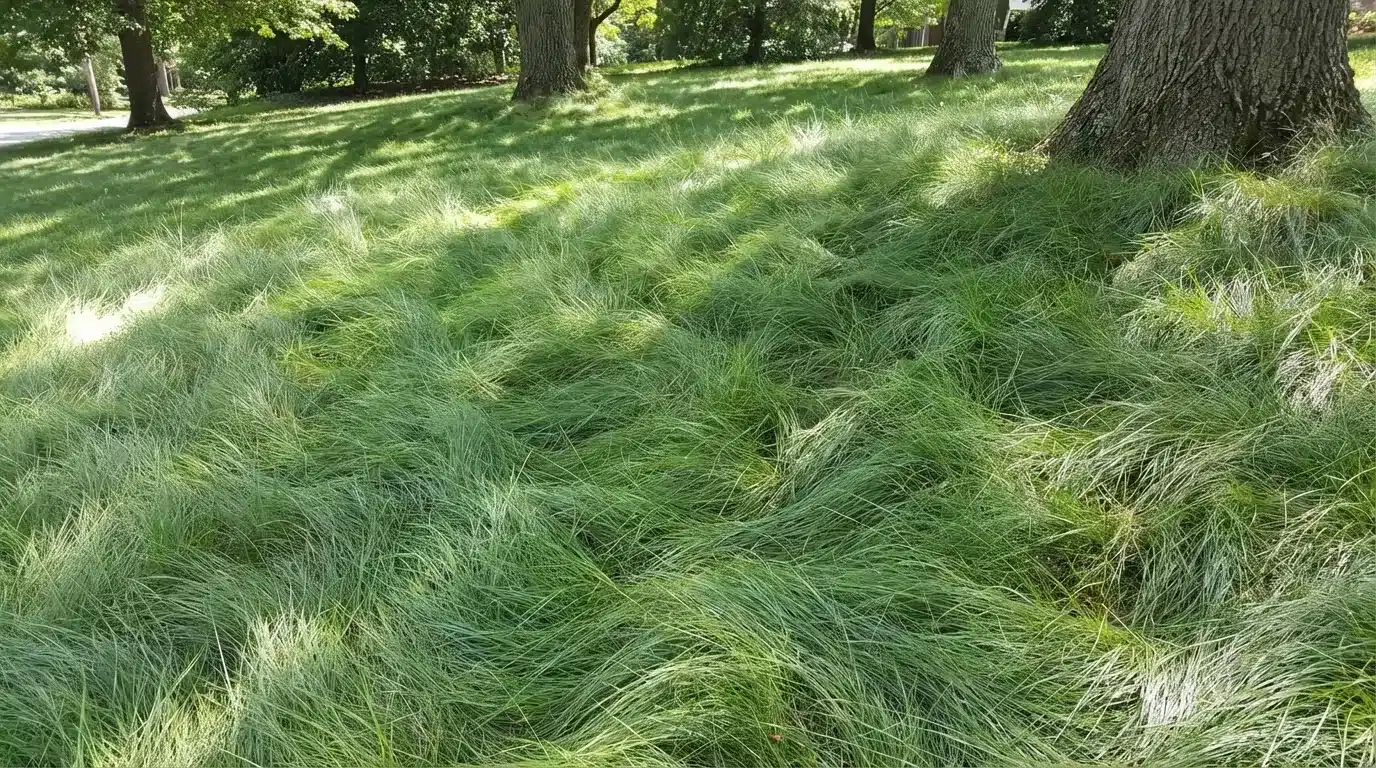
If your yard has heavy shade, fine fescue is almost always the right call. It is one of the few grasses that genuinely thrives in limited sunlight.
What It Looks Like: Very fine, hair-like blades in a lighter to medium green. Includes creeping red fescue, chewings fescue, and hard fescue as varieties.
Where It Grows Best: Northern US and Pacific Northwest, especially yards with dense tree cover.
| Pros | Cons |
|---|---|
| Best shade tolerance of any common cool-season grass | Not built for heavy foot traffic |
| Very low water and fertilizer requirements | Struggles in hot, sunny locations |
| Works well on slopes and low-traffic areas | Not suitable for active family yards |
Best For: Shaded yards, low-maintenance lawns, and areas under trees where other grasses have repeatedly failed.
Quick Care Note: Rarely needs fertilizing. Keep mowing height at 3 to 4 inches.
4. Perennial Ryegrass
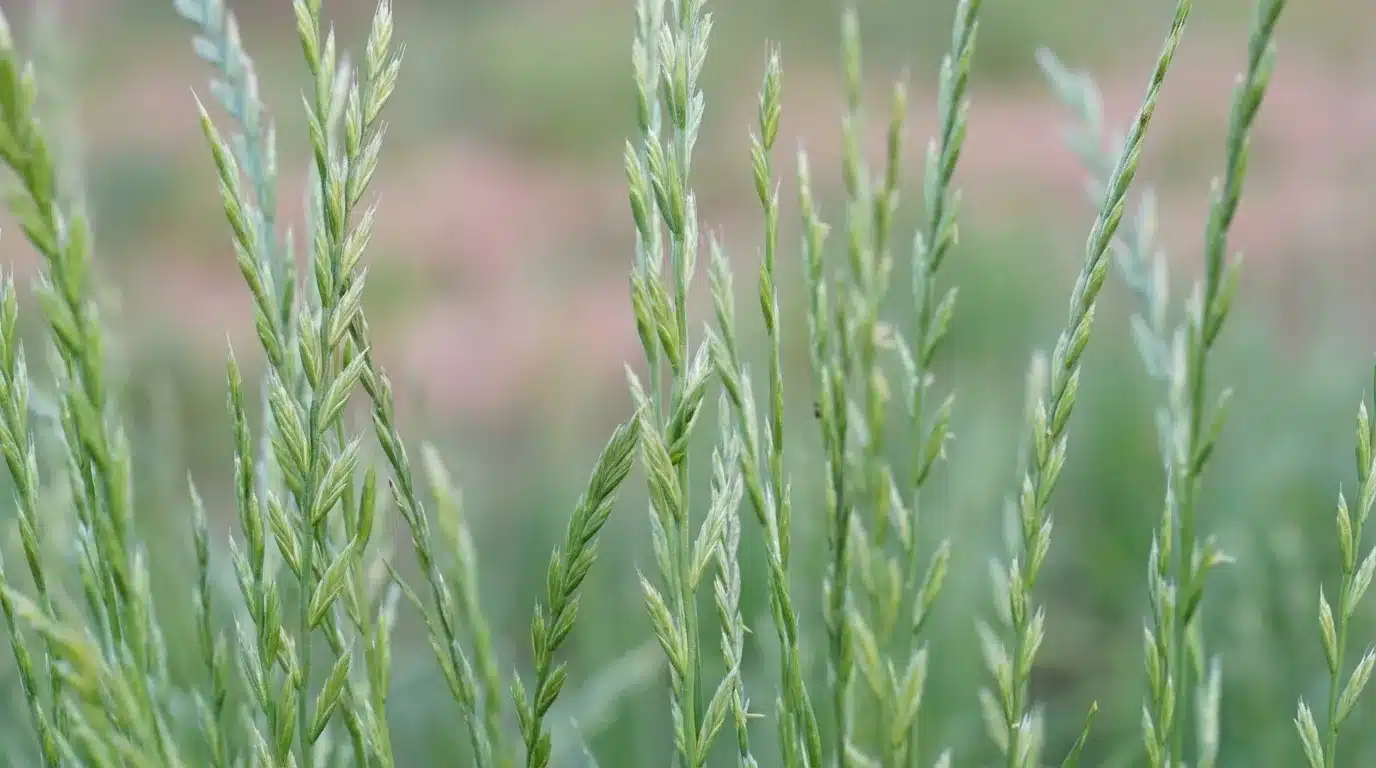
Perennial ryegrass is the fastest-starting grass on this list. If you need ground coverage quickly, this is the one that gets there first.
What It Looks Like: Narrow, bright green blades with a shiny upper surface. New leaves fold when emerging rather than rolling.
Where It Grows Best: Northern US as a permanent lawn grass. Southern US as a winter overseeding grass for dormant warm-season lawns.
| Pros | Cons |
|---|---|
| Fastest germination of any common lawn grass, as fast as 5 to 7 days | Needs consistent watering and fertilizing to hold color |
| Suppresses weeds well once established | More prone to fungal disease in hot, humid conditions |
| Handles moderate to heavy foot traffic | Not as heat-tolerant as warm-season alternatives |
Best For: Quick lawn establishment in the north, or adding winter green color to dormant southern lawns.
Quick Care Note: Water regularly. Mow at 1.5 to 2.5 inches for best results.
5. Bermuda Grass
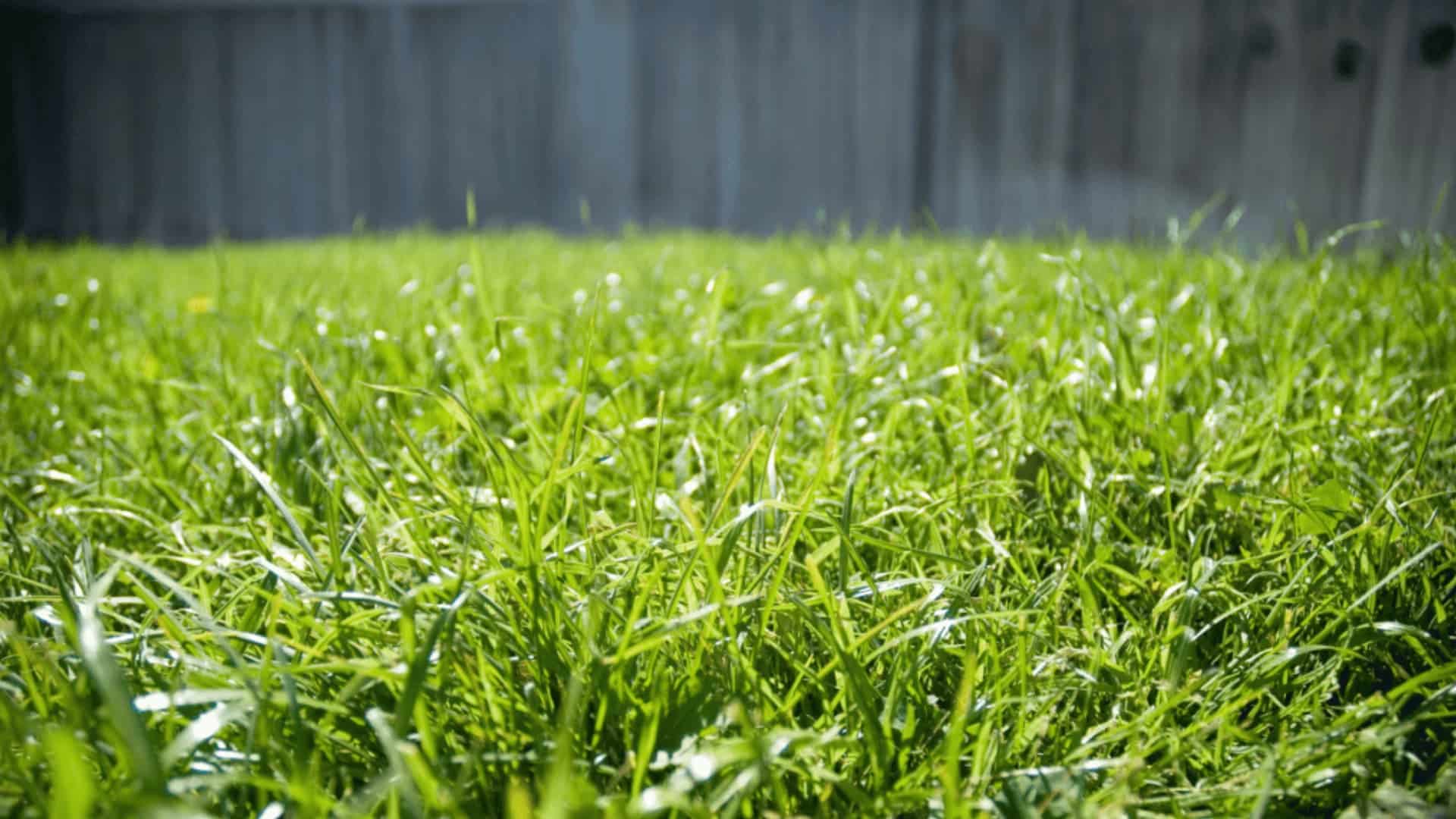
Bermuda grass is the workhorse of southern lawns. It grows fast, recovers quickly from damage, and withstands conditions that would cause most other types to fail.
What It Looks Like: Medium to fine blades in a gray-green color. Spreads through both above-ground runners and underground stems, forming a thick, dense mat.
Where It Grows Best: Southeast, South-Central, and coastal US. Widely used on golf courses throughout the region.
| Pros | Cons |
|---|---|
| Outstanding heat and drought tolerance | Needs full sun and does poorly with any shade |
| Recovers fast from foot traffic, bare spots, and pet damage | Goes dormant and turns brown in winter |
| High salt tolerance, good for yards with dogs | Requires consistent mowing to stay looking neat |
Best For: High-traffic family yards, sports fields, and sunny southern lawns with active households.
Quick Care Note: Mow short at 1 to 1.5 inches. Fertilize in spring and summer. Dethatch every couple of years.
6. Zoysia Grass
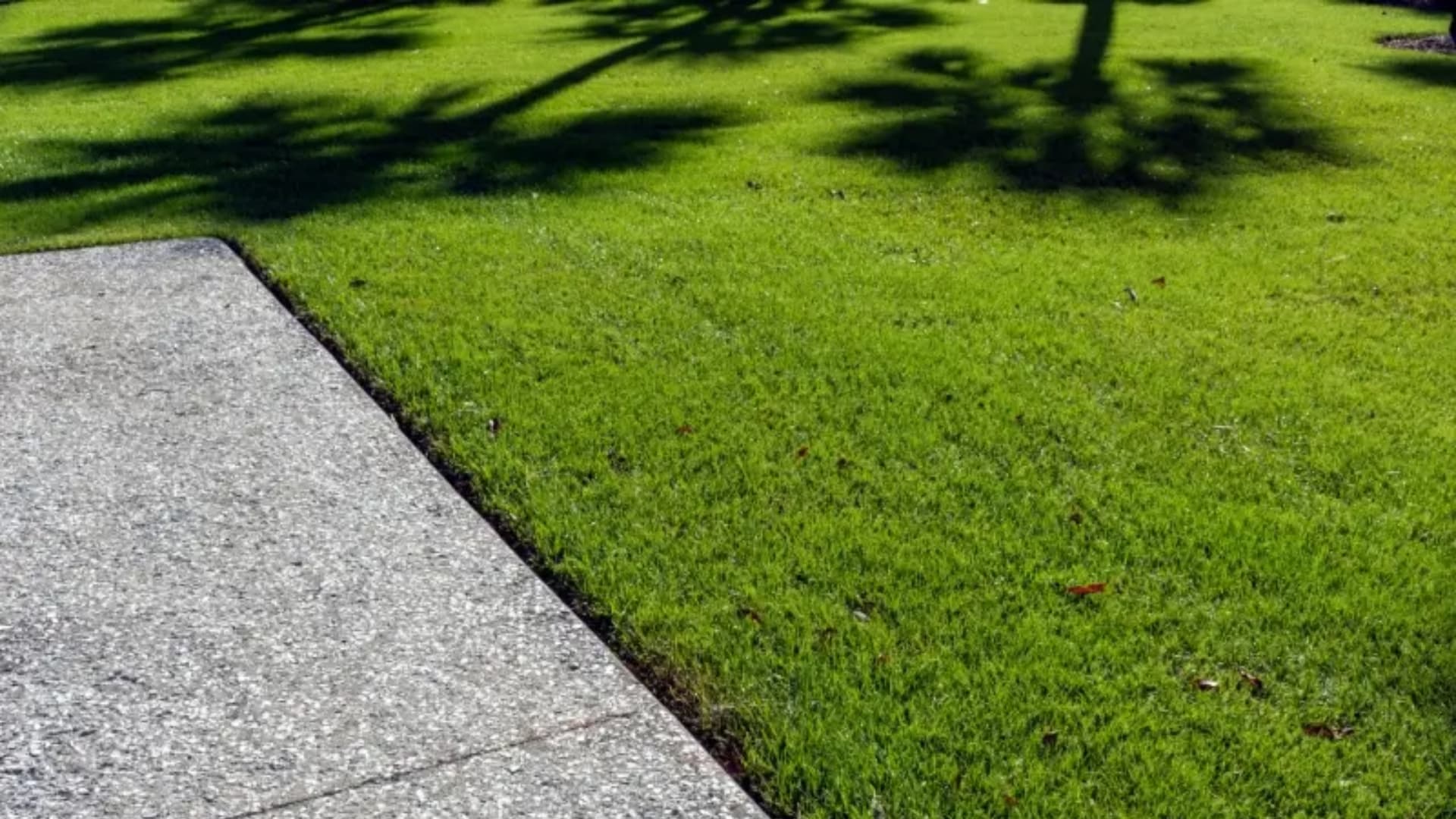
Zoysia is for homeowners who want a low-effort, weed-resistant lawn and are willing to be patient with the setup. It takes time to establish, but once it does, it is very hard to beat.
What It Looks Like: Stiff, dense blades that form a thick carpet. Turns brown during dormancy but greens up earlier in spring than most warm-season grasses.
Where It Grows Best: Southern US and transition zone. More cold-tolerant than most warm-season types.
| Pros | Cons |
|---|---|
| Dense growth naturally crowds out weeds | One of the slowest grasses to establish, sometimes over a year |
| Low water needs once fully established | Requires regular dethatching due to its dense growth habit |
| Holds up well under regular household use | Not ideal for homeowners who want fast results |
Best For: Homeowners in the transition zone or South who want a weed-resistant, low-water lawn and are patient with the startup time.
Quick Care Note: Mow at 1 to 2 inches. Dethatch every 1 to 2 years. Fertilize in late spring.
7. St. Augustine Grass
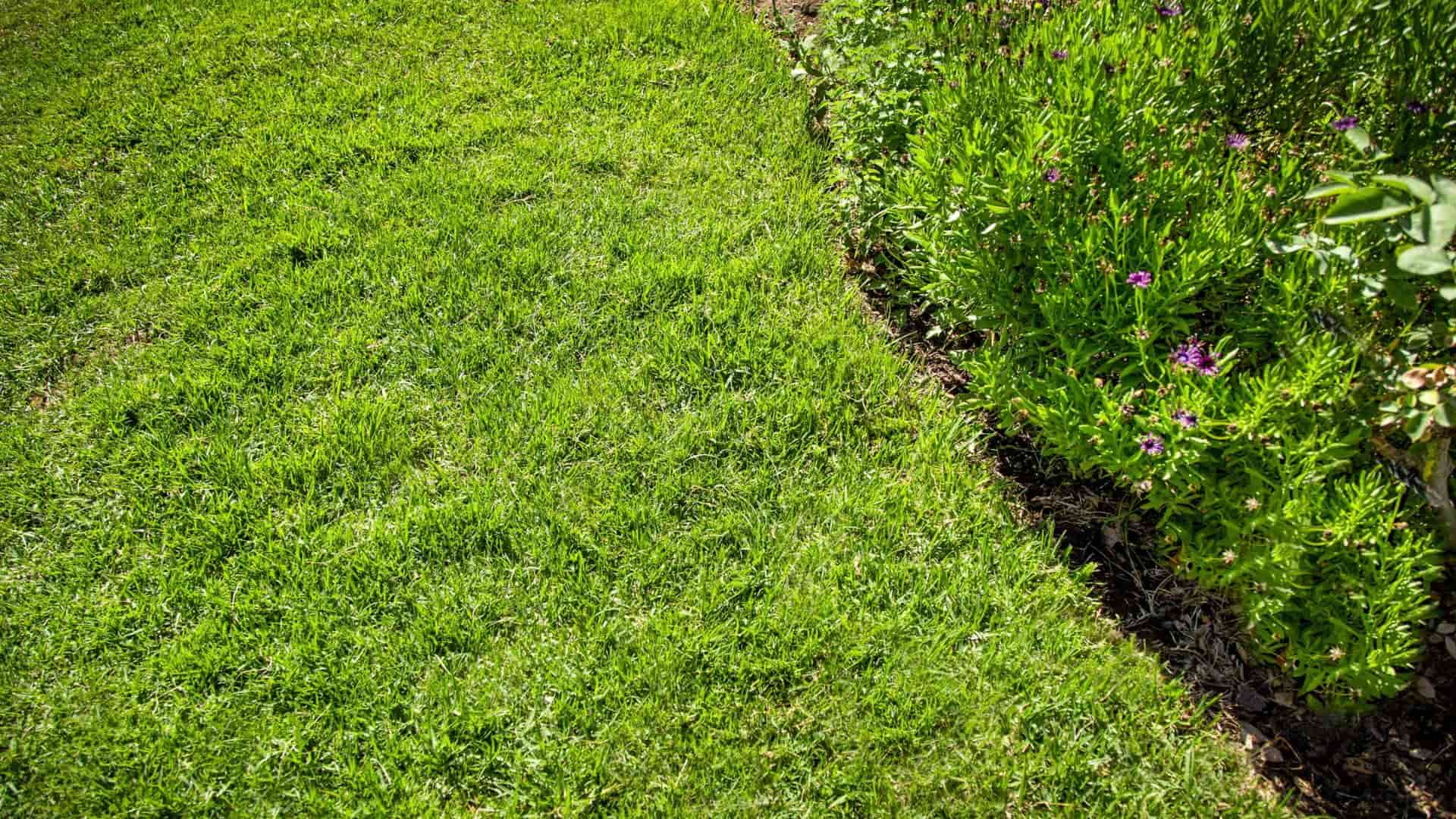
St. Augustine has been a go-to grass for southeastern yards since the early 1900s. It handles the heat and outperforms nearly every other warm-season type in shade.
What It Looks Like: Very broad, flat blades with rounded tips. Dark green forms a thick, carpet-like layer across the ground.
Where It Grows Best: Southeast US, especially Florida, Texas, and Gulf Coast states.
| Pros | Cons |
|---|---|
| Best shade tolerance of any warm-season grass type | Very low traffic tolerance, not suited for active yards |
| Grows well in coastal and fertile soils | Cannot handle freezing temperatures |
| Well-understood by lawn professionals across the South | Needs more water than most other warm-season grasses |
Best For: Shaded southern yards, coastal homes, and homeowners who care more about appearance than durability.
Quick Care Note: Water deeply twice a week. Mow at 3.5 to 4 inches to protect roots from summer heat.
8. Centipede Grass
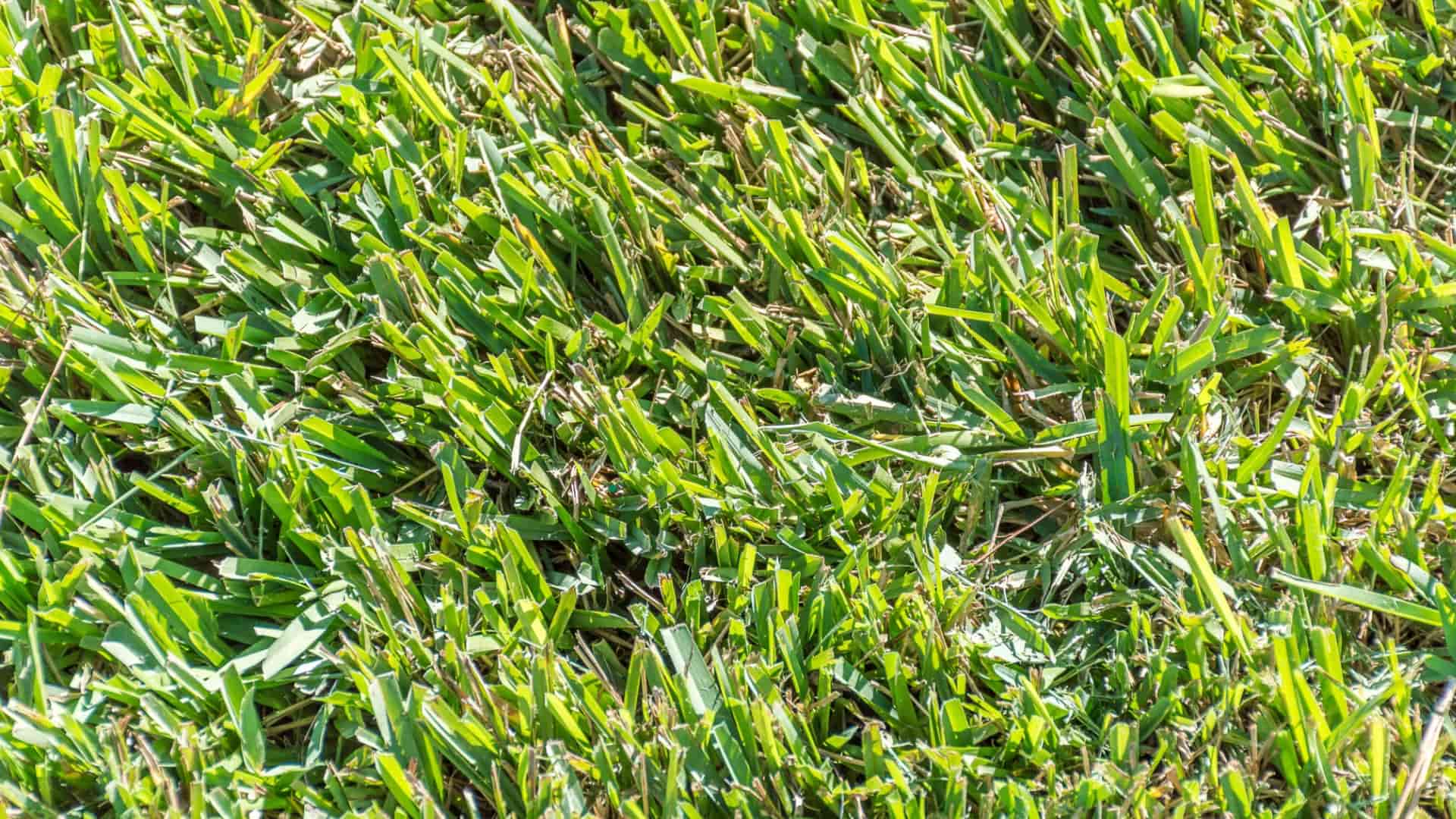
Centipede grass does not ask for much. It grows slowly, needs little fertilizer, and handles itself in ways that most other grasses simply do not.
What It Looks Like: Coarse, medium green texture. Spreads through above-ground runners. Forms a low, dense layer that is easy to edge around garden beds and paths.
Where It Grows Best: Southeast US and Texas Gulf Coast.
| Pros | Cons |
|---|---|
| Very low maintenance with minimal fertilizer needs | Cannot handle heavy foot traffic |
| Easy to edge and manage around flower beds and walkways | Sensitive to high-pH soil or over-fertilization |
| Naturally suppresses some weeds through consistent coverage | Struggles in hot, dry conditions without regular watering |
Best For: Low-traffic southern yards where easy upkeep is the top priority.
Quick Care Note: Mow at 1.5 to 2 inches. Avoid over-fertilizing, as it tends to do more damage than good for the centipede.
9. Bahia Grass
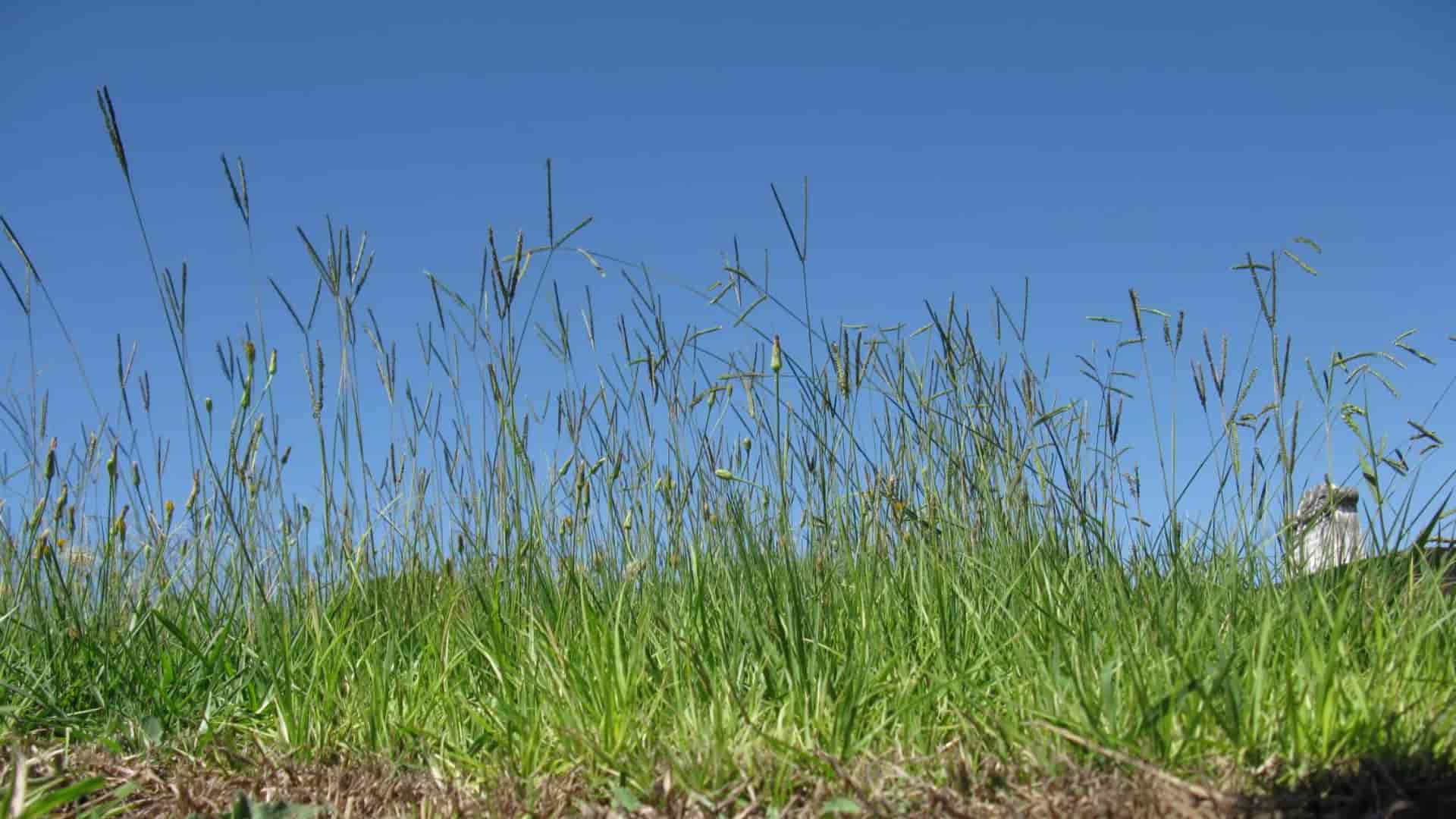
Bahia grass is not the most visually impressive option on this list. But it survives in conditions that would cause most other grasses to give up entirely.
What It Looks Like: Coarse, open growth with a V-shaped leaf arrangement. Medium green, with tall seedheads that require frequent mowing to manage.
Where It Grows Best: Florida, Gulf Coast states, and regions with sandy, acidic soil.
| Pros | Cons |
|---|---|
| Thrives in poor, sandy soils where other grasses fail | An open growth habit lets weeds move in easily |
| Very heat and drought-tolerant | Produces frequent seed heads that look untidy |
| Low fertilizer requirements | Will never give you a thick, dense appearance |
Best For: Low-budget, low-input lawns in hot, sandy areas of the deep South.
Quick Care Note: Mow often at 3 to 4 inches. One spring fertilizer application is usually enough.
10. Buffalo Grass
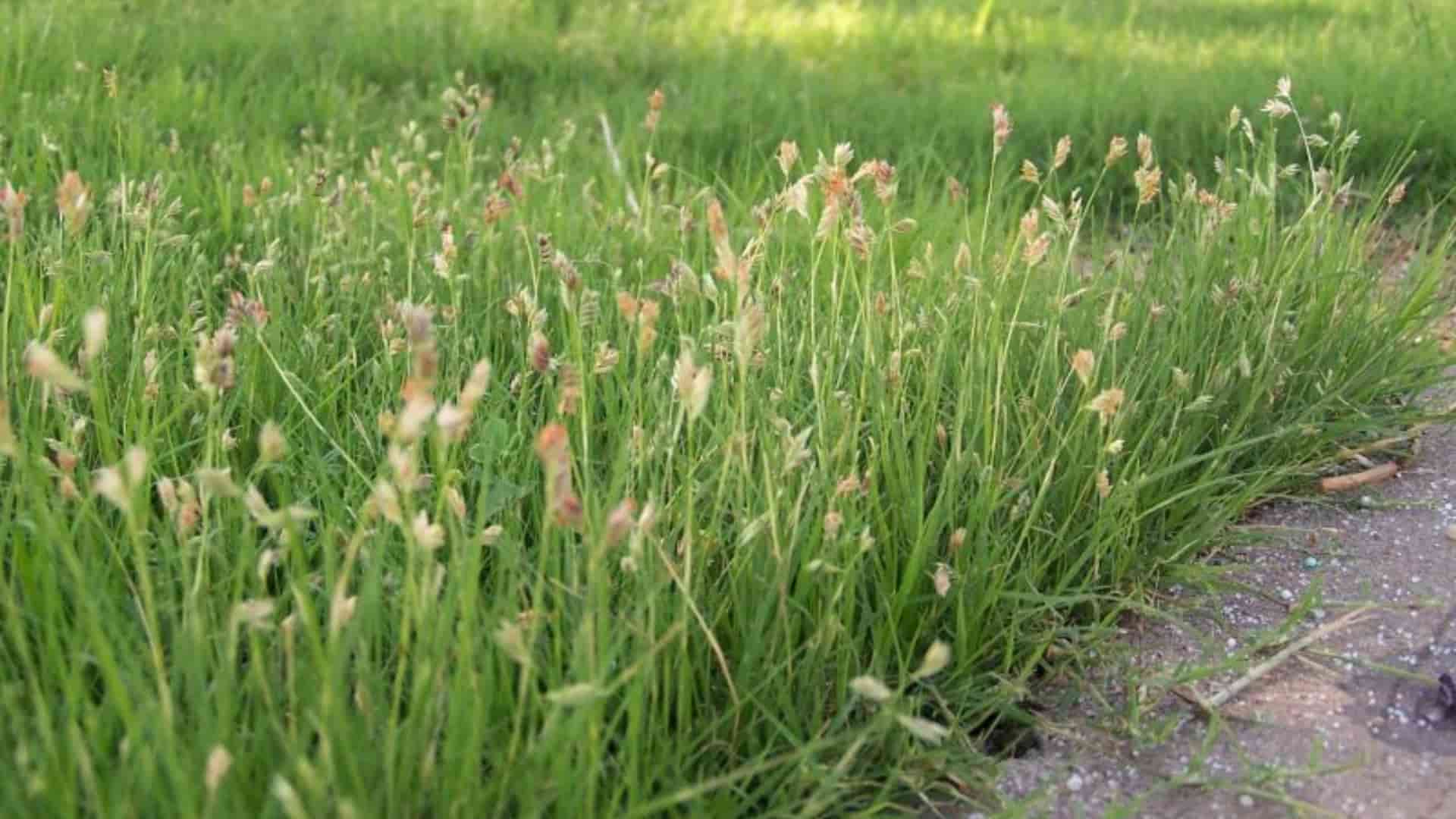
Buffalo grass is one of the few turfgrasses actually native to North America. It was a food source for bison and deer long before it became a lawn option, and it still carries that natural toughness today.
What It Looks Like: Fine texture, gray-green color. Grows low and sparse. Visibly different from most other lawn grasses in both tone and texture.
Where It Grows Best: Great Plains and Southwest US, specifically hot and dry regions with full sun.
| Pros | Cons |
|---|---|
| Lowest water requirements of any common lawn grass | Grows thin and sparse in shade |
| Needs mowing only about once a month | Does not hold up under heavy foot traffic |
| Deep roots handle heat and drought naturally | Slow to establish from seed |
Best For: Water-conscious homeowners in dry, sunny regions who want the lowest-maintenance lawn possible.
Quick Care Note: Only water when the grass shows visible stress. Mow at 3 to 4 inches, approximately once a month.
11. Bent Grass
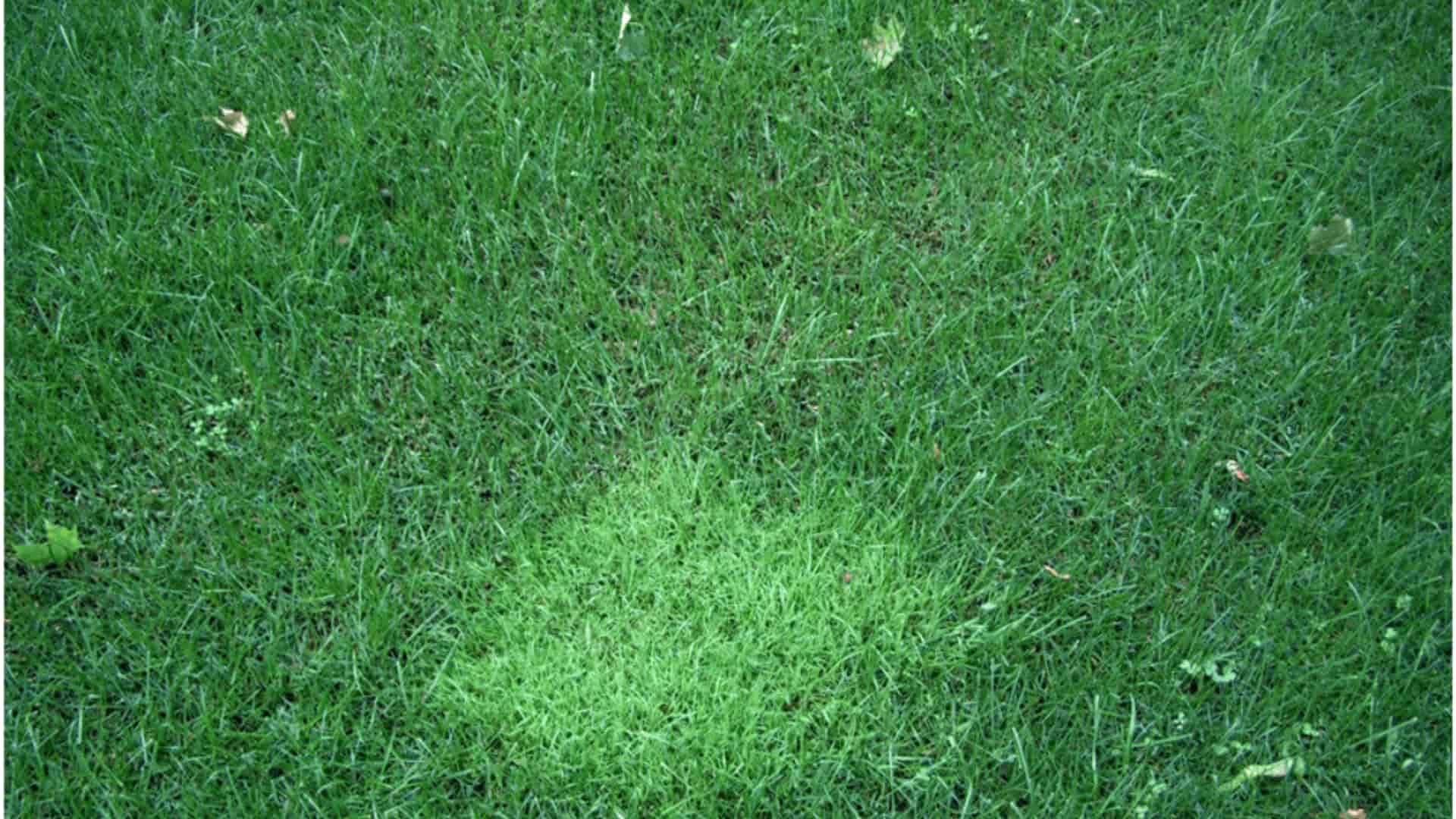
Bent grass is what you walk on at a professional golf course. It creates one of the smoothest, finest lawn surfaces available, but it comes with a care routine that most home lawns simply cannot support.
What It Looks Like: Extremely fine, dense blades. Can be mowed lower than almost any other grass type, sometimes under half an inch on professional putting greens.
Where It Grows Best: Northern US, Pacific Northwest, and cooler coastal climates.
| Pros | Cons |
|---|---|
| Creates an exceptionally smooth, fine-textured surface | Requires very high maintenance across mowing, watering, and disease management |
| Can handle a very low cutting height | Highly prone to fungal disease without consistent care |
| The gold standard for golf course putting surfaces | Not practical or cost-effective for typical home lawns |
Best For: Golf courses and specialty turf applications. Residential use is only realistic with professional-level support.
Quick Care Note: Not recommended for DIY home lawns unless you have significant lawn care experience or professional backing.
12. Carpet Grass
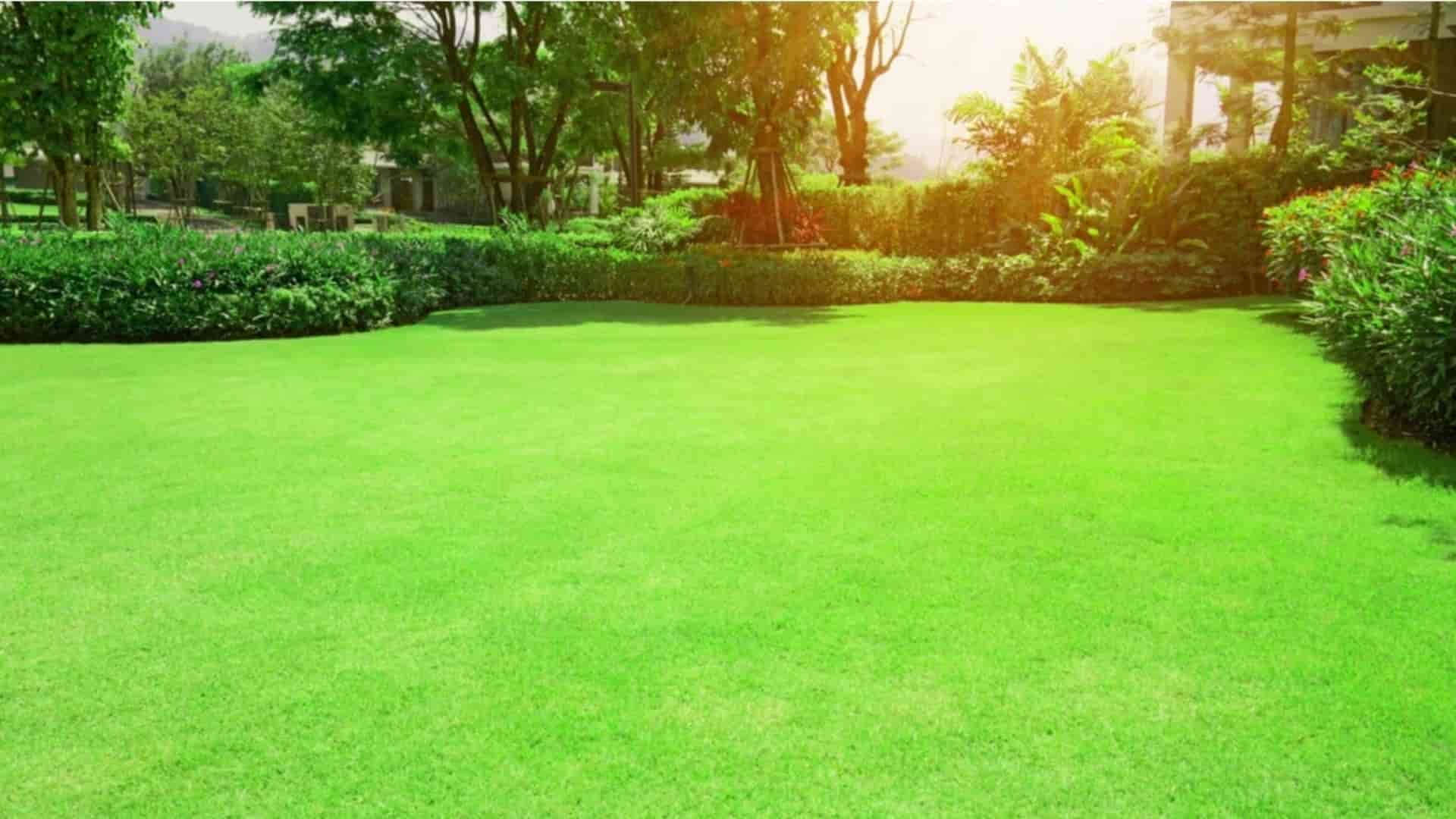
Carpet grass fills a gap that most grasses cannot: it grows in wet, low-lying, shaded areas with poor drainage and low soil fertility.
What It Looks Like: Broad, flat blades with rounded tips. Light green in color. Looks similar to St. Augustine but is lighter, less dense, and noticeably coarser.
Where It Grows Best: Gulf Coast states and humid southeastern areas with poor drainage or consistently wet ground.
| Pros | Cons |
|---|---|
| Grows in wet, low-fertility soils where most grasses cannot | Poor drought and cold tolerance |
| Tolerates part shade better than many warm-season types | Produces frequent seed heads that look untidy |
| Low fertilizer requirements | Not suited for northern climates at all |
Best For: Wet, low-lying yards in Gulf Coast states where drainage is a consistent issue.
Quick Care Note: Mow regularly to manage seed heads. Avoid heavy fertilizing as it feeds weeds more than the grass itself.
13. Kikuyu Grass
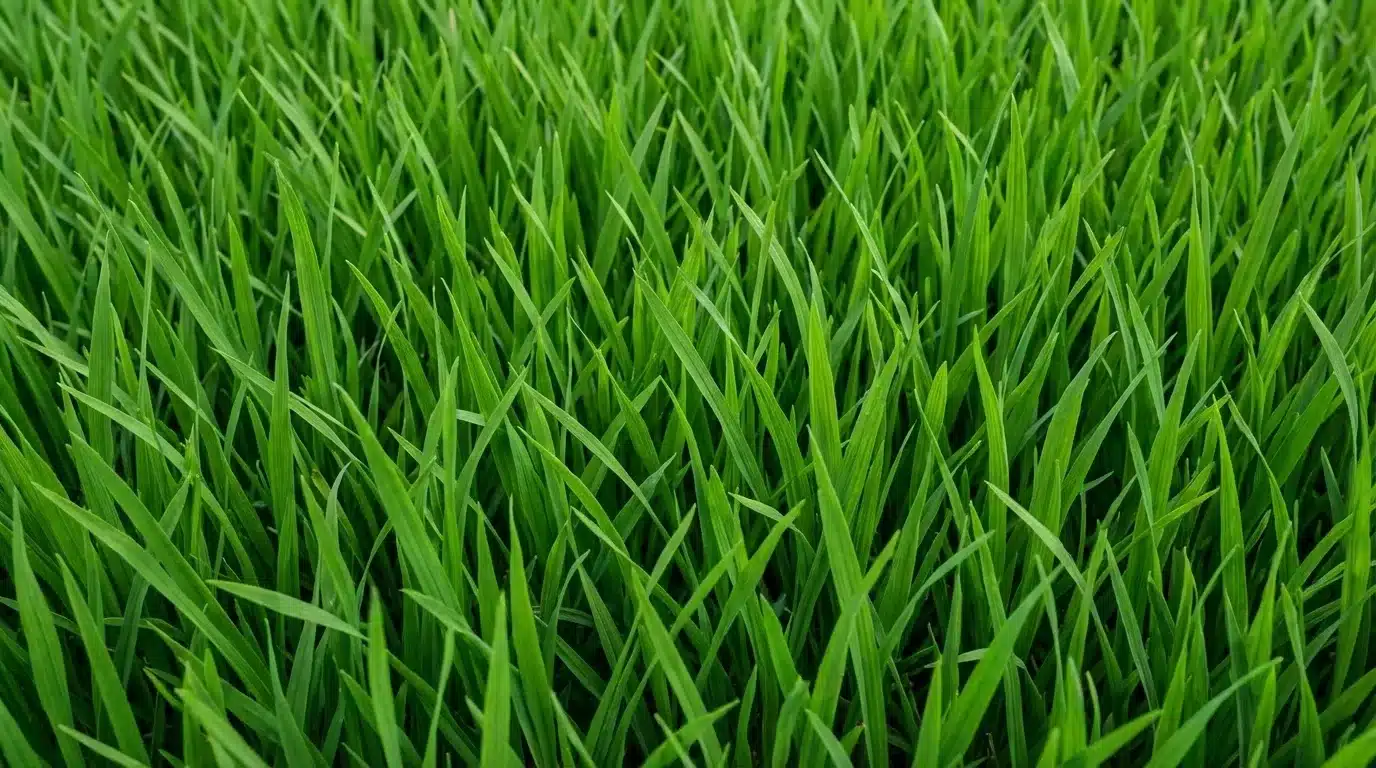
Kikuyu grass is one of the fastest-spreading types on this entire list. That quality is both its greatest strength and its most significant drawback.
What It Looks Like: Medium to coarse texture, bright green color. Spreads very aggressively through both above-ground runners and underground stems.
Where It Grows Best: Coastal California and mild, warm climates. Also used on some California golf courses and sports fields.
| Pros | Cons |
|---|---|
| Recovers from heavy wear faster than most grass types | Spreads so aggressively that it can invade flower beds and neighboring yards |
| Handles high foot traffic well | Very difficult to remove once established |
| Drought-tolerant once fully established | Listed as invasive in some US states |
Best For: High-traffic lawns in mild coastal climates where you are prepared to actively manage its spread.
Quick Care Note: Edge frequently to control the spread. Mow at 1 to 2 inches.
14. Paspalum Grass
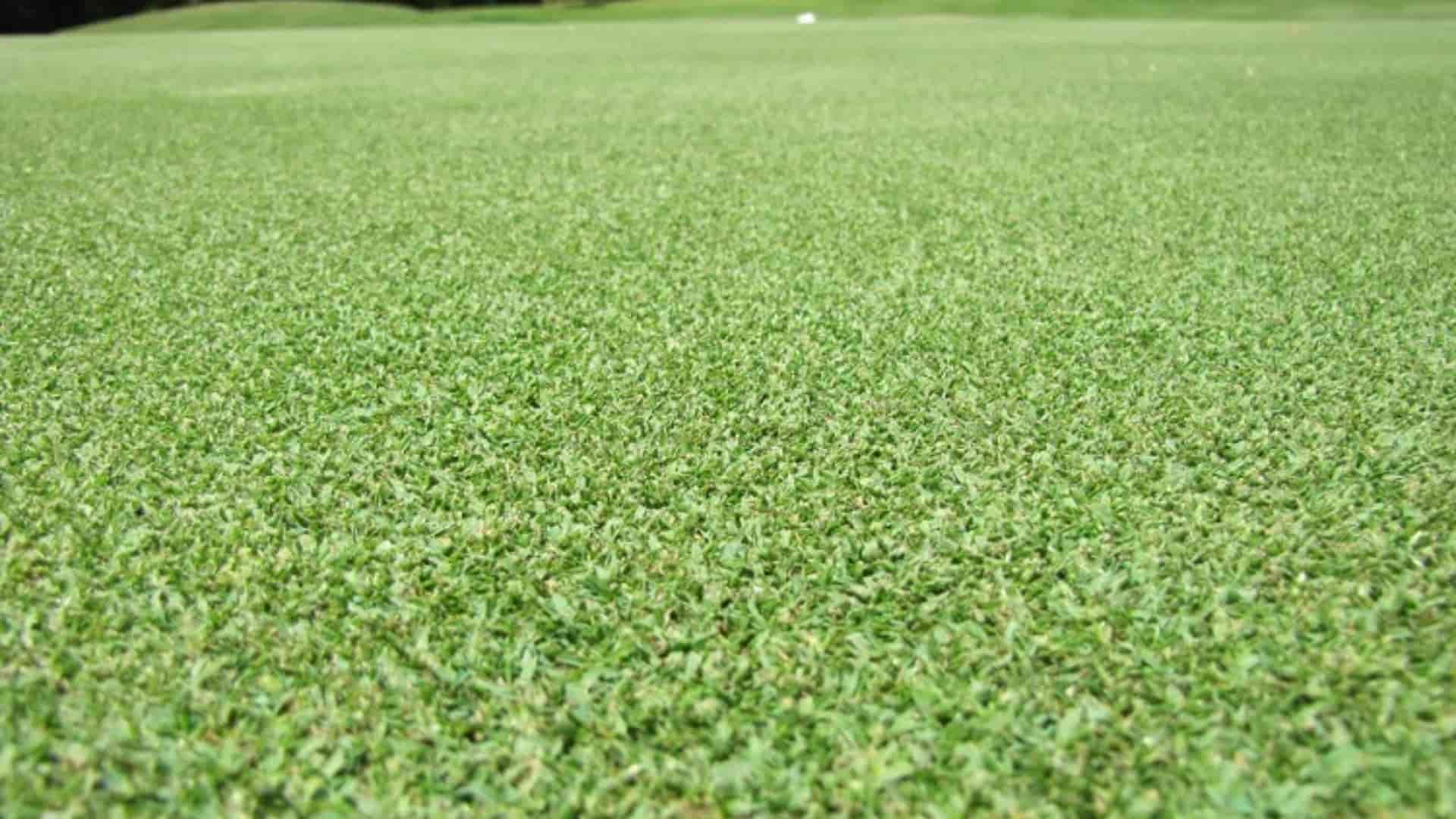
Paspalum is not a common choice for residential lawns, but it earns its spot on this list because of how well it performs under the demands of warm, humid sports fields and golf courses.
What It Looks Like: Medium texture, dark green when well-watered. Spreads through above-ground runners in a consistent, even growth pattern.
Where It Grows Best: Warm, humid areas of the Southeast, coastal states, and Hawaii.
| Pros | Cons |
|---|---|
| Handles high humidity and intense heat very well | One of the most expensive grass seed types available per pound |
| Strong performer on sports fields and premium lawns | Needs regular watering and fertilizing to stay healthy |
| Takes a consistent mowing schedule without thinning | Limited availability in retail stores |
Best For: Warm, humid sports fields and high-end lawns in southern coastal areas.
Quick Care Note: Fertilize regularly during the growing season. Mow at 1 to 2 inches.
15. Seashore Paspalum
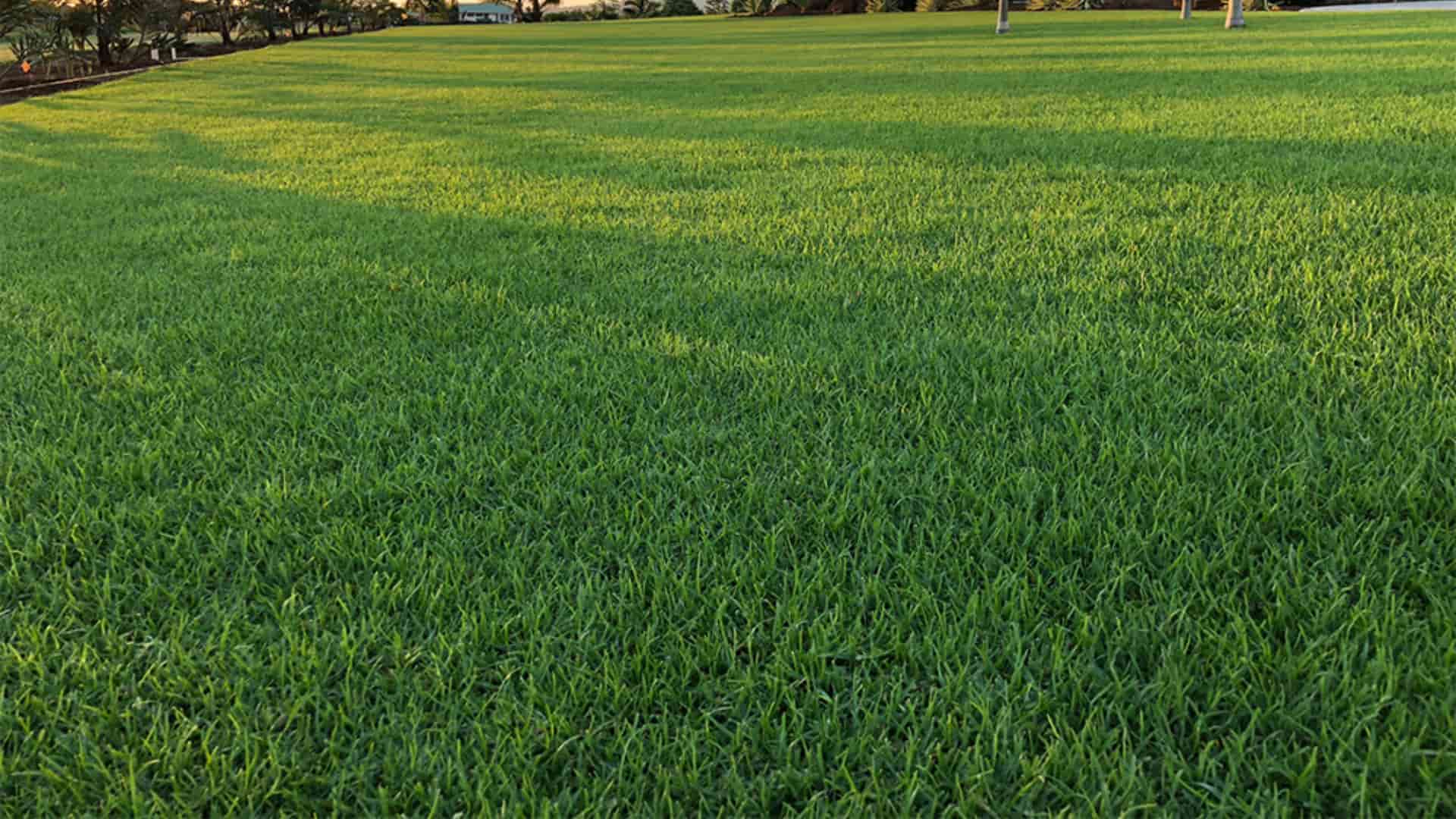
Seashore paspalum solves a specific problem that most grasses simply cannot handle: growing well in high-salt soil.
What It Looks Like: Similar to standard paspalum but slightly finer and more compact in texture. Medium green color with a clean, consistent appearance.
Where It Grows Best: Coastal areas with saline or salt-affected soil, especially Florida, Hawaii, and Gulf Coast states.
| Pros | Cons |
|---|---|
| Handles salt spray, saline irrigation, and salty soil better than almost any other grass | Needs warm temperatures year-round and is not cold-hardy |
| Used on coastal golf courses specifically for salt tolerance | Limited seed availability through retail channels |
| Tolerates some shade, uncommon among warm-season types | Requires steady care to maintain a healthy appearance |
Best For: Coastal homeowners dealing with salt-affected soil or limited access to fresh water for irrigation.
Quick Care Note: Can be watered with slightly brackish water when fresh water is limited. Mow at 0.5 to 2 inches, depending on intended use.
16. Annual Ryegrass
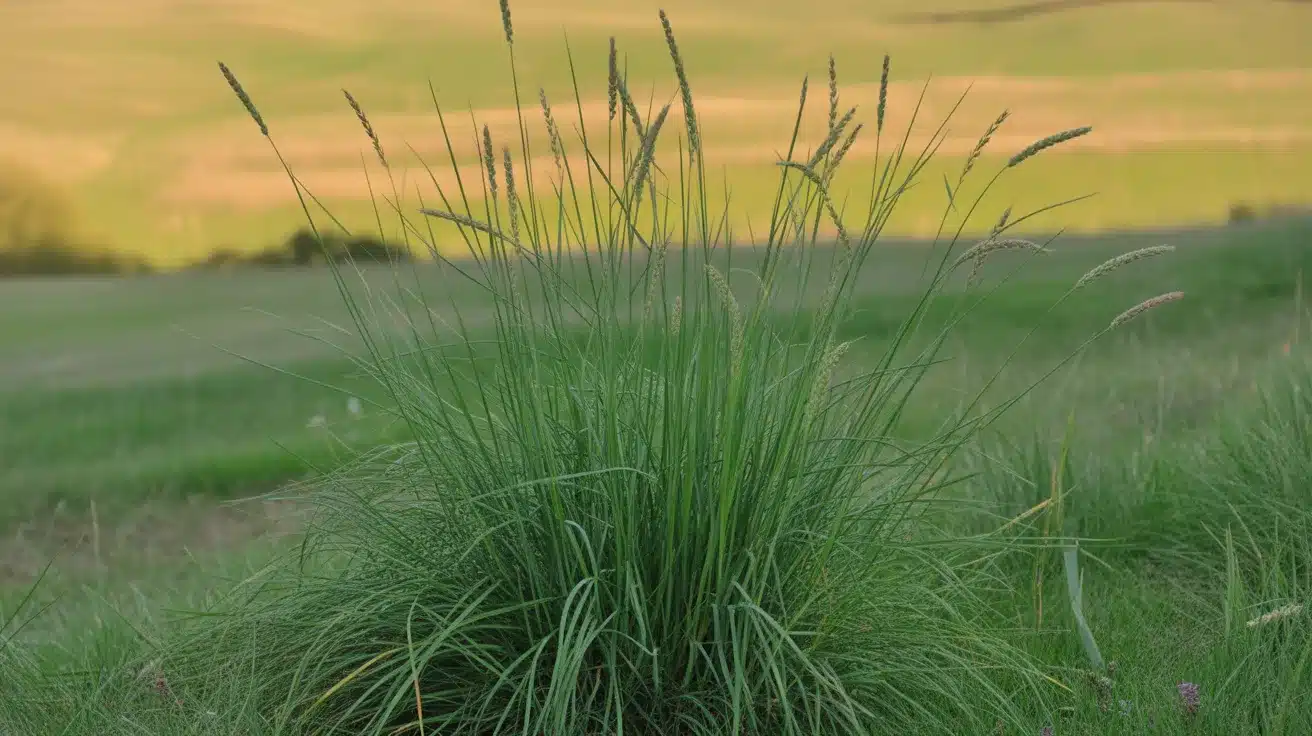
Annual ryegrass is not a permanent lawn solution. It is the grass you reach for when you need coverage fast, or when you want to keep a dormant warm-season lawn looking green through the winter months.
What It Looks Like: Narrow, bright green, shiny blades. Grows quickly and dies when summer heat arrives, unlike its perennial counterpart.
Where It Grows Best: Used across the US as a temporary or overseeding grass. Not intended as a permanent lawn variety.
| Pros | Cons |
|---|---|
| Very affordable, one of the cheapest seed options per pound | Dies in summer heat, leaving bare spots if no permanent grass is in place |
| Germinates in as little as 5 to 7 days | Not a long-term lawn solution by any measure |
| Provides effective winter color on dormant warm-season lawns | Can compete with permanent grass in spring if overseeded too heavily |
Best For: Temporary winter color on warm-season lawns, quick erosion control, or covering bare ground while a permanent lawn gets established.
Quick Care Note: Overseed southern lawns in early fall at 5 to 10 pounds per 1,000 sq ft. Do not rely on it to carry through the summer.
Types of Grass by Region
Your location is the single most important factor in narrowing down the right grass for your lawn. Here is a quick breakdown of which grass types perform best in each of the major US growing regions.
- Northern US: Kentucky bluegrass, tall fescue, fine fescue, and perennial ryegrass perform best here, where winters run cold and summers stay moderate.
- Southern US: Bermuda, St. Augustine, Zoysia, Centipede, and Bahia grass are the go-to choices across the South, where summers are hot, and winters stay mild.
- Transition Zone: Tall fescue and Zoysia hold up best in this difficult middle ground, where summer heat and cold winters make life hard for most grass types.
- Southwest / Arid Regions: Buffalo grass, drought-tolerant Bermuda, and fescue blends handle low rainfall and intense heat better than almost any other options available.
How to Identify Your Grass Type?
If you moved into a home with an existing lawn, figuring out what is already growing there is the first step before you buy seed, fertilizer, or any lawn care products. Here are three reliable ways to identify your grass type using nothing but your eyes and hands.
Look at Blade Shape and Texture
Run your fingers across the blades and pay attention to the width and feel. Fine, narrow blades are typical of ryegrass, fine fescue, or Bermuda. Wide, flat blades suggest St. Augustine or tall fescue. If the grass feels stiff and prickly underfoot, Zoysia is a likely match. An extremely fine, dense surface is usually a sign of bent grass.
Check the Leaf Tip Shape
Pull one blade and look closely at the very tip. Rounded tips are common in St. Augustine and carpet grass. Sharp or pointed tips appear in Bermuda, Zoysia, and tall fescue. A tip that pinches into a shape like the front of a canoe is a strong indicator of Kentucky bluegrass.
Notice Color and Growth Pattern
Watch how the grass spreads and what shade of green it carries. Dark green with visible surface runners points to Bermuda. Light green with very slow spreading is typical of Zoysia or centipede.
Bright, shiny green growing in tight clumps is most likely ryegrass. Gray-green and very sparse with fine blades is almost always buffalo grass.
For a more precise confirmation, look at the vernation, which is how new leaf shoots are arranged when they first emerge. Some grasses fold, others roll.
This small detail is one of the most dependable ways to confirm your grass type.
Grass Care Tips by Season
Your lawn does not need the same care in January that it needs in July, and knowing the difference can save you real time and money throughout the year. Here is what to focus on in each season, broken down by grass category.
| Season | Cool-Season Grasses | Warm-Season Grasses |
|---|---|---|
| Spring | Fertilize, apply pre-emergent weed control, and begin regular watering | Hold off on fertilizing until late spring when active growth resumes |
| Summer | Raise mowing height, water early, watch for fungal patches | Peak growing season, mow, fertilize, and water consistently |
| Fall | Best time to seed or overseed, aerate before fertilizing | Reduce watering and feeding as growth slows before dormancy |
| Winter | Light mow if still growing, test soil pH for spring prep | Fully dormant, avoid foot traffic, no feeding or watering needed |
How to Choose the Right Grass for Your Lawn
Choosing comes down to four things: where you live, how much sun your yard gets, how much use the lawn takes, and how much time you are willing to spend on upkeep.
A family yard with dogs and kids in Texas needs a completely different grass than a shaded, low-traffic yard in Ohio.
Get honest about your actual conditions first, and the right types of grass for your lawn will become clear on their own.
Summing It Up
Picking the right grass is not about finding the most popular option. It is about matching what you plant to the actual conditions of your yard.
Different types of grass come with different strengths and weaknesses. Some handle heat and drought well. Others do better in shade or cold. Some need very little from you throughout the year. Others require steady care to stay healthy season after season.
Once you know your region, how much sun your yard gets, and how your lawn is used day to day, you are most of the way there. The rest is just maintenance.
Have a question about a specific grass type, or not sure what you are already growing? Drop it in the comments below.