Your front yard is the first thing anyone sees. Before a guest even knocks, they have already made up their mind about your home.
And if you live somewhere hot and dry, keeping that first impression fresh can feel like a losing fight with the heat and the soil.
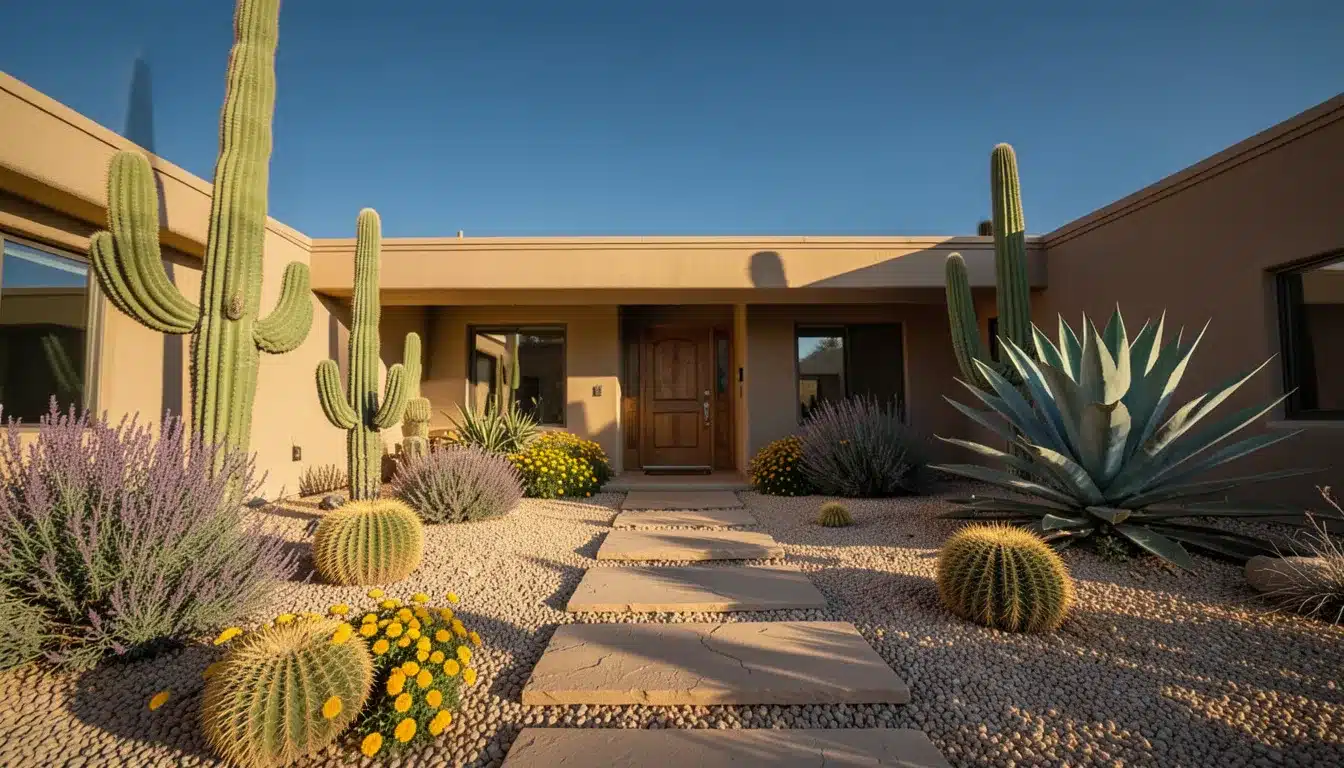
A desert landscape front yard does not need green grass or a sprinkler running twice a day. It needs the right plants, the right materials, and a plan that fits your space.
This blog walks you through real ideas to improve your curb appeal, desert landscape, and front yard. You will also find plant picks, budget tips, and year-round care advice. Let us get into it.
How to Add Curb Appeal to Your Front Yard?
The fastest way to add curb appeal is to start with a clean slate. Pull out dead plants, remove weeds, and sharpen up the edges.
Then lay fresh gravel or mulch, add a few low-water plants near the entry, and make sure your path to the front door is clear and easy to see.
You do not need a full redesign. Small, focused changes make a bigger visual difference than most people expect.
How to Plan Your Desert Front Yard Before You Start
You can find hundreds of front-yard ideas online, but most people skip the planning and end up paying for it later. Taking even 30 minutes to plan upfront saves you from buying the wrong plants, running out of gravel, or breaking an HOA rule you did not know existed.
- Check your climate zone: Look up your USDA hardiness zone to confirm your chosen plants can handle your local winters.
- Measure your yard: Know the square footage before you buy gravel, plants, or edging materials so you do not over- or under-order.
- Check HOA rules: Some communities have specific guidelines on rock color, plant types, and structures, so confirm before you spend anything.
- Set a budget: Decide how much you want to spend upfront and split it between materials, plants, and labor if needed.
- Map out sun and shade: Note which parts of your yard get full sun and which stay cooler, since this affects every plant choice you make.
- Sketch a rough layout: Even a simple pencil drawing helps you see spacing, pathways, and plant groupings before you start digging.
12 Curb Appeal Desert Landscape Front Yard Ideas
You do not need a big budget or a full crew to make your front yard stand out on the street. These ideas cover a range of yard sizes, personal styles, and price points, so there is something useful here for everyone.
1. Use Decorative Gravel and Rock Mulch
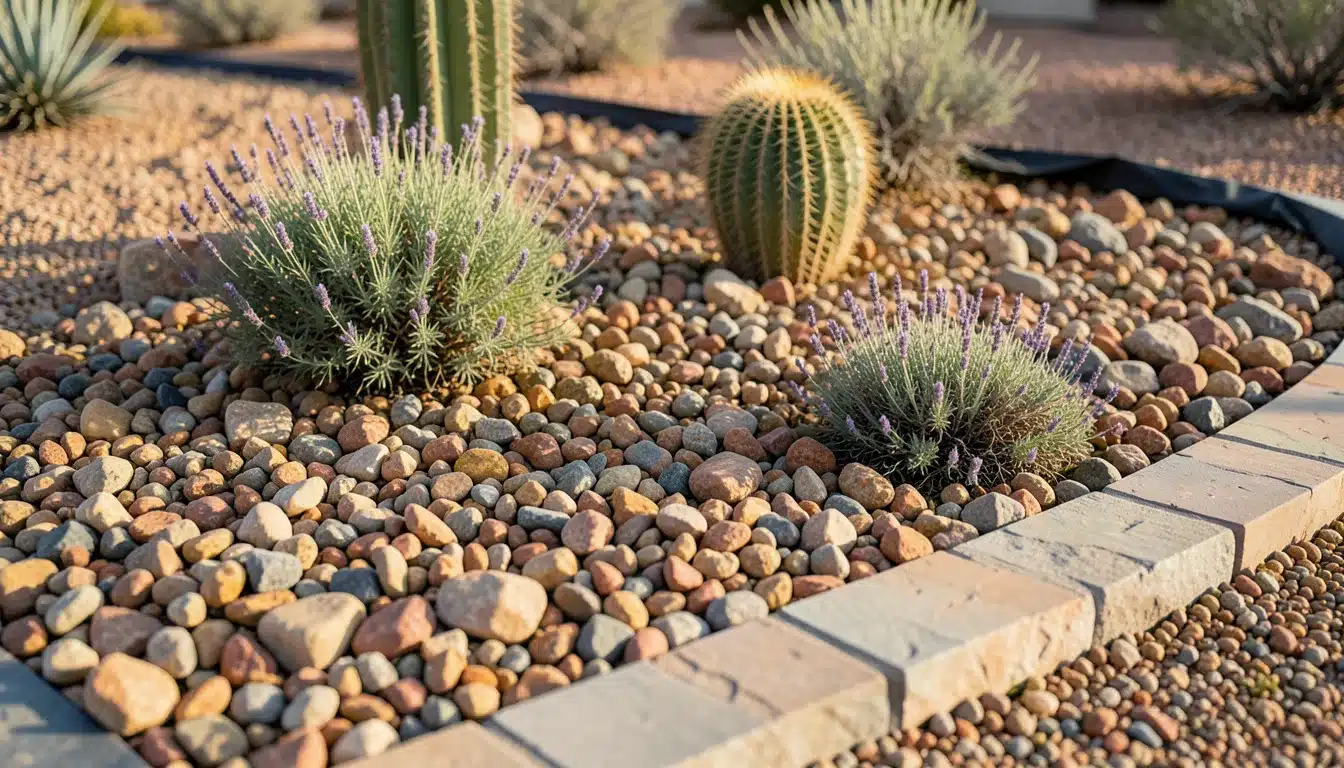
Gravel is one of the easiest changes you can make to a desert front yard. It comes in shades like tan, rust, white, and charcoal, so you can pick the one that works best with your home’s color. Always lay landscape fabric underneath it first. This one step blocks most weed growth before it starts.
2. Plant a Bold Cactus Collection
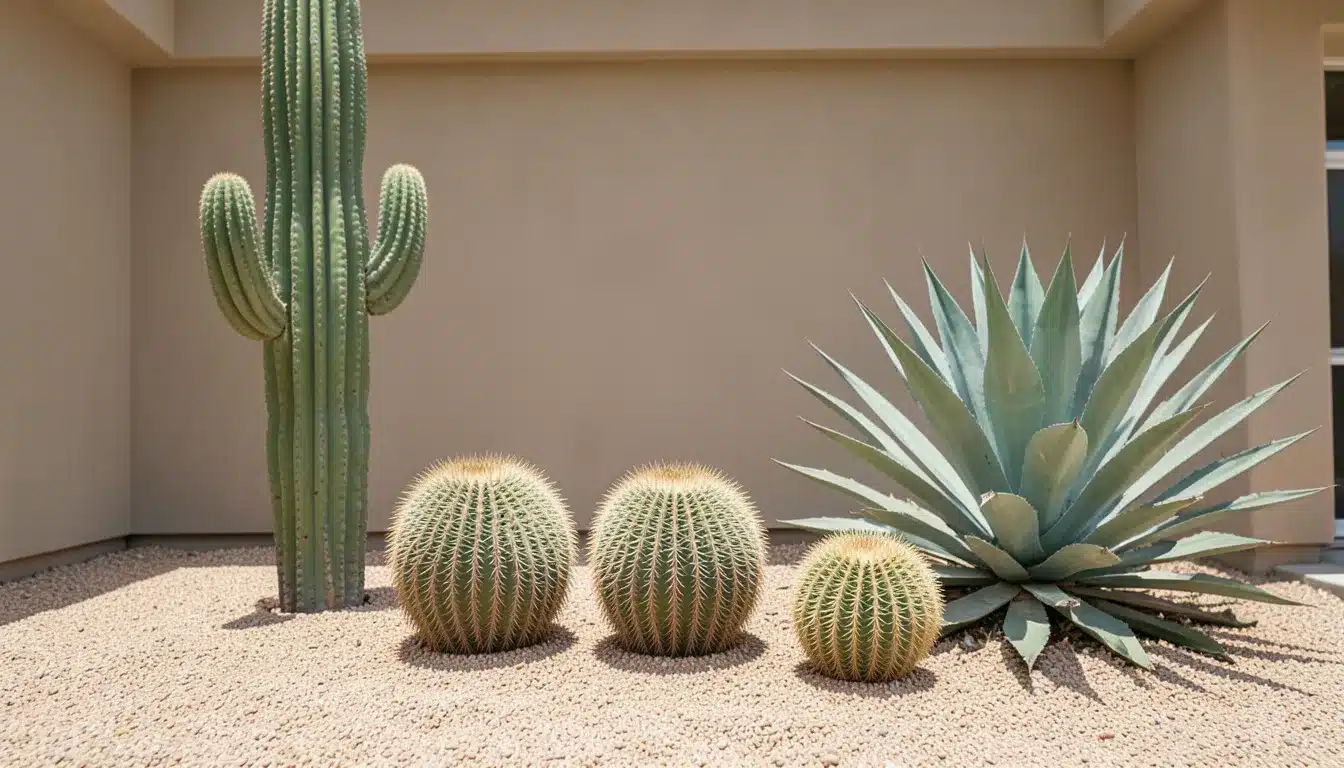
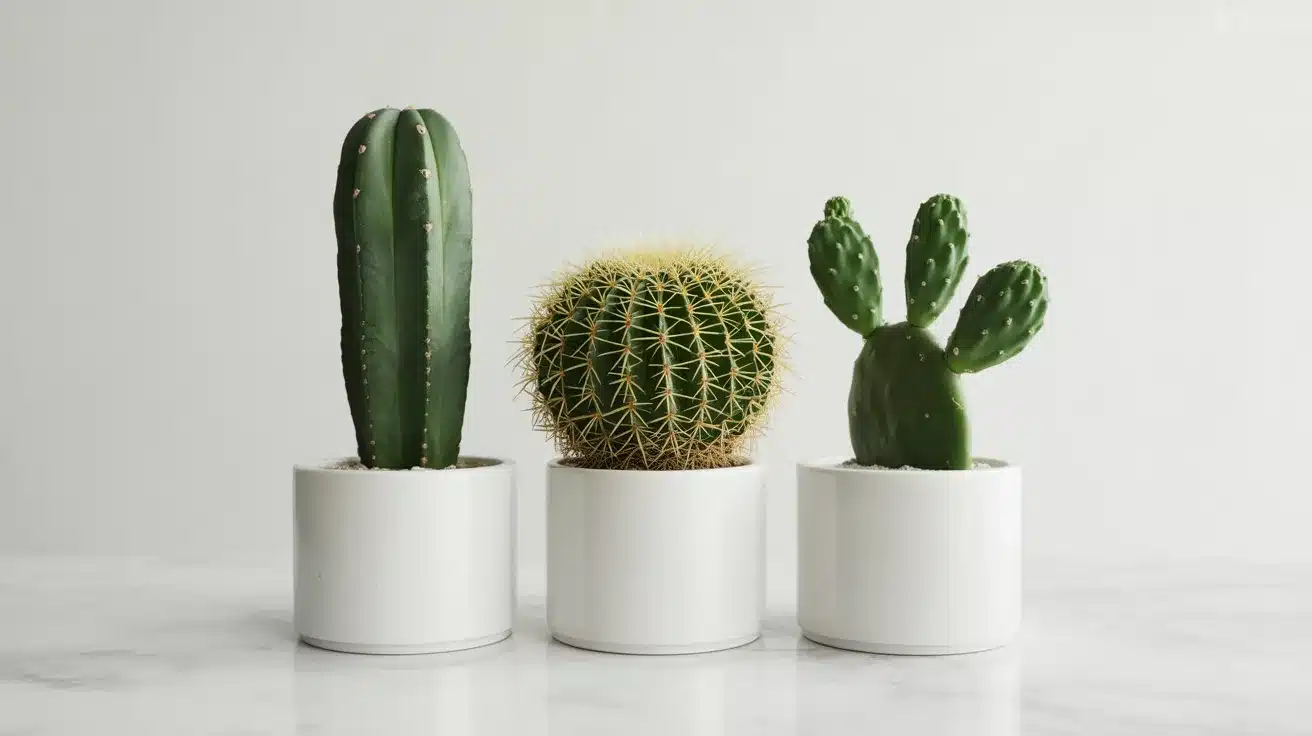
A well-placed group of cacti makes a strong visual statement without any extra effort on your part. Mix tall saguaros, round barrel cacti, and wide agaves to get contrast in height and shape. Plant them in odd-numbered groups of three or five. They naturally look better that way.
3. Add a Dry River Bed
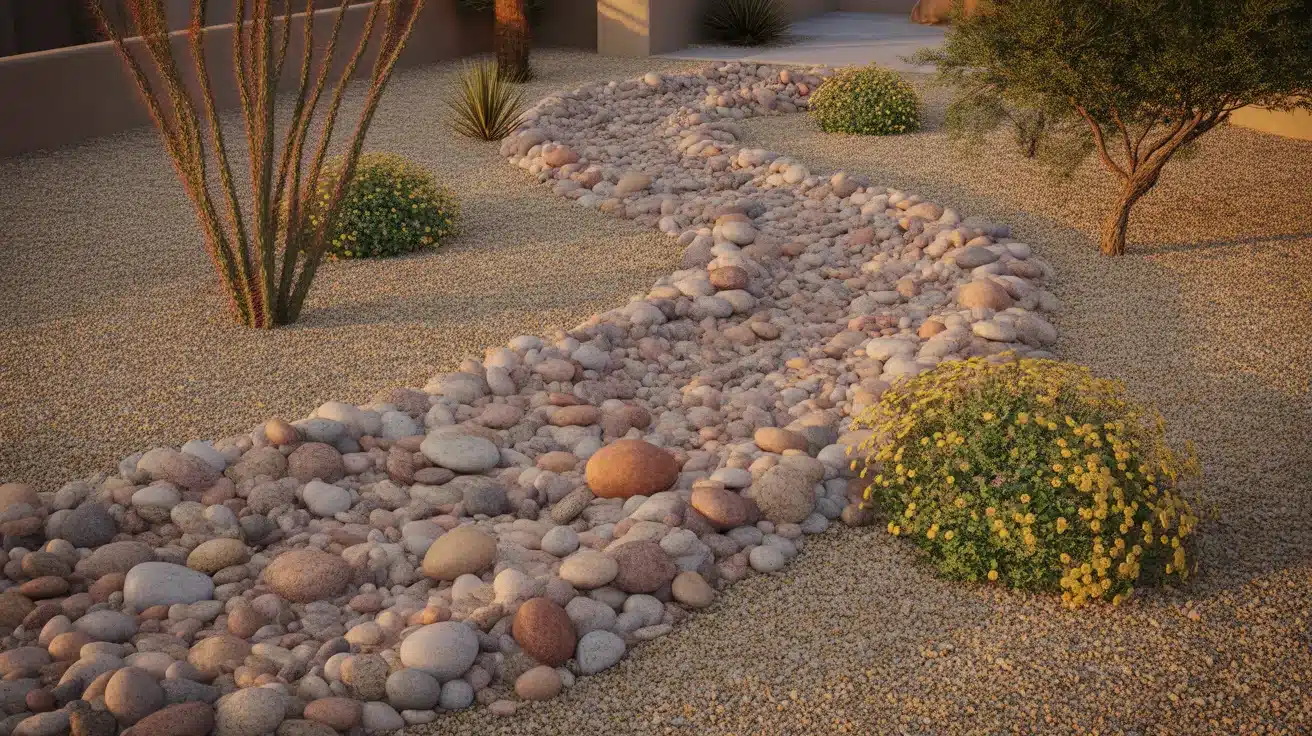
A dry riverbed uses rounded rocks arranged in a curved path to resemble a natural stream. It gives the yard a natural, grounded feel and channels rainwater away from your home during a storm. Use rocks of a few different sizes so it looks less arranged and more like it belongs there.
4. Layer Native Desert Plants
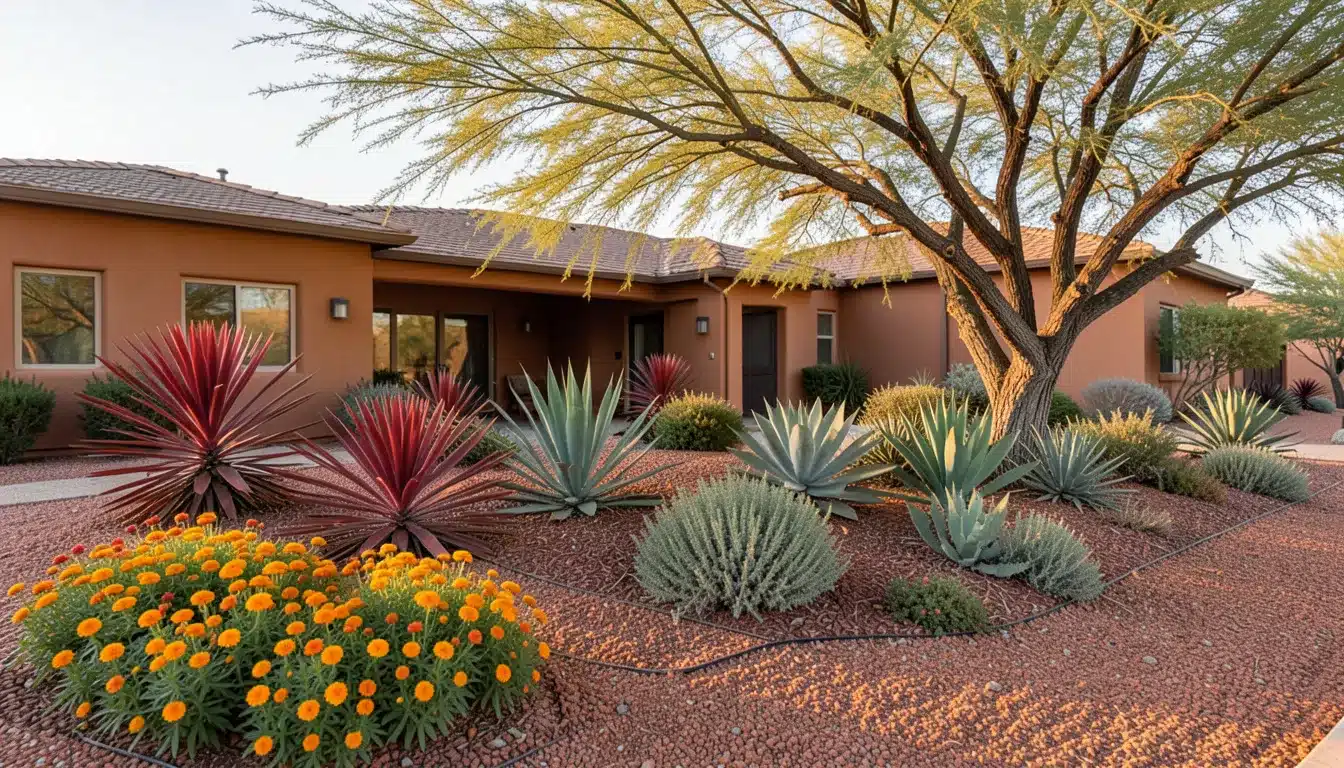
Layering means placing tall plants at the back, medium ones in the middle, and short ones at the front. This creates depth and makes the yard feel full without overcrowding any single area. Native plants are the best choice here because they need far less water once they settle in.
5. Create a Pathway With Stepping Stones
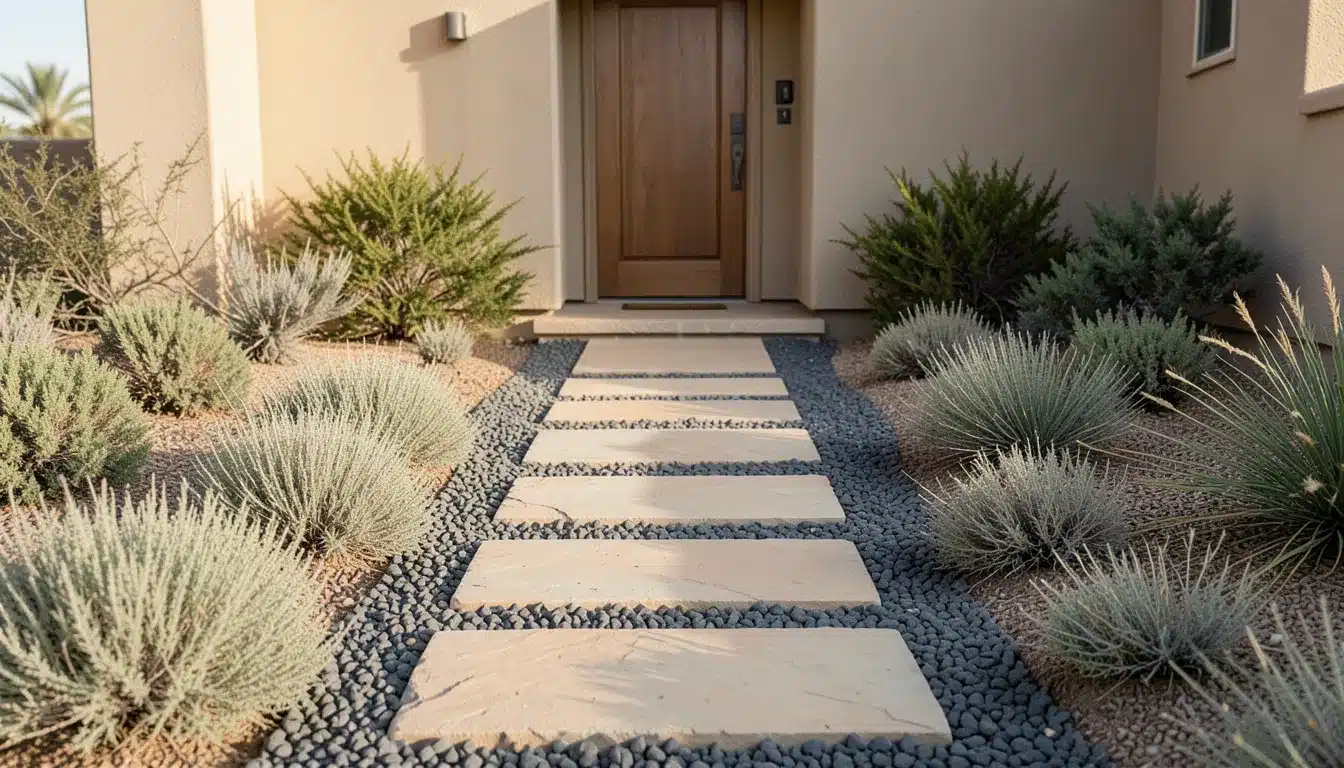
A clear path to your front door adds structure and ties the whole yard together visually. Use flat sandstone, slate, or concrete pavers spaced about 18 to 24 inches apart for comfortable walking. Fill the gaps between them with fine gravel or a low-growing ground cover for a finished look.
6. Use Desert-Friendly Ground Cover
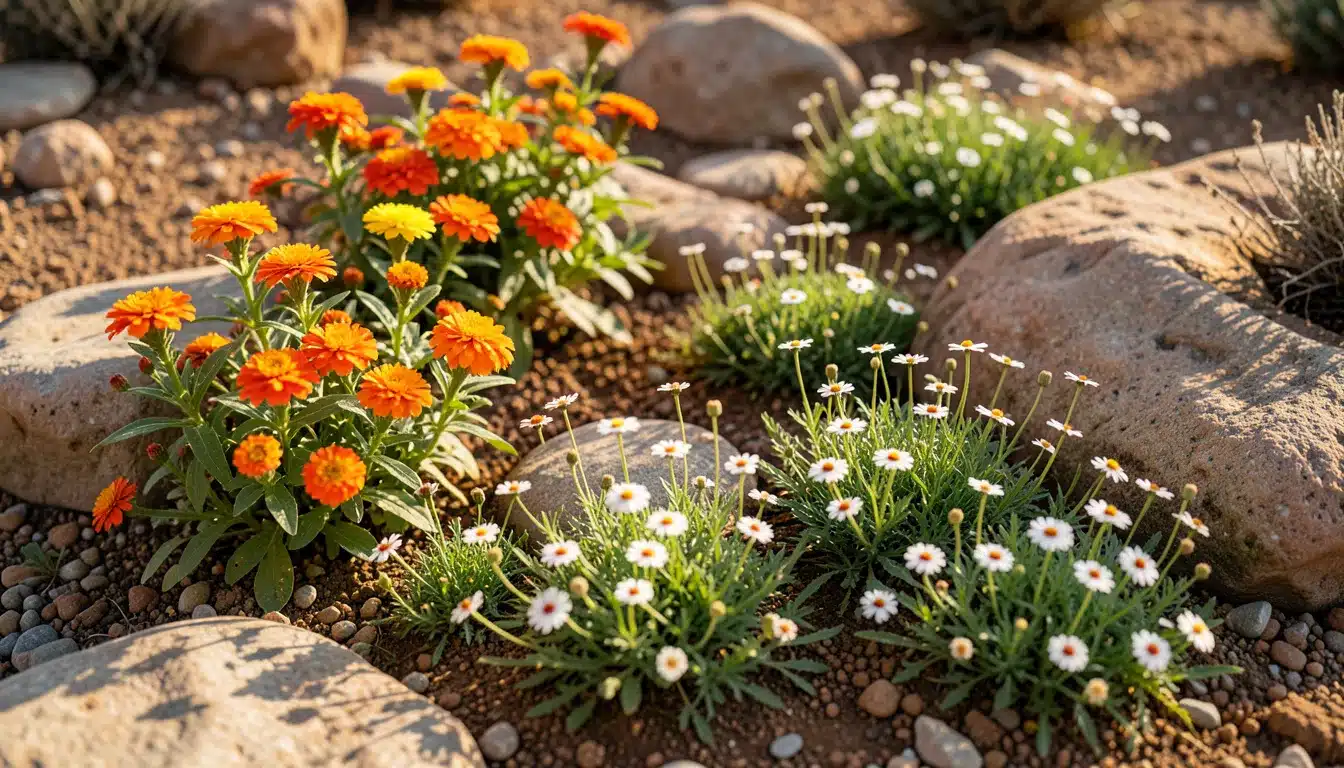
Ground covers fill bare patches and slow the soil from drying out too quickly in the sun. Good options include lantana, desert zinnia, and creeping thyme. Most of them spread on their own after the first growing season, so you’ll need less replanting.
7. Add Color With Flowering Desert Plants
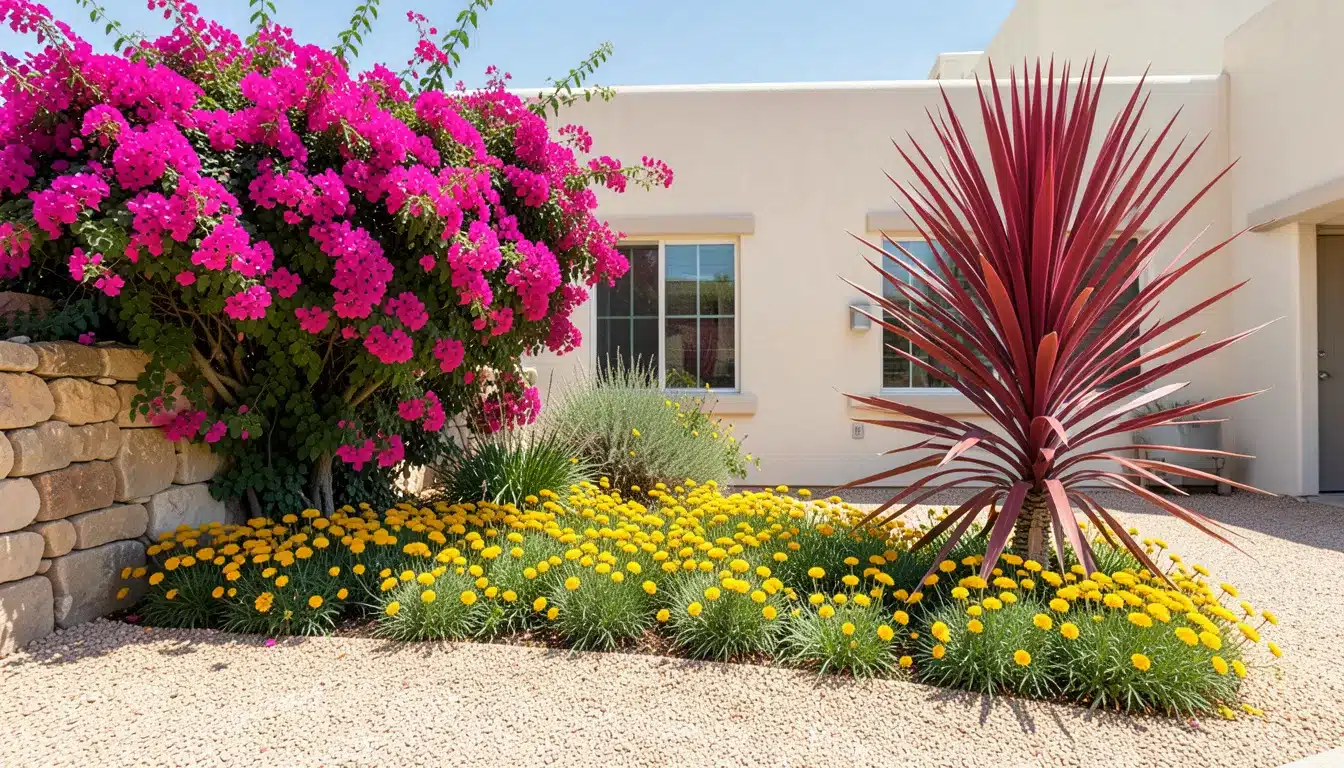
A lot of people assume desert yards only come in brown and green. That is far from the truth. Bougainvillea, desert marigold, and red yucca bring bright pinks, reds, and yellows that stand out sharply against neutral gravel. Plant them near your entrance or along your borders for the strongest visual hit.
8. Use Large Boulders as a Design Feature
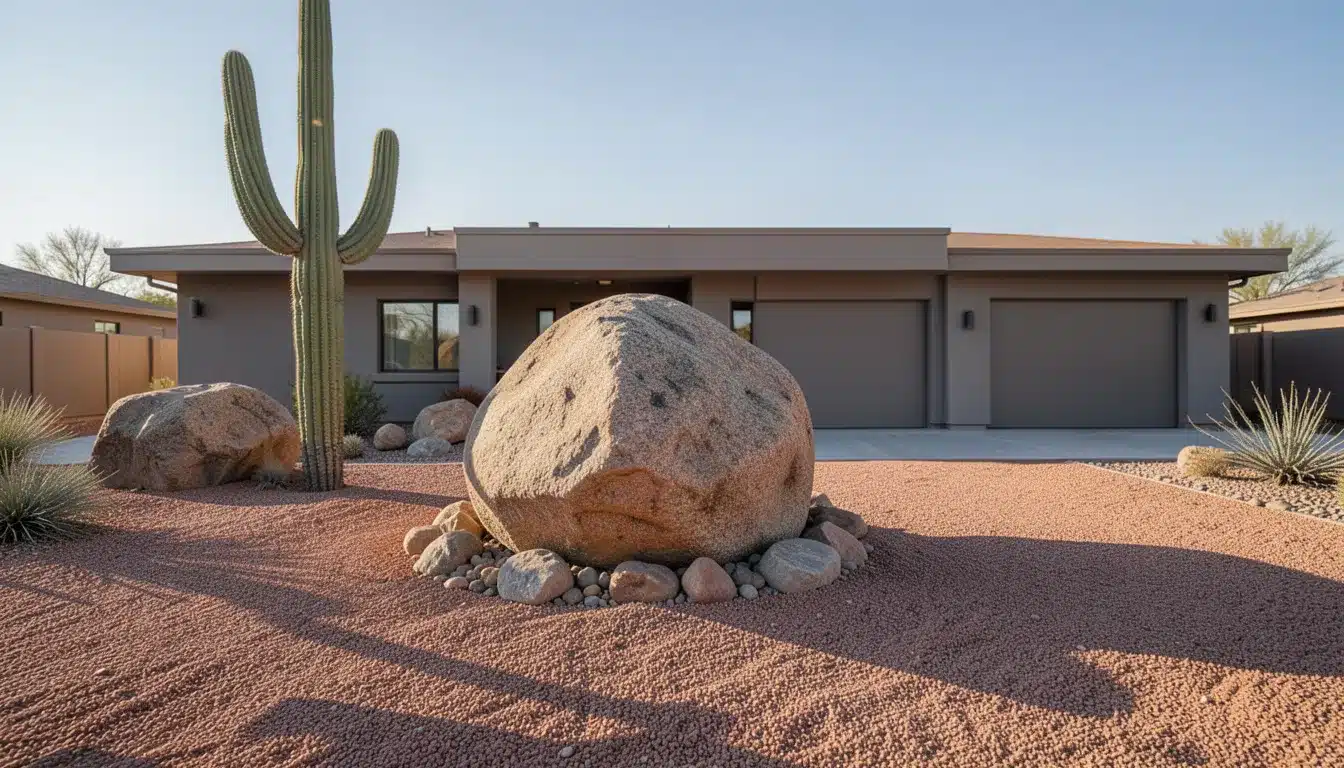
One or two large boulders can anchor your entire yard design and give it a grounded, solid feel. Choose boulders that match the natural rock colors found in your area. Place them slightly off-center rather than dead in the middle. This makes the yard look natural, not staged.
9. Frame the Entrance With Desert Trees
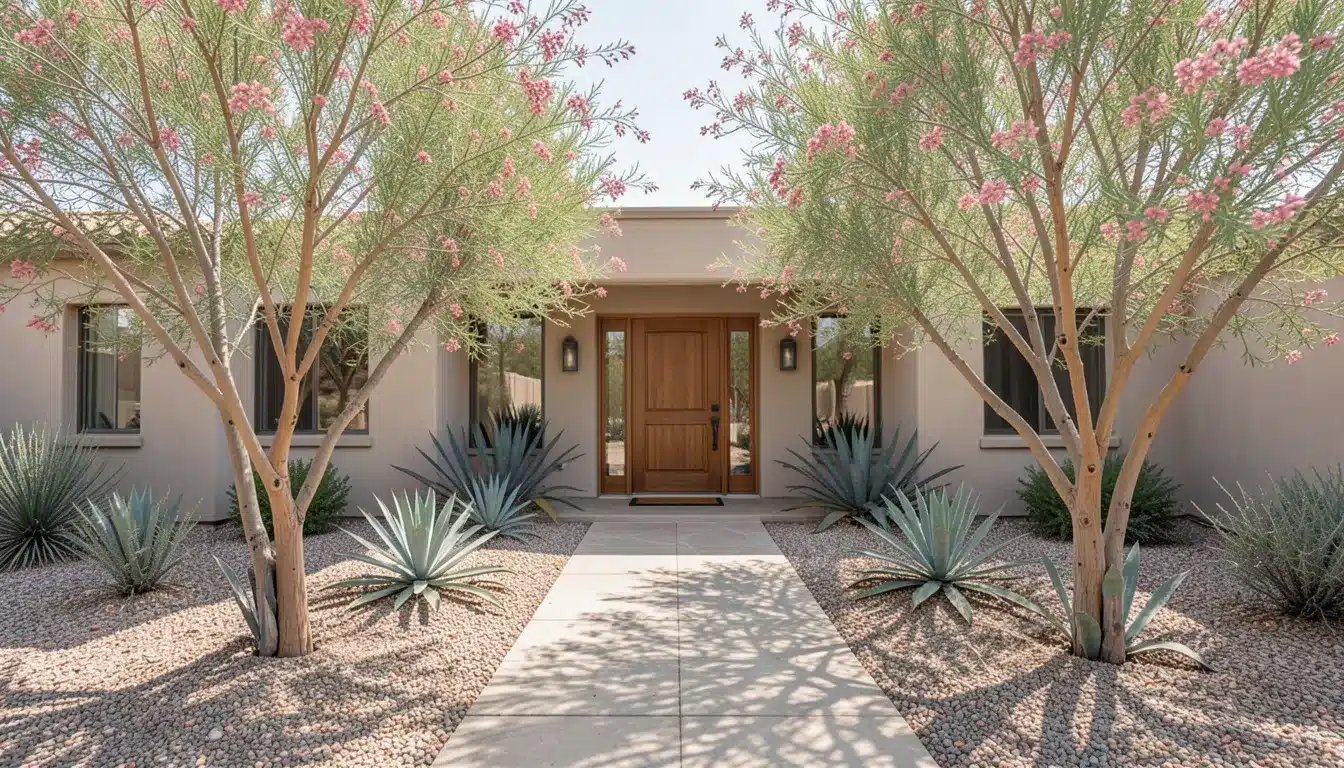
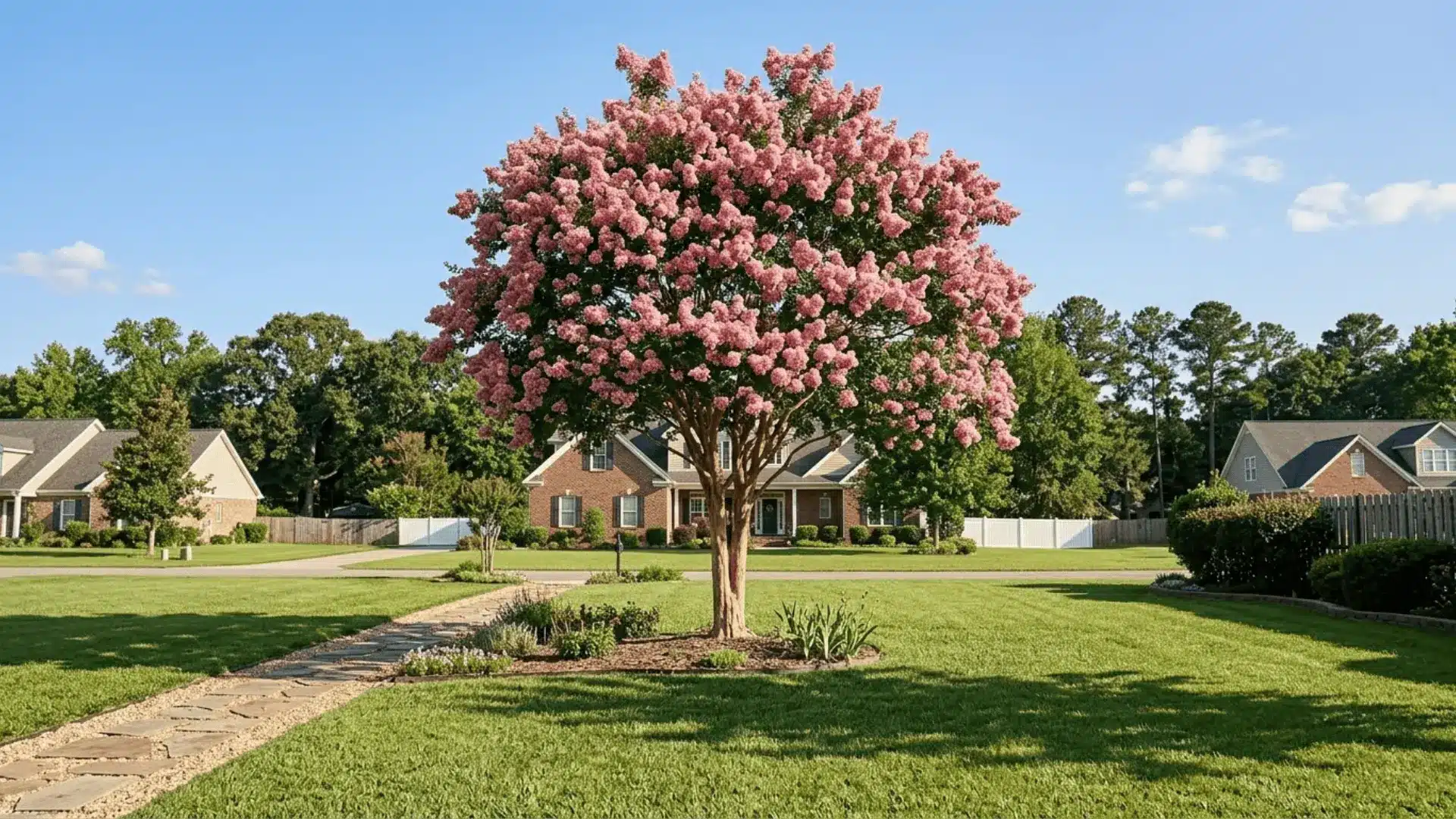
A desert tree on either side of your front path creates a welcoming frame without blocking the view of your home. Palo verde, desert willow, and ironwood are all solid choices. They grow tall enough to add structure and offer a little shade without demanding much care once established.
10. Add Outdoor Lighting
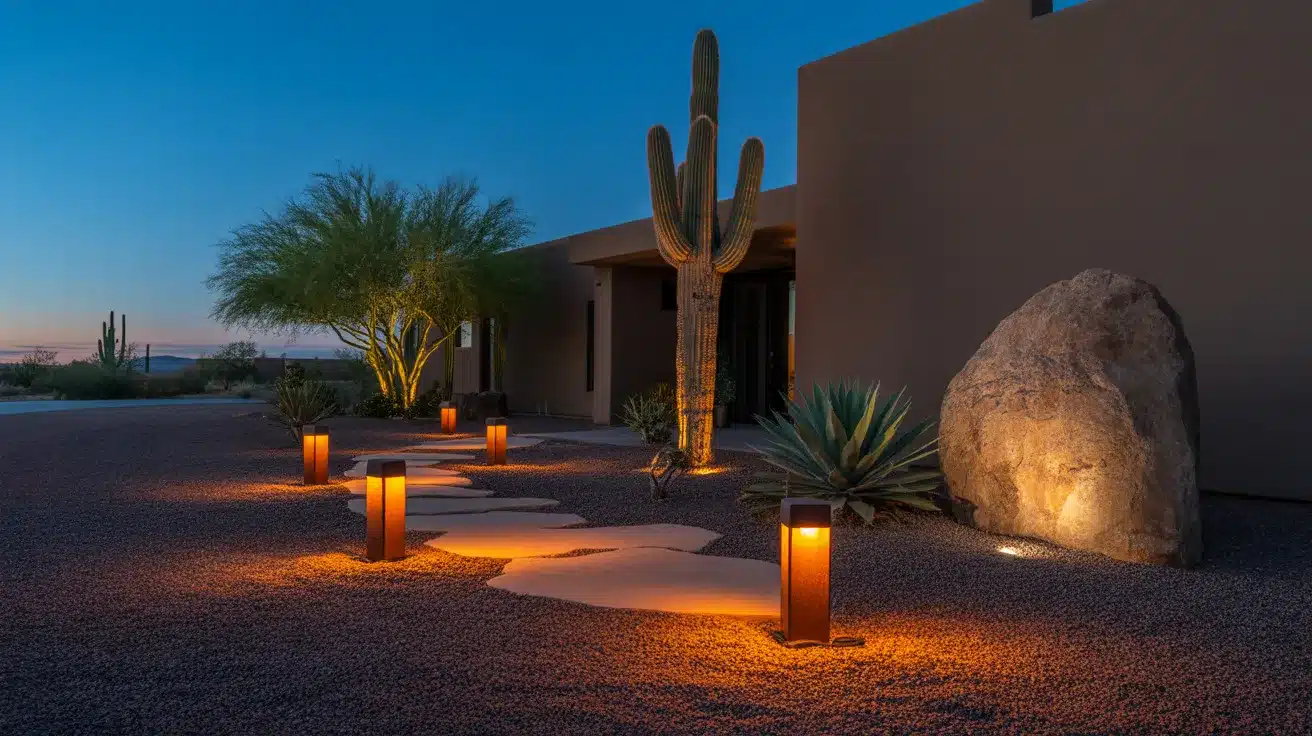
Lighting changes the feel of a front yard completely once the sun goes down. Solar-powered path lights work well along walkways, and upward-facing lights placed near trees or boulders add depth after dark. Use warm-toned bulbs to keep the look soft. Cool white light tends to feel harsh against earthy desert tones.
11. Try a Modern Desert Style
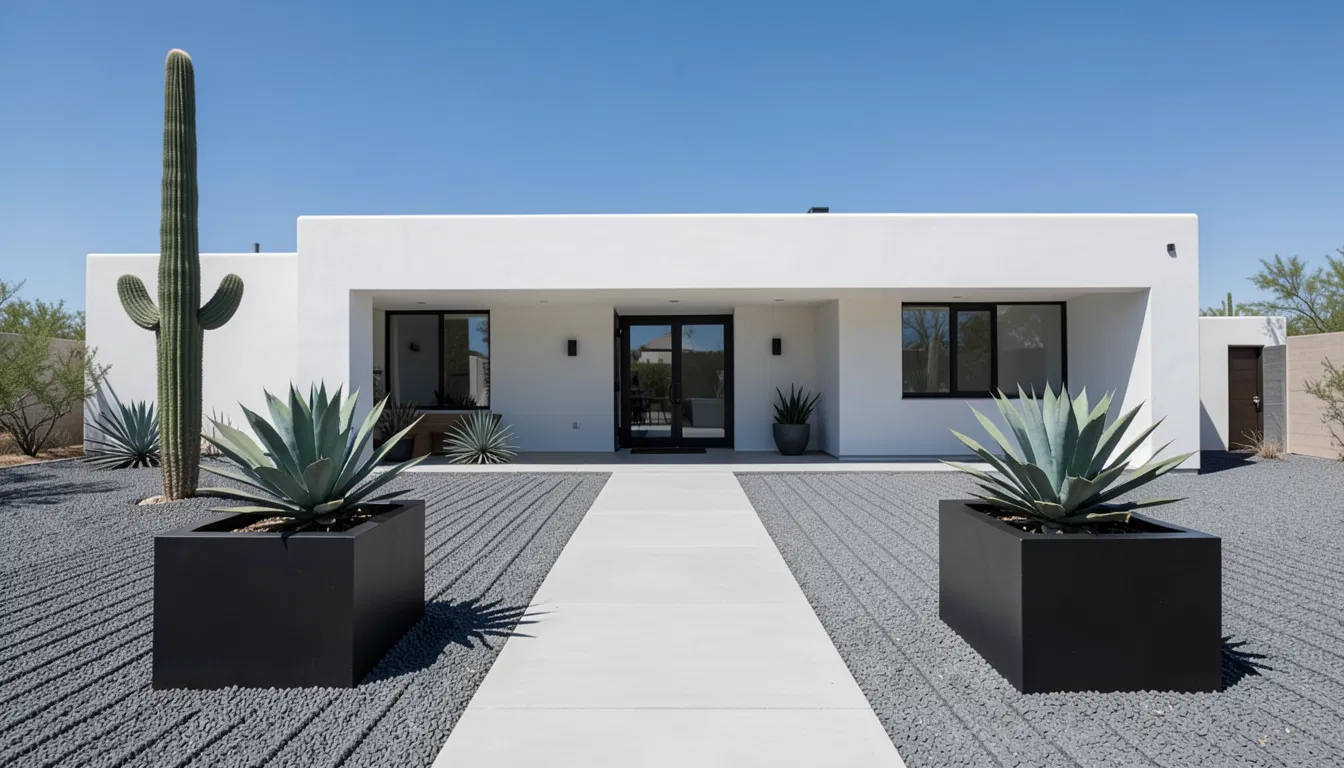
Modern desert design keeps things stripped back and sharp. Use concrete or metal planters, clean gravel lines, and one or two large statement plants, like agave or yucca, as the focal point. Stick to a neutral palette of white, gray, and black. The contrast with green or blue-green plants makes everything pop.
12. Build a Low Border Wall or Raised Planter Bed
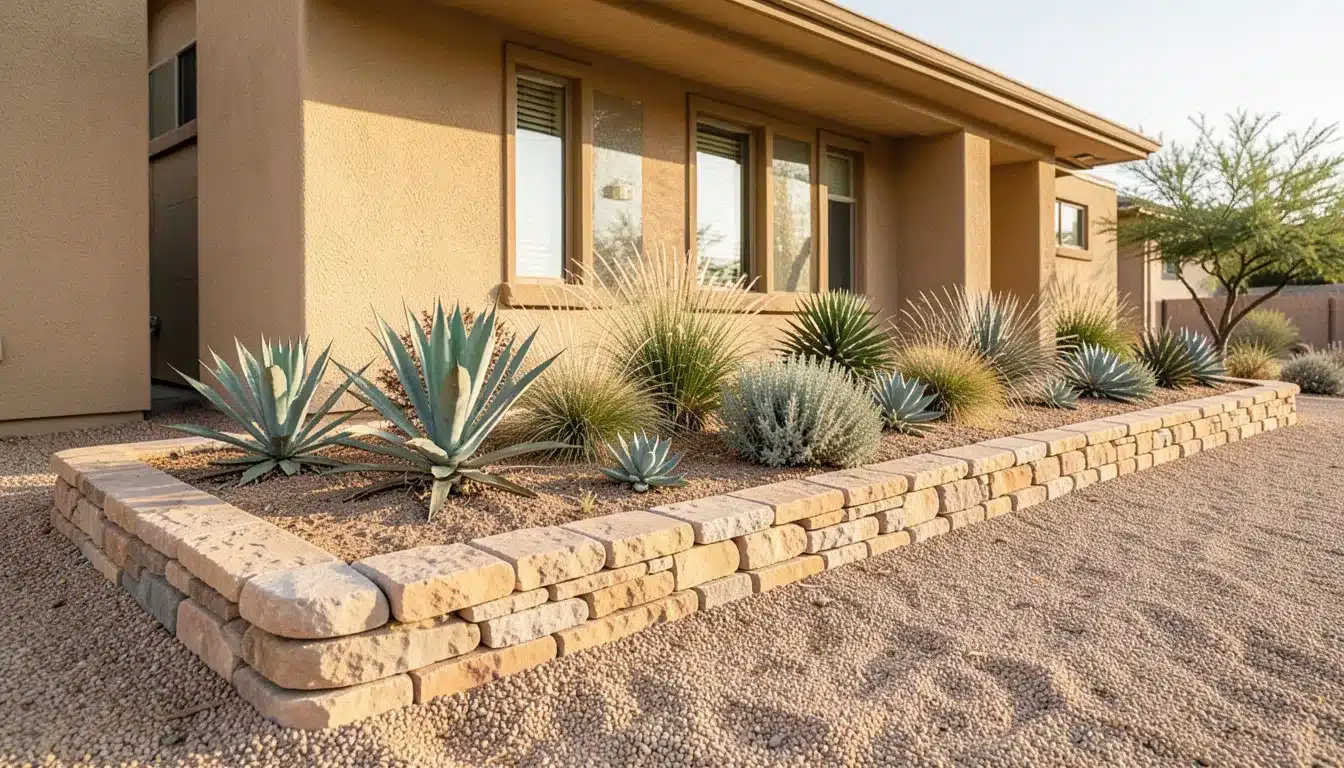
A low stone or block wall adds definition to the yard and separates planting areas without looking heavy. Raised beds also improve drainage, and most desert plants grow far better in well-draining soil. Match the stone or block material to your home’s exterior so the whole yard feels pulled together.
Best Plants for Desert Front Yard Curb Appeal
Picking the right plants is the part where most people slow down or second-guess themselves. To make it easier, here is a straight list of plants that perform well in desert front yards and keep your maintenance time low.
- Saguaro Cactus: This tall, iconic cactus makes a bold statement and needs almost no water once it is established in your yard.
- Agave: A low, spiky plant with strong structure that stays green all year through heat, drought, and dry winters.
- Palo Verde Tree: A light desert tree with bright yellow blooms that provides gentle, filtered shade near a front entry.
- Bougainvillea: A fast-growing shrub with vivid pink or red blooms that thrives in full sun with very little water.
- Desert Marigold: A cheerful yellow wildflower that blooms for several months and naturally draws in pollinators.
- Red Yucca: A tall, grass-like plant with long red flower stalks that add strong vertical interest to any yard design.
- Lantana: A spreading ground cover with small, bright flowers in shades of orange, yellow, and red that fills gaps well.
- Ocotillo: A tall, spindly shrub with red-tipped branches that looks dramatic and sharp against a clean gravel background.
Pro Tip: Always confirm a plant is suited to your specific USDA hardiness zone before buying. Your local nursery is the most reliable source for this.
DIY vs. Hiring a Professional Landscaper
Knowing when to handle things yourself and when to bring in a professional can save you real money and a lot of frustration. Here is a clear side-by-side to help you figure out which route makes sense for your project.
| Factor | DIY | Hire a Pro |
|---|---|---|
| Best Yard Size | Small to medium | Large or complex |
| Skill Level Needed | Basic outdoor skills | Specialized knowledge |
| Cost | Lower upfront | Higher cost, better long-term outcome |
| Time Required | More of your own time | Faster project completion |
| Best Suited For | Gravel, simple planting, edging | Boulders, irrigation, retaining walls |
| Risk Level | Low for simple projects | Managed risk often includes a warranty |
| Tools Required | Basic hand tools | Heavy equipment may be needed |
Quick Tip: If you hire a landscaper, look for someone with experience in desert-specific plants and ask to see photos of past projects before you sign anything.
Keeping Your Desert Front Yard Looking Its Best
Desert yards are low-maintenance, but they are not zero-maintenance. In spring, pull weeds early before they spread and refresh your gravel if it looks thin in spots.
Summer is about watering new plants deeply but not too often. Established desert plants need very little during the hottest months.
In the fall, trim back any overgrown shrubs and add new plants while the soil is still warm. Winter is mostly hands-off, though a light cover on frost-sensitive plants during cold nights goes a long way.
A quick monthly rake and a seasonal check of your drip irrigation lines is genuinely all it takes to keep the yard looking sharp and tidy.
Final Thoughts
A well-designed desert front yard is not a fallback for people who have given up on grass. It is a real choice. One that saves water, reduces upkeep, and gives your home a look that holds up all year long.
From gravel and boulders to flowering plants and warm lighting, the ideas in this blog work across different yard sizes and budgets.
You do not need to change everything at once. Pick one idea that fits where you are right now and build from there.
If this helped you think through your curb appeal desert landscape front yard, share it with a neighbor who is considering the same. And if you have already started your makeover, drop a comment below.
We would love to hear what you are working on.