Your morning coffee tastes better outdoors, and that’s just a fact. As more homeowners create stunning outdoor retreats, the deck vs. patio conversation has become impossible to ignore.
Maybe you’ve envisioned cozy evenings on a raised wooden platform, or perhaps a stone surface that flows naturally from your back door speaks to you.
Both options bring their own charm and personality to your space, but choosing between them involves more than aesthetics alone.
This guide will walk you through everything you need to know, helping you decide which option will bring your backyard vision to life in the most beautiful way possible.
What is a Deck?
A deck is a raised outdoor platform typically built from wood or composite materials, attached to your home or freestanding in your yard.
Popular materials include pressure-treated lumber for budget-friendly durability, composite decking that resists fading and splintering, and naturally beautiful options like cedar and redwood.
PVC decking offers a low-maintenance alternative that stands up to the elements.
Decks can be elevated several feet off the ground or built at a lower level, depending on your needs. They shine in sloped yards where leveling is costly and are ideal for homes with great views or second-story access.
What is a Patio?
A patio is a ground-level outdoor area built directly on the earth, creating a solid foundation for your outdoor living space.
Common materials include poured concrete for a sleek, modern look, pavers that offer endless design possibilities, classic brick with timeless appeal, and natural stone like flagstone or slate for an organic feel.
Patios are installed on a prepared base of gravel and sand, making them stable and long-lasting.
They work beautifully in flat yards where the ground is already level, and they’re especially popular in warm climates where staying close to the cool earth makes outdoor gatherings more comfortable.
Deck vs. Patio: Key Differences
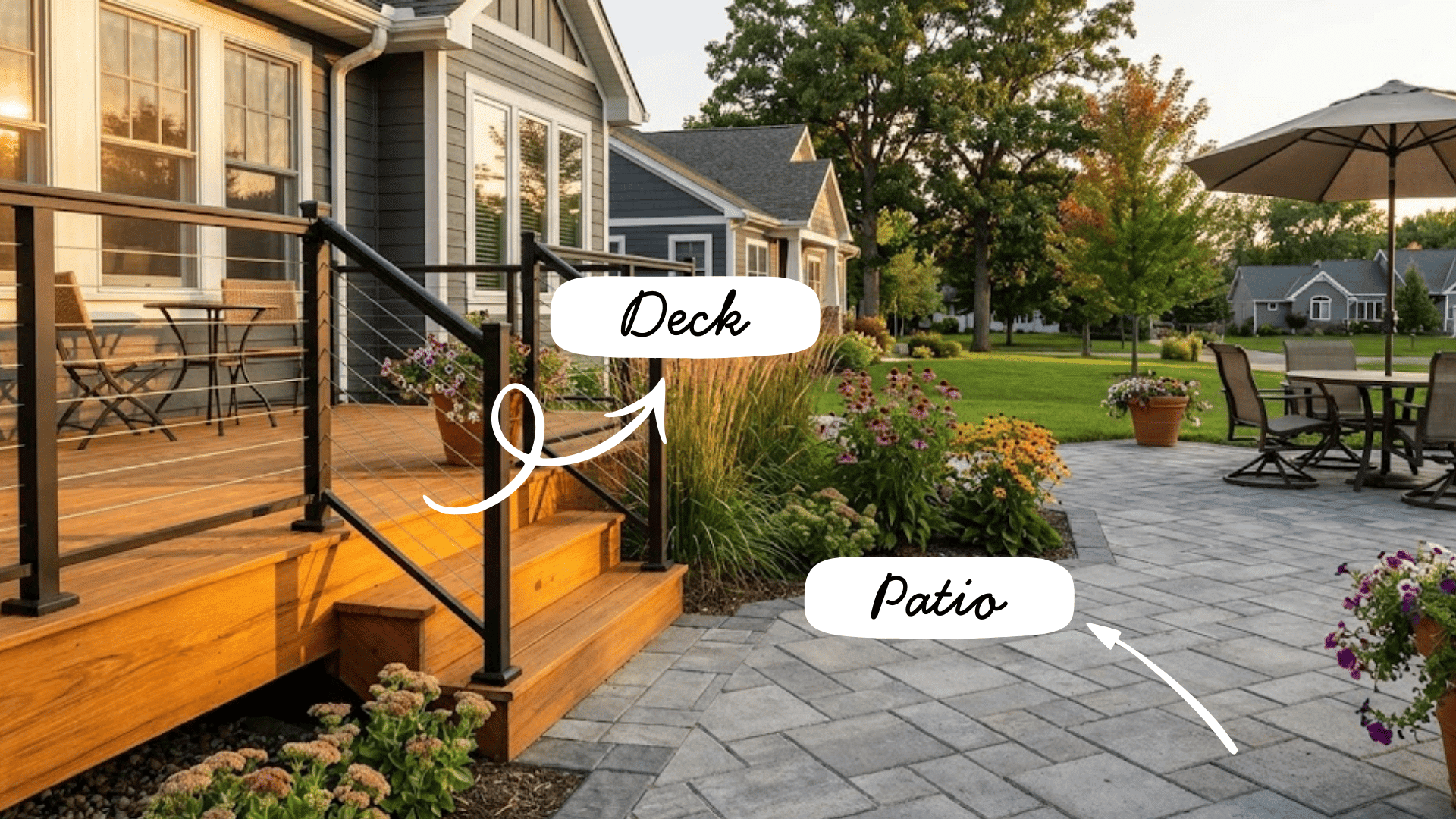
When you’re weighing your options, understanding how decks and patios stack up against each other makes all the difference.
Here’s a closer look at what sets them apart.
1. Materials
Decks rely on wood or composite boards that create an elevated platform above the ground. Popular choices include pressure-treated lumber, cedar, redwood, and synthetic composites that mimic wood’s warmth without the splinters.
Patios use hard surface materials like concrete, pavers, brick, or natural stone laid directly on the earth. Each material brings its own texture, color palette, and character to your outdoor space.
Your material choice affects everything from the aesthetic vibe to how much upkeep you’ll tackle over the years, so it’s worth considering what feels right for your lifestyle and budget.
2. Installation Method
Decks require structural framing with posts and joists, often needing professional carpentry skills and building permits to ensure safety. The construction builds a raised framework supporting decking above ground.
Patios involve ground preparation with gravel and sand, followed by careful material placement on a compacted, level base. The process is more about excavation and layering than vertical construction.
Deck installation tends to be more complex and time-intensive, while patios can sometimes be DIY-friendly depending on the material you choose and your comfort level with outdoor projects.
3. Average Cost
Decks typically range from fifteen to thirty-five dollars per square foot, with basic pressure-treated wood at the lower end and premium composite options commanding higher prices.
Patios cost between eight to twenty-five dollars per square foot, making poured concrete the most budget-friendly choice and natural stone the priciest. Labor costs vary with project complexity, site conditions, and location.
Keep in mind that these are average ranges, and your actual costs may shift based on design features, material availability, and whether you hire professionals or tackle portions yourself.
4. Maintenance Needs
Wood decks require annual sealing or staining to prevent weather damage, rot, and insects, increasing maintenance over time. Composite decking needs only occasional soap and water cleaning, no refinishing required.
Patios need minimal upkeep, mainly power washing once or twice a year and occasional re-sanding of joints for paver installations.
Concrete patios might need sealing every few years to prevent staining. Stone patios may require periodic sealing depending on the material type, but overall, they’re wonderfully low-maintenance.
The time and money spent on upkeep are worth considering.
5. Durability and Lifespan
A well-maintained wood deck lasts 10-15 years before needing significant repairs or replacement, though some premium woods stretch longer.
Composite decking can reach 25-30 years with minimal care, making it a solid long-term investment. Patios usually outlast decks, with concrete and stone lasting 30-50+ years when properly installed.
Material quality, installation craftsmanship, and climate conditions play major roles in longevity. If you’re planning to stay in your home for decades, a patio might offer better value over time.
6. Design Flexibility
Decks offer multi-level designs and built-in seating options that create defined zones for dining, lounging, and entertaining. They can wrap around trees, follow your home’s lines, or cantilever over slopes for drama.
Patios provide endless pattern possibilities with pavers and can incorporate flowing curves, mosaic-style borders, and mixed materials for visual interest. Both allow for creative personalization based on your style preferences.
Decks give you vertical dimension and railings to play with, while patios let you experiment with ground-level artistry and integrate landscaping more organically into the design.
7. Climate Suitability
Decks work well in variable climates, but wood varieties can warp, crack, or fade in extreme humidity or intense heat cycles. Composite materials handle weather fluctuations better but can get hot underfoot in direct summer sun.
Patios excel in hot, dry regions where stone and concrete stay cooler than elevated surfaces, making barefoot walking more comfortable. Concrete can crack in harsh freeze-thaw areas without proper control joints.
Consider your local weather patterns, seasonal temperature swings, and precipitation levels when making your choice for the best long-term performance.
Deck vs. Patio Cost Comparison
Money matters, and understanding the full financial picture helps you make a confident choice.
Beyond the initial investment, think about what you’ll spend over the years to keep your outdoor space looking gorgeous and functioning well.
| Cost Factor | Deck | Patio |
|---|---|---|
| Materials Cost (per sq ft) | Wood: $15-25 Composite: $25-45 |
Concrete: $6-12 Pavers: $10-20 Stone: $15-30 |
| Labor Cost (per sq ft) | $15-35, depending on complexity and elevation | Concrete: $5-15 Pavers: $8-18 Stone: $12-25 |
| Total Cost (300 sq ft) | Wood: $9,000-$21,000 Composite: $12,000-$24,000 |
Concrete: $3,300-$8,100 Pavers: $5,400-$11,400 Stone: $8,100-$16,500 |
| Annual Maintenance | Wood: $200-500 Composite: $50-150 |
$50-150 for all types |
| Lifespan | Wood: 10-15 years Composite: 25-30 years |
30-50+ years for all types |
| 30-Year Total Cost | Wood: $18,000-$42,000+ (with replacements) Composite: $12,000-$28,500 |
$4,800-$21,000 (single installation + maintenance) |
Budget Winner: Patios typically cost less both upfront and over time, especially concrete options. Decks require higher initial investment and ongoing maintenance, though composite materials narrow the long-term gap.
Maintenance & Longevity: What to Expect?
How much time and effort you’re willing to invest in upkeep can make or break your satisfaction with your choice.
Here’s what you’ll need to do to keep each option looking its best year after year.
Deck Maintenance Requirements
Wood decks demand regular attention to stay beautiful and safe, while composite options lighten the load considerably.
Expect to invest time and money into preserving your deck’s integrity, especially in harsh weather conditions.
- Annual sealing or staining keeps wood protected from moisture, UV damage, and prevents rot, warping, and splintering over time.
- Composite decking eliminates refinishing but still needs occasional soap-and-water cleaning to remove dirt, mildew, and prevent surface staining.
- Watch for structural issues like loose boards, popped nails, insect damage in wood varieties, and sagging joists that need prompt repair.
Patio Maintenance Requirements
Patios ask far less of you in terms of regular upkeep, making them ideal for low-maintenance lifestyles.
Most of your effort goes into keeping surfaces clean and addressing minor issues before they become major problems.
- Power washing once or twice yearly removes dirt, algae, and stains, while re-sanding paver joints keeps them stable and weed-free.
- Sealing concrete every few years prevents staining and surface damage, while stone may need periodic sealing depending on porosity.
- Address drainage and settling issues by releveling sunken pavers or filling cracks in concrete before water damage spreads.
Deck vs. Patio: Climate & Location Considerations
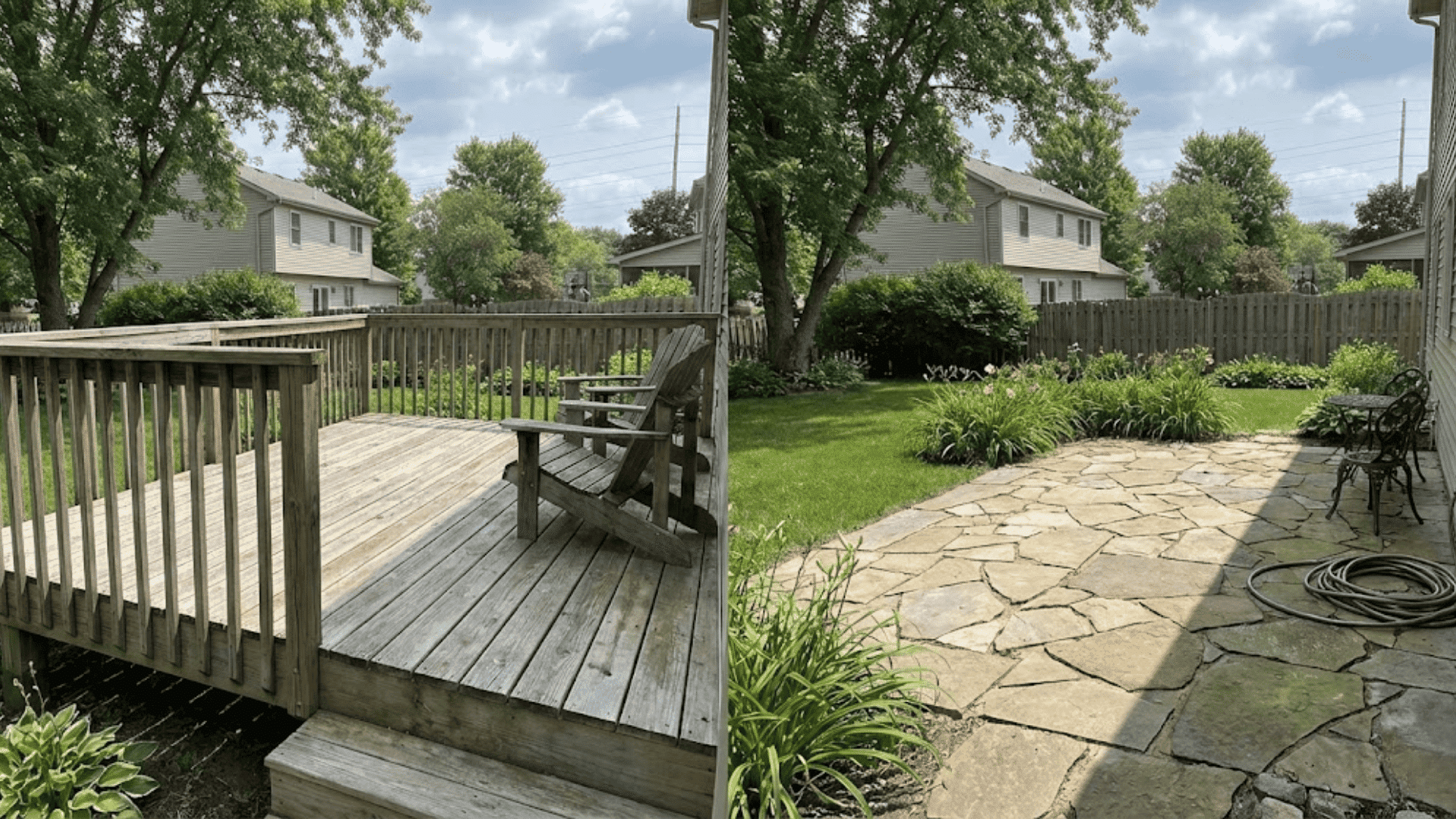
Your local weather patterns play a huge role in how well your outdoor space holds up and how comfortable it feels throughout the seasons.
Choosing the right option for your climate means fewer headaches and more enjoyment down the road.
- Cold climates favor patios since concrete and stone handle freeze-thaw cycles better than wood, though proper drainage prevents frost heave damage.
- Hot, humid regions challenge wood decks with warping, mold, and rot issues, while composite materials and stone patios resist moisture damage.
- Rainy areas need excellent drainage, with patios requiring proper grading and decks needing adequate airflow beneath boards to prevent water pooling.
- Direct sun exposure heats up surfaces, making composite decking and dark pavers uncomfortably hot underfoot, while light-colored materials stay cooler.
- Elevated decks catch breezes in warm climates for natural cooling, while ground-level patios stay naturally cooler by drawing temperature from the earth.
The right choice works with your weather, not against it, giving you an outdoor retreat that stays comfortable and beautiful no matter what nature throws your way.
Design, Style & Customization Options for Decks and Patios
Your outdoor space should reflect your personal style and complement your home’s architecture.
Both decks and patios offer exciting design possibilities, each with unique ways to make your vision come to life.
| Design Element | Deck | Patio |
|---|---|---|
| Design Flexibility | Multi-level designs, custom railings, and built-in seating | Unlimited patterns, curves, mixed materials, borders |
| Popular Features | Planters, hidden storage, lighting, stairs | Fire pits, seating walls, water features, inlays |
| Landscaping Integration | Floats above plants, tree cutouts | Sits within the landscape, garden borders |
| Modern Homes | Composite with cable railings | Concrete or large-format pavers |
| Traditional Homes | Wood with turned balusters | Brick, cobblestone, flagstone |
| Color Options | Wood stains, composite tones | Pavers, stamped concrete, stone |
Resale Value & ROI of Decks and Patios
Both decks and patios boost home value, but the return varies by region and buyer preferences.
Decks typically return 65-75% of their cost at resale, while patios return 50-70%, according to home improvement studies. In warm climates, patios often appeal more to buyers seeking low-maintenance outdoor living.
Decks attract buyers in areas with sloped yards or scenic views. Curb appeal goes to well-designed patios since they’re visible from the street and integrate with landscaping.
However, a beautiful deck with multiple levels and built-in features can be a major selling point for the right buyer.
Deck vs. Patio: Which is Better for Your Needs?
The best choice depends on how you plan to use your outdoor space and what matters most to you.
Here’s a quick guide to help you match your priorities with the right option.
| Your Priority | Best Choice | Why |
|---|---|---|
| Entertaining | Deck | Multi-level zones, built-in seating, elevated views |
| Low Maintenance | Patio | Minimal upkeep, no refinishing, decades of durability |
| Uneven Yards | Deck | Builds over slopes, no grading needed, level at any height |
| Small Backyards | Patio | Ground-level feels spacious, no railings, natural flow |
| Long-Term Value | Patio | 30-50+ year lifespan, lower total costs |
Your lifestyle and property features should guide your decision more than general recommendations.
Think about what you value most, whether that’s ease of care, design flexibility, or getting the most for your investment.
Can You Combine a Deck and a Patio?
Absolutely, and many homeowners love the versatility of a hybrid design.
Combining both creates distinct outdoor zones, like an elevated deck for dining connected to a ground-level patio with a fire pit. This works beautifully on sloped properties where the deck transitions naturally to a lower patio area.
The cost ranges from moderate to high, depending on size and materials, but you gain multiple functional spaces.
Visually, the combination adds depth and interest to your backyard while offering the best of both worlds: elevated views plus a grounded entertainment area that flows into your landscaping.
Final Thoughts
Choosing between a deck vs. patio comes down to your unique space, budget, and how you want to spend your time outdoors. Maybe you’re drawn to the elevated charm of a deck or the grounded simplicity of a patio.
Both create beautiful spaces for making memories with family and friends. Take your time weighing the costs, maintenance needs, and design possibilities we’ve covered here.
Your backyard deserves thoughtful planning, and now you have everything you need to make the right call.
What’s leaning your decision one way or the other? Drop a comment below and share your thoughts!