A brown lawn has a way of making even the most patient homeowner second-guess everything they thought they knew about lawn care.
Before you write off your yard and start over, though, take a breath because brown does not always mean gone.
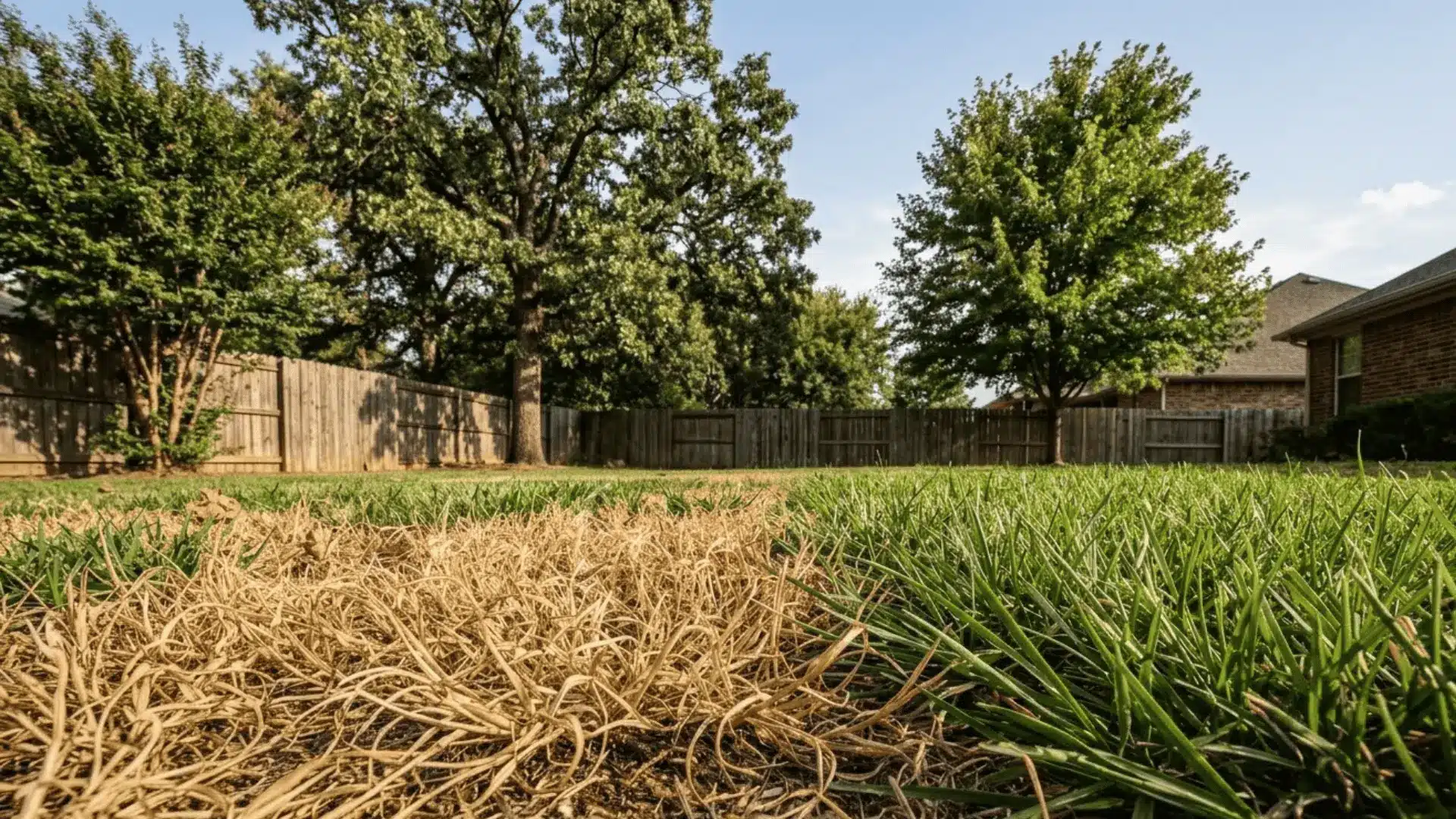
So much of what looks like dead grass is actually dormant grass, quietly waiting for the right conditions to bounce back.
Knowing what dormant grass looks like, understanding why your lawn got here, and learning how to bring it back is exactly what this guide is for.
Dead Grass vs. Dormant Grass: Why the Difference Matters?
Getting this wrong means wasting effort on a lawn that just needs patience, or babying grass that is already gone.
Here is how to tell them apart.
| Factor | Dormant Grass | Dead Grass |
|---|---|---|
| What’s happening | Grass pauses its growth to protect its roots during stress | Roots have completely failed and cannot sustain the plant |
| Can it recover? | Yes, with consistent care and the right conditions | No, dead grass cannot be revived |
| Main triggers | Drought, heat, or cold winters | Prolonged neglect, disease, pests, or severe drought |
| Appearance | Uniform tan or straw-like color | Patchy, matted, and uneven across the lawn |
| Root condition | Alive, intact, and viable | Dry, brittle, and completely lifeless |
| What to do | Resume gentle watering and avoid heavy foot traffic | Remove dead patches and plan for reseeding or resodding |
What Does Dormant Grass Look Like?
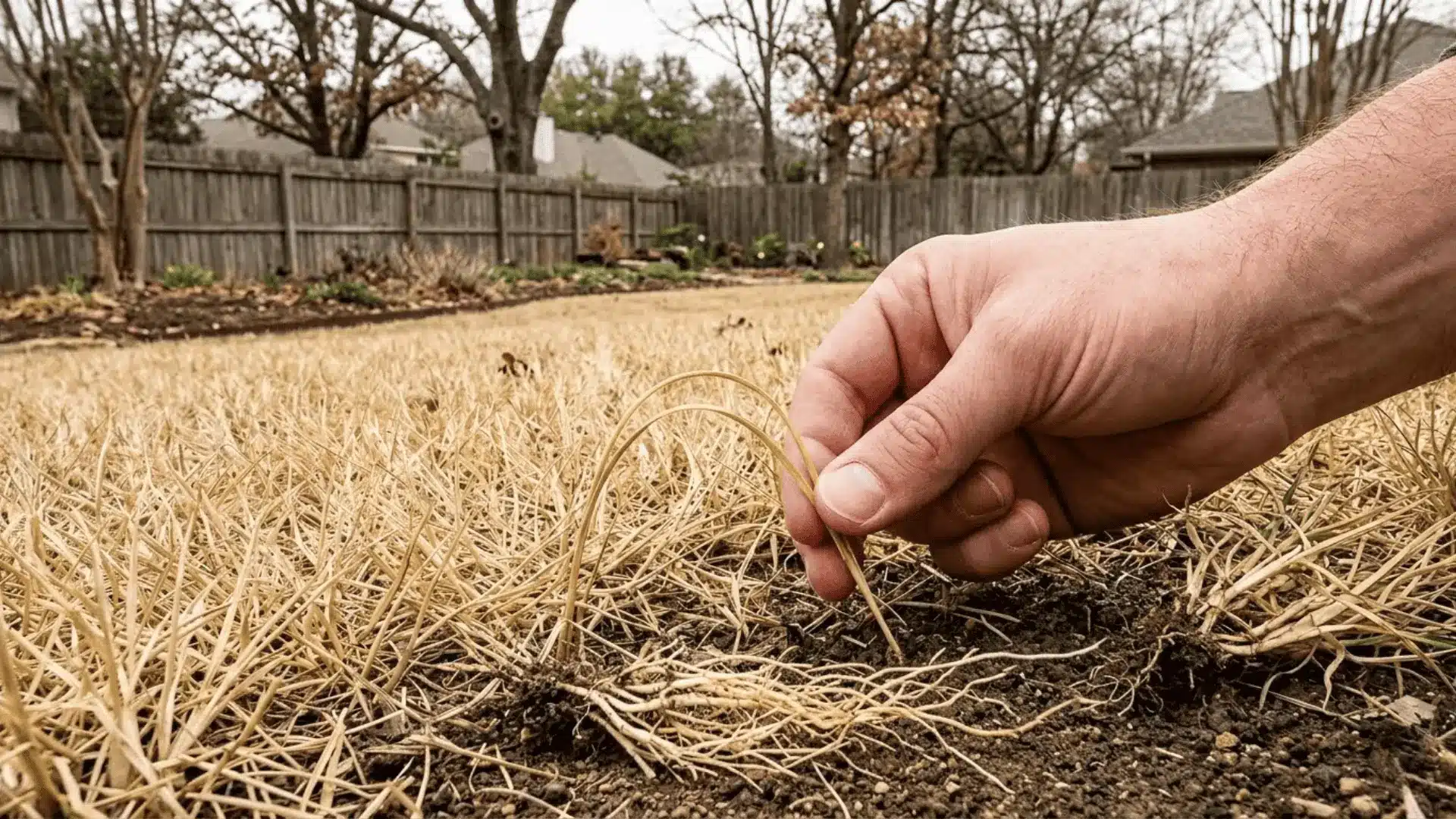
Your lawn turning brown does not automatically mean it is lost.
Dormant grass has specific signs that set it apart from dead grass, and learning to read them saves you from making a costly call too soon.
1. Color Changes
Dormant grass typically shifts to a straw-like, yellowish-tan shade rather than a deep or patchy brown. The color change tends to be fairly uniform across the lawn, which is actually a reassuring sign.
Uneven, blotchy discoloration with gray or matted spots is more characteristic of grass that has passed the point of recovery.
2. Flexible vs. Brittle Blades
One of the simplest ways to check on your lawn is to bend a few blades between your fingers. Dormant grass stays pliable and bends without breaking, because there is still some moisture held within the plant.
Dead grass, on the other hand, snaps immediately and crumbles with very little pressure.
3. Root Health
If you are unsure what you are dealing with, pull up a small section of grass and look at the roots. Dormant grass holds onto white or pale yellowish roots that still feel slightly firm and moist.
Dead grass roots are dry, dark, and fall apart easily, a clear sign that the plant has no viable life left in it.
4. Seasonal Dormancy Patterns
Cool-season grasses like fescue and bluegrass typically go dormant during peak summer heat, while warm-season varieties like Bermuda and zoysia slow down through the colder months.
Both are simply responding to their natural growth cycles. Understanding which type of grass you have helps you anticipate dormancy periods and avoid mistaking seasonal rest for permanent damage.
Signs Your Grass is Truly Dead
Dormancy has a window, and once that window closes, no amount of watering or care brings the lawn back. If your grass is showing these signs, it is time to stop waiting and start planning.
- Blades pull out effortlessly with no root resistance
- Roots appear dark, dry, and crumble when touched
- A gray or powdery coating sits on the surface of the blades
- Consistent watering produces zero green regrowth over several weeks
- Soil underneath feels rock-hard, compacted, and completely dry
If most of these boxes are checked, revival is off the table. Reseeding or resodding is your most practical path to a healthy lawn again.
Common Causes of Dead Grass
Reviving your lawn is only half the work. Understanding what killed it in the first place is what keeps it from happening again.
Here is a look at the most common culprits and what they actually do to your grass.
| Cause | What Happens | Visible Sign |
|---|---|---|
| Drought and Lack of Water | Roots are cut off from nutrients | Uniform straw-colored patches |
| Extreme Heat | Soil dries out faster than grass can recover | Scorched, thinning blades |
| Overwatering and Root Rot | Roots suffocate and fungal rot sets in | Soggy, yellowing, or slimy patches |
| Lawn Diseases | Fungal infections break down grass from blade to root | Circular or irregularly spreading dead zones |
| Pest Damage | Grubs feed on roots from below the surface | Patches that lift off soil with no resistance |
| Pet Urine | High nitrogen concentration burns the grass | Dead center patch with a darker green ring around it |
| Soil Compaction | Water, air, and nutrients cannot reach the roots | Thinning grass over high-traffic areas |
| Excessive Foot Traffic | Root system weakens under constant pressure | Worn, bare patches along frequently used paths |
How to Revive Dead Grass Patches?
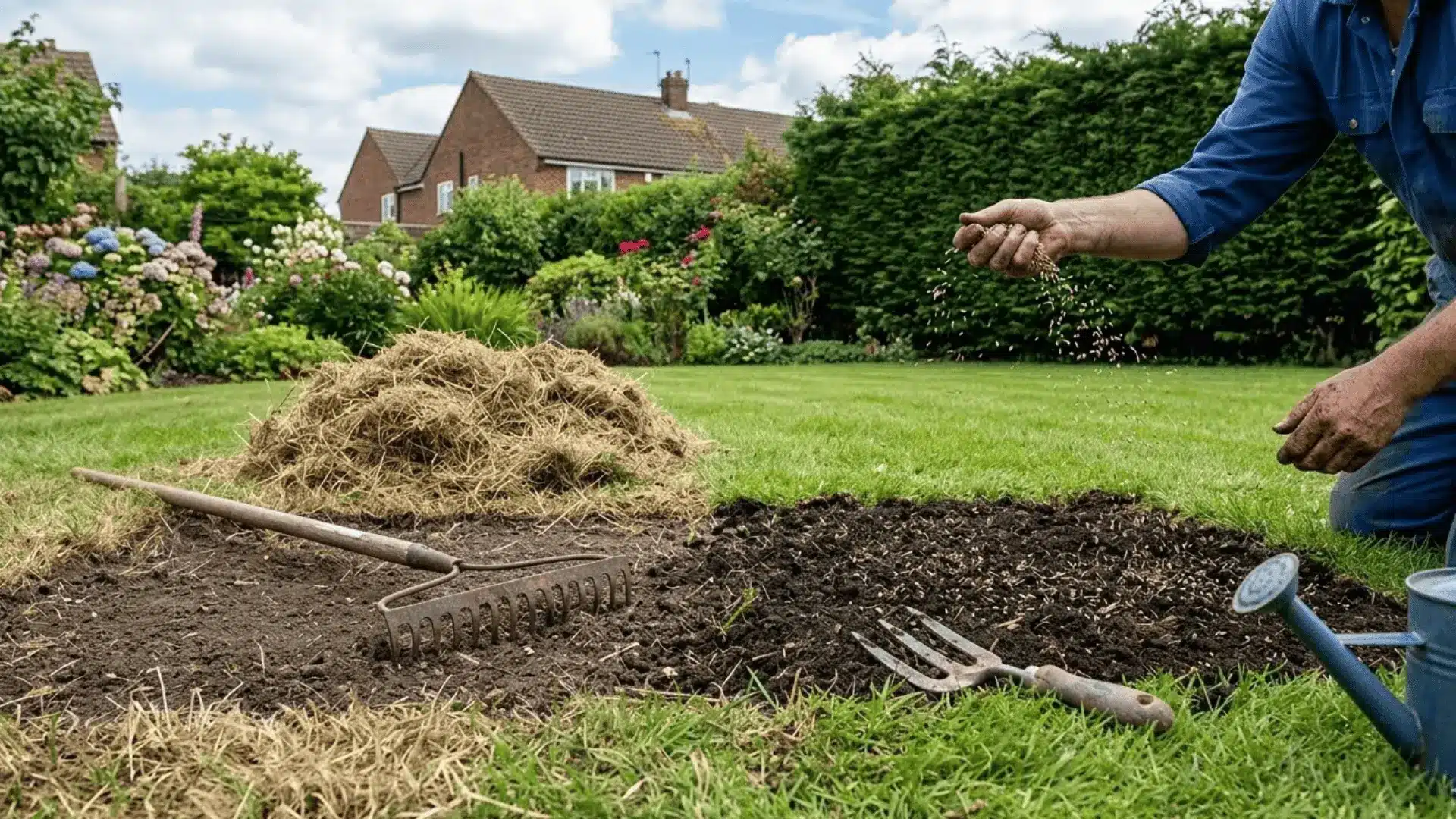
Dead patches do not have to mean a full lawn overhaul. With the right steps in the right order, you can restore those bare spots and have them blending seamlessly back into the rest of your yard.
Option 1: Remove Dead Grass
Skipping this step is one of the most common mistakes homeowners make. Dead material sitting on the soil blocks everything you apply afterward from actually reaching the ground.
- Use a rake or dethatching tool to pull out dead grass and debris
- Clear the area down to bare soil before moving forward
- Dispose of the dead material rather than composting it, especially if disease was involved
Option 2: Loosen and Improve the Soil
Compacted soil is often what got you here in the first place, so loosening it before reseeding gives new grass a real fighting chance.
- Aerate the area using a fork or core aerator to open up the soil
- Mix in compost or a quality topsoil amendment to improve texture and drainage
- Aim for loose, crumbly soil that holds moisture without becoming waterlogged
Option 3: Overseed the Lawn
Choosing the right seed matters as much as how you apply it. Mismatched grass types will stick out and struggle to establish properly.
- Match your seed to the existing grass variety for a seamless look
- For cool-season lawns, fescue and ryegrass are reliable repair options
- For warm-season patches, Bermuda and zoysia fill in quickly and hold up well
- Spread seed evenly and press it lightly into the soil for good contact
Option 4: Water Correctly
New seed and recovering soil need moisture, but flooding the area does more harm than good.
- Water lightly twice a day until germination begins, typically within one to two weeks
- Once seedlings establish, shift to deeper, less frequent watering to encourage root growth
- Early morning watering reduces evaporation and lowers the risk of fungal issues
Option 5: Fertilize to Encourage Growth
The right nutrients at the right time give newly seeded patches the push they need to establish and thicken up.
- Use a starter fertilizer high in phosphorus to support early root development
- Avoid high-nitrogen fertilizers too early as they promote blade growth before roots are strong enough
- Reapply a balanced fertilizer after the first mow to keep growth steady and consistent
For a trusted head start, Scotts Turf Builder Starter Food for New Grass and Pennington UltraGreen Starter Fertilizer are two well-regarded options specifically formulated for seeding and patch repair.
When to Reseed vs. When to Install Sod?
Both reseeding and sodding can bring a lawn back to life, but they are not interchangeable.
The right choice depends on how much damage you are dealing with, how quickly you need results, and what your budget looks like.
| Factor | Reseeding | Sod |
|---|---|---|
| Best for | Small to medium patches with moderate damage | Large or severely damaged areas needing quick coverage |
| Time to establish | Several weeks to a few months | Roots establish within two to three weeks |
| Cost | More budget-friendly with lower upfront investment | Higher upfront cost but faster results |
| Effort involved | Requires consistent watering and monitoring through germination | Less maintenance intensive once laid correctly |
| Ideal conditions | Works best during active growing seasons with mild temperatures | Can be installed across a wider range of conditions |
| Risk level | Germination can be inconsistent depending on soil and weather | Lower risk of failure when installed and watered properly |
How Long It Takes Grass to Grow Back?
Recovery time depends on the grass type, the extent of the damage, and how consistently you follow through with care.
Most seeds germinate anywhere between 1 to 3 weeks, but visible filling and thickening takes closer to 6 to 8 weeks.
Warm-season grasses tend to establish faster in heat, while cool-season varieties do better with mild temperatures and steady moisture.
Soil quality, watering consistency, and sunlight exposure all play a role in speeding things up or slowing them down.
Patience is genuinely part of the process here.
Lawn Care Practices That Prevent Dead Grass
Most lawn damage is avoidable with a little consistency. These five habits go a long way in keeping your grass healthy before problems have a chance to take hold.
- Water deeply but infrequently to encourage roots to grow downward rather than staying shallow.
- Mow at the correct height for your grass type, never removing more than a third of the blade at once.
- Fertilize according to the season, matching nutrients to what your lawn actually needs at that time of year.
- Aerate once a year to break up compaction and give roots room to breathe and spread.
- Stay on top of pest and disease signs early, catching them before they spread across the lawn.
A healthy lawn is less about doing more and more about doing the right things at the right time. Build these into your routine and your grass will have far less reason to struggle.
Best Grass Types for a Resilient Lawn
Not all grass is built the same, and choosing the right variety for your climate and conditions is one of the simplest ways to avoid a struggling lawn in the first place.
Here is a quick breakdown to help you find the best fit.
| Grass Type | Climate | Drought Tolerance | Shade Tolerance | Best For |
|---|---|---|---|---|
| Bermuda | Warm | High | Low | High-traffic, sunny lawns in hot climates |
| Zoysia | Warm to transitional | High | Moderate | Lawns needing durability with some shade |
| Buffalo Grass | Warm to semi-arid | Very high | Low | Low-maintenance, dry climate lawns |
| Tall Fescue | Cool to transitional | Moderate | High | Shaded yards with cooler temperatures |
| Kentucky Bluegrass | Cool | Low | Low | Lush, high-quality lawns in cool climates |
| Fine Fescue | Cool | Moderate | Very high | Heavily shaded or low-maintenance cool lawns |
| St. Augustine | Warm and humid | Moderate | High | Coastal or humid climates with partial shade |
Wrapping It Up
A brown or patchy lawn is rarely the end of the story.
Now that you know how to spot dead grass, understand what caused it, and take the right steps toward recovery, your yard is already in better hands.
The difference between a lawn that bounces back and one that does not usually comes down to catching the signs early and acting with a little intention.
Whatever stage you are at, recovery is more within reach than it looks.
Drop a comment below telling us about your lawn situation and we will help you figure out the next best step!