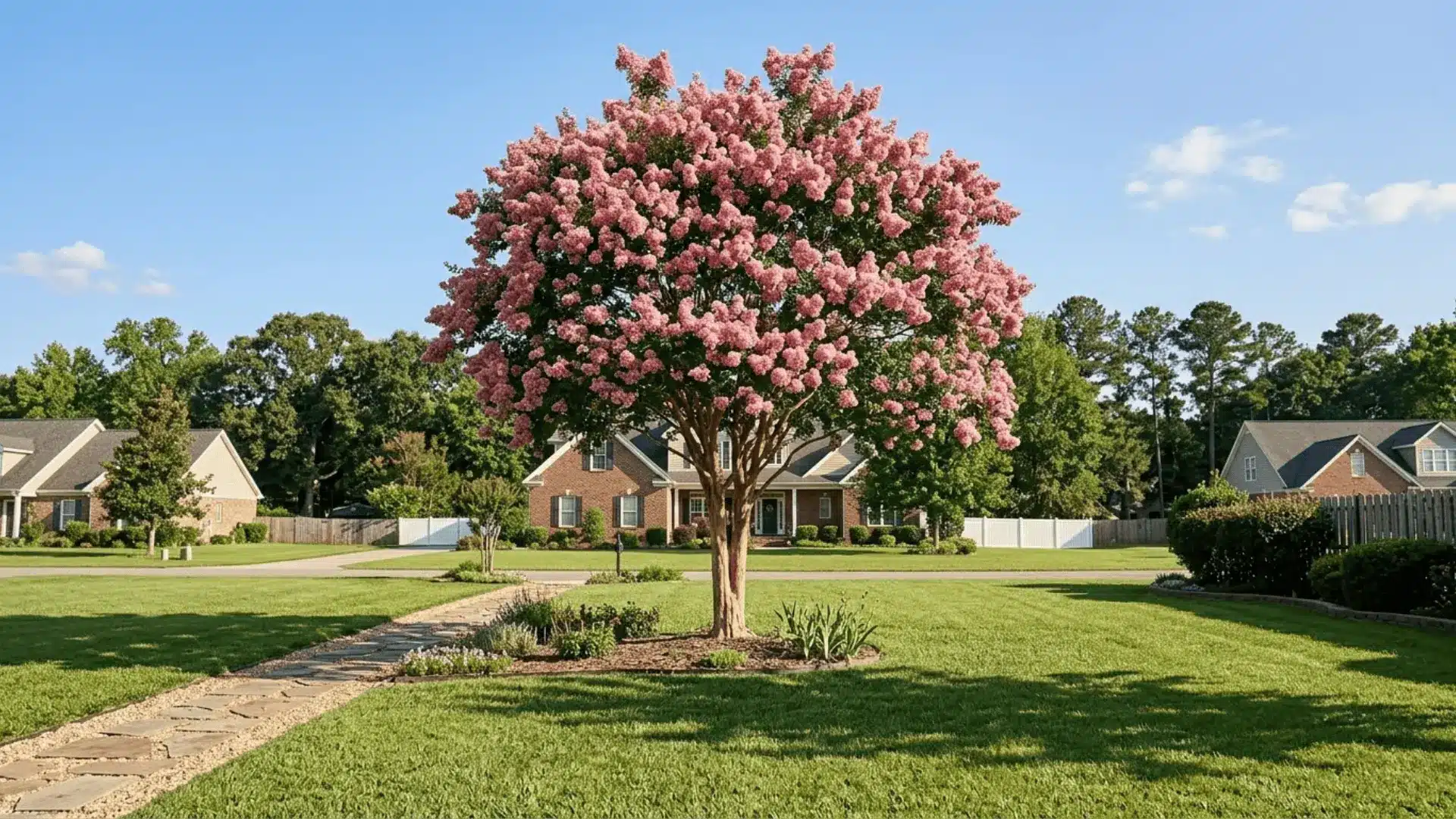
Imagine stepping into your backyard with pruning shears in hand, wandering through rows of blooms grown purely for your vases.
That’s the magic of a cut flower garden, a dedicated space where you can snip freely without guilt, knowing every stem was planted to bring beauty indoors.
Unlike traditional flower beds designed for curb appeal, these gardens prioritize abundance and cutting-friendly varieties that actually improve with regular harvesting.
You’ll learn how to create your own cutting garden sanctuary, from selecting the perfect blooms to mastering harvest techniques that keep arrangements fresh for days.
Ready to fill your home with garden-grown bouquets?
What is a Cut Flower Garden?
A cut flower garden is a productive growing space designed specifically for harvesting.
While ornamental gardens exist to look beautiful in the landscape, cut flower gardens function as your personal flower shop, where every plant serves one purpose: filling your vases.
The layout prioritizes accessibility and abundance over visual design, often arranged in straight rows like a vegetable patch rather than decorative clusters.
You’ll find a mix of annuals that bloom all season prolifically, perennials that return year after year, and bulbs that offer early spring color.
The beauty happens indoors, where these blooms truly shine in arrangements, centerpieces, and hand-tied bouquets.
How to Plan a Cut Flower Garden?
Before you plant a single seed, proper planning sets the foundation for a thriving cutting garden that produces armfuls of blooms all season long.
- Pick a spot with at least six hours of direct sunlight for maximum flower production and stronger stems.
- Prioritize well-draining soil to prevent root rot and keep plants healthy through summer storms.
- Consider raised beds for better control over soil quality, drainage, and easier access when harvesting.
- Start with a space as small as 4×8 feet to grow enough flowers for weekly bouquets without overwhelming yourself.
Even a compact corner can become your personal flower farm when thoughtfully planned with the right conditions in place.
Best Flowers to Grow in a Cut Flower Garden
Selecting the right flowers turn your cutting garden from hopeful to bountiful. These tried-and-true varieties offer reliable blooms, sturdy stems, and vase life that make every harvest worthwhile.
1. Zinnias
Season: Summer through fall
Spacing: 6-12 inches apart
Sunlight Exposure: Full sun
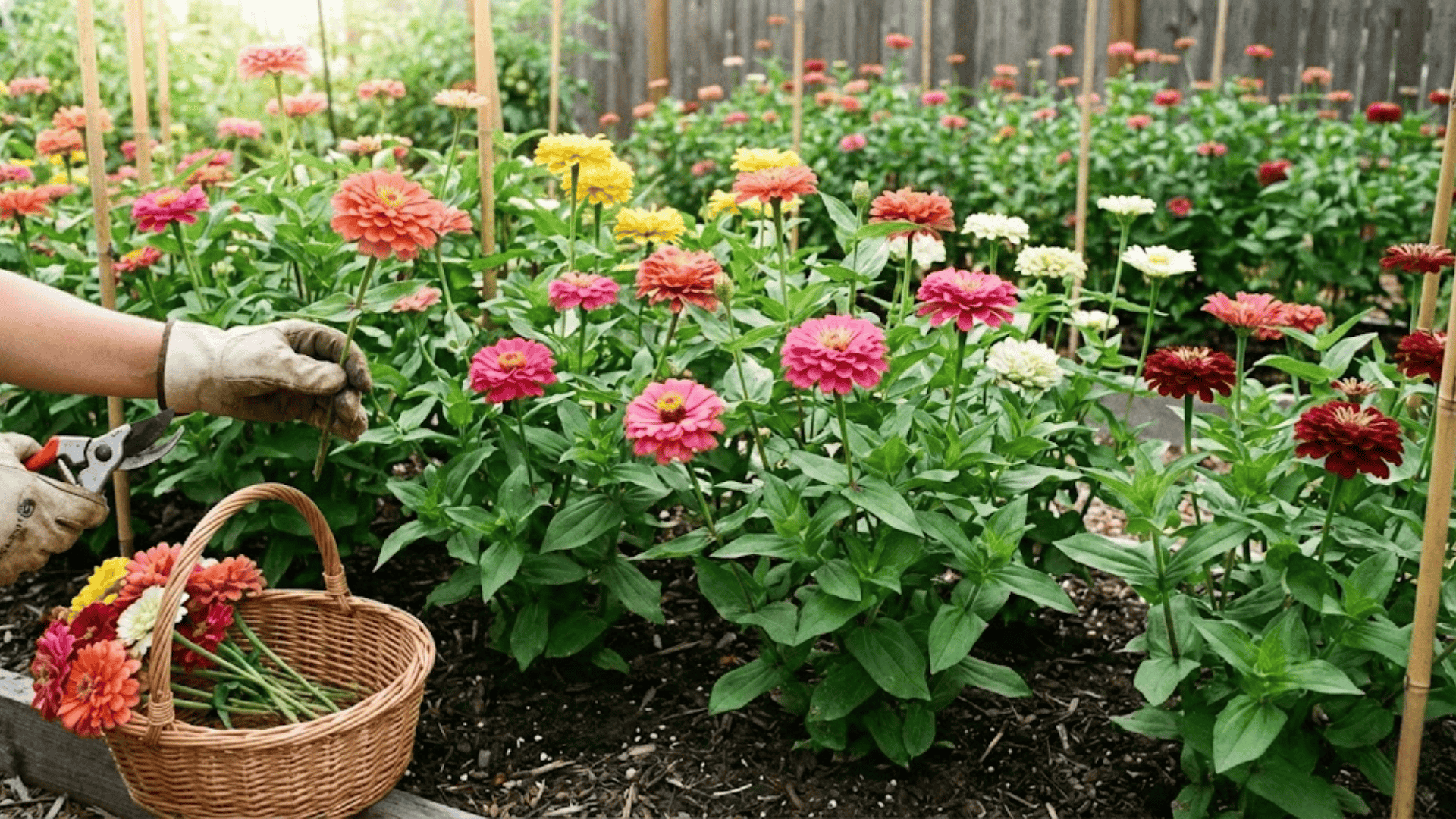
Zinnias are the workhorses of any cut flower garden, blooming nonstop from summer until frost. The more you cut, the more they produce, making them perfect for beginners.
Available in nearly every color except blue, they range from petite pompoms to dinner-plate-sized blooms. Their sturdy stems and week-long vase life make them instant favorites for both casual jams and formal arrangements.
2. Cosmos
Season: Summer through fall
Spacing: 12-18 inches apart
Sunlight Exposure: Full sun
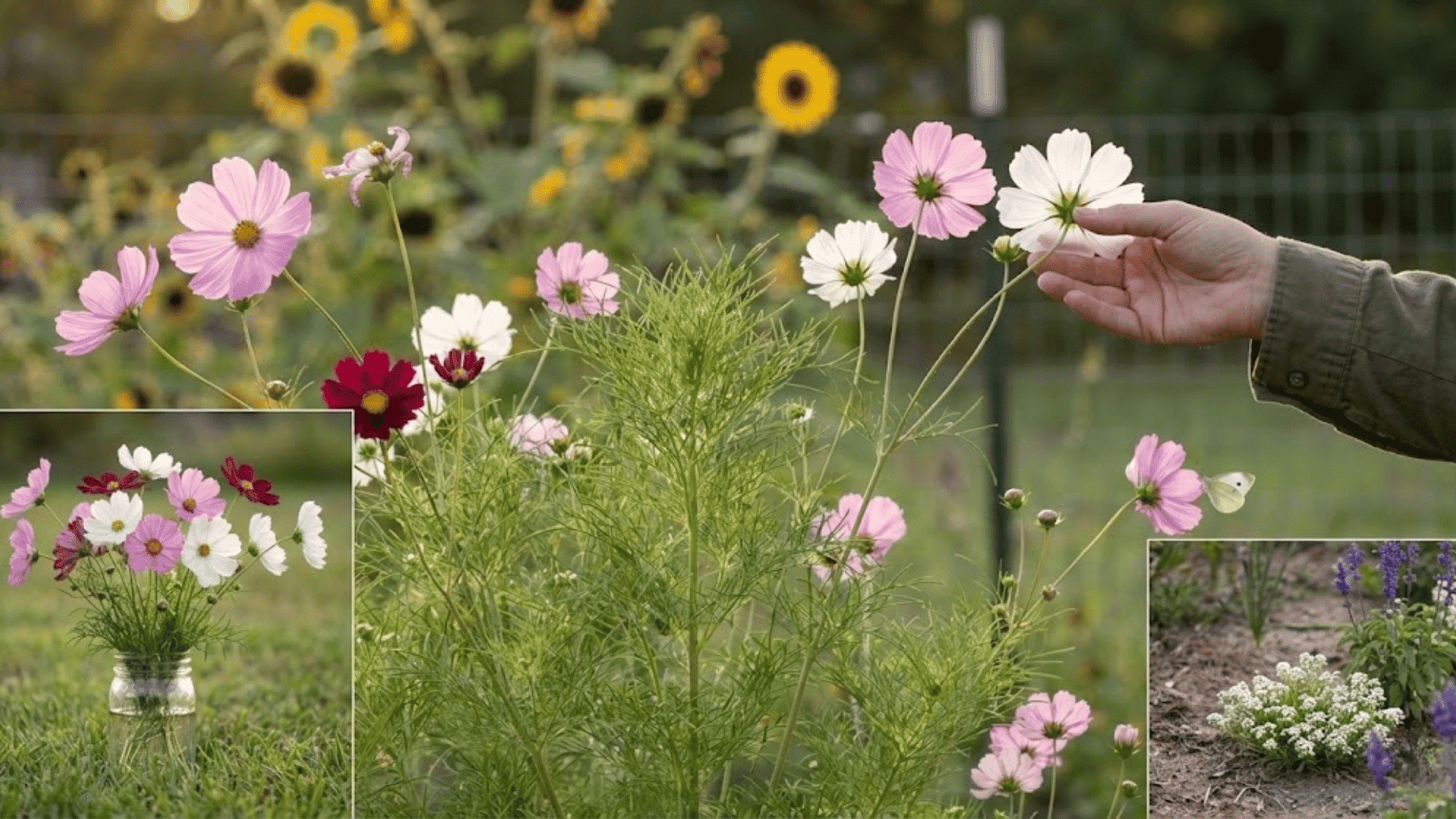
These airy, delicate-looking blooms belie their tough nature, thriving even in poor soil with minimal care. Cosmos add a soft, romantic texture to bouquets with their feathery foliage and daisy-like flowers in pink, white, and burgundy.
They reseed freely, often returning year after year in the same spot. Their long stems and abundant blooms make them excellent fillers.
3. Sweet Peas
Season: Spring through early summer
Spacing: 6 inches apart
Sunlight Exposure: Full sun to partial shade
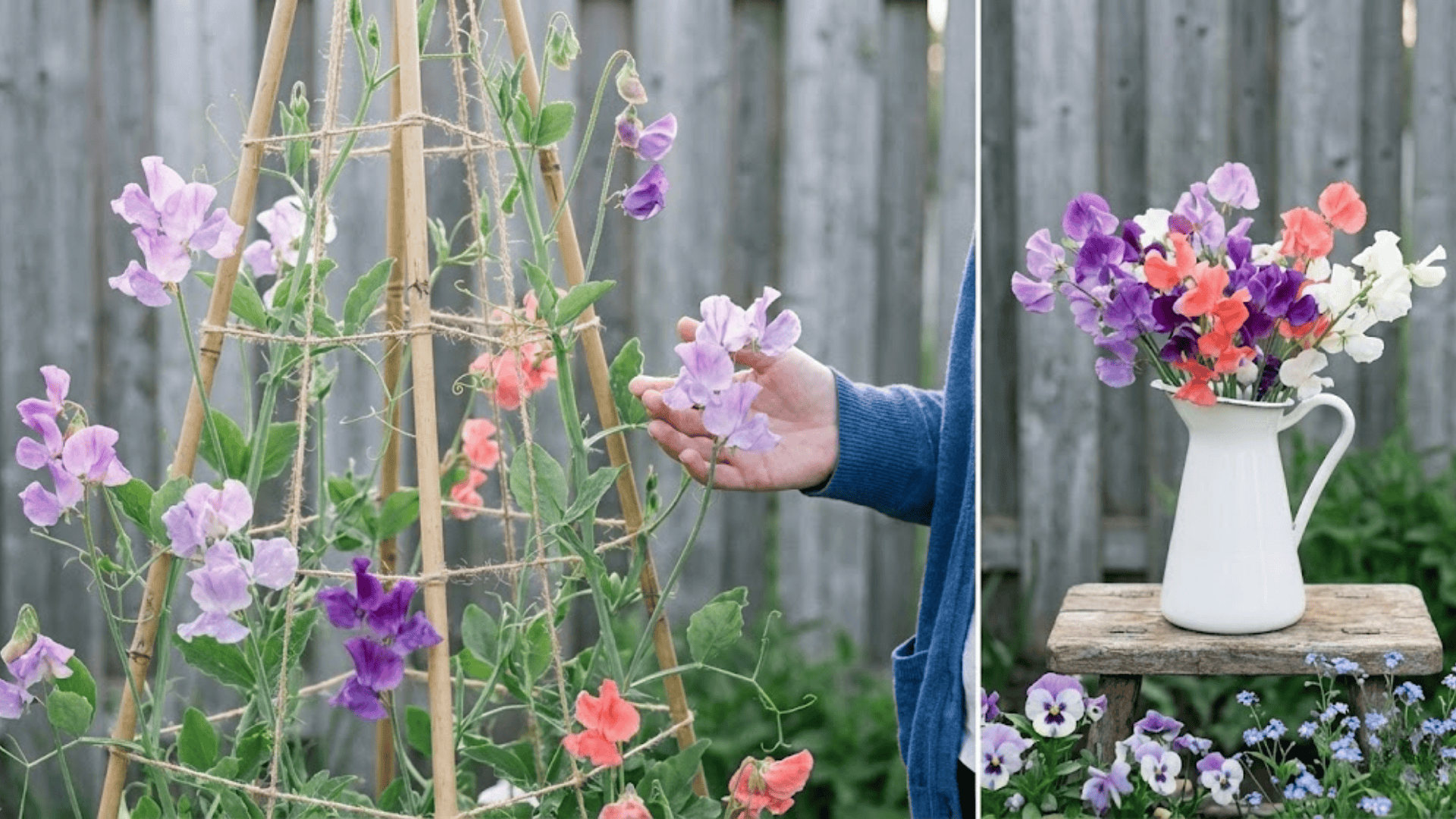
Sweet peas bring unmatched fragrance and ruffled charm to spring arrangements. These climbing vines need support but reward you with continuous blooms when harvested regularly.
They prefer cool weather and often fade as summer heat arrives. Their delicate petals and intoxicating scent make them cherished additions to vintage-inspired bouquets and romantic tablescapes.
4. Snapdragons
Season: Spring through fall
Spacing: 6-12 inches apart
Sunlight Exposure: Full sun
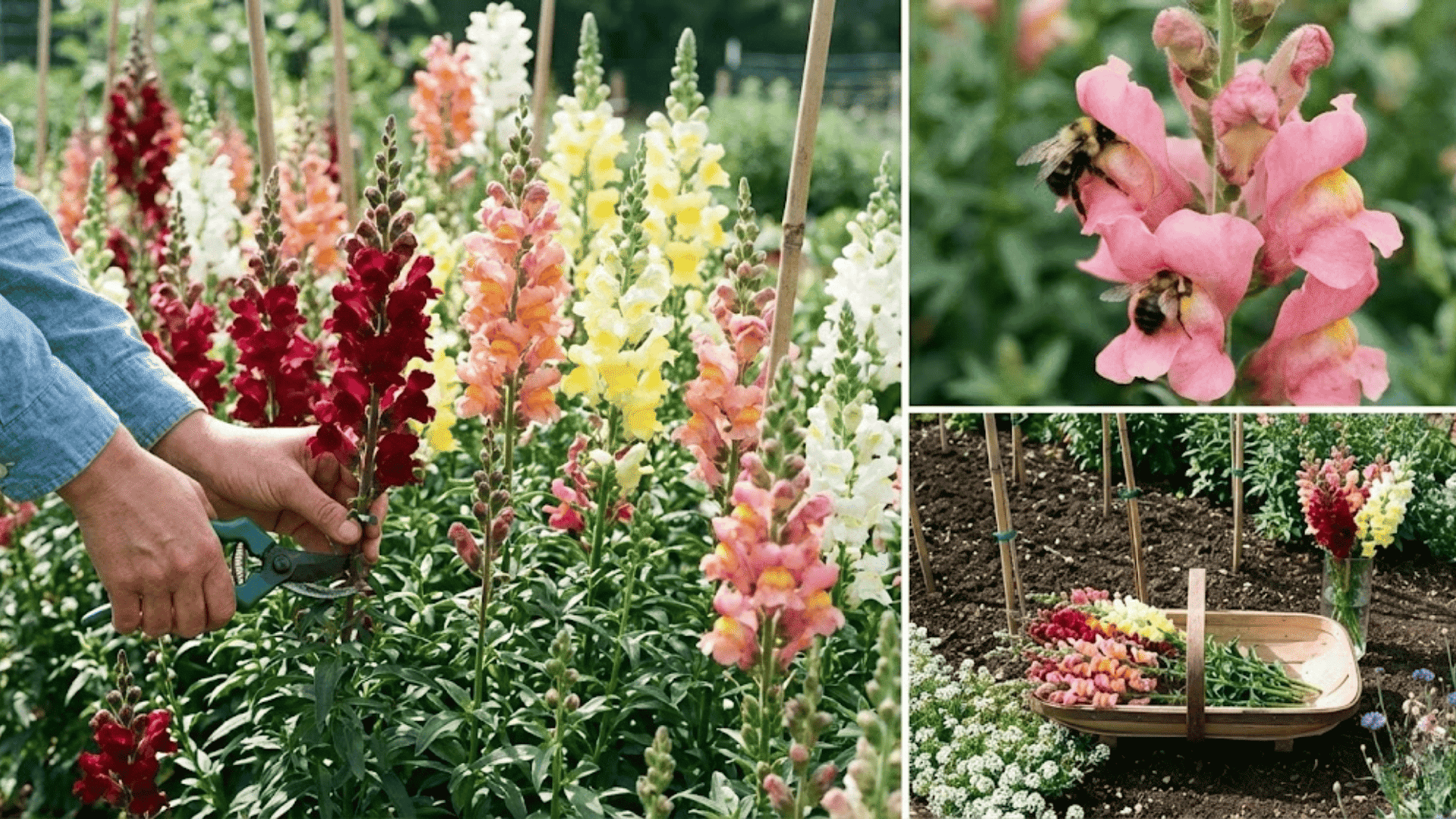
Snapdragons provide impressive vertical interest with their tall spikes of tubular flowers in every imaginable shade. They prefer cooler weather, but often rebound in the fall after the summer heat.
Pinching young plants encourages bushier growth and more stems for cutting. Their architectural form and long vase life make them essential for adding height and drama to mixed arrangements.
5. Sunflowers
Season: Summer through fall
Spacing: 12-24 inches apart
Sunlight Exposure: Full sun
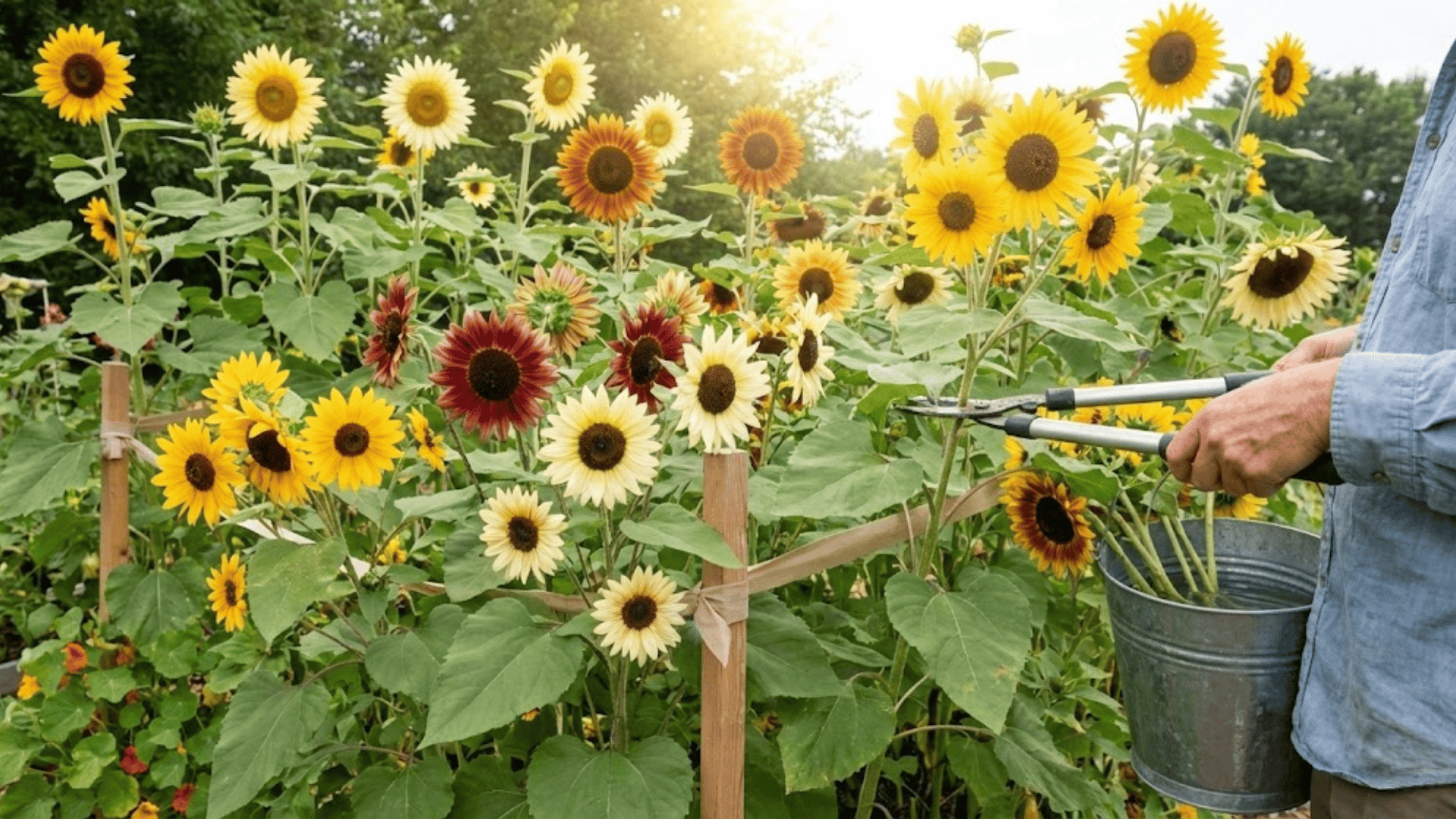
Sunflowers range from towering giants to petite branching varieties perfect for bouquets. Pollenless varieties keep arrangements cleaner and vases fresher longer.
They grow quickly from seed and provide bold, cheerful focal points that instantly brighten any room. Plant successively every two weeks for continuous blooms throughout the growing season.
6. Peonies
Season: Late spring to early summer
Spacing: 3-4 feet apart
Sunlight Exposure: Full sun to partial shade
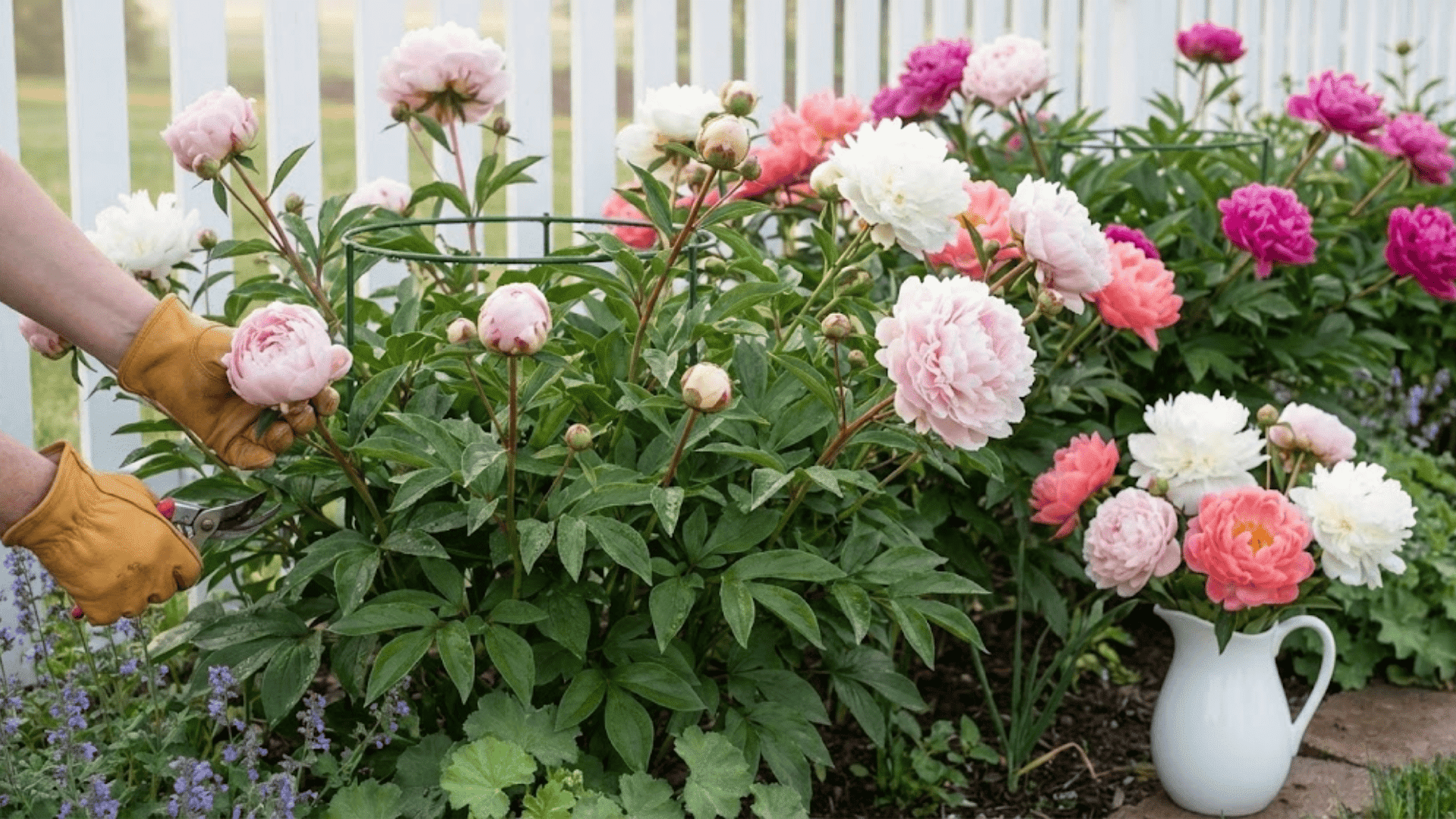
Peonies are the crown jewels of the cutting garden, producing lush, fragrant blooms that command attention in any arrangement. Though they bloom for weeks, their large flowers and scent make waiting worthwhile.
Plants take a few years to establish but then produce reliably for decades. Harvest when buds show color for maximum vase life.
7. Black-Eyed Susans
Season: Summer through fall
Spacing: 12-18 inches apart
Sunlight Exposure: Full sun
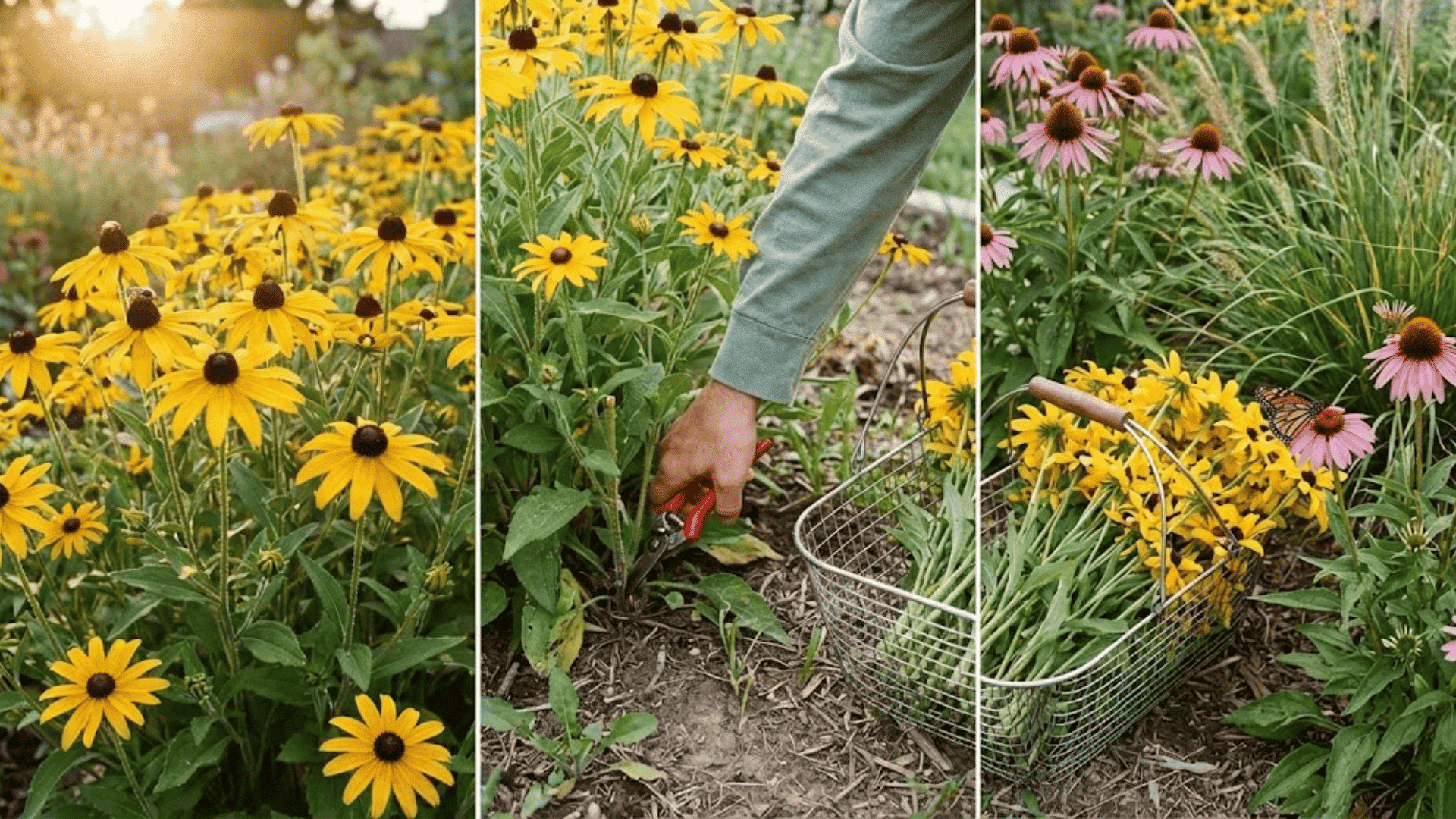
These cheerful yellow daisies with dark centers bring sunshine to late summer and fall bouquets. Extremely low-maintenance and drought-tolerant once established, they multiply readily and provide armfuls of blooms for cutting.
Their sturdy stems and long vase life make them reliable performers. They pair beautifully with both bold and delicate flowers in mixed arrangements.
8. Coneflowers
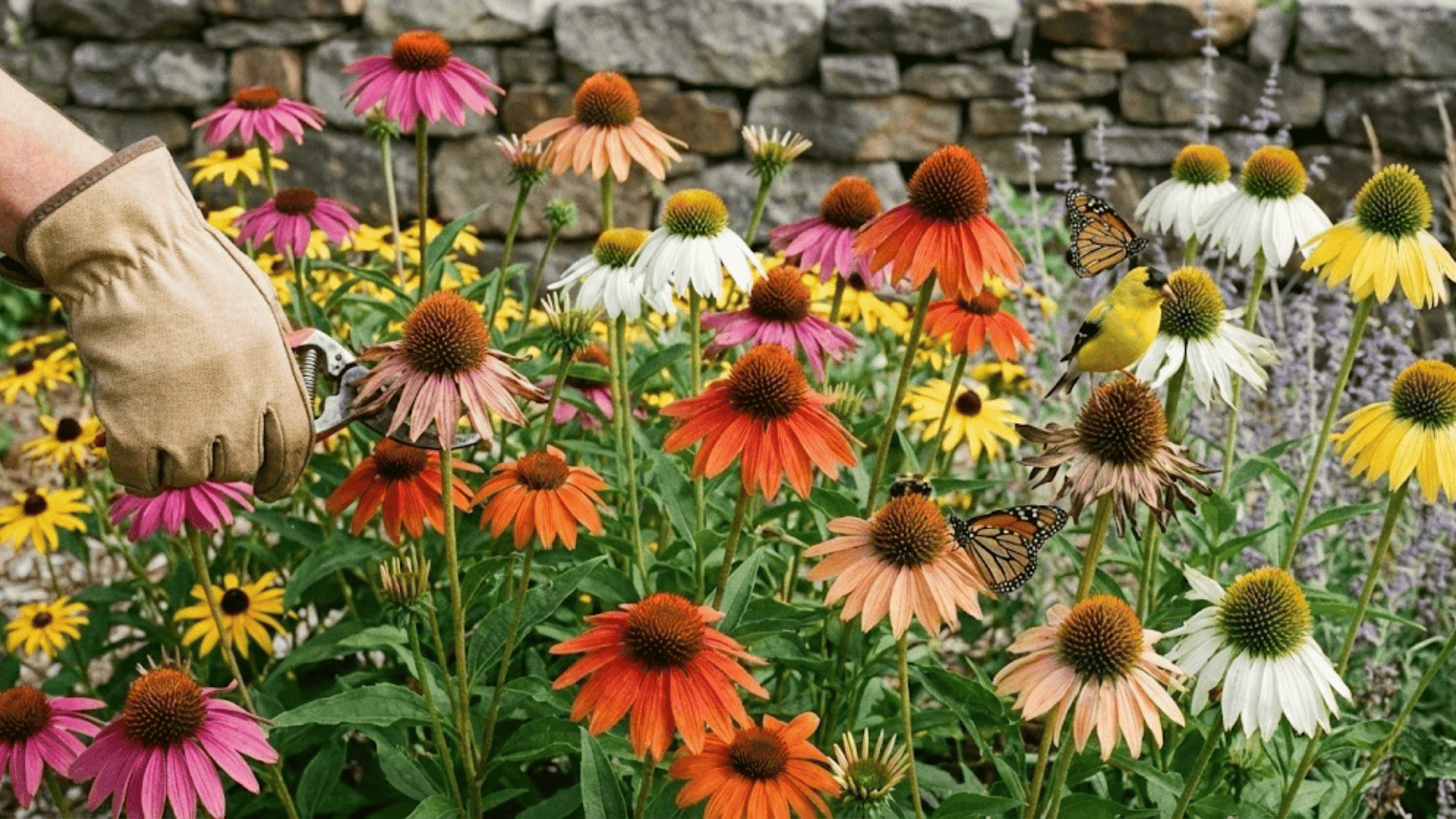
Season: Summer through fall
Spacing: 18-24 inches apart
Sunlight Exposure: Full sun
Also known as echinacea, coneflowers offer bold colors beyond traditional purple, including white, orange, and coral. Their distinctive cone-shaped centers add texture and interest to arrangements.
Extremely drought-tolerant and deer-resistant, they thrive with minimal care. Deadheading encourages more blooms, but leaving some seed heads provides winter interest and food for birds.
9. Shasta Daisies
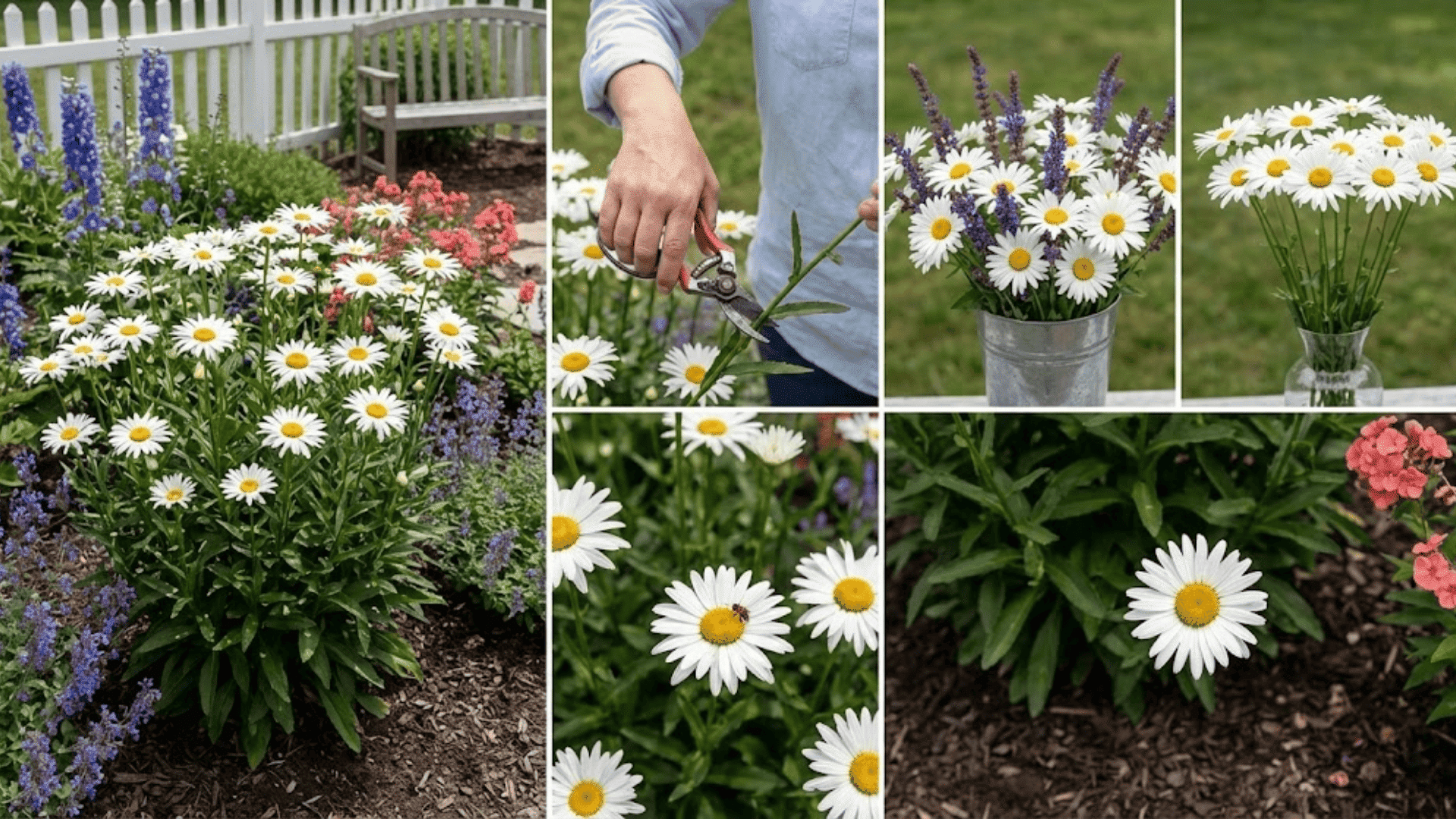
Season: Summer
Spacing: 12-24 inches apart
Sunlight Exposure: Full sun
Classic white petals surrounding golden centers make Shasta daisies timeless additions to any bouquet. They bloom prolifically throughout summer and work beautifully in both casual wildflower bunches and arrangements.
Their clean, crisp appearance complements virtually any other flower. Divide clumps every few years to maintain vigor and abundant blooms.
10. Tulips
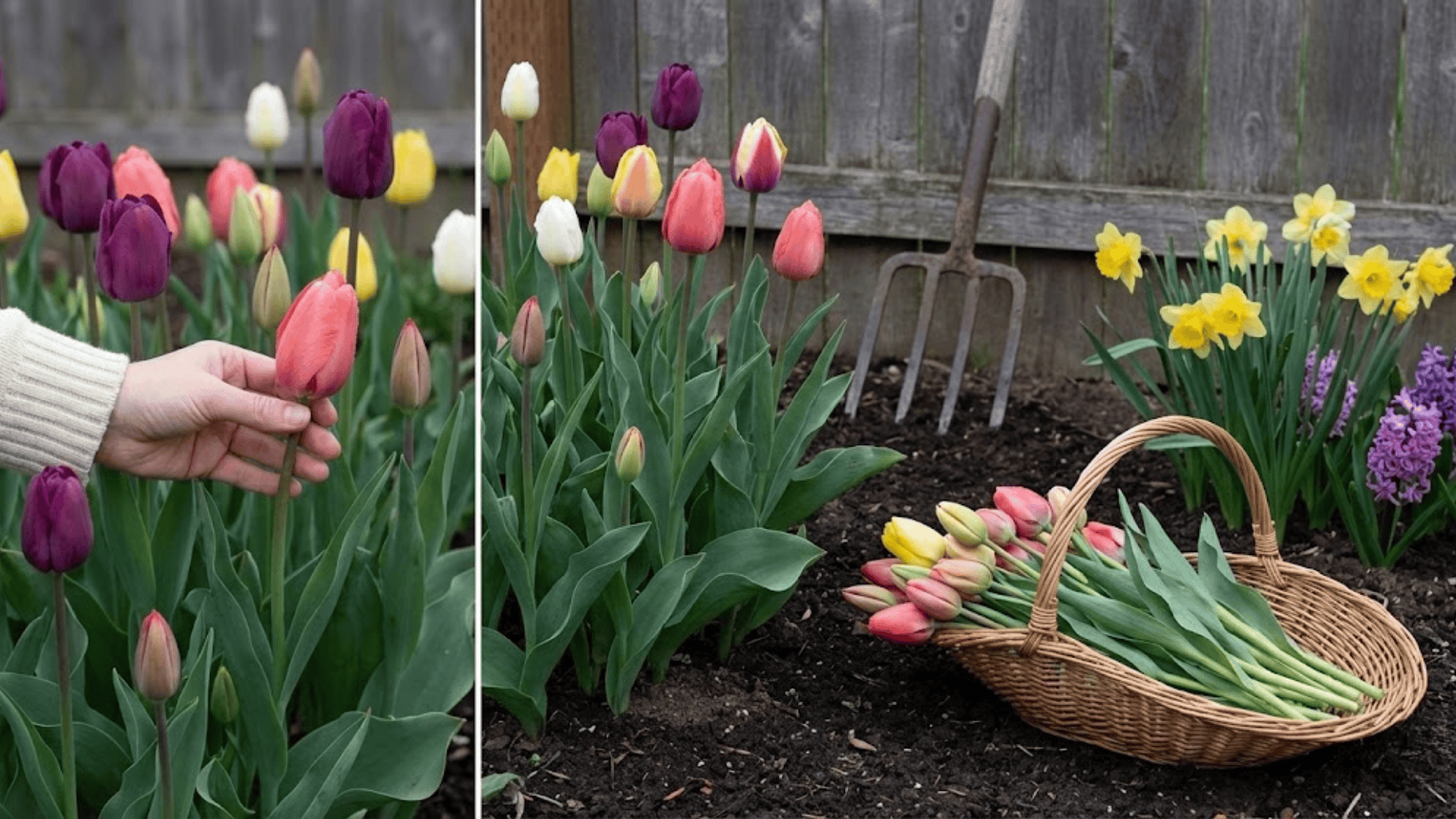
Season: Spring
Spacing: 4-6 inches apart
Sunlight Exposure: Full sun to partial shade
Tulips offer unmatched elegance with their sculptural forms and saturated colors. Plant bulbs in fall for spring blooms, choosing varieties specifically bred for cutting with stronger stems.
While often treated as annuals in warmer climates, they can perennialize in colder regions. Harvest when buds show color and watch them continue opening indoors, creating a living arrangement.
11. Daffodils
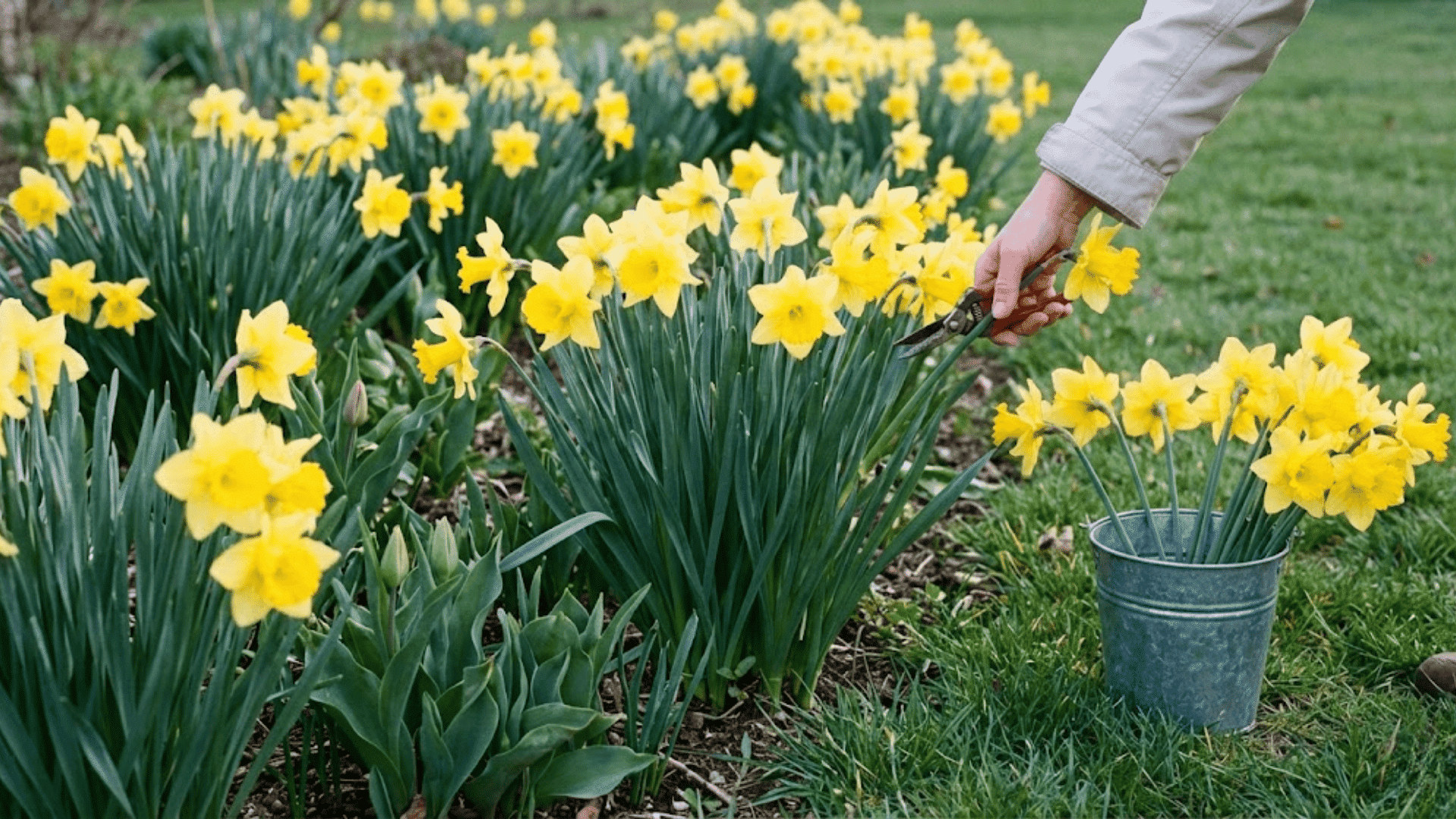
Season: Early to mid-spring
Spacing: 4-6 inches apart
Sunlight Exposure: Full sun to partial shade
Daffodils are among the earliest spring bloomers, bringing golden cheer when gardens are just awakening. They naturalize beautifully, multiplying year after year with zero effort.
Their sturdy stems and long vase life make them excellent for cutting. Note that their sap can shorten the life of other flowers, so condition them separately overnight before mixing.
12. Ranunculus
Season: Spring
Spacing: 4-6 inches apart
Sunlight Exposure: Full sun
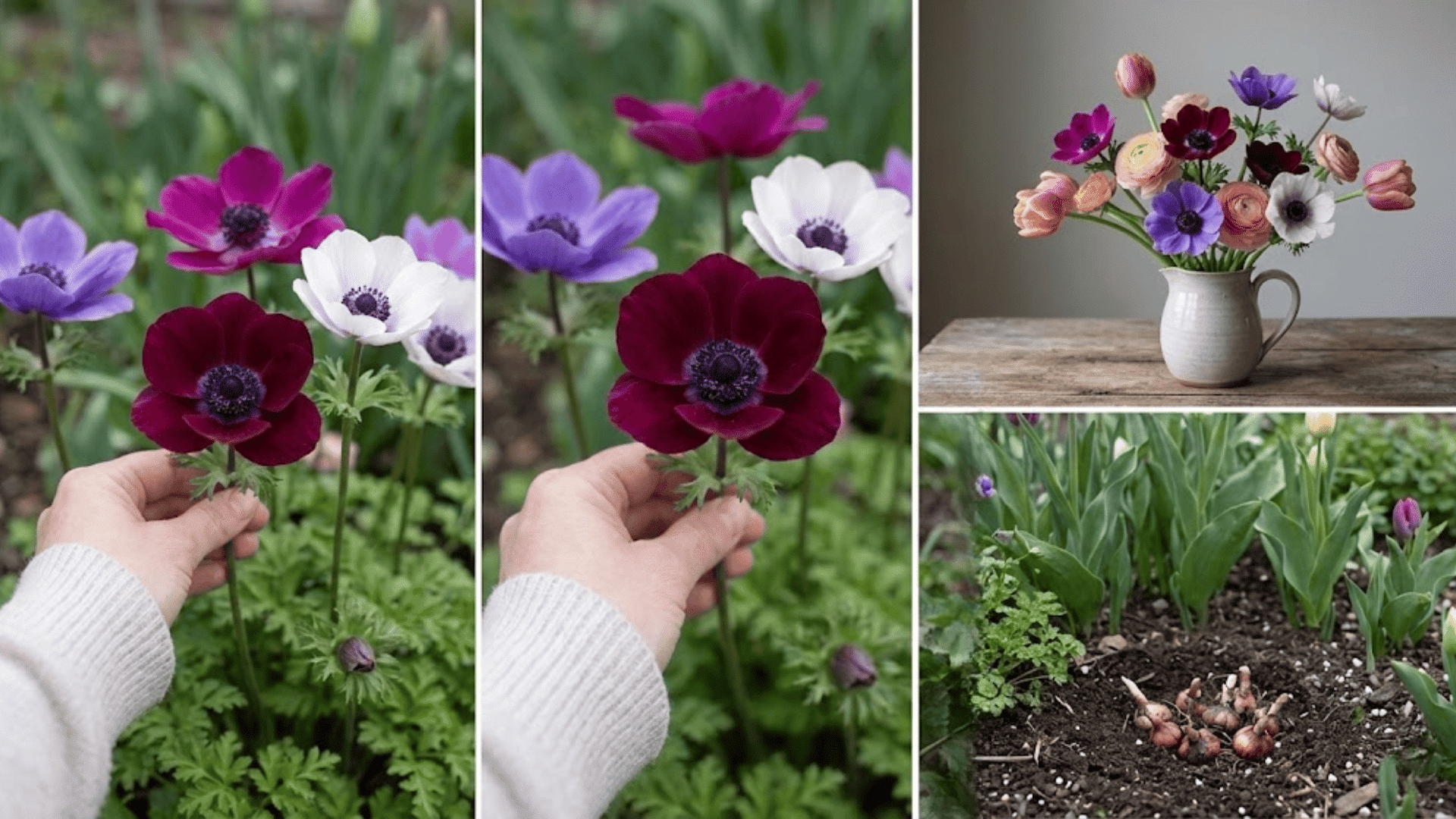
These show-stopping blooms feature layers upon layers of delicate, tissue-paper petals in stunning colors. Often called the roses of spring, ranunculus offer incredible vase life and continue opening for days after cutting.
They prefer cool weather and well-draining soil. Though fussier than other bulbs, their extraordinary beauty makes the extra effort worthwhile.
13. Anemones
Season: Spring
Spacing: 4-6 inches apart
Sunlight Exposure: Full sun to partial shade
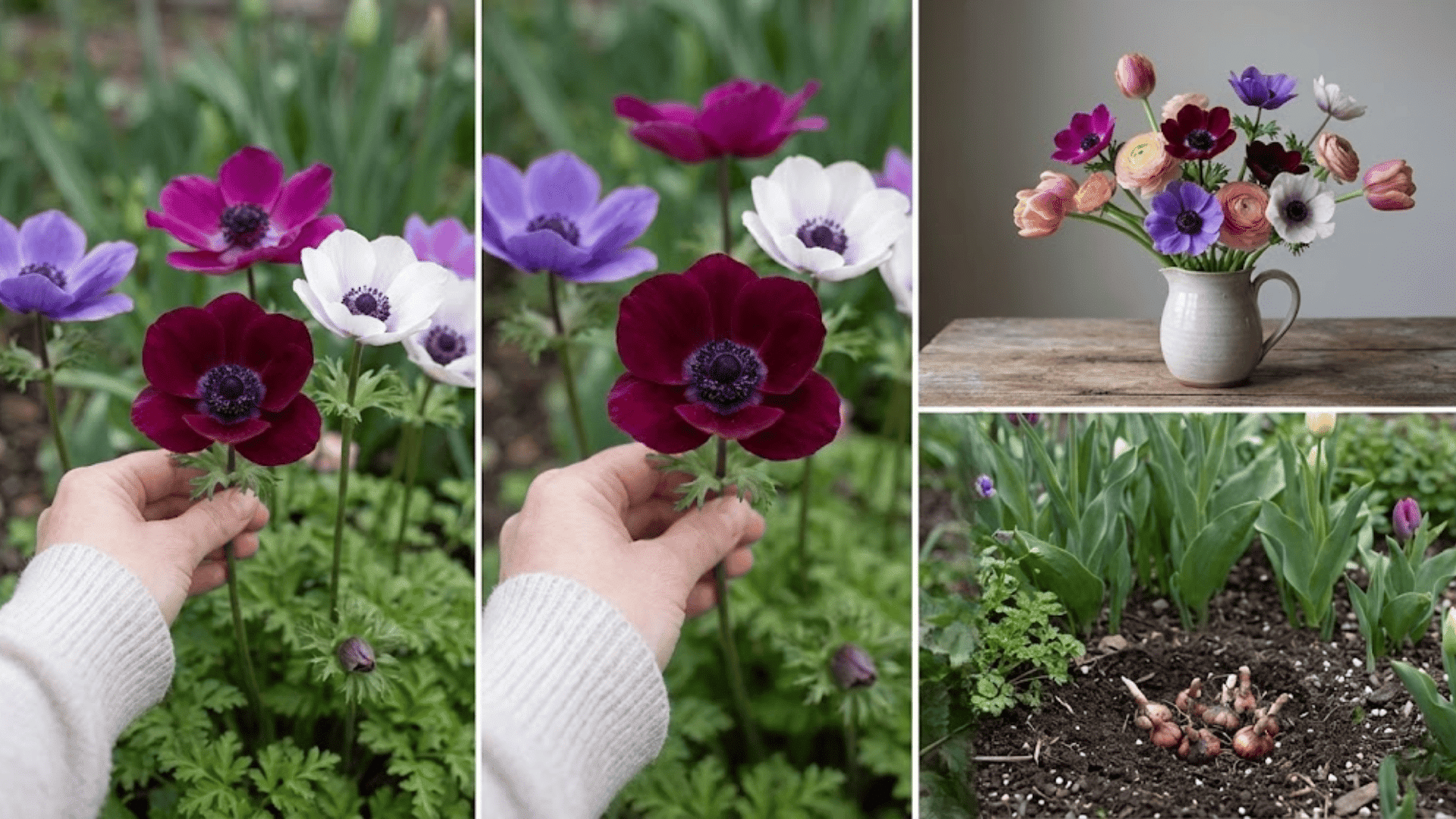
Anemones bring dramatic dark centers surrounded by silky petals in jewel tones. Their delicate appearance belies their surprisingly long vase life. They pair beautifully with ranunculus and tulips in sophisticated spring arrangements.
Plant corms in fall or early spring after soaking overnight. Their unique coloring and form add depth and interest to any bouquet.
How to Choose Flowers for a Cut Flower Garden?
Not all beautiful flowers make good cut flowers. Focus on varieties bred specifically for cutting to ensure your garden delivers blooms that last in vases and produce abundantly all season.
- Prioritize flowers with a vase life of at least five days and strong, sturdy stems that won’t droop or break during arranging.
- Select prolific bloomers that produce more flowers when cut regularly, rather than one-and-done varieties.
- Plan for continuous color by mixing early, mid, and late season bloomers to ensure fresh bouquets from spring through frost.
- Include a mix of focal flowers, fillers, and foliage to create balanced arrangements without needing store-bought additions.
- Add fragrant varieties like sweet peas and peonies to bring sensory dimension beyond visual beauty.
The right flower choices mean less work and more reward, turning your garden into a reliable source of stunning, long-lasting arrangements.
When to Plant a Cut Flower Garden?
Timing your plantings correctly ensures a steady supply of blooms from early spring through the first hard frost.
Understanding your local frost dates and climate zone helps you maximize your growing season and avoid costly planting mistakes.
| Planting Time | What to Plant | Key Considerations |
|---|---|---|
| Early Spring (4-6 weeks before last frost) |
Sweet peas, snapdragons, larkspur | Cold-tolerant; can handle light frosts |
| After Last Frost | Zinnias, cosmos, sunflowers, dahlias | Wait for 50°F+ nighttime temperatures |
| Late Spring/Early Summer | Succession plantings of annuals | Plant every 2-3 weeks for continuous blooms |
| Fall (6-8 weeks before first frost) |
Tulips, daffodils, alliums | Requires a cold period; plant 2-3 times the bulb depth |
| Fall (mild climates only) | Hardy annuals for winter blooms | Zones 8-10 only |
Succession Planting for Continuous Blooms
Succession planting means sowing the same flowers in waves rather than all at once, ensuring a steady supply of blooms instead of one big flush followed by nothing.
For fast-growing annuals like zinnias and cosmos, plant new seeds or transplants every two to three weeks from spring through midsummer.
Example Timeline:
- Late April: First planting of zinnias, cosmos, and sunflowers
- Mid-May: Second round of the same varieties
- Early June: Third planting to fill mid-summer gaps
- Late June: Final succession for fall blooms
- Early July: Last sunflower planting for autumn harvests
This staggered approach keeps your garden productive and your vases full from June through October.
How to Care for a Cut Flower Garden?
A thriving cut flower garden requires consistent attention to a few key practices. Regular maintenance and vigilant monitoring keep plants productive and healthy throughout the entire growing season.
Essential Maintenance Practices
Keeping your cutting garden in peak condition means staying on top of watering, feeding, and harvesting routines that encourage continuous bloom production.
- Step 1: Water deeply once or twice weekly rather than shallow daily watering to encourage strong root systems.
- Step 2: Feed every two to three weeks with balanced liquid fertilizer to support heavy bloom production.
- Step 3: Cut flowers regularly in the morning when stems are most hydrated for the longest vase life.
- Step 4: Deadhead spent blooms on plants you’re not harvesting to redirect energy into new flower production.
Pest and Disease Management
Proactive monitoring and quick action prevent small problems from becoming garden-wide disasters that compromise your harvest.
- Step 1: Inspect plants weekly for aphids, Japanese beetles, and other common pests before infestations spread.
- Step 2: Ensure proper spacing and airflow between plants to prevent fungal diseases like powdery mildew.
- Step 3: Remove affected leaves or plants immediately to stop the disease from spreading to healthy specimens.
- Step 4: Use organic solutions like neem oil or insecticidal soap as first-line treatments before harsher chemicals.
How to Harvest Flowers for the Longest Vase Life?
The way you harvest flowers matters just as much as what you grow. Proper timing and technique can add days to your arrangements and keep blooms looking fresh and vibrant.
- Step 1: Cut flowers early morning, after the dew dries but before heat stress sets in, when stems hold maximum water.
- Step 2: Use clean, sharp pruners or scissors and cut stems at a 45-degree angle to maximize water uptake.
- Step 3: Bring a bucket of room temperature water to the garden and immediately plunge cut stems into it.
- Step 4: Strip all foliage that will sit below the waterline to prevent bacterial growth and cloudy water.
- Step 5: Condition flowers indoors in a cool, dark place for several hours or overnight before arranging.
- Step 6: Recut stems under water before final arranging to remove any air bubbles blocking water flow.
Cut Flower Garden Layout Ideas
Your garden layout should prioritize accessibility and efficiency over ornamental beauty. Choose a structure that makes harvesting easy while maximizing space and bloom production for your specific needs.
| Layout Style | Best For | Key Features | Spacing |
|---|---|---|---|
| Row Planting | Maximum production | Straight rows with clear pathways | 12-18″ rows, 2-3′ paths |
| Mixed Beds | Smaller spaces | Various heights and textures | 18-24″ between plants |
| Color Blocking | Coordinated bouquets | Same colors planted together | 3×3′ minimum blocks |
| Cutting Patch | Beginners | Informal dedicated corner | Closer than ornamental spacing |
Pro Tip: Always leave enough space to walk comfortably between plantings with a basket in hand. Cramped gardens lead to trampled plants and frustrating harvests.
Common Cut Flower Garden Mistakes to Avoid
Even experienced gardeners stumble when growing flowers specifically for cutting.
Sidestepping these common pitfalls saves time, money, and the disappointment of a garden that underperforms when you need it most.
- Planting only once per season leads to feast or famine instead of the steady supply that succession planting provides.
- Waiting until flowers fully open means shorter vase life since blooms cut in bud stage last significantly longer.
- Neglecting soil health depletes nutrients quickly when plants are producing blooms constantly throughout the season.
- Cramming plants too close together invites disease and makes it nearly impossible to harvest without damaging neighboring stems.
Learning from these mistakes before making them means more blooms in your vases and fewer frustrations in your garden.
The Closing Note
Your cut flower garden journey begins with a single seed and grows into a ritual you’ll cherish season after season.
There’s something deeply satisfying about filling your home with blooms you’ve nurtured from the ground up, stems still dewy from morning harvest.
Starting small with a sunny corner or dedicating an entire plot to cutting flowers means each arrangement becomes a reflection of your care and attention.
The learning curve is gentle, the rewards are immediate, and your kitchen table will never look the same.
What flowers are you most excited to grow? Share your thoughts in the comments below.