Growing celery can feel like a bit of a challenge, but choosing the right plant companions changes everything.
When you tuck the perfect neighbors alongside your celery stalks, something wonderful happens: pests drift away, soil health improves, and your harvest becomes more abundant.
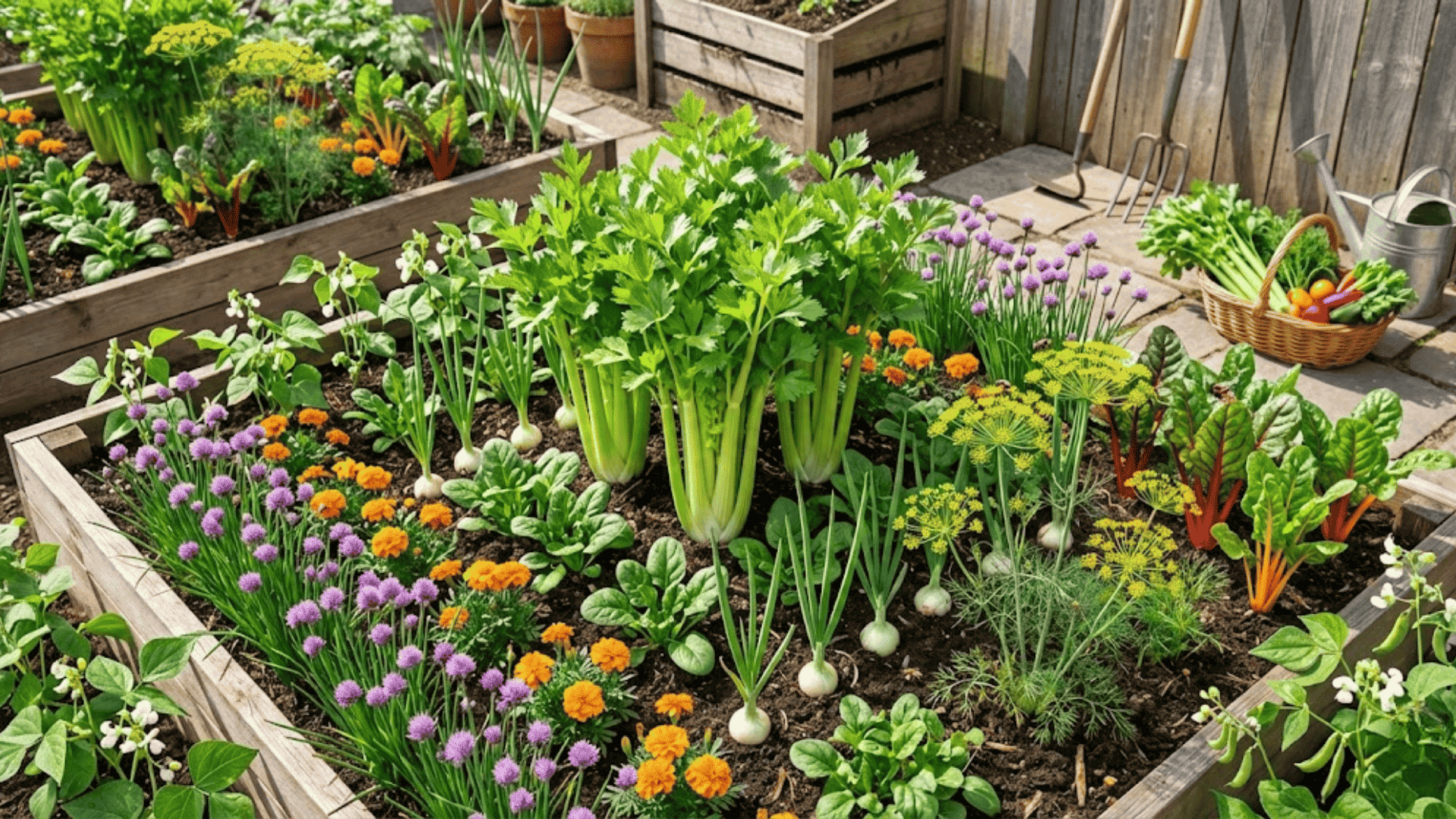
Companion planting creates a supportive community in your garden beds, where each plant contributes something valuable to the others.
You’ll learn which plants make celery truly flourish, which ones to keep at a distance, and how to arrange them for a garden that practically tends itself.
Why Companion Planting Matters for Celery?
Celery asks a lot from your garden. With shallow roots that barely scratch the surface, it competes poorly for nutrients and water.
Add in its high nitrogen demands and sensitivity to temperature swings, and you’ve got a crop that needs serious support. Celery also attracts aphids, celery worms, and leaf miners without much defense of its own.
Companion plants step in as problem-solvers. They can shade those tender roots, repel hungry insects, fix nitrogen back into tired soil, and even act as living mulch to keep moisture locked in.
Suddenly, those celery-growing headaches start to fade.
How to Choose the Right Companion Plants for Celery?
Choosing companions for celery isn’t about cramming every beneficial plant into one bed. It’s about matching needs and building balance so everything thrives together.
- Look for moisture lovers since celery drinks constantly and pairs best with plants that won’t compete for water.
- Prioritize pest fighters like herbs and alliums that naturally repel aphids, carrot flies, and leaf miners.
- Mix in nitrogen fixers such as legumes to feed celery’s heavy appetite without constant fertilizing.
- Mind the spacing so taller companions provide shade without blocking airflow or inviting fungal issues.
When you align these factors, your celery bed becomes a working ecosystem rather than a guessing game.
17 Best Celery Companion Plants
Not all neighbors are created equal in the garden. Some plants actively boost celery’s health, while others just peacefully coexist.
Here are the top companions that actually earn their spot beside your celery stalks.
1. Onions
Best For: Organic gardeners battling aphids and carrot rust flies
Garden Size: Any size from containers to large in-ground beds
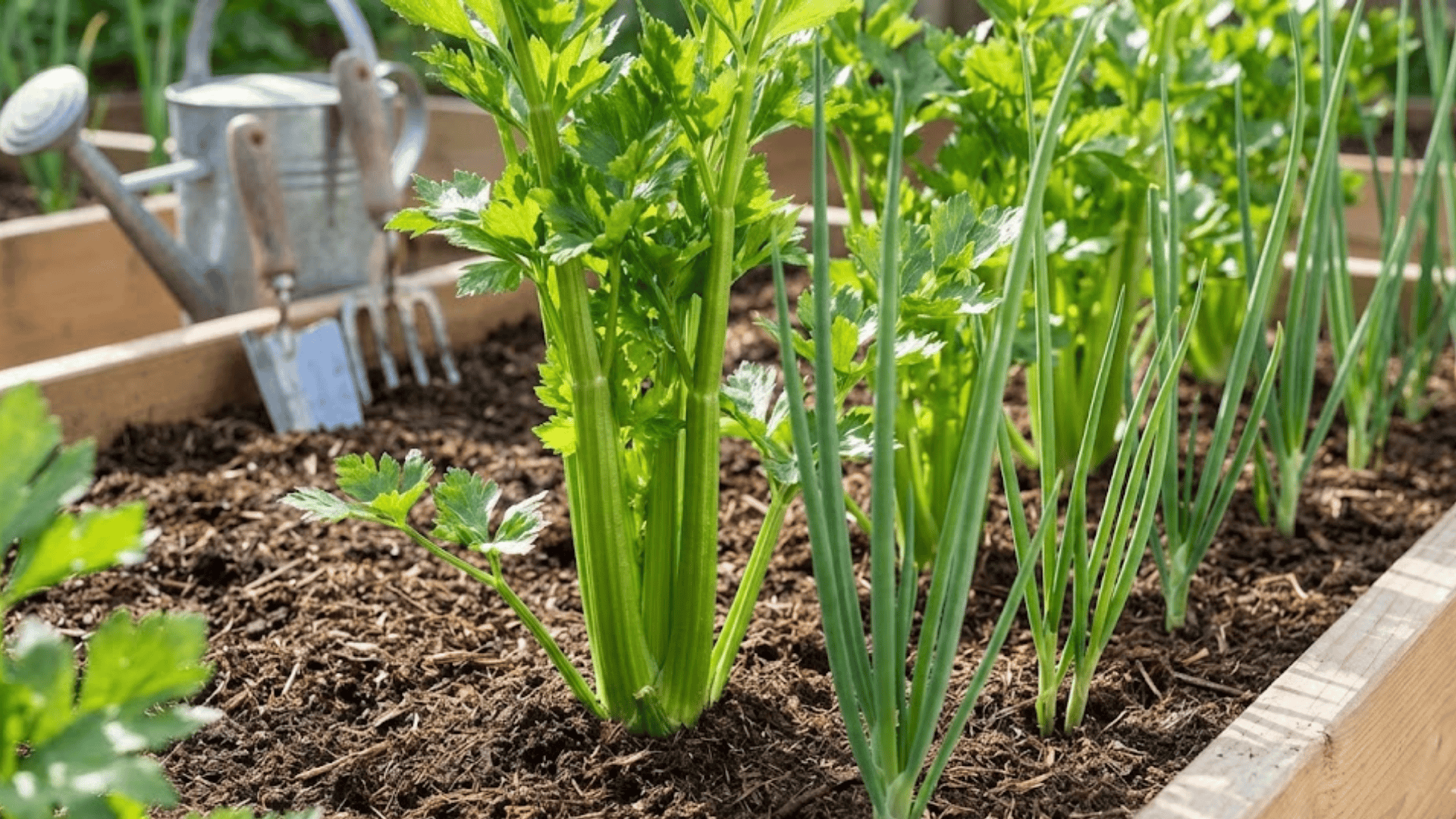
Spacing & Arrangement: Plant 4-6 inches apart alongside celery or border the patch with protective onion rings
Onions repel aphids and carrot rust flies while demanding minimal nutrients, making them one of celery’s most reliable allies. Their pungent scent confuses pests that would otherwise zero in on your celery crop.
They thrive in the same moist, fertile soil celery loves without competing for resources. Plant them early in spring alongside celery transplants, and you’ll have natural pest protection throughout the growing season.
2. Garlic
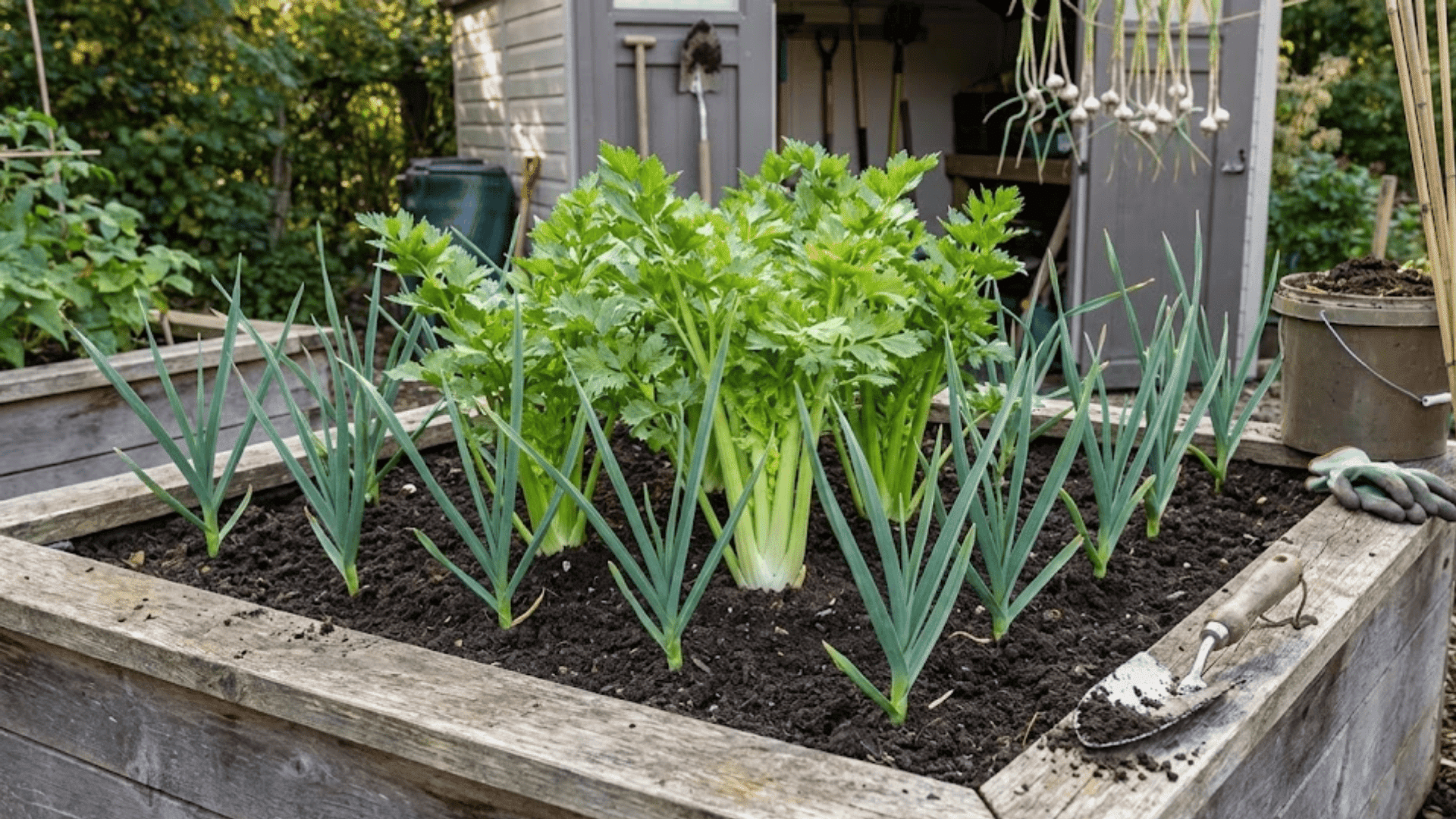
Best For: Gardens dealing with fungal issues or wanting year-round protection
Garden Size: Medium to large gardens with space for garlic’s longer growing season
Spacing & Arrangement: Space cloves 6 inches apart around celery beds, planted in fall for summer harvest
Garlic acts as a natural pest deterrent and supports disease resistance through its antifungal properties. Its strong aroma masks the scent of celery from hunting pests.
Both crops appreciate rich soil and steady moisture, though garlic tolerates slightly drier conditions once established. The timing works beautifully since garlic planted in the fall matures just as celery enters its peak growth phase.
3. Leeks
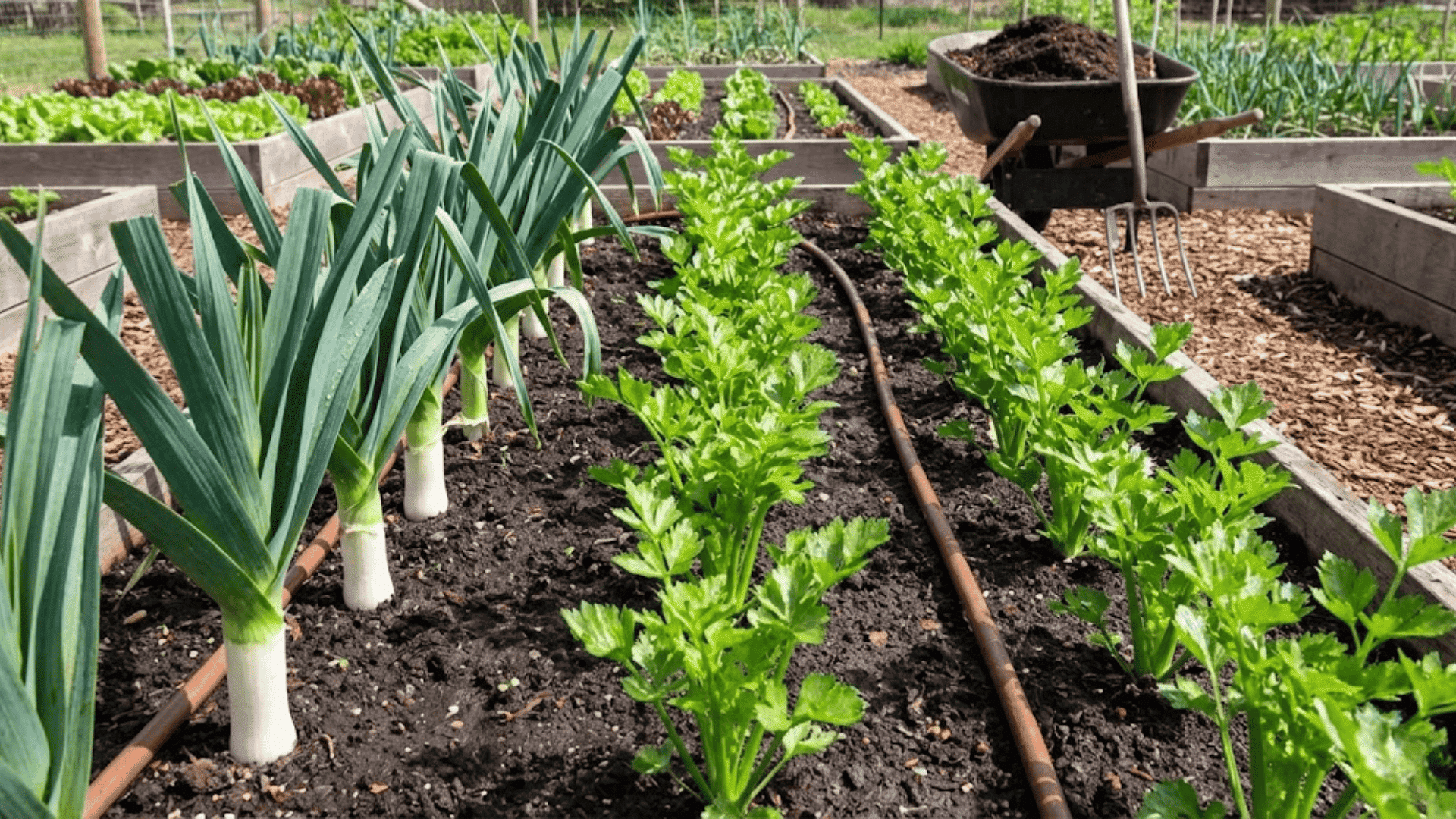
Best For: Spring and fall gardens maximizing cool-weather productivity
Garden Size: Larger beds where both crops can develop extensive roots side by side
Spacing & Arrangement: Plant 6 inches apart in rows 12 inches from celery
Leeks share nearly identical growing conditions with celery and help deter celery leaf miners. Both crops appreciate consistent moisture, cool weather, and rich organic soil.
Their upright growth habit won’t shade celery while still providing companion benefits. Harvest leeks as needed throughout the season without disturbing nearby celery plants.
4. Chives
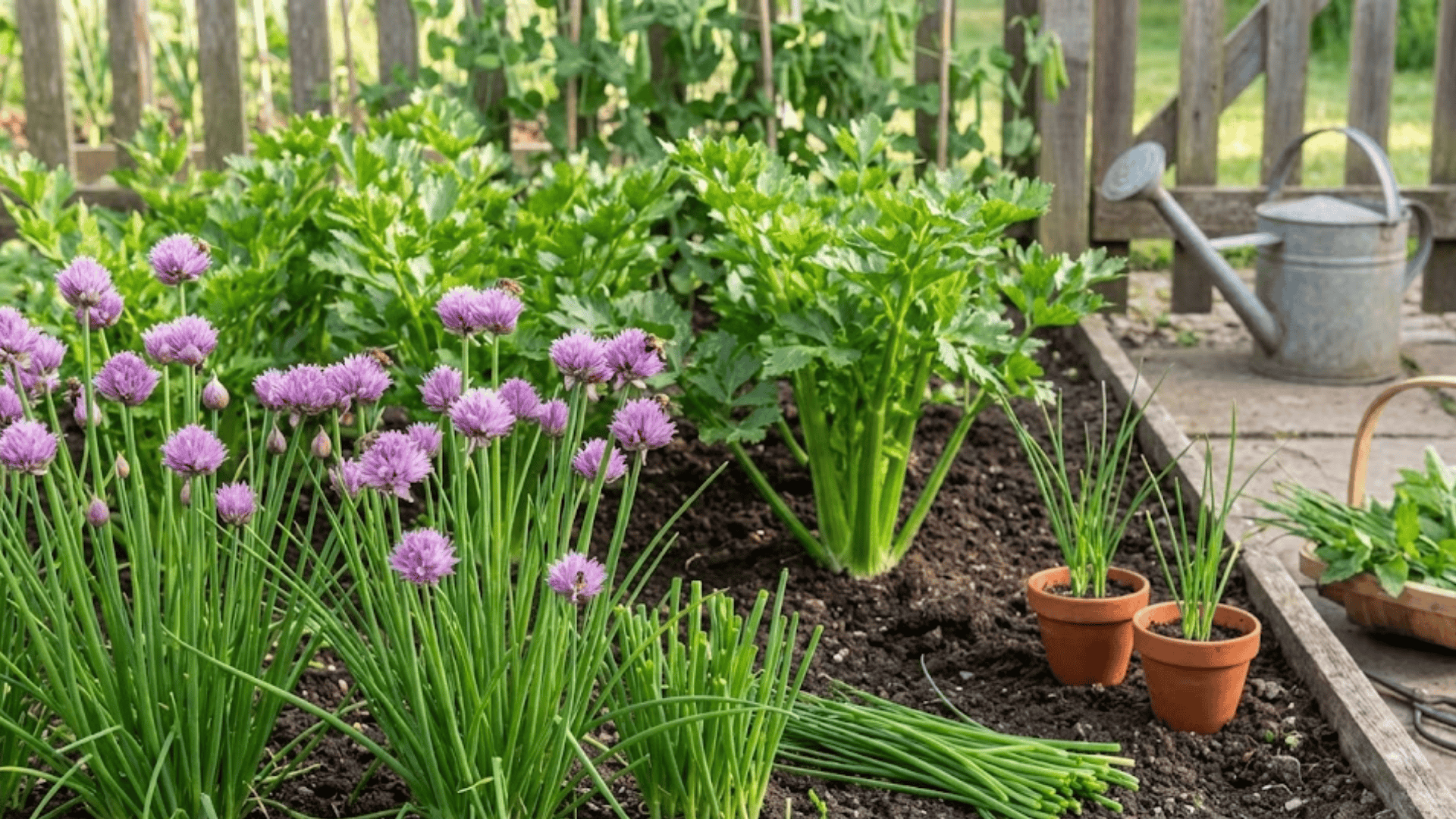
Best For: Low-maintenance gardens and edible landscaping
Garden Size: Any size, including small spaces and containers
Spacing & Arrangement: Plant clumps 8-10 inches from celery as edging or tucked between plants
Chives improve celery flavor while attracting beneficial insects like hoverflies and parasitic wasps. Their purple blooms add visual interest and pollinator support to your garden.
Once established, chives return year after year with minimal care, creating a permanent companion planting structure. Snip leaves regularly to encourage fresh growth and prevent flowering if you prefer foliage over blooms.
5. Spinach
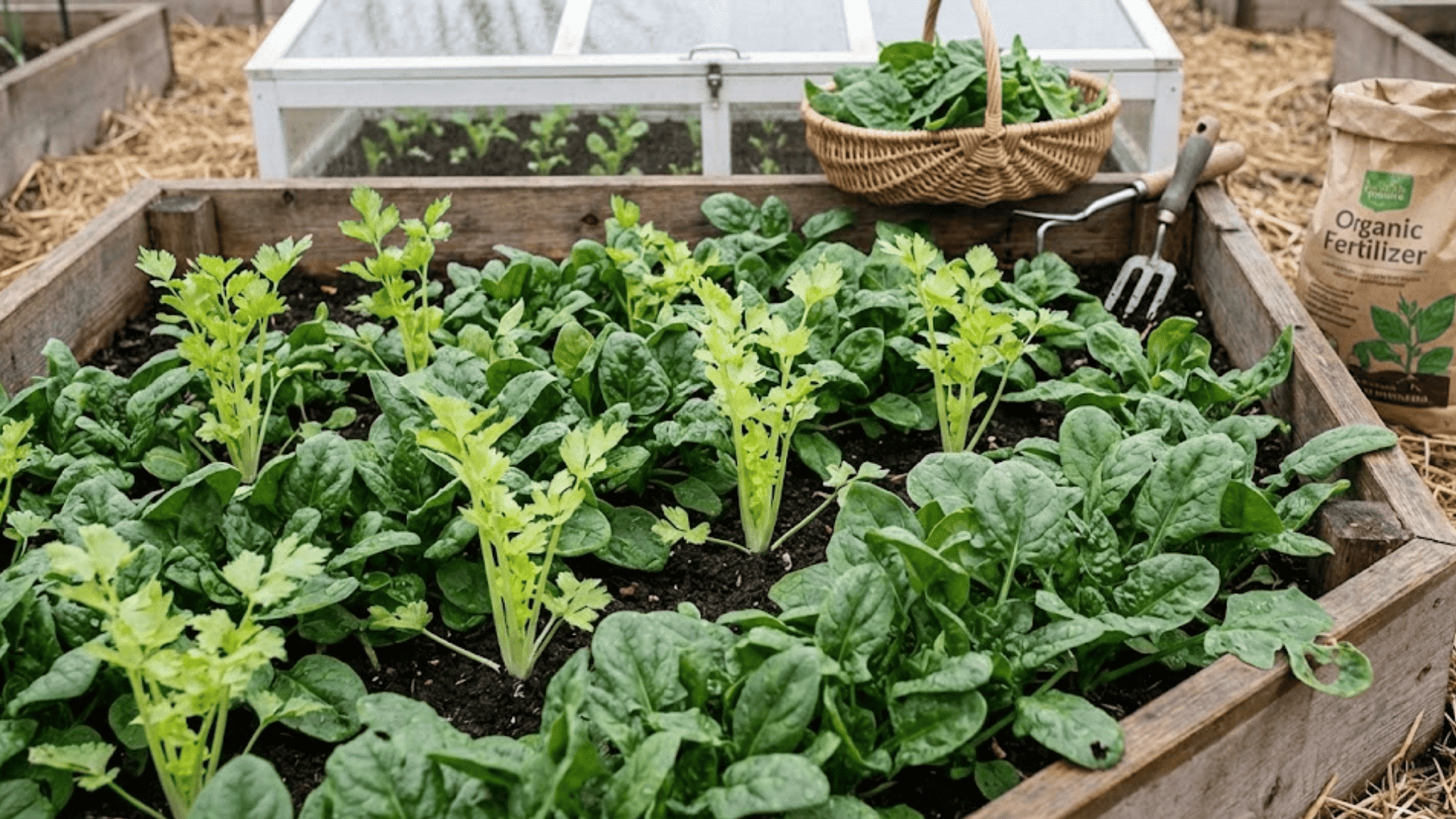
Best For: Spring gardens and succession planting strategies
Garden Size: Small gardens and raised beds where space is precious
Spacing & Arrangement: Sow seeds 3-4 inches apart between celery plants
Spinach acts as a living mulch around celery, keeping the soil cool and moist while maximizing garden space. It matures quickly before celery reaches full size, allowing you to harvest spinach without interfering with celery growth.
Both crops thrive in cool weather and appreciate the same rich, consistently moist soil. Plant spinach seeds directly in gaps between celery transplants for continuous harvests.
6. Lettuce
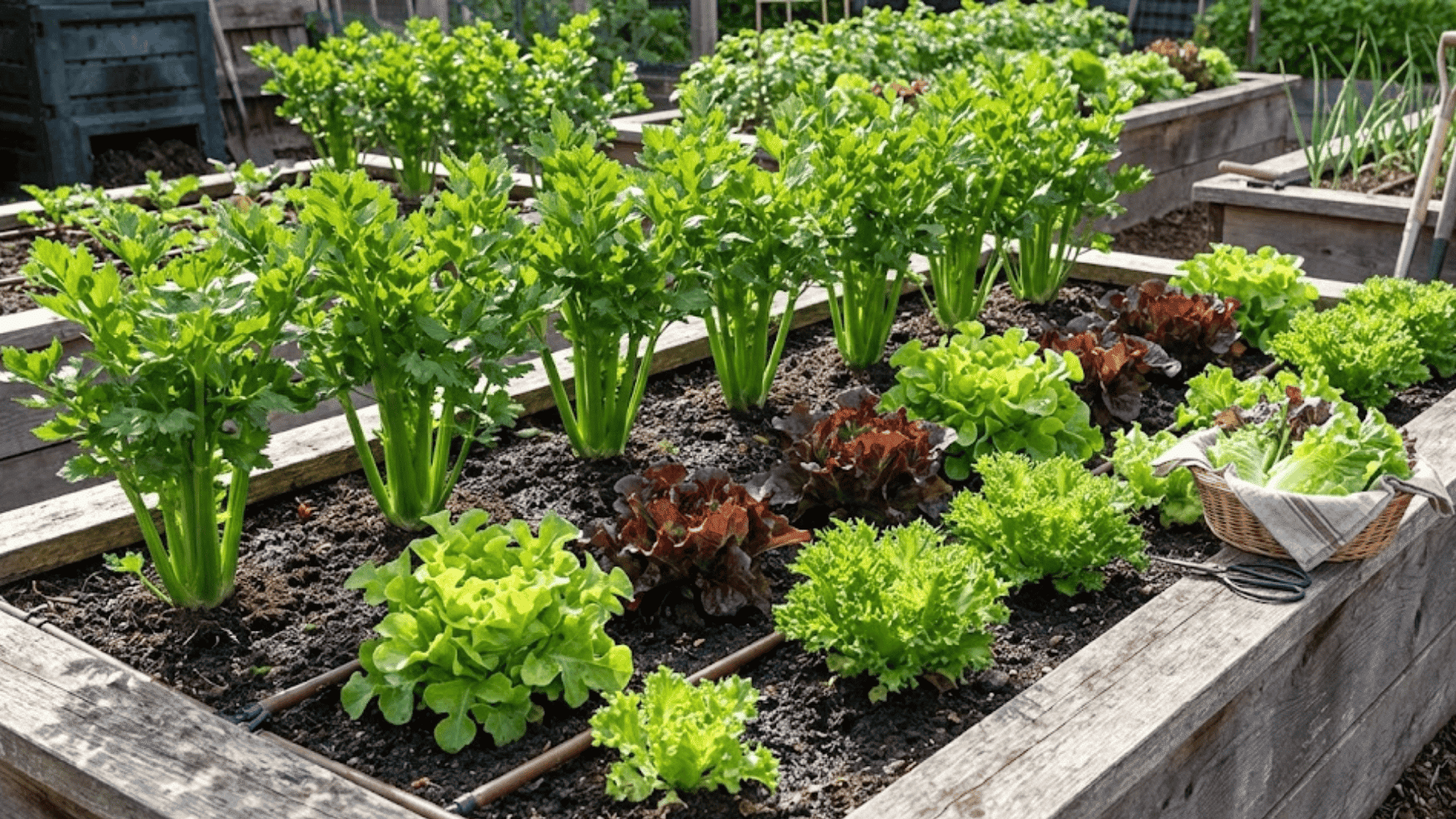
Best For: Market gardens and impatient home gardeners wanting fast returns
Garden Size: Any size from window boxes to large plots
Spacing & Arrangement: Plant 6-8 inches apart between celery, using loose-leaf varieties for cut-and-come-again harvesting
Lettuce’s shallow roots complement celery perfectly without competing for nutrients or water at different soil depths. It provides ground cover that retains moisture and suppresses weeds.
Both crops prefer cool weather and consistent watering, making them natural companions. Harvest outer lettuce leaves continuously while celery continues growing, then remove lettuce entirely once celery needs the space.
7. Bush Beans
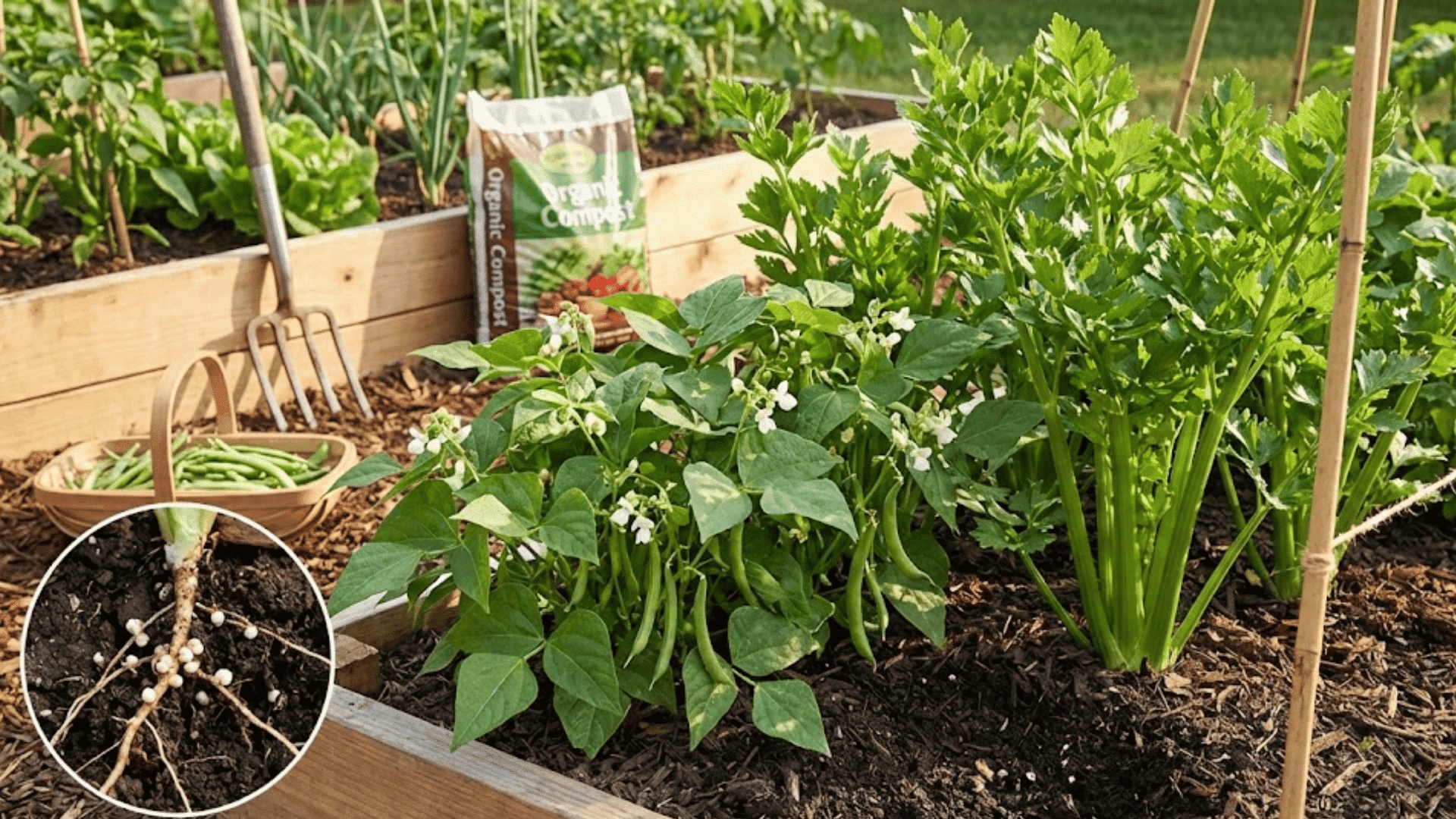
Best For: Organic gardens, reducing fertilizer inputs naturally
Garden Size: Medium to large gardens with room for beans to spread
Spacing & Arrangement: Plant 4-6 inches apart in rows 18 inches from celery
Bush beans fix nitrogen in the soil through their root nodules, directly supporting celery’s heavy feeding needs. They improve soil fertility while producing their own edible harvest.
Plant beans after the last frost when the soil has warmed, timing them to mature during celery’s mid-season growth spurt. Their compact growth habit won’t interfere with celery harvesting or airflow.
8. Peas
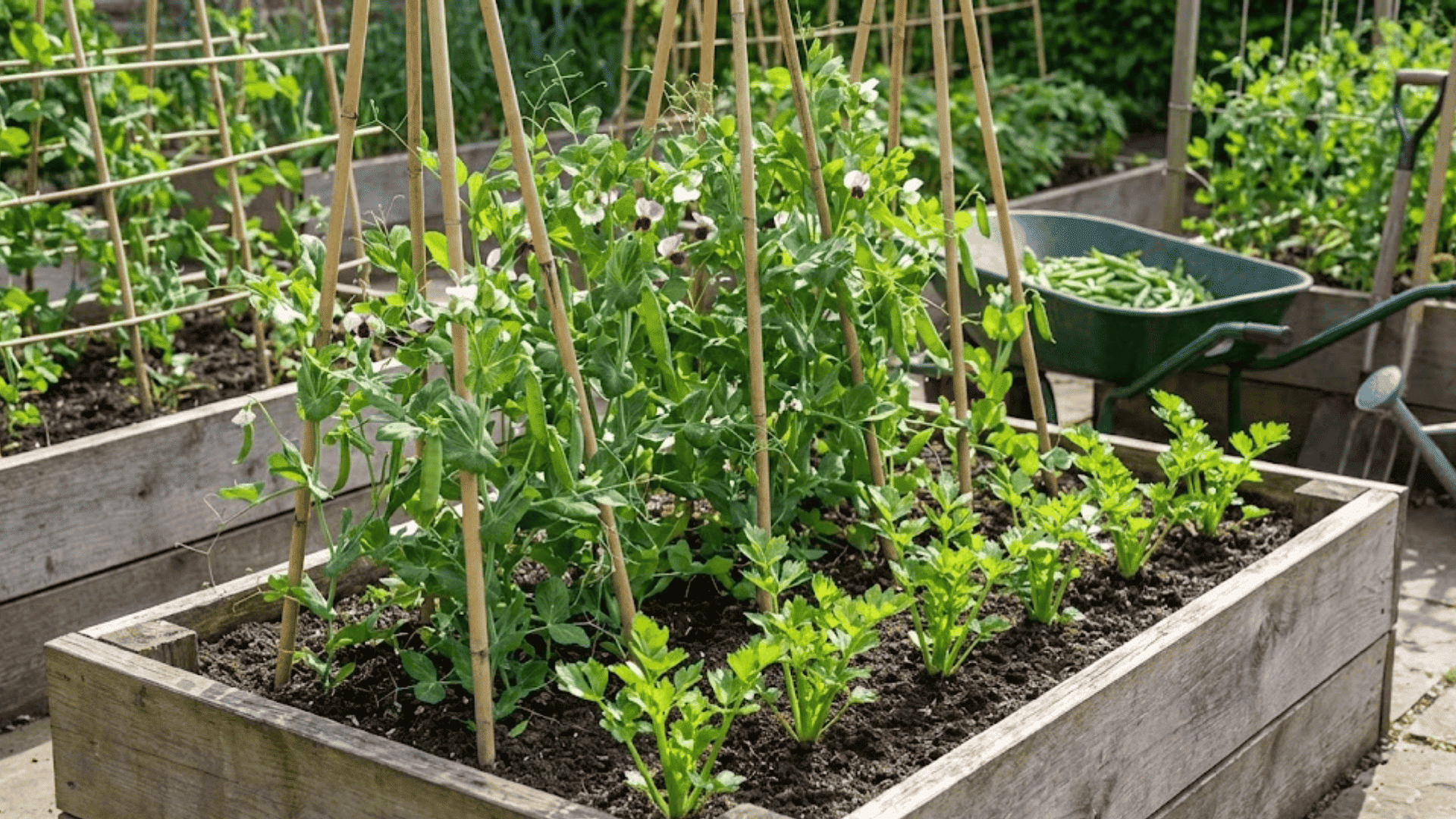
Best For: Cool-climate regions and vertical gardening in small spaces
Garden Size: Any size since peas grow upward on trellises
Spacing & Arrangement: Plant 2-3 inches apart on supports north of celery rows to avoid shading
Peas improve soil fertility through nitrogen fixation and grow beautifully in the same cool conditions that celery prefers. They mature early in the season, leaving behind nutrient-rich soil and nitrogen nodules for celery to access.
Position trellises carefully to prevent shading the celery as the peas grow taller. Harvest peas completely before they start competing for water during peak summer heat.
9. Cabbage
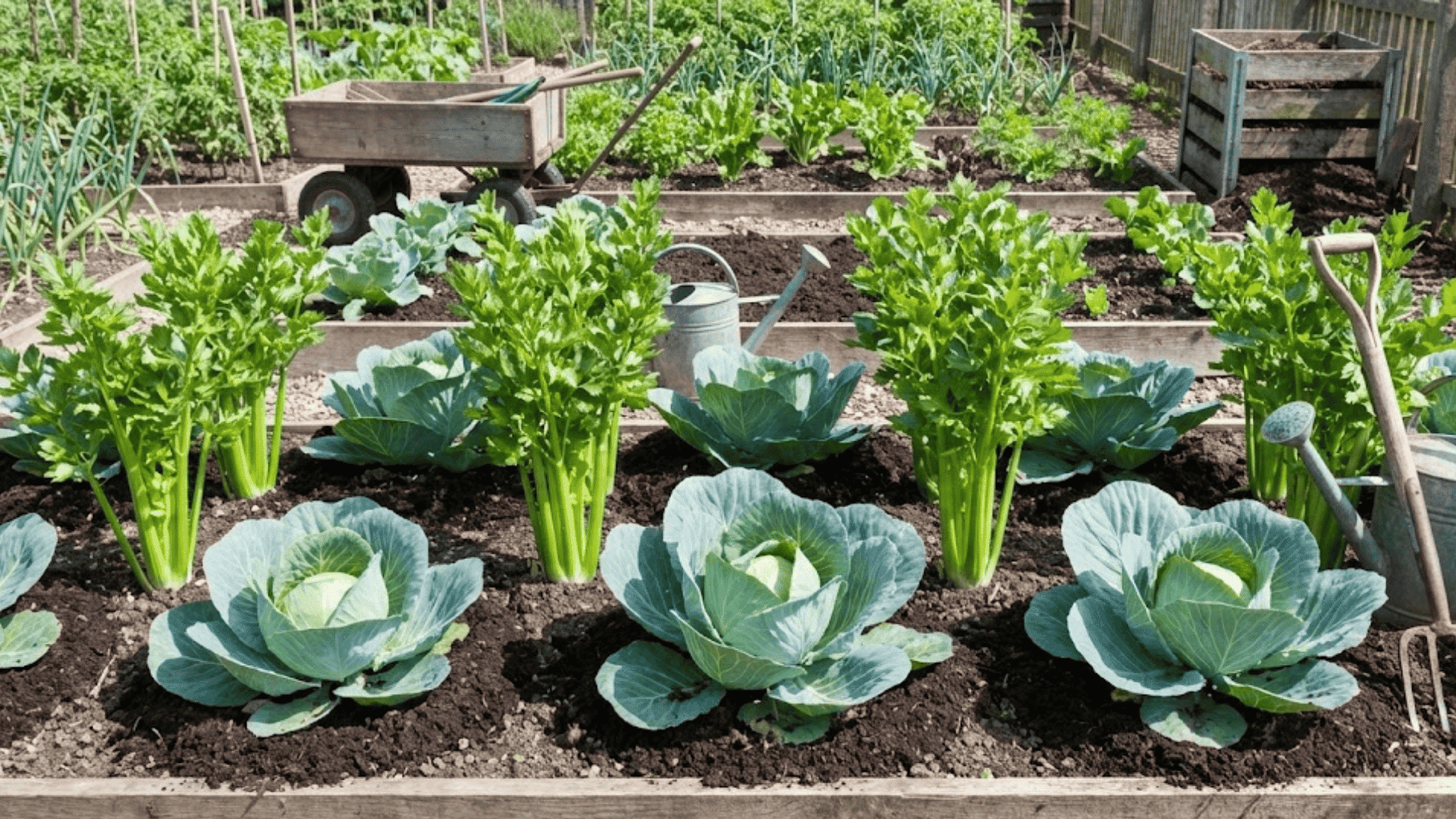
Best For: Classic vegetable gardens following time-tested combinations
Garden Size: Medium to large beds accommodating mature cabbage heads
Spacing & Arrangement: Space 18-24 inches apart with celery planted between, allowing cabbage leaves to provide some shade
Cabbage benefits from celery’s pest-masking scent, creating mutual protection in the garden. Both are heavy feeders that appreciate rich, amended soil and consistent moisture.
They’re commonly paired in traditional gardens because their needs align so well. The cabbage’s broad leaves provide beneficial shade for celery roots during warmer weather without completely blocking sunlight.
10. Cauliflower
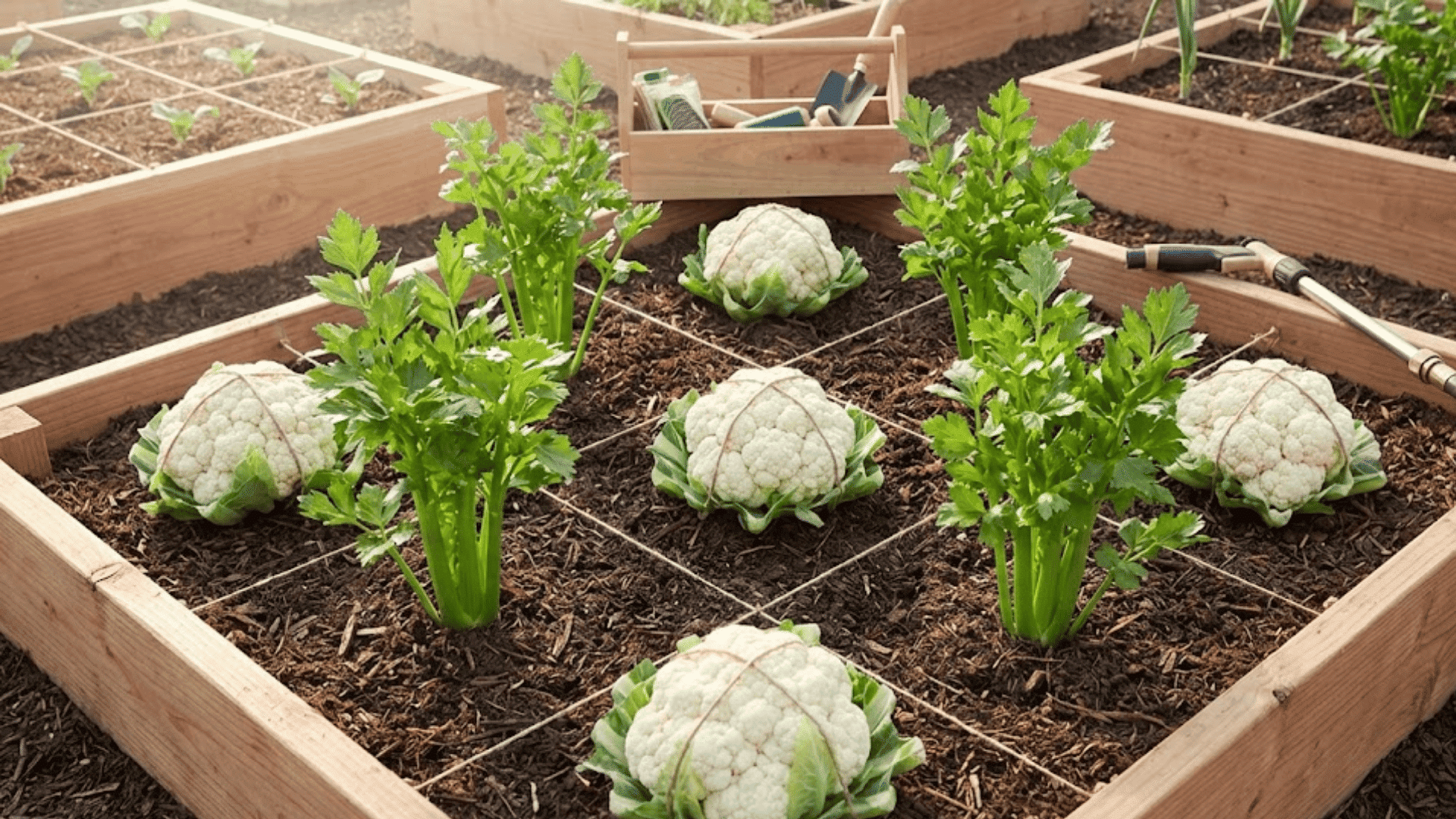
Best For: Square-foot gardening and strategic space planning
Garden Size: Medium to large gardens accommodating cauliflower’s size
Spacing & Arrangement: Plant 18-24 inches apart in alternating rows with celery, maintaining airflow
Cauliflower shares compatible nutrient needs with celery, and pairing them maximizes bed efficiency. Both crops demand consistent moisture, cool temperatures, and fertile soil rich in organic matter.
Time plantings so both crops mature around the same period for simplified care. Keep plants properly aligned to maintain good airflow and prevent fungal issues in humid conditions.
11. Broccoli
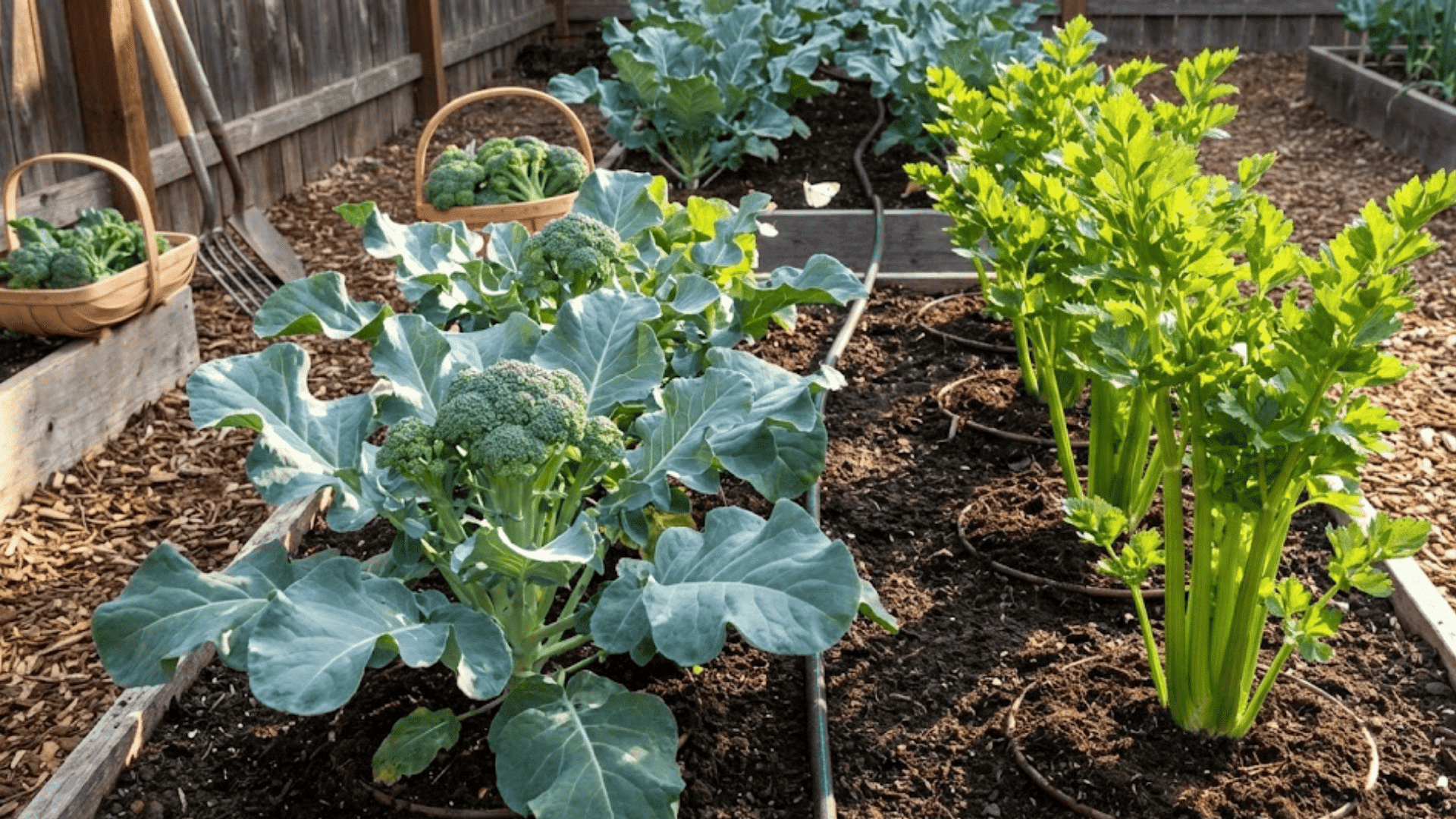
Best For: Family gardens growing multiple vegetables with natural pest management
Garden Size: Medium to large beds for broccoli’s spreading foliage
Spacing & Arrangement: Space 18 inches apart with celery on the sunny side for adequate light
Broccoli works well in mixed vegetable beds, and celery helps deter cabbage moths that typically target brassicas. They share similar water and nutrient requirements, making care routines simple.
Position celery where it receives full morning sun before any afternoon shade from broccoli’s large leaves. Both crops appreciate side-dressing with compost during their growing season.
12. Tomatoes
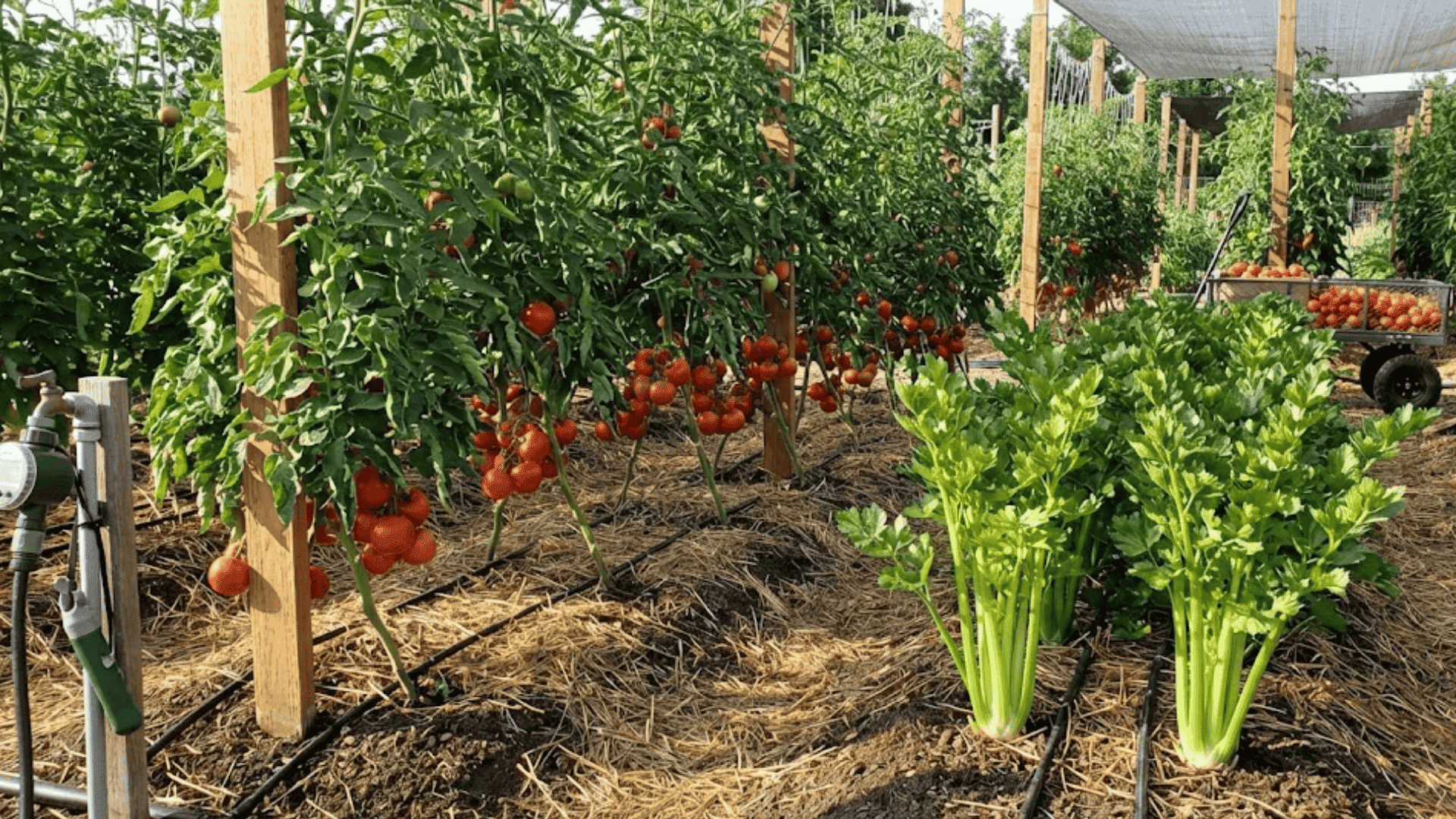
Best For: Hot-summer regions where celery needs afternoon shade protection
Garden Size: Larger gardens, maintaining proper spacing between demanding crops
Spacing & Arrangement: Plant tomatoes 24-36 inches from celery rows, positioning celery east for morning sun
Celery repels certain tomato pests while tomatoes provide strategic afternoon shade in scorching climates. This pairing requires thoughtful spacing since both crops need substantial room and resources.
In cooler regions, skip this combination as tomatoes may shade celery too much. Water both deeply and consistently, as they share similar moisture needs during peak summer growth.
13. Dill
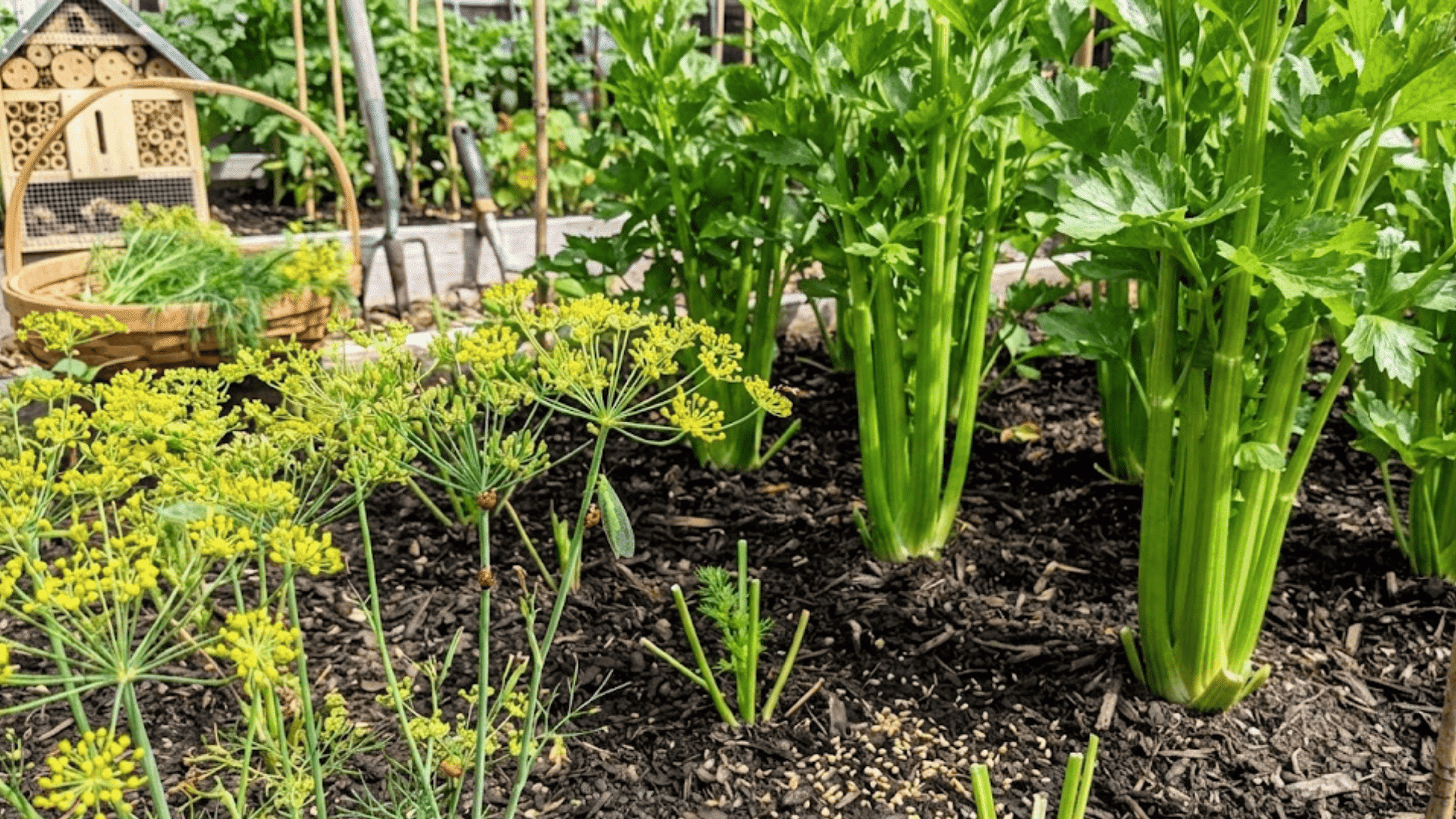
Best For: Organic gardens focused on biological pest control
Garden Size: Any size, though dill self-seeds prolifically
Spacing & Arrangement: Plant 12 inches from celery in small clusters, harvesting some before they overshadow celery
Dill attracts predatory insects like lacewings and ladybugs that devour aphids and other celery pests. Allow some plants to flower for beneficial insects while harvesting others young for culinary use.
Both plants appreciate similar growing conditions with full sun and consistent moisture. Be mindful that mature dill grows quite tall and may need staking near celery.
14. Chamomile
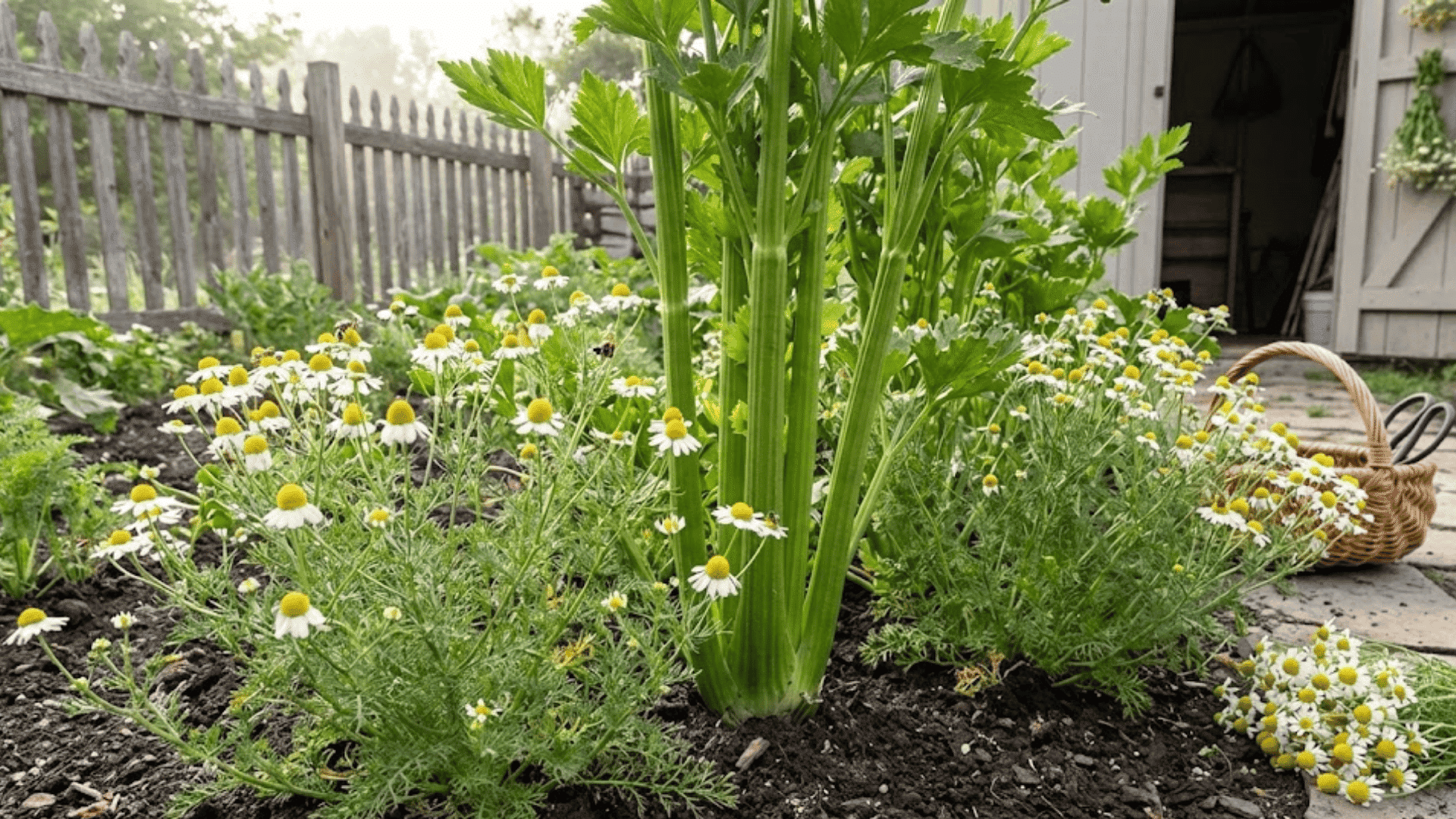
Best For: Permaculture gardens, building long-term soil resilience
Garden Size: Any siz,e including containers
Spacing & Arrangement: Plant 8-10 inches from celery in scattered groupings throughout the bed
Chamomile improves overall plant health and enhances soil microbiology through beneficial root interactions. Gardeners call it the “plant doctor” for its ability to support nearby plants.
Its low, spreading growth won’t compete with celery for light or resources. Harvest chamomile flowers for tea while leaving some to self-seed for next season’s natural garden support.
15. Nasturtiums
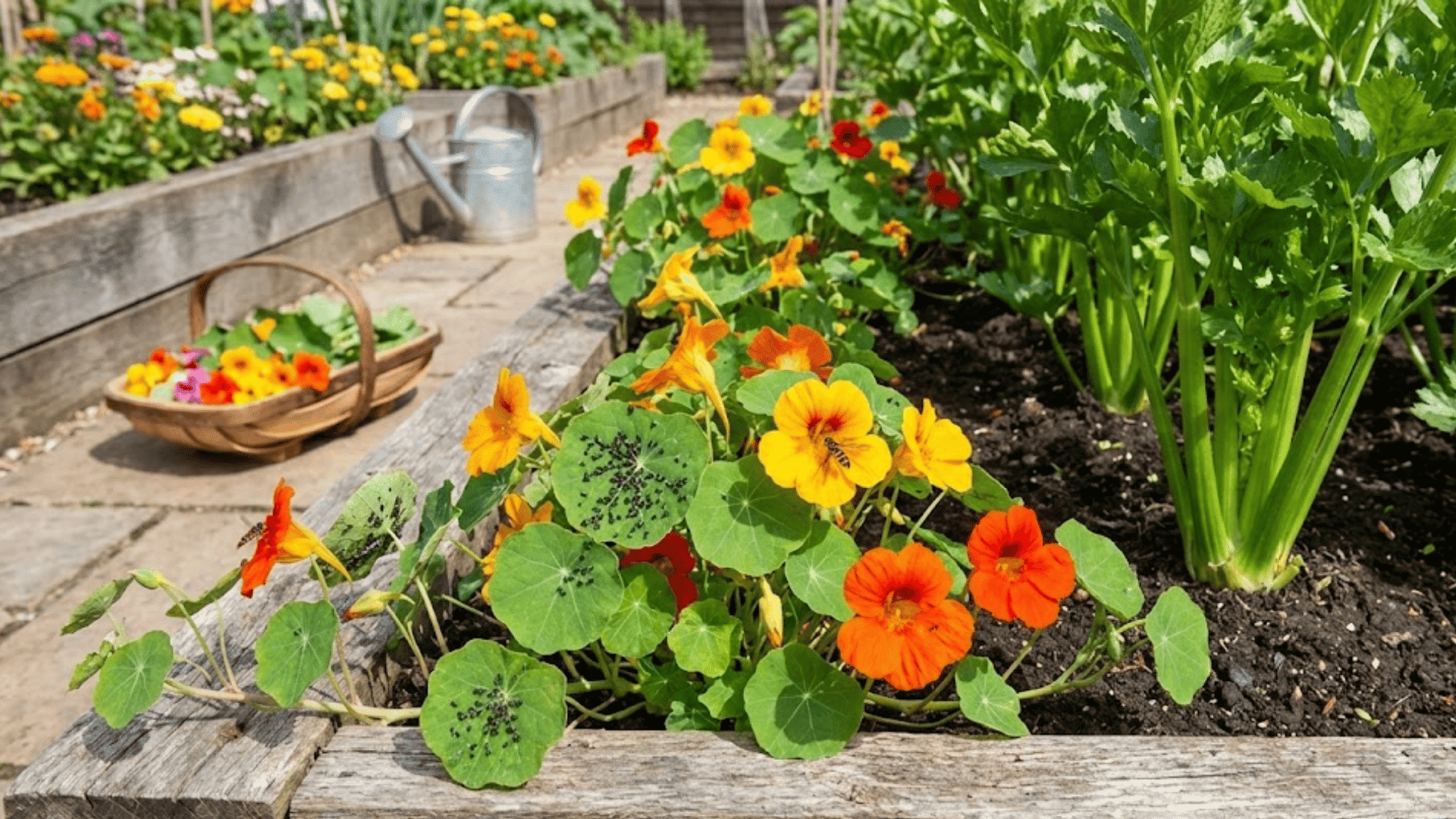
Best For: Gardens with aphid pressure wanting edible flowers
Garden Size: Any size from hanging baskets to sprawling groundcover
Spacing & Arrangement: Plant 10-12 inches from celery along bed edges, removing heavily infested plants before pests migrate
Nasturtiums draw aphids away from celery like magnets, protecting your main crop. Their bright flowers signal beneficial insects from across the garden while adding peppery leaves and blooms to salads.
Both plants appreciate consistent moisture and full sun. Monitor nasturtiums regularly and remove any that become overwhelmed with aphids before the pests spread to celery.
16. Marigolds
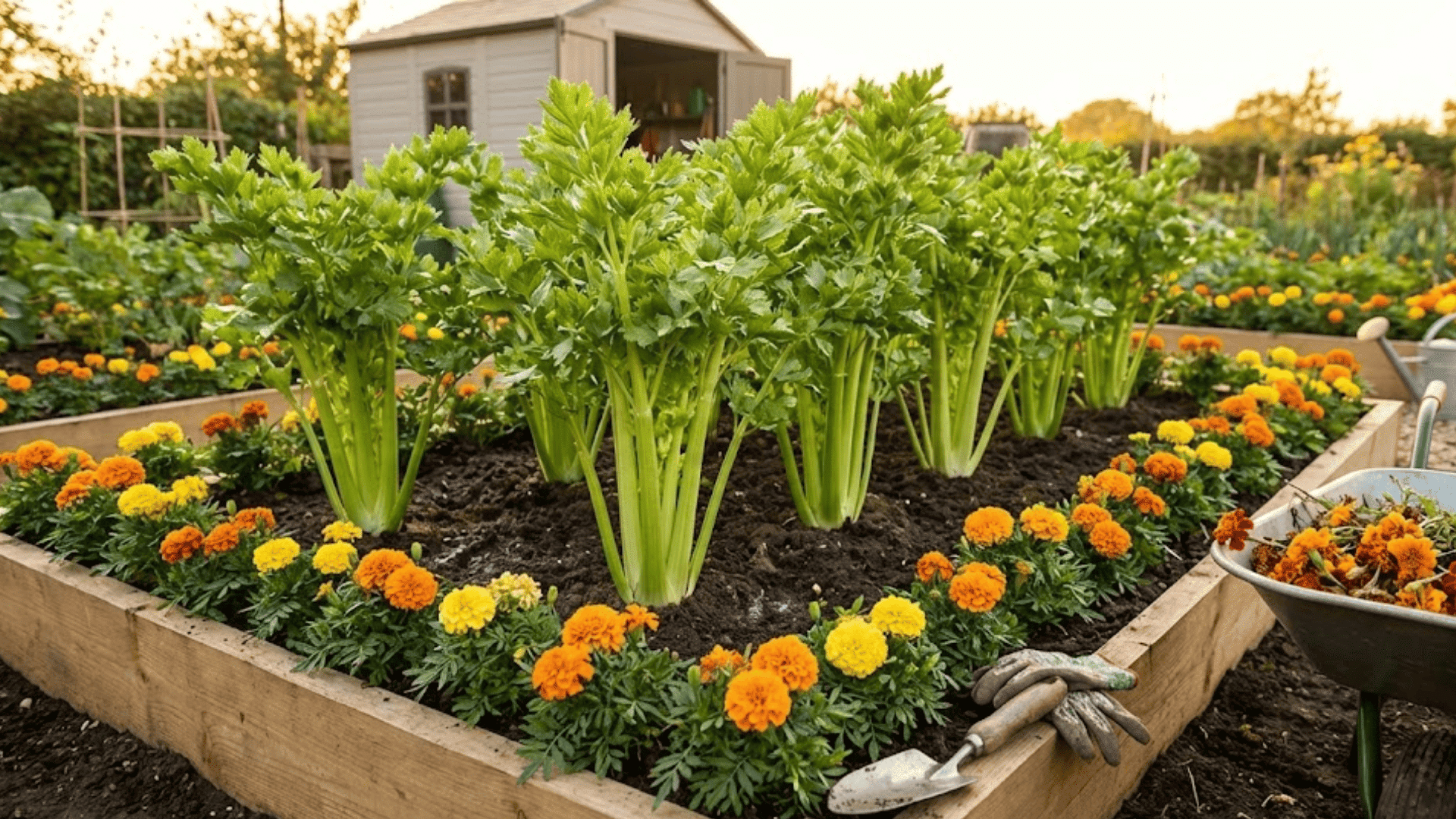
Best For: Gardens with soil nematode problems and beginning gardeners
Garden Size: Any size from containers to large plots
Spacing & Arrangement: Space French marigolds 8-10 inches apart around the celery bed perimeters
Marigolds suppress soil nematodes through root exudates and are staples in companion planting guides. Their pungent scent deters various above-ground pests as well.
Plant them at the same time as celery for season-long protection. Choose French marigolds rather than African varieties, as they’re more effective for pest control and stay compact near celery.
17. Swiss Chard
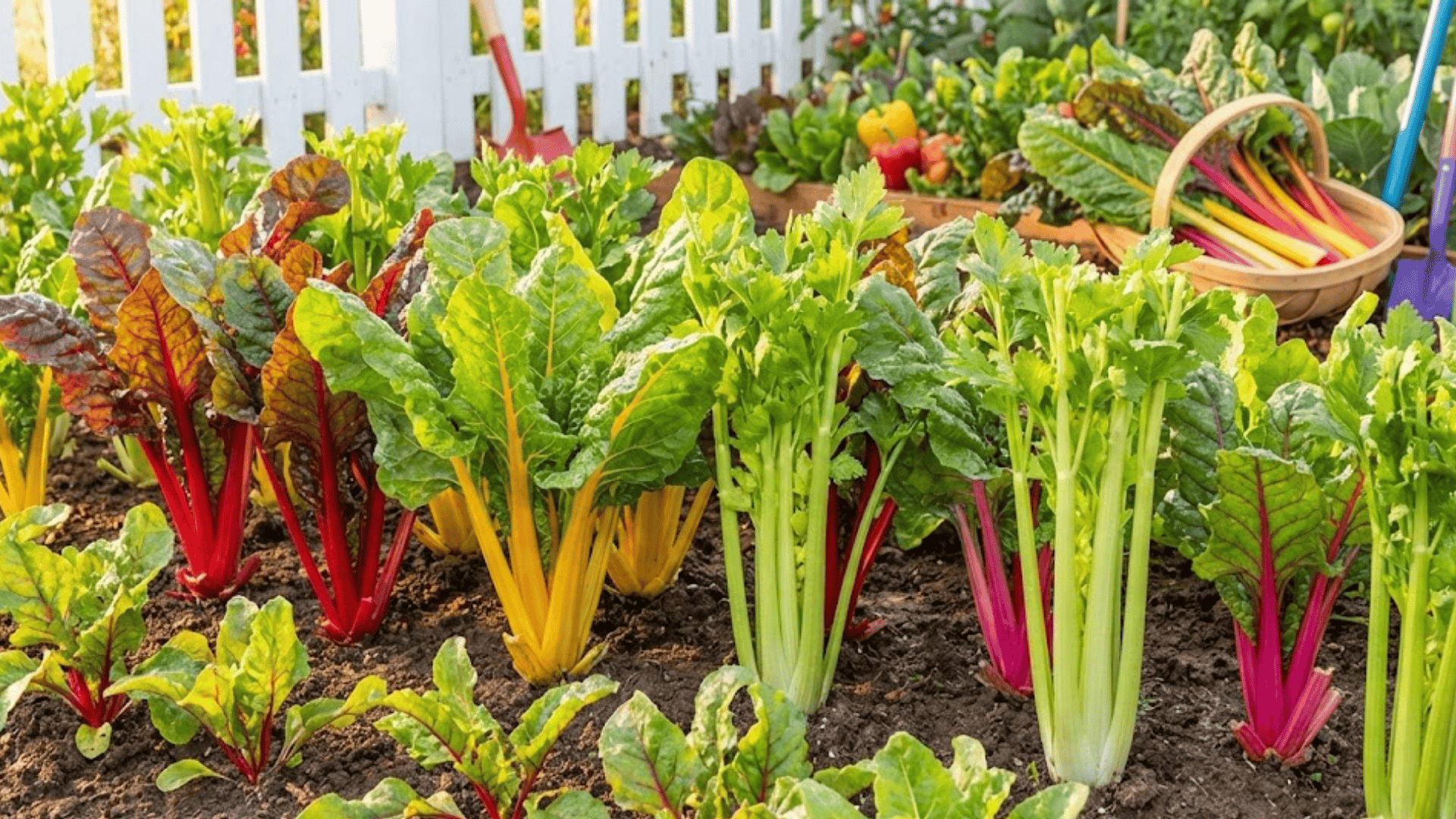
Best For: Ornamental edible gardens with continuous harvesting
Garden Size: Any size, particularly attractive in decorative plantings
Spacing & Arrangement: Plant 8-12 inches from celery in alternating patterns, harvesting outer leaves regularly
Swiss chard shares similar water needs with celery and has a non-competitive root system. Both crops appreciate consistent moisture without waterlogging and thrive in rich, organic soil.
The colorful stems add visual interest while you harvest outer leaves continuously throughout the season. Keep chard trimmed to prevent it from overshadowing celery as both plants mature together.
Plants You Should NOT Grow Near Celery
Just as important as knowing good companions is understanding which plants to keep away from your celery.
Some neighbors compete too aggressively for resources, while others share the same pests and diseases, turning your garden into a problem zone.
- Corn starves celery of nitrogen and water while creating excessive shade once it reaches full height.
- Potatoes share blight susceptibility with celery and disturb shallow roots during harvest.
- Parsnips attract the same pests like carrot rust flies and leaf miners, concentrating infestations.
- Carrots compete directly in the same root zone for nutrients and water, with similar pest vulnerabilities.
Keep these plants in separate beds or at least several feet away from your celery to avoid unnecessary competition and pest problems.
Companion Planting Layouts for Celery
Knowing which plants work together is only half the equation.
How you arrange them in your garden determines whether they actually thrive as companions or end up competing for space and resources.
| Layout Type | Best Companions | Arrangement | Spacing |
|---|---|---|---|
| Raised Bed (4×8 ft) |
Lettuce, onions, spinach, bush beans | Celery down the center. Leafy greens on one side, alliums and beans on the other. | 8-10 inches between celery. |
| Square-Foot Garden | Chives, lettuce, spinach, marigolds | One celery per square surrounded by companions. | 12×12 inch squares. |
| Container | Chives, chamomile, nasturtiums | Celery in the center, trailing companions around the edges. | 18-20 inch pot, 6-8 inch spacing. |
| Row Garden | Onions, cabbage, beans, and leeks | Alternating rows with beans on the outer edges. | 18-inch rows, 8-inch within. |
Common Companion Planting Mistakes With Celery
Even experienced gardeners can stumble when pairing celery with companions. Avoiding these common pitfalls saves you from disappointing harvests and wasted garden space.
- Overcrowding moisture lovers creates competition for water and turns your bed into a soggy breeding ground for root rot.
- Ignoring nutrient depletion happens when pairing multiple heavy feeders like celery, cabbage, and cauliflower without soil amendments.
- Assuming all herbs work is a mistake since some, like rosemary and oregano, prefer drier conditions than celery.
- Poor airflow from tight spacing invites fungal diseases like leaf blight and makes pest problems harder to spot.
- Planting shade-tolerant companions, expecting them to thrive when celery demands full sun for proper growth.
Watch for these mistakes as you plan your beds, and you’ll set up companion plantings that actually work instead of fighting against each other.
The Bottom Line
Pairing celery with the right companions turns a finicky crop into a garden success story.
Tucking onions along the edges, filling gaps with quick-growing lettuce, or letting beans boost your soil naturally all help these celery companion plants work together to create healthier beds with fewer problems.
Start small with a few tried-and-true pairings, observe what thrives in your specific conditions, and adjust from there. Your garden will reward you with crisp, flavorful stalks and a more balanced growing space.
What companion combinations are you planning to try this season? Share your thoughts below.