
If you live in Austin, you know cedar fever season means more than just outdoor misery—it means your home becomes a pollen trap that makes symptoms worse. The solution isn’t cleaning more with the same methods; it’s using specific techniques designed for microscopic cedar pollen. Here’s what actually works: stop pollen at entry points with shoes-off protocols and washable mats, use only damp microfiber cloths (never dry dusting), vacuum exclusively with HEPA-filtered equipment, and protect your bedroom as a clean sanctuary. These four strategies, done consistently December through February, can reduce indoor pollen by 70-80%.
Why Cedar Fever Hits Austin Homes So Hard
Understanding Mountain Cedar Season in Central Texas
Mountain cedar trees (Ashe juniper) surround Austin and the Hill Country, releasing massive pollen clouds from December through February, with peak intensity in January. Austin regularly records pollen counts exceeding 10,000 grains per cubic meter during peak days—some of the highest measurements in the entire nation. For context, counts above 1,000 are considered catastrophic for most allergens.
On windy January days, visible yellow-green clouds drift across neighborhoods from Cedar Park and Leander through Round Rock, Georgetown, and into West Lake Hills and Lakeway. Research from 1998 documented Texas cedar pollen traveling over 1,000 miles to Ontario, Canada—demonstrating just how far these particles can spread on wind currents.
How Cedar Pollen Invades Even Sealed Homes
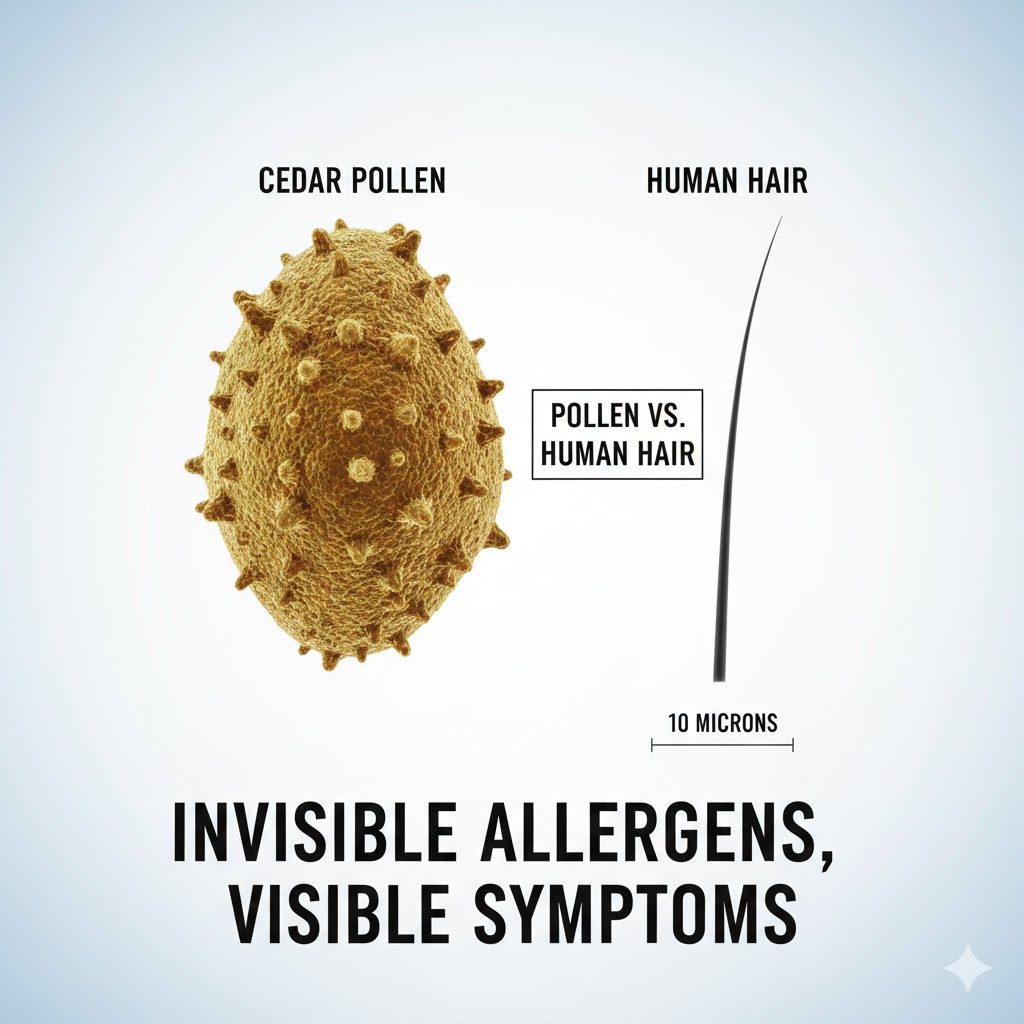
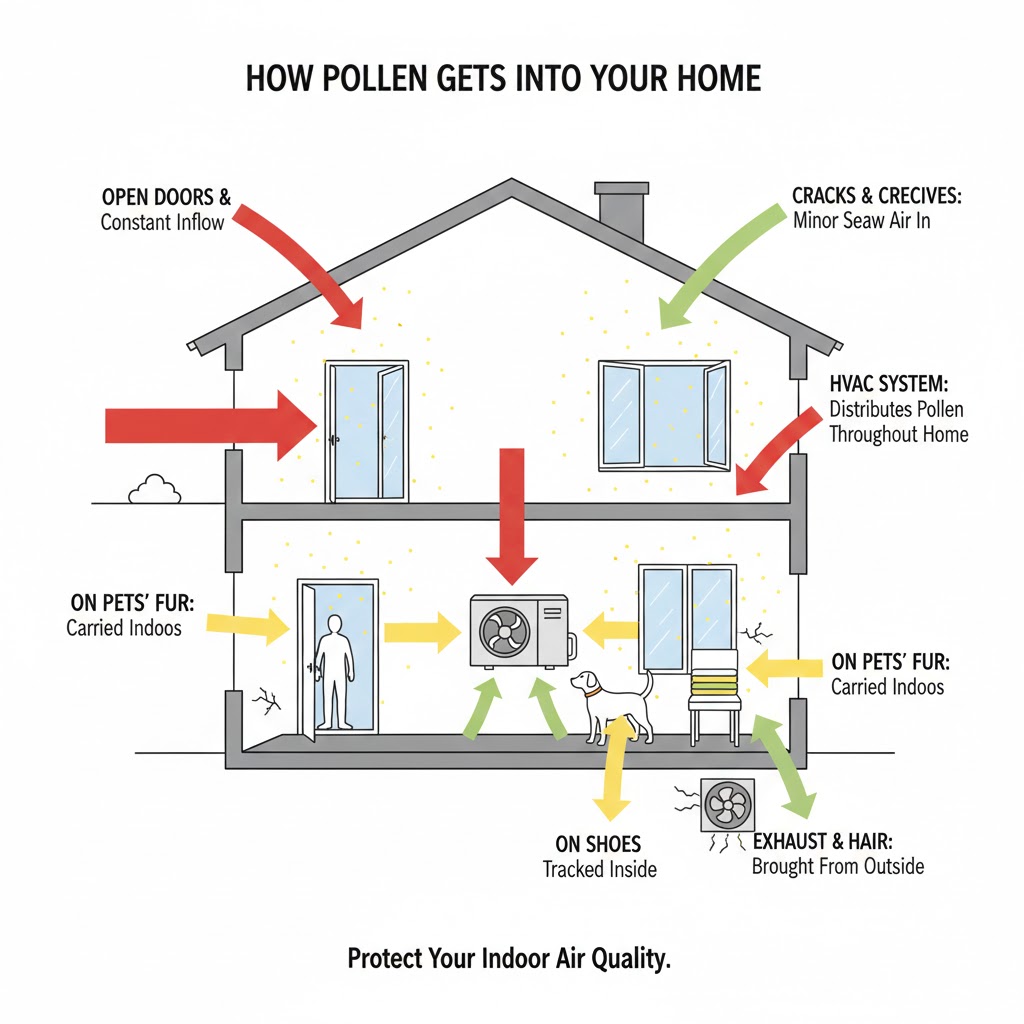
The critical problem: cedar pollen measures less than 10 microns in diameter—seven times smaller than the width of human hair. You need a microscope to see individual grains. This microscopic size allows pollen to infiltrate homes through multiple routes even when windows stay closed.
Shoes are the number one carrier. Every step across your driveway, parking lot, or lawn collects thousands of pollen grains on shoe soles and laces. When you walk inside, you create a pollen trail from your entry through your entire home.
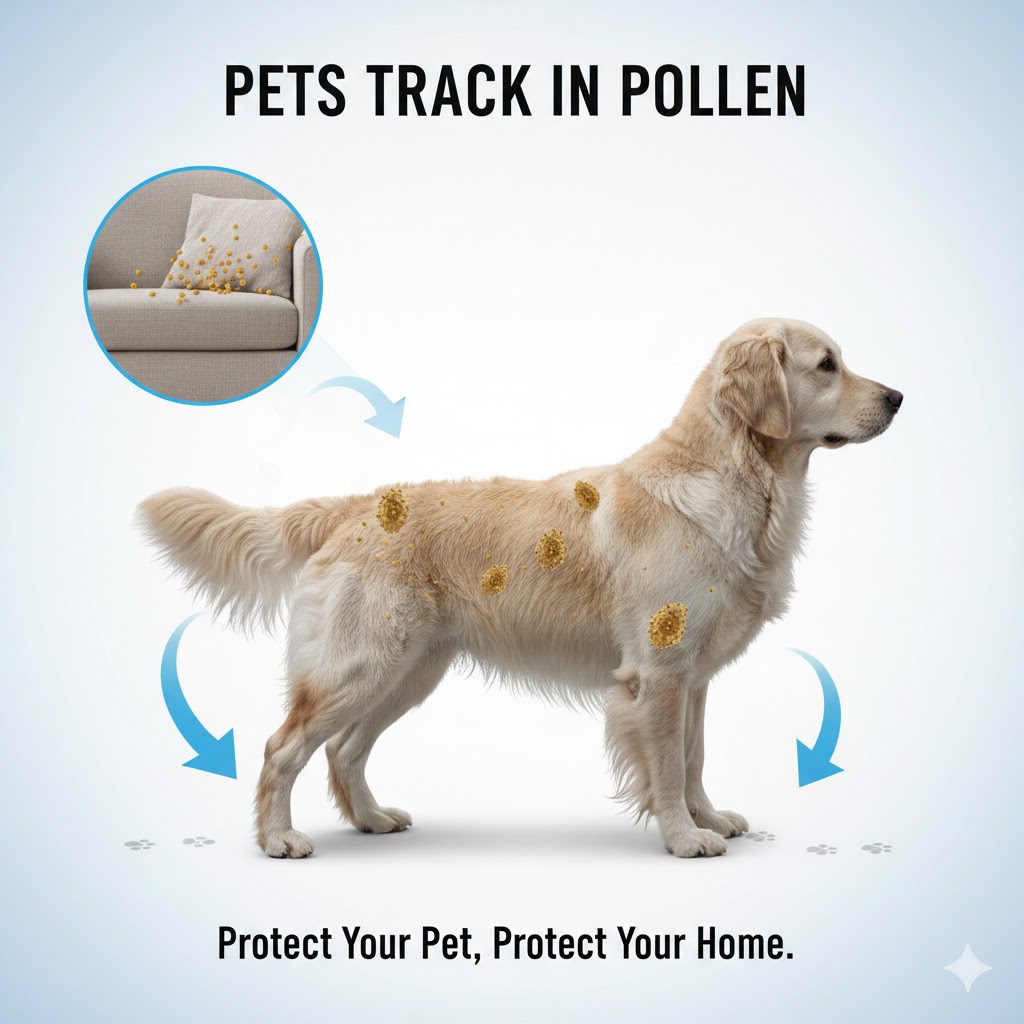
Pets function as mobile pollen distribution systems. Your dog’s fur acts like velcro for pollen particles. A 10-minute yard break collects thousands of grains that transfer to furniture, beds, and floors when they come inside.
Clothing and hair absorb pollen during even brief outdoor exposure. A quick walk from car to building embeds pollen in fabric and hair that rides inside with you, then transfers to furniture when you sit down.
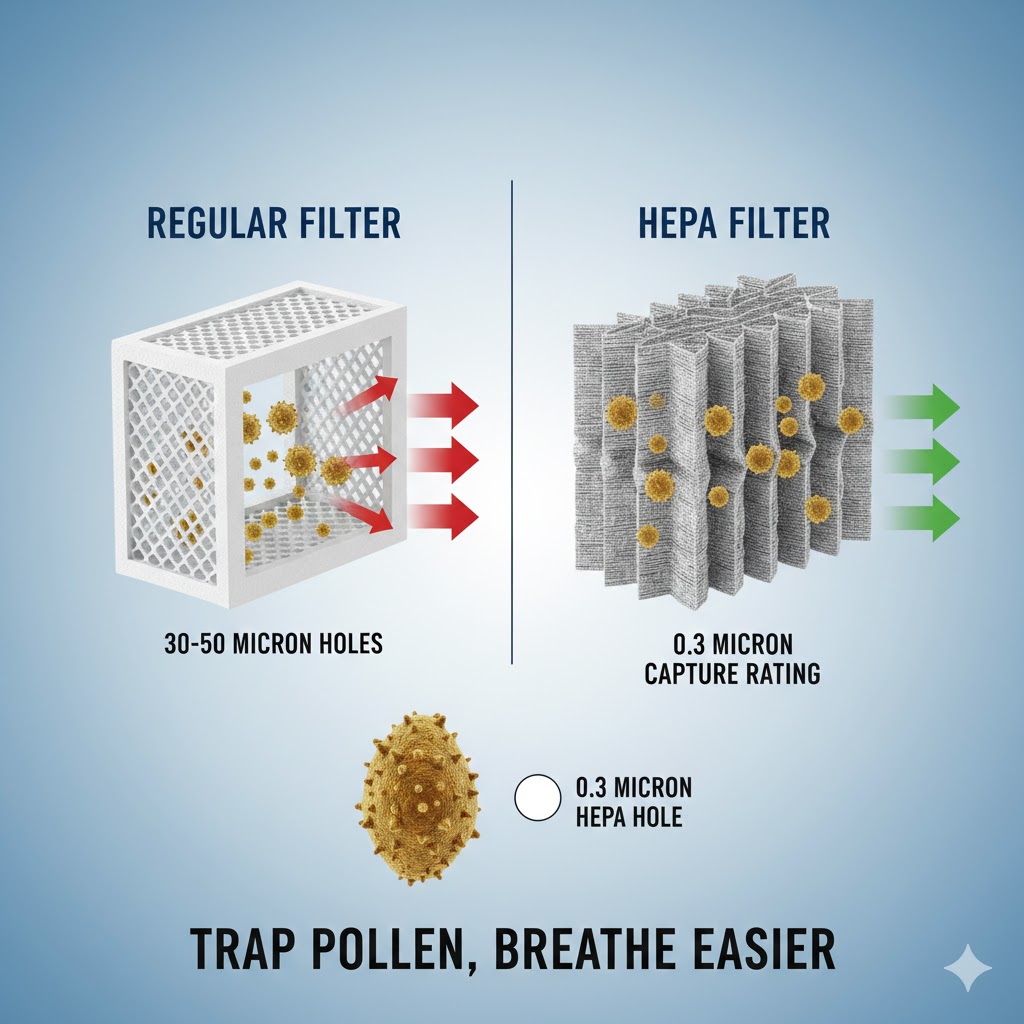
HVAC systems and air exchange provide another route. Your home breathes even with windows sealed. Standard HVAC filters have 30-50 micron holes—cedar pollen at 10 microns passes straight through. Every door opening for deliveries, kids running in and out, or taking trash outside invites pollen inside.
Why Regular Cleaning Doesn’t Work During Cedar Season
Here’s the frustrating reality most Austin families experience: you spend 30-40 minutes vacuuming and dusting, feel accomplished, then within 2-3 hours you’re sneezing uncontrollably indoors with itchy eyes worse than before you started cleaning.
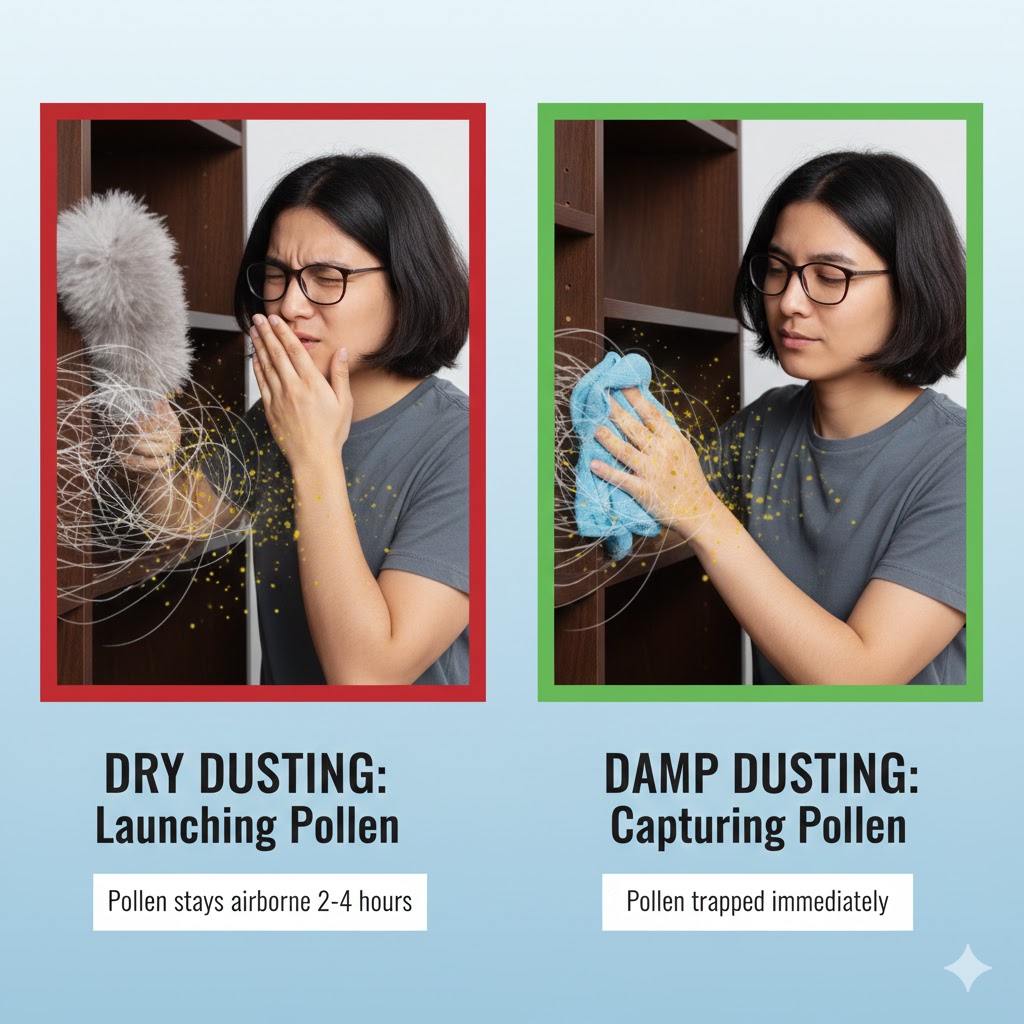
The problem: regular cleaning methods designed for visible dirt actively spread microscopic cedar pollen. Dry dusting with cloths or feather dusters launches settled pollen into air where it stays suspended at breathing level for 2-4 hours. Regular vacuums with standard filters capture visible dirt but blow cedar pollen back into your room through exhaust. Ignoring entry points means pollen spreads unchecked from the door through every room.
Cedar season requires a fundamentally different approach built around capturing microscopic particles rather than just moving visible dirt around.
Daily Cedar Fever Cleaning Routine (10-15 Minutes)
Consistency beats intensity during cedar season. This four-step daily routine stops approximately 70% of pollen before it spreads through your home. The entire sequence takes 10-15 minutes—less time than your morning coffee ritual.
Entry Point Control: Stop Pollen at the Door
Entry points are where you win or lose the cedar pollen battle. Controlling what comes through your door prevents hours of cleaning deeper in your home.
Shoes-Off Policy Setup
Implement a strict no-outdoor-shoes policy December through February. Shoes track more pollen than any other source. Place a basket, shelf, or rack immediately inside every main entry. Make it impossible to walk past without removing shoes—position matters for compliance.
For guests, politely request shoe removal: “We’re managing bad allergies right now—would you mind removing shoes?” Most Austinites understand during cedar season. Keep inexpensive guest slippers if you’re concerned about comfort.
Door Mat System (Indoor + Outdoor)
Layer two mats at every entry people actually use. Heavy-duty outdoor mat with deep grooves (minimum 3×4 feet) goes directly in front of door. This captures bulk pollen before it hits your threshold. Shake this mat outside weekly or hose it down.
Washable indoor mat (microfiber or tight-weave, minimum 3×5 feet) serves as second barrier. Machine wash this weekly in hot water. This mat is your last defense before pollen enters your main living space—worth the weekly wash effort.
Quick Door Handle and Entry Wipe-Down
Keep 3-4 damp microfiber cloths in a small basket right by your entry mat. Daily (takes 60 seconds): grab one cloth, wipe door handles, light switches near entry, and any rail or surface people touch coming in. If pet just came inside, quick paw wipe before they run through house.
High-Traffic Floor Maintenance
Cedar pollen settles on floors first—it’s heavy enough to drop from air but light enough to get kicked back up with foot traffic. Daily floor control breaks this cycle.
HEPA Vacuum Entry Rugs Daily
Run your HEPA vacuum over entry rugs and main walkways connecting rooms. Move slowly—about one foot per second. Count “one-Mississippi” per foot of forward movement. Fast vacuuming might look efficient but captures only 60% of pollen. Slow passes extract 90%+.
Focus on visible traffic patterns: entry to living room, hallway to bedrooms, kitchen pathways. You’re not vacuuming entire floors daily—just the highways pollen travels.
Microfiber Mopping for Hard Floors
For hard floors (tile, hardwood, vinyl), use microfiber dust mop instead of vacuum. Never use dry broom—it pushes pollen into air. Microfiber traps particles through static charge. If you have time, make it slightly damp for even better capture.
Spot Clean Visible Pollen
During peak season, if you see dust, it’s mostly cedar pollen. Quick removal prevents it from getting disturbed and becoming airborne.
Window Sills and Sliding Door Tracks
Window sills collect visible yellow film—pollen settles heavily here. Sliding glass door tracks become pollen highways. Daily quick-wipe of these surfaces takes 90 seconds total but removes major accumulation points.
Damp Microfiber Technique
Mist microfiber cloth with water—damp but not dripping. Wipe in one direction (not back-and-forth scrubbing). After 2-3 wipes, fold cloth to clean section. When all sections dirty, rinse cloth in clean water, squeeze out excess, continue. This captures pollen instead of launching it.
Bedroom Protection Protocol
You’ll spend the next 8 hours in your bedroom. Making it the cleanest space in your house gives 8 hours of relief while you sleep and better mornings.
Keep Bedroom Doors Closed
Close bedroom doors during the day, especially if you have pets. This simple action prevents pollen tracked through living areas from entering your sleep space. Every family member needs to build this habit.
Change Clothes After Outdoor Exposure
If you’ve been outside for 30+ minutes—work, errands, exercise—change clothes before entering bedroom. Think of bedroom as an airlock requiring decontamination. Outdoor clothes go directly to hamper outside bedroom door, not draped on bedroom furniture. Shower before bed if you’ve had significant outdoor time; pollen embeds in hair and transfers to pillow.
This sounds extreme but the impact is dramatic. Many Austin allergy sufferers report this single change—keeping outdoor clothes out of bedroom—improves sleep quality by 40-50% during peak season.
Weekly Deep Cleaning Protocol (45-90 Minutes)
Your daily 15-minute routine maintains cleanliness by preventing new pollen accumulation. Weekly house cleaning removes what’s already embedded in carpets, trapped on fan blades, and settled in places you don’t touch daily. Plan 45-60 minutes for homes under 1,500 square feet, 75-90 minutes for larger Austin ranch-style or two-story homes.
Top-to-Bottom Dusting Methodology
The non-negotiable rule: always start at the highest point in any room and work your way down. Gravity is your friend. If you dust baseboards first, then ceiling fans, you’ve just covered your clean baseboards in fan-blade pollen. Never work backwards—it wastes effort and creates frustration.
Start with Ceiling Fans (Critical in Austin Homes)
Austin ranch and two-story homes with high ceilings typically run fans year-round. During winter months when fans run less frequently, blades act as pollen shelves—accumulating massive amounts over weeks. Turn on an uncleaned fan and you create an instant allergen snowstorm.
The pillowcase method works best: slide old pillowcase over one fan blade, press pillowcase against top and bottom of blade simultaneously, pull pillowcase back toward yourself. Pollen stays trapped inside pillowcase instead of raining down on you. Repeat for all blades. Seal pillowcase and dispose outside. For very high fans beyond arm’s reach, use damp microfiber cloth on extension pole, working slowly with someone holding drop cloth below.
Clean ceiling fans weekly during December-February. This single action prevents more airborne pollen than almost any other cleaning task.
Light Fixtures and High Surfaces
Move to light fixtures next: pendant lights, recessed lighting trim rings, chandeliers. Use damp cloth on extension pole or stable step stool. Get top edges and surfaces where pollen settles invisibly.
Then door frame tops and cabinet tops (if cabinets don’t reach ceiling). These surfaces sit at eye level or above—you can’t see them, but they collect massive pollen amounts. In kitchens, cabinet tops that don’t reach ceiling gather yellow film visible when you stand on step stool. One pass with damp microfiber cloth across entire top removes months of accumulation.
Window Blinds (Both Sides)
Window blinds are major pollen magnets. Horizontal blinds especially problematic—each slat is a tiny pollen shelf.
For horizontal blinds: close blinds completely, then use microfiber glove method. Wear damp microfiber cloth like a glove, pinch each slat between fingers, slide from end to end. This cleans both sides simultaneously. Flip blinds to opposite tilt, repeat on other side. Alternative: blind duster tool with damp microfiber wrapped around prongs cleans multiple slats at once.
For vertical blinds: wipe each vane top to bottom, both sides, with barely-damp cloth to avoid water streaks.
Time-saver for extremely dirty blinds: if washable, remove them entirely, spray with hose outside, dry in sun, reinstall clean. This takes 15 minutes versus 45 minutes hand-wiping severely neglected blinds.
Furniture Surfaces and Baseboards
After high and mid-level surfaces done, move to furniture: dressers, nightstands, coffee tables, end tables, desks, bookshelves, TV stands. Damp microfiber cloth, one-direction wipes. Fold cloth to clean section every 2-3 wipes. Rinse cloth in bucket of clean water when all sections dirty.
Finish with baseboards last—so all falling pollen from above lands where you haven’t cleaned yet. Run damp cloth along entire baseboard perimeter of room. Get top edge, front face, and corners where baseboard meets floor where pollen settles heavily.
Deep HEPA Vacuuming Strategy
This step only works with true HEPA vacuum. Using regular vacuum during cedar season actually makes allergies worse by blowing pollen back into air through exhaust. If you don’t have HEPA, skip vacuuming and focus on entry control plus damp dusting, or hire professional with commercial equipment.
Slow-Pass Technique for Carpets
The technique matters as much as equipment. Move vacuum at approximately one foot per second—count “one-Mississippi” per foot. Overlap each pass by about 50%. In high-traffic areas (hallways, main walkways), make 2-3 passes instead of one.
Push vacuum forward and pull it back—both directions capture pollen. Move furniture if possible, or at least vacuum under edges where you can reach.
Why slow matters: fast vacuuming captures maybe 60% of pollen. Slow, methodical passes extract 90%+ because suction has time to pull particles from deep in carpet fibers and backing.
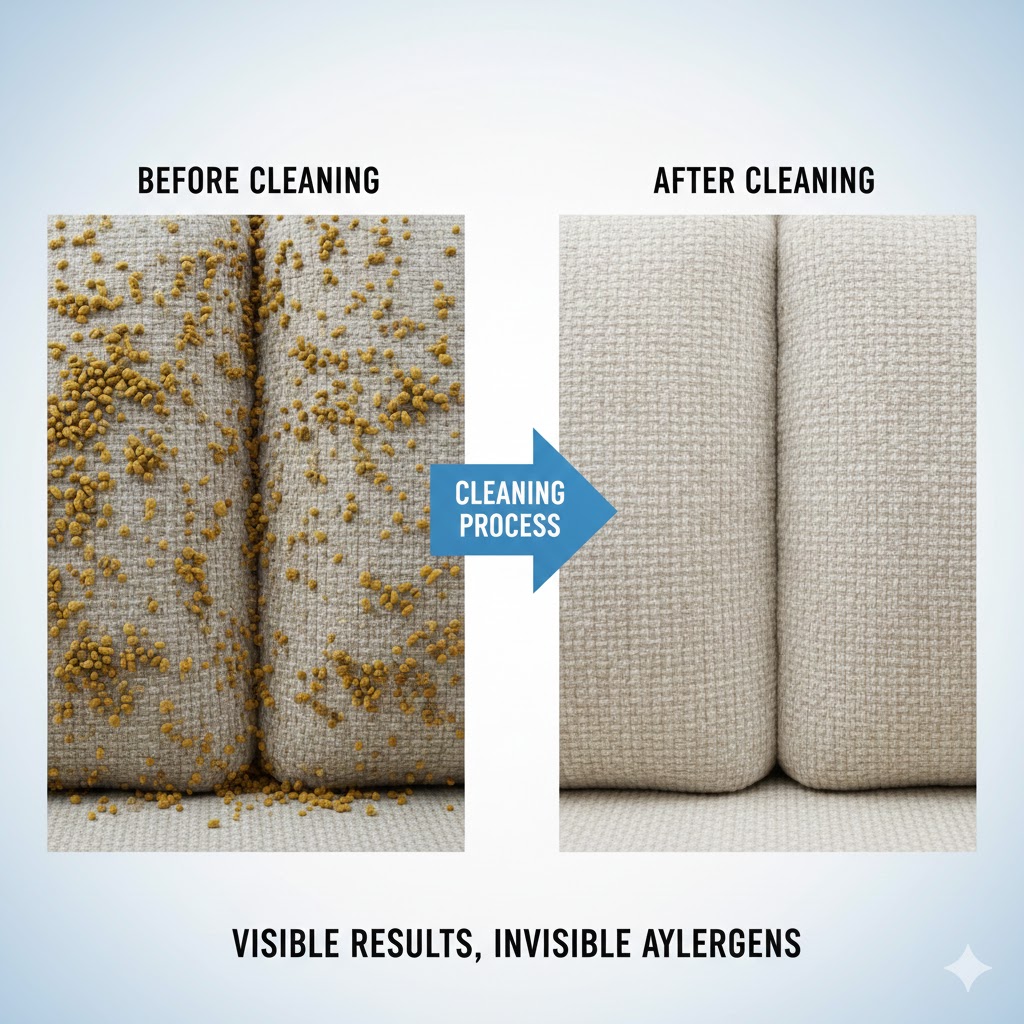
Upholstered Furniture Vacuuming
Your couch, chairs, and upholstered furniture absorb pollen from clothing when you sit, from pets, and from air settling. Then you spend 3 hours there every evening breathing those trapped allergens.
Remove all cushions—vacuum under and between them. Use upholstery attachment (never use beater bar on furniture; it damages fabric). Slow passes on seat cushions, backs, arms. Get crevices where cushions meet frame. If you have pets that sleep on furniture, this step is non-negotiable weekly.
Baseboards and Corners with Crevice Tool
After vacuuming open floor areas and furniture, switch to crevice tool attachment. Run it along entire baseboard-floor junction around room perimeter. Get corners where walls meet—pollen settles in edges regular vacuum head can’t reach.
Vacuum around floor vents and wall return vents. These pull air through your HVAC system, so pollen accumulates around edges.
For two-story homes: vacuum each stair tread individually, vertical risers, and corners of each step. Stairs are high-traffic pollen highways in Austin two-story homes.
Bedding and Fabric Washing Schedule
You shed pollen from hair and skin onto sheets all night. Your pillowcase touches your face for 8 hours. Weekly washing in hot water is non-negotiable during cedar season.
Hot Water Requirements (130°F+)
Hot water serves two purposes: kills dust mites and removes pollen oils that bind particles to fabric. Set water heater to 130°F minimum (check fabric labels first for heat tolerance). Use regular detergent; fragrance-free if you’re sensitive.
Machine dry completely on high heat if fabric allows. Never line-dry bedding outdoors during cedar season—you’ll coat clean sheets in fresh pollen, defeating entire purpose.
Weekly vs. Bi-Weekly Items
Weekly minimum: all sheets (fitted and flat), all pillowcases, blankets you use nightly. Every two weeks: comforters or duvets, mattress pads. If symptoms are severe, consider washing heavy bedding weekly as well.
Timing strategy: start bedding load first, before you begin dusting and vacuuming. Cleaning runs while washer runs. Move to dryer mid-clean. Remake bed with fresh linens at end—satisfying finish to weekly routine.
Pet Bedding Separate Loads
If you have pets: wash all pet beds, blankets pets lay on, and furniture slipcovers weekly in hot water. Run these in separate load from human bedding—don’t cross-contaminate. Your pet’s bedding likely contains more concentrated pollen than yours since they spend more time outdoors or in pollen-heavy areas of house.
HVAC Filter Management
Your HVAC system circulates air through your entire home. During peak cedar season with pollen counts hitting 10,000+ grains per cubic meter, filters clog much faster than normal months.
Monthly Filter Checks During Cedar Season
Ignore “change every 3 months” guidance printed on filter packaging during December-February. That’s for normal conditions, not cedar apocalypse. Check filters every 2 weeks. Replace when you see yellow or tan dust coating surface, any clogged-looking dark areas, or if filter looks significantly different from new filter.
Write install date on filter frame with marker. Set phone reminder for 4 weeks out.
MERV Rating Selection (8-13 Range)
MERV stands for Minimum Efficiency Reporting Value—measures how small particles filter captures. For cedar season, use MERV 8-13 range. This captures pollen effectively without over-restricting airflow in most residential HVAC systems.
Check your HVAC manual first—some systems can’t handle MERV 13+ due to airflow restriction. Never use MERV 1-4; these are too porous and let pollen sail through. If your system accepts HEPA-rated filters, even better, but verify compatibility with professional first.
When to Replace vs. Manufacturer Schedule
During January peak season, quality MERV 11 filter might need replacement in 3-4 weeks instead of 3 months. Don’t wait for time-based schedule—visually inspect and replace when you see pollen accumulation. Clogged filter means reduced airflow throughout home, more allergens bypassing filter, less efficient heating/cooling, and strain on HVAC system.
Consider professional duct cleaning before cedar season starts (late November). This removes accumulated pollen and dust from years of use, giving you clean baseline. Frequency: every 3-5 years, or before first cedar season in new home.
Kitchen and Bathroom Touchpoints
Even in rooms where you don’t think about pollen, it settles on every horizontal surface in your home.
Often-Forgotten Pollen Collectors
Kitchen: cabinet tops if they don’t reach ceiling show visible yellow film during peak season. Refrigerator top collects dust invisible at eye level. Light fixtures over island or table. Range hood top surface (grease plus pollen creates sticky mess).
Bathroom: exhaust fan cover—remove cover (usually clips in), wash in sink with soap and water, wipe fan housing opening without getting motor wet. Top edge of shower doors where glass meets frame. Medicine cabinet top. Window sills.
Exhaust Fans and Cabinet Tops
Bathroom exhaust fans deserve special attention. Dusty fan pulls less air, making it less effective at removing humidity and airborne allergens. Remove cover, clean thoroughly, replace when dry. This 5-minute task significantly improves bathroom air quality.
Kitchen cabinet tops: stand on stable step stool, run damp cloth across entire top surface. Gets disturbed every time you open cabinets below, so removing accumulation prevents it from falling into your breathing zone.
Why Your Regular Vacuum Makes Cedar Allergies Worse
The Science of Cedar Pollen Size
Understanding why regular vacuums fail requires understanding particle size. Cedar pollen grains measure less than 10 microns in diameter. For context: human hair is approximately 70 microns wide. Cedar pollen is seven times smaller than your hair. You need microscope to see individual grains.
Cedar Pollen vs. Regular Vacuum Filter Holes
Standard vacuum filters—even those marketed as “high-quality”—have holes measuring 30-50 microns. These filters effectively capture dust, visible dirt, pet hair, and anything your eye can see. But they have fatal flaw for cedar season: pollen grains at 10 microns are 3-5 times smaller than filter holes.
Simple physics: particles smaller than holes pass straight through. It’s like trying to catch sand with chain-link fence.
How Regular Vacuums Redistribute Allergens
Here’s what actually happens when you vacuum with regular vacuum during cedar season:
Vacuum sucks up air from your carpet containing cedar pollen. Air passes through motor and filter system. Pollen passes through 30-50 micron filter holes like they don’t exist. Vacuum exhaust blows pollen back into your room—at breathing level—creating a cloud of airborne allergens. This cloud stays suspended for 2-4 hours before particles settle again.
The cruel irony: you’re taking pollen that was safely trapped in carpet fibers and aerosolizing it directly into your breathing zone. Regular vacuums make you feel productive while actively worsening your indoor air quality.
What HEPA Actually Means
HEPA stands for High Efficiency Particulate Air filter. This isn’t marketing language—it’s certification standard with specific testing requirements.
True HEPA Certification Standard (99.97% at 0.3 Microns)
True HEPA certification requires filter to capture 99.97% of particles as small as 0.3 microns. Why 0.3 microns? This is “most penetrating particle size”—the hardest size to capture due to physics of how particles behave in air stream. Smaller particles get caught by diffusion, larger by inertia, but 0.3 microns is worst-case scenario.
If filter captures 99.97% at 0.3 microns, it captures everything larger. Cedar pollen at 10 microns? That’s 33 times larger than HEPA’s rated size. These particles have zero chance of escape through true HEPA filter.
Sealed System Requirement
HEPA filter alone isn’t sufficient. You also need sealed vacuum system where no air can leak around filter. If air bypasses filter through gaps in housing, you’re back to blowing pollen out unfiltered.
Look for “sealed system” or “100% sealed” in vacuum specifications. Quality HEPA vacuums seal every junction where air could escape, forcing all exhaust through HEPA filter before exiting.
True HEPA vs. Marketing Deception
Vacuum marketing uses confusing language designed to sound like HEPA without meeting actual standards.
“HEPA-Type” and “HEPA-Like” Warning Signs
Reject these terms immediately: “HEPA-type,” “HEPA-style,” “HEPA-like filtration,” “HEPA-grade.” These are not certified HEPA. They’re marketing language for filters that might capture 85-95% of particles—better than basic filters but not good enough for cedar season.
Also reject “99% effective” claims. True HEPA is 99.97%—that extra 0.97% matters when dealing with billions of pollen particles in your home.
How to Identify Certified HEPA
Look for these terms: “True HEPA,” “Certified HEPA,” or “H13 HEPA” (H12 and H14 also acceptable). Specifications should explicitly state “99.97% at 0.3 microns.” Serious brands provide certification testing documentation.
If package just says “HEPA filter included” without detailed specifications, be skeptical. Contact manufacturer and ask for certification documents before purchasing.
Alternatives If You Can’t Afford HEPA Yet
Hire Professionals for Initial Deep Clean
One-time professional deep clean with commercial HEPA equipment costs $150-300 depending on home size. This gets you to clean baseline by extracting embedded pollen consumer equipment can’t reach. Then maintain that baseline with entry point control, damp dusting, and minimal vacuuming until you can purchase HEPA.
Prioritize Entry Control and Damp Dusting
Focus available budget and energy on methods that don’t require expensive equipment: entry point pollen trap system (mats, shoe basket, hooks—under $100 total), microfiber cloths for damp dusting ($20-30 for quality set), bedroom protection protocols (mostly behavior changes, minimal cost).
Save $50/month and you’ll have HEPA vacuum in 4-6 months while managing symptoms through other protocols.
Rental Options for Monthly Deep Cleans
Some hardware stores rent carpet cleaners with HEPA filtration for $30-50 per day. Rent monthly for deep clean, use other methods between rentals. Not sustainable long-term but bridges gap while saving for purchase.
Common Cedar Fever Cleaning Mistakes
Dry Dusting with Feather Dusters or Old T-Shirts
This is the most common and most damaging mistake. Cedar pollen is incredibly light—air currents keep it suspended for hours. When you use dry cloth or feather duster, you launch settled pollen directly into breathing-level air where it stays for 2-4 hours before resettling.
You create pollen cloud that you breathe during cleaning, then it settles back onto surfaces you just “cleaned” within 20 minutes. Fix: use damp microfiber cloths exclusively. Moisture traps particles on contact instead of releasing them.
Skipping Ceiling Fans and High Surfaces
Austin homes with high ceilings and open floor plans use ceiling fans extensively. During months when fans run less, blades collect huge pollen amounts. Neglect this and every time you turn fan on, you’re creating intentional pollen distribution system.
Fix: dust ceiling fans first in every room, before any lower surfaces. Use pillowcase method weekly during season.
Using Worn-Out or Low-Quality Vacuums
Vacuums degrade over time. Seals crack, filters wear out, suction weakens. A 5-10 year old vacuum, even if it was quality when new, likely leaks fine particles through degraded seals.
Budget vacuums without HEPA filtration actively harm indoor air quality during cedar season. Fix: upgrade to true HEPA vacuum, or hire professionals with commercial equipment until you can purchase proper equipment.
Letting Pets Sleep on Unwashed Fabrics
Dogs playing in yard collect thousands of pollen grains in fur with each outdoor trip. Cats that go outside similarly contaminated. Letting them sleep on your couch for hours means that furniture becomes pollen reservoir exactly where you spend evening relaxing.
Fix: wash pet beds weekly in hot water (separate load from human bedding). Keep pets off human beds during cedar season. Quick paw wipe and brush after every outdoor trip.
Not Changing HVAC Filters Frequently Enough
Following manufacturer’s “3-month” replacement schedule during peak cedar season means filter becomes completely clogged in 3-4 weeks. Clogged filter reduces airflow, decreases efficiency, and forces allergens to bypass filter through gaps.
Fix: check filters every 2 weeks during December-February. Replace when you see yellow dust coating or any signs of clogging, regardless of time since last change.
When DIY Cedar Fever Cleaning Isn’t Enough
Clear Signs You Need Professional Help
You’ve fallen 3-4 weeks behind on deep cleaning and see visible buildup on ceiling fans, blinds, and baseboards. Life happened—work deadlines, family obligations, personal stress. Now pollen accumulation feels overwhelming.
Your allergies remain severe despite following all protocols correctly for 2+ weeks. You’re doing daily entry control, using HEPA vacuum, damp dusting, protecting bedroom—everything right—but still miserable indoors. Problem may be pollen embedded so deep in carpets and upholstery that consumer equipment can’t extract it.
You’re physically or mentally exhausted from constant cleaning. Cedar season lasts 10-12 weeks. That’s 10-12 weekends of extra cleaning on top of regular life, work, and family responsibilities. The thought of spending another Saturday cleaning makes you want to cry.
You have young kids plus pets making maintenance overwhelming. Two working parents plus two kids plus dog equals no time for 90-minute weekly deep cleans. More people and animals mean more pollen entry points and more cleaning needed but less time to do it.
You don’t own HEPA equipment and can’t afford $500-700 investment right now, but you need relief this season.
What Professional Services Offer
Commercial-Grade HEPA Equipment (3x Suction Power)
Professional services bring industrial backpack or canister systems with 100-120 CFM suction versus residential 50-70 CFM. This isn’t just “a little better”—it’s fundamentally different level of extraction.
Commercial equipment pulls pollen from deep in carpet pad, furniture batting, and places consumer vacuums can’t physically reach. One slow pass with commercial system accomplishes what takes 3-4 passes with consumer vacuum.
Systematic Top-to-Bottom Protocols
Professional teams follow systematic approach: start highest surfaces every room, work methodically down, never backtrack. They don’t skip steps due to fatigue or time pressure. They have training in proper damp-dusting technique, HEPA vacuuming method, and allergen-focused cleaning versus cosmetic cleaning.
Initial Deep Reset (3-5 Hours)
Initial professional deep clean for average Austin home takes 3-5 hours with team of 2-3 people. This establishes clean baseline by removing months or years of accumulated pollen. Then recurring maintenance visits (weekly, bi-weekly, or monthly) keep that baseline rather than letting you slide back to zero.
Service Timing and Frequency Options
Ideal Start: Late November/Early December
Best time to engage professional service is late November or early December, before peak season hits. Initial deep clean gets you ahead of pollen accumulation rather than playing catch-up in January when you’re already miserable.
Weekly vs. Bi-Weekly vs. Monthly Maintenance
Weekly service ($150-200 per visit) appropriate for severe allergies, large homes, families with kids and pets—highest allergen challenge. Bi-weekly service ($175-250 per visit) most common choice during cedar season—balances cost and effectiveness for moderate allergies. Monthly service ($200-300 per visit) works as supplement to your own daily and weekly DIY routine—professionals handle what you can’t (high surfaces, deep extraction).
Front-Load January (Peak Season)
Smart strategy: schedule more frequent service in January (peak month with worst pollen counts), then reduce frequency in February as season wanes. For example: weekly in January, bi-weekly in February, then stop professional service in March and maintain yourself rest of year.
Cost vs. Value Analysis
Deep Clean: $150-350
Initial deep clean ranges $150-350 depending on home size, level of buildup, and service provider. Smaller homes under 1,500 sq ft toward lower end. Larger ranch or two-story homes toward upper end. Severe neglect may cost more due to extra time required.
Recurring Maintenance Pricing
Recurring maintenance typically discounted 10-20% versus one-time pricing. Bi-weekly service through December-February (approximately 6 visits) totals $1,050-1,500 for season. Weekly service (approximately 12 visits) totals $1,800-2,400.
Compare to Medical Costs and Lost Productivity
Allergy medications: $200-500 per season for over-counter antihistamines, decongestants, nasal sprays. Doctor visits: $150-300 in co-pays and prescriptions if seeing specialist. Lost productivity: harder to quantify but real—working at 60% capacity due to exhaustion and symptoms, using sick days, reduced quality of life with family.
Professional cleaning service may cost similar to or less than combined medical and productivity costs, while delivering better symptom control.
DIY + Professional Hybrid Model
You Handle: Daily Entry Control, Spot Cleaning
Most sustainable approach for average families: you handle daily 15-minute routine (entry point control, spot cleaning visible pollen, bedroom basics). This prevents new accumulation and maintains professional cleaning between visits.
Professionals Handle: Weekly Deep Dusting, HEPA Vacuuming
Professionals come weekly or bi-weekly for deep work: ceiling fans, blinds, top-to-bottom dusting, deep HEPA vacuuming, areas you can’t safely reach or don’t have time to address.
Most Sustainable Approach for Busy Families
This hybrid prevents DIY burnout while keeping costs reasonable. You’re not trying to do everything yourself while exhausted. You’re not paying professionals for tasks you can easily handle. You’re strategically delegating the most time-consuming, equipment-intensive tasks while maintaining daily basics.
Total time commitment for you: 15 minutes daily plus light weekly touch-ups (30 minutes) = under 2 hours per week versus 3-4 hours trying to do everything yourself.
Take Control of Cedar Season in Your Austin Home
Cedar fever season brings 10-12 weeks of misery for Central Texas residents, but it doesn’t have to control your life indoors. The difference between suffering and managing successfully comes down to understanding that cedar pollen requires a different approach than regular cleaning.
Stop pollen at entry points before it spreads through your home. Use damp microfiber cloths with pH-neutral, fragrance-free cleaners to capture particles instead of launching them airborne. Vacuum only with HEPA equipment that actually removes allergens rather than redistributing them. Protect your bedroom as an eight-hour clean sanctuary where you can sleep and recover. Avoid harsh chemicals like bleach, ammonia, or vinegar during cedar season—these can irritate already-sensitive respiratory systems and don’t effectively address microscopic pollen.
Start with entry point setup and bedroom protection this week—these deliver highest impact for time invested. Stock up on gentle, allergy-safe products that won’t trigger additional symptoms while you’re fighting cedar pollen. Add proper HEPA vacuuming when equipment is available. If you’re overwhelmed or suffering severe allergies, professional cleaners who specialize in allergen removal can provide initial deep reset plus bi-weekly maintenance through January and February, delivering relief without exhausting yourself.
The goal isn’t perfection. The goal is breathing easier in your own home from December through February. These methods, proven through 22+ years serving Austin families during cedar season, deliver exactly that result when applied consistently. Miss a day? Resume tomorrow. Consistency matters more than perfect execution.
Cedar season is temporary. Your relief starts with the first protocol you implement today—whether that’s switching to allergy-friendly products, setting up your entry point system, or seeking professional support.