Few things feel more like summer than growing your own cantaloupe plant.
Sweet, sun-warmed, and endlessly rewarding, cantaloupes have a way of turning even a humble backyard into something that feels a little more intentional.
They love the heat, they sprawl beautifully across garden beds, and when the season comes together just right, the payoff is absolutely worth it.
Planting, care, growing conditions, and harvesting tips are all covered here to help grow the most flavorful cantaloupe of the season.
What is a Cantaloupe Plant?
The cantaloupe plant belongs to the Cucumis melo species, a warm-season melon that thrives in long, sunny days and well-drained soil.
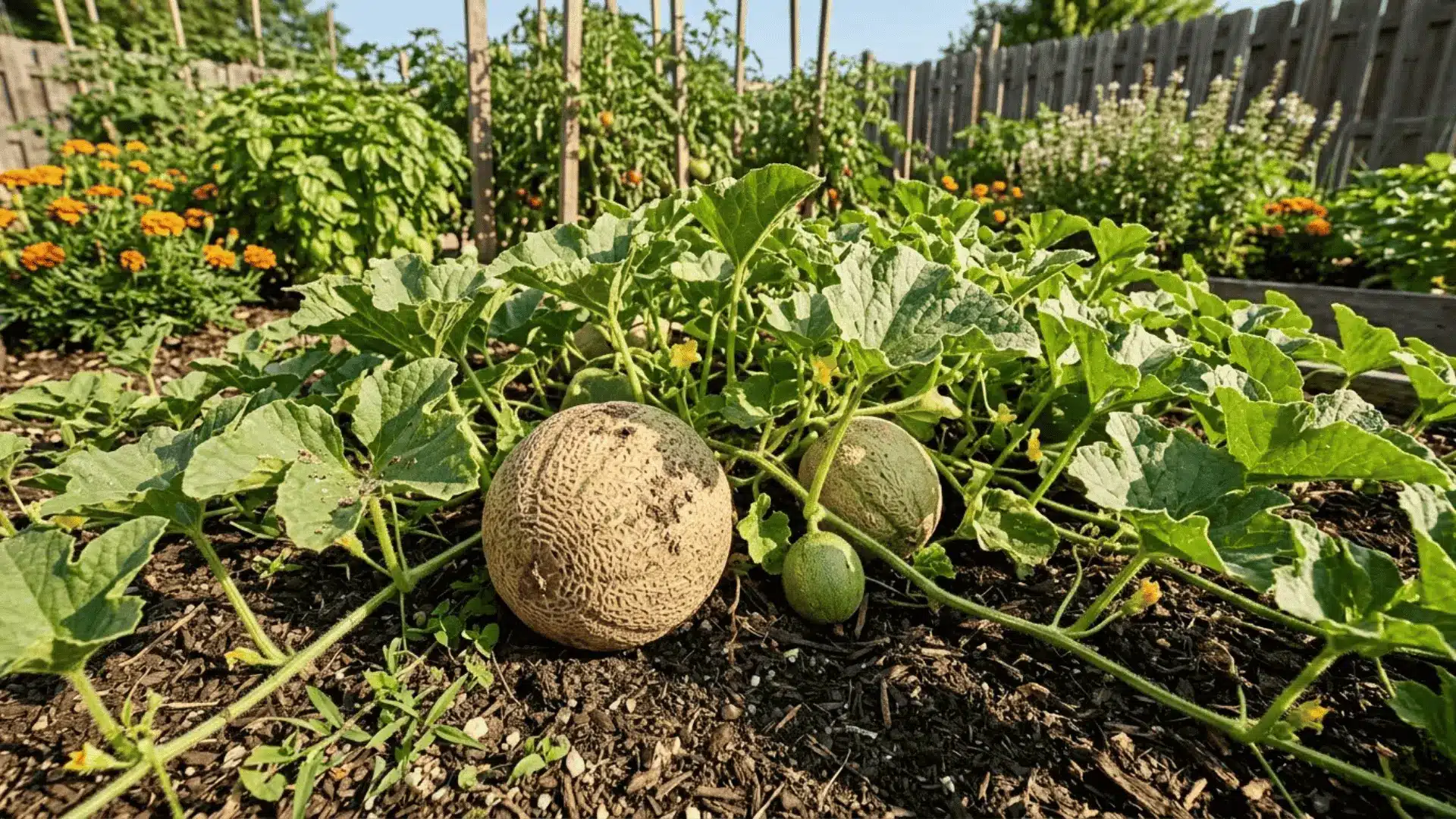
It grows as a sprawling vine with large green leaves and cheerful yellow flowers that eventually give way to the melons we all look forward to each summer.
Cantaloupes are actually a variety of muskmelon, sharing the same species but differing slightly in their netting, flesh color, and sweetness.
North American cantaloupes tend to have a rougher, netted skin compared to their smoother European counterparts.
Best Growing Conditions for a Cantaloupe Plant
Getting the growing conditions right is what separates a decent harvest from a really great one.
Cantaloupes are particular about their environment, and giving them what they need early on sets everything else up for success.
Sunlight Requirements
Cantaloupe plants are sun lovers through and through. They need a solid six to eight hours of full sun daily to develop their signature sweetness.
Less light means slower growth, smaller fruit, and a flavor that never quite hits its peak. A south-facing garden bed or an open, unshaded spot in the yard tends to work best.
Ideal Soil Type
Soil quality makes a bigger difference than most people expect. Cantaloupes do best in loose, well-draining soil that’s rich in organic matter, ideally with a pH sitting between 6.0 and 6.8.
Compacted or waterlogged soil slows root development and increases the risk of rot, so amending with compost before planting goes a long way.
Temperature Requirements
Cantaloupes are warm-weather plants at heart. They grow best when daytime temperatures sit consistently between 70°F and 90°F, with warm nights to match.
Cool spells slow vine development and can affect how well the fruit sets, so waiting until the soil is reliably warm before planting makes all the difference.
When to Plant a Cantaloupe Plant?
Timing is everything with cantaloupes. Getting them in the ground at the right moment gives the vines enough runway to grow, flower, and fruit before the season winds down.
| Planting Method | Best Time | Why It Matters |
|---|---|---|
| Spring Planting | After the last frost date | Cold soil stunts root development and slows the entire growing process |
| Starting Seeds Indoors | 3 to 4 weeks before the last frost | Gives seedlings a head start, especially in regions with shorter warm seasons |
| Direct Sowing Outdoors | Once the soil is consistently warm | Cantaloupes planted in warm soil establish faster and grow more vigorously |
How to Grow a Cantaloupe Plant?
Growing cantaloupes is a really satisfying process once the basics click into place. A little attention to how they’re planted and how the vines are managed makes the whole season run more smoothly.
Step 1: Planting Cantaloupe Seeds
Start with high-quality seeds pressed about an inch into warm, prepared soil. If transplanting seedlings started indoors, handle the roots gently to avoid transplant shock.
Plant in hills or rows, water in well, and keep the soil consistently moist during those first few days while the seeds settle and germinate.
Step 2: Proper Spacing Between Plants
Cantaloupe vines sprawl generously, so spacing plants at least three to four feet apart keeps them from competing for nutrients and airflow.
Crowded vines are harder to manage, more prone to disease, and tend to produce smaller fruit. Giving each plant its own room to breathe is one of the simplest ways to improve yield.
Step 3: Training Vines on Trellises
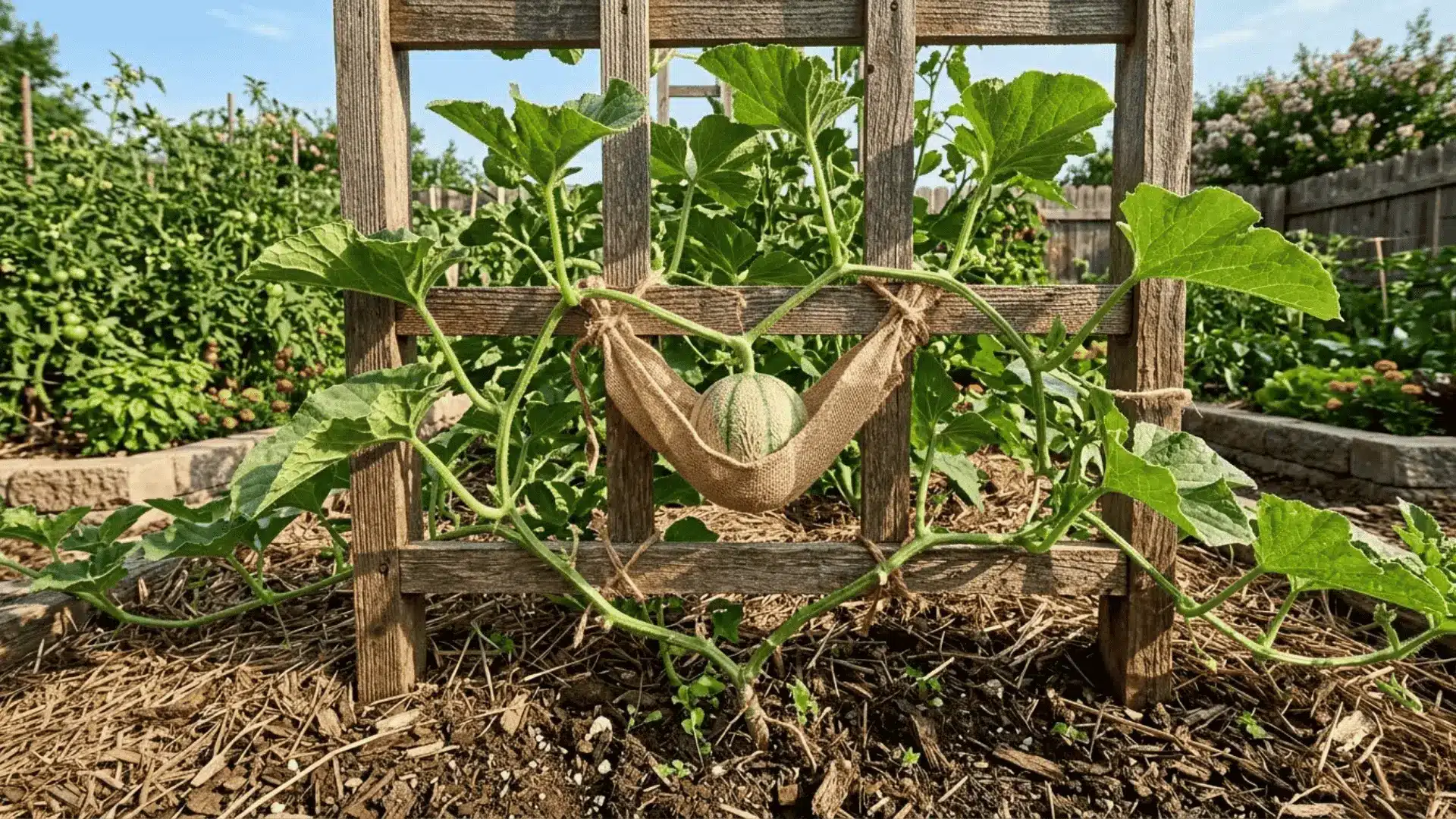
For smaller garden spaces, growing cantaloupes vertically on a sturdy trellis is a practical and visually appealing option.
Guide the main vine upward as it grows, securing it loosely with garden ties. Vertical growing also improves air circulation around the leaves, which helps reduce the risk of fungal issues.
Step 4: Supporting Developing Fruit
When growing vertically, the developing melons need a little extra help. Simple slings made from fabric, netting, or old pantyhose work beautifully to cradle each fruit and tie back to the trellis.
This keeps the weight from pulling on the vine and gives the melon a stable, supported environment to ripen evenly.
Cantaloupe Plant Care Tips
Cantaloupes are relatively easygoing once they’re established, but a few consistent care habits make a noticeable difference in how well the plant performs and how the fruit develops through the season.
Watering Requirements
Consistent moisture is what keeps cantaloupe vines healthy and productive. Too little water stresses the plant, while too much invites root rot.
- Water deeply once or twice a week rather than shallow, frequent watering.
- Keep soil evenly moist during flowering and early fruit development.
- Pull back on watering slightly as fruit nears maturity to concentrate sweetness.
Fertilizing the Plant
Feeding cantaloupes at the right growth stages makes a real difference in both vine strength and fruit quality.
- Use a balanced fertilizer at planting to support early root and vine development.
- Switch to a phosphorus-rich formula once flowering begins to encourage fruiting.
- Avoid over-fertilizing with nitrogen late in the season, as it pushes leafy growth over fruit.
Mulching Around Plants
Mulch is one of those small additions that quietly does a lot of heavy lifting throughout the growing season.
- Lay two to three inches of organic mulch around the base of each plant.
- Mulch keeps soil moisture consistent and regulates soil temperature during heat spells.
- It also keeps developing fruit on bare soil, reducing rot and keeping melons clean.
A little consistency with watering, feeding, and mulching goes a long way. These three habits together create the kind of steady, supportive environment where cantaloupes genuinely thrive.
Pollination and Fruit Development
Pollination is the quiet process behind every cantaloupe that makes it to harvest. Understanding how it works and how to support it gives the plant a much better chance of setting healthy, flavorful fruit.
Male vs. Female Flowers
Cantaloupe plants produce both male and female flowers, and knowing the difference helps track where the plant is in its growth cycle.
| Flower Traits | Male Flowers | Female Flowers |
|---|---|---|
| Appearance | Slim, straight stem | Small, swollen base behind the petal |
| Bloom Time | Appear first on the vine | Appear a week or two after the male flowers |
| Role | Produce pollen | Receive pollen and develop into fruit |
| What to Look For | No fruit formation after bloom | Tiny melon is visible at the base when pollinated |
Hand Pollination Tips
Hand pollination is worth trying when bee activity around the garden feels low.
- Use a small, dry paintbrush or cotton swab to collect pollen from a fully open male flower.
- Gently dab the collected pollen onto the center of a female flower.
- Always do this in the early morning when flowers are most receptive and fully open.
- Repeat the process over a few consecutive days for the best chance of successful fruit set.
Common Cantaloupe Plant Problems
Cantaloupes are fairly resilient, but a few common issues are worth keeping an eye on through the season.
| Problem Type | What to Watch For | Quick Fix |
|---|---|---|
| Pests | Aphids, spider mites, cucumber beetles | Treat early with neem oil or insecticidal soap |
| Diseases | Powdery mildew, Fusarium wilt | Improve airflow and avoid overhead watering |
| Environmental | Poor fruit development, irregular sizing | Maintain consistent watering and protect plants during temperature dips |
How Long Does a Cantaloupe Plant Take to Grow?
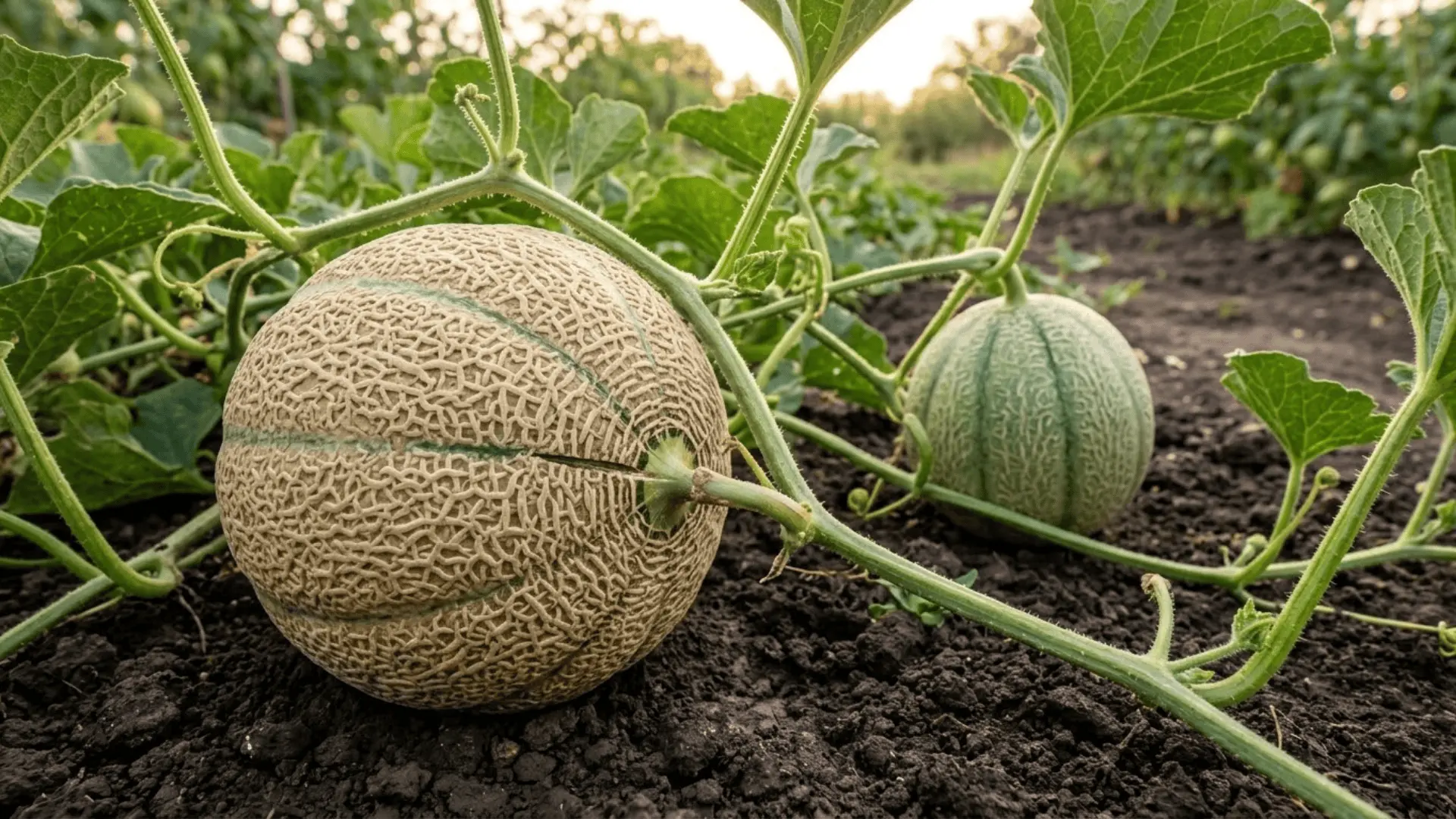
Cantaloupes are a season-long commitment, and knowing what to expect along the way makes the wait a lot more enjoyable.
Most varieties reach full maturity somewhere between 70 and 100 days after planting, depending on the cultivar and growing conditions.
As the fruit develops, a few reliable signs indicate things are moving in the right direction:
- The skin shifts from smooth green to a tan, netted surface
- A sweet, fragrant melon scent becomes noticeable near the stem end
- The stem begins to naturally slip away from the fruit
Growing Cantaloupe Plants in Containers
Cantaloupes can absolutely thrive in containers with the right setup.
Choose a pot that holds at least five gallons to give the roots enough room to develop comfortably.
Pairing the container with a sturdy trellis keeps the vines growing upward rather than sprawling outward, making it a great option for balconies and smaller outdoor spaces.
Container plants dry out faster than garden beds, so checking soil moisture daily is especially important.
Feed regularly with a balanced fertilizer and ensure the container has adequate drainage to keep the roots healthy throughout the season.
Wrapping Up
Growing a cantaloupe plant is one of those rewarding garden experiences that stays with you long after the season ends.
With the right conditions, a little consistent care, and some patience, the payoff is genuinely worth every bit of effort put in.
There is something deeply satisfying about watching a vine go from a tiny seed to a fragrant, sun-ripened melon ready to be sliced open on a warm afternoon. Give it a try this season and see how it goes.
Grown cantaloupes at home before? Drop a comment and share what worked best in your garden!
Frequently Asked Questions (FAQs)
How Big Does a Cantaloupe Plant Get?
Cantaloupe vines can spread anywhere between six and eight feet in length under the right growing conditions. Vertical training on a trellis is a great way to manage that spread, especially in smaller garden spaces.
Can Cantaloupe Plants Grow in Pots?
Yes, cantaloupes can grow successfully in containers as long as the pot is large enough and drainage is adequate. Pairing the container with a trellis and keeping up with watering and feeding makes all the difference.
How Many Melons Does One Plant Produce?
A healthy cantaloupe plant produces two to four melons per season, depending on variety and conditions. Consistent watering, fertilizing, and pollination improve that number.