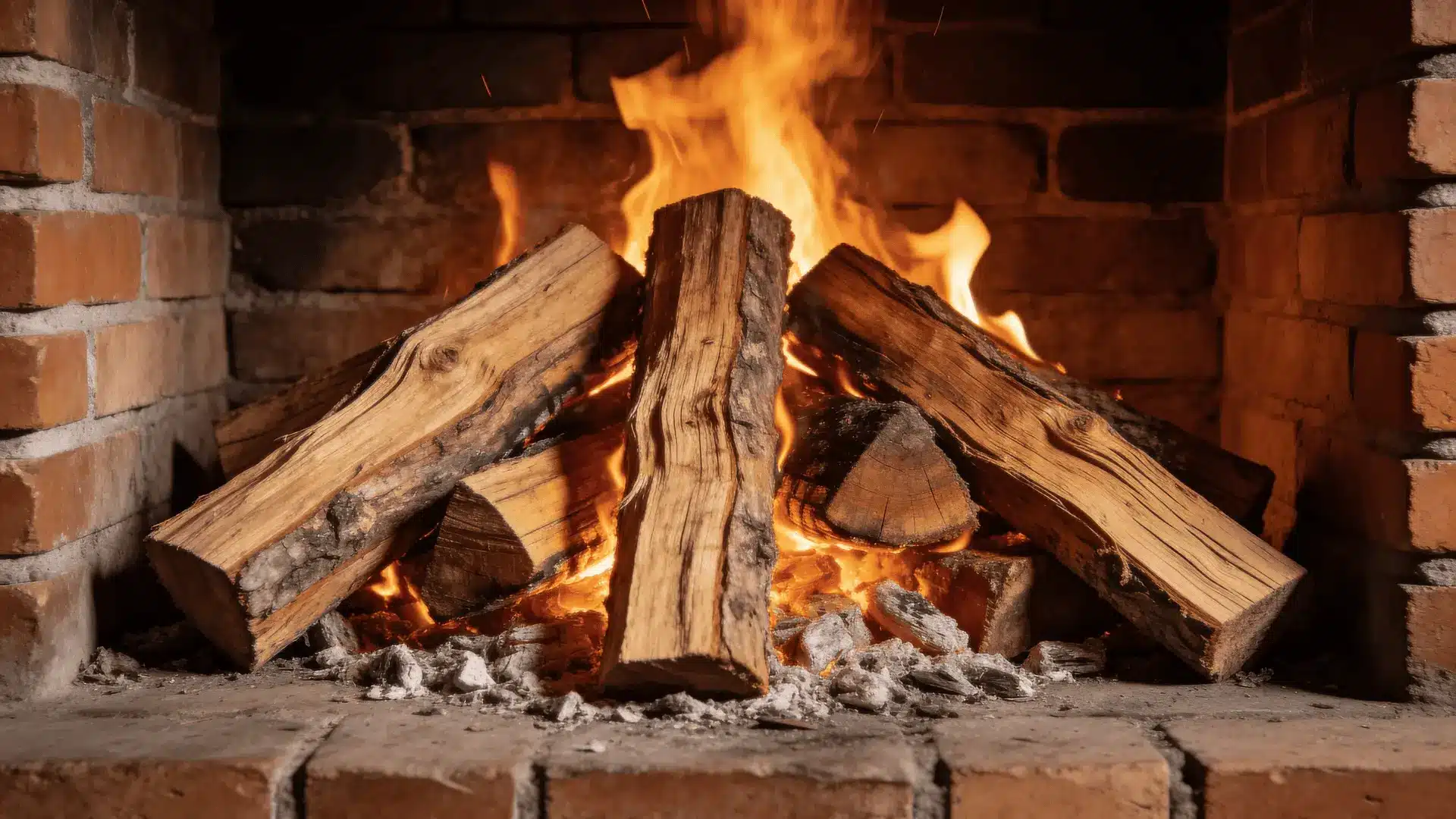
Choosing firewood sounds simple until the fire smokes, burns out too fast, or smells wrong. Many people think bigger flames mean more heat. Others assume all hardwood burns the same. Both ideas cause problems.
To understand the best wood for fireplace use, you need to look at what wood actually does once it starts burning.
Heat, smoke, coals, and safety all come from a few basic physical traits. When those traits work well together, fires burn cleaner and last longer.
That is what I’ll walk you through here, step by step, starting with what actually makes one piece of wood better than another.
What Makes a Wood Good or Bad for Burning in A Fireplace
Before getting into specific wood types, let’s look at what actually makes firewood work well indoors. This part sets the foundation for everything else.
Good firewood is not about how it looks or how big the flames are. It comes down to how the wood releases energy over time inside your home.
Here are the traits that matter most:
- Density and burn rate: Dense wood burns slower and more evenly. That steady burn releases heat over time and keeps the room warm. Lighter wood burns fast, flares up, and disappears quickly, leaving the space cold again.
- Moisture content: Wet wood has to boil off water before it can burn properly. That process wastes heat and creates more smoke. More smoke means more particles sticking to the chimney walls instead of heating the room.
- Coal formation: Some woods leave behind thick, glowing coals. Those coals continue giving off heat even after the flames die down. Other woods turn to ash quickly and stop producing warmth.
- Indoor safety limits: Indoor fires are less forgiving than outdoor ones. Smoke, sparks, and residue matter more in enclosed spaces. A wood that feels fine outside can be messy or risky indoors.
Most people judge firewood by flame height alone. Big flames look powerful, but they usually mean fast fuel loss and uneven heat.
Why Hardwoods Outperform Softwoods in Indoor Fireplaces
Hardwoods and softwoods burn differently because their structure controls how fire moves through the wood.
Hardwoods are dense, so fire spreads more slowly. Heat releases over time instead of all at once. That creates steadier warmth and stronger coals that keep giving off heat after flames shrink.
Softwoods are lighter, which lets fire move fast. Heat spikes quickly, then drops. Fuel disappears sooner and the room cools faster.
Resin is the other major difference. Many softwoods contain resins that ignite easily and burn hot for a short window. As those vapors cool, they turn into smoke and residue instead of usable heat.
Because of this:
- Hardwoods burn longer
- Heat feels more stable
- Coals last longer
- Less residue ends up in the chimney
Softwoods are not instantly dangerous. Small amounts can work in limited situations. Problems start when they are used as the main fuel.
How the Best Woods for Fireplaces Actually Behave When Burned
Oak, hickory, maple, and ash keep showing up on “best wood” lists because they burn in controlled, predictable temperature ranges indoors. They are all hardwoods, but they deliver heat very differently.
Here’s what you need to know:
1. Oak and Slow, Steady Heat
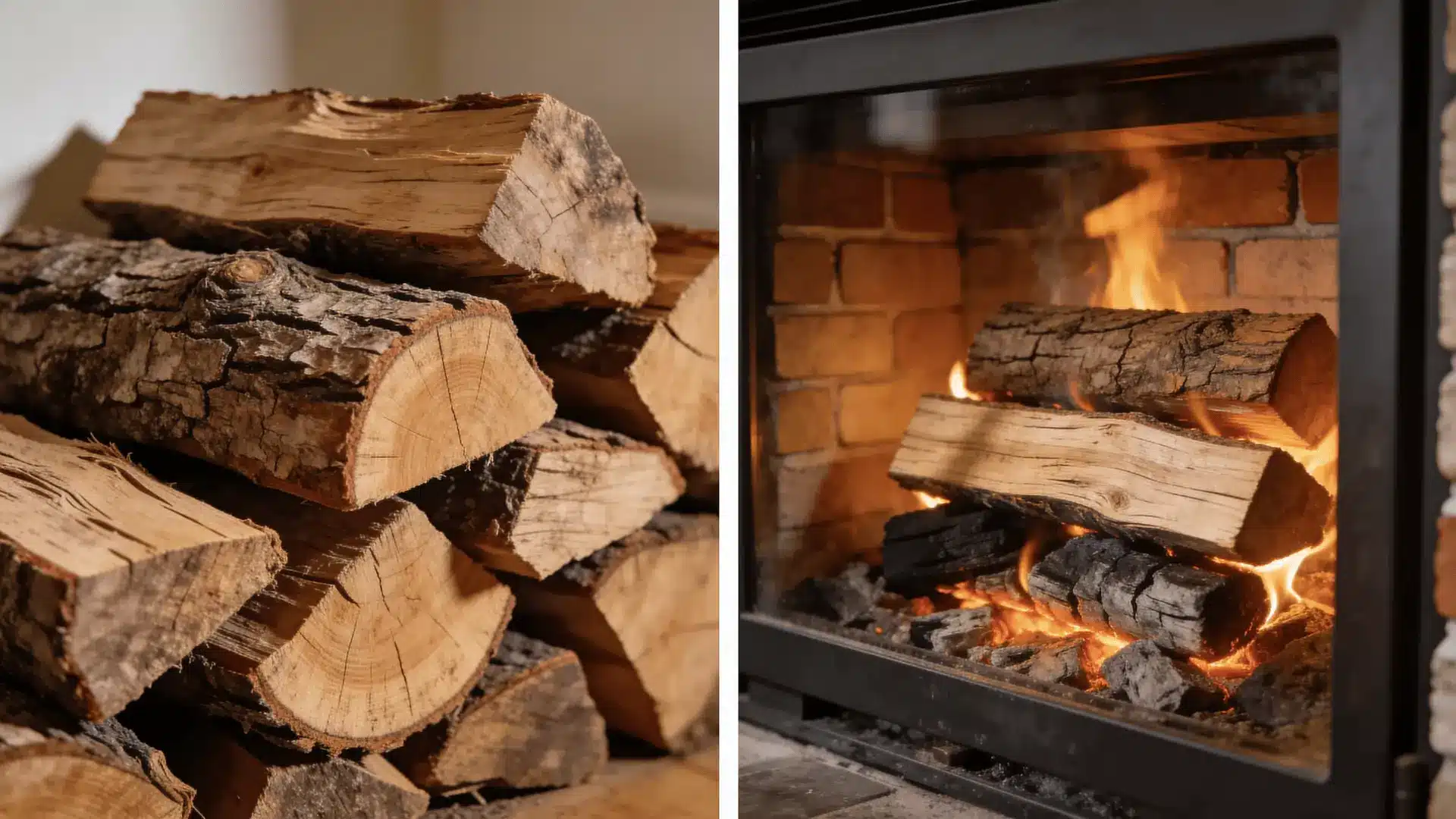
Oak burns at a moderate but sustained temperature, usually in the range of 600–900°F inside the firebox once established.
- Temperature climbs gradually instead of spiking
- Delivers steady, long-lasting heat
- Dense wood forms thick, durable coals
- Coals continue radiating warmth well after flames fade
Oak can feel underwhelming at first because it does not flare up. But once it settles in, it provides long-duration heat with fewer swings, which is ideal for indoor fireplaces.
2. Hickory and Maximum Heat Output
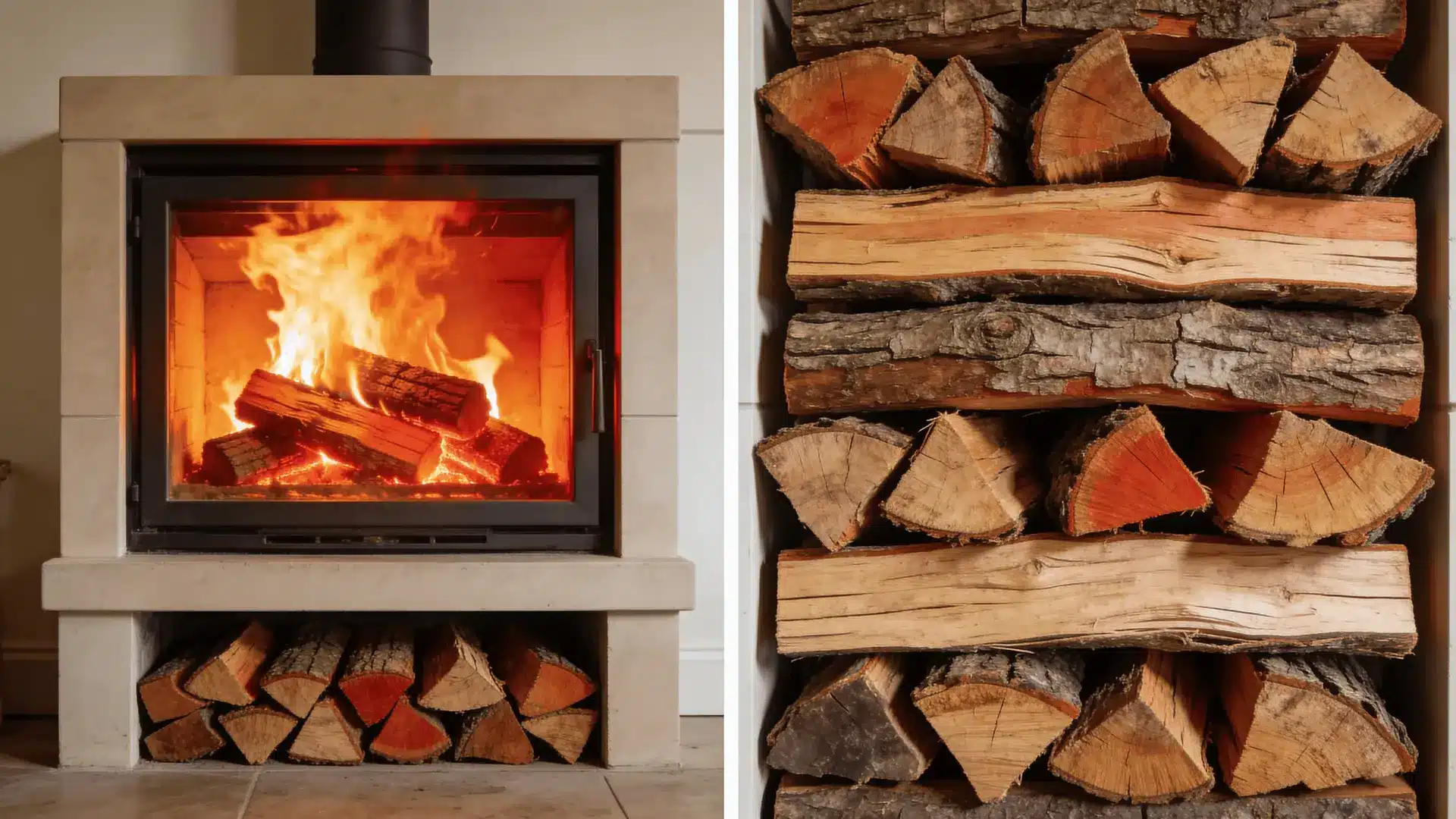
Hickory burns hotter than most common firewoods, often reaching 800–1,100°F in the firebox.
- Heat output ramps up fast due to more energy release earlier in the burn
- Flames burn hot and aggressively
- Raises room temperature quickly
- Produces solid coals that burn down faster than oak’s
This is great when you need quick warmth. It can be a problem in smaller spaces. Too much hickory at once can push temperatures higher than needed and make the fire harder to control.
3. Maple and Balanced Performance
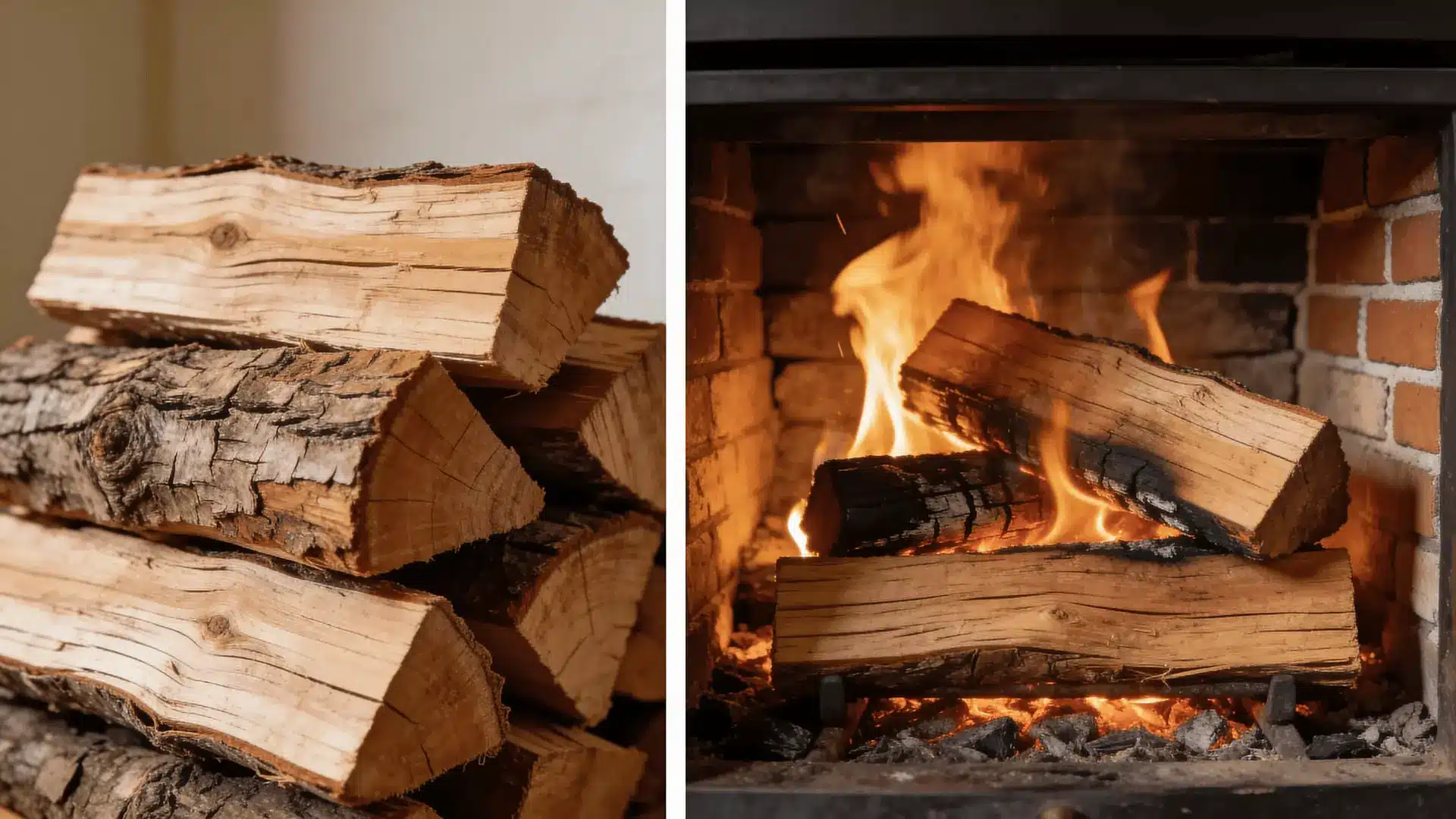
Maple typically burns in the 700–1,000°F range, depending on the species and dryness.
- Temperature rises at a moderate, controlled pace
- Heat output stays balanced and stable
- Coals form reliably but do not last as long as oak’s
- Easier to manage than hickory with fewer heat spikes
Maple is often chosen for its balance. You get solid heat without extreme highs or slow starts.
4. Ash and Easy, Clean Burning
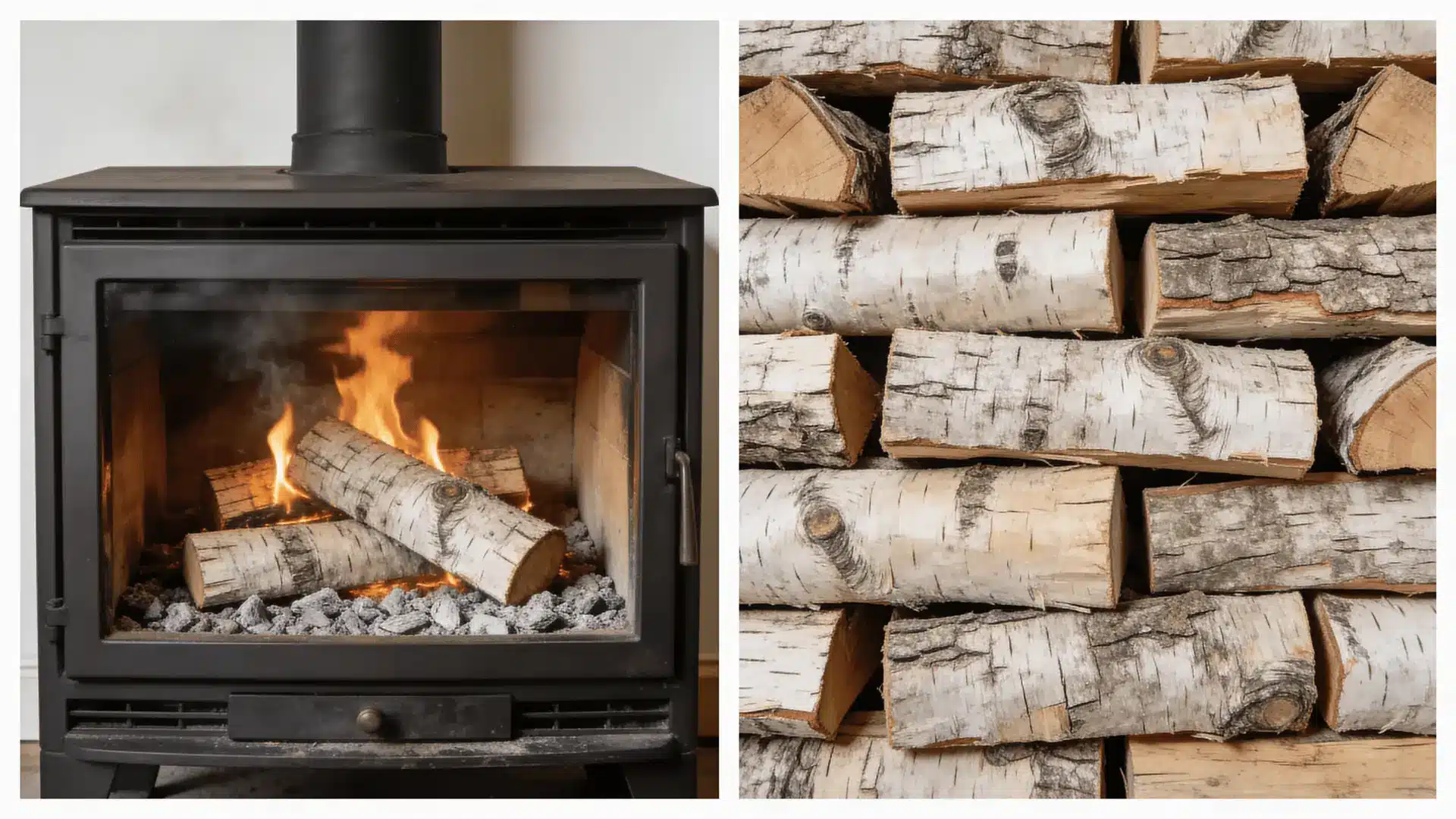
Ash burns a bit cooler than oak and hickory, usually around 600–850°F.
- Lights easily and reaches heat quickly but gently
- Burns at moderate, even temperatures
- Produces low smoke when dry
- Coals form fast but fade sooner than oak or maple
- Heat staysconsistent without sharp swings
Ash feels mild compared to hickory, but that is why it works so well indoors. It delivers consistent, manageable heat with low smoke and minimal drama.
When you look at these woods through temperature and burn behavior instead of hype, the choice gets clearer. It is not about which wood burns “best.” It is about how much heat you want, how fast you want it, and how steady you need it to be.
Why Moisture Content Matters More than Wood Species
The common belief that species alone decides quality misses this entire process.
When it comes to firewood, dryness sets the baseline. Wood type matters, but moisture level decides whether a fire works well or fights you the entire time.
What Happens Before Wood Can Burn
Before wood can burn, it has to get rid of the water trapped inside its fibers. That water boils off as steam. Boiling water absorbs a large amount of heat, which means less energy is left to warm your room.
When moisture escapes during burning, it actively cools the fire. Cooler fires struggle to burn fuel completely. That leads to incomplete combustion, which shows up as smoke, soot, and residue instead of usable heat.
Why Dry Softwood Can Beat Green Hardwood
This is why green hardwood can perform worse than dry softwood. A dense species cannot overcome the energy loss caused by excess moisture. Dry wood burns hotter, cleaner, and more predictably, regardless of species.
Why Fire Behavior Changes Day to Day
Moisture also explains why fires change from day to day. Wood can absorb moisture from humid air. Even well-seasoned wood can smoke if conditions keep water trapped inside it.
Many people assume species alone decides firewood quality. In reality, moisture content controls how efficiently any wood can burn, and species only shapes how that efficiency shows up once the wood is dry.
Which Woods Cause Problems in Fireplaces and Why
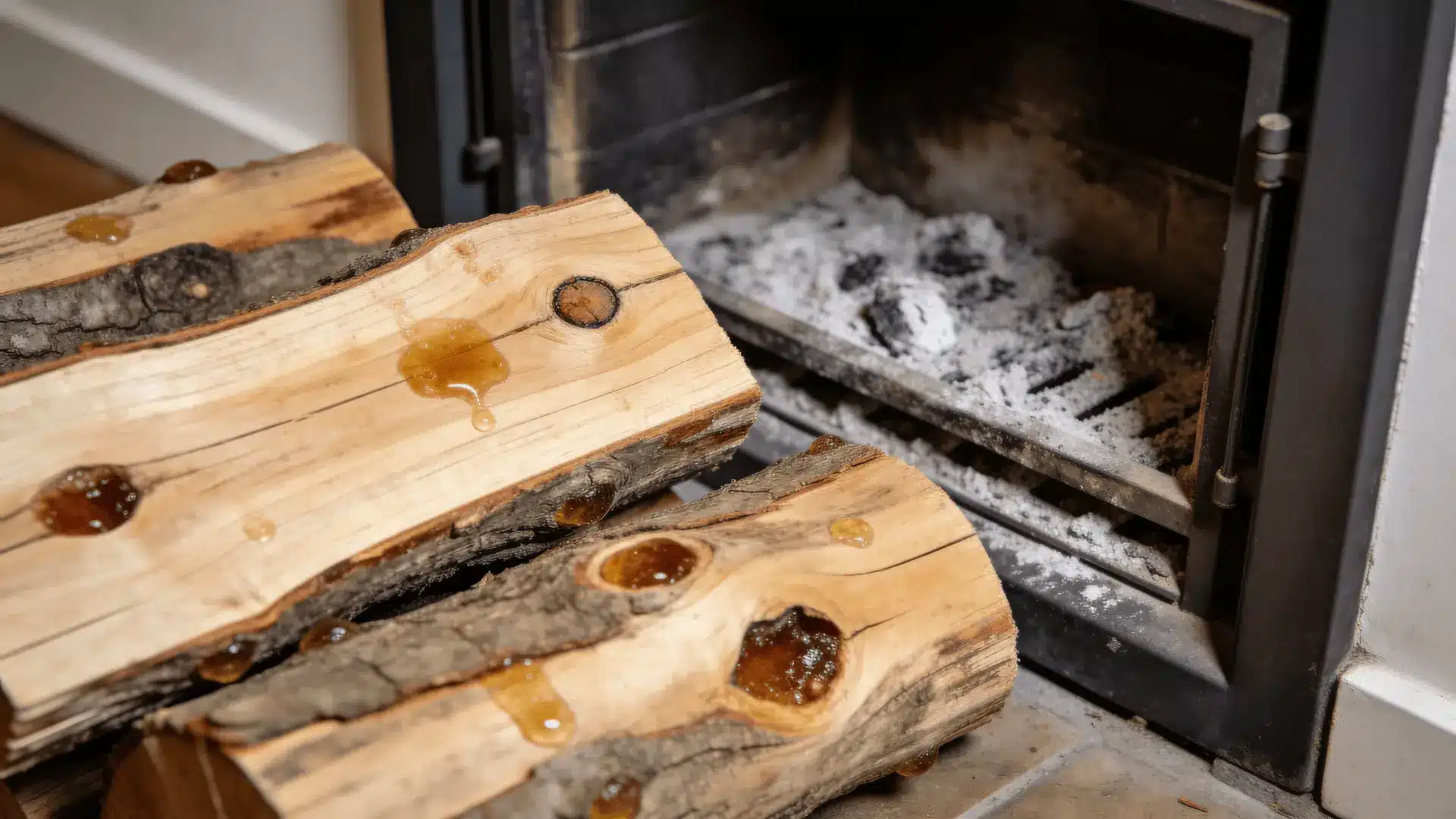
Some firewood causes trouble no matter how good the chimney is. The reason is not mystery or bad luck. It comes down to how the wood burns once heat is applied.
Here’s a clear breakdown of the main problem categories and the types of wood that fall into each one:
| Problem category | What goes wrong when burned | Common wood types involved |
|---|---|---|
| Resin-heavy woods | Burn too fast and release sticky vapors that turn into smoke and chimney residue | Pine, fir, spruce, cedar |
| Treated or painted wood | Releases toxic fumes and leaves chemical residue inside the fireplace and chimney | Pressure-treated lumber, painted boards, plywood |
| Very fast-burning woods | Create sharp temperature spikes, then collapse, leading to uneven heat and chimney stress | Poplar, willow, cottonwood |
| High-smoke producers | Incomplete combustion leads to heavy smoke and poor indoor air quality | Green wood of any species, damp or poorly dried logs |
Each of these problems has the same root cause. The fire cannot burn steadily or completely. When combustion breaks down, heat becomes uneven, smoke increases, and residue builds up where it should not.
It is easy to blame the chimney when fires smoke or behave badly. In most cases, the real issue is fuel behavior, not the structure burning it.
How to Interpret “Clean Burning,” “Low Smoke,” and “High Heat” Claims
These phrases sound clear but often mean different things.
Clean burning usually refers to complete combustion. Less smoke leaves the firebox because more fuel turns into heat instead of residue.
Low smoke does not always mean low heat. Some woods burn clean but gently. Others burn hot but briefly.
High heat can mean intense flames or sustained warmth. Those are not the same thing. Short bursts feel powerful but fade fast.
The mistake is chasing one label instead of understanding the balance behind it. No single measure defines the best choice.
When you match wood traits to how fires actually work, these claims become easier to judge.
Wrapping Up
The best wood for fireplace use is not about rankings or hype. It comes down to density, dryness, and how energy moves through the fire.
Dense hardwoods burn slower, form better coals, and release heat in a steady way. Dry wood burns cleaner and wastes less energy. Once you see how flame behavior, smoke, and heat connect, the usual advice stops feeling random.
The goal is not the biggest fire. It is a stable, controlled burn that warms your space and stays predictable. With that in mind, choosing firewood becomes simpler and far less frustrating.