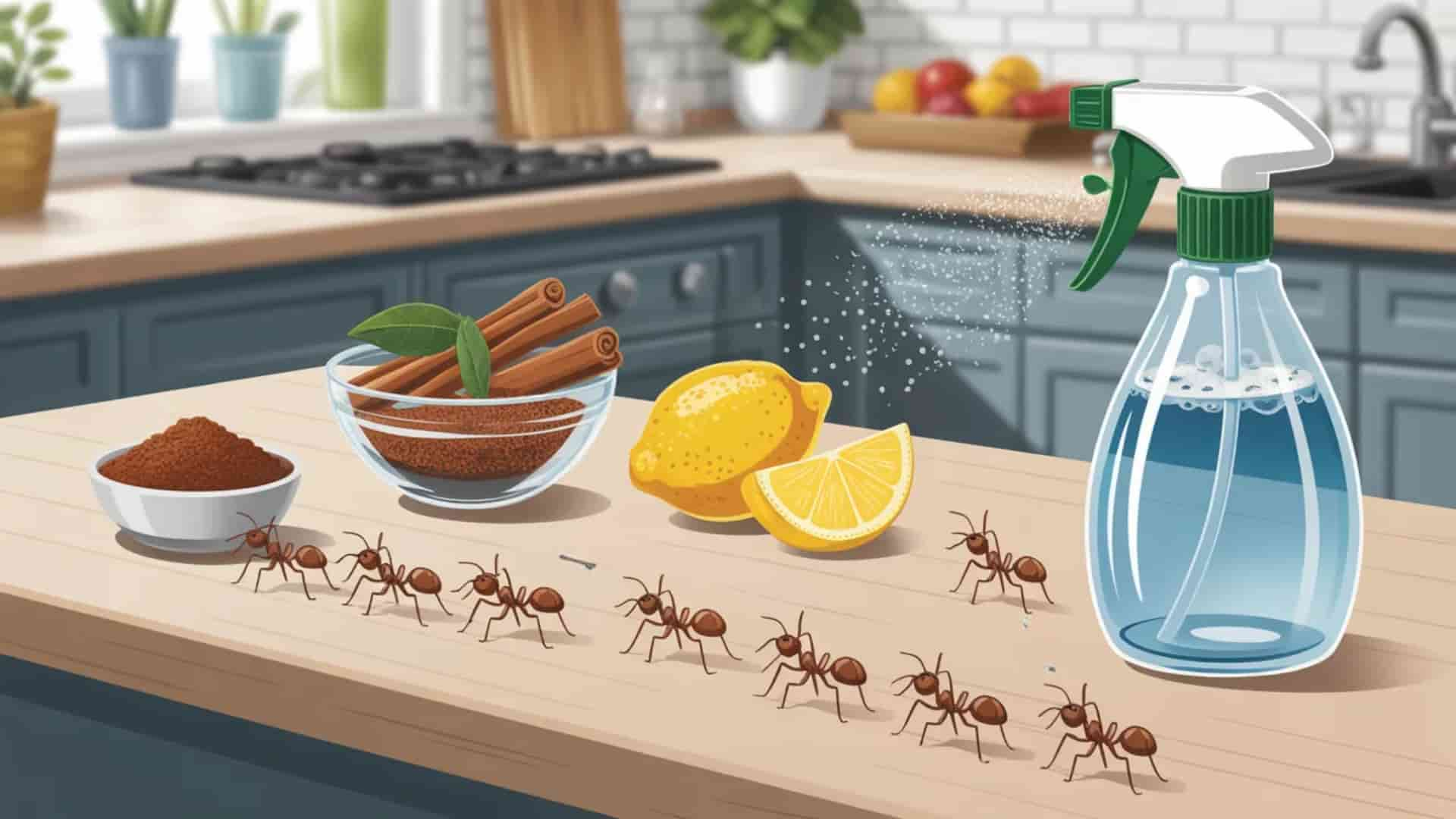

Keeping bugs away doesn’t have to feel like you’re fighting nature every day. A lot of people jump straight to sprays or gadgets, but plants that repel bugs can shift the whole space in a quieter, more natural way.
When you place the right plants together and understand how they behave, your garden or home starts working with you instead of against you.
In this guide, you’ll see how different plants help in real situations, which ones give you the most support, and which ones you should skip. By the end, you’ll know how to build a setup that stays simple and actually works.
Now let’s look at how these plants do their job.
Do Bug-Repelling Plants Really Work?
A lot of people hear about these plants and think they’re some kind of shield. They’re not. They work, but they work in a way that’s slower and more natural.
The plants give off scents, oils, and simple compounds that bugs don’t enjoy. Some of these smells hit a bug’s senses hard enough that it changes where they land or how long they stick around.
But there are limits. These plants won’t clear your yard like a fog machine. They won’t stop every mosquito from hunting for you. And a few of the popular claims online come from guesswork instead of real results.
Some plants only work when they’re healthy. Some help more when the leaves are rubbed or crushed. And some of the “miracle repellent plants” barely do anything at all.
They’re tools. Not magic. When you use them the right way and mix them with good habits, they make things better. Just don’t expect them to replace everything else.
Plants that Repel Bugs
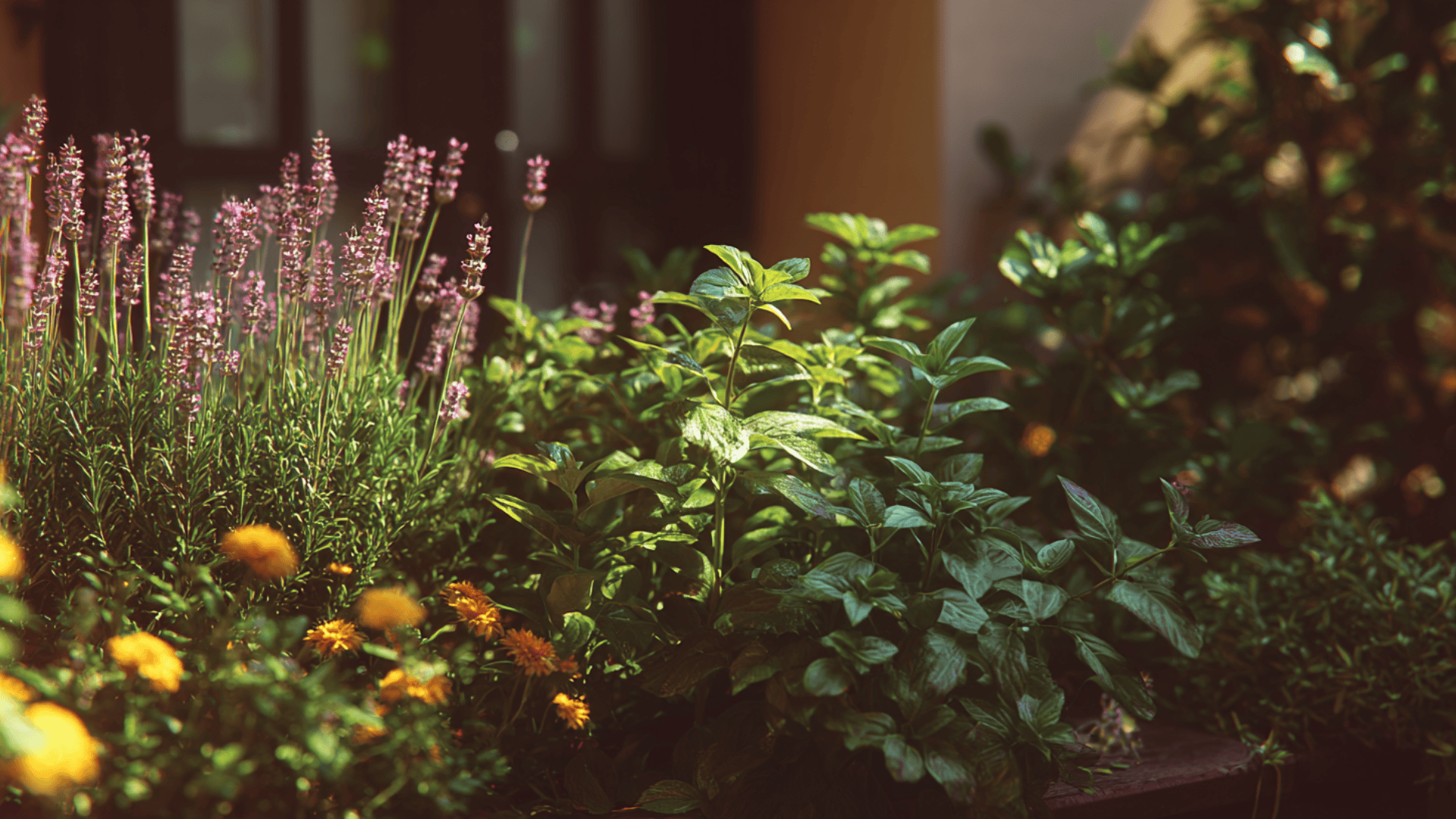
People hear about bug-repelling plants and act like there’s some secret trick behind them. There isn’t. The plants put out scents and natural compounds that bugs would rather avoid.
They won’t clear out every mosquito in the world, but they make your space less appealing. And when you use a few of them together, the whole area shifts enough that bugs start choosing other places to land.
Herbs that Help Repel Bugs
Herbs do most of the heavy lifting. They grow fast, smell strong, and actually change how bugs behave.
- Basil keeps mosquitoes and flies from hovering around you by giving off a sharp scent they avoid, and it stays strong if the plant is healthy and grown with good sunlight.
- Peppermint or Spearmint knocks back ants, aphids, and flea beetles because the scent overwhelms their tracking patterns, but you need to contain the plant since it spreads aggressively and takes over space fast.
- Lemon Balm hits mosquitoes with that sharp lemon scent bugs dislike, and it grows easily even for beginners, making it a simple plant for adding quick natural protection around your outdoor seating areas.
- Rosemary pushes flies and cabbage moths away with its woody aroma, and it holds up well in hot, dry conditions, making it a solid pick for people who forget to water things.
- Thyme slows down whiteflies and moth pressure because it releases strong oils when warm, and it stays low to the ground, which makes it helpful for filling gaps in garden spaces.
- Oregano helps reduce a broad mix of garden pests thanks to its scent and thick growth habit, and it works well as a companion plant that supports nearby vegetables.
- Catnip is one of the strongest mosquito deterrents you can plant because it carries nepetalactone, a compound mosquitoes hate, though you may attract every neighborhood cat in the process.
- Chives push off carrot flies and beetles by releasing sulfur-like compounds from their leaves, and they grow in tight clumps that make them easy to tuck around vegetable beds.
- Garlic helps against root maggots and cabbage worms because the smell moves through the soil and air, and it doubles as a useful crop once the bulbs mature.
- Leeks and other alliums make soil pests rethink their life choices since they produce strong sulfur compounds, and they integrate well into mixed garden beds without stealing too much space.
Flowers and Ornamentals
These are the plants people grow because they look good, and the bug control is the bonus.
- Marigolds help with nematodes and some flying pests by releasing a compound through their roots, and their bright flowers make them an easy border option for vegetable gardens.
- Chrysanthemums carry natural pyrethrum, which hits roaches, ants, and fleas by affecting their nervous systems, and the flowers bring color while acting as a quiet line of defense.
- Nasturtiums pull aphids away and slow down beetles by working as a trap crop, and they spread gently across garden edges without overwhelming nearby plants.
- Petunias keep aphids and beetles off your vegetables because their sticky leaves make landing harder for pests, and they blend well with edible and ornamental gardens.
- Scented Geraniums put out a smell bugs don’t enjoy, especially mosquitoes, and they stay compact, which makes them easy to place near doors, patios, or sitting areas.
- Calendula helps deter aphids and acts like a soft shield in the garden, and its flowers stay productive through cooler months, giving you longer-lasting support.
- Borage repels certain pests and brings in pollinators with its blue flowers, and it grows tall enough to create a subtle screen between vulnerable plants and common insects.
Grasses and Strong-Scent Plants
These are the powerful ones. When people think “bug-repelling plants,” this is what they’re talking about.
- Citronella Grass is the classic mosquito-repelling plant because it produces citronellal-rich oils that confuse their scent receptors, and it thrives in warm climates where people spend the most time outdoors.
- Lemongrass is right there with it since it carries the same compounds, and it grows in tall clumps that create a natural barrier around patios or pathways where mosquitoes gather.
- Yarrow helps deter beetles and some flying pests thanks to its strong aroma, and its feathery leaves hold up well in heat, making it a low-maintenance choice for busy gardeners.
- Borage shows up here too because of its scent and pollinator draw, and it builds a healthier garden ecosystem that naturally reduces pest pressure across multiple plant beds.
Plants to Avoid
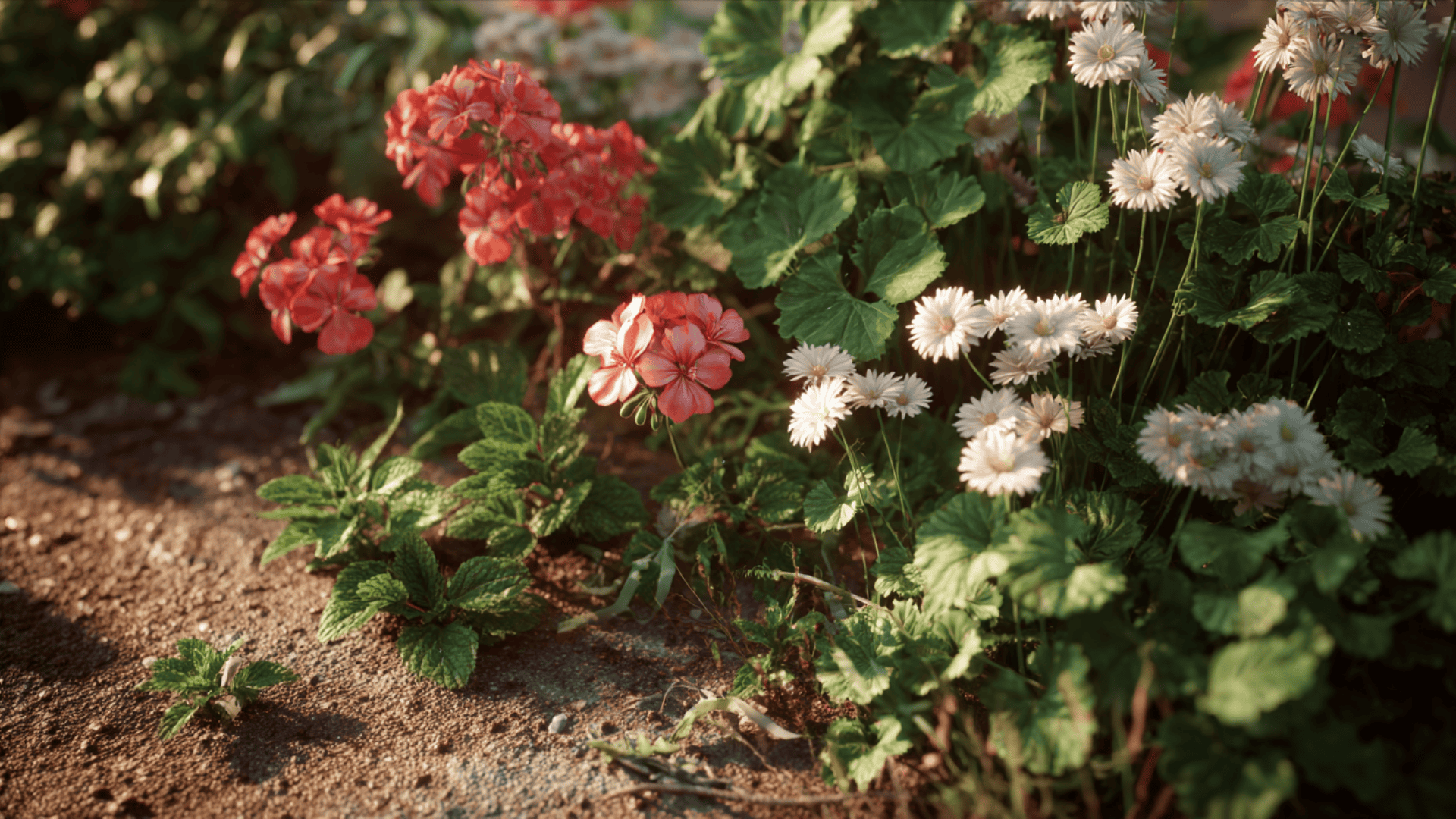
This is the part people skip, and that’s how they get burned. Not every “bug-repelling plant” actually does the job. Some of them bring their own problems.
Some don’t repel anything. Some are straight up toxic to pets. And a couple just get hyped because they smell strong.
Plants that Don’t Really Repel Much
- Regular Marigolds for Aphids sound great on paper, but aphids are actually attracted to bright yellow shades, so you might end up drawing in more pests instead of reducing pressure.
- Mint for Mosquito Control gets pushed hard online, but the scent usually isn’t strong enough outdoors to make a real difference, which leaves people dealing with mosquitoes even when mint is everywhere.
- Geraniums marketed as “mosquito plants” often lack enough citronellal to matter, so they look convincing in the store but provide almost no practical repellency once you get them home.
Plants that Cause More Trouble than They Solve
- Mint (uncontained) spreads aggressively through runners, quickly overrunning beds and containers, which forces you to spend more time controlling it than enjoying any bug-repelling benefits it supposedly offers.
- Wormwood can repel some pests, but it releases chemicals that stunt nearby plants, so you end up damaging your own garden while trying to knock back insects.
- Alliums around pets become a problem because dogs and cats can get sick if they chew on the leaves or bulbs, making them risky choices for people with curious animals around the yard.
Plants with Overhyped Claims
- Anything labeled “mosquito plant” without real citronella genetics usually leans on marketing hype, and once you plant it, you find out the scent barely spreads enough to bother mosquitoes at all.
- Lavender indoors smells amazing, but it doesn’t shift bug activity much in closed spaces unless you’re using the oils directly, which leaves people disappointed when bugs show up anyway.
Bug-Specific Recommendations: What Repels What
When you’re dealing with bugs, sometimes you just want straight answers. Here’s a quick look at which plants actually help with each specific pest, so you’re not guessing:
| Bug Type | Plants That Help Repel Them | Notes |
|---|---|---|
| Mosquitoes | Citronella Grass, Lemongrass, Lavender, Basil, Catnip | Strong scents confuse mosquito tracking. Catnip is one of the most effective natural options. |
| Ants | Peppermint, Thyme, Rosemary | Peppermint works best in high-scent areas or when leaves are crushed. |
| Beetles | Geraniums, Chives, Nasturtium | Nasturtiums act like a trap crop, pulling beetles away from other plants. |
| Flies | Basil, Lavender, Rosemary | Basil works especially well near outdoor seating areas. |
| Fleas & Ticks | Chrysanthemums, Lavender | Chrysanthemums contain pyrethrum, a compound used in many pest-control products. |
| Spiders | Mint, Lavender | Spiders dislike strong aromatics but are harder to repel than insects. |
| Rodents | Mint, Wormwood | Wormwood works but can be toxic to pets and nearby plants. Mint should be contained. |
Use this chart like a shortcut. Pick the bug, match the plant, and place it where the problem shows up. Simple moves, less hassle, and a garden that works with you.
Indoor Bug-Repelling Plants
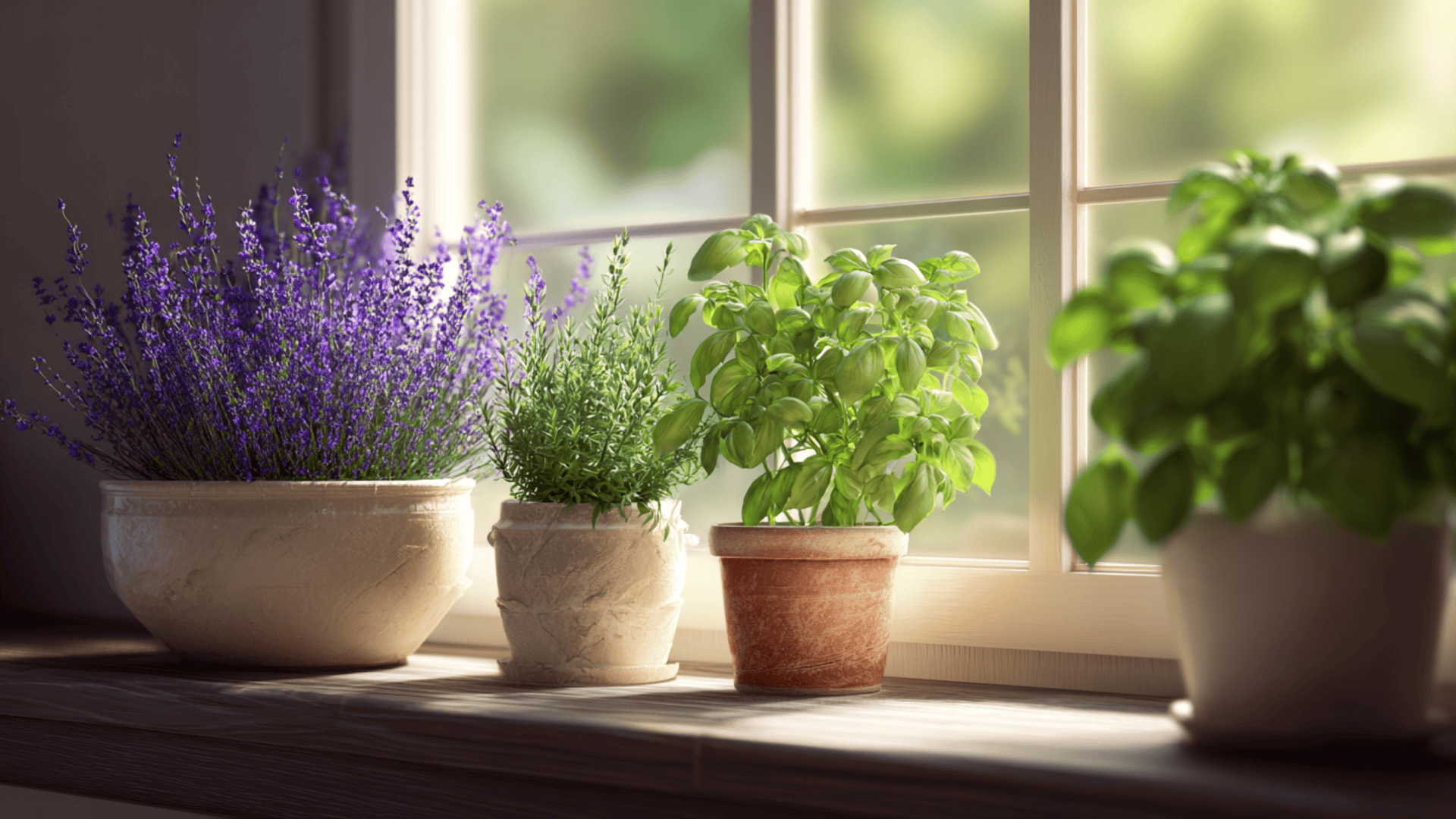
Indoor bugs show up for different reasons than outdoor ones, so you need plants that grow well in containers and put out steady scents without overwhelming the room.
These won’t replace simple habits like keeping food sealed, but they make your space less inviting and help keep common indoor pests from settling in.
- Lavender gives off a steady scent that flies and mosquitoes try to avoid, and it grows well near bright windows where the light helps the oils stay strong enough to matter.
- Mint (kept in a pot) puts out a sharp, clean smell that ants and flies dislike, and keeping it contained stops the roots from spreading while still giving you solid, consistent indoor coverage.
- Basil releases more scent whenever the leaves are brushed or moved, which helps push flies away from counters, and it grows well close to warm kitchen windows.
- Lemon Balm creates a soft lemon smell that bugs don’t enjoy, and it forms compact clumps that fit easily on shelves or tabletops without taking over the whole area.
- Scented Geraniums put out a strong aroma that helps reduce indoor pest activity, and they stay compact enough for small spaces as long as they get steady light.
- Rosemary keeps its woody scent even when indoor air gets dry, and flies tend to avoid the plant when it sits near kitchen doors, sunny counters, or window ledges.
Dog- and Cat-Safe Bug-Repelling Plants
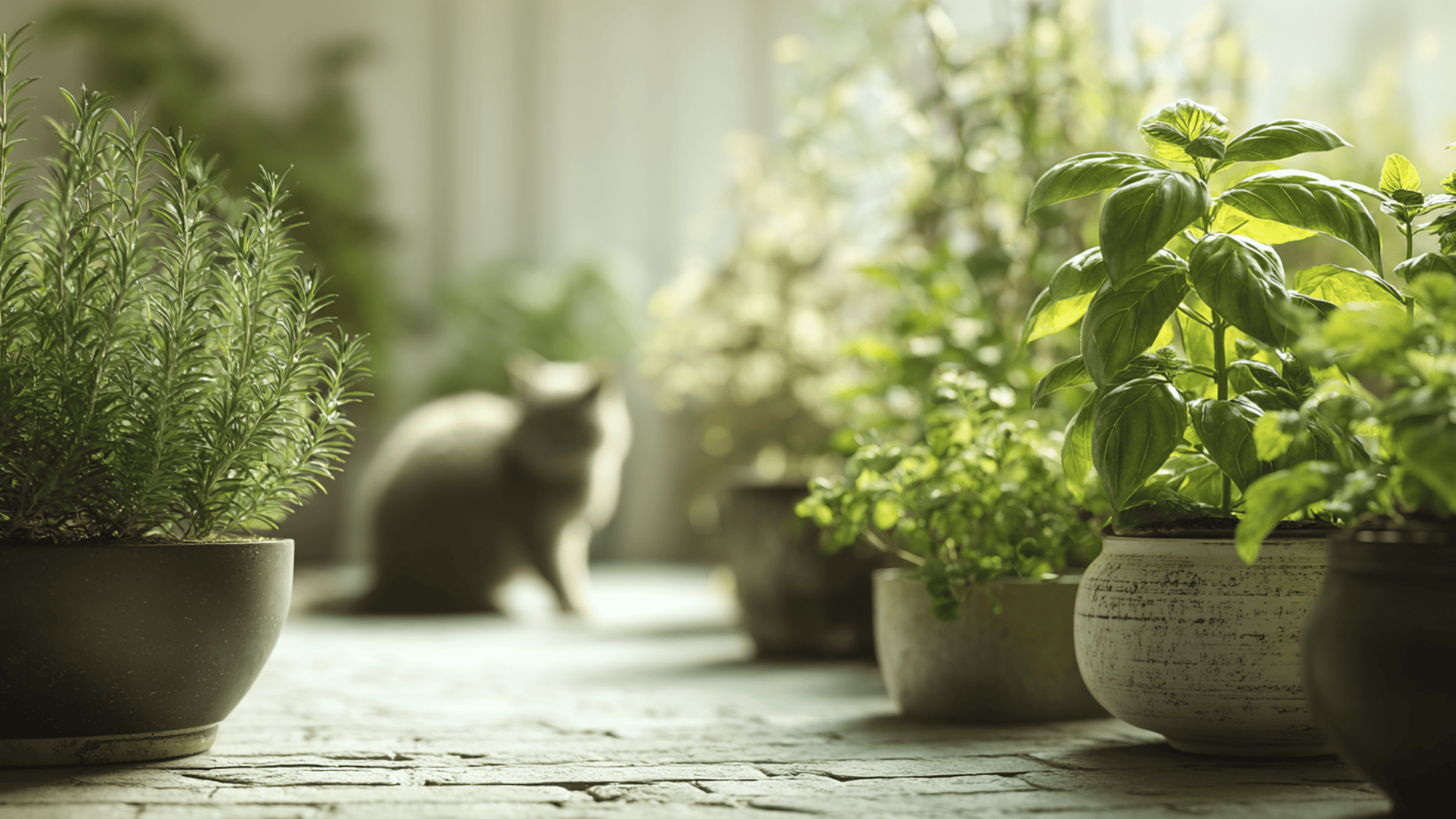
Pets don’t care about your plan. If a plant looks fun, they might bite it, knock it over, or sleep in the pot.
So if you’re trying to keep bugs away without putting your animals at risk, these are the plants that give you some breathing room. They still need to be placed smartly, but they don’t carry the same dangers as the ones on the “avoid” list.
Safe Options for Homes with Pets
- Basil stays safe for dogs and cats, and the strong scent helps push flies away from food areas, making it a simple indoor and outdoor pick for families with pets.
- Lemon Balm is gentle and safe, and its soft lemon smell bothers mosquitoes more than it bothers animals, so it works well near entryways or spots where pets like to hang out.
- Catnip is safe for cats and dogs, and it pushes mosquitoes back with its natural compounds, though you might see your cat rolling around like it’s having the best day of its life.
- Mint (contained) is safe in small amounts and helps discourage ants and flies, and keeping it in a pot stops it from spreading while giving pets a harmless plant to sniff.
- Rosemary is safe for most pets when grown normally, and its steady scent helps cut down on flies indoors or outside without creating risky conditions around curious animals.
Plants to Avoid Around Pets
- Geraniums can cause digestive issues for dogs and cats, and even though they may help repel mosquitoes, the risk isn’t worth having them in pet-heavy spaces.
- Chrysanthemums carry pyrethrum, a natural compound that helps repel fleas and ticks, but it can make pets sick if they chew on the leaves or flowers.
- Alliums like garlic, chives, and leeks can hurt pets if they eat the bulbs or leaves, so they don’t belong inside or outside where animals can reach them easily.
Matching Plants to Your Weather and Light
Different plants handle weather in different ways. I’ve laid it out here so you can see which ones fit your climate, your light conditions, and your garden setup.
| Climate / Light Condition | Plants That Do Well Here |
|---|---|
| Hot Climates | Lemongrass, Citronella Grass, Rosemary |
| Cool Climates | Calendula, Chives, Yarrow |
| Partial Shade / Low Light | Mint (contained), Lemon Balm, Catnip |
| Full Sun | Lavender, Basil, Oregano |
Companion Planting for Natural Pest Control
Companion planting is basically giving your vegetables the right neighbors. Some plants keep pests off specific crops just by growing nearby. You just match the right plant with the right vegetable and let the scents do the work.
Plants that Help Protect Tomatoes
- Basil pairs well with tomatoes and helps push flies and mosquitoes away from the area, making outdoor harvests a little easier.
- Petunias sit well at the base of tomato plants and help discourage aphids and beetles from settling in.
- Chives can be planted along the edges and help reduce beetle activity around tomato beds.
Plants that Help Protect Cucumbers
- Oregano grows low and spreads scent through the bed, helping reduce pest pressure without crowding the vines.
- Nasturtiums act like a trap crop, pulling beetles and aphids away from cucumber plants so the vines stay healthier.
Plants that Help Protect Brassicas (Cabbage, Kale, Broccoli)
- Rosemary helps push back cabbage moths and some flying pests that target leafy greens.
- Thyme holds its scent close to the soil and helps reduce whitefly and moth activity around brassica beds.
- Sage supports brassicas by masking their smell, which confuses pests that normally target them.
Wrapping Up
Keeping bugs away isn’t about finding one perfect plant. It’s about understanding how these plants work together and choosing the ones that fit your space.
When you use plants that repel bugs with a little strategy, you get healthier gardens, calmer indoor spaces, and fewer surprises from pests.
The goal isn’t perfection; it’s balance. Pick the plants that match your climate, place them with purpose, and let them support the rest of your setup.
If you’re ready to build a garden that makes your life easier, start choosing your plants today and put them to work.