Your flower beds deserve more than just a pretty face. They need nourishment from the ground up.
Finding the best mulch for flower beds takes your garden from surviving to thriving, creating a protective blanket that locks in moisture, enriches soil, and makes those blooms absolutely radiant.
Dreaming of a cottage garden bursting with color or a minimalist escape with architectural plants? The right mulch becomes your ultimate ally.
We’ll walk you through everything you need to know about choosing, applying, and loving the mulch that’ll make your flower beds flourish beautifully.
What Makes the Best Mulch for Flower Beds?
The best mulch for flower beds does double duty. It keeps your soil consistently moist while buffering those temperature swings that stress delicate roots.
A good layer creates a barrier against weeds, saving you endless hours of pulling and fussing.
But here’s where it gets interesting: some mulches actually feed your soil as they break down, while others shine purely for their visual appeal.
Think about how often you want to refresh your beds, too. Organic options decompose and enrich but need replenishing, while decorative stones stay put for years with minimal upkeep.
Types of Mulch Explained
Not all mulch is created equal, and knowing your options helps you match the perfect type to your garden’s personality.
Let’s break down the two main categories and what makes each one special.
Organic Mulch
These living materials break down over time, feeding your soil while they work. They’re the go-to choice for gardeners who love that rich, earthy look and want to build healthier beds season after season.
- Bark Mulch: Classic chunks that last longer and add texture
- Wood Chips: Budget-friendly and versatile for any garden style
- Shredded Hardwood: Interlocks beautifully, stays put on slopes
- Pine Bark: Naturally acidic, perfect for roses and acid-loving blooms
Inorganic Mulch
These materials stay put indefinitely and shine in low-maintenance landscapes. They won’t enrich your soil, but they deliver serious staying power and unique visual appeal.
- Rubber Mulch: Recycled and resilient, never decomposes
- Gravel and stone: Clean, lasting beauty with excellent drainage
- Landscape Fabric: Weed barrier that works best when layered under other mulches
Best Mulch for Flower Beds by Type
Ready to find your perfect match? These top performers each bring something special to your flower beds, from feeding the soil to keeping pests at bay.
Here’s how they stack up.
1. Shredded Hardwood Mulch
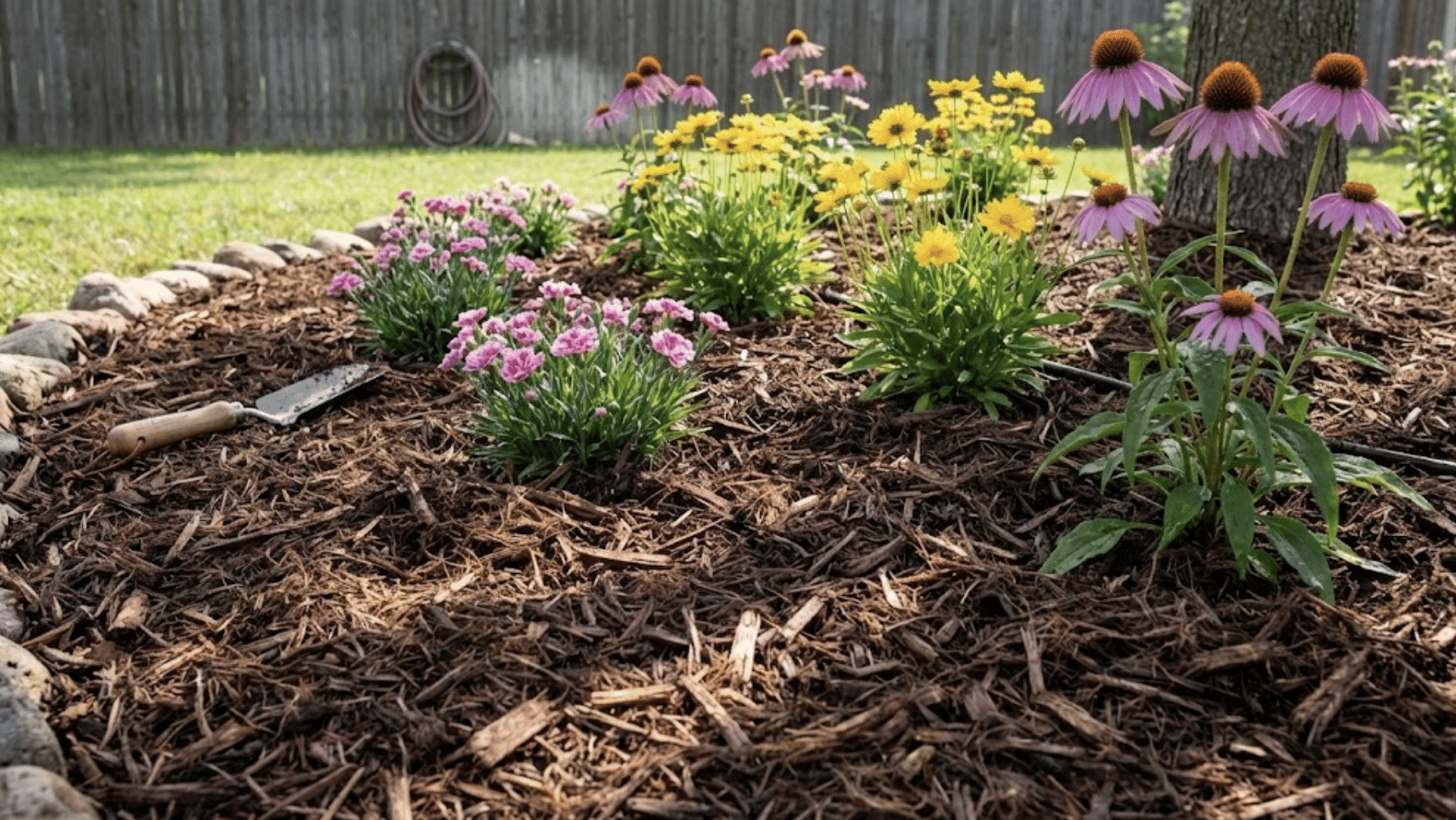
The all-around champion for flower beds everywhere. This finely shredded material locks together beautifully, resists washing away on slopes, and breaks down at just the right pace to enrich your soil without constant reapplying.
It comes in rich natural browns and dyed options, blending perfectly with any garden aesthetic. Expect it to last about a year before needing a refresh, making it wonderfully low-fuss.
2. Pine Bark Mulch
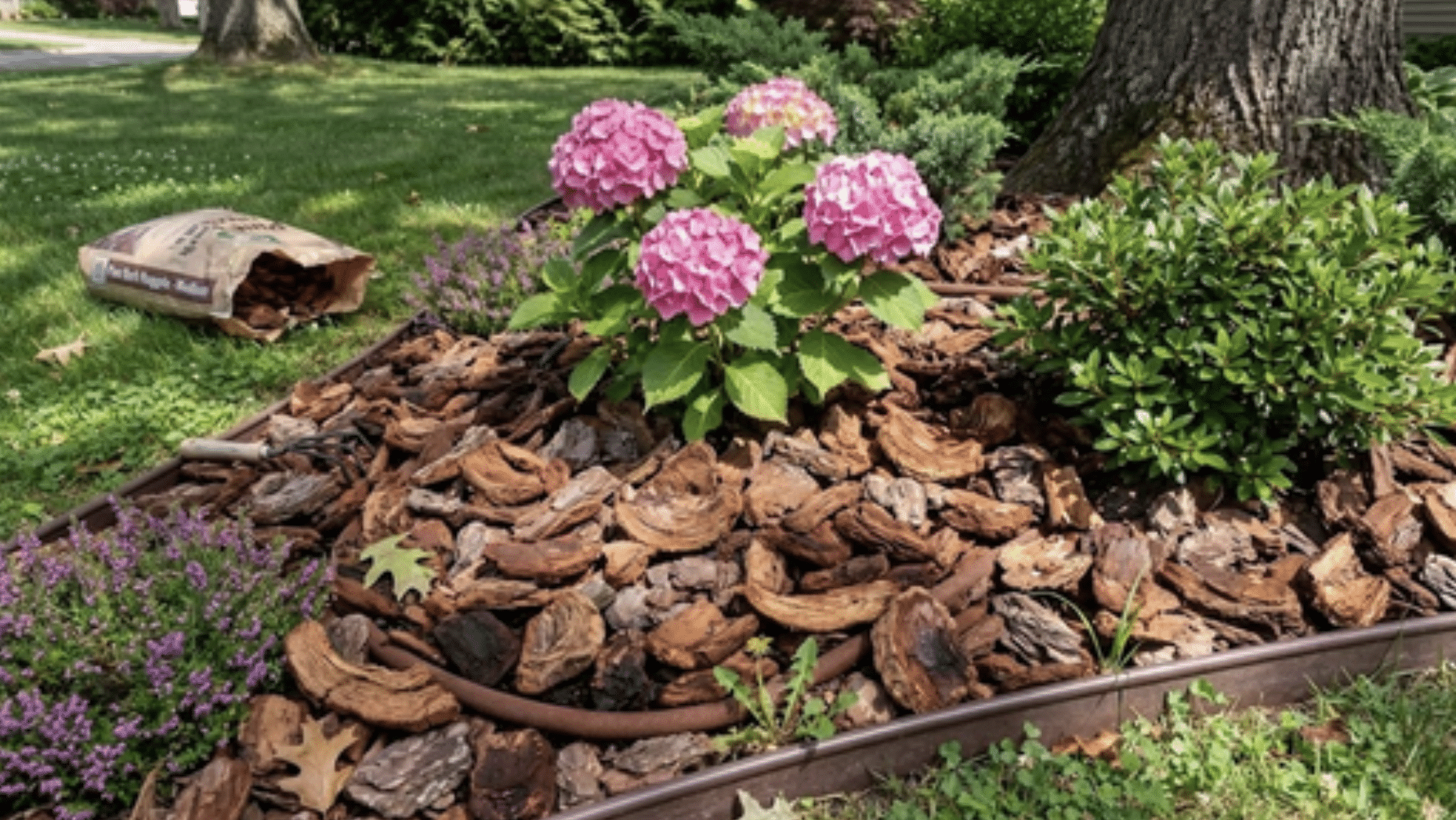
Your acid-loving blooms will absolutely thrive under this one. Azaleas, hydrangeas, and roses adore the slight pH drop pine bark delivers as it decomposes.
The nuggets come in various sizes, from fine to chunky, letting you customize the look. It’s lighter than hardwood, so consider heavier pieces if you have windy spots or steep beds.
3. Pine Straw
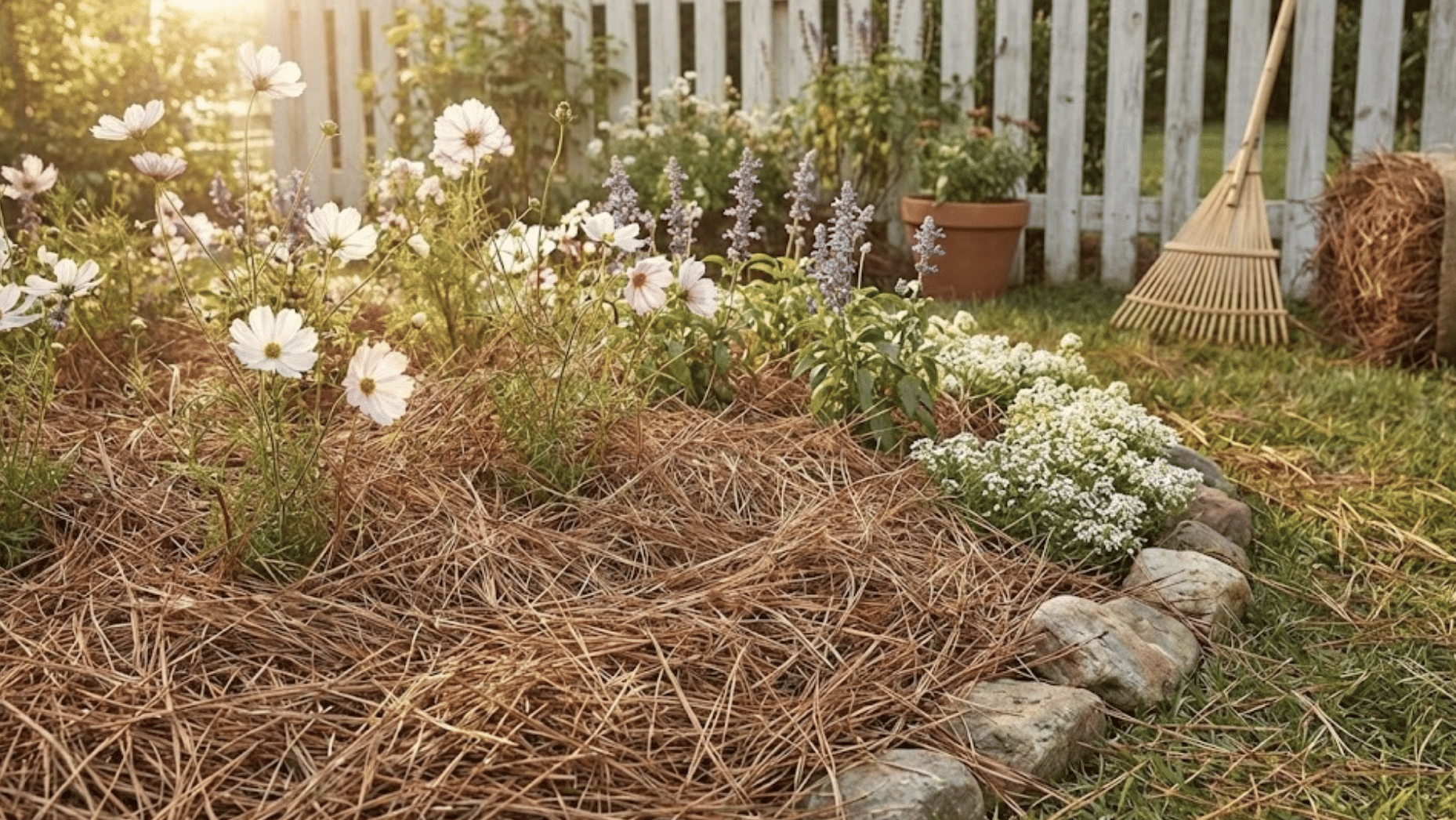
Feather-light and effortlessly spreadable, pine needles create that soft, natural carpet look. They’re fantastic for delicate plants since they won’t compact or smother tender stems.
The airy texture allows excellent water penetration while still suppressing weeds. Pine straw decorates plant bases well and upgrades cottage gardens, but needs more frequent replenishment than chunkier mulches.
4. Compost
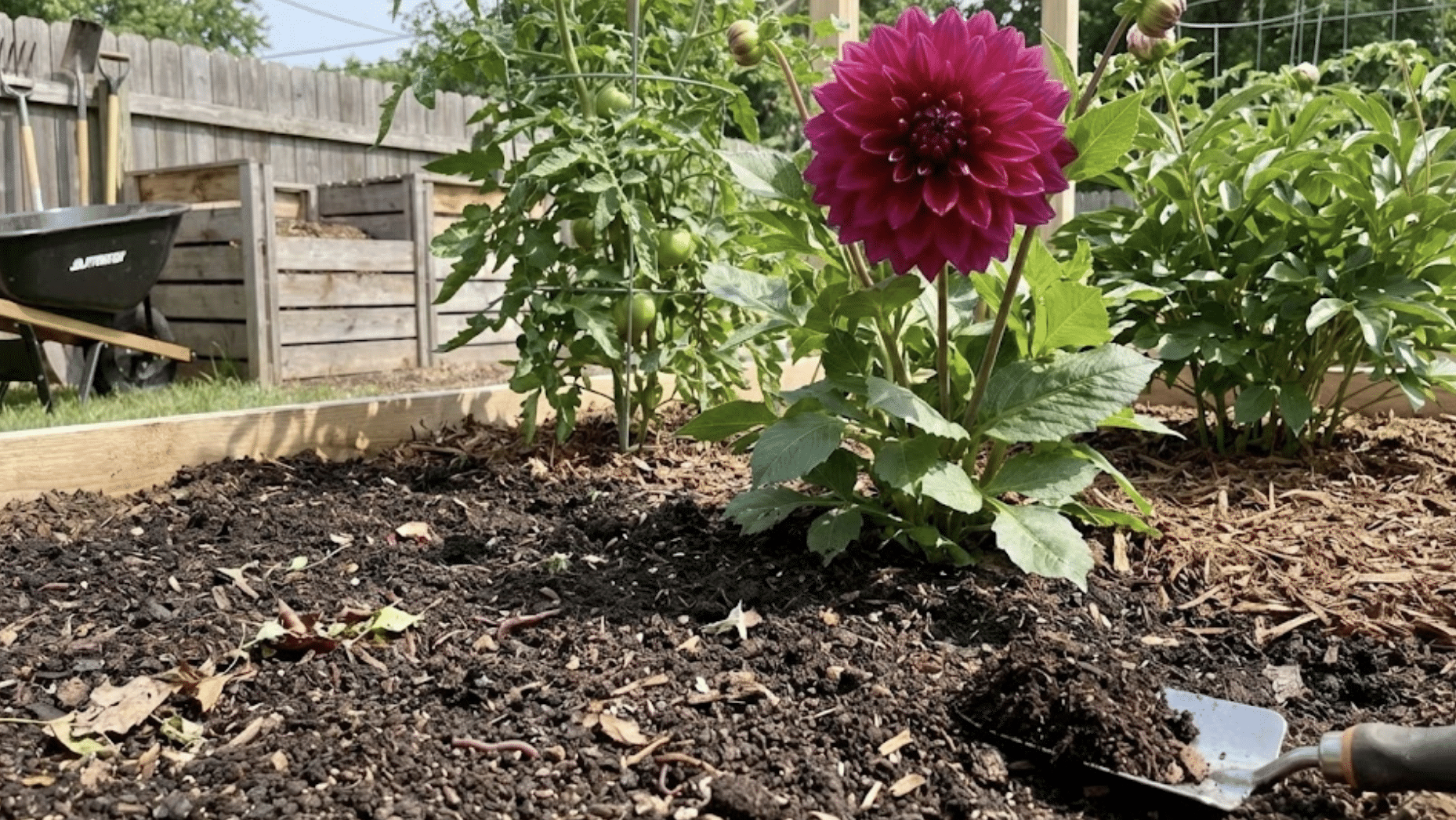
The ultimate soil builder that does double duty as mulch. Spreading a layer of finished compost feeds your flowers while protecting roots and retaining moisture. It’s particularly brilliant for heavy feeders like dahlias and peonies.
The only catch? It breaks down quickly, so you’ll want to top it off throughout the growing season or layer it under a longer-lasting mulch for the best of both worlds.
5. Cocoa Bean Hulls
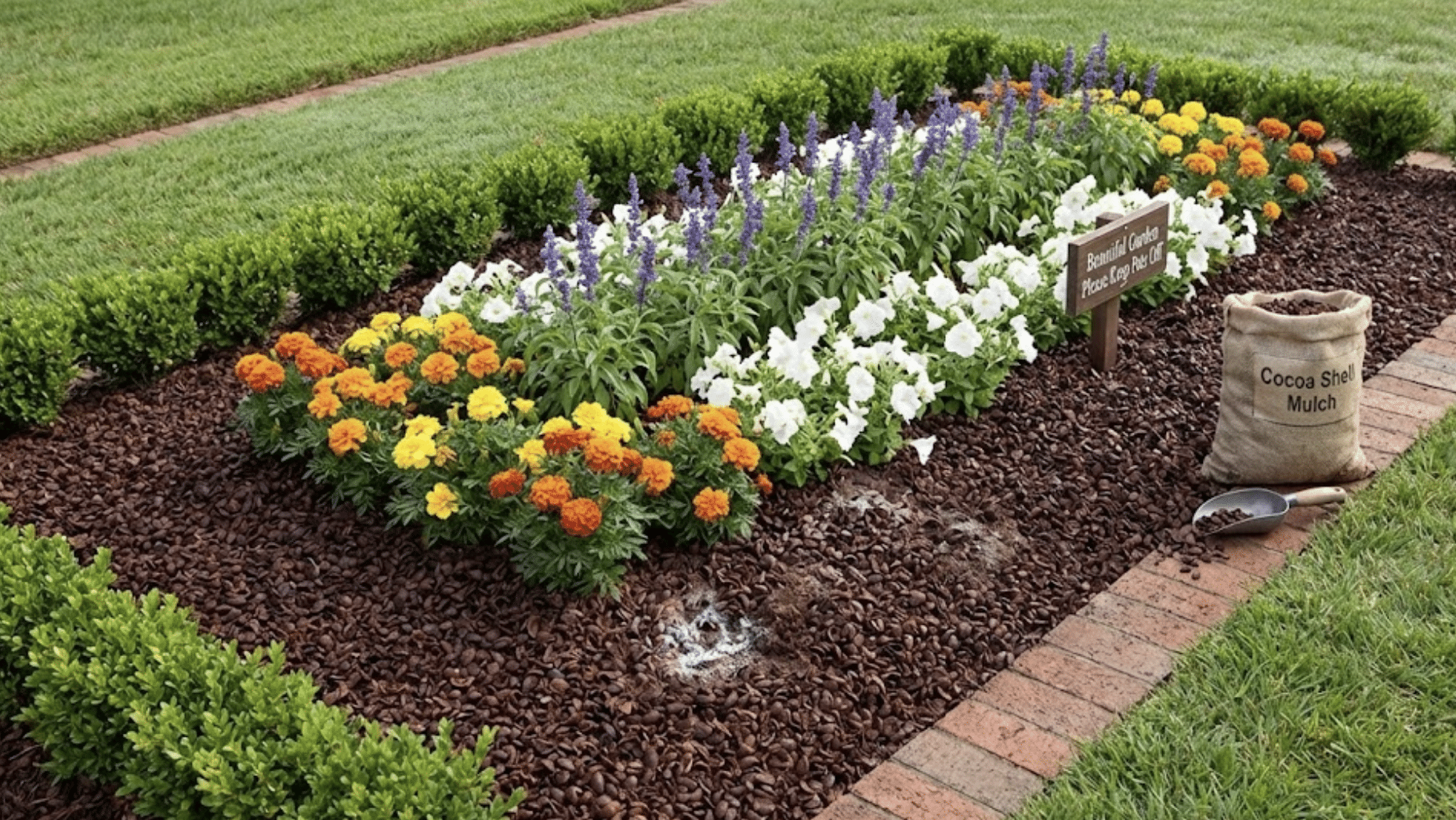
These gorgeous chocolate-scented beauties create a refined, dark finish that makes flower colors pop. They’re lightweight, fine-textured, and absolutely stunning in formal beds.
Important note: they contain compounds toxic to dogs, so skip this option if pets roam your garden. They also tend to mold in very humid climates and can blow away until they settle and mat together.
6. Cedar Mulch
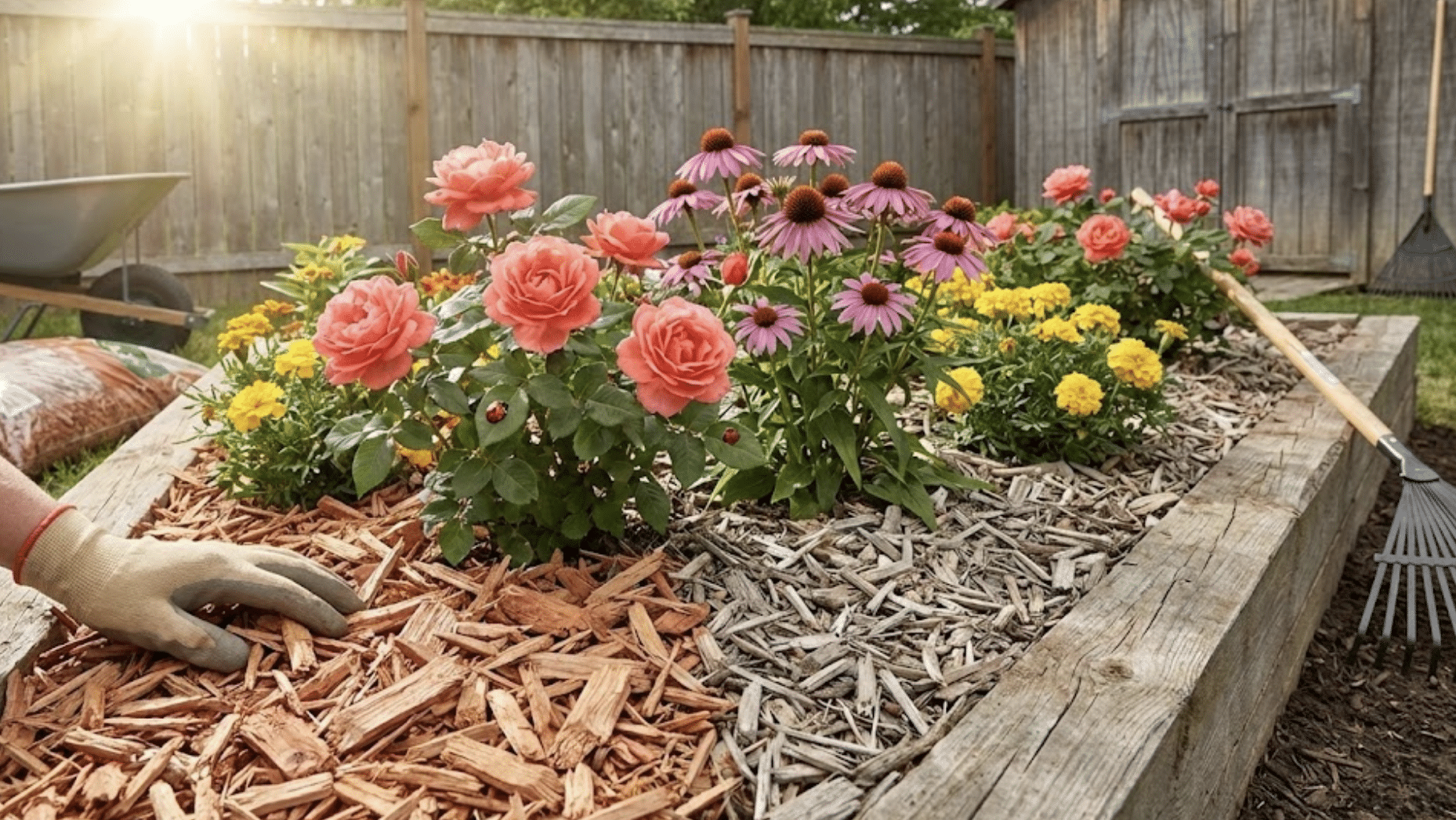
Nature’s pest deterrent wrapped in a gorgeous package. Cedar naturally repels insects like ants, termites, and certain beetles while releasing that fresh, woodsy aroma.
It breaks down slowly, giving you longer coverage between applications. The natural oils that provide pest protection do fade over time, but the mulch itself remains functional and attractive long after the scent mellows.
Best Mulch for Flower Beds Based on Specific Needs
Your garden has its own unique personality and challenges. Match your mulch to what your beds really need, and watch everything fall beautifully into place.
| Your Specific Need | Best Mulch Choice | Why It Works |
|---|---|---|
| Weed control | Shredded hardwood or landscape fabric | Blocks light from weed seeds |
| Moisture retention | Compost or shredded hardwood | Holds water, prevents evaporation |
| Hot climates | Light-colored wood chips or pine straw | Reflects heat, keeps roots cool |
| Cold climates | Shredded leaves or straw | Insulates roots from freezing |
| Perennial flower beds | Pine bark nuggets or shredded hardwood | Lasts multiple seasons |
| Annual flower beds | Compost or fine wood chips | Feeds the soil for replanting |
Mulch Colors and Aesthetics
Color sets the mood for your entire garden. Natural mulches in warm browns and tans create that organic, earthy vibe that lets flowers take center stage.
Dyed mulches in deep blacks, rich reds, or chocolate browns add bold contrast and make blooms pop dramatically. Black mulch looks striking with bright florals, while red tones complement brick homes beautifully.
Most dyed mulches use carbon-based or iron oxide dyes that are perfectly safe for plants and soil. Just avoid anything with chemical additives.
The key is choosing a shade that complements your flowers rather than competing with them.
How Much Mulch to Use in Flower Beds?
Getting the depth just right makes all the difference. Aim for 2 to 3 inches of mulch around established plants and up to 4 inches for weed-prone areas.
Too little won’t suppress weeds or retain moisture effectively. Too much suffocates roots and invites rot.
To calculate how much you need, multiply your bed’s length by width by desired depth in feet, then divide by 27 for cubic yards.
Always keep mulch a few inches away from plant stems and tree trunks to prevent crown rot and pest problems.
How to Apply Mulch Correctly?
Applying mulch the right way protects your plants and maximizes all those benefits.
Follow these simple steps for picture-perfect results.
- Step 1: Clear the bed of weeds, debris, and old mulch that’s completely broken down.
- Step 2: Water the soil thoroughly before mulching to lock in moisture.
- Step 3: Spread mulch evenly to your desired depth using a rake or gloved hands.
- Step 4: Pull mulch back 2-3 inches from all plant stems and tree trunks to prevent rot.
Done right, your mulch becomes a protective layer that keeps working hard all season long.
Mulch Types to Avoid in Flower Beds
Not every mulch deserves a spot in your flower beds. Some options do more harm than good, so steer clear of these troublemakers.
- Fresh Wood Chips: Rob nitrogen from the soil as they decompose, starving your plants.
- Rubber Mulch: Doesn’t break down, can leach chemicals, and overheats soil in summer.
- Excessive Gravel: Creates drainage issues, makes soil amendments impossible, and is painful to remove.
- Thick Landscape Fabric: Suffocates soil, prevents beneficial decomposition, and becomes a tangled mess over time.
- Grass Clippings Alone: Mat down into a slimy, smelly barrier that blocks water and air.
Stick with proven performers and your flower beds will thank you with gorgeous, healthy blooms.
Organic vs. Inorganic Mulch: Which is Better?
The great mulch debate comes down to what matters most for your garden.
Here’s how these two categories stack up against each other.
| Factor | Organic Mulch | Inorganic Mulch |
|---|---|---|
| Soil enrichment | Feeds soil as it breaks down | No nutritional value |
| Longevity | Needs annual refreshing | Lasts indefinitely |
| Moisture retention | Excellent | Variable by material |
| Cost | Budget-friendly | Higher upfront cost |
| Environmental impact | Biodegradable, renewable | Non-biodegradable |
The Verdict? For thriving flower beds with healthy, living soil, organic mulch wins hands down. Inorganic options work best for low-maintenance spaces where soil building isn’t a priority.
Common Mulching Mistakes to Avoid
Even the best mulch can backfire if applied incorrectly. Sidestep these common pitfalls to keep your flower beds flourishing.
- Mulch Volcanoes: Piling mulch against plant stems and tree trunks invites rot, disease, and pest damage.
- Over-Mulching: Layers deeper than 4 inches suffocate roots and prevent water from reaching the soil.
- Ignoring Soil Quality: Mulch isn’t a substitute for healthy soil, so test and amend before covering.
- Replacing Too Frequently: Turning over mulch annually wastes money and disrupts beneficial decomposition.
A little awareness goes a long way. Avoid these mistakes and let your mulch do what it does best.
The Bottom Line
Finding the best mulch for flower beds doesn’t have to feel overwhelming. You’ve got all the knowledge now to choose wisely, apply correctly, and watch your garden thrive like never before.
Start with what your plants truly need, pick a mulch that matches your maintenance style, and enjoy the magic that happens when soil stays happy and healthy.
Your flower beds are about to look absolutely stunning with far less work from you.
Have questions or your own mulch success stories? Drop a comment below and let’s chat about what’s working in your garden.