Growing herbs together isn’t just about saving space on your windowsill. When you pair the right herbs in one pot, they actually help each other flourish.
Some herbs love the same amount of sunshine and water, while others prefer their own space and different care routines. Getting these combinations right means healthier plants, fuller harvests, and less work for you.
You’ll learn the best herb pairings for containers, plus simple care tips to keep your mini garden thriving.
Understanding what herbs can be planted together makes all the difference in creating a little green corner that actually lasts.
Think of it as matchmaking for your kitchen garden, where the right companions bring out the best in each other.
Key Rules for Planting Herbs Together
Not all herbs play well together, and knowing a few basics saves you from watching half your pot wilt while the other half thrives.
Here’s what to keep in mind:
- Match Their Thirst Levels: Pair herbs that need similar watering schedules so you’re not drowning some while others go parched.
- Group by Sunlight Preferences: Full-sun lovers and shade-tolerant herbs won’t be happy sharing the same spot.
- Consider Growth Habits: Fast-spreading herbs can crowd out slower growers, so balance their personalities.
- Keep Mediterranean and Moisture-Loving Types Apart: Rosemary and basil have opposite needs, and forcing them together rarely ends well.
Get these foundations right, and your herb combinations will practically take care of themselves.
Herb Group 1: Basil, Parsley & Cilantro
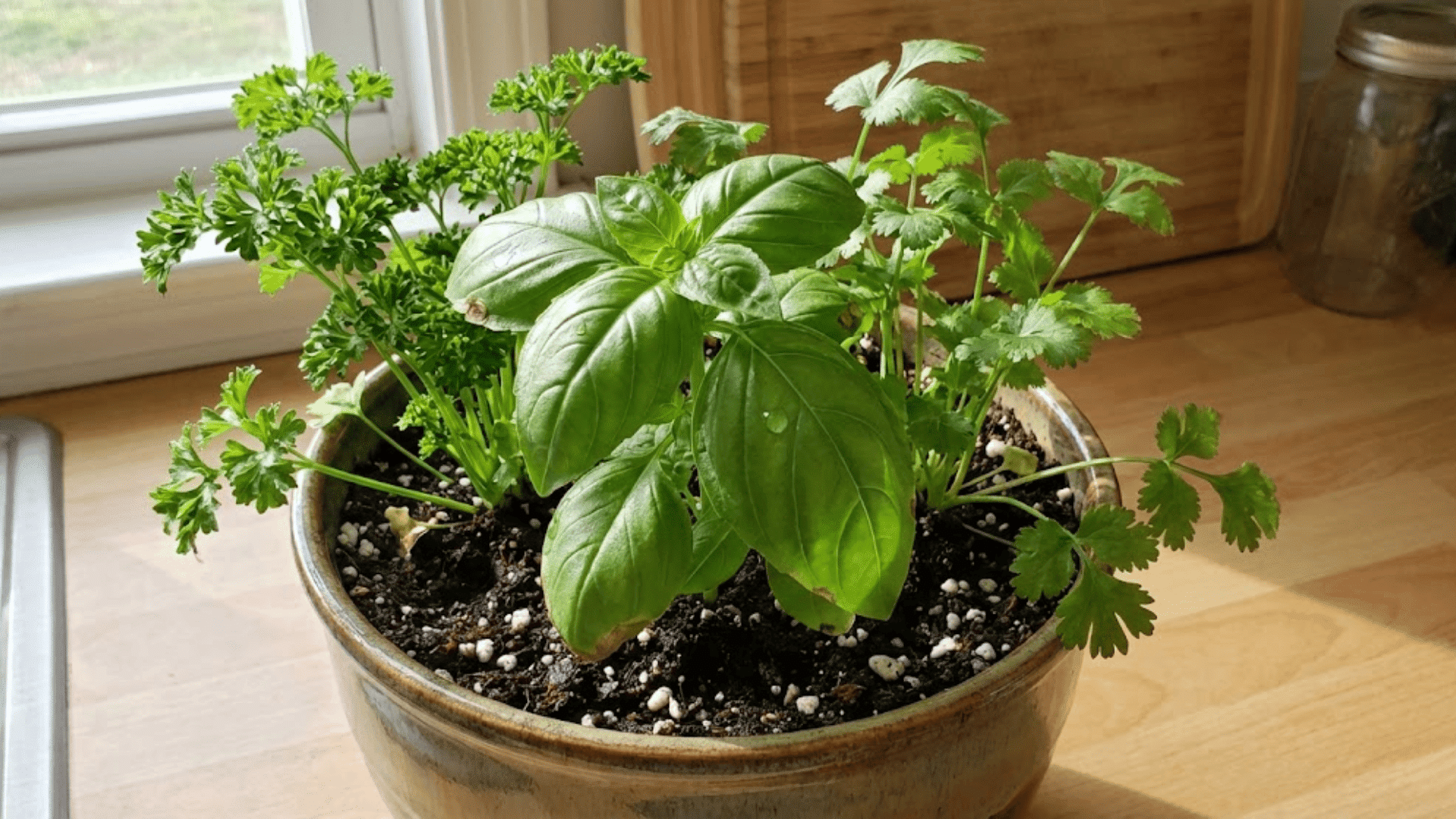
Style: Fresh and leafy
Best For: Frequent cooking and fresh garnishes
Garden Size: Medium to large pots (12-14 inches)
Spacing & Arrangement: Plant basil in the center with parsley and cilantro around the edges
These three love consistent moisture and bright light, making them natural roommates. They all prefer rich, well-draining soil and appreciate regular watering without sitting in soggy conditions.
Harvest often to encourage bushier growth, and keep them in a spot that gets at least six hours of sunlight daily. Perfect for a sunny kitchen windowsill or outdoor patio where you can snip fresh herbs for every meal.
Herb Group 2: Rosemary, Thyme & Sage
Style: Mediterranean and woody
Best For: Low-maintenance gardeners who forget to water
Garden Size: Large pots (14-16 inches) with excellent drainage
Spacing & Arrangement: Give rosemary the back or center, with thyme and sage flanking the sides
Classic Mediterranean herbs that thrive on neglect rather than attention. They prefer dry conditions between waterings and will quickly rot if their roots stay wet.
Sandy, well-draining soil works best, and terracotta pots help wick away excess moisture. These woody herbs love full sun and actually perform better when you let the soil dry out completely between drinks.
Herb Group 3: Mint & Lemon Balm
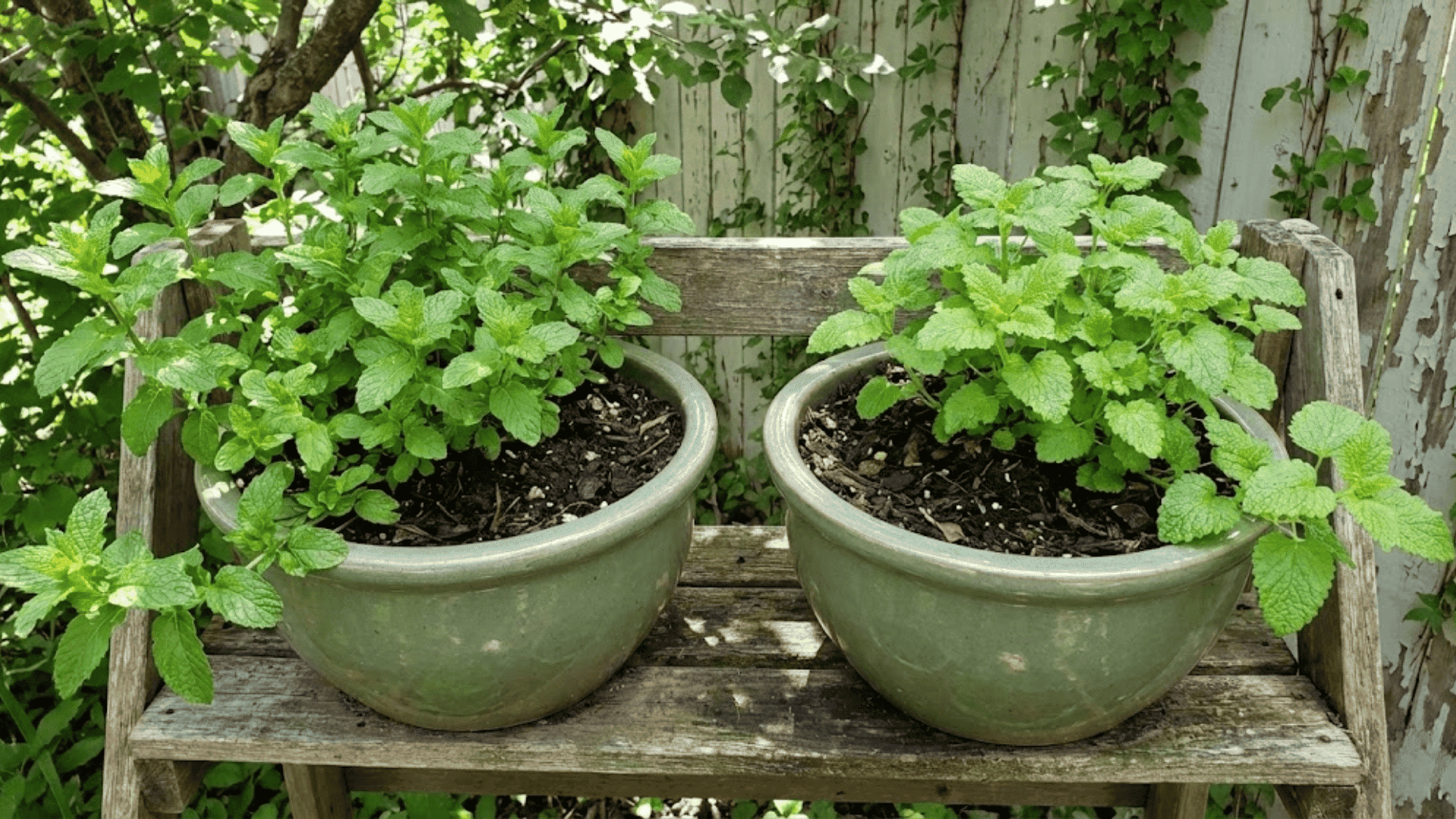
Style: Vigorous and spreading
Best For: Tea lovers who want abundant harvests
Garden Size: Separate medium pots (10-12 inches each) or one large divided container
Spacing & Arrangement: Keep them isolated from other herbs entirely
These two grow like they’re in a race, sending runners everywhere and taking over any available soil. While they pair beautifully together in flavor and care needs, their aggressive nature means they’ll bully other herbs out of the pot.
Plant them alone or use root barriers. They tolerate partial shade and love consistent moisture, making them surprisingly easy to grow as long as you contain their enthusiasm.
Herb Group 4: Chives, Parsley & Dill
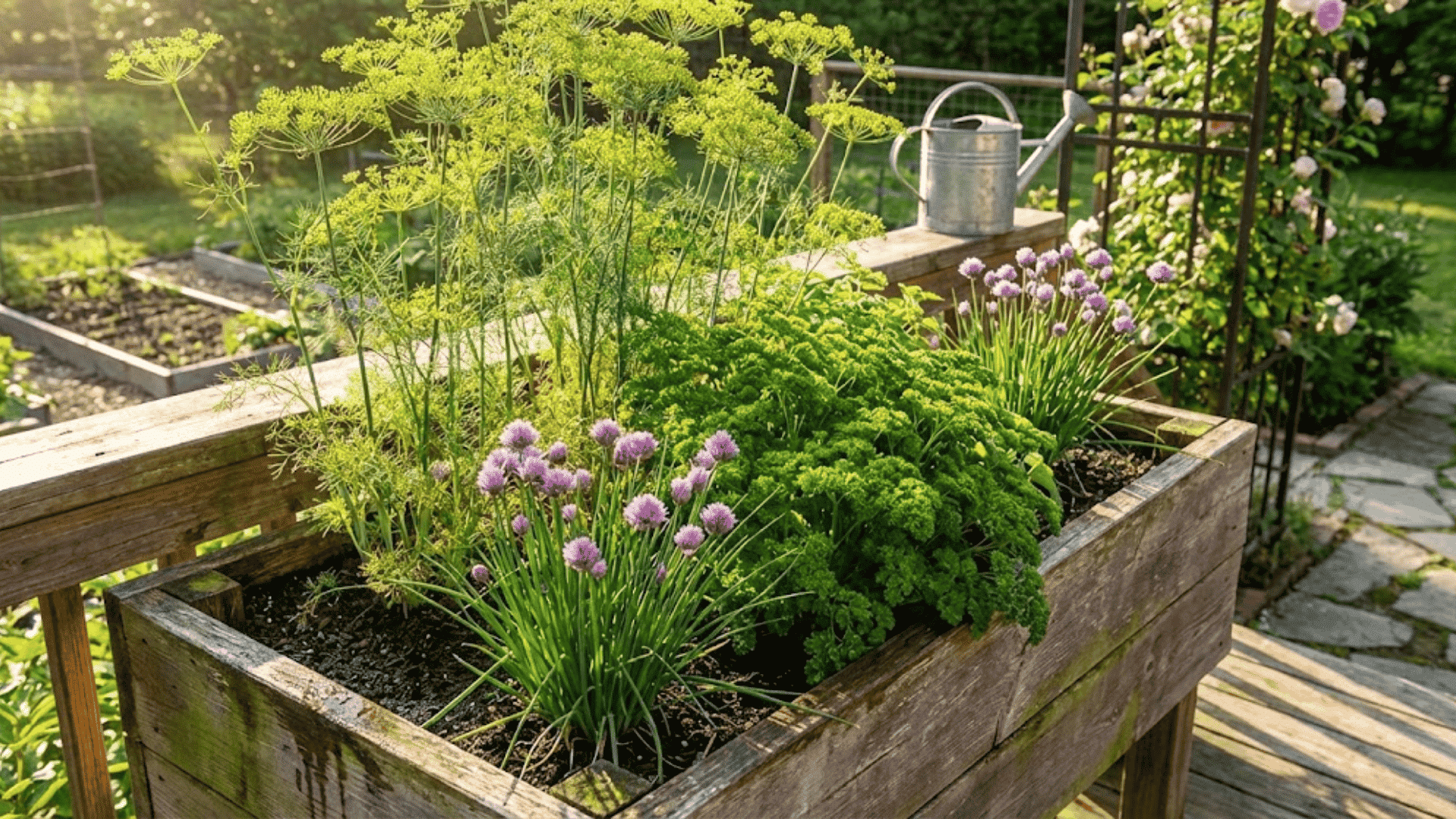
Style: Upright and airy
Best For: Outdoor gardens with room for tall growth
Garden Size: Large, deep pots (14-16 inches) or raised beds
Spacing & Arrangement: Dill in the back, parsley mid-level, chives in front
Dill shoots up tall and ferny, so it needs the back position to avoid shading its companions. All three appreciate steady moisture and rich soil but can handle partial sun.
Chives add structure with grass-like leaves, while parsley fills the middle ground. Best for outdoor spaces where dill can grow upward without overwhelming the container or blocking light for lower herbs.
Herb Group 5: Oregano, Thyme & Marjoram
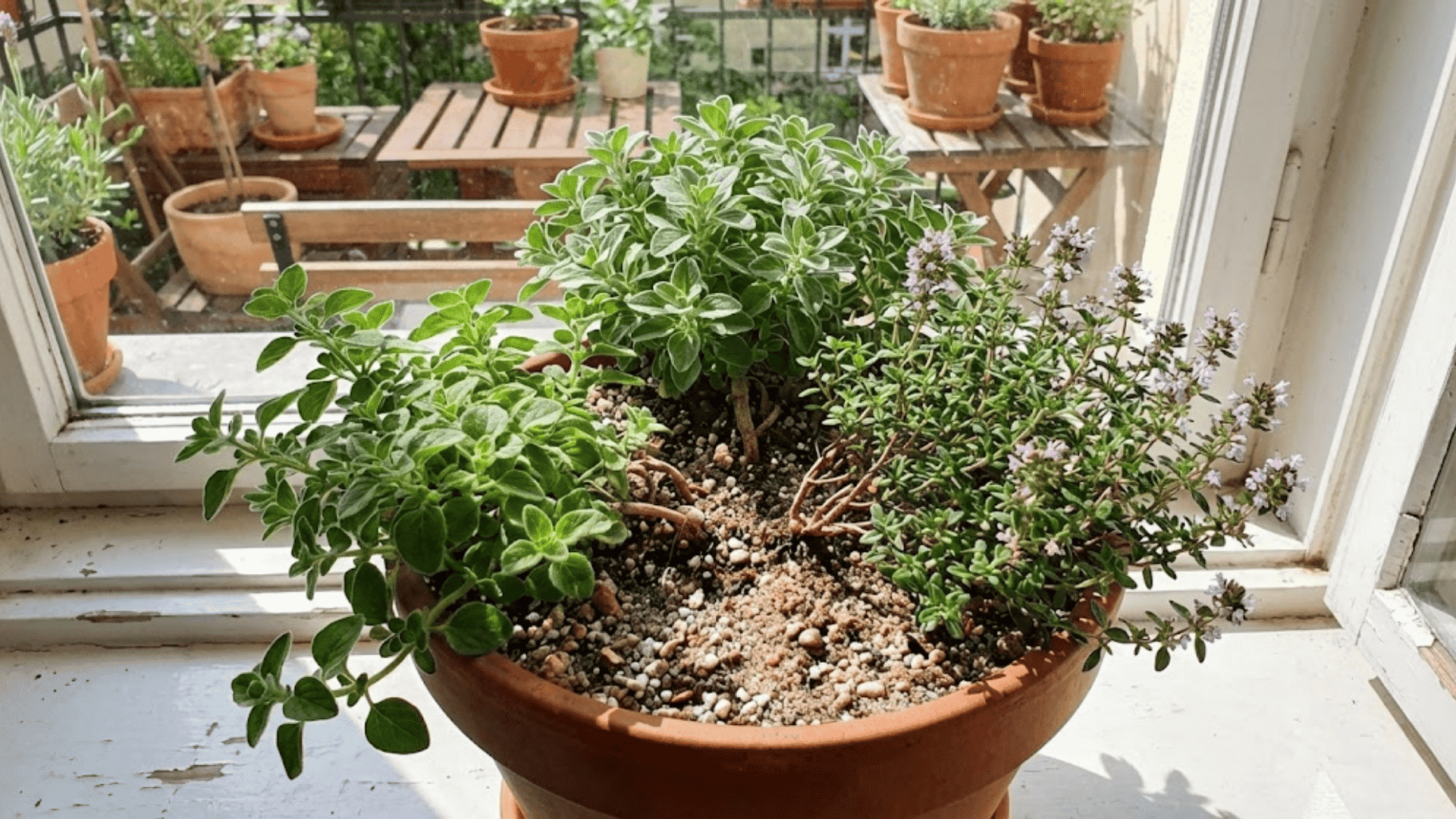
Style: Low-growing and aromatic
Best For: Sunny windowsills and balcony herb gardens
Garden Size: Medium pots (10-12 inches) with drainage holes
Spacing & Arrangement: Plant in a triangle pattern with equal spacing
These cousins share nearly identical growing preferences and won’t compete for resources. They all prefer drier soil conditions, plenty of sunlight, and good air circulation.
Their compact, trailing growth habits suit small spaces and won’t outgrow their pots quickly. Add some grit or perlite to the soil for better drainage, and place them where they’ll soak up at least 6 hours of direct sun.
Herb Group 6: Basil & Chives
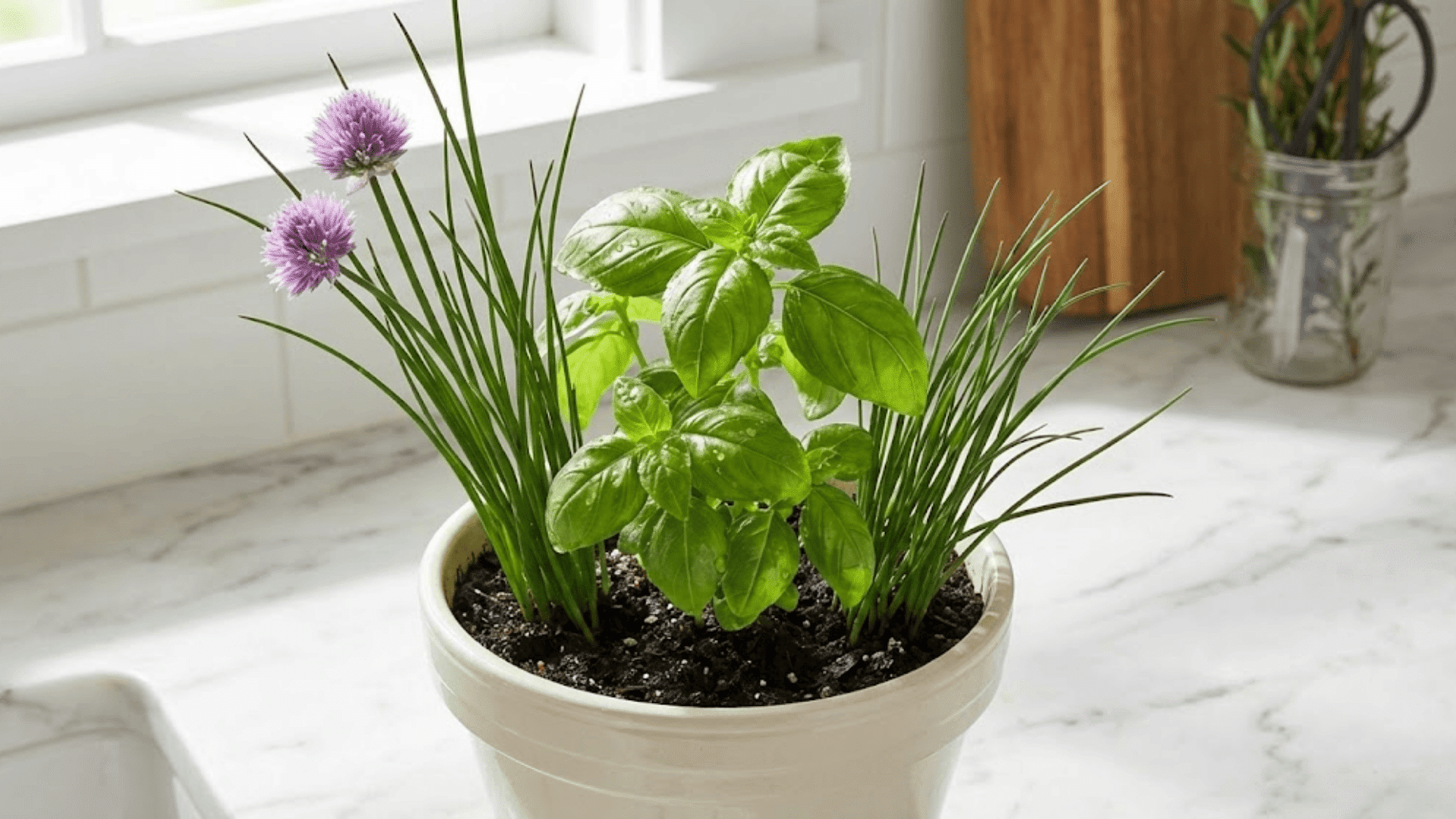
Style: Simple and productive
Best For: Small kitchens and beginner herb gardeners
Garden Size: Small to medium pots (8-10 inches)
Spacing & Arrangement: Basil in the center, chives around the perimeter
A foolproof pairing for beginners with container herbs, both need regular watering and full sun, and their growth patterns complement each other. Chives grow upright and slender, while basil bushes out, each giving plants space.
They’re both culinary workhorses that taste great together in dishes, and harvesting one doesn’t disturb the other. Easy maintenance and big flavor payoff in a compact package.
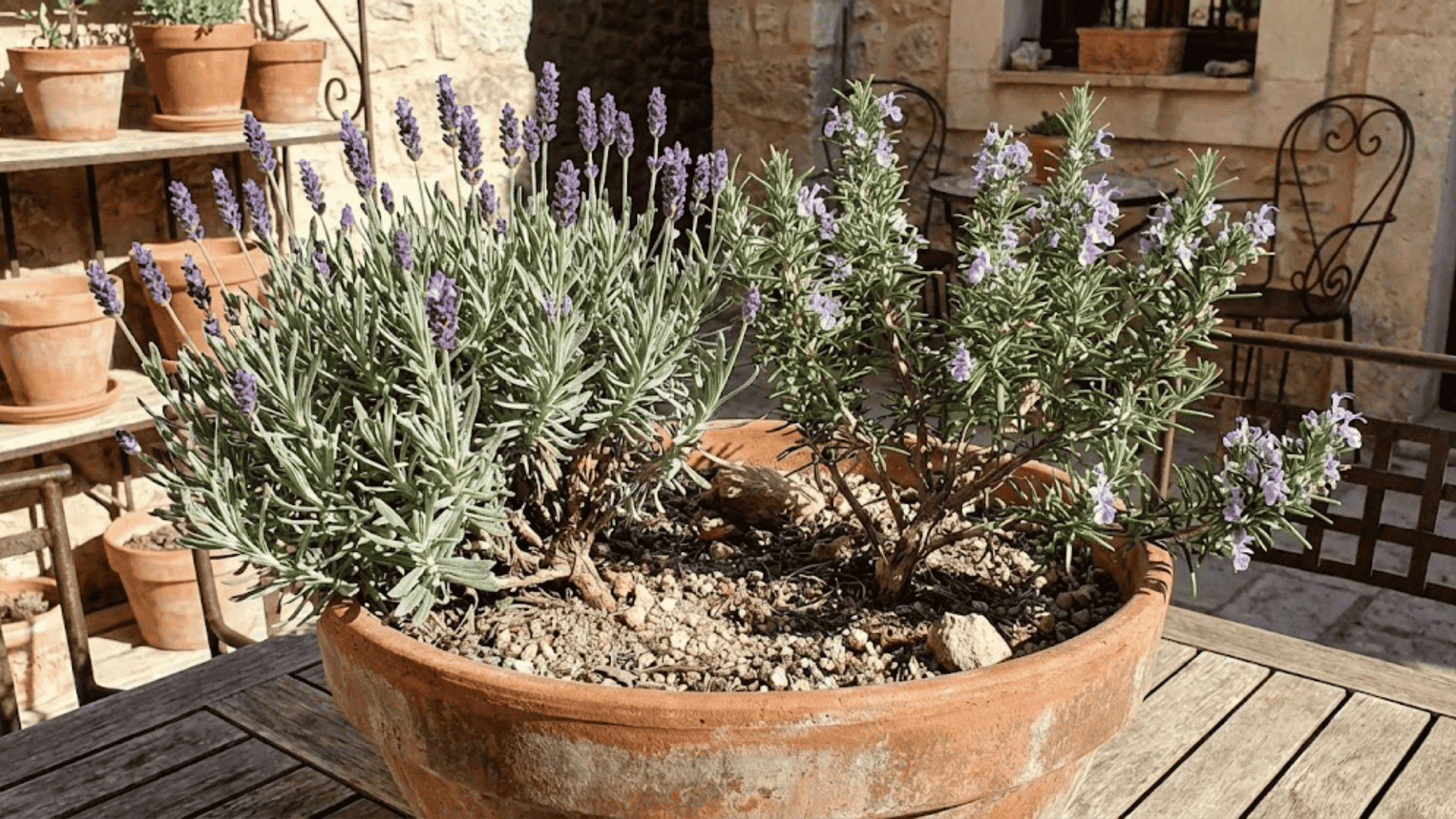
Herb Group 7: Lavender & Rosemary
Style: Fragrant and ornamental
Best For: Sunny patios and decorative container gardens
Garden Size: Large pots (14-18 inches) with excellent airflow
Spacing & Arrangement: Plant side by side with space between for air circulation
Both herbs hail from Mediterranean hillsides and despise wet feet. They need gritty, well-draining soil and pots with multiple drainage holes. Terracotta or unglazed ceramic is ideal as it breathes and prevents moisture buildup.
Place them in the sunniest spot you have, and water only when the soil is completely dry. Their woody stems and aromatic foliage create a beautiful, low-maintenance display that smells incredible.
Herb Group 8: Cilantro & Dill
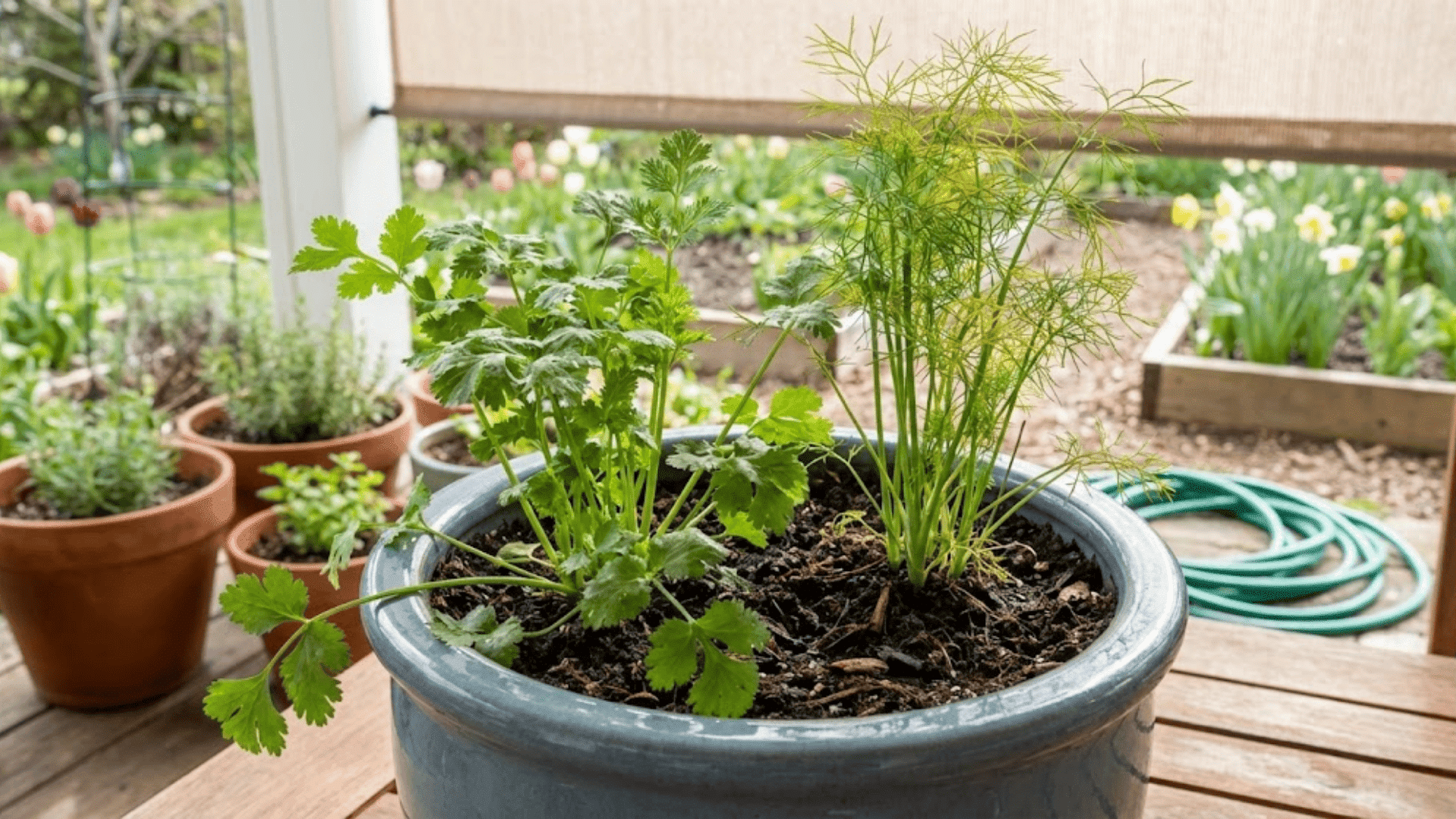
Style: Cool-season and feathery
Best For: Spring and fall planting in cooler climates
Garden Size: Medium to large pots (12-14 inches)
Spacing & Arrangement: Side by side with dill slightly toward the back
Plant herbs in early spring or late summer for better harvests, as they bolt quickly in hot weather. They share similar moisture needs and enjoy afternoon shade in warmer areas.
Keep the soil consistently moist and harvest frequently to delay flowering. Once they start to bolt, let them go to seed for a second harvest of coriander and dill seeds.
Herb Group 9: Parsley & Chives
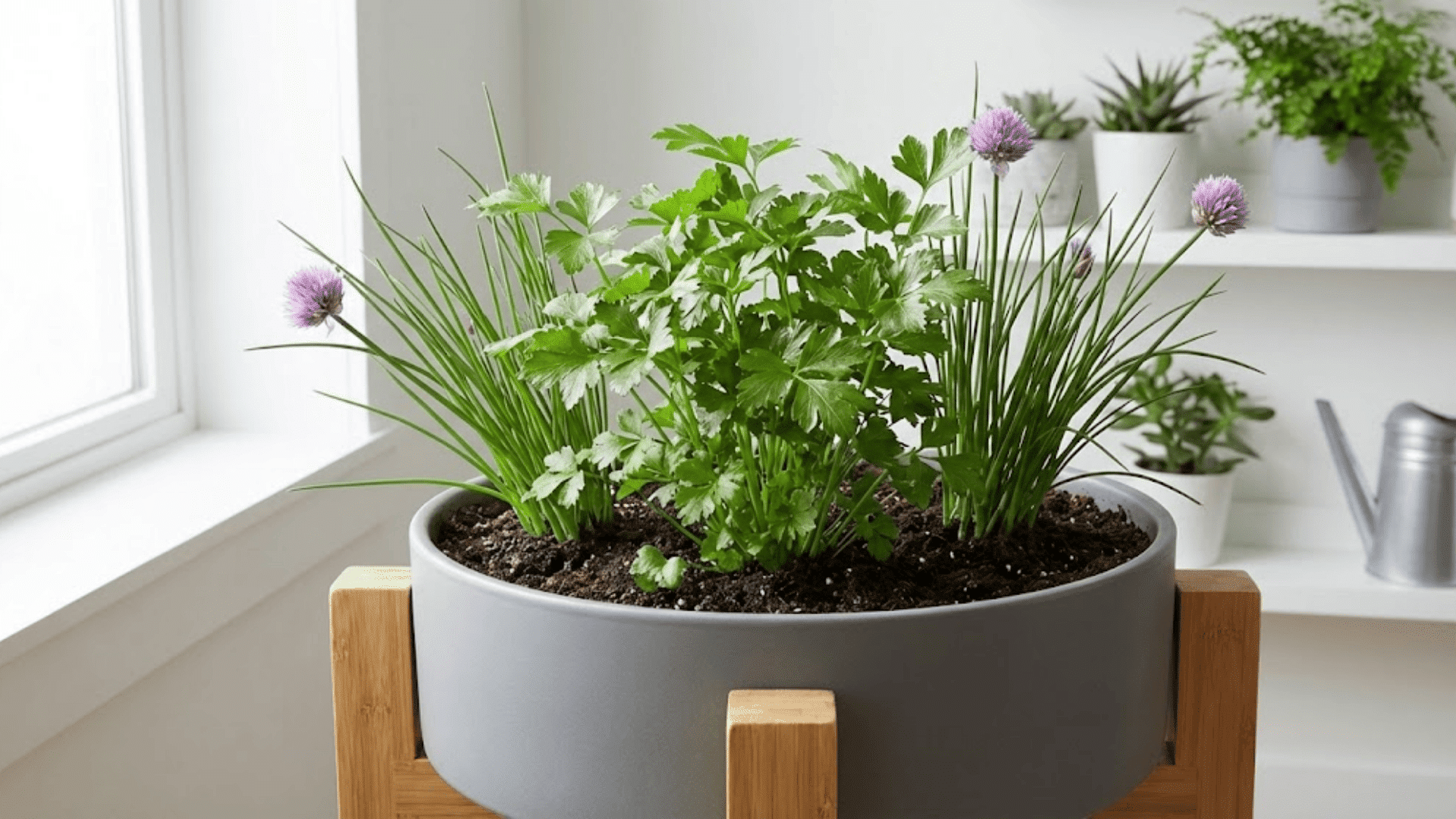
Style: Reliable and unfussy
Best For: First-time herb gardeners and indoor growers
Garden Size: Small to medium pots (8-12 inches)
Spacing & Arrangement: Plant together in the center or divide the pot in half
The easiest pairing with no drama, both have similar root systems that won’t tangle and share the same watering schedule. They tolerate partial shade better than most herbs, ideal for indoor lighting.
Chives grow vertically while parsley grows outward, so they naturally share space without crowding. Harvest regularly to keep both plants compact and productive throughout the season.
Herb Group 10: Sage & Thyme
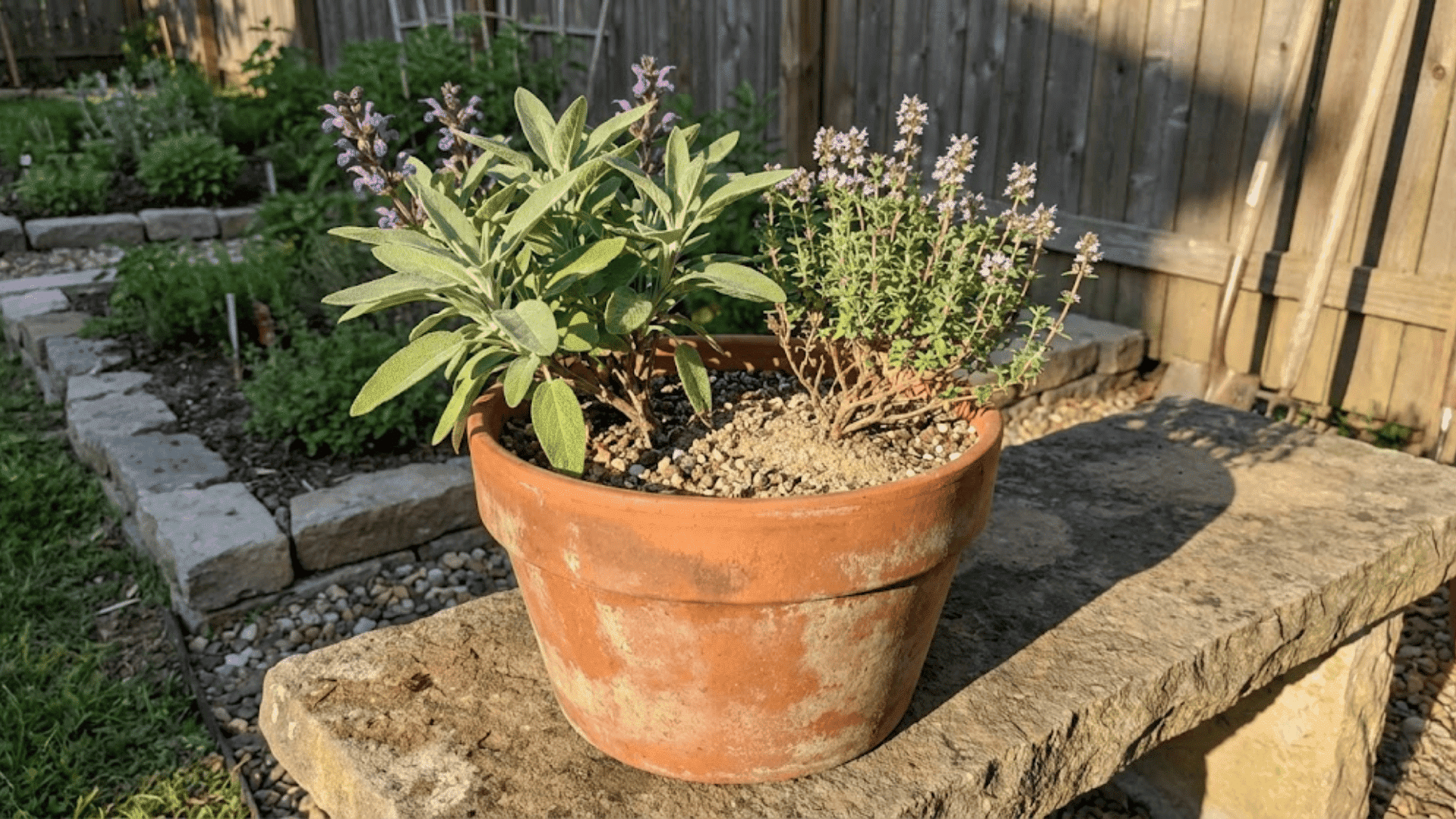
Style: Compact and woody
Best For: Long-term container gardens and perennial setups
Garden Size: Medium pots (10-12 inches) with good depth
Spacing & Arrangement: Plant on opposite sides with room to spread
Both herbs develop woody stems and can live for years in the same container with proper care. They follow the same drought-tolerant watering schedule and prefer lean soil without heavy fertilization.
Their compact growth habits mean they won’t outgrow a medium pot quickly, and both can tolerate light pruning to maintain shape. Great for gardeners wanting a low-maintenance, perennial herb set that returns yearly.
Herb Group 11: Basil, Oregano & Parsley
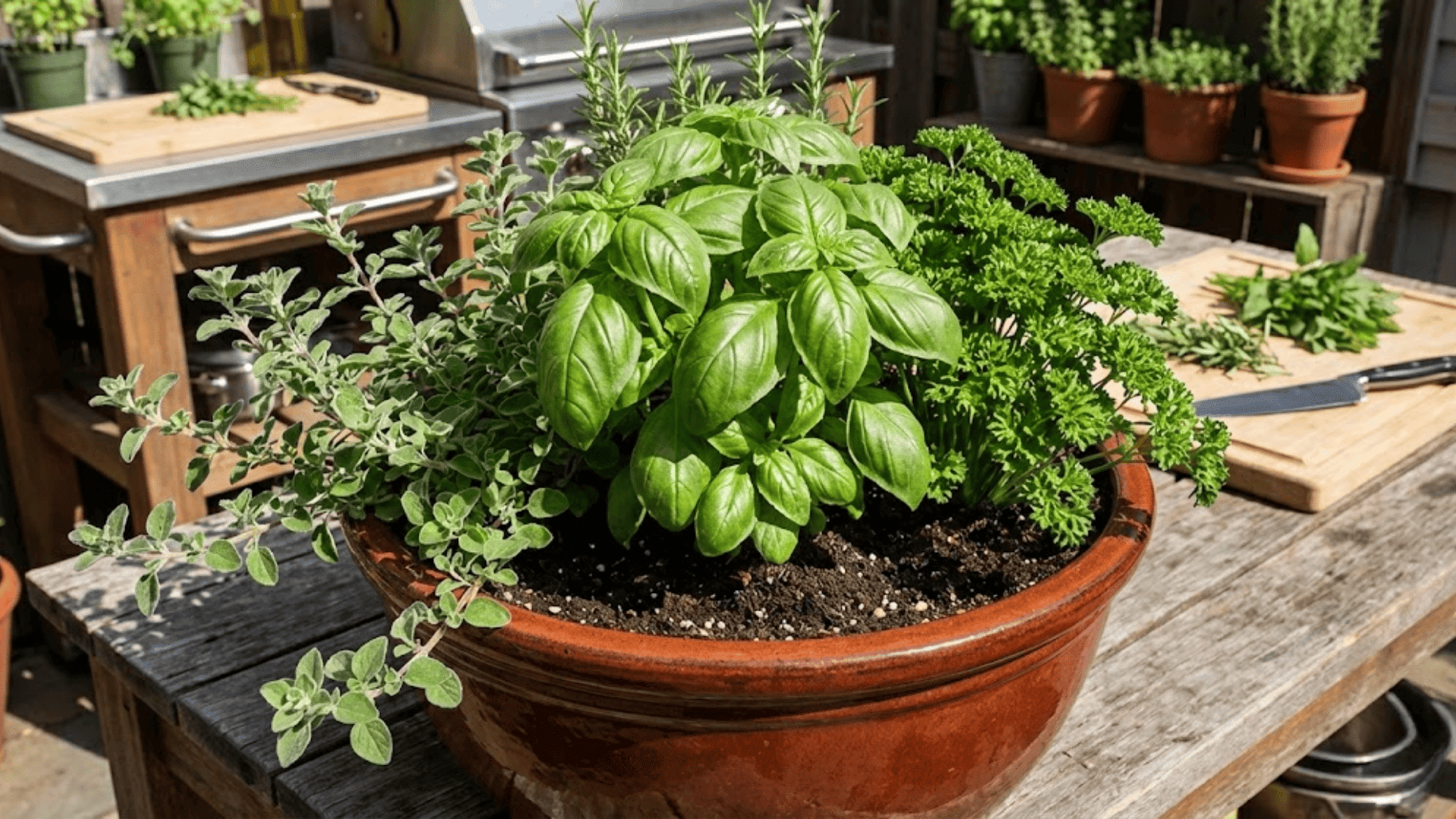
Style: Kitchen essentials trio
Best For: Cooks who want Italian and Mediterranean flavors on hand
Garden Size: Large pots (14-16 inches) with depth
Spacing & Arrangement: Basil in the center, oregano and parsley on either side
This combination requires a bit more attention since basil grows faster and needs more water than oregano. The trick is finding a middle ground with watering frequency and making sure oregano gets excellent drainage.
Place basil where you can easily pinch it back to prevent it from overshadowing the others. All three prefer full sun and regular harvesting to stay bushy and prevent legginess. Large pots give herbs room to flourish without competition.
Herbs That Should NOT Be Planted Together
Knowing which herbs to keep apart is as important as knowing which thrive together. Some combos cause one plant to dominate, while others have mismatched care needs, leading to constant compromises.
Here are the herb pairings to avoid:
| Herb | Keep Away From | Reason |
|---|---|---|
| Mint | Basil, cilantro, parsley, chives | Aggressive roots overtake the pot |
| Fennel | All herbs | Releases growth-inhibiting compounds |
| Rosemary | Basil, cilantro, parsley | Needs dry soil vs. constant moisture |
| Lavender | Cilantro, parsley, chives | Drought-lover vs. moisture-seekers |
| Dill | Basil, cilantro | Stunts their growth |
| Sage | Basil, moisture-loving herbs | Dry soil vs. rich, moist conditions |
The biggest mistake is mixing watering schedules. If you’re constantly deciding between overwatering one herb or underwatering another, split them into separate pots.
Best Container & Potting Tips for Mixed Herb Plantings
The right container setup makes or breaks your herb garden before you even add the plants.
Getting these basics right means healthier roots, better drainage, and herbs that actually grow instead of struggling:
- Choose Pots at Least 10-12 Inches Deep and Wide: Shallow containers dry out too fast and cramp root systems, especially for multiple herbs sharing space.
- Drainage Holes are Non-Negotiable: Without them, water pools at the bottom and causes root rot, no matter how carefully you water.
- Use a Light, Well-Draining Potting Mix with Perlite or Sand: Garden soil is too dense for containers and suffocates roots, while airy mixes let water flow through properly.
- Leave 4-6 Inches Between Plants for Airflow: Crowding invites fungal issues and makes it harder for each herb to develop its own root zone.
Get the foundation right, and your herbs will reward you with steady growth and fewer problems down the line.
Wrapping Up
Planting herbs together doesn’t have to feel complicated once you understand their personalities.
Group the water-lovers with water-lovers, keep the Mediterranean crew together, and give aggressive growers their own space.
Knowing what herbs can be planted together turns your container garden from a guessing game into a thriving little ecosystem that practically takes care of itself.
Start with one or two combinations that match your cooking style, and watch how much easier fresh herbs become.
Have a favorite pairing that works beautifully for you? Drop it in the comments below and share what’s flourishing in your pots.