Your apartment layout isn’t just lines on a floor plan. It’s the blueprint for how you’ll actually live.
The way your space flows can make mornings feel effortless or chaotic, turn hosting into a joy or a squeeze, and even impact what buyers see when you’re ready to move on.
If you’re hunting for the perfect rental, reimagining your current home, or designing from scratch, understanding layouts changes everything.
We’ll walk through the most popular apartment configurations, unpacking what works beautifully and where each style stumbles.
You’ll find practical design tips that help any layout shine, plus insights into how different floor plans match different lifestyles and needs.
What to Consider Before Choosing an Apartment Layout?
Before falling for a floor plan, think about what your daily life actually demands.
Consider these key factors:
- Square footage and proportions matter more than total size. A well-proportioned 700-square-foot space often feels better than an awkward 900.
- Your lifestyle needs come first. Remote workers need dedicated office zones, entertainers want open flow, and collectors require serious storage.
- Natural light transforms everything. Note where windows sit and how sunlight moves through rooms.
- Balance privacy with openness. Some moments need separation, others thrive on connection.
- Load-bearing walls in apartments limit renovation options, so understand what’s movable before committing to changes.
Getting clear on these priorities helps you recognize which layouts will actually support how you live, not just how you wish you lived.
Most Common Apartment Layout Types
Apartment layouts fall into distinct categories, each designed around how many people live there and what they need from their space.
1. Studio Apartment Layout
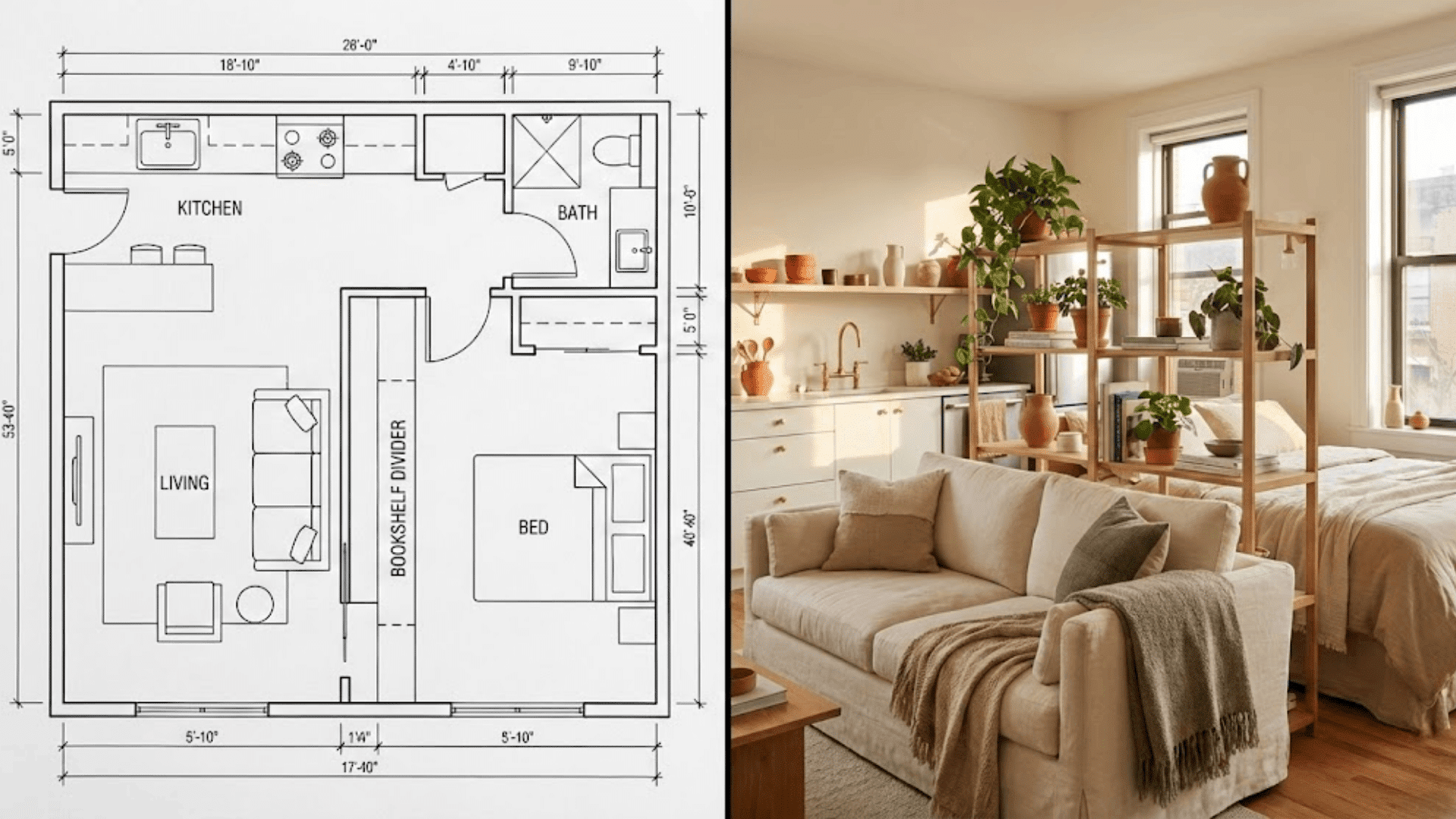
Studios combine sleeping, living, and cooking into one continuous room, typically ranging from 300 to 600 square feet. They work beautifully for minimalists, young professionals, and anyone who values location over space.
The main challenge lies in creating visual separation between zones without actual walls.
Smart furniture placement, area rugs, and room dividers become essential tools for carving out distinct areas while maintaining that airy, open feeling studios are known for.
2. One-Bedroom Apartment Layout
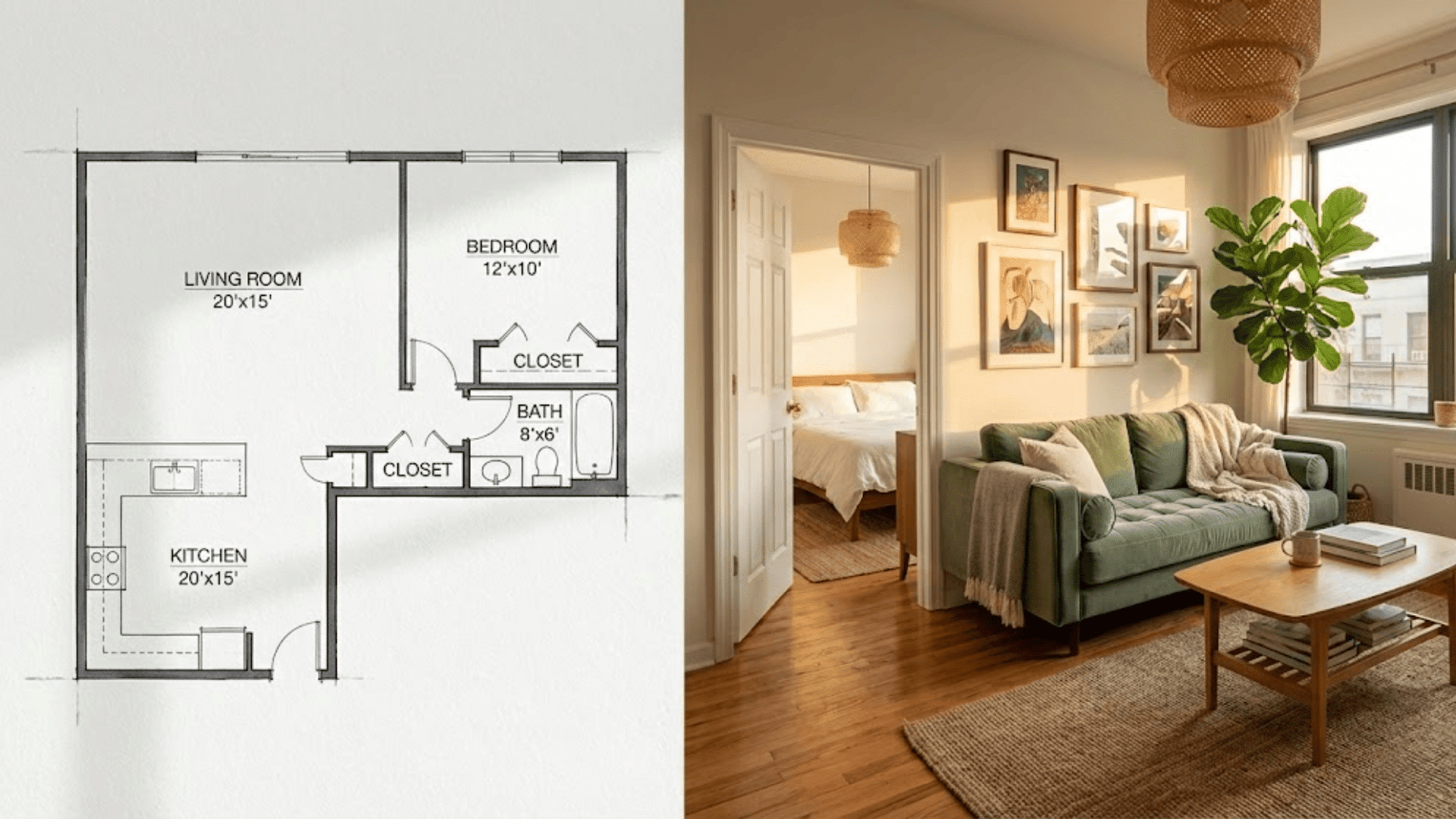
One-bedrooms introduce the luxury of separation, with a dedicated bedroom closed off from the main living space.
Ranging from 600 to 900 square feet, they suit singles craving privacy and couples who want breathing room. The separate bedroom means you can keep work, entertaining, and sleep truly distinct.
Layout variations include galley kitchens versus open kitchens, and bedroom placement at either end of the unit or tucked to one side for maximum living area.
3. Two-Bedroom Apartment Layout
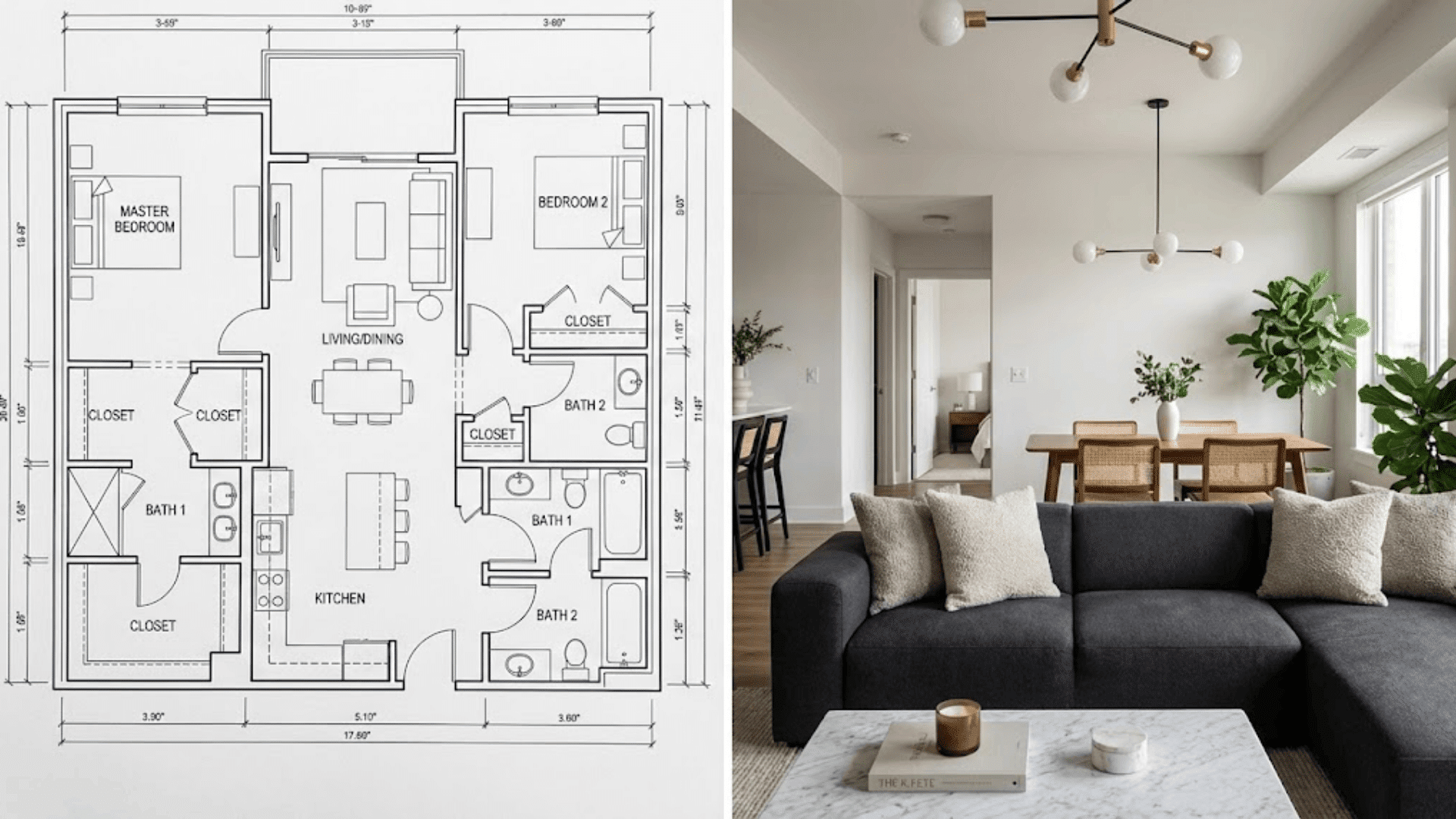
Two-bedrooms offer flexibility through that second room, whether it becomes a guest room, office, nursery, or roommate space.
Spanning 900 to 1,200 square feet, these layouts come in two main configurations: split bedrooms positioned on opposite sides for maximum privacy, or side-by-side bedrooms sharing a hallway.
Split layouts work better for roommates or families wanting separation, while side-by-side designs create a dedicated sleeping wing that keeps the living area quieter and more spacious.
4. Three-Bedroom Apartment Layout
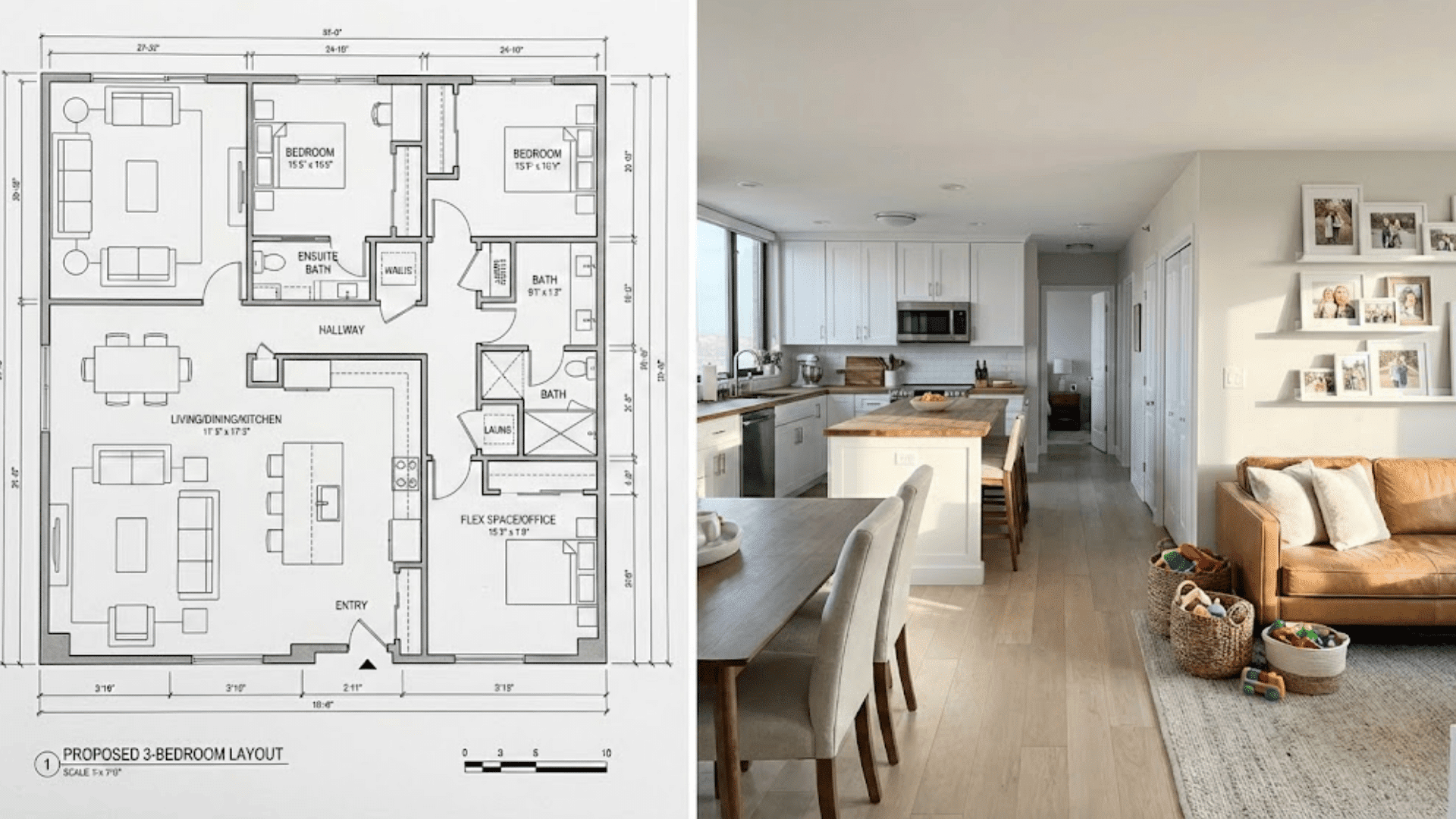
Three-bedrooms transition into family territory, typically offering 1,200 to 1,600 square feet with space for kids, home offices, and hobbies.
These layouts often include a primary bedroom with an ensuite bathroom, two additional bedrooms sharing a hall bath, and occasionally a flex space that adapts as life changes.
The extra room becomes whatever you need: a playroom today, a home gym tomorrow, or guest quarters when family visits. Look for layouts where bedrooms cluster together to keep noise contained.
Popular Apartment Layout Floor Plans
Beyond bedroom count, the actual shape and flow of your apartment dramatically affect how it functions.
These popular floor plan styles each bring distinct advantages and trade-offs worth understanding before you commit.
5. Open-Concept Apartment Layout
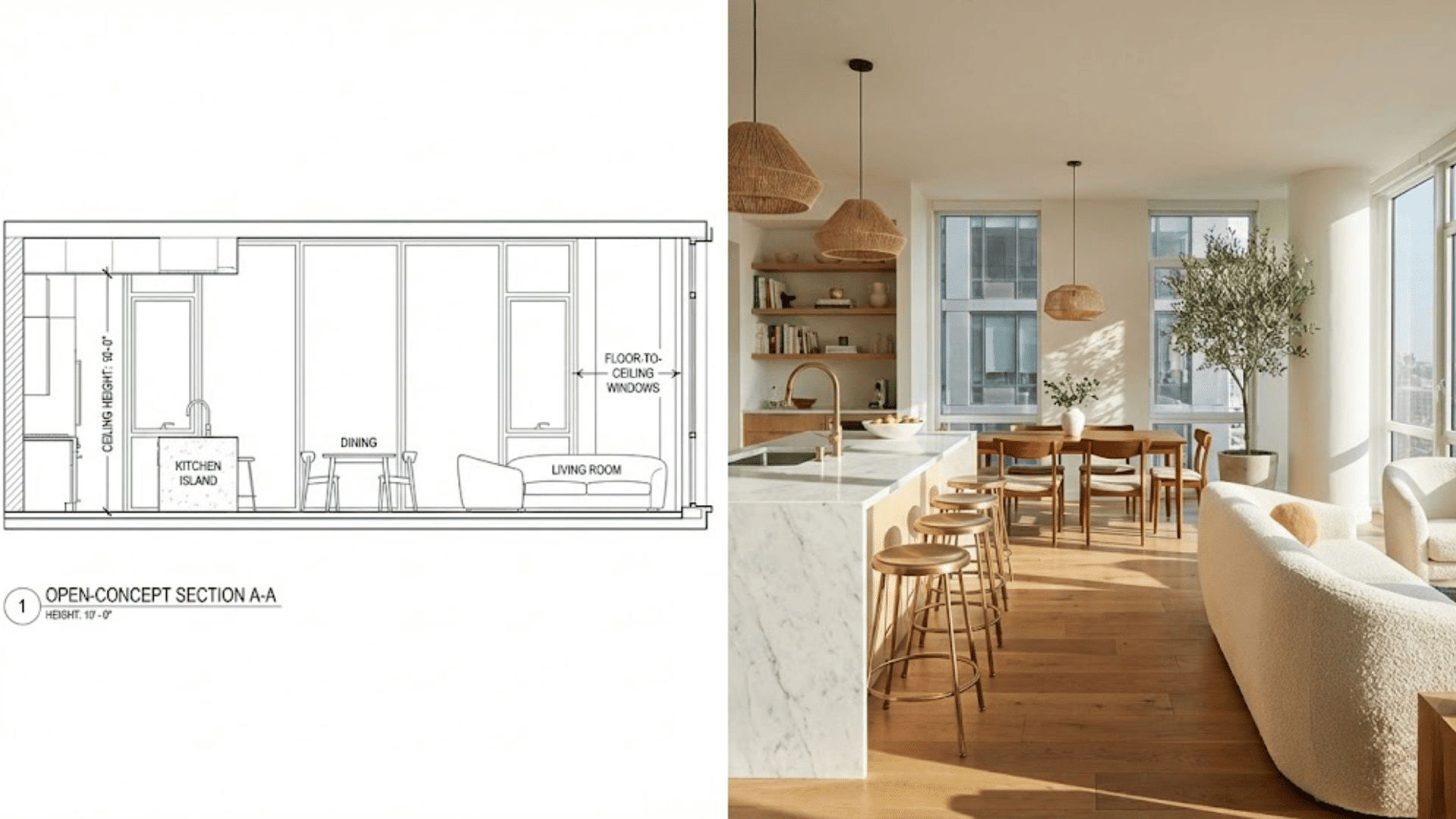
Open-concept layouts eliminate walls between kitchen, dining, and living areas, creating one flowing space. Popular in modern builds, this design maximizes visual square footage and keeps everyone connected during daily life.
Light travels freely, sightlines extend, and the space feels generous even in smaller footprints. Perfect for entertaining and casual living, though kitchen chaos stays permanently on display.
- Pros: Feels significantly more spacious, natural light reaches every corner, ideal for entertaining and supervising kids, and flexible furniture arrangement.
- Cons:Kitchen messes are always visible, cooking smells and noise travel everywhere, limited wall space for storage or art, and no sound barriers between activities.
6. Railroad Apartment Layout
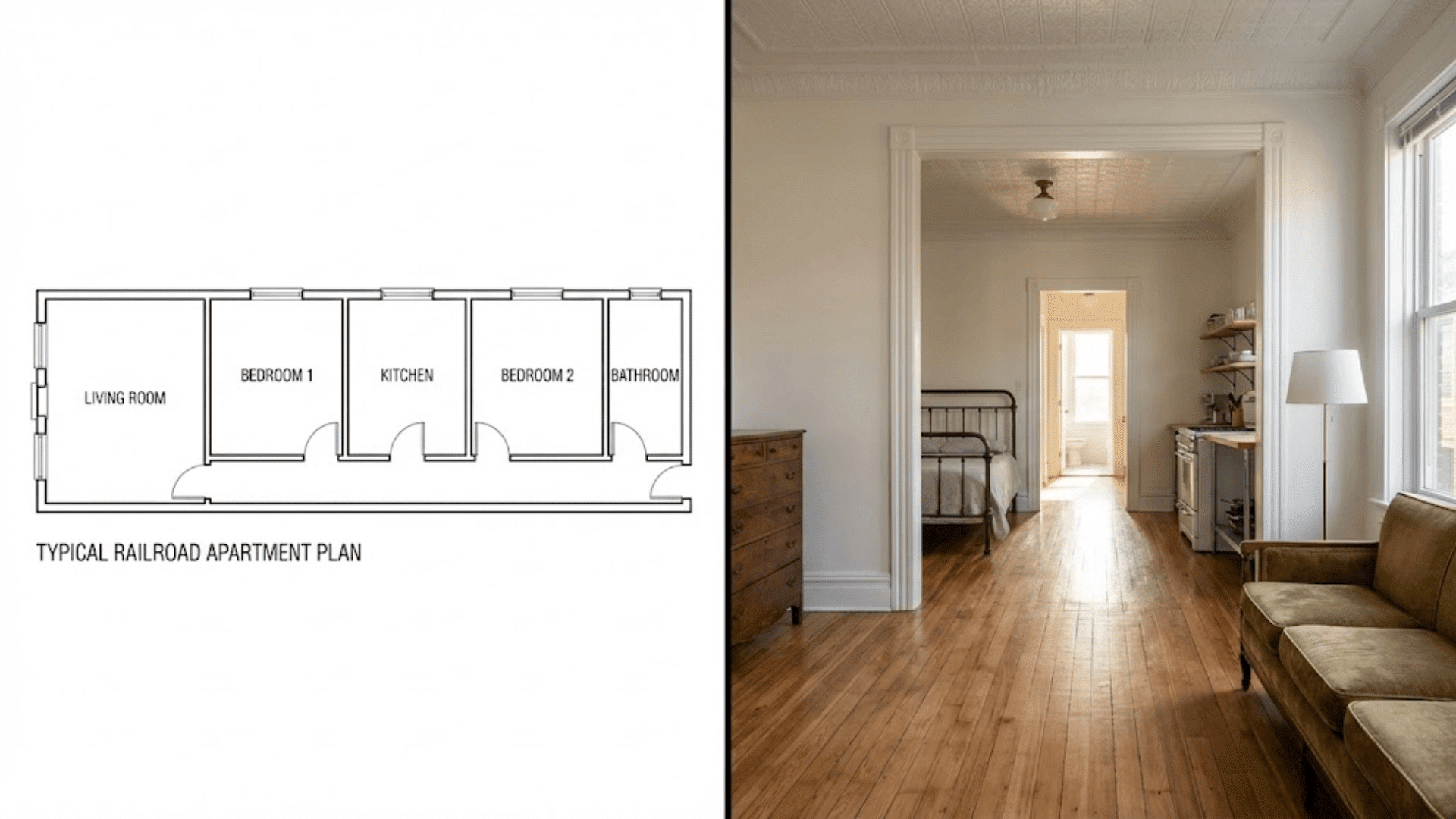
Railroad apartments have rooms in a straight line, like train cars. Common in pre-war Northeast buildings, these narrow layouts often lack hallways, so you walk through one room to get to another.
The design maximizes street frontage in dense urban areas where every inch of width matters, though privacy becomes nearly impossible.
- Pros: Windows on both ends create excellent cross-ventilation, found in charming historic buildings with character, natural light reaches front and back, and more affordable than conventional layouts.
- Cons: Zero privacy between connected rooms, challenging furniture placement in pass-through spaces, middle rooms often darker without exterior walls, impractical for roommates or families.
7. Loft-Style Apartment Layout
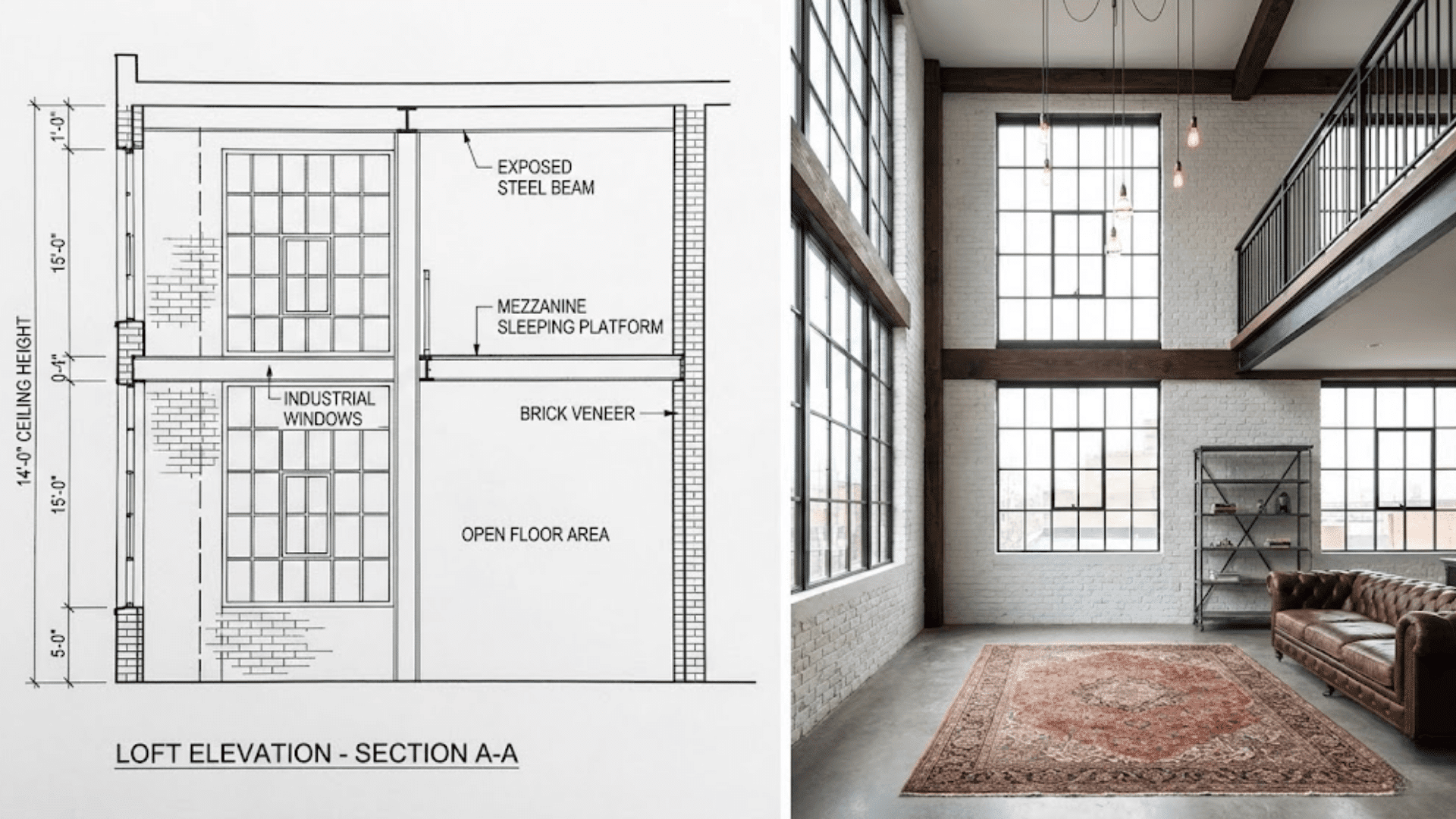
Loft apartments adopt industrial roots with soaring ceilings, exposed structural elements, and wide-open floor plans. Converted from warehouses and commercial spaces, lofts offer dramatic volume and flexibility.
The challenge becomes defining zones within all that openness while celebrating the architectural features that make lofts special. Raw materials and vertical drama create unforgettable spaces, though heating bills tell another story.
- Pros: Dramatic vertical space and architectural character, complete flexibility in arranging zones, abundant natural light from oversized windows, and exposed brick and beams add instant personality.
- Cons: Higher heating and cooling costs, soundproofing challenges in concrete structures, creating private spaces requires creative solutions, and can feel cold or echo without thoughtful design.
8. L-Shaped Apartment Layout
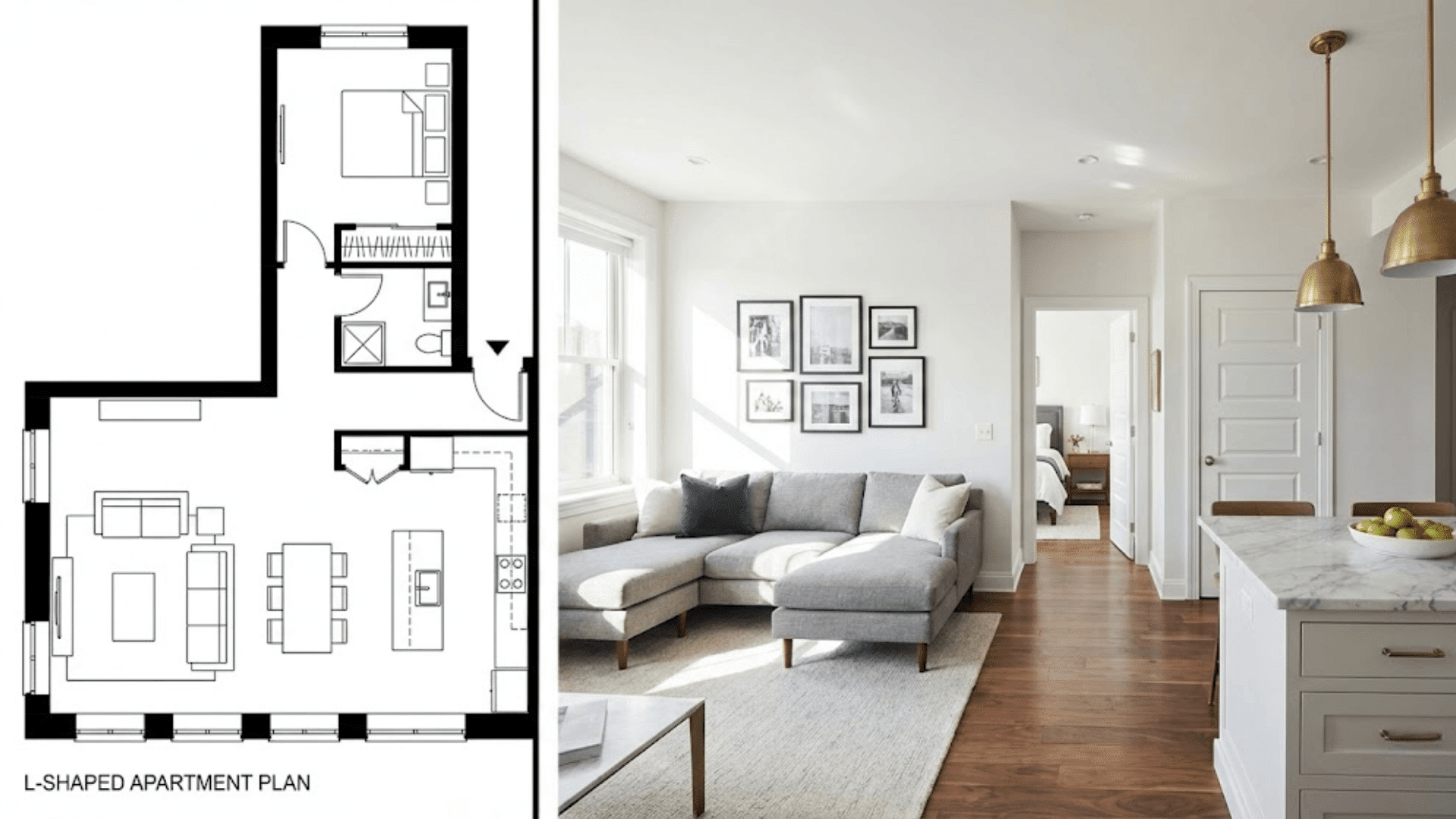
L-shaped layouts wrap around a corner, naturally dividing the apartment into two wings. This configuration creates distinct zones without needing extra walls, with living spaces often occupying one leg and bedrooms the other.
The shape works beautifully for corner units with windows on two sides, bringing light from multiple directions while the angle itself becomes a natural gathering spot.
- Pros: Built-in separation between public and private areas, windows on two sides provide excellent light and views, the corner creates a natural focal point for furniture, and it feels more spacious than rectangular layouts.
- Cons: Awkward corner areas are tricky to furnish, some rooms may feel isolated or tucked away, longer walking distances between opposite ends, and less efficient square footage than rectangular designs.
9. U-Shaped Apartment Layout
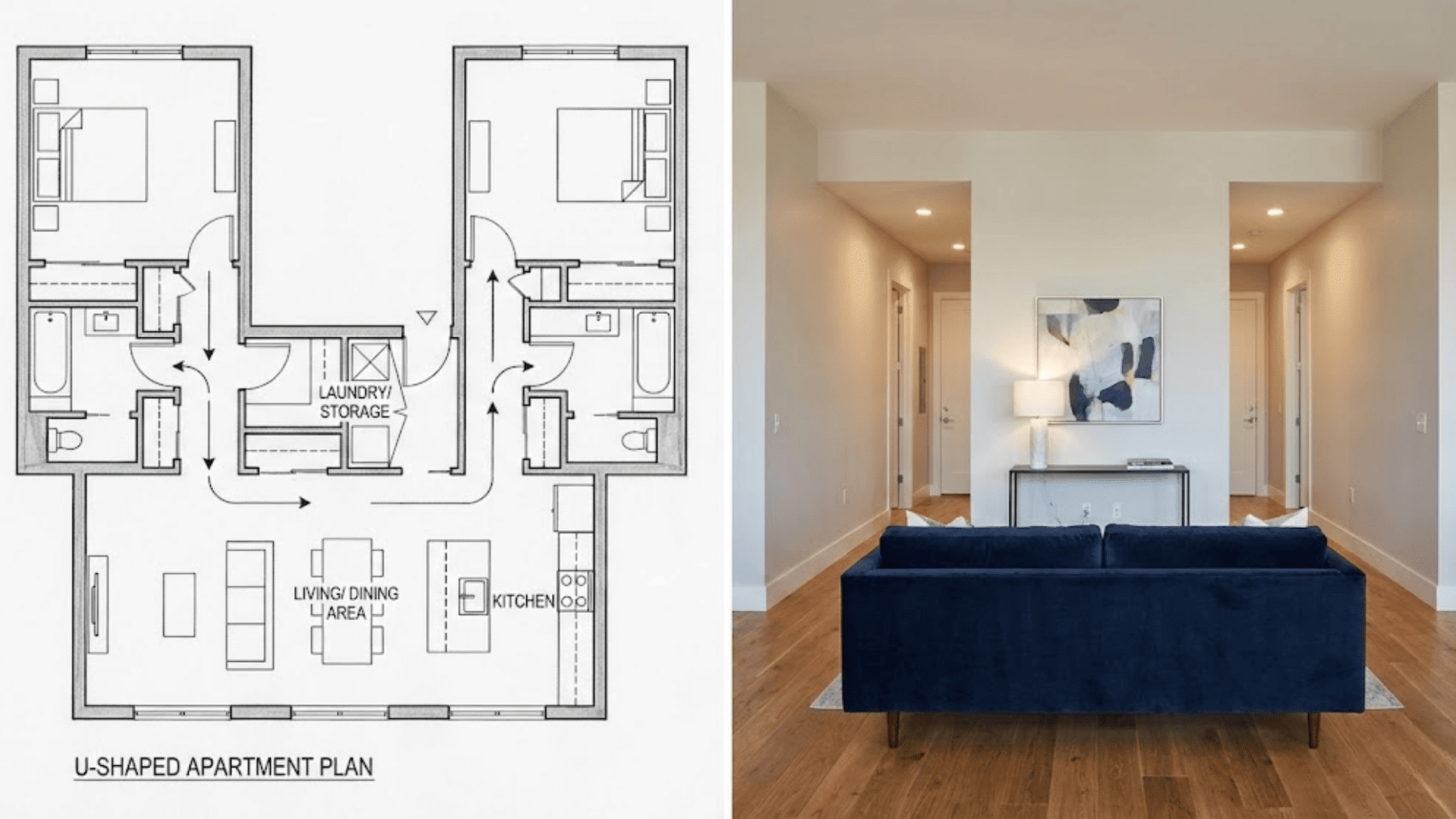
U-shaped apartments wrap around a central core, typically with living spaces forming the base of the U and bedrooms branching off either side.
This efficient design creates natural circulation patterns and often positions bathrooms and kitchen plumbing in the center, keeping bedrooms quieter and more private along the outer edges.
- Pros: Excellent traffic flow with multiple pathways, bedrooms feel naturally separated and private, central core efficiently houses plumbing and utilities, and works beautifully for medium-sized apartments.
- Cons: Central rooms may lack natural light, can feel maze-like without good hallway lighting, use more square footage for circulation, and be less flexible for furniture arrangement.
10. Split-Bedroom Apartment Layout
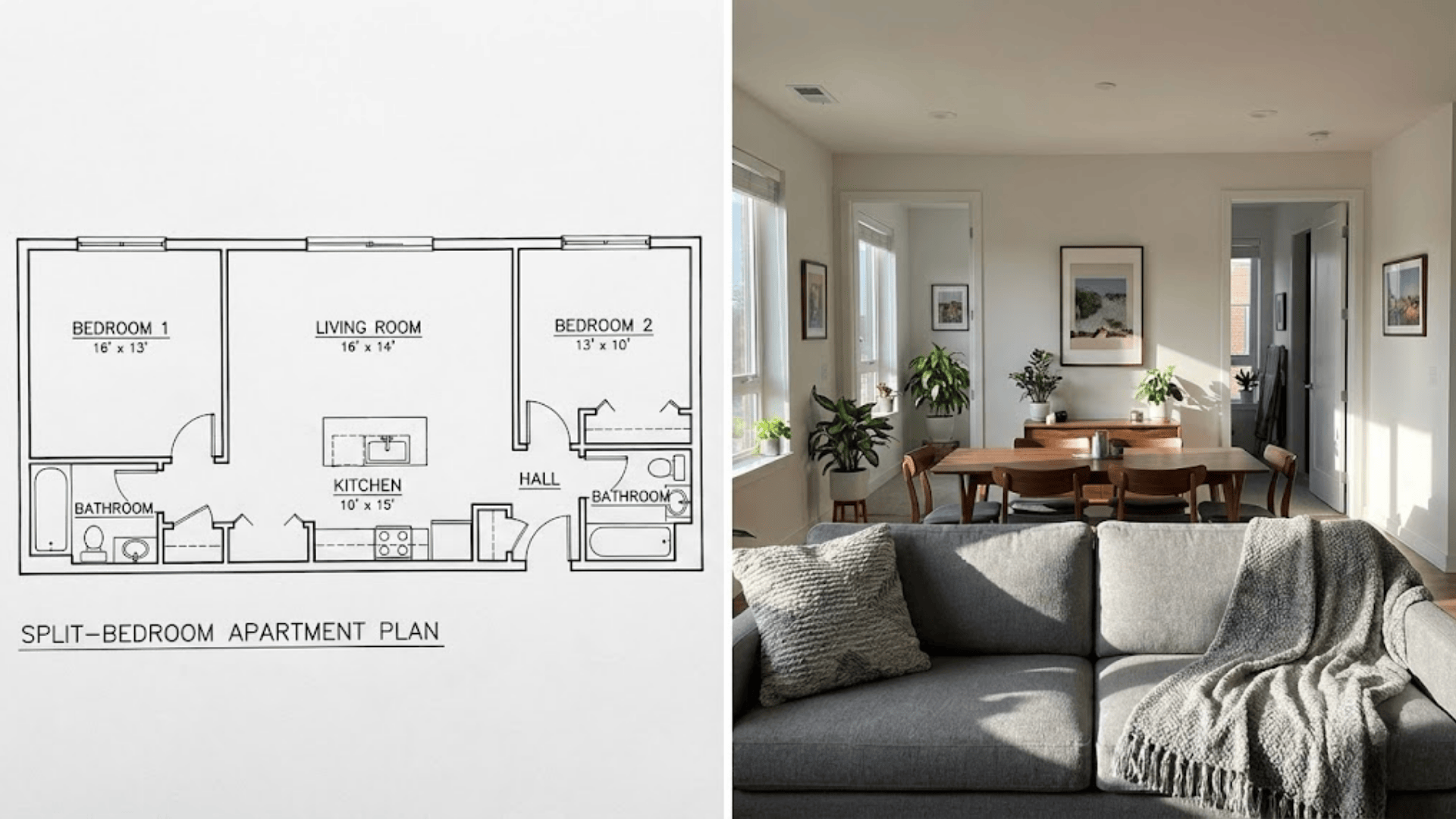
Split-bedroom layouts position bedrooms at opposite ends of the apartment, maximizing distance and privacy between sleeping spaces.
Popular in two and three-bedroom units, this configuration places living areas in the middle as a buffer zone, making it ideal for roommates, families, or anyone working from home who needs separation.
- Pros: Maximum privacy between bedrooms, noise from one room doesn’t disturb the other, home office stays separate from daily activity, guests feel comfortable in their own wing.
- Cons: Requires more total square footage, one bedroom is often closer to the kitchen noise, can feel less cohesive as a living space, and bathroom placement may favor one bedroom.
Small Apartment Layout Ideas
Small apartments demand smart strategies that make every square foot count. The right layout tricks transform cramped quarters into functional, breathable spaces that feel twice their actual size.
- Multi-functional furniture becomes your best friend: sofa beds, extendable dining tables, ottomans with hidden storage, and wall-mounted desks that fold away when not in use.
- Visual zoning creates room separation without walls through area rugs, lighting changes, furniture arrangement, and strategic placement of open shelving units.
- Vertical storage maximizes limited floor space by using tall bookcases, floating shelves, wall-mounted cabinets, and hooks that draw the eye upward while keeping surfaces clear.
- Light colors and mirrors amplify natural light and create the illusion of more space, making small layouts feel open and airy rather than boxed in.
The goal isn’t just fitting everything in, but creating a layout that breathes and adapts to how you actually live day to day.
Large Apartment Layout Ideas
Large apartments bring their own challenge: all that space can feel cold and unfocused without intentional design. The key lies in creating intimate zones that make expansive rooms feel purposeful and inviting.
- Define zones with furniture placement by floating sofas away from walls, using bookcases as dividers, and positioning rugs to anchor distinct areas.
- Layer lighting at different heights through floor lamps, pendants, and sconces to create warmth and break up vast ceiling heights.
- Establish clear traffic flow by mapping natural pathways, leaving generous walking space, and creating symmetrical arrangements that guide movement.
- Add texture and scale with oversized artwork, substantial furniture, layered textiles, and plants that fill vertical space without cluttering floors.
Generous square footage becomes truly livable when you treat it as a collection of smaller, intentional spaces rather than one cavernous room.
Apartment Layout Ideas by Room
Each room in your apartment has its own layout puzzle to solve. From where your bed lands to how your kitchen flows, these room-specific strategies help you make the most of every space.
| Room | Key Considerations | Best Practices |
|---|---|---|
| Living Room | Seating arrangements, TV placement, traffic flow | Float furniture away from walls, angle pieces for conversation, and create distinct zones |
| Bedroom | Bed positioning, storage access, nightstand space | Place the bed opposite the door, use vertical storage, and maintain clearance around closets |
| Kitchen | Galley vs. open layout, island vs. peninsula | Maximize counter space with rolling carts, and define zones with a peninsula |
| Bathroom | Space-saving fixtures, storage solutions | Wall-mounted vanities, recessed cabinets, vertical shelving, and glass shower doors |
How to Design an Apartment Layout Without Renovation?
Renters and budget-conscious homeowners can completely convert their layouts without touching a single wall.
Start with furniture placement to define zones: float your sofa to create a living area, position bookcases as room dividers, and angle pieces to break up boxy spaces.
Area rugs anchor distinct zones while lighting layers add depth and intimacy through floor lamps, string lights, and plug-in sconces.
Temporary dividers like folding screens, curtain panels, and open shelving units create privacy without permanent commitment. These renter-friendly moves give you full control over layout while keeping your security deposit intact.
Apartment Layout Remodeling Ideas
When temporary fixes won’t cut it, strategic remodeling can fundamentally reshape how your apartment functions. These permanent changes require investment and planning, but they deliver layouts tailored precisely to how you live.
- Knock down non-load-bearing walls to create open-concept flow between kitchen and living areas, enlarge cramped bedrooms, or merge small rooms into one functional space.
- Install sliding doors or partitions for flexible room division that adapts to your needs, offering privacy when wanted and openness when preferred without sacrificing square footage.
- Convert unused or awkward spaces like walk-in closets into compact home offices, transform hallway nooks into reading alcoves, or reimagine dining rooms as multipurpose flex spaces.
- Reconfigure kitchen layouts by relocating appliances, adding islands or peninsulas, or switching from galley to L-shaped configurations for better workflow and entertaining.
Always consult with your building management and hire licensed professionals to ensure structural safety and compliance with local codes before making permanent changes.
Apartment Layout Tools & Resources
Planning your apartment layout becomes exponentially easier with the right digital tools.
These resources help you visualize changes, avoid costly mistakes, and experiment with different configurations before moving a single piece of furniture.
| Tool Type | Options | Best For |
|---|---|---|
| Online Floor Plan Creators | Floorplanner, RoomSketcher, SmartDraw | Detailed planning with drag-and-drop furniture, 2D/3D views |
| Room Layout Apps | Planner 5D, Homestyler, MagicPlan | Quick mobile planning with AR visualization |
| Measuring Tools | Laser measures, tape measures, and graph paper | Accurate room dimensions, ceiling heights, and door swings |
| Design Inspiration | Houzz, Pinterest, Instagram | Browse real layout examples by room type |
The Bottom Line
Your apartment layout shapes more than just where furniture sits. It influences how naturally you move through your morning routine, how comfortably you host friends, and how peacefully you unwind at night.
Every floor plan carries potential waiting to be unlocked, regardless of size or configuration.
Start by understanding your space, experiment with arrangements that match your lifestyle, and remember that even small shifts can create dramatic improvements.
Ready to reimagine your apartment layout? Share your biggest layout challenge or favorite design win in the comments below.