The air inside your home tells a story you might not even realize. Sometimes it feels heavy and damp, clinging to your skin. Other times, invisible particles make you sneeze without explanation.
Here’s where the confusion begins: air purifiers and dehumidifiers sound similar, but they solve entirely different problems.
One fights pollutants you can’t see, while the other tackles moisture that makes everything feel uncomfortable. Knowing which one your space actually needs changes everything about how you breathe easier.
Let’s break down what sets them apart and why it matters for your home.
What is an Air Purifier?
An air purifier quietly pulls air through its system, capturing the invisible particles that float around your home.
The magic happens through HEPA filters, which trap dust, pollen, and pet dander before they reach your lungs.
Activated carbon layers work alongside these filters to absorb unwanted odors and chemicals. Some models include UV light or ionizers for added protection.
What this means for you is simpler: less sneezing, fewer allergy symptoms, and air that feels genuinely fresh and clean.
Think of it as giving your home’s air a gentle, continuous refresh throughout the day.
What is a Dehumidifier?
A dehumidifier focuses on one clear job: removing excess moisture from the air around you.
It works by drawing humid air over cold coils, causing water to condense and collect in a tank, while drier air circulates back into your space.
Desiccant models use absorbent materials instead, perfect for cooler areas. You’ll notice the biggest difference in basements, bathrooms, or any humid climate where dampness settles in.
The benefits go beyond comfort; it stops that sticky, heavy feeling on your skin while preventing mold and mildew from taking hold.
Your home feels lighter, fresher, and healthier when humidity stays balanced.
Air Purifier vs. Dehumidifier: Detailed Comparison
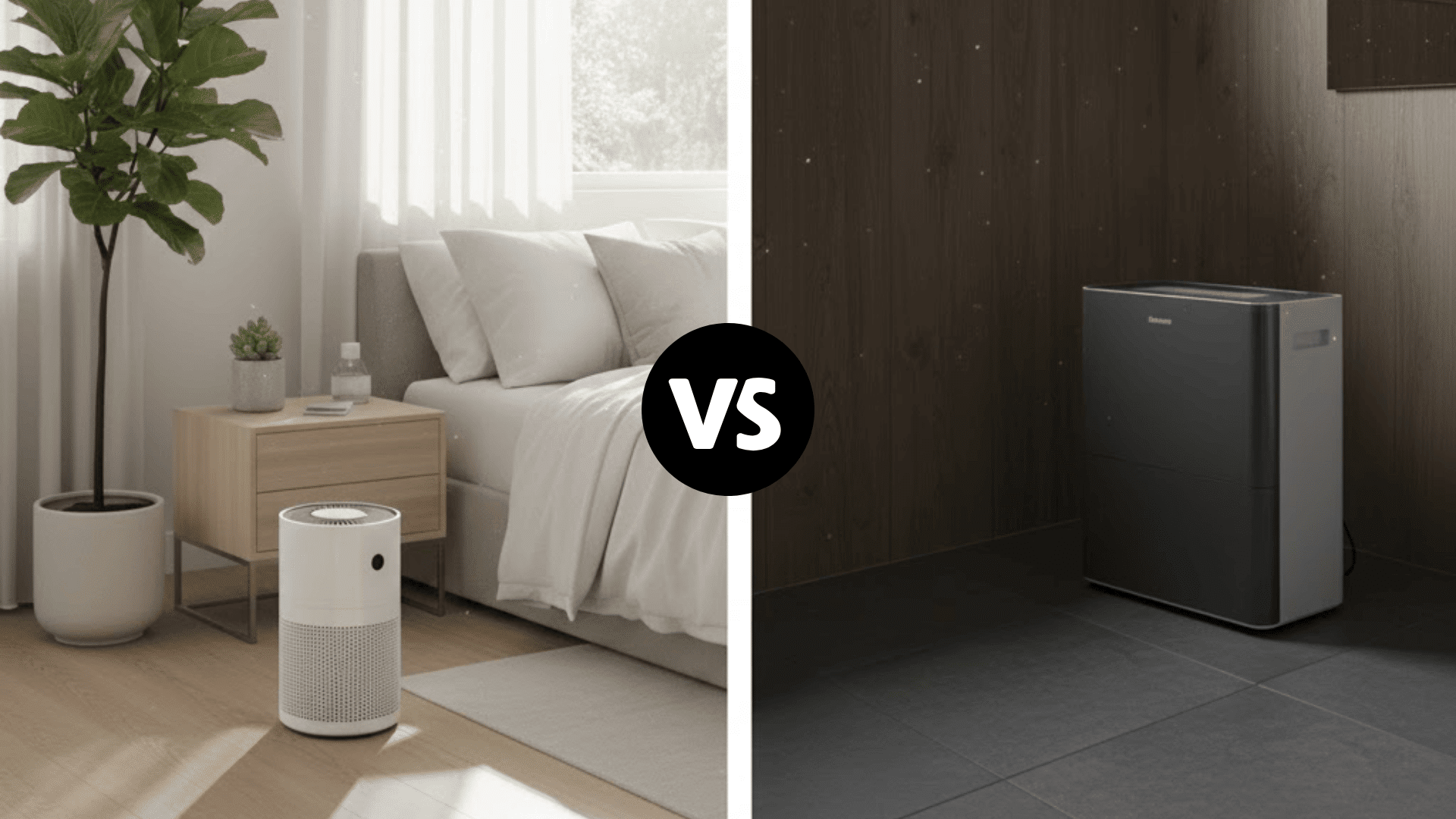
Understanding the differences between these two devices helps you choose what your home actually needs.
Here’s how they stack up against each other across the features that matter most.
1. Main Purpose
An air purifier cleans the air by removing particles like dust, pollen, and smoke that affect your breathing. A dehumidifier, on the other hand, pulls moisture from the air to reduce dampness and that sticky, heavy feeling.
One tackles what you inhale, the other manages how the air feels against your skin. They’re solving completely separate problems, even though both improve your indoor environment.
2. Impact on Humidity Levels
Air purifiers leave humidity exactly as it is; they don’t add or remove moisture while filtering particles. Dehumidifiers directly lower humidity levels, making spaces feel drier and more comfortable.
If your walls feel damp or windows fog up constantly, an air purifier won’t help. That’s a moisture issue requiring a dehumidifier’s specific skill set.
3. Best Environments
Air purifiers shine in homes with allergies, asthma, or pet dander concerns, regardless of climate. Dehumidifiers work best in basements, bathrooms, coastal areas, or anywhere humidity climbs above comfortable levels.
Think musty smells and visible condensation, that’s dehumidifier territory. Sneezing and stuffy noses point toward an air purifier instead.
4. How They Work
Air purifiers rely on filtration systems that trap particles as air passes through layers of material. Dehumidifiers use condensation or absorption to extract water from the air, collecting it in a tank or draining it away.
The mechanisms couldn’t be more different; one is about capturing solids, the other about removing liquid.
5. Technology Inside
Air purifiers typically feature HEPA filters, activated carbon, and sometimes UV light or ionizers for comprehensive particle removal.
Dehumidifiers use refrigerant coils or desiccant materials to pull moisture out efficiently. Each technology is purpose-built for its specific function, which is why one device can’t do the other’s job effectively.
What Each Device Offers and Where It Falls Short
Every home solution comes with its strengths and trade-offs. Here’s what to consider before bringing either device into your space.
| Feature | Air Purifier | Dehumidifier |
|---|---|---|
| Biggest Advantage | Immediate relief for breathing issues and allergies. | Solves dampness problems that lead to structural damage. |
| Main Drawback | Ongoing filter replacement costs. | Requires frequent tank emptying or a permanent drainage setup. |
| Won’t Help With | Moisture, mold, or that sticky humid feeling. | Airborne particles, odors, or allergens are floating around. |
| Best Investment For | Homes with pets, smokers, or allergy-prone family members. | Spaces with visible condensation, musty smells, or humidity above 50%. |
How Air Purifiers and Dehumidifiers Support Your Health
Your health and comfort depend heavily on the air around you. Here’s how each device supports your wellbeing in distinct, meaningful ways.
How Air Purifiers Support Your Health
Air purifiers work directly on what enters your lungs, filtering out triggers that cause discomfort and breathing difficulties. The benefits show up quickly for anyone dealing with sensitivities.
- Reduces allergy symptoms by capturing pollen, pet dander, and dust before they irritate
- Eases asthma triggers through removal of airborne particles that cause flare-ups
- Eliminates smoke and VOCs that linger from cooking, cleaning products, or outdoor pollution
- Minimizes airborne bacteria and viruses with advanced filtration technologies
How Dehumidifiers Protect Your Health
Dehumidifiers tackle the environmental conditions where harmful organisms thrive. By controlling moisture, they stop health problems before they start.
- Prevents mold and mildew growth that causes respiratory issues and allergic reactions
- Reduces dust mite populations since these allergens can’t survive in drier conditions
- Improves breathing comfort by eliminating that heavy, stuffy feeling in humid air
- Works alongside air purifiers to address both moisture and particles for complete protection
Choosing Between an Air Purifier and Dehumidifier
Choosing the right device starts with understanding your specific concerns.
Ask yourself these questions:
- Do you struggle with allergies, asthma, or breathing issues?
- Does your space feel damp with visible condensation or musty smells?
- Want to address both moisture and airborne pollutants?
Matching Devices to Your Space
Different rooms and situations call for different solutions. Here’s how to match your environment with the right device.
| Situation | Best Choice | Why It Works |
|---|---|---|
| Bedrooms with allergy sufferers | Air Purifier | Filters pollen, dust, and pet dander for better sleep and breathing. |
| Basements or bathrooms | Dehumidifier | Prevents mold growth and eliminates that musty, damp smell. |
| Living rooms with pets | Air Purifier | Captures pet hair, dander, and odors circulating through shared spaces. |
| Humid climates or monsoon seasons | Dehumidifier | Controls excess moisture that makes everything feel sticky and heavy. |
| Homes with smokers | Air Purifier | Removes smoke particles and lingering odors from the air. |
| Rooms with visible dampness on walls | Dehumidifier | Addresses the root moisture problem causing condensation and potential damage. |
When to Use Both Devices Together?
If you’re dealing with both humidity and airborne irritants, running these devices side by side makes perfect sense.
Think humid basements that also collect dust, or coastal homes where moisture meets pollen season. One pulls water from the air while the other catches floating particles.
They work independently without getting in each other’s way.
Place your dehumidifier where dampness settles most and your air purifier near where you breathe and relax. Just check each device’s coverage area to match your room size.
The combination creates air that’s both dry enough and clean enough to feel genuinely comfortable.
Keeping Your Devices Running Smoothly
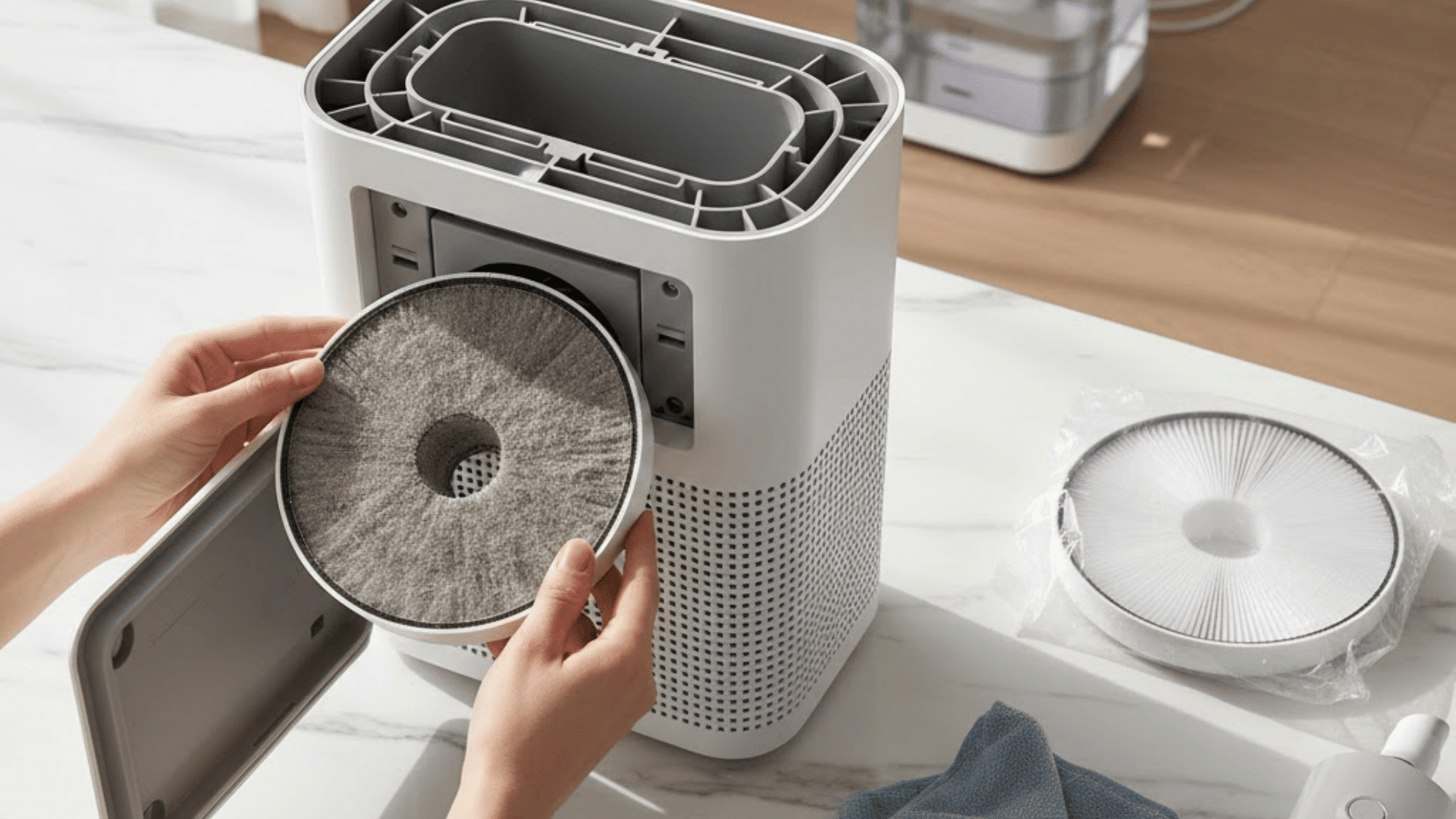
Both devices need regular care to work effectively. Staying on top of simple maintenance keeps them running efficiently and saves money over time.
Air Purifier Maintenance:
- Replace HEPA filters every six to twelve months depending on usage and air quality
- Wipe down the exterior and vacuum pre-filters monthly to prevent dust buildup
- Check manufacturer guidelines since some filters are washable while others aren’t
Dehumidifier Maintenance:
- Empty the water tank daily or set up continuous drainage for convenience
- Clean coils and filters monthly to maintain efficiency and prevent mold growth
- Run a vinegar solution through the system occasionally to remove mineral deposits
Regular upkeep prevents costly repairs and keeps both devices performing at their best. Factor in replacement filters and electricity costs when budgeting for long-term use.
Maintaining Your Air Purifier and Dehumidifier
Both devices need regular care to work effectively. Here’s what to keep in mind for smooth operation.
- Replace air purifier filters every six to twelve months based on usage and air quality levels
- Empty dehumidifier tanks daily or set up continuous drainage to avoid overflow and interruptions
- Wipe down surfaces and vacuum pre-filters monthly to prevent dust accumulation on both devices
- Clean dehumidifier coils regularly to maintain efficiency and stop mold from developing inside
- Monitor energy usage and filter costs as ongoing expenses add up over time
Consistent upkeep extends the life of your devices and ensures they keep delivering the results you need.
Final Thoughts
Choosing between an air purifier vs dehumidifier really comes down to what your home is telling you.
Listen to the signs: sneezing and stuffy noses point one direction, while damp walls and musty corners point another.
Sometimes you need one, sometimes both, but either way, you’re taking meaningful steps toward a space that feels genuinely good to breathe in. Your comfort matters, and now you have the clarity to make the right call.
Have questions about your specific situation or tips to share from your own experience? Drop a comment below and let’s keep this conversation going.