Ever caught yourself staring at a house and wondering if your ladder’s actually long enough, or if that new roofline will peek over the neighbor’s fence?
The height of a 2-story home matters more than you’d think, from planning that dream roof deck to sweet-talking your insurance agent or simply making sure your place does not look like it’s trying too hard on the block.
Renovating, building from scratch, or just deeply curious about the bones of your space?
Understanding what goes into those vertical feet can save you headaches, money, and maybe even a permit violation or two.
Let’s break down what really determines how high your home reaches toward the sky.
What “House Height” Actually Includes?
When you measure a two-story house, you are not just stacking rooms on top of each other.
Here’s what sneaks into that total number:
| Component | Typical Size |
|---|---|
| Foundation/stem wall | A few inches to a couple of feet |
| Floor-to-ceiling (per story) | 8–9 ft standard; 9+ ft in modern builds |
| Inter-floor structure (joists, subfloor) | 6–12 inches |
| Roof structure and pitch | Several feet for peaked roofs |
Each layer adds up quietly. That gorgeous vaulted ceiling or steep roofline? They are pushing your house higher than you might expect, which matters when permits and property lines come into play.
House Height: Typical Ranges and Examples
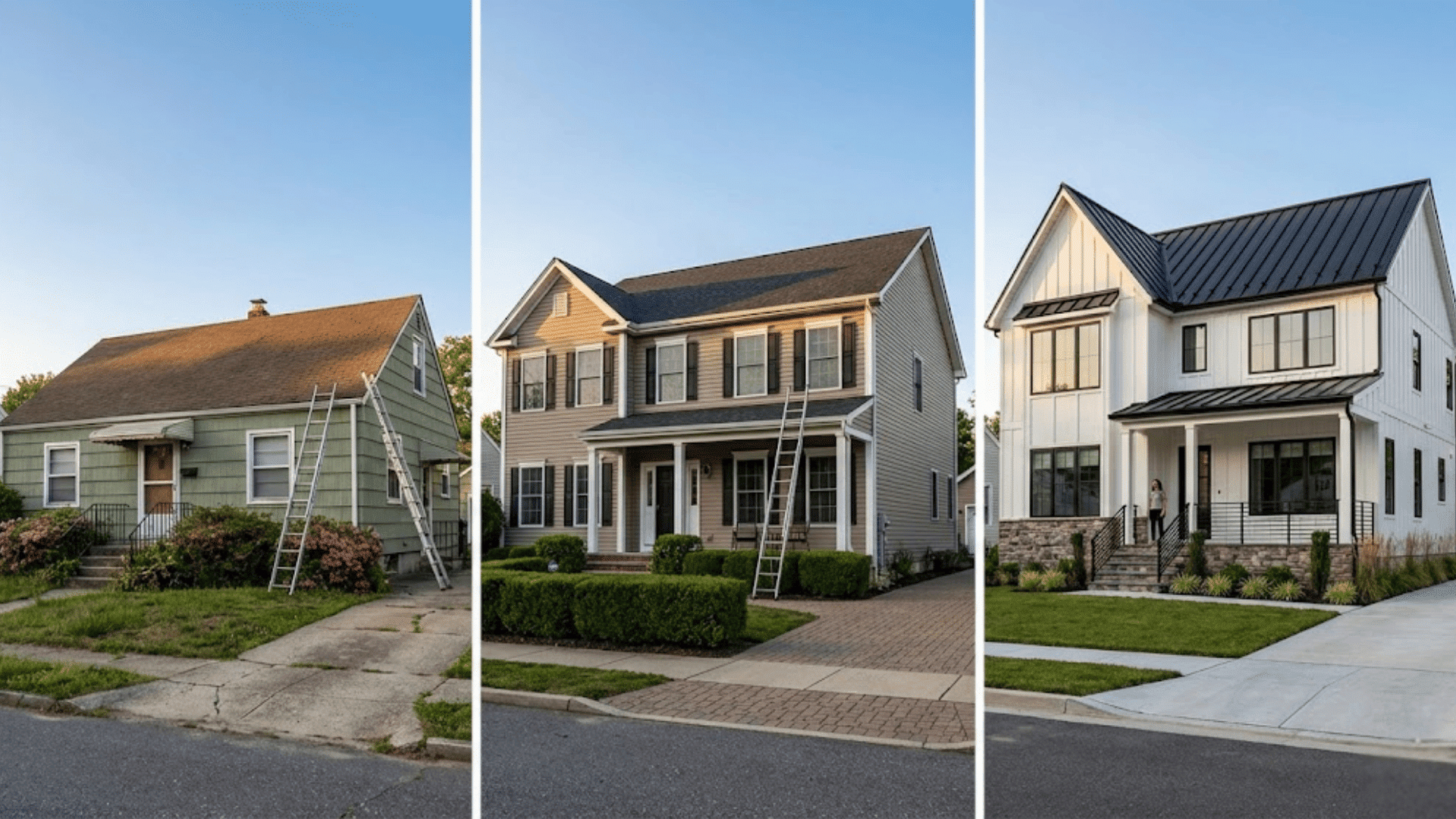
Understanding the total vertical footprint of a two-story home is essential for exterior maintenance planning, ladder selection, and renovation projects.
These height ranges fluctuate significantly based on architectural era, ceiling standards, and roof design.
1. Compact or Older Homes
Typical Height: ~16–20 feet
These structures often feature modest 8-foot ceilings on both levels and lower-pitched or flat roofs.
Common in cottages, bungalows, or mid-century developments, the reduced height is typically due to minimal foundation reveals and shallower floor joist systems between stories.
They present the most accessible profile for exterior work, like gutter cleaning or painting.
2. Typical Suburban 2-Story
Typical Height: ~20–25 feet
This range represents the standard for most modern residential neighborhoods.
These homes generally incorporate 8 to 9-foot ceilings and average roof pitches (often around a 6:12 slope).
The increased height accounts for thicker intermediate floor systems to hide modern HVAC ducting and a standard raised foundation, balancing aesthetic appeal with practical interior volume.
3. Tall or Modern Designs
Typical Height: 25–30+ feet
Luxury builds and custom modern designs frequently exceed standard limits to accommodate premium features.
These homes often boast 10-foot to 12-foot ceilings, vaulted interior spaces, and steep roof pitches.
Furthermore, they may be built on raised basements or significant crawl spaces that elevate the first floor several feet above grade, pushing the roof peak well over 30 feet.
Building Codes, Zoning & Legal Limits that Affect Height
Before you fall in love with sky-high ceilings or dramatic rooflines, local rules have a say in how tall your house can actually go.
Codes set the baseline for safety and livability, while zoning laws keep neighborhoods looking cohesive and functioning smoothly.
| What’s Regulated | Legal Minimum/Limit | Where to Check |
|---|---|---|
| Ceiling heights (habitable spaces) | 7 ft minimum (IRC) | ICC Digital Codes |
| Overall house height | Varies by locality | Municipal zoning map or building department |
| Practical design choice | Usually 8–9+ ft ceilings | Market standards, resale value |
Your dream home might technically be legal at 7-foot ceilings, but good luck selling it later.
Most builders aim well above code to keep spaces feeling open and inviting, which is why typical two-story homes end up taller than the bare minimum regulations require.
How to Measure an Existing House’s Height?
Need to know your home’s actual height for permits, repairs, or pure curiosity? The method depends on what you’re measuring and how precise you need to be.
- Grade to the roof peak gives you total height (what zoning cares about), while grade to the eave measures just to where your roof starts its upward slope.
- Tape measure and ladder works for smaller homes if you can safely reach the eave or have a helper holding steady below.
- Laser distance measurers let you point and shoot from the ground for instant readings without climbing anything.
- Smartphone surveying apps use your camera and tilt sensors to calculate height when you step back and aim at the roofline.
- Counting brick courses offers a quick ballpark estimate (each course runs about 8 inches with mortar) if your home has exposed brick.
Safety Note: Roofs are slippery, steep, and unforgiving. If you need a precise measurement for official purposes or your house is tall, skip the DIY heroics and call a surveyor or contractor who has the right gear and insurance.
Why Do House Heights Vary?
Not all 2-story houses stand at the same height, and that is by design. Everything from ceiling trends to roof angles plays a role in how tall your home actually reaches.
| Design Element | Shorter Option | Taller Option |
|---|---|---|
| Ceiling height | 8 ft (older homes) | 9–10+ ft (modern builds) |
| Architectural style | Craftsman, Ranch | Colonial, Modern farmhouse |
| Roof type | Flat or low-slope | Steep gable or hip pitch |
| Foundation | Slab on grade | Raised basement or crawlspace |
A ranch-style home with a shallow roof will hug the ground, while a modern farmhouse with vaulted ceilings and a steep gable can tower over it.
Your home’s height isn’t just about square footage; it’s about the mood and function you’re designing for.
Practical Impacts of Height (Useful Homeowner Angle)
Your home’s height isn’t just a number on a blueprint; it shows up in your wallet, your weekend projects, and even your home’s market appeal.
- Ladder Selection and Safety: For an average two-story home (20–25 ft to the eave), you’ll need at least a 28-foot extension ladder to work safely with proper overlap and angle.
- Cost Implications: Taller walls mean more siding, paint, and drywall upfront, plus a bigger volume to heat and cool every month, which quietly inflates your utility bills year-round.
- Resale and Curb Appeal: A taller facade can feel grand and stately, but if your home towers over the neighbors, it might clash with the street’s vibe or bump against zoning limits that affect future buyers.
Height isn’t just an aesthetic choice; it ripples through your budget, maintenance routine, and how your home fits into the neighborhood.
Homeowners on Reddit’s r/HomeImprovement often discuss how ceiling height choices affect renovations, resales, and unexpected repair costs, like paying double for extra vertical feet.
The Bottom Line
Understanding how tall a two-story house really is goes beyond satisfying curiosity.
It shapes everything from the ladder you buy to the energy bills you pay, the permits you pull, and how your home feels when you walk through the door.
Every foot matters, from foundation to roofline, and now you know exactly where those inches hide.
Got questions about your own home’s height or tips from your latest renovation? Drop a comment below and let’s swap stories.
Sometimes the best advice comes from someone who’s already been up that ladder.