Some damage is obvious.
Other damage is quieter—and more dangerous because of it.
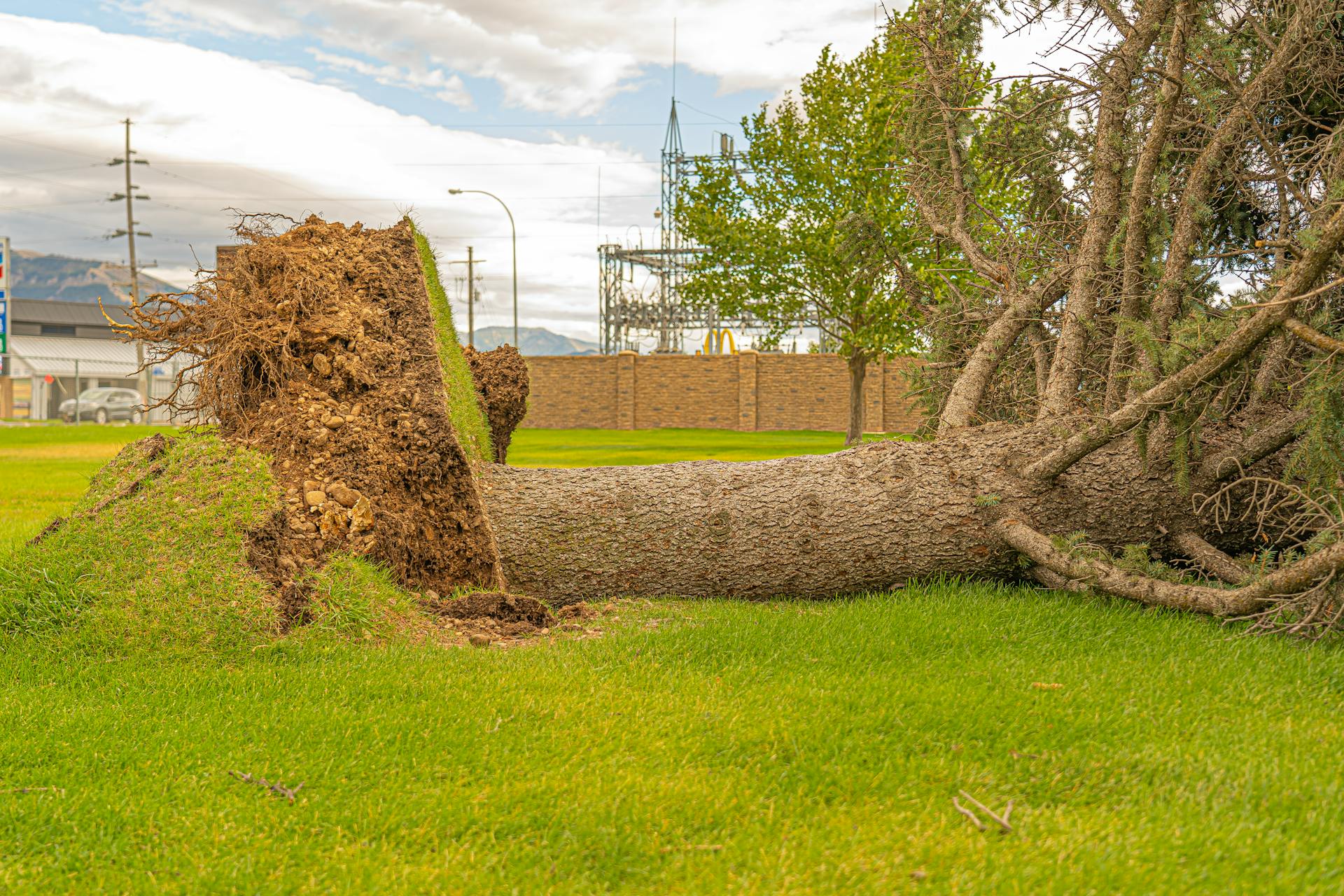
After a storm, a tree may still be standing. Leaves may still be green. From a distance, everything appears fine. But beneath the surface, the structure may be compromised. Roots may be torn. The trunk may be cracked internally. The next strong wind—or even a calm day—can bring it down.
Addiction follows a similar pattern.
The most severe damage often does not happen at the beginning. It happens when warning signs are ignored, minimized, or postponed. In both storm-damaged trees and addiction, delay allows hidden damage to spread, making the eventual consequences far more destructive.
Damage Does Not Always Look Like an Emergency
One of the most dangerous assumptions homeowners make after a storm is believing that “standing” means “safe.”
A tree can be deeply damaged while still upright. Likewise, a person can be struggling while still functioning.
Common signs that are easy to dismiss include:
- A tree leaning slightly after a storm
- Hairline cracks in the trunk
- Soil lifting around the roots
- Broken branches that haven’t fallen yet
In addiction, the equivalents often look like:
- Increased reliance rather than loss of control
- Justifying use instead of hiding it
- Emotional volatility masked by productivity
- Relationships strained but not broken
In both cases, the absence of collapse is mistaken for stability.
Why Delay Increases Risk
When damage is not addressed early, it compounds.
For storm-damaged trees, delay allows:
- Root systems to weaken further
- Internal decay to spread
- Cracks to deepen under normal stress
- The probability of sudden failure to rise
For addiction, delay allows:
- Patterns to become entrenched
- Coping skills to erode
- Emotional and physical harm to accumulate
- The threshold for intervention to rise
What could have been addressed with early support often turns into a crisis requiring emergency action.
Denial Feels Safer Than Disruption—Until It Isn’t
Waiting is rarely about ignorance. It is often about fear.
Homeowners delay tree removal because:
- It feels drastic
- It costs money
- The damage is inconvenient
- The tree still looks “mostly fine”
People delay addressing addiction for similar reasons:
- Fear of stigma or judgment
- Fear of disruption to work or family
- Belief they can handle it later
- Hope that things will stabilize on their own
In both cases, delay is an attempt to preserve normalcy. Unfortunately, it often sacrifices safety instead.
The Cost of Waiting Is Rarely Linear
One of the most important parallels between storm damage and addiction is that consequences rarely increase gradually—they escalate suddenly.
A weakened tree does not fall in stages. It fails at once.
Similarly, addiction often progresses quietly until a threshold is crossed:
- A medical emergency
- A legal issue
- A relationship rupture
- A loss that cannot be undone
The moment of collapse feels sudden, but it is usually the result of accumulated, unaddressed damage.
Early Intervention Is Not Overreaction
There is a common misconception that acting early is excessive.
In reality:
- Removing a compromised tree before it falls is preventative, not extreme
- Seeking help before addiction reaches crisis is responsible, not weak
Early intervention reduces:
- Risk to people and property
- Long-term cost
- Emotional fallout
- Collateral damage to others
The goal is not to wait until danger is undeniable. The goal is to act when danger is likely.
Why Professional Assessment Matters?
Storm-damaged trees are unpredictable. What looks minor on the outside may be severe internally. This is why professionals are brought in—to assess risks that are not visible.
Addiction works the same way.
Self-assessment is often unreliable when coping mechanisms are involved. External perspective—whether from professionals, trusted support systems, or structured programs—can identify risks before they escalate.
In both situations, expertise provides clarity when uncertainty encourages delay.
Damage Addressed Early Leaves Room for Recovery
When action is taken early:
- Tree removal or stabilization can protect the surrounding environment
- Property damage can be prevented
- Recovery and regrowth can be planned intentionally
In addiction recovery:
- Early intervention preserves physical and mental health
- Relationships are more repairable
- Identity is less defined by crisis
- Recovery can focus on growth, not just survival
Addressing the problem sooner does not just reduce harm—it preserves possibility.
Waiting Feels Passive, But It Is a Choice
Not acting is still a decision.
Choosing to “wait and see” when warning signs are present transfers risk into the future—often to a moment when control is lower and consequences are higher.
Whether it is a storm-damaged tree or a growing dependency, the principle is the same:
Problems rarely punish action. They punish delay.
Final Thoughts
Storm-damaged trees and addiction share an uncomfortable truth:
The most dangerous damage is often the damage that goes unaddressed.
Standing is not the same as stable.
Functioning is not the same as healthy.
The earlier a risk is acknowledged, the more options remain. The longer action is postponed, the fewer safe outcomes are available.
Intervening early is not about fear—it is about responsibility, protection, and the opportunity to rebuild before something collapses.