Can you imagine the warm glow a child feels not just when they tear open a box of plastic bricks, but when they hand over a gift they’ve carefully chosen for someone else? It would appear that this feeling is more than just a pleasant holiday message. It is a physical experience.
For parents and teachers, encouraging a shift from getting to giving is more than a lesson. It is giving an experience that allows for a physical reaction within a child’s brain. By picking the right type of present, we can move beyond the usual toy aisle and into a world where children learn that generosity is its own high-octane reward.
By integrating the principles of developmental psychology into gift-giving practices, we can use the act of giving a gift as a teaching tool for what empathy and connection are all about.
Shareable Micro-Garden Kit
For children, the idea of waiting for the reward is an early principle of delayed gratification. The gardening set, which comes with two copies of everything, such as two pots, two kinds of seeds, and two trowels, is much more than a science kit. It is a two-tracked experience in which the child grows one plant while taking care of another meant for a neighbor, parent, or friend.
This approach teaches the long game of generosity. According to a 2025 report by the Indiana Youth Institute, giving back activates the brain’s reward system, releasing dopamine and oxytocin.
Through the process of caring for a gift instead of buying it, there’s a constant helper’s high the child enjoys, which continues a pathway for patience and caring for others.
Cooperative Board Games: Strategy Over Rivalry
Traditional games often are based on a zero-sum outcome; for one child to win, everybody else has to lose. Games of cooperation, such as Stone Soup or Space Escape, reverse that by having all the children work together toward a common goal. Here are some excellent gift ideas that celebrate shared success rather than individual glory.
Kindness Tokens & “Buy-One-Give-One Dolls
The visual symbol can be very effective for young children who are not developmentally ready to comprehend abstract concepts such as philanthropy. Brands like Cuddle and Kind are making waves with what they term the Buy-One-Give-One model, whereby for each handmade doll, 10 meals are donated to children who need them.
When a child is given a doll that has kindness tokens that they get to distribute to others, this becomes an interactive way of socializing the child and putting them into the reality that there is a direct link between the child and the positive effect that they cause in the world. Also, this closes the distance that has been identified in research that shows a child has underestimated the positive effects that kindness has on others.
The Three-Compartment Piggy Bank
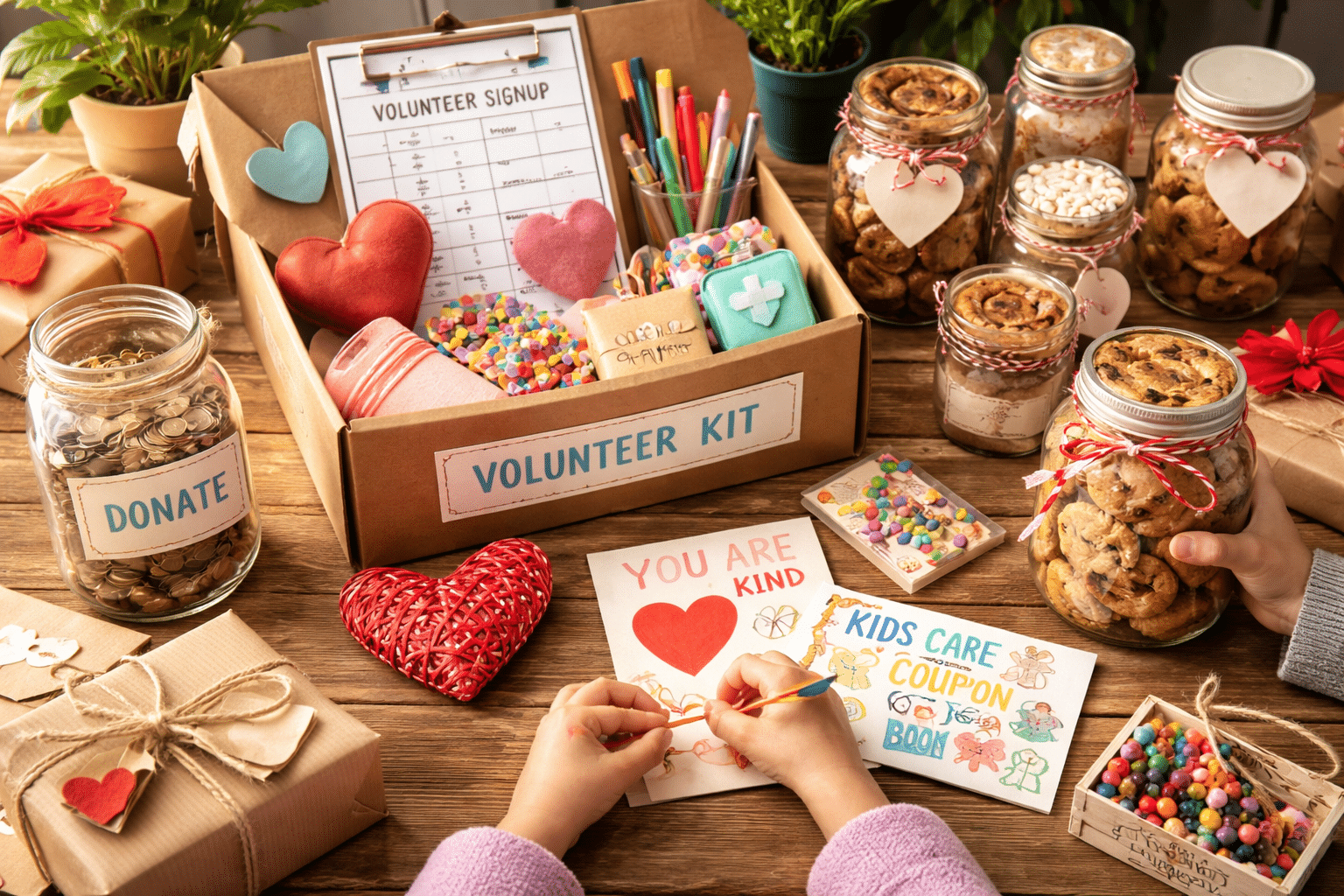
One of the best ways for kids to learn the underlying science of this great act is through the use of a specialized bank that has three slots: Spend, Save, and Give. This serves as a tangible method for kids to learn the art of financial empathy. To give to others means that kids get to direct their wealth into the Give slot.
According to a study in Philanthropy Outlook in the year 2024, children who obtain early exposure to philanthropic habits experience increased life satisfaction when adults. This isn’t just a coin bank. It’s actually all about creating habits. When the Give slot is full, it’s up to the child to make decisions on exactly where they can donate it. This includes animal shelters in their own town or a clean water campaign internationally.
Experience-Based Acts of Service Coupons
At other times, the most valuable gift may be one that requires no money at all, only time. Making a kindness coupon book can allow the child to give the gift of themselves. Examples of what the coupons can be:
- One Free Room Cleaning (for a parent)
- One Extra Bedtime Story (for a younger sibling)
- One Afternoon of Yard Work (for a senior neighbor)
This shows the child that their own personal effort is worth something and that giving can be so many different things, not just objects. It reconfirms the warm glow that is experienced instinctively through World Happiness Reports, where it is shown that strangers and community members are a better predictor of happiness than actual reward.
Conclusion: Planting the Seeds of Lifetime Altruism
Teaching a child to be generous isn’t about deprivation; it’s about enriching them with a different kind of wealth. When we choose gifts that encourage children to look outward, we are essentially giving them the gift of a more connected, less entitled future.
The science is clear. The more a child practices giving, the more her brain reinforces the neural pathways associated with happiness and trust. By treating generosity as a skill to be nurtured, much like a prize-winning garden, you ensure the warm glow of kindness stays a permanent part of their character long after the holiday lights have been dimmed.