Blueberries earn their keep in a home garden. They look good most of the year, fit neatly into smaller spaces, and produce fruit that tends to “disappear” on the walk back to the kitchen. Grow them well and you’ll get berries that beat the store on flavor, every time.
They do ask for a little discipline at the start, mainly with soil and moisture. Once a bush gets established, it settles down and becomes a steady producer. Then early summer rolls around and those dusty-blue clusters show up, right on schedule.
Choosing the Right Blueberry Varieties
Blueberries don’t reward guesswork. Pick the wrong type for your climate and you’ll spend the season trying to convince a plant to be something it isn’t.
Across much of Texas and the Gulf Coast, rabbiteye and southern highbush varieties tend to be the practical choices. Rabbiteyes are durable, forgiving, and built for heat. Southern highbush varieties usually ripen earlier and can produce big, handsome fruit, but they often want more consistent care. Planting more than one variety helps with pollination and usually boosts yield, so a pair (or trio) is often better than a single bush.
Containers are another smart option, especially where native soil fights every attempt to acidify it. A large pot with an acidic mix can outperform an in-ground planting that never quite gets comfortable. Start with the right variety and the rest of the work feels a lot easier.
Planting and Caring for Blueberry Bushes
If blueberries have a dealbreaker, it’s soil. They want it acidic, loose, and loaded with organic matter. A pH between 4.5 and 5.5 keeps nutrients available and roots functioning the way they should. When blueberry bushes stall, soil is often the reason.
Before planting, build a bed or container mix that leans heavily on pine bark, peat moss, and composted leaves. That blend holds moisture, drains well, and keeps the root zone in the range blueberries prefer.
Give them sun. Six hours is a good baseline, though some afternoon shade can help where summers get intense. Water consistently during the first few years, because blueberry roots sit shallow and dry out fast. Mulch matters, too. A thick layer keeps moisture in, protects roots from temperature swings, and reduces weeds without much effort.
Blueberries are at their best fresh, but they’re also easy to keep in the rotation after harvest season. A lot of people scratch that itch with convenient options like blueberry muffin clusters when fresh fruit isn’t available. The bush lives in the yard, but the flavor can show up year-round.
Harvesting Blueberries at Peak Flavor
Blueberries don’t ripen all at once, and that’s a good thing. You get a longer harvest window and the chance to pick at a relaxed pace.
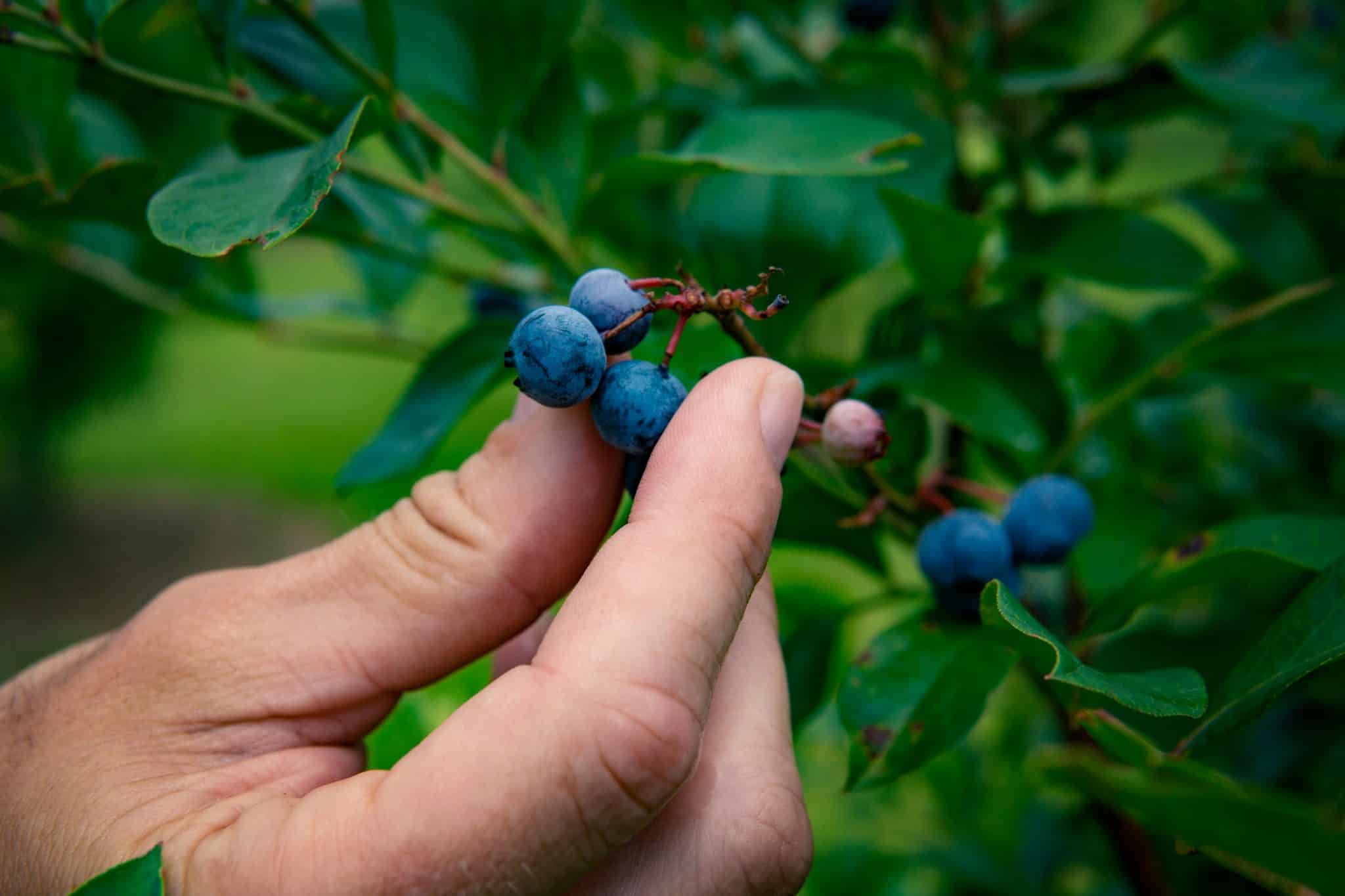
Here’s the trick: berries turn blue before they’re truly ready. Give them a few extra days after color change and you’ll taste the difference. Ripe berries should come off with a gentle roll of your fingers. If you have to pull, leave it.
Pick during the cooler part of the day when fruit is firm. Use shallow containers so berries don’t crush each other on the way inside.
For storage, skip washing until you’re ready to eat them. Moisture shortens shelf life. Fresh berries typically hold a week in the fridge, sometimes longer if they were picked dry. Freezing is the easiest long-term move: spread berries on a tray, freeze until firm, then bag them. They keep well and stay useful for smoothies, oatmeal, and baking.
Health Benefits of Blueberries
Blueberries taste like a treat, but they carry real nutritional value. That deep color comes from anthocyanins, plant compounds tied to heart and brain support when berries are part of a regular diet.
They also bring fiber without heaviness, which makes them easy to work into breakfast and snacks. Add vitamin C, vitamin K, and manganese, and you’ve got a fruit that supports digestion, circulation, and overall metabolic health without requiring a special plan.
People who keep berries in their weekly routine often show stronger cardiovascular markers and lower levels of inflammation over time, a pattern that lines up with the long-term health patterns associated with eating berries regularly. For gardeners, that’s the best kind of benefit: practical, believable, and easy to live with.
Enjoying Blueberries Beyond the Garden
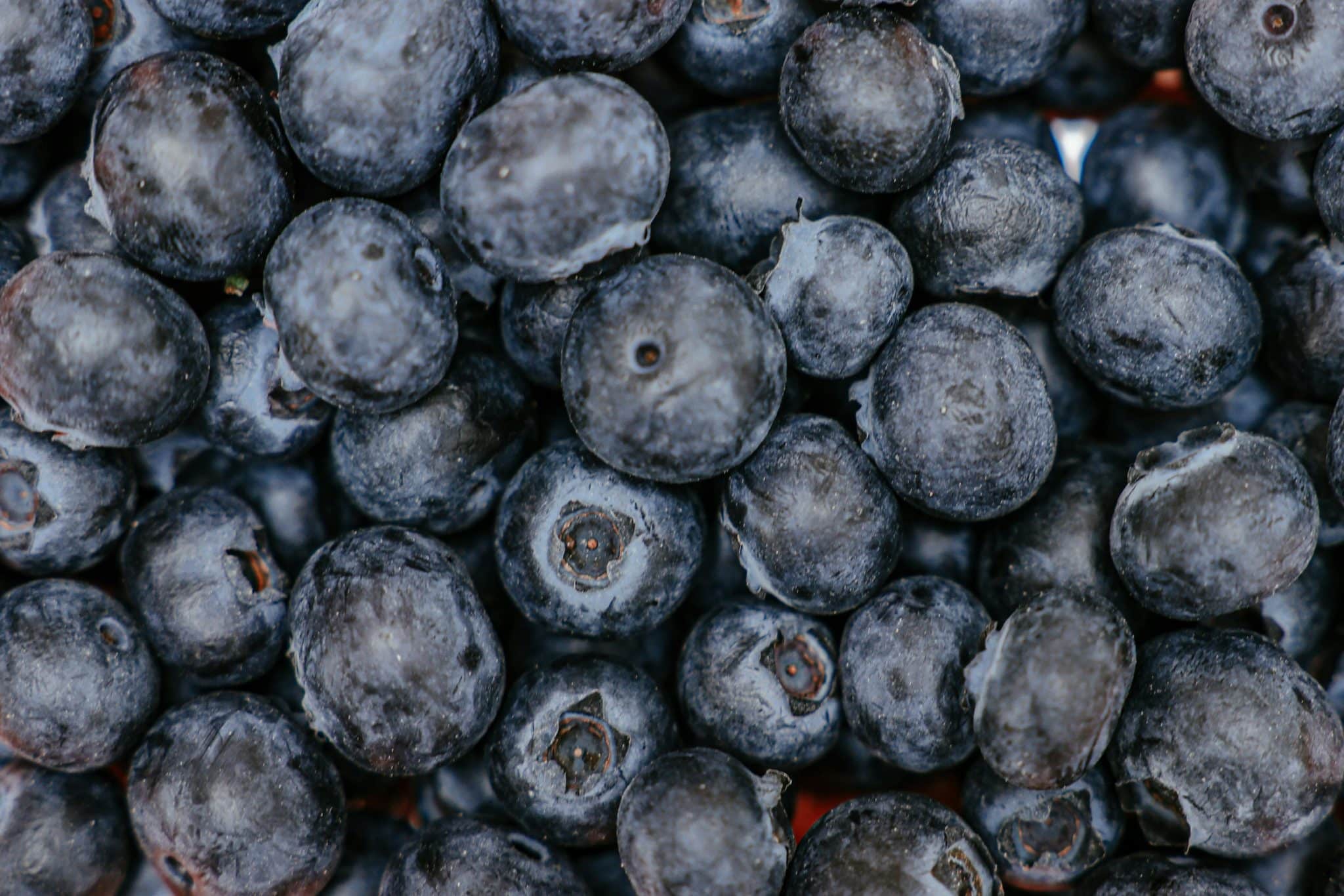
A good blueberry harvest usually outpaces fresh eating. That’s where blueberries really shine, because they’re flexible.
Frozen berries handle breakfasts beautifully. They soften quickly in oatmeal, blend cleanly into smoothies, and bake well. Fresh berries are hard to beat in yogurt, cereal, or a simple handful on the porch. If you like quick snacks, blueberries pair well with nuts and seeds without turning into a sticky mess.
Preserving doesn’t have to become a hobby. The simplest methods are the ones you’ll actually use, and blueberries are cooperative that way.
Blueberries as Part of a Year-Round Lifestyle
Once blueberries find a place in your routine, they tend to stay there. In season, they’re fresh and immediate. Out of season, they still show up in small, dependable ways, especially if you keep some frozen.
Timing helps, too. Plant at the right moment and your bushes establish faster, handle stress better, and produce more reliably. If you want to line things up from the start, when to plant blueberry bushes for best results is one of those details that pays off later.
For home gardeners, blueberries are a long-game plant with a very satisfying return. Put in the early work, keep the soil honest, and you’ll get fruit that earns its spot in the yard and on the table.