A dandelion looks simple until you slow down and really watch what it does. One day it’s a low cluster of leaves. Then a bright flower appears. Not long after, seeds drift away on the wind.
Most explanations treat this as a quick trick of nature. It’s not. The dandelion life cycle follows a steady, repeatable pattern built around survival, timing, and preparation. A lot of what matters happens below the surface, long before anything is visible.
In this blog, I’ll walk you through how the plant grows, how long each phase takes, and why it behaves the way it does. To make sense of all that, we first need to understand…
What Type of Plant is a Dandelion?
Dandelions are perennial plants. That matters more than most people realize. A perennial does not start from scratch every year. Instead, it survives from one growing season to the next.
Annual plants live fast. They grow, flower, drop seeds, and die within one season. Dandelions do not follow that pattern. Once established, the same plant can live for years.
The reason is the taproot. A dandelion grows a single thick root that pushes straight down into the soil. This root stores energy. During cold months or dry periods, the plant above ground may disappear, but the root stays alive. When conditions improve, the stored energy fuels new growth.
This is why dandelions come back each spring. You are not seeing a new plant every time. In many cases, you are seeing the same plant waking up again.
The 5 Stages of the Dandelion Life Cycle
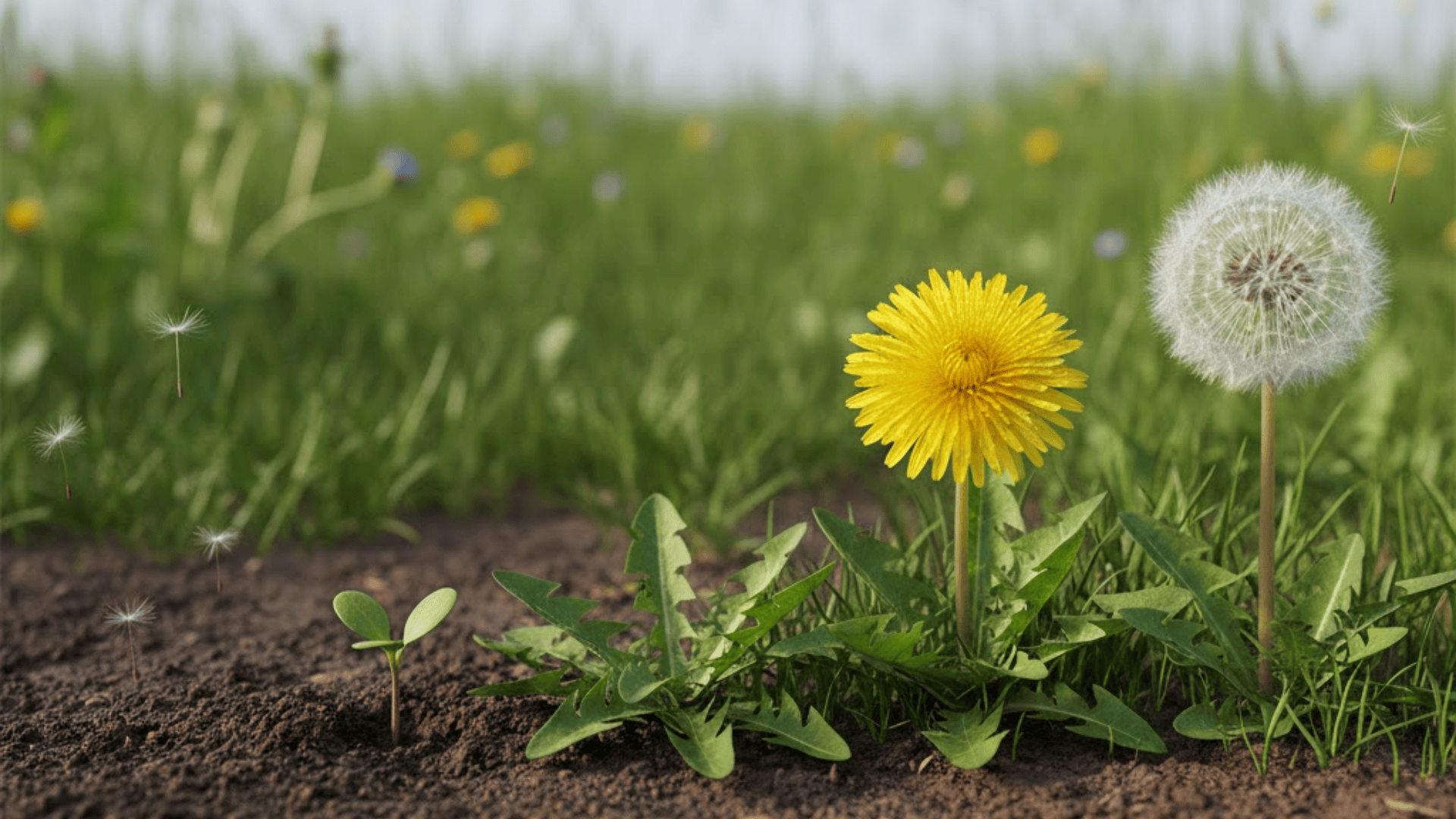
A dandelion does not move through its stages just once. The process repeats as long as the plant is alive. Some stages may overlap, especially during long growing seasons.
Understanding the stages helps explain how one plant can spread so quickly while also surviving year after year.
Stage 1 – Seed Dispersal
The white puffball is not decoration. It is a seed delivery system. Each tiny piece is a seed attached to a thin stalk and a parachute-like top.
When wind moves through, the parachutes catch air. This allows seeds to lift off and drift away from the parent plant. Some land nearby. Others travel much farther.
Wind matters because it removes distance limits. Seeds do not rely on animals or water. A light breeze is enough. This increases the chance that at least some seeds will land in good soil.
Stage 2 – Germination
Once a seed lands, nothing happens right away unless conditions are right. Dandelion seeds need light, moisture, and moderate temperatures.
Spring and early fall work best. The soil does not need to be rich. It just needs to stay slightly damp.
When a seed germinates, the first root grows quickly downward. This happens before much leaf growth appears. The plant is already working on its future survival by building the taproot early.
Stage 3 – Rosette Growth
At this stage, the plant stays low to the ground. Leaves grow in a circular pattern called a rosette. This shape helps the plant collect sunlight while avoiding damage.
The leaves funnel energy into the root. The taproot thickens and stores more fuel. This storage is what allows the plant to flower later and survive stress.
Mowing often removes the leaves but leaves the root untouched. The plant responds by growing new leaves. That is why cutting alone rarely stops a dandelion.
Stage 4 – Yellow Flower
When enough energy is stored, the plant sends up a hollow stem with a bright yellow flower. This usually happens in spring but can repeat later in the year.
The flower opens during daylight and closes at night. This protects it from cold and moisture. Dandelions do not rely fully on pollination. Many can produce seeds without it. That means seed production is very reliable.
This stage looks short, but it is the result of months of preparation below ground.
Stage 5 – Seed Head Formation
After flowering, the yellow petals close. Inside, seeds begin to form. Over about one to two weeks, the flower transforms.
The stem lengthens. The head dries. Then it opens into the familiar white puffball.
A single flower can produce well over a hundred seeds. Each one is ready to repeat the cycle if it lands in the right place.
How Long Does the Dandelion Life Cycle Take?
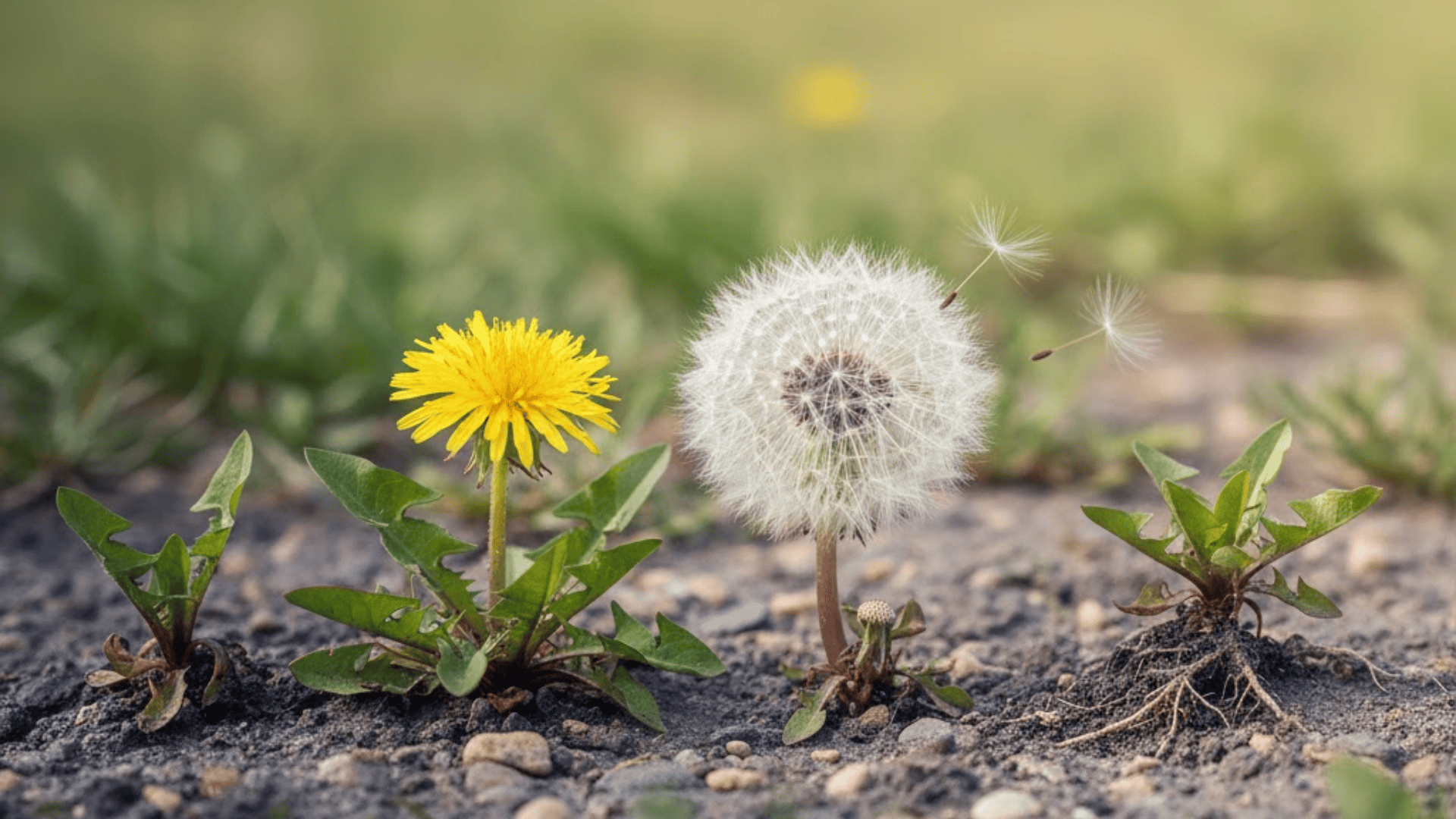
Timing depends on weather and location, but the overall pattern of the dandelion’s growth stays fairly predictable. Temperature, sunlight, and moisture can speed things up or slow them down, but the sequence of stages does not change.
From seed to visible plant usually takes a few weeks. During this time, the plant focuses on establishing roots before putting much energy into leaves.
Flowering most often happens the following spring, after the plant has had time to store energy in its root. In warmer climates or ideal conditions, some plants can flower sooner.
Once the yellow flower appears, seed formation moves quickly. After the flower closes, seeds develop inside, and it usually takes less than two weeks for the head to reopen as a white puffball ready for dispersal.
A single dandelion plant can live for several years, and in stable conditions, some survive close to a decade. During that time, the life cycle repeats multiple times each growing season.
This long lifespan, combined with rapid seed production and repeated flowering, explains why dandelions spread so easily and become established so quickly once they appear
Why Dandelions Are so Hard to Get Rid Of
The taproot is the main reason dandelions are so hard to remove. It grows deep into the soil and stores energy. If even a small portion of the taproot remains after pulling or cutting, the plant can use that stored energy to regrow.
Seed production adds to the problem. A single dandelion can produce hundreds of seeds in one cycle. Many of these seeds survive, spread easily by wind, and germinate under a wide range of conditions.
Fast regrowth also plays a role. When leaves are damaged or removed, new leaves form quickly. The plant stays low to the ground and avoids wasting energy on tall stems unless it is ready to flower again.
Seasonal timing gives dandelions a strong advantage. They begin growing early in spring, often before other plants are active. With less competition for light, water, and space, they establish themselves easily.
Together, these traits make dandelions highly resilient and difficult to eliminate once established.
Wrapping Up
Once you look closely, the dandelion stops feeling random and starts feeling intentional. Each stage supports the next, from energy storage underground to fast seed release above ground.
The dandelion life cycle works because the plant prepares early, wastes very little, and responds quickly when conditions change. That’s why it survives mowing, cold weather, and poor soil so well.
It’s also why the same plant can return year after year. Seeing this process clearly helps replace frustration or confusion with understanding.
If you’re curious to go deeper, revisit the stages the next time you spot a dandelion and try to identify where it is in its cycle. Observing it in real time is the best next step.
Frequently Asked Questions
Do dandelions need pollination?
Not always. Many dandelions can form seeds without pollination, which means they can reproduce even when insects or other pollinators are not present.
How far can dandelion seeds travel?
Dandelion seeds are very light and move easily with wind. Even gentle air movement can carry them far enough to spread the plant widely.
Do dandelions grow back every year?
Yes. If the taproot stays alive underground, the same dandelion can regrow each year instead of starting from a new seed.