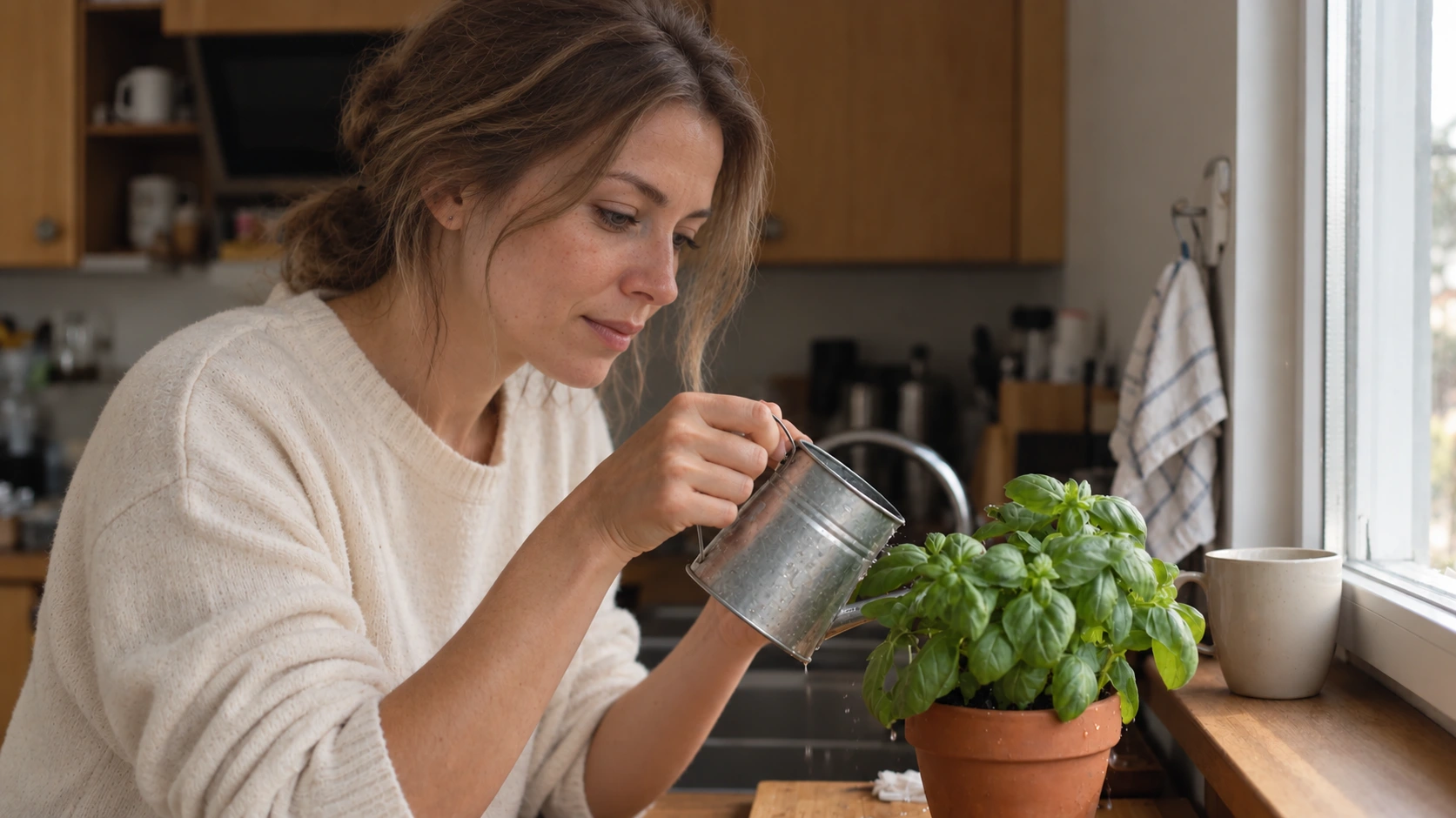
Brown Houseplant Leaves? Put the Watering Can Down for Two Seconds
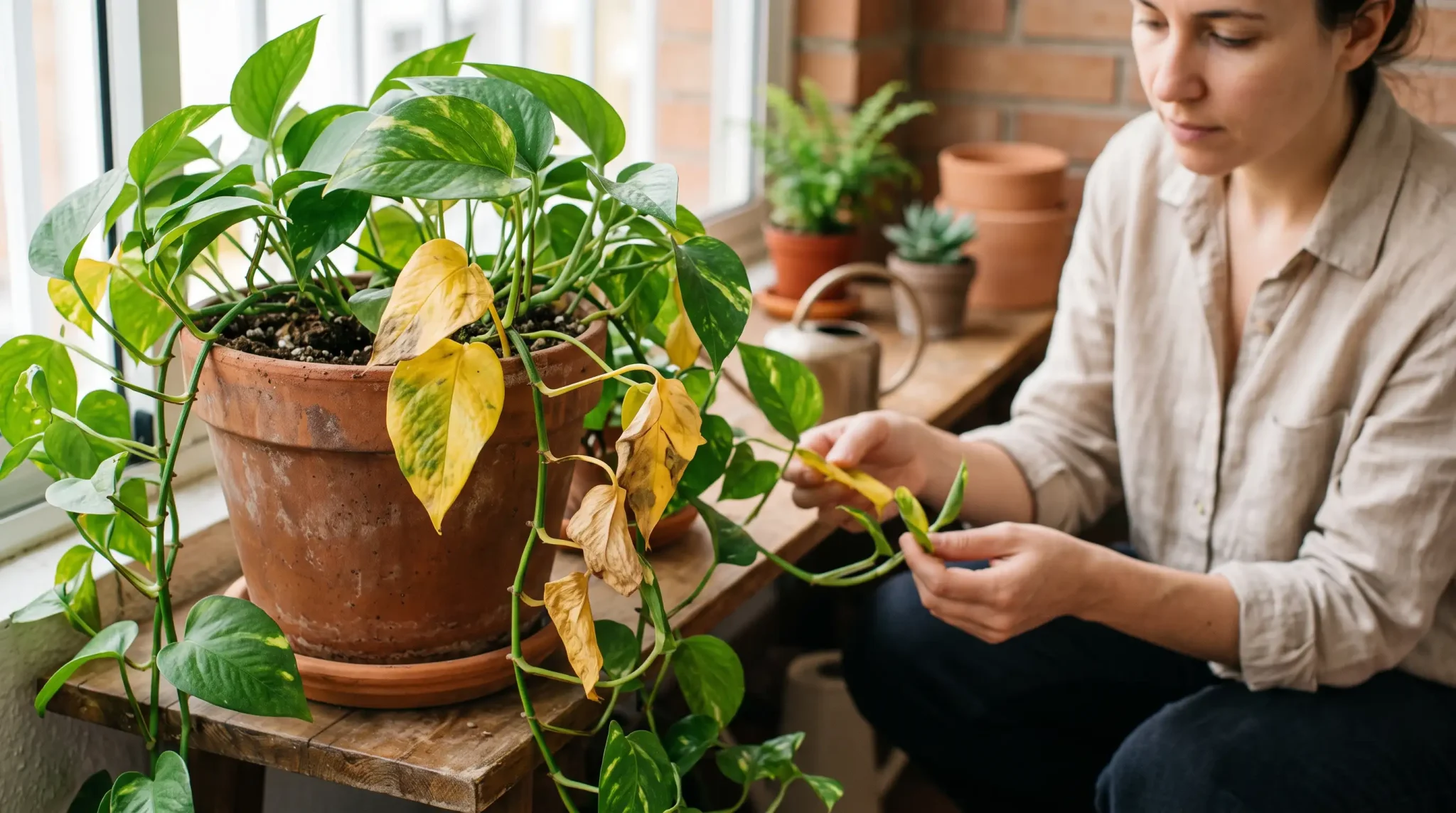
If you see brown leaves and your first instinct is to panic water… welcome to the club. I’ve done it. I’ve also guilt watered. And once I “just gave it a little sip” every day for a week and basically slow drowned a pothos while whispering, “Why do you hate me?” into the soil.
Here’s the thing: brown leaves are your plant waving a tiny flag that says “Something’s off.” But that “something” isn’t always thirst. Sometimes it’s too much water, or crunchy winter air, or a vent blasting it like it owes the HVAC system money.
So before you water, let’s do a quick, calm, actually helpful diagnosis.
Step 1: Read the Brown Like a Plant Detective (Not a Plant Panicker)
Where the browning shows up is basically your plant’s version of a text message. Not always super clear, but definitely hinting at something.
Brown tips only (crispy, papery)
Usually: dry air, inconsistent watering, salt/mineral buildup, or cranky water quality (hi, fluoride).
This is the classic “my plant is offended” look.
Brown edges along the leaf (like a crispy outline)
Usually: underwatering or low humidity.
This is where we stop guessing and check the soil in Step 2.
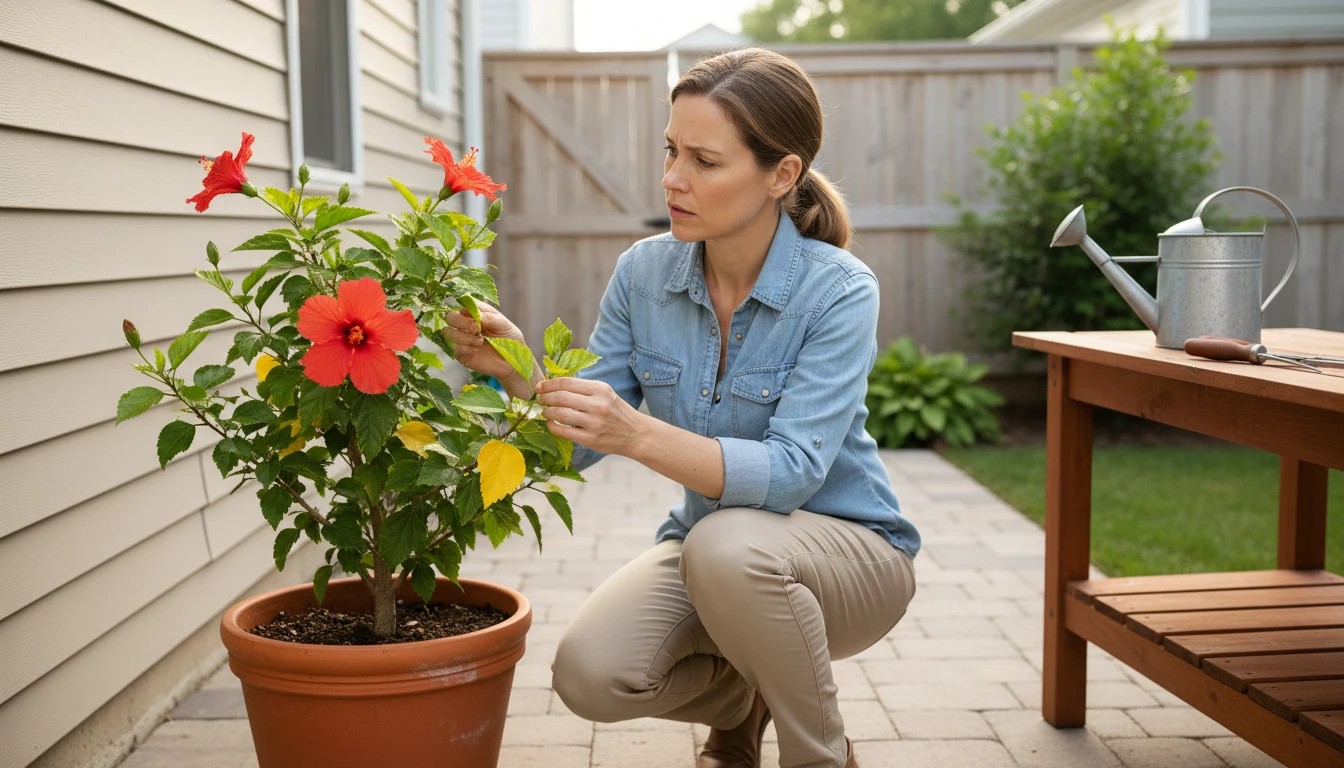
Scattered brown spots
Could be: sunburn, pests, or leaf spot fungus (especially if there’s a yellowish halo).
Pro tip: if it looks like “random freckles of doom,” flip the leaf over and actually look closely. Pests love the underside like it’s a tiny gated community.
One side of the plant browning
Usually: temperature stress (vent, drafty window, radiator).
Plants don’t enjoy being toasted on one side like a sad houseplant rotisserie.
Bottom leaves turning brown and dropping
Sometimes: totally normal aging (especially if new growth looks fine).
If it’s only an old leaf or two, your plant might just be moving on with its life.
Now the big clue: texture.
- Crispy + papery usually means “dry” problems.
- Soft + mushy usually means “wet” problems (and possibly root rot).
And if you mix those up? That’s how plants meet their untimely end.
Step 2: The Two Checks That Clear Up 80% of the Drama
1) Do the soil test (yes, with your finger)
Stick a finger about 2 inches down.
- Bone dry: underwatering (or soil that’s turned hydrophobic and is rejecting water like a toddler rejecting vegetables).
- Damp: watering might be fine look at humidity, light, salts, pests.
- Soggy/heavy/wet for days: overwatering and potentially root rot.
If you only do one thing from this whole post, do this. It’s simple and it saves plants.
2) Peek at the roots (the truth lives down there)
I know. Pulling a plant out of its pot feels illegal. But roots tell you what’s actually happening for palms in pots.
Slide it out and look:
- Firm, pale/whitish roots, no stink: roots are fine. Look elsewhere (humidity, light, water quality).
- Brown/black, mushy roots, smells sour: root rot. We’re going into plant ER mode.
- Dry, shriveled, brittle roots: chronic underwatering. (One big flood won’t fix this you need consistency.)
- Roots circling like spaghetti with barely any soil: root bound. It may need a pot one size up.
If you can’t get it out:
- Soil pulling away from the pot = usually too dry.
- Soil smells funky = usually too wet.
Okay. Now you get to fix the right thing instead of randomly doing plant CPR.
Fixes That Actually Work (Based on What You Found)
If it’s underwatered (crispy tips/edges, dry soil, curling leaves)
First: don’t shame yourself. Life is busy. Plants are needy.
What I do:
- If water runs straight through or the soil seems to repel it, bottom water: set the pot in a bowl of room temp water for 10-15 minutes, then let it drain.
- Otherwise, water from the top until it runs out the drainage holes.
Then the most important part:
Stop watering on a strict schedule. Check the soil first. Always.
You won’t “heal” the brown parts (those are done), but new growth should look better within a week or two.
If it’s overwatered / root rot (wet soil, soft leaves, yellowing, gnats, stink)
Overwatered plants are rude because they often look thirsty. But the roots are basically suffocating.
If you suspect rot, do this:
- Slide the plant out of the pot.
- Rinse roots so you can see what’s going on.
- Snip off any mushy, dark, slimy roots with clean scissors.
- Repot into fresh, well draining mix (and a pot with drainage holes this is not optional).
- Hold off watering for 3-7 days so the roots can recover.
- After that, water only when the top inch or two dries out.
- Skip fertilizer for about a month (fertilizer + stressed roots = more stress).
Also: if your pot sits in a saucer, dump the excess water after watering to reduce container drainage problems. Every time. No plant wants to marinate.
Give it a couple weeks to stabilize. Root problems don’t resolve overnight, unfortunately.
If it’s dry winter air (crispy tips even when you’re watering correctly)
If your watering seems solid and your roots look fine, but your plant is still crisping up especially in winter your house air might be drier than a saltine.
What actually helps:
- Humidifier. I know, not sexy, but it works.
- Group plants together (they help each other a little).
- Move it away from vents/radiators. Those blasts of air are brutal.
What I don’t bother with anymore: misting.
It makes you feel productive for 14 seconds, then the air goes right back to being dry. Plus, wet leaves can invite fungus. Hard pass.
If you see crusty white stuff on the soil (salt/mineral buildup)
If there’s a white/gray crust on the soil or pot rim, that’s usually minerals and fertilizer salts building up.
Flush it like this:
- Scrape off the crusty top layer.
- Put the pot in a sink/tub.
- Run water through the soil until it drains out the bottom.
- Let it drain, then repeat a couple more times.
This won’t “overwater” the plant as long as it drains fully. The point is to wash the extra salts out.
If buildup keeps coming back, consider repotting with fresh soil.
If your plant hates your tap water (looking at you, dracaena)
Some plants are dramatic about water quality spider plants, dracaenas, calatheas, peace lilies… they can get brown tips from stuff in tap water.
A few quick notes:
- Letting water sit out helps with chlorine, not fluoride.
- Softened water is usually a no go (it adds sodium, and plants do not want that drama).
If you suspect water quality, try:
- distilled, reverse osmosis, rainwater, or filtered water
Give it a couple weeks after switching. Plants are not instant feedback machines.
If it’s light or temperature stress (sunburn is real)
- Too much direct sun: you’ll see pale/tan crispy patches on the side facing the window. Move it back to bright, filtered light.
- Too cold/hot drafts: browning on one side, or sudden decline after moving it near a window/vent. Shift it 3-5 feet away from the problem.
Houseplants like stable conditions. (Honestly, same.)
If it’s pests (a.k.a. tiny villains)
If you see spotting, sticky residue, webbing, cottony fluff, bumps, or weird twisted new growth assume pests until proven otherwise.
My quick and dirty approach:
- Isolate the plant (unless you want the whole collection to join the party).
- Rinse/spray it down thoroughly.
- Use insecticidal soap or neem oil depending on the pest.
- Repeat weekly until you stop seeing signs.
If you have spider mites, don’t do one sad little spray and call it a day. They require persistence. (Annoying, but true.)
“Should I Cut the Brown Parts Off?” (Yes, But Do It Like This)
Brown tissue doesn’t turn green again. Trimming is mostly for looks and for your mental health, because staring at crispy tips can feel oddly personal.
Here’s what I do:
- If less than half the leaf is brown: trim just the brown part.
- Follow the natural shape of the leaf and leave a tiny brown margin (don’t cut into healthy green it can trigger more browning).
- If more than half the leaf is toast: remove the whole leaf and let the plant focus on new growth.
Also: clean your scissors. It takes 10 seconds and prevents spreading problems.
How to Keep Brown Leaves From Coming Back (Without Becoming a Plant Monk)
I’m not here to give you a 47 step “plant routine.” Nobody has time for that. But these few habits make a huge difference:
- Check soil before watering. Every time. Schedules are liars.
- Water thoroughly when you do water until it drains out the bottom.
- Make sure there’s drainage. No drainage hole = you’re basically guessing with every watering.
- In winter: water less often and go easy on fertilizer.
- Keep plants away from vents and radiators if they’re prone to crisping.
If you want one simple “maintenance” thing: once in a while, water thoroughly enough that it flushes the pot a bit. It helps prevent salt buildup (and it’s also a good reminder to empty the saucer).
When Brown Leaves Are Actually a Big Deal
Not every brown leaf is a crisis.
Totally normal:
- One or two old bottom leaves browning while new growth looks great
Worry a little more when:
- lots of leaves (old and new) brown at the same time
- browning spreads fast upward
- new growth comes in damaged
If you treat the obvious cause and new growth is still coming in brown, go back to basics: check roots, check soil, consider fresh potting mix, and look hard for pests.
Plants don’t usually “randomly” brown for no reason. There’s almost always a clue you just have to look in the right order.
If your plant is sitting there right now looking crunchy and betrayed, do this today: touch the soil, then check the roots (if you can). Once you know whether it’s a dry problem or a wet problem, the fix gets a lot less mysterious and your watering can can stop being the automatic answer to everything.