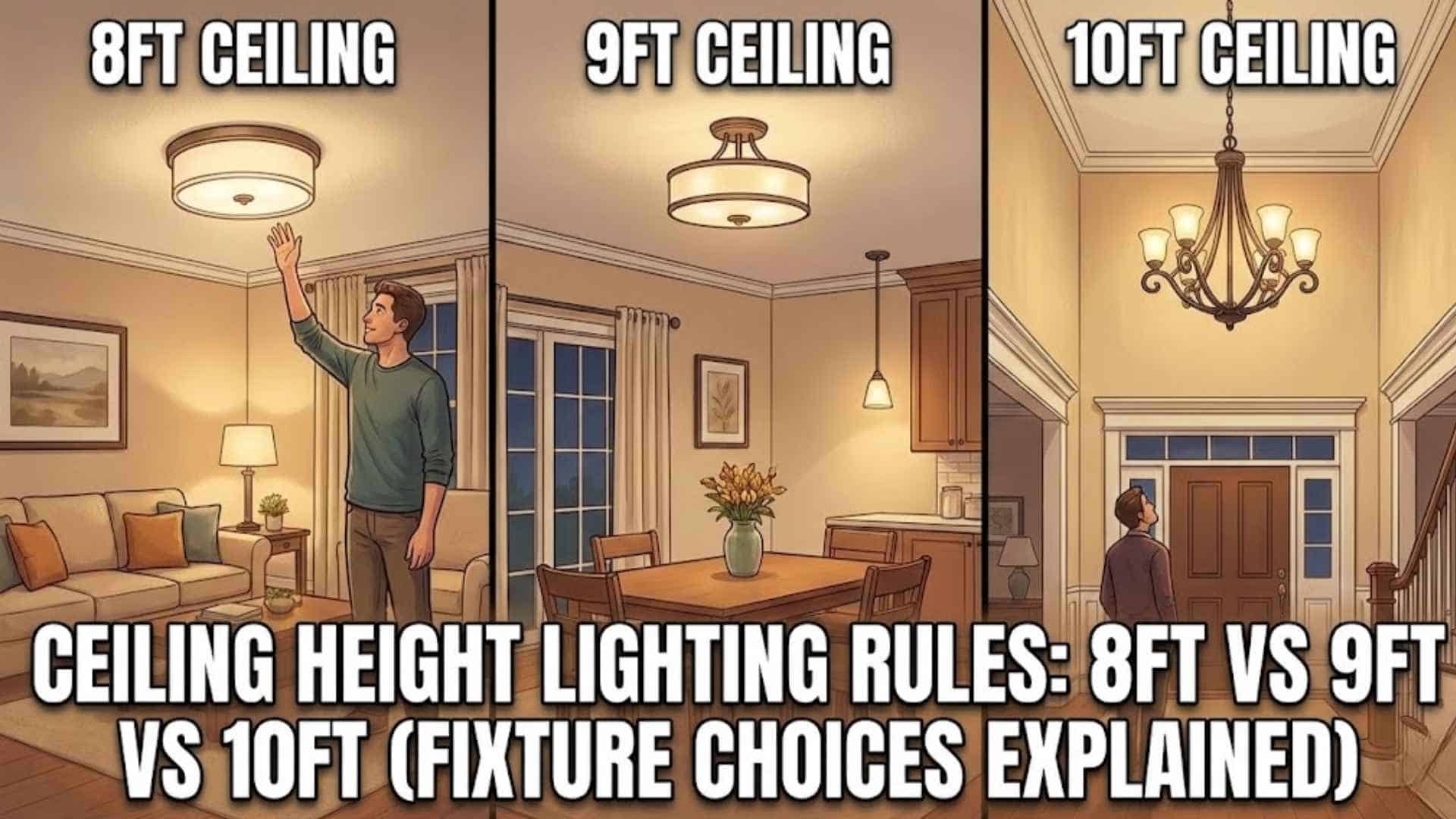
In many U.S. homes, lighting looks “off” for one simple reason: the fixture does not match the ceiling height. A chandelier that feels perfect in a 10-foot room can look oversized in an 8-foot bedroom. A tiny flush mount that works at 8 feet can look lost in a 10-foot living room. The goal is not just style, it is clearance, scale, and how the light spreads.
This guide breaks down practical fixture rules for 8 ft, 9 ft, and 10 ft ceilings, plus room-by-room tips that help you avoid common layout and hanging mistakes.
Three Things Ceiling Height Controls
Before comparing 8 vs 9 vs 10 feet, it helps to know what changes when ceilings get taller:
- Visual scale: taller ceilings can handle taller fixtures and bigger diameters.
- Headroom: a low-hanging piece can feel crowded or unsafe in an 8 ft room.
- Light spread: higher mounting often needs more lumens or better distribution to avoid dim corners.
Fast Clearance Rules (So Fixtures Don’t Feel in the Way)
General walk-through spaces
- Try to keep the bottom of a hanging fixture at least 7 feet above the finished floor in areas people walk through.
Over dining tables
- A common target is 30–36 inches from the tabletop to the bottom of the fixture.
- With higher ceilings, you can float slightly higher if the fixture still feels connected to the table.
Over kitchen islands
- Many homeowners aim for 30–36 inches from countertop to the bottom of pendants.
- Spacing and sightlines matter so people can see across the island comfortably.
8-Foot Ceilings: Keep It Clean, Close, and Comfortable
With 8-foot ceilings, the main risk is choosing fixtures that hang too low or feel visually heavy. You can still have a statement look, but it needs the right profile.
Best fixture types for 8 ft ceilings
- Flush mounts: great for bedrooms, hallways, smaller kitchens
- Semi-flush mounts: adds style without eating headroom
- Low-profile chandeliers: can work in dining rooms and entries if they are not too tall
Simple 8 ft rule of thumb
If a room is primarily for walking through (hallway, small entry), stay with flush or semi-flush designs. Save hanging fixtures for places where people sit under them (dining table) or where there is a clear open volume.
9-Foot Ceilings: The “Most Flexible” Height in Many U.S. Homes
Nine-foot ceilings are common in newer construction and give you more breathing room. You can use semi-flush lights more often, and many medium chandeliers start to look balanced.
Best fixture types for 9 ft ceilings
- Semi-flush or compact chandeliers: living rooms, bedrooms, breakfast nooks
- Pendants: kitchen islands, bars, sinks (with proper spacing)
- Standard chandeliers: dining rooms and foyers where the footprint allows
A practical upgrade approach
If you are moving from 8 ft to 9 ft, your biggest design upgrade is often switching from basic flush mounts to more sculptural semi-flush pieces. They give the room dimension without the “too low” problem.
10-Foot Ceilings: Use the Height or the Room Can Feel Empty
Ten-foot ceilings can make rooms feel airy, but lighting can look undersized if you keep using fixtures meant for 8-foot spaces. The room may feel bright in the center and dim around the edges.
Best fixture types for 10 ft ceilings
- Larger chandeliers: dining rooms, living rooms, foyers
- Multi-pendant arrangements: longer kitchen islands or open kitchens
- Layered plans: ceiling fixture + wall lights + lamps to fill volume
What changes at 10 ft
- You can usually go larger in diameter and a bit taller in fixture height.
- Consider adding additional sources (lamps or sconces) so the room does not rely on one overhead point.
- If the room has dark walls or long corners, one ceiling light may not cover the full space evenly.
Room-Specific Tips by Ceiling Height
Entry / foyer
- 8 ft: semi-flush often looks best and avoids headroom issues.
- 9 ft: compact chandelier can work if the entry is wide enough.
- 10 ft: consider a larger chandelier or layered lighting to match the volume.
Dining room
- Table clearance stays similar across heights (30–36 inches above the tabletop), but bigger ceilings can handle more scale in the fixture.
- Use a dimmer so you can shift between dinner mood and brighter tasks.
Kitchen
- In 8 ft kitchens, keep pendants compact or use semi-flush designs for clean headroom.
- In 9–10 ft kitchens, pendants can be more dramatic, but keep them high enough for clear sightlines.
Bedroom
- Low-profile fixtures tend to feel best at 8 ft.
- At 9–10 ft, you can use semi-flush pieces with more depth without the room feeling crowded.
Common Mistakes (That Make Rooms Feel “Wrong”)
- Using an 8 ft fixture in a 10 ft room: the ceiling feels empty and the fixture looks undersized.
- Hanging a chandelier too low in an 8 ft room: it feels intrusive and reduces perceived space.
- Ignoring the room footprint: a bigger ceiling does not always mean a bigger fixture if the room is narrow.
- Relying on one overhead light: taller ceilings usually need layered lighting for comfort and balance.
A Simple Decision Shortcut
If you want a fast way to decide without overthinking:
- 8 ft: lean flush/semi-flush, choose compact chandeliers only where people sit under them.
- 9 ft: most fixture types work, choose scale based on room footprint and furniture.
- 10 ft: increase fixture scale and add layers so the room does not feel top-heavy or empty.
Want Fixture Options That Match Your Ceiling Height?
Once you choose fixtures that respect ceiling height, rooms immediately feel more intentional. If you are comparing chandeliers, pendants, ceiling lights, and coordinated styles for 8 ft, 9 ft, or 10 ft ceilings, you can see the latest designs on Seus Lighting. The right ceiling-height match is one of the quickest upgrades that makes a U.S. home feel more finished without remodeling.