Setting up a bedroom with the right energy isn’t just about moving furniture around. It’s about creating a space that actually supports you: the way you rest, the way you feel, and the way your mind settles when the lights go out.
A lot of people come to feng shui because the room feels “off” in a way they can’t quite name, and they’re looking for a steadier, calmer setup.
This guide breaks everything down in a practical way, showing you how small shifts in layout, decor, and atmosphere can change the room’s entire tone. By the end, the space will feel calmer, clearer, and a lot more intentional.
What Positive Energy Means in Feng Shui
So here’s the deal. When people talk about positive energy in a bedroom, they’re not trying to get mystical for the sake of it. They’re talking about how a room hits your system the second you walk in.
Chi is just the word they use for that flow. You feel it. Your body knows when a space supports you or when it’s throwing you off.
In feng shui, positive energy comes from chi that can move through the room without getting stuck or pushed around. The setup should feel stable. A solid wall behind the bed. A headboard that anchors you. Those things signal safety, even if you don’t think about them consciously.
Why the Bedroom Matters Most
The bedroom matters because this is where your body lets go. You drop your defenses and recharge. If the room has the wrong energy, you feel it fast: lighter sleep, more tension, slower recovery.
It also shapes intimacy. A grounded, balanced room makes connection easier.
When the space is set up well, you don’t have to think about it. You just feel more rested, more centered, and ready for whatever the day throws at you.
The Most Important of Feng Shui Rules: Bed Placement for Positive Energy
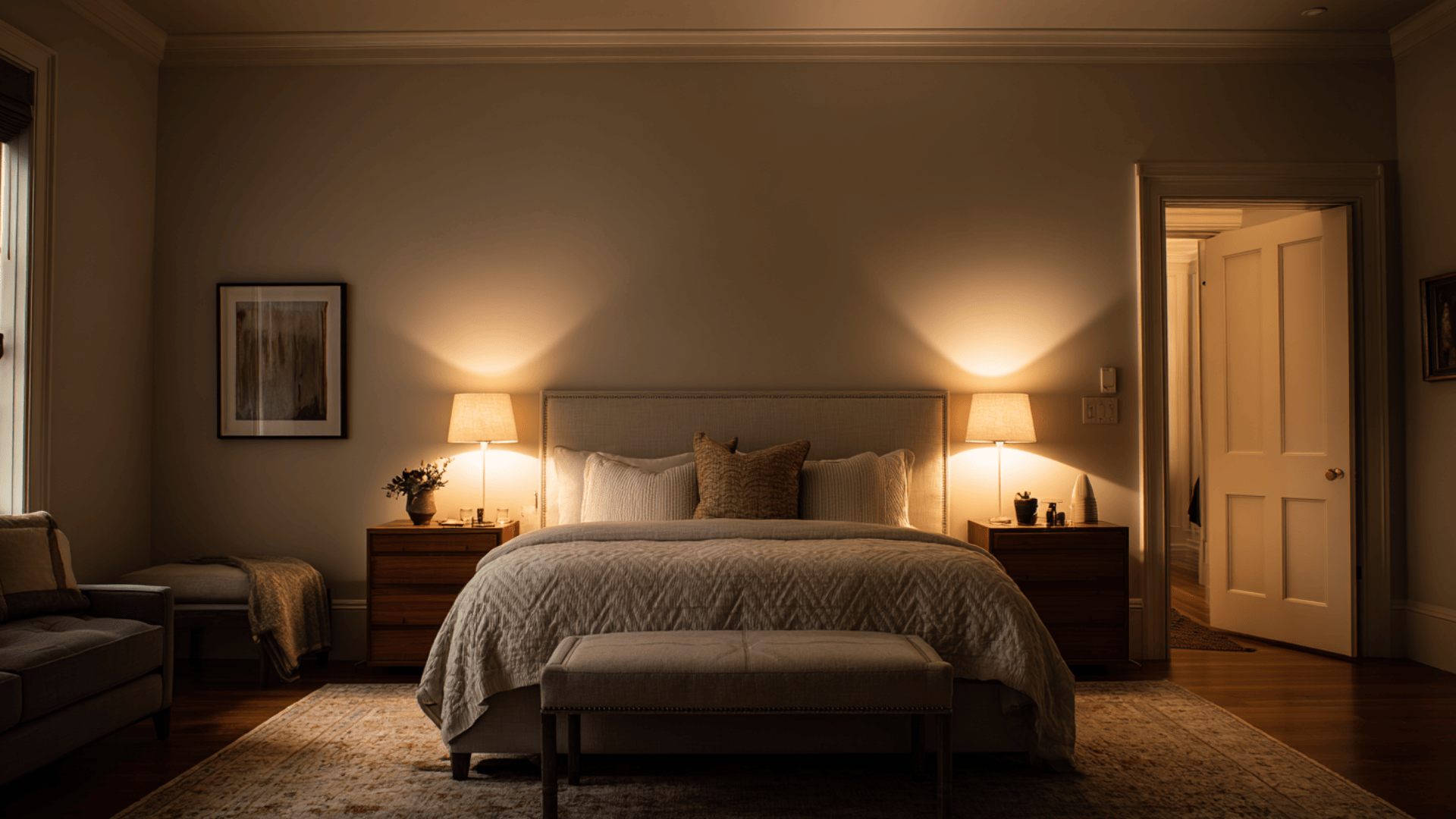
In feng shui, the bed is the center of everything. It’s where your body rests the longest, and it’s the spot that shapes how safe or exposed you feel.
Because of that, bed placement ends up being about 80 percent of the whole setup. If the bed is in the right spot, the room works with you. If it’s in the wrong spot, the space keeps you on edge even when you’re trying to sleep.
1. How to Put Your Bed in the Commanding Position
The commanding position is simple. It’s the spot where you can see the door without being lined up with it. Here’s the basic idea:
- Put the bed against a solid wall .
- Have the door in your view , usually diagonally across the room.
- Make sure the bed is not directly in the door’s path .
- Leave space on both sides if you can.
- Add a solid headboard to anchor the position.
The goal is simple: you feel in control without feeling exposed.
2. The Best Wall for the Bed
The best wall is the one that feels the most solid with no windows or gaps. Just a stable surface that makes the bed feel supported.
A solid headboard adds even more stability. Wood or upholstered works best, because it creates a sense of protection and grounding while you sleep. You want the bed to feel like it actually has your back.
3. Placements to Avoid and Why
Some bed placements throw the energy off fast. Here’s what to avoid:
- In line with the door: This puts your body directly in the path of energy rushing in. It feels exposed and unsettled.
- Under a window: Windows don’t offer support. Airflow, noise, and shifting light make the space feel unstable.
- Under beams: Beams create a downward pressure. Even if you don’t notice it at first, your body feels it.
- Feet pointing to the door: This position has a long history in feng shui as the “drained energy” spot. It makes the room feel like it’s pulling your energy outward instead of holding it.
4. If Your Room Won’t Allow a Proper Placement
Most rooms aren’t perfect, so here are fixes that actually work:
If the bed must face the door, use a small bench, footboard, or soft barrier at the end of the bed to slow the energy flow.
If the bed must go under a window, add heavy curtains and a strong headboard to create support. Keep the window closed while you sleep.
If you’re stuck under beams: Use a canopy, fabric panel, or tall headboard to soften the downward pressure.
If the room is too small for equal space on both sides, keep it balanced visually. One real nightstand, one smaller shelf or floating table. Symmetry matters more than perfect spacing.
If the layout gives you no view of the door, hang a small mirror in a way that lets you see the door’s reflection from the bed. Not facing the bed, and angled low on a side wall.
These fixes help the room feel more stable, even when the layout fights you.
How to Create Positive Energy in the Room Beyond the Bed
Once the bed is sorted, you start shaping the rest of the room so the energy isn’t bouncing all over the place. You want the space to feel calm in a way your body understands before your brain even says anything. That’s what good chi does. It supports you quietly.
1. Clearing Clutter Physically and Energetically
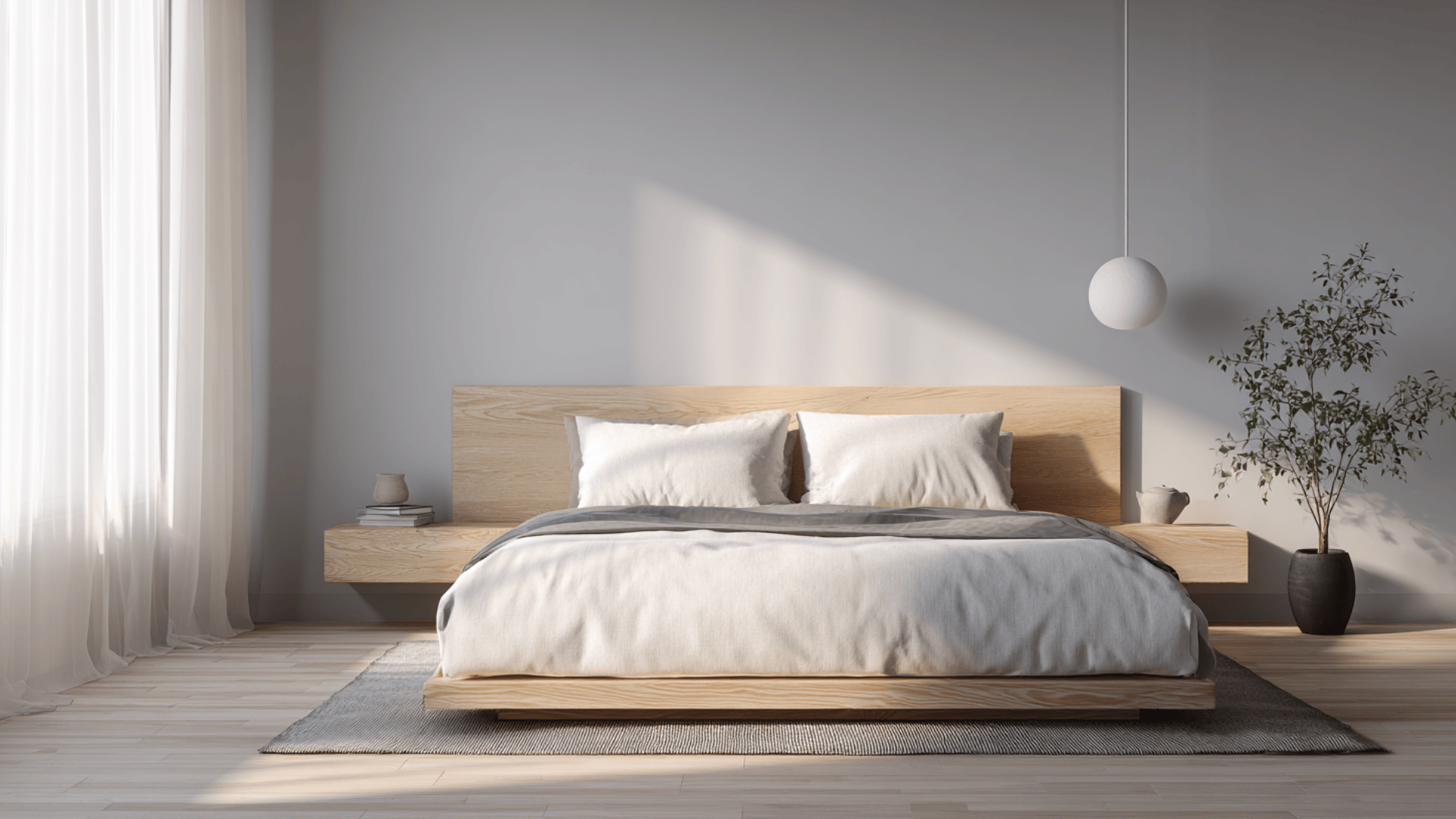
Clutter isn’t just “stuff.” It’s noise. And the bedroom is the last place you want noise. I’ve seen this a lot… the second people clean up the room, even a little bit, the whole vibe shifts. You feel lighter.
Under-bed storage rules:
Yeah, people love to shove everything under the bed, and look, I get it. But in feng shui, that space is supposed to breathe.
Chi flows under the bed the same way air does. So if you have to store stuff there, keep it soft and calm: bedding, blankets, that kind of thing. No old paperwork. No gym gear. Nothing emotionally heavy.
Nightstand clutter:
Your nightstand should not look like you’re running a convenience store out of it. Keep the essentials: lamp, a book, maybe water. That’s it. You start stacking chargers, receipts, whatever… the room starts to feel like it’s working overtime.
Laundry, cords, devices:
Laundry piles carry stale energy. Cords look chaotic. Devices buzz even when they’re off. All of that low-level stimulation keeps your system from settling down. Clean lines, quiet surfaces, that’s the move.
2. Mirror Rules for Positive Energy
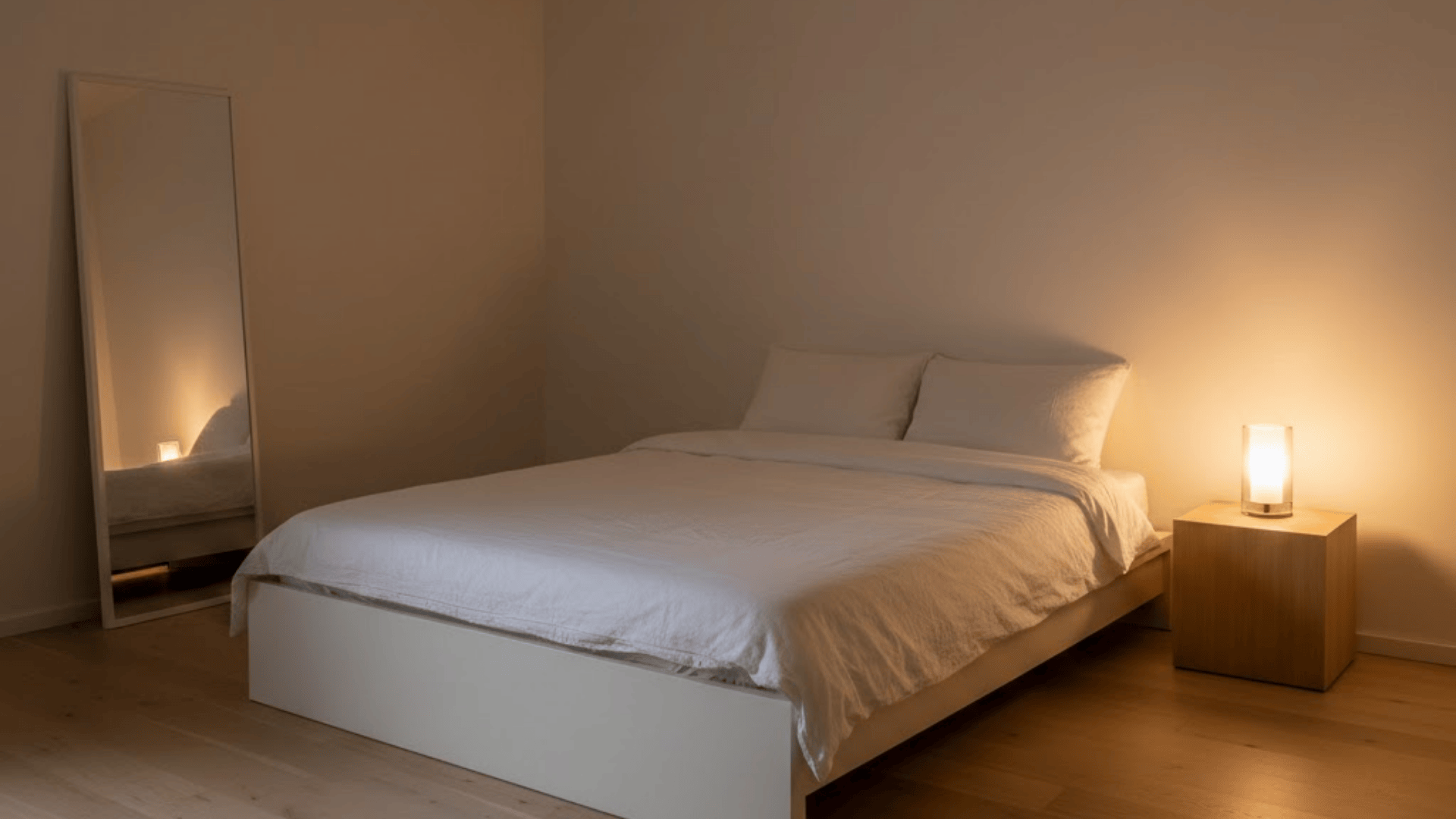
Mirrors are tricky. They double everything; the good energy and the bad. And in a bedroom, where you’re trying to rest, that bounce-back effect can feel restless.
The reason feng shui practitioners worry about mirrors facing the bed is because they reflect movement. Even tiny shifts. When you’re half asleep and your brain catches that flicker, it keeps you alert when you should be dropping into deep rest.
So the rule is simple: If you can see yourself in the mirror while you’re in bed, fix it. Move it, tilt it, cover it at night… anything that stops that energetic ping-pong.
3. Electronics and EMF Considerations
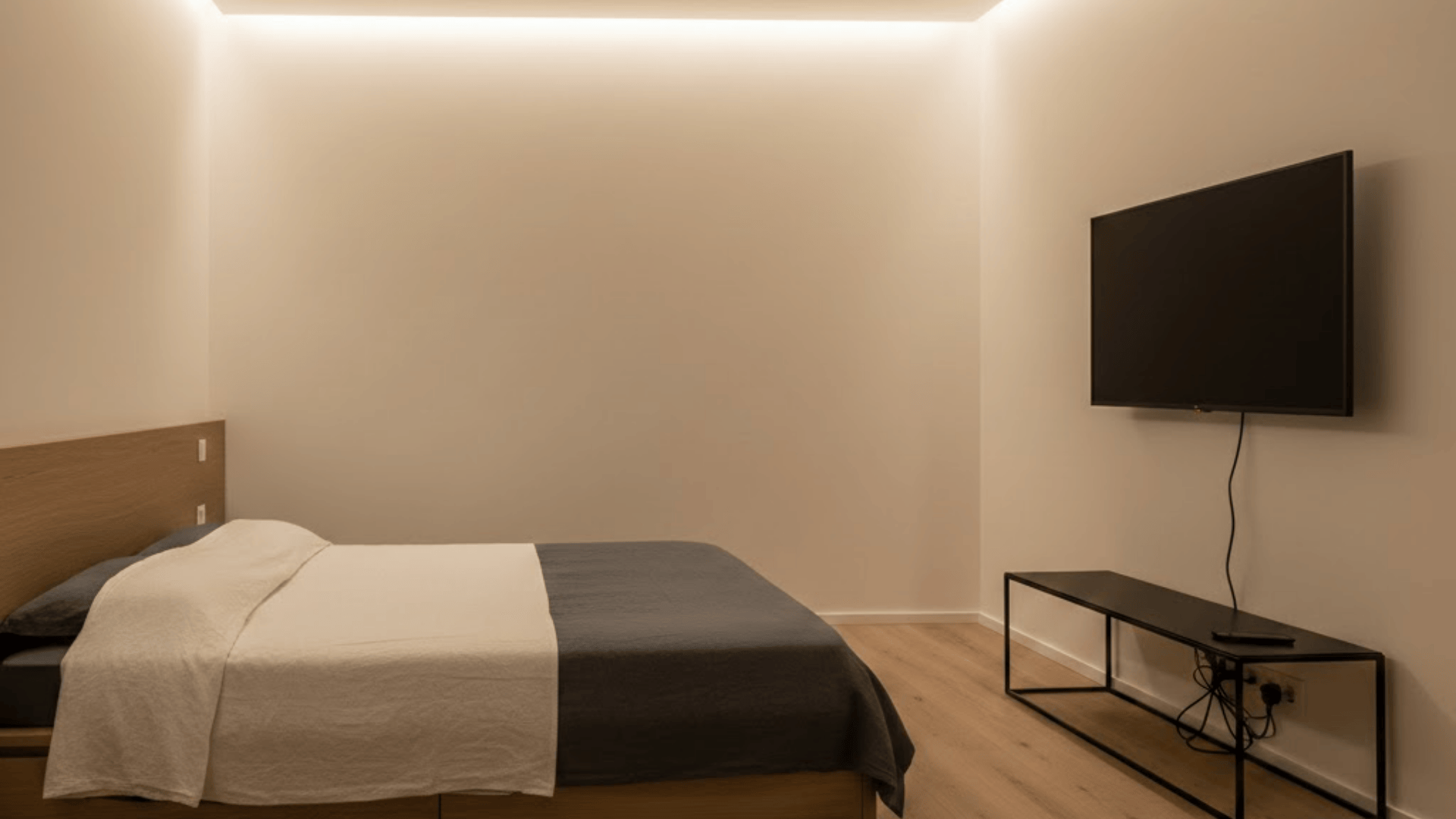
Modern bedrooms are basically mini command centers. Phones, tablets, TVs, smart speakers. And yeah, these things aren’t evil, but they’re not neutral either. They give off a kind of sharp, active energy that pushes your nervous system into “on” mode.
So here’s what actually helps:
- Keep the phone across the room, not next to your head.
- If you have to keep a TV, unplug it at night or cover it.
- Use cord organizers so wires aren’t spiderwebbing everywhere.
- Turn off notifications; your brain hears every buzz, even when you think you don’t.
It’s all about dialing back the background hum so you can actually settle.
4. Lighting that Supports Relaxation
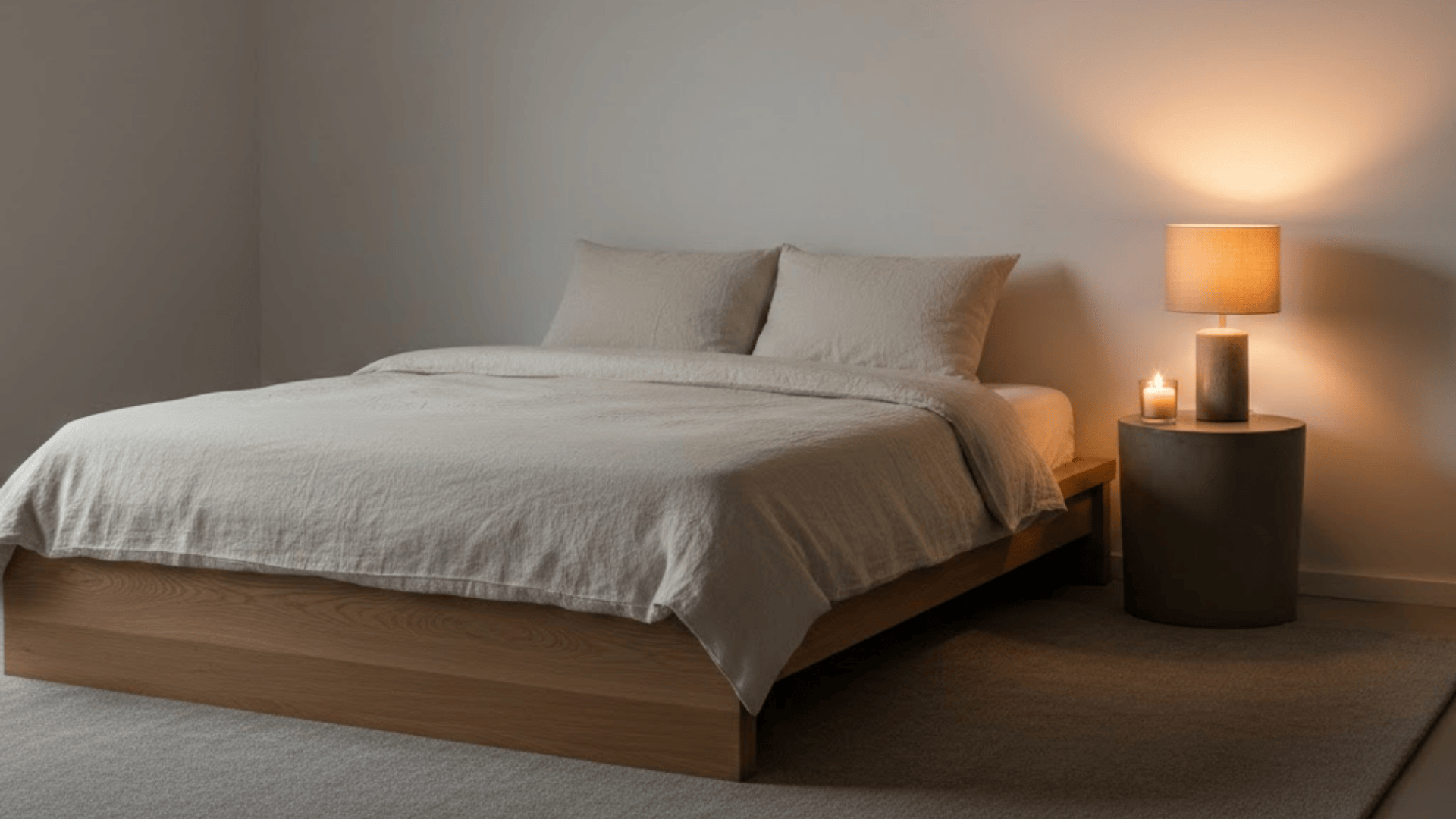
Lighting is one of those things people ignore until they fix it, and then they’re like, “Oh damn… why didn’t I do this earlier?” It changes everything.
Soft lighting: Soft, indirect light feels safer and more grounded. Harsh overheads feel like you’re in a doctor’s office trying to get your blood pressure checked.
Warm color temperature: Stick to warm tones… around 2700K. Your body reads that as “evening,” and your brain winds down smoother.
Dimmers: Absolute cheat code. You control the vibe instantly.
Candles (safe usage): Candles work because they move gently. That tiny flicker is comforting. Just keep them away from anything that can catch fire, and don’t fall asleep with one burning.
5. Feng Shui Bedroom Colors for Positive Chi
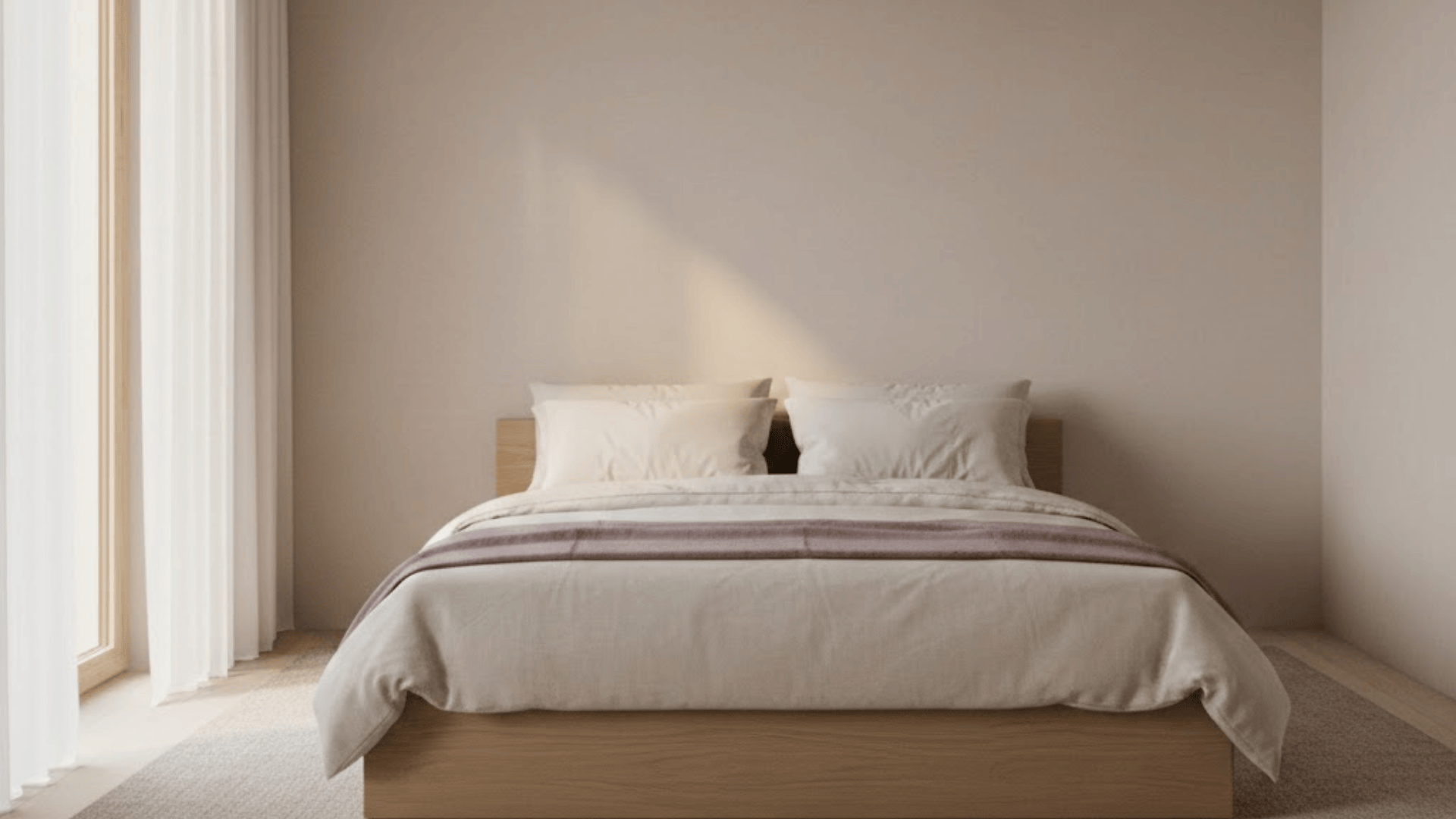
Color hits your system fast. You don’t even think about it, you just feel it. Feng shui leans on colors that soften the room instead of amping it up.
Here are the groups that usually bring in calm, supportive energy:
- Soft neutrals : warm whites, sandy tones, gentle taupes
- Muted earth tones : clay, terracotta, soft browns
- Light blues and greens : shades that feel like sky or still water
- Soft blush or peach tones : warm, quiet, grounded
- Dusty lavender : calming without drifting into heavy “sleepy” energy
The goal isn’t to make the room boring; it’s to make it steady. You want colors that let your mind land instead of spin.
Feng Shui Decor that Improves Positive Energy
Here’s the thing… the decor in your bedroom isn’t just “stuff on the walls” or “whatever you picked up at Target because it looked cool.” Every piece either supports the energy in the room or it chips away at it.
Chi reacts to texture, shape, weight, color, and even the emotional tone of an object. When you dial this in, the room feels like it’s actually taking care of you instead of draining you. That’s the whole game here.
1. Headboards, Bedding, and Materials
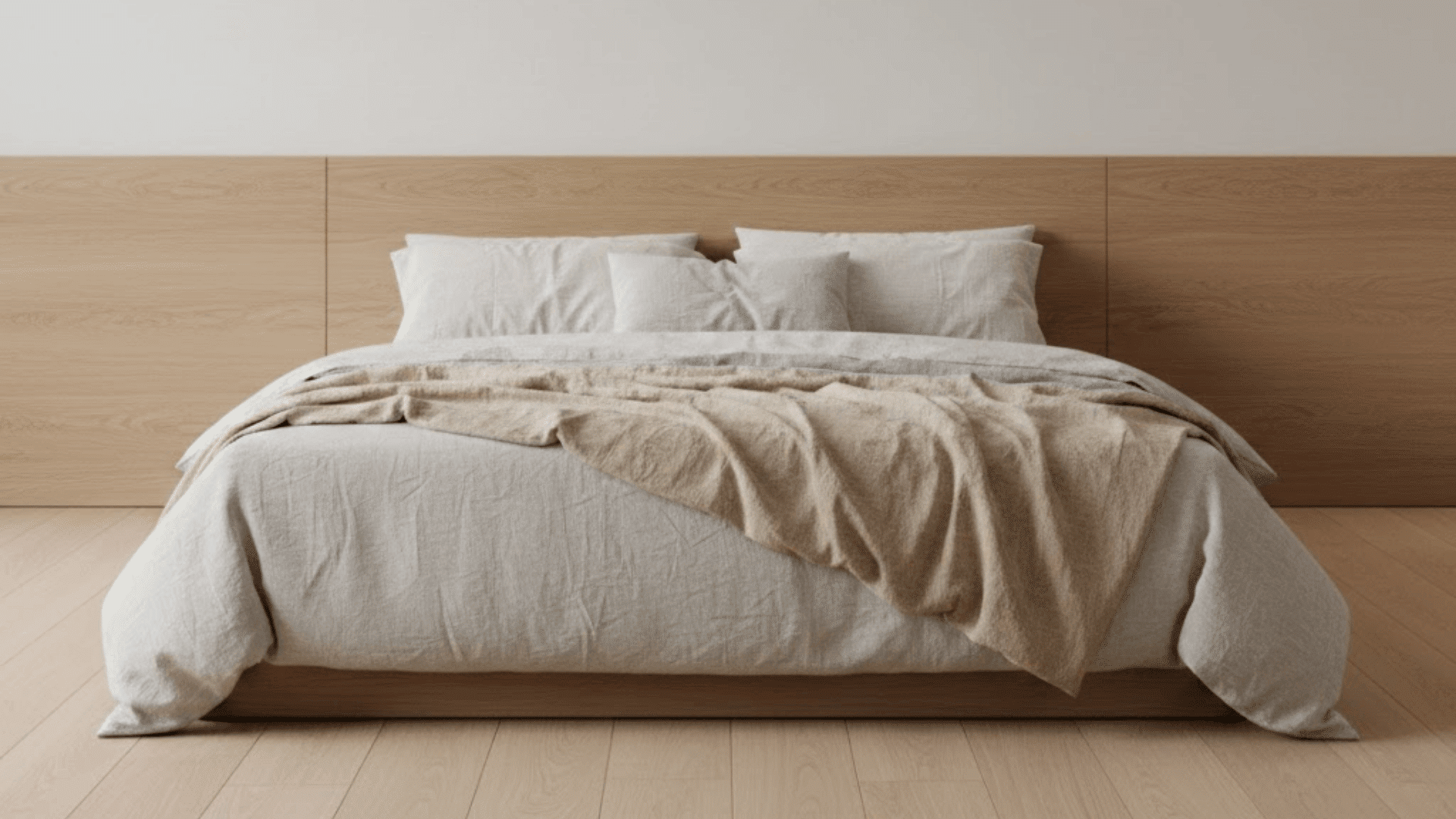
A lot of people don’t think twice about this, but feng shui takes headboards seriously because they represent support. It’s the thing behind you, literally. It’s symbolic, yeah, but it’s also practical. You want something that gives you this quiet sense of “I’m good here.”
Solid headboard required: A solid headboard, wood or upholstered, gives you a feeling of grounding. Nothing slatted. Nothing that looks like it belongs in a prison bunk or a summer camp cabin. A strong headboard says stability. It gives the bed presence.
Best fabrics: Go soft, breathable, natural. Cotton, linen, bamboo. These materials sit easy with your body. They don’t hold weird energy. They feel clean in a way that synthetics just don’t.
Avoid metal frames: Metal reads cold, reactive, and sharp. And if you’ve ever slept in a metal frame, you know the sound; those tiny vibrations every time you shift. Feng shui sees that as unsettled chi.
Metal also interacts with electromagnetic fields, so if you already have a lot of electronics, it amps up that “wired” feeling instead of calming it.
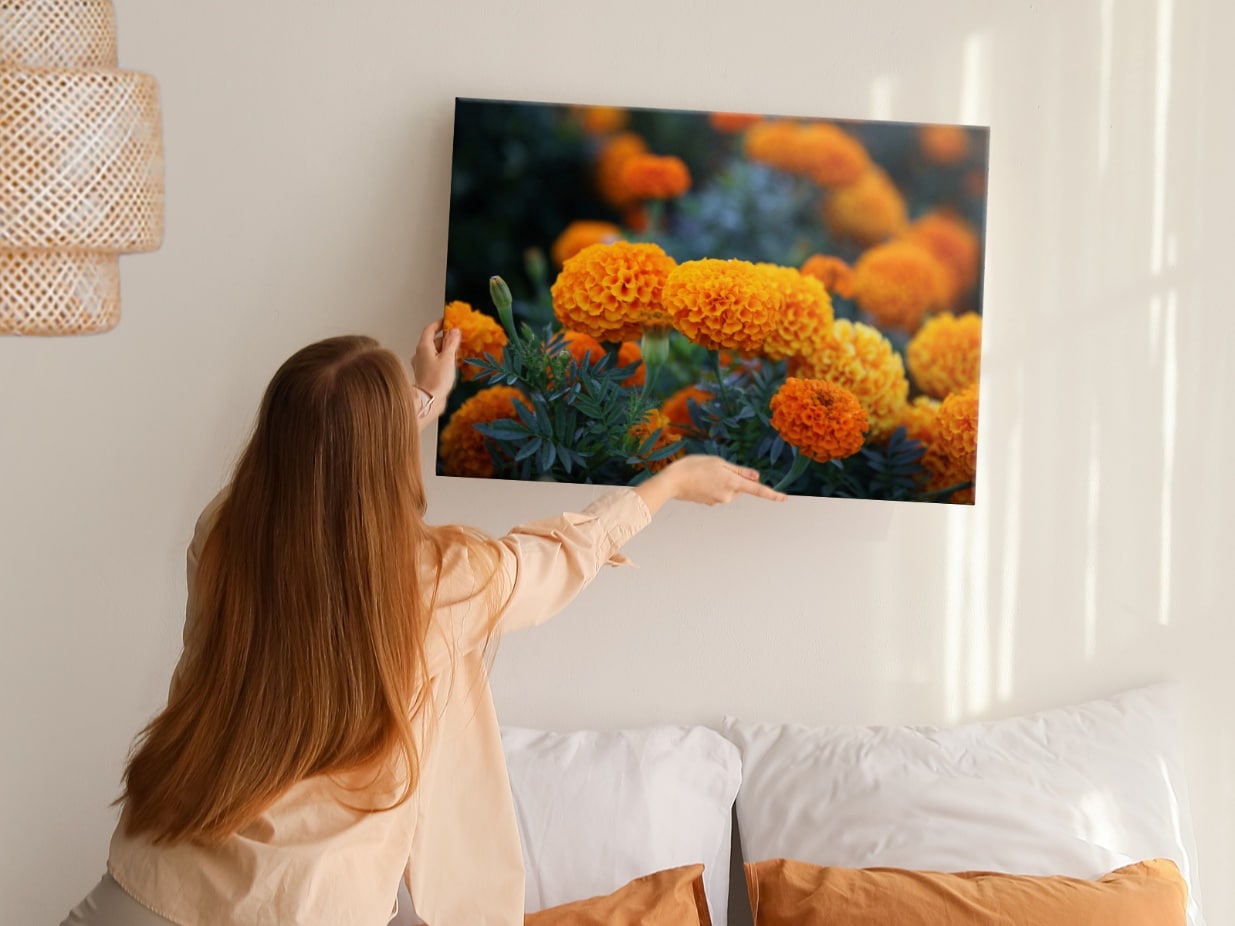
2. Artwork that Supports Peace and Connection
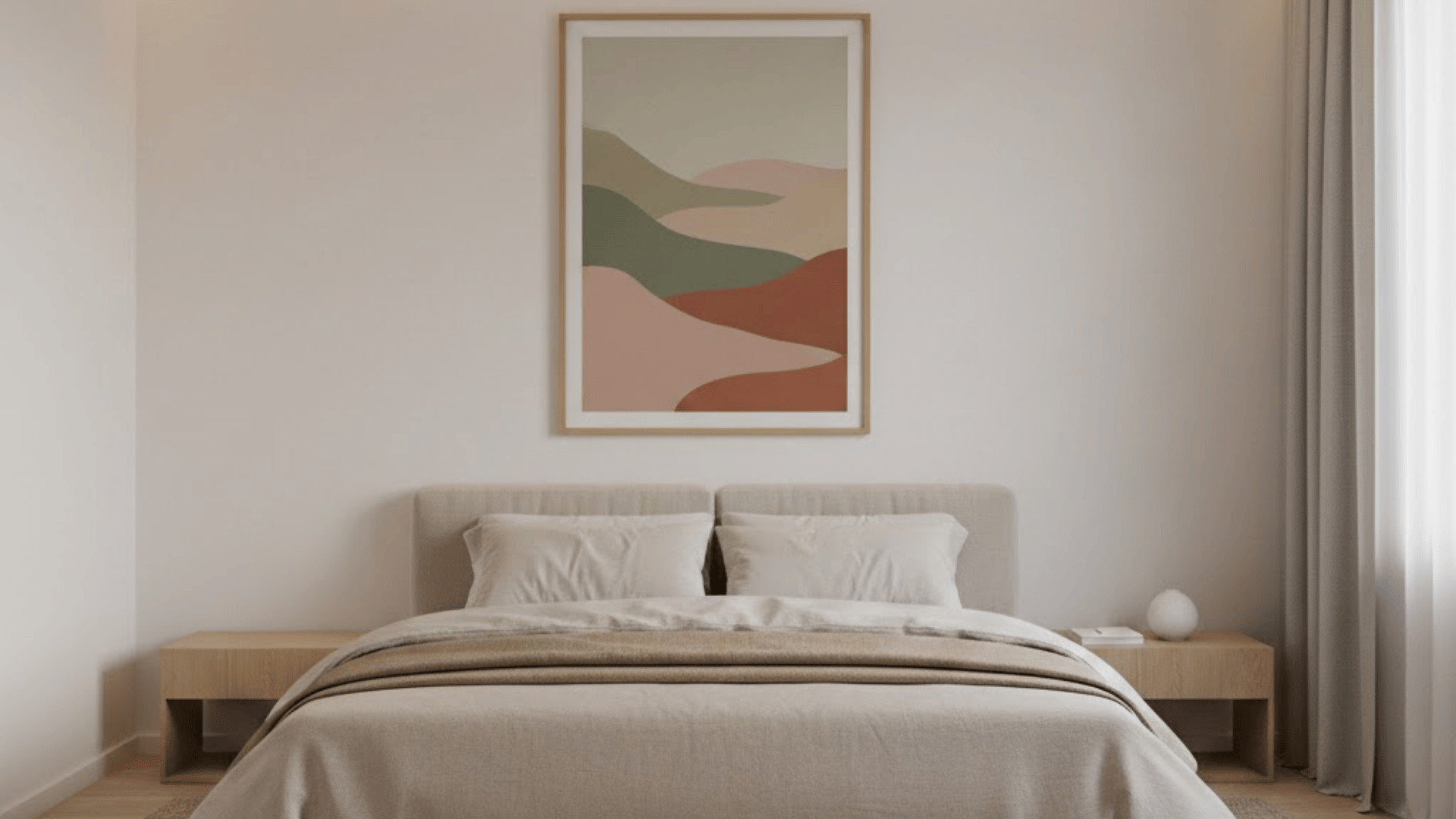
Artwork carries emotional weight. You pick it because it makes you feel something, but in a bedroom, you want to pay attention to what it’s making you feel.
Supportive themes: Go for images that feel warm, soft, grounded. Think landscapes with stillness, abstract forms that flow instead of spike, or art that carries positive associations for you personally.
Symbols to avoid:
- Water imagery: rivers, oceans, waterfalls, all look cool, but water symbolizes movement and emotional turbulence. Not great when you’re trying to sleep.
- Lonely figures: one person standing alone, abstract “isolation” art; it brings in a solo vibe that can mess with relationship energy.
- Chaotic or aggressive visuals: sharp lines, war scenes, anything with intensity behind it.
You want art that feels like a deep breath, not a caffeine hit.
3. Plants in the Bedroom: Yes or No?
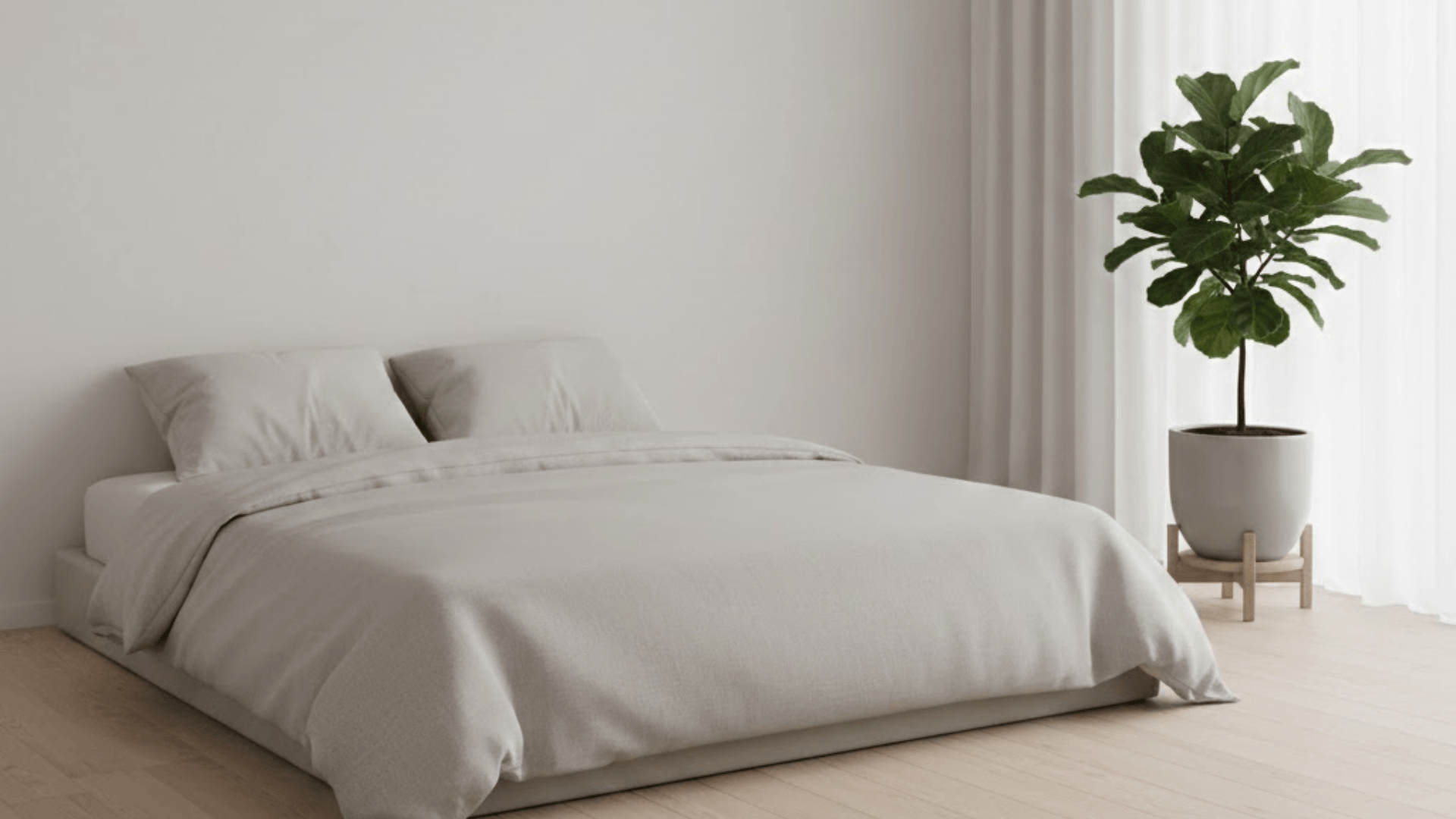
This one always sparks debate, and honestly, it depends more on the specific plant and your lifestyle than anything else. Here’s a way to look at it:
Good reasons to have plants:
- They bring in life chi.
- They soften the room.
- They clean the air a bit.
- They add gentle color without overwhelming the space.
Reasons to be cautious:
- Too many plants turn the room into a jungle; that’s way too active.
- Sharp leaves (like snake plants) shoot energy upward instead of absorbing it.
- Dying or struggling plants drag the whole room down.
Best choice: One healthy plant with rounded leaves. Something easy, something that doesn’t demand attention. The plant should feel like part of the room, not a project you’re trying to keep alive.
4. Scents, Sounds, and Sensory Support
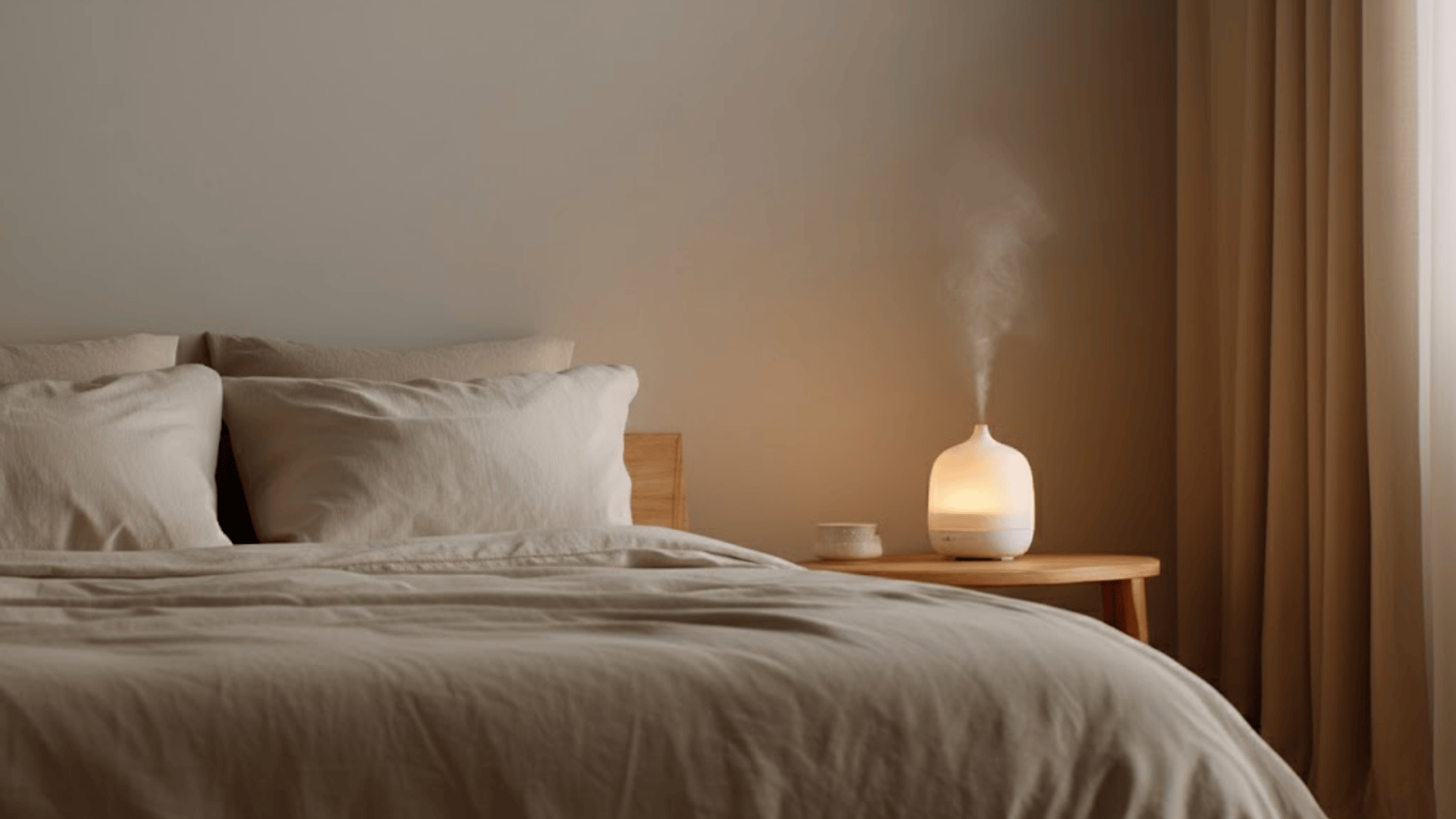
This is the part nobody else is talking about, but your senses shape the energy of a room as much as furniture does. Your nervous system responds instantly to scent and sound, so this layer is huge for creating positive chi.
Scents: You’re not trying to make your bedroom smell like a mall candle shop. Keep it simple.
- Lavender for calming
- Sandalwood for grounding
- Chamomile or vanilla for warmth
Diffusers with a light mist work better than heavy sprays.
Sounds: Some rooms feel too quiet; not peaceful silence, but tense silence. A little bit of ambient sound can help.
- Soft white noise
- Gentle fan
- Low-volume nature sounds (not ocean waves, same water symbolism issue)
Just enough to settle your brain.
Sensory support: This is where everything ties together.
- Soft textures
- Warm lighting
- A room that smells clean, not “perfumed”
- No jarring noises
- No harsh edges visually
You’re building an environment that tells your whole system, “Hey, you can relax now.” When you get this right, sleep gets deeper, stress drops, and the room actually feels alive in a calm way.
Feng Shui for Couples vs. Singles
Here’s the thing people forget… the bedroom doesn’t carry the same job description for everyone. A couple walks into that space with one kind of energy. A single person walks in with another.
Feng shui reacts to those needs differently. So the setup shifts a little depending on where you are in your life and what you’re actually trying to call in.
Relationship Harmony Placement Tips
When two people are sharing a space, you’re shaping the energy the relationship has to live in every day.
And if the room is tilted in one direction, too much of one person’s stuff, too many symbols of independence, too much imbalance, the relationship starts to feel lopsided. It shows up in the energy long before it shows up in arguments.
- Balance: Both sides of the bed deserve equal space and access. When one side is cramped or blocked, the relationship can feel uneven. Matching nightstands and lamps help keep the room centered.
- Pairs of objects: Feng shui loves pairs because they reinforce unity. Two pillows, two lamps, paired decor, it sends a steady signal of partnership without being cheesy.
- Avoiding third-party symbolism: Anything with three figures or an odd “extra” energy can subtly create tension. Keep artwork and decor focused on two so the room stays aligned with connection, not interference.
Feng Shui Tips for Single People Calling in Love
This is the part nobody else wants to say out loud, but it’s true: the energy in your bedroom can absolutely broadcast “I’m good alone” even when you’re not consciously trying to.
Here’s how to shift the room into something more open, more inviting, without turning it into a shrine to romance:
- Create energetic space: Leave room for someone; a little closet space, an empty drawer, a nightstand that isn’t packed. It signals openness instead of resistance.
- Soften the solo vibe: If the room feels too sharp or overly self-contained, it can read as closed-off. Warm materials and gentle decor help the energy feel inviting.
- Use art that reflects connection: Choose imagery that shows pairs or harmony. It doesn’t need to be romantic, just symbolic of two elements moving together.
- Clear out old relationship leftovers: Anything tied to past partners holds emotional residue. Removing it gives the room a clean emotional slate.
- Don’t hug the edge of the bed: Sleeping on the extreme side all the time reinforces “just me” energy. Use the center sometimes so the bed feels available for two.
What to Do When Your Bedroom Layout Isn’t Ideal
Most bedrooms aren’t perfect, and that’s normal. Feng shui still works as long as you give the room a clear point of stability.
When the Door and Window Placement Make Layout Difficult
If the door aims straight at the bed, shift the bed a little so it’s not in the direct line. Even a small adjustment settles the space.
When the only open wall is under a window, focus on giving the area a steadier feel by adding some visual weight behind the bed. It helps the room feel less exposed.
If the bed sits between a door and a window, place something grounding beneath it so the space doesn’t feel like everything is rushing through. It slows the room down enough to feel calm.
Rooms with multiple doors can feel scattered, so choose the wall that feels the most stable, even if it isn’t perfect. Go with the spot where the room feels the least pulled apart.
Studio Apartments and Shared Rooms
Studios work better when the bed feels like its own zone. A slight separation, even a visual one, helps your mind switch into rest mode in a room that’s doing multiple jobs at once.
Shared rooms just need a steady area on your side. A clean, intentional setup creates a quiet pocket of energy, even if the rest of the room is busy.
Good Luck Enhancers and Positive Energy Boosters
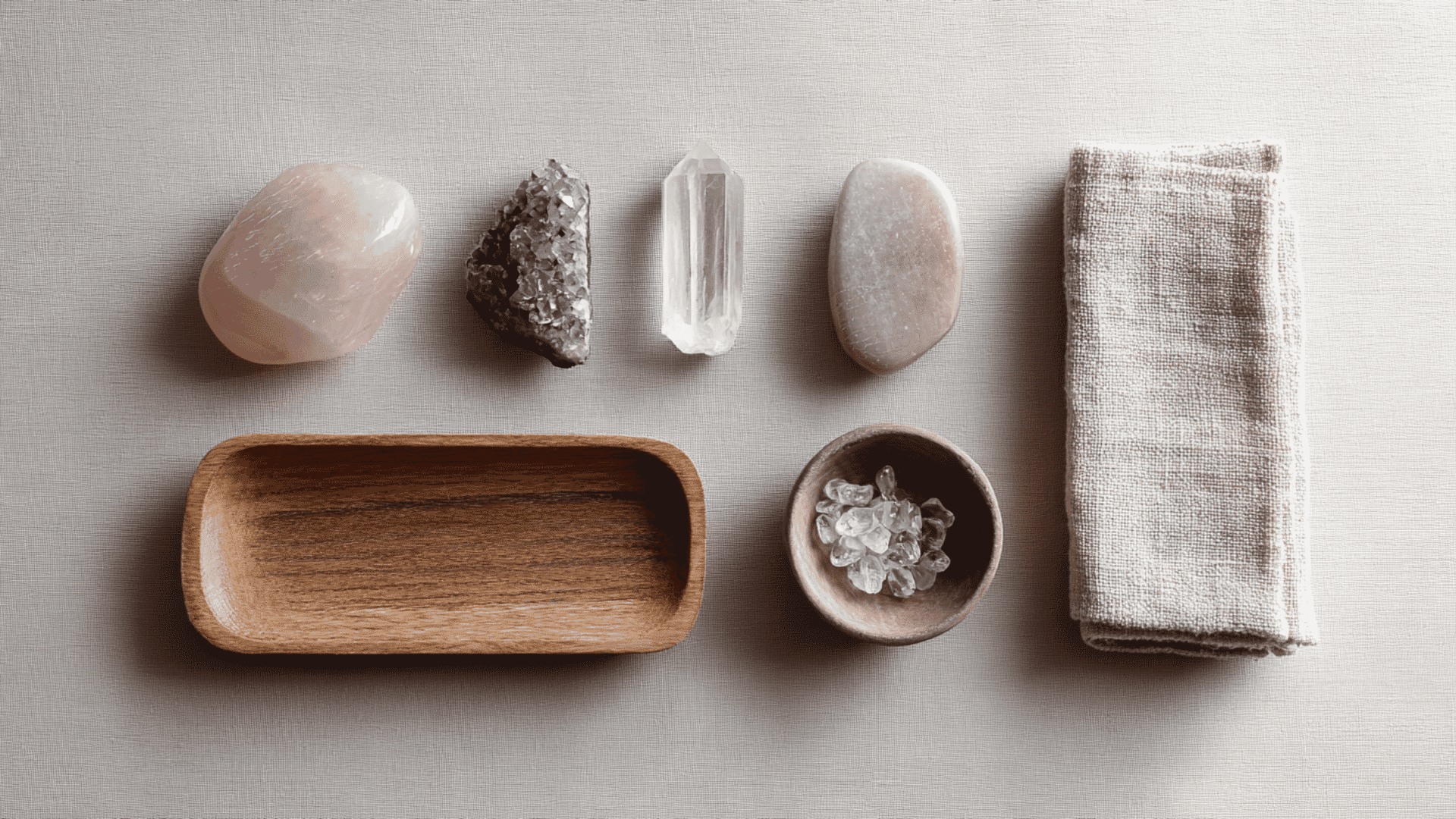
Once the room feels stable and calm, you can add a few elements that lift the energy a bit. These aren’t meant to overwhelm the space or turn it into a shrine. They’re simple additions that support chi and make the room feel warmer, softer, and more intentional.
| Item / Material | What It Does | Why It Works in Feng Shui | How to Use It in the Bedroom |
|---|---|---|---|
| Rose quartz | Softens the room, supports emotional calm | Carries gentle, heart-focused energy | Place one stone on a nightstand or dresser |
| Amethyst | Supports rest and clarity | Calms mental noise and settles chi | Keep near the bed or on a shelf |
| Clear quartz | Cleans and uplifts stagnant energy | Acts as a neutral amplifier for positive chi | Use one piece; don’t overload the room |
| Small paired symbols | reinforces relationship harmony | Feng shui responds to pairs for unity | Use two matching objects in one spot |
| Ceramic bowls or objects | Grounds the room | Earth element adds stability | Use for holding small items or as decor |
| Wood accents | Warms and softens the space | Wood element brings growth and renewal | In frames, trays, or small furniture |
| Cotton or linen fabrics | Creates a calmer sensory feel | Natural fibers support steady chi | Bedding, throw blankets, or pillows |
| Soft woven textures | Adds comfort without noise | Textures slow the room’s energy | Use sparingly to avoid clutter |
| Clay or stone pieces | Strengthens the room’s foundation | Earth element anchors the space | Place one near the bed or on a shelf |
You don’t need all of these. One or two well-chosen items are enough to raise the room’s energy without making it feel busy or overdone.
The Biggest Feng Shui Mistakes and How to Fix Them
These are the issues people overlook, even when they think they’ve set up the room well.
- Chaotic or emotionally heavy artwork: Swap it for calmer imagery so the room doesn’t feel tense or overstimulated.
- Sharp or aggressive decor: Replace harsh shapes with softer forms to keep the energy steady.
- Crowded pathways around the bed: Clear the sides so movement feels natural instead of squeezed.
- Overloading the room with symbols or “lucky” items: Keep only one or two meaningful pieces so the space doesn’t feel noisy.
- Ignoring the emotional tone of the room: Remove anything that carries old stress, past relationships, or memories you don’t want in the space.
These small adjustments clean up the energy fast and make the bedroom feel calmer without changing the whole layout.
Wrapping Up
A bedroom with strong, steady energy doesn’t happen by accident. It comes from paying attention to the small details: the flow of the space, the items you choose to keep, and how each part of the room makes you feel.
When you get the balance right, the whole space works for you instead of against you. Using the principles behind a positive energy placement feng shui bedroom, you can shape a room that feels grounded, warm, and genuinely supportive.
Start with one change, then build from there. Turning your bedroom into a calmer, more aligned space one step at a time.
Explore more design guides on the website to keep refining your space. There’s a lot more you can build on from here.