Starting a garden can feel confusing at first, but once you understand how a beginner basic vegetable garden layout works, the whole thing becomes a lot easier.
You don’t need experience or fancy tools. You just need a simple plan, the right spot, and a basic idea of how plants behave.
Today, I’ll walk you through choosing the layout that fits your space, picking plants that won’t give you a hard time, setting up the soil, and avoiding the mistakes that slow beginners down.
By the end, you’ll know exactly how to build a small garden that actually grows food.
The Basics of a Beginner Garden Layout
When you’re just getting into this stuff, it’s easy to overthink it. People start imagining these giant gardens with perfect rows, and then they burn out before they even touch a shovel.
A beginner’s layout isn’t about building some masterpiece. It’s about making a space you can actually take care of. Something small. Something simple… Something you can look at and think, yeah, I can handle that.
Once you get that first season under your belt, everything starts to make sense.
How Big Should Your First Garden Be?
Most folks jump in way too big. I’ve seen it over and over. They make this huge plot, and then halfway through summer, they’re staring at a jungle thinking, what the hell did I do? You don’t need a farm. You need a starter spot.
A 4×4 bed is the easiest way to dip your toe in. Sixteen little squares. You can grow a surprising amount of food in there without spending your weekends wrestling weeds.
A 4×8 bed gives you more room to play with. Still manageable, still simple, but big enough that you can grow a mix of things and actually feel like you’ve got a real garden going.
A 10×10 plot is when you’re ready for something a little more serious. Doesn’t sound big, but once you’re out there planting and watering, you’ll feel it. That’s the size where time starts to matter. If your schedule’s packed or you know you only have a couple evenings a week to check in, stick with the smaller beds.
It all comes down to how much energy you can give. Start with the one that actually fits your life, not the one you wish you had. The garden grows with you.
How Much Sun Do You Need?
Vegetables are like people. Some of them just need a lot of sun to be happy. Most of your classic garden plants want six to eight hours of direct sunlight. That’s the sweet spot.
If you don’t know how much sun your yard gets, the easiest way is just watching it for a day. Morning, midday, late afternoon. You’ll see exactly where the bright spots are and how long they last.
If you don’t have full sun, don’t panic. You can still grow stuff. Leafy greens don’t mind a little shade. Herbs are pretty chill about it too.
The only time it really becomes a problem is with tomatoes, peppers, squash, anything that wants heat and light all day. If you’re dealing with less sun, grow the things that won’t fight you.
Understanding Plant Heights
One of the first layout mistakes beginners make is putting the tall plants anywhere they want. Then halfway through summer the tomatoes turn into Godzilla and everything else is begging for sunlight. Height matters.
You’ve got three basic groups. Tall crops like tomatoes, corn, and pole beans. Medium crops like peppers, broccoli, and herbs. Short crops like lettuce, carrots, radishes, and onions.
The way you place them is simple. Put the tall stuff on the north side of your bed. That way they’re not casting a big shadow over everybody else. Medium plants go in the middle. Short ones go in front, toward the south side.
Think of it like lining up kids for a school photo. Tall kids in the back. Little kids in the front. Everybody gets to see the sun.
Different Vegetable Garden Layout Styles
When you’re picking a layout, you’re really just picking the way you want to move through your garden. That’s it. It’s about what actually fits your space and the way you like to work.
1. Simple Raised Bed Layout (Best for Beginners)
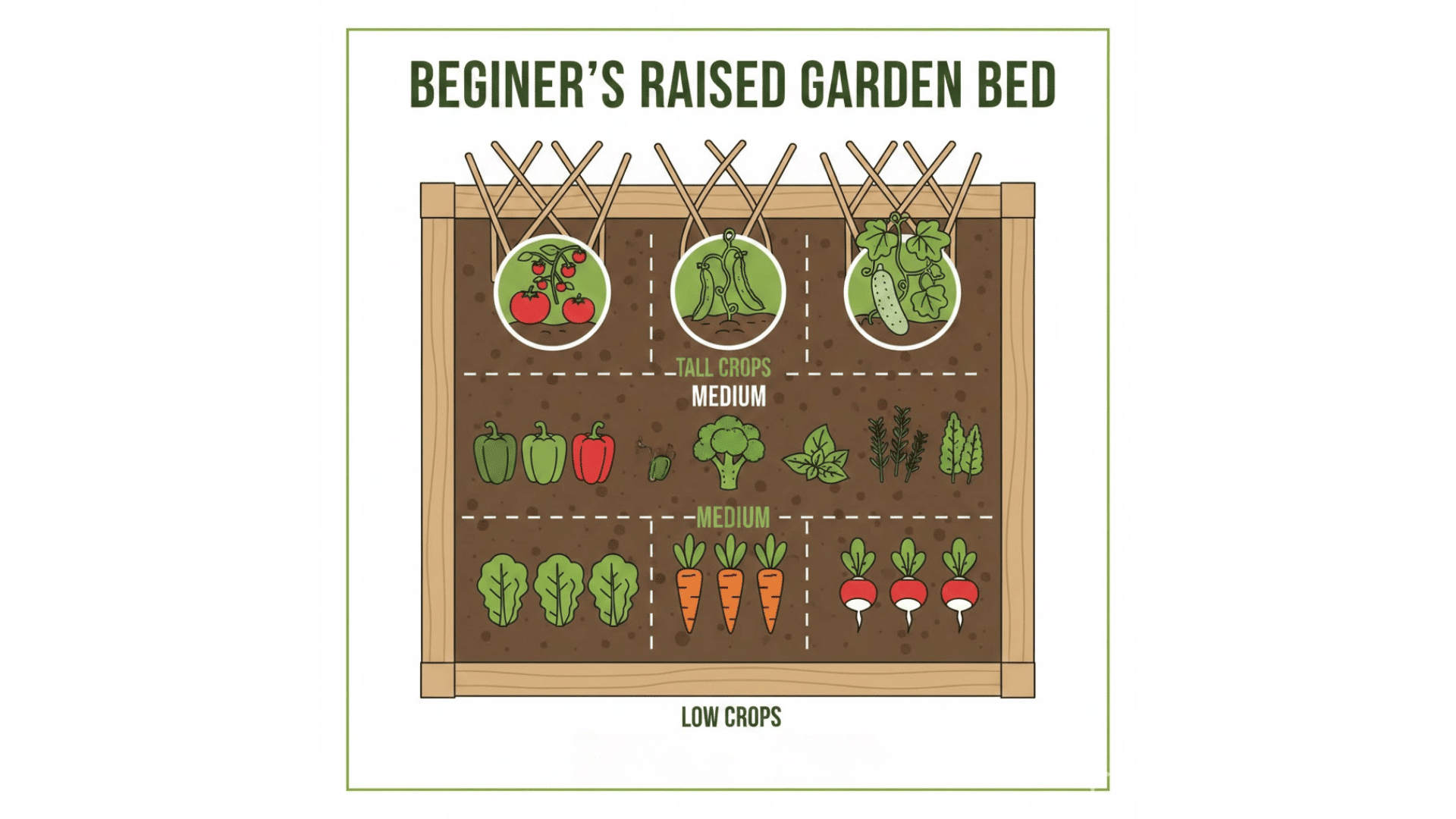
A raised bed is like training wheels for gardening. It keeps everything contained, it looks clean, and it takes a lot of the guesswork out of soil issues.
Most beginners do great with a 4×4 or a 4×8 bed. Those sizes are easy to reach from all sides so you’re not stepping in the soil and compacting it.
For placement, think in layers. You put the tall stuff along the back. Tomatoes, pole beans, maybe a trellis for cucumbers. In the middle, you tuck in the medium crops like peppers, broccoli, or herbs.
Then in the front, you slide in the low growers like lettuce, carrots, or radishes. It turns into this smooth little slope of plants that all get their share of sunlight.
2. Traditional Row Layout (Best for Large Spaces)
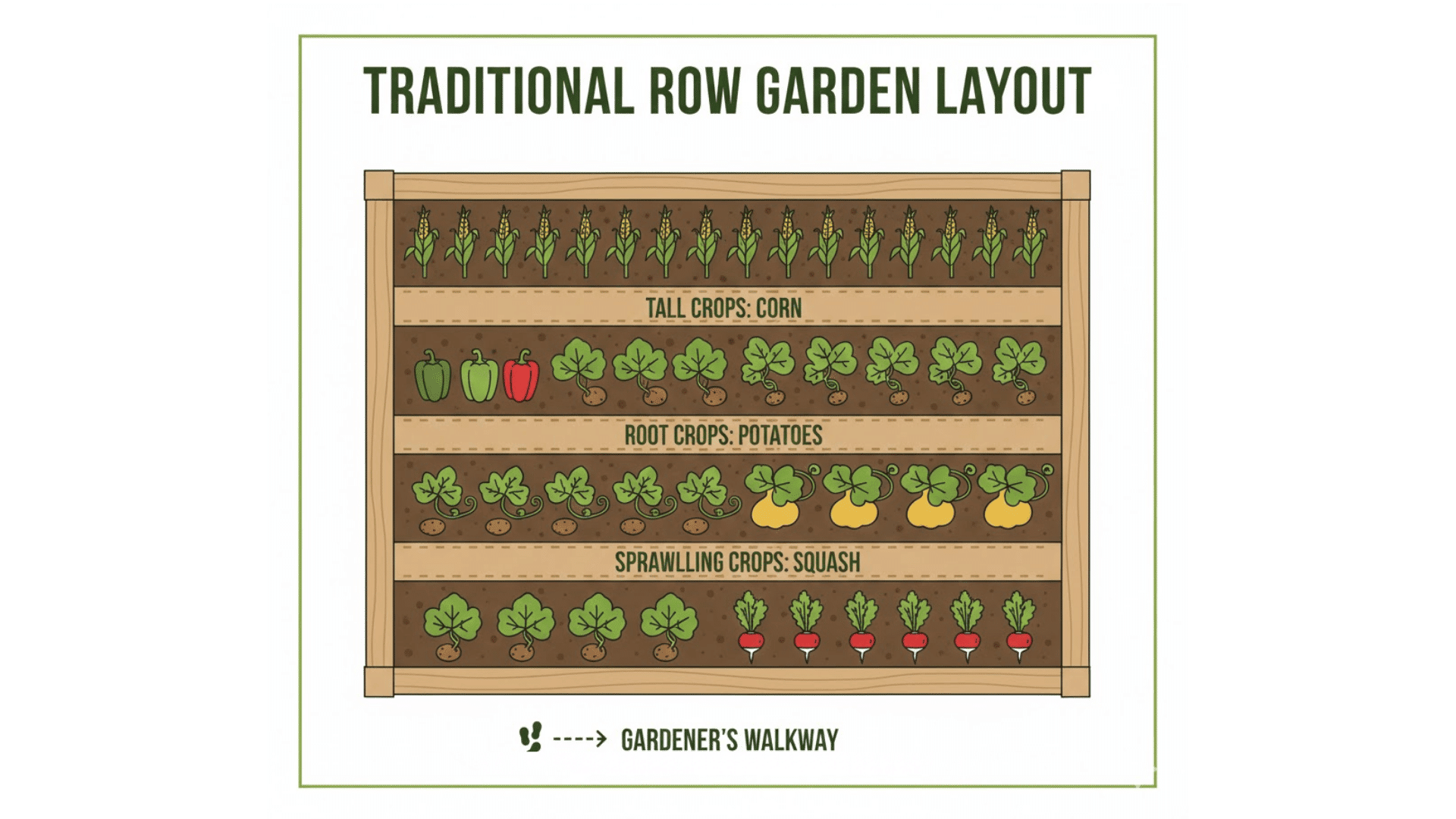
This is the old-school setup. Long straight rows. You give each row a little breathing room so you can walk down the lines and weed or water without stepping on anything.
Most folks keep the rows about two to three feet apart. That gives you enough space for tools or even a wheelbarrow if you need it.
The upside here is freedom. Big space means big crops. Corn, potatoes, squash, all that classic garden stuff fits well.
The downside is maintenance. You’re dealing with more weeds, more watering, and more time out there. If you love the whole process and you’ve got the space, it’s great. If you’re tight on time, it can get overwhelming fast.
3. Square Foot Grid (Most Organized)
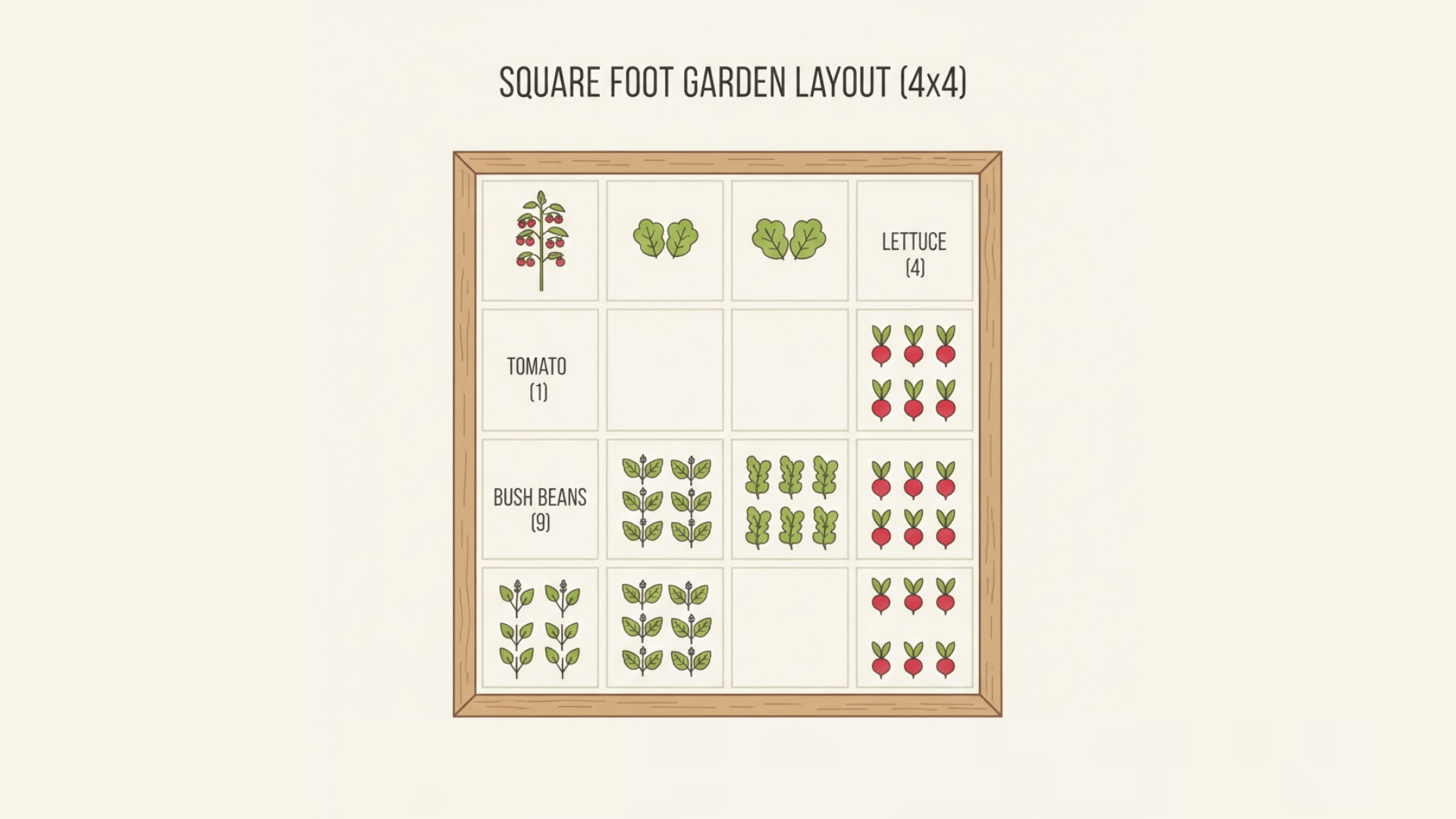
This layout is like the garden version of graph paper. You take a 4×4 or 4×8 bed and divide it into one-foot squares. Just a simple string grid or some wooden dividers. Each square becomes its own little zone, and you plant based on how many of each crop can fit.
For example:
- One tomato per square
- Four lettuces per square
- Nine bush beans per square
- Sixteen radishes per square
It keeps everything neat, easy to see, and easy to manage. Beginners love it because the structure takes the stress out of spacing.
4. Vertical Layout for Small Yards (Space Saver)
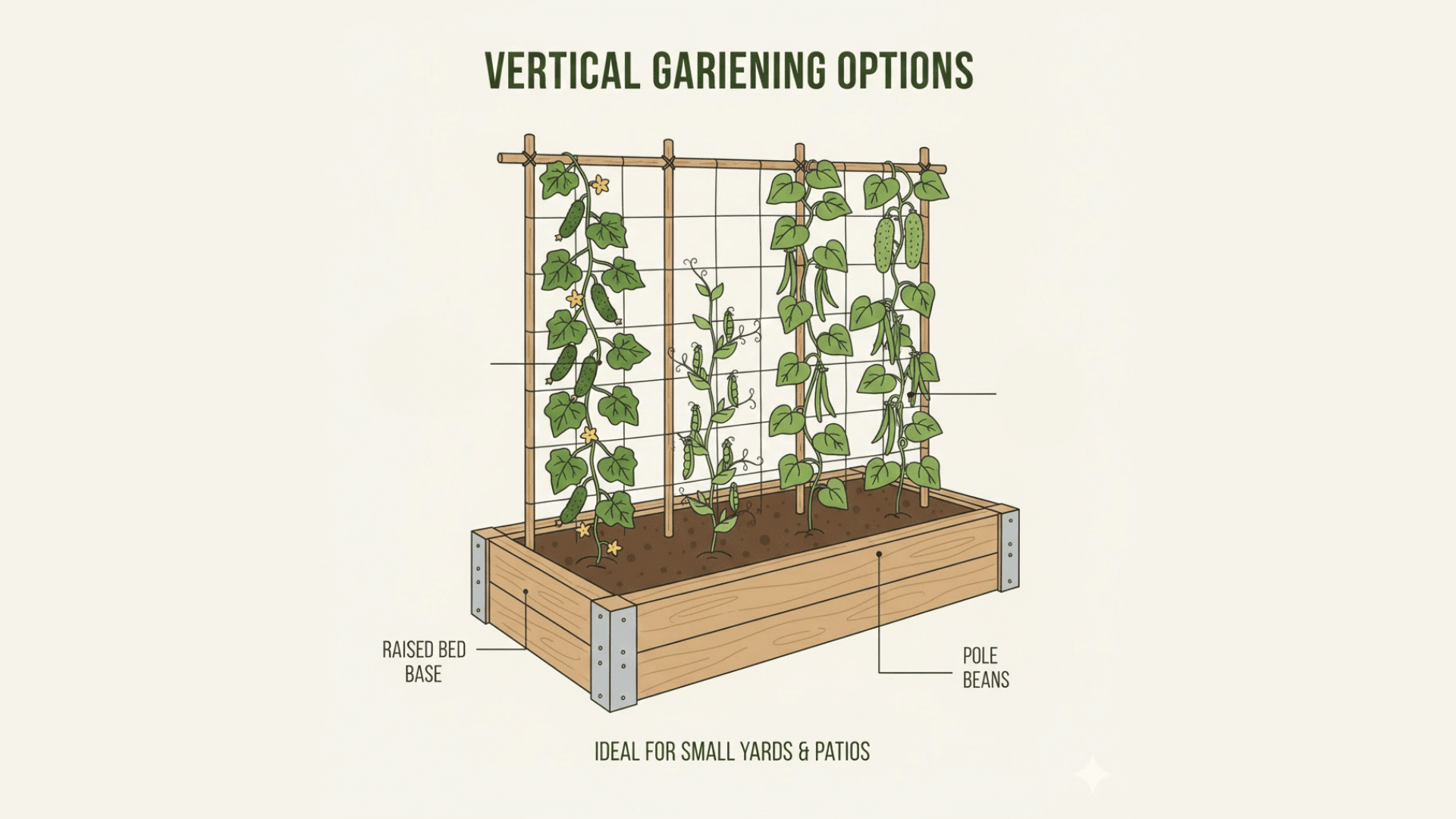
If your yard is tiny, going vertical is the move. A trellis turns one little patch of soil into a whole wall of food.
You can use:
- Simple wooden A-frame trellises
- Metal cattle panels bent into arches
- Netting along the back side of a raised bed
The best vertical crops are the ones that actually want to climb. Cucumbers. Peas. Pole beans. Even certain tomato varieties if you clip them as they grow. You save space on the ground, and your garden ends up feeling cleaner and easier to work in.
Pick the Right Beginner-Friendly Vegetables
When you’re new to gardening, the easiest way to stay sane is to grow plants that don’t push back. Here’s a quick look so you know exactly what belongs in your first garden and what you should leave for later:
| Category | Vegetables | Why They Fit (or Don’t) |
|---|---|---|
| Easiest Crops for Beginners | Lettuce | Grows fast, low effort, forgiving with shade and spacing. |
| Radishes | Quick harvest, simple to seed, very low-maintenance. | |
| Beans | Reliable growers, minimal care, good yield. | |
| Peas | Easy cool-season crop, climbs well, low fuss. | |
| Cherry Tomatoes | Productive, resilient, great for beginners. | |
| Zucchini | High yield, handles mistakes, very hardy. | |
| Herbs (basil, parsley, dill) | Thrive in small spaces, easy to maintain. | |
| Crops to Avoid Your First Year | Celery | Extremely picky about water and spacing. |
| Melons | Need lots of room, heat, and attention. | |
| Cauliflower | Sensitive to weather and timing, easily ruined. |
Picking the right plants sets you up for early wins, and early wins keep you going. Start simple now, and you can play with the tougher stuff once you’ve got a season or two under your belt.
Planning Paths, Spacing, and Access
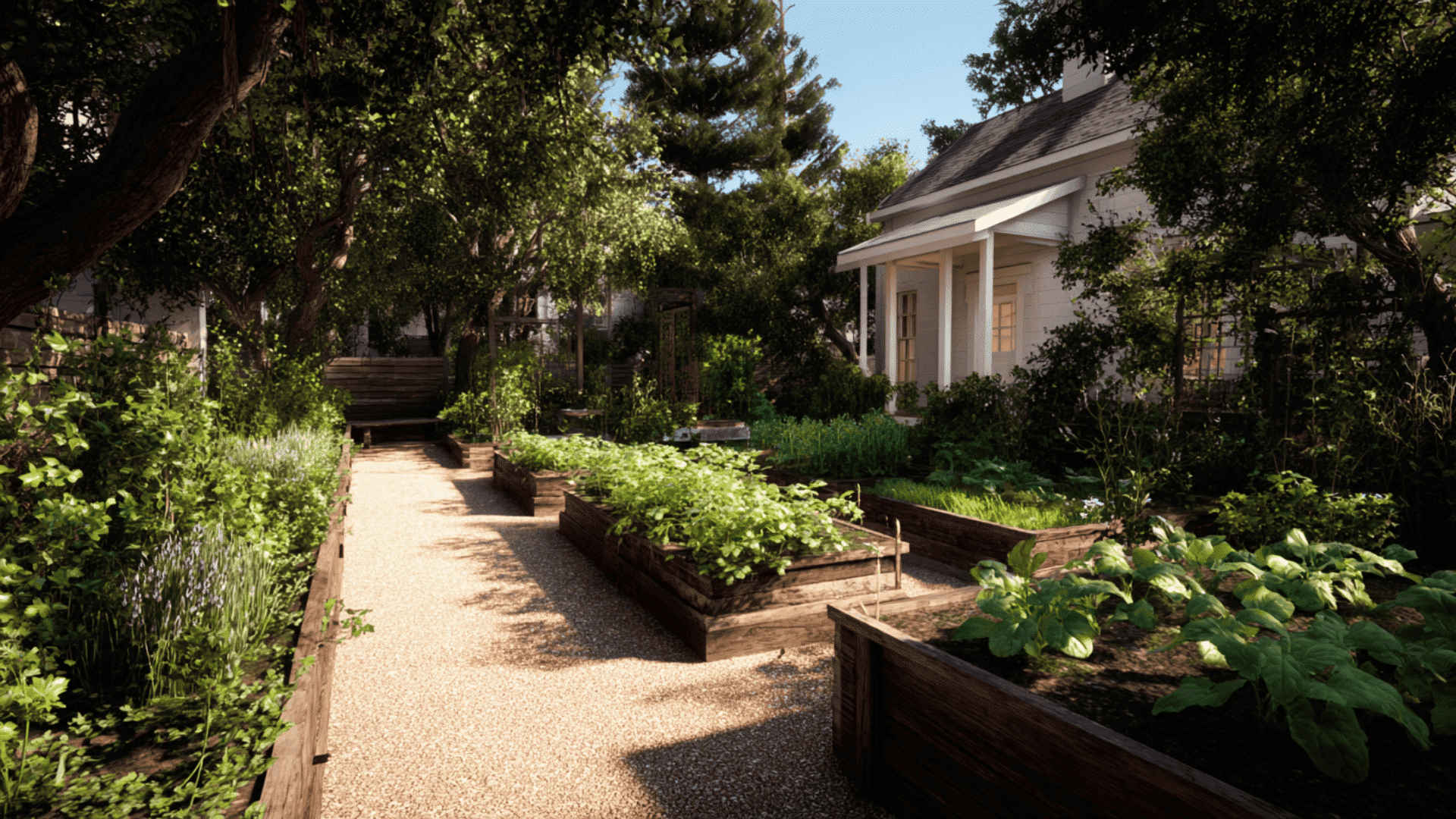
When you build a garden, you have to think about how you’re going to move through it. Most beginners don’t do that. They cram everything together and then wonder why they can’t reach anything without stepping on something important.
You want the garden to feel comfortable, because if it feels comfortable, you’ll actually use it.
Path Widths and Mulching
Two feet for a path is the sweet spot. Anything narrower and you’re twisting your body like you’re trying to slip past strangers in a crowded hallway. You want to walk through the garden like a normal person, not like you’re doing a weird fitness challenge.
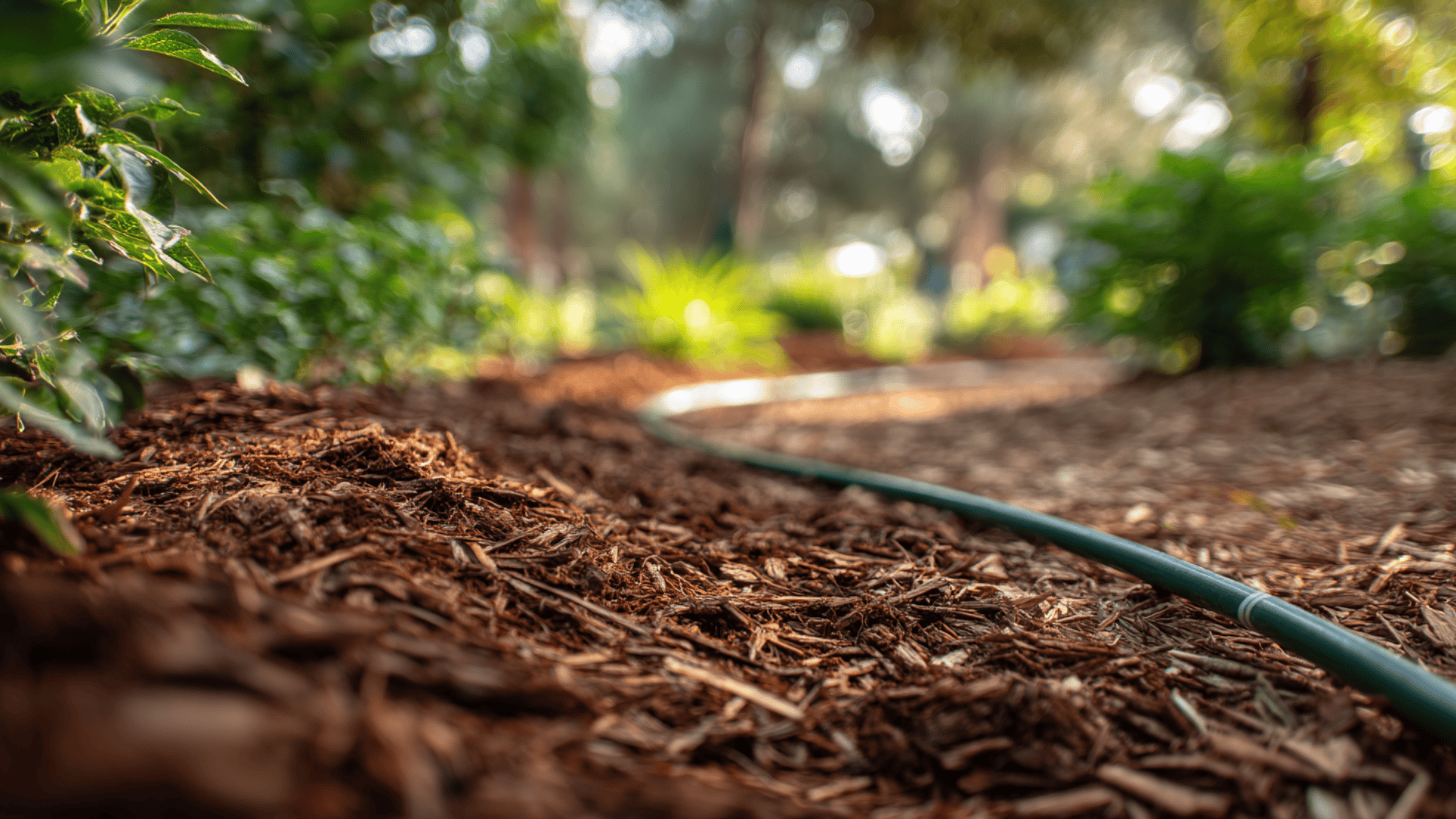
Mulch helps a ton. It keeps the weeds down, and it keeps the mud from turning your shoes into bricks. Wood chips, straw, whatever you’ve got. Just drop it down and the whole area feels cleaner and easier to work in.
Plant Spacing Rules Beginners Forget
The biggest beginner mistake, hands down, is planting too close. When everything is small, it looks like you’ve got a ton of empty room. But give it a few weeks and the whole thing turns into a leafy traffic jam.
| Plant | How Many per 1 Square Foot | Why This Spacing Works |
|---|---|---|
| Tomato | 1 | Needs room for airflow and sunlight so it doesn’t choke itself out. |
| Lettuce | 4 | Leaves stay open and full instead of stacking on each other. |
| Bush Beans | 9 | Enough plants to fill the square but still let air move through. |
| Radishes | 16 | Small roots, fast growers, no crowding issues at this density. |
Plants need space for air to move. Space for light to hit the lower leaves. Space to grow without bumping into their neighbors like they’re in a crowded bar. When you give them that space, the garden stays healthier and everything grows better.
Soil, Watering, and Setup Essentials
Most new gardeners don’t realize how much easier things get when the soil is decent and the watering is consistent.
You’re not trying to master soil chemistry here. You’re just giving the plants a foundation so they can actually grow without turning every week into a rescue mission.
Simple Soil Prep for Beginners
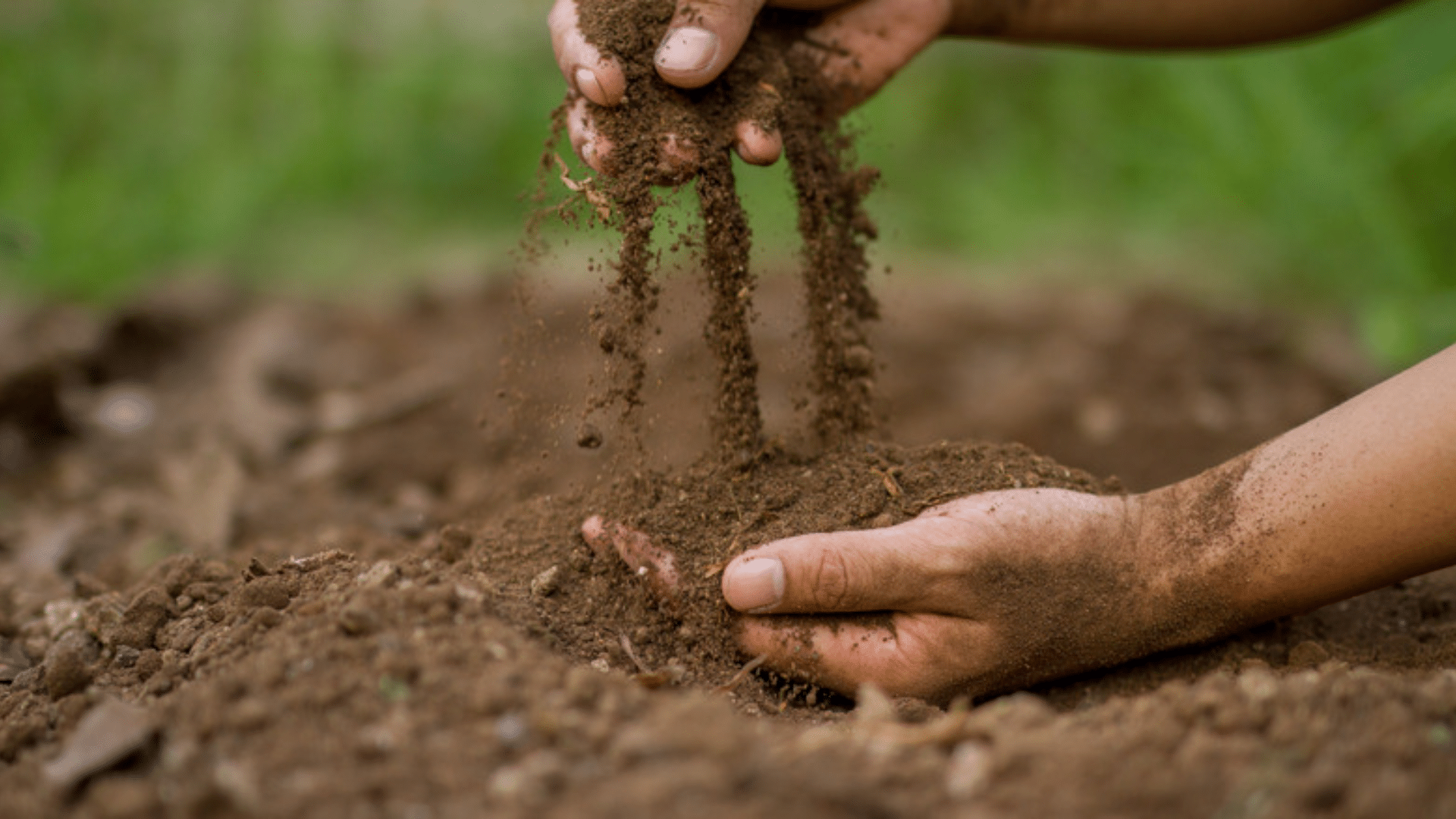
- Use a raised bed mix. It drains well, stays loose, and saves you from wrestling with whatever hard, clumpy soil your yard came with.
- Add a layer of compost. Store-bought or homemade, it doesn’t matter. Compost boosts nutrients and helps the soil stay alive and balanced.
- Keep it simple. You don’t need fertilizers, additives, or complicated blends. If the soil is loose, dark, and drains well, you’re already set.
Watering Rules for New Gardeners
- Water deeply. Let the water soak down instead of just wetting the surface. Deep roots make strong plants.
- Water in the morning. The plants get the whole day to dry, which cuts down on disease and keeps things steady.
- Avoid soaking the leaves. Water the soil, not the plant tops. Wet leaves overnight are a fast track to mildew and other issues.
- Stay consistent. Moist soil, not soggy. Not bone dry. Once you get that rhythm, the rest of the garden follows.
Common Beginner Layout Mistakes to Avoid
Most new gardeners run into the same problems, and they’re all avoidable once you know what to look for.
Planting too many crops: Beginners love to overpack the bed. It feels productive at first, but it turns into extra watering, extra pests, and smaller harvests. Pick a few crops and grow them well instead of growing everything at once.
Ignoring sun patterns: Every yard has bright spots and shady spots. If you don’t pay attention, you’ll put sun-loving plants where they can’t get enough light. Watch the yard through the day so you know where the sun actually hits.
Overcrowding the bed: Plants start small, so it’s easy to think you have more room than you do. Give everything enough space to breathe. Good spacing keeps airflow moving and keeps disease away.
Forgetting pathways: You need space to walk and reach your plants without stepping in the beds. If the paths are too tight or missing, the garden becomes a pain to work in. A comfortable path makes every task easier.
If you avoid these mistakes, the whole layout works better, and the garden stays way easier to manage.
Wrapping Up
Building your first garden isn’t about being perfect. It’s about setting up a space that you can manage, learning how plants behave, and giving yourself a chance to enjoy the process.
Once you understand how a beginner’s basic vegetable garden layout works, every season gets easier.
Keep the space simple, give the plants room, and trust the small steps. That’s how you build a garden that produces steady food without overwhelming you.
If you’re ready to get your hands in the soil, start planning your layout today and make this the season you finally grow your own vegetables.