
When it comes to upgrading home bathrooms, whether it is possible to install a brushed nickel shower faucet with valve on one’s own has always been a concern for many homeowners and DIY enthusiasts. The brushed nickel showerhead has a low-key, durable appearance, combining modernity and longevity, while the “with valve core” configuration directly affects water safety and daily use.
So, can such a shower system really be installed by oneself? This article will comprehensively analyze this issue from an industry perspective, combining actual construction logic, costs, risks, and trends.
Why Are More and More People Considering Installing It Themselves?
In recent years, bathroom renovation has gradually shifted from “all-inclusive to contractors” to “semi DIY mode”. There are three main reasons:
- Labor costs continue to rise.
The labor cost for replacing a standard shower faucet is usually between $250 and $600. If it involves replacing the valve core and opening holes in the wall, the cost will be even higher.
- Improved modularity of products
Nowadays, mainstream shower faucets and valve cores mostly use standard interfaces (such as 1/2-inch) and offer clearer installation instructions, reducing technical barriers.
- DIY content popularization
Video tutorials, official brand guides, and community experience sharing enable ordinary homeowners to systematically learn the installation process.
Under What Circumstances Can One Install It Themselves?
From an industry perspective, self-installation is not entirely unfeasible, but the prerequisite is crucial.
Suitable DIY situations include:
- Just replacing the original shower faucet and valve core, in the same position.
- The wall is a detachable maintenance panel, or the back is a wardrobe or storage room.
- Original pipeline size standard (1/2 inch copper pipe or PEX pipe)
- Does not involve changing the direction of hot and cold water or increasing the water outlet function
Under these conditions, people with certain hands-on abilities can usually complete the installation within 4-6 hours.
What Situations Are Not Recommended for Self-Installation?
From industry news and after-sales data, problems often arise in the following types of DIY attempts:
- Need to move the valve core position (involving cutting, re-welding, or crimping of pipelines)
- The old house uses non-standard pipe diameters.
- There is no independent valve to close; only the main water valve of the entire house can be closed.
- Lack of experience in waterproofing and wall sealing
Especially for the valve core’s installation height and depth, if the error exceeds 1/4 inch, the decorative cover plate may not fit properly later, and the rework cost is extremely high.
Industry Standard Logic for Installation Process
From a professional perspective, the standard process is roughly as follows:
- Close the water supply and drain the pipeline.
- Dismantle the old faucet and valve core.
- Fix the new valve core according to the instructions (pay attention to the “UP” direction)
- Connect hot and cold water pipes and conduct pressure testing.
- After confirming that there is no leakage, seal the wall.
- Install brushed nickel exterior parts and handle
- Debugging water temperature and water pressure balance
The fourth step of stress testing is the most easily overlooked but crucial step in DIY.
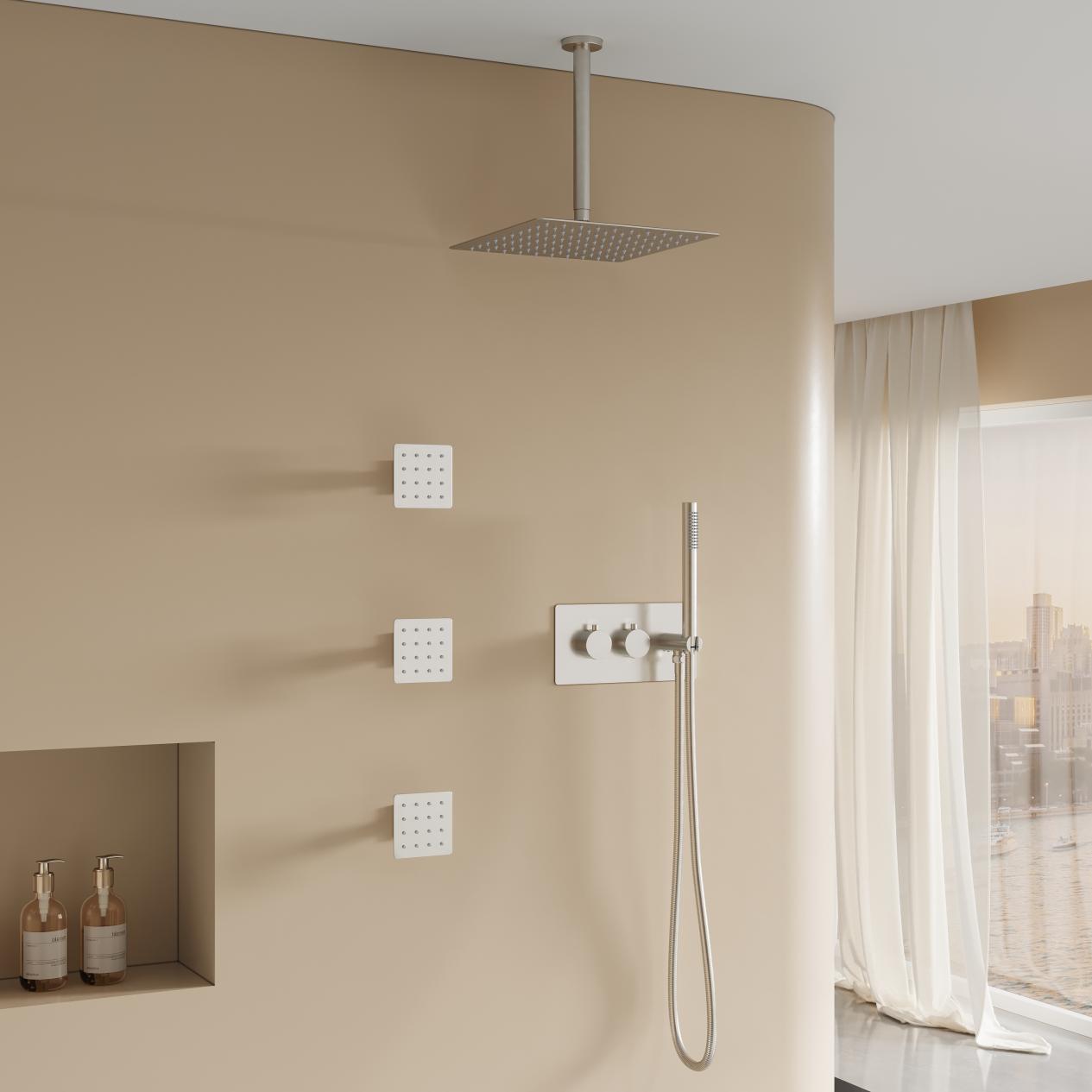
Special Requirements for The Installation of Brushed Nickel Material
From a product perspective, brushed nickel is not just about “color selection”; it also has certain requirements for installation details:
- The surface is more prone to leaving hard scratches, and soft gloves should be worn during installation.
- It is not recommended to use a sealant containing acid or strong alkali.
- After installation, it is necessary to clean with a soft cloth to avoid water stains from solidifying.
These details are often the parts that professional installers are more familiar with.
How Does the Industry View ‘diy vs Professional Installation’?
In the current market environment, the attitude of brands and platforms towards DIY is actually “limited support”:
- Most product warranties remain valid, provided the installation meets the specifications.
- Leakage and valve core damage caused by improper installation are usually not covered by warranty.
- Some high-end valve core systems are explicitly recommended for installation by certified plumbers.
Based on the trend, DIY is more suitable for mid-range, relatively simple-structured shower systems.
Cost Comparison: Can It Really Save a Lot?
Taking a common upgrade as an example (in US dollars):
- Product cost: $180- $350
- Professional installation: around $300
- DIY Tool Supplement: $50- $120 (if not originally available)
If everything goes smoothly, DIY can indeed save some costs; But once rework or water leakage occurs, the subsequent repair costs are often higher than the original labor costs.
Industry Trend: Will the Future Be Easier to Install?
From the perspective of product design trends, the answer is yes:
- Pre-installed valve core modularization
- Clearer depth identification
- The popularization of quick-connect interfaces
- A more user-friendly manual for DIY users
This means that the feasibility of installing shower faucets on one’s own will be further improved in the future, but whether it is worth installing depends on personal experience and housing conditions.
Conclusion: Should You Install It Yourself?
Based on industry experience, it is possible to install brushed nickel shower faucets yourself, but it is better suited for homeowners who are prepared and discerning. If it’s just a simple replacement and the conditions are ripe, DIY is a cost-effective option. However, if it involves structural modifications or long-term safety, professional installation is still a safer choice.
When it comes to upgrading a bathroom, what really matters is not who will install it, but whether it is installed correctly, safely, and can withstand the test of time. Only by striking a balance between functionality, aesthetics, and long-term reliability can the upgrade be considered truly successful.